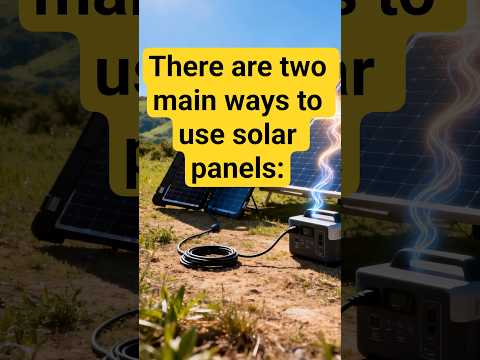
There are two main ways to use solar panels:
Solar Panels + Separate Inverter System
This is a traditional setup.
The solar panels produce DC (Direct Current) electricity.
An inverter (for example, a Veroria inverter or similar brand) converts DC into AC (Alternating Current) so you can power normal household appliances.
How it works: Solar Panel → Charge Controller → Battery → Inverter → Home Appliances
Advantages:
More powerful and expandable
Good for full home or off-grid systems
You can customize batteries and components
Better for long-term survival or backup systems
Disadvantages:
More wiring and installation work
Higher initial cost
Requires technical setup knowledge
Solar Panels Connected Directly to a Power Station
A power station (like Jackery, Bluetti, EcoFlow, etc.) already has:
Built-in battery
Built-in charge controller
Built-in inverter
You simply plug the solar panel into the power station.
How it works: Solar Panel → Power Station → Appliances
Advantages:
Plug-and-play
Portable
Easy setup
Good for camping, emergencies, apartments
Disadvantages:
Limited expansion
Lower total power capacity
More expensive per watt
🔎 Key Difference
Separate Inverter System =
More powerful, expandable, better for long-term off-grid living.
Power Station System =
Simple, portable, good for short-term or emergency use.
#SolarPower
#OffGridLiving
#GridDown
#EmergencyPreparedness
#Prepper
#SolarGenerator
#Blackout
#EnergyIndependence
#SurvivalSkills
#PowerOutage
#SolarInverter
#BatteryBackup
Leave a Reply