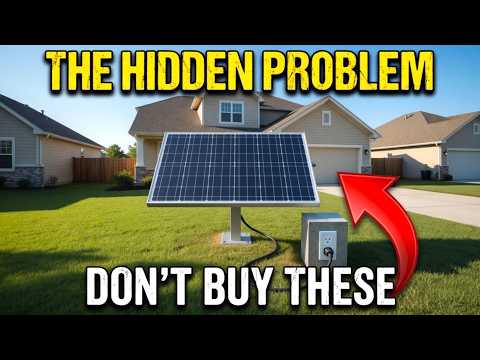
Plug-in solar panels are becoming extremely popular in 2026 because they promise an easy way to lower your electric bill without installing a full rooftop solar system. The idea sounds simple: buy a small solar kit, plug it into a wall outlet, and start generating electricity immediately. But the real-world performance of these systems is often very different from the marketing.
In this video, we break down the hidden output problem behind plug-in solar panels and explain why many homeowners and renters overestimate how much energy these systems can actually produce. We cover how advertised wattage ratings are measured under ideal laboratory conditions and why real-world setups rarely achieve those numbers consistently.
You’ll learn:
How plug-in solar systems actually work
Why shading, panel angle, heat, and weather heavily affect output
Why a 600W system may only generate around 2–4 kWh per day
How that compares to the average U.S. home using 25–30 kWh daily
Why monthly savings are often far smaller than buyers expect
How U.S. regulations and utility rules vary by state
The major differences between plug-in systems and full rooftop solar
We also compare small plug-in systems to properly installed residential solar arrays in the 6–12 kW range and explain why full rooftop systems deliver far more meaningful long-term energy production and return on investment.
Plug-in solar panels can still make sense for renters, small supplemental power, or learning basic solar concepts. But they are not a true replacement for full residential solar systems, and understanding the real output numbers is critical before buying one.
#solar #solarpanels #pluginsolar #solarenergy #solarpower #balconysolar #solarinstallation #renewableenergy #cleanenergy #homeenergy #solaroutput #solarperformance #solar2026 #energyefficiency #rooftopsolar #solarreview #solarfacts #solarindustry #electricity
Leave a Reply