Blog

  • Why is Donald Trump discontinuing the penny? – Al Jazeera English

    Why is Donald Trump discontinuing the penny? – Al Jazeera English

    United States President Donald Trump has ordered the Treasury to stop minting new pennies, reviving an old debate about the value of the one cent coin.

    The penny, Trump argued in a post on his Truth Social platform on February 9, is “wasteful” because the cost to make it far exceeds its currency value.

    “Let’s rip the waste out of our great nation’s budget, even if it’s a penny at a time,” he wrote.

    Why the push to retire the coin?

    Despite being worth only one cent, each penny costs nearly four cents to produce, according to the US Mint. That’s due to the cost of the raw material – mostly zinc – and the moulding process.

    Some 3.2 billion pennies were minted in 2024, meaning a production cost of $12.8bn.

    Centuries of inflation have also made the penny, first minted in 1793, virtually obsolete. It has become so insignificant that it’s no longer even practical for the cheapest retail items—such as a gumball or a single piece of candy.

    “People don’t want them. They don’t use them,” Larry Jackson, a 65-year-old coin dealer in Atlanta told the Reuters news agency. “They sock them away in cans and drawers and jars … Even a 30-pound bag won’t fetch you $50.”

    In addition, the use of the penny tends to clog up retail transactions. If cashiers can skip counting pennies, they’d save 2.5 seconds per check-out, according to a 2006 study by the National Association of Convenience Stores.

    An employee rings up sales at a cash register at a Walmart in the Crenshaw district of Los Angeles on Black Friday, November 29, 2013. US stocks Friday moved higher in a holiday-shortened session following better eurozone economic data and positive early assessments of
    An employee rings up sales at a cash register at a Walmart in Los Angeles on Black Friday, on November 29, 2013 [Robyn Beck/AFP]

    Is there an argument to keep it?

    Yes. Some penny advocates contend that the currency helps keep prices in check.

    Businesses, they argue, will be more likely to round off prices upwards than downwards without the penny. That could have a marginal inflationary impact.

    Additionally, they argue, pennies serve as a valuable source of funding for charities: Each individual contribution might be tiny, but it all adds up.

    Others point out that scrapping the coin may force the government to churn out more nickels, an even bigger financial burden. Worth five cents, the nickel costs 13 cents apiece to produce.

    Ultimately, however, most economists say losing the penny would have a negligible effect on consumers. That’s because the vast majority of transactions are already cashless.

    “I think at some point in history cancelling the penny would have been a bigger deal, but now people don’t even carry them in their pockets,” said economist Sean Snaith. “They’re largely not in circulation.”

    Have other countries tried scrapping the penny?

    Yes, countries like Canada, New Zealand, Australia and the Netherlands have all phased out their smallest-denomination coins.

    When Canada stopped minting the penny in 2013, it saved an estimated $11m annually, according to the Canadian government. Many retailers began rounding cash purchases to the nearest five-cent mark, while the government collected and recycled the pennies for their copper and zinc content.

    US lawmakers have long advocated for similar measures. Starting in 1989, the late Arizona Congressman Jim Kolbe started a decades-long bid to eliminate the penny, introducing several failed bills to scrap it. “The penny has been a nuisance for years,” he said back in 2006.

    It’s unclear.

    Congress, which oversees the US Mint’s operations, would likely need to pass a law to permanently retire the coin. But some legal experts say Trump could simply direct the treasury secretary to stop producing them.

    Legal scholar Laurence H Tribe pointed out that the secretary has the authority to mint coins in whatever amounts deemed necessary – potentially zero for the penny.

    “Unlike a lot of what the new administration [of President Trump] has been doing pursuant to the flood of executive orders since January 20, this action seems to me entirely lawful and fully constitutional,” said Tribe.

    Robert Triest, an economist professor at Northeastern University, says “the process of discontinuing the penny in the US is a little unclear”.

    “It would likely require an act of Congress, but the secretary of the Treasury might be able to simply stop the minting of new pennies,” Triest was quoted by Northeastern Global News as saying in a January news article. Phasing out the penny, he added, would raise questions about how to round cash transactions and the use of people’s existing collections of pennies.

    Source

    :

    Al Jazeera and news agencies

  • US judge orders Trump to restore funding for foreign aid programmes – Euronews

    US judge orders Trump to restore funding for foreign aid programmes – Euronews

    A US federal judge ordered the Trump administration to temporarily lift a funding freeze that has shut down US aid and development work globally.

    A federal judge has ordered the Trump administration to to temporarily lift a fundingfreeze that has shut down US aid and development work worldwide.

    The sudden shutdown has resulted in sweeping damage to non-profits and other organisations that help carry out crucial US assistance internationally, US District Judge Amir Ali said while issuing the temporary order on Thursday.

    The freeze has shut down almost all of the thousands of US-funded aid and development programmes globally, USAID workers and humanitarian groups say.

    The court ruling is the second major setback for the Trump administration in its dismantling of the six-decade-old US Agency for International Development (USAID).

    US President Donald Trump and his billionaire ally Elon Musk, who runs the Department of Government Efficiency (DOGE), say the agency is out of line with their agenda.

    The decision by the US district court in Washington is the first to target what aid groups have described as a sudden and absolute cutoff of USAID funds for programmes abroad.

    Contractors, farmers and suppliers in the US and around the world have been left without hundreds of millions of dollars in pay for work already done, and have been forced to carry out wide-scale layoffs and furloughs as a result.

    Ali’s ruling followed a lawsuit brought forth by two organisations — the AIDS Vaccine Advocacy Coalition and the Global Health Council — who represent health organisations receiving US funds for work abroad.

    ‘Set off a shockwave’

    Ali noted that the Trump administration argued it had to shut down funding for the thousands of USAID aid programmes abroad to conduct a “thorough review” of each programme individually, and decide on whether or not it should be eliminated.

    Yet he said administration officials “have not offered any explanation for why a blanket suspension of all congressionally appropriated foreign aid, which set off a shockwave and upended reliance interests for thousands of agreements with businesses, nonprofits, and organizations around the country, was a rational precursor to reviewing programs.”

    Lawyers for the administration had failed to show they had a “rational reason for disregarding the countless small and large businesses that would have to shutter programmes or shutter their businesses altogether,” according to Ali.

    The ruling also bars US Secretary of State Marco Rubio, and other Trump officials from enforcing stop-work orders that the Trump administration and Musk have sent to the companies and organisations carrying out foreign aid orders.

    The funding order applies to contracts that were in place before Trump issued his 20 January 20 executive order declaring a freeze on foreign assistance.

    Earlier on Thursday, a judge in a separate case relating to the dismantling of USAID and US aid programmes abroad said that his order halting the Trump administration’s plans halting plans to pull all but a fraction of the agency’s staffers off the job worldwide will stay in place for at least another week.

    US District Judge Carl Nichols ordered the extension after a nearly three-hour hearing, much of it focused on how employees were affected by Trump and Musk’s abrupt orders. The judge said he plans to issue a written ruling in the coming days on whether the pause will continue.

    Thousands of USAID and humanitarian workers face the risk of losing their jobs as the Musk-run DOGE looks to continue slashing “unnecessary spending” and prioritise cost-cutting initiatives.

  • Thousands of probationary employees fired as Trump administration directs agencies to carry out widespread layoffs – CNN

    Thousands of probationary employees fired as Trump administration directs agencies to carry out widespread layoffs – CNN

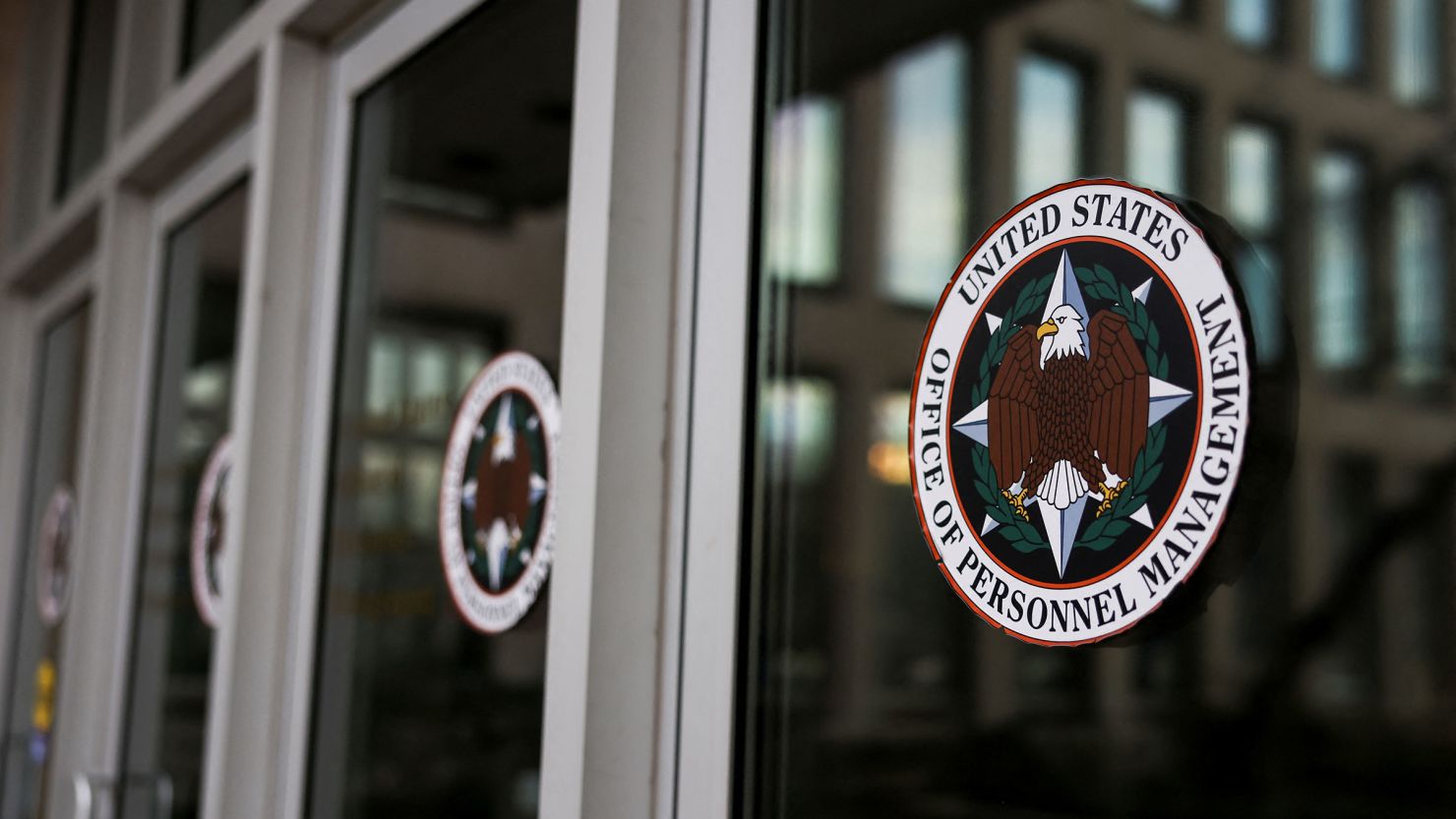
    Probationary staff at the Office of Personnel Management were fired in a conference call on Thursday.

    CNN  — 

    The Trump administration broadened its effort to terminate thousands of probationary workers on Thursday, instructing agencies on a call to move forward with the layoffs.

    Officials have set their sights on probationary workers, who have typically been employed for less than a year, or two years in some cases, because they have fewer job protections and lack the right to appeal.

    More than 200,000 employees have worked within the federal government for less than a year, according to the most recent 2024 data from the US Office of Personnel Management, which conducted Thursday afternoon’s call.

    The culling on Thursday took place at the departments of Energy and Veterans Affairs, among others, and followed terminations of scores of probationary workers earlier this week at the Department of Education, the Consumer Financial Protection Bureau and the Small Business Administration.

    Until recently, federal employees across all government agencies had only been placed on paid administrative leave.

    Thursday’s directive marked a shift in guidance, as OPM had told agencies earlier this week they did not have to terminate all probationary workers but should focus on those who have been underperforming.

    “The probationary period is a continuation of the job application process, not an entitlement for permanent employment,” an OPM spokesperson told CNN in a statement Thursday. “Agencies are taking independent action in light of the recent hiring freeze and in support of the President’s broader efforts to restructure and streamline the federal government to better serve the American people at the highest possible standard.”

    Since taking office in January, President Donald Trump and Elon Musk have upended the federal workforce, firing top officials and watchdogs, dismantling a key humanitarian agency and convincing more than 75,000 workers to voluntarily leave their jobs through a deferred resignation offer.

    The dismissal of probationary workers had been in the works since Trump’s first day in office, when the acting head of OPM sent a memo to all agencies ordering them to compile a list of all their probationary workers and send it to the office. The January 20 memo noted that it is easier to terminate these employees.

    Firings by email and video

    Employees received their termination notices via emails, form letters and video calls, according to sources who spoke with CNN.

    At OPM, dozens of probational employees were fired on an afternoon Microsoft Teams call, according to the American Federation of Government Employees, which represents career employees at the office. After receiving an email to join the call, roughly 100 people joined with their video and speaking ability deactivated, and probationary employees were told that they were being terminated and would have to leave the building within a half hour.

    The reason cited for their termination was that they did not accept the deferred resignation package, according to AFGE. After 3 p.m. those who were let go no longer had access to the building or government emails. Union representatives were not allowed on the call, AFGE said.

    The VA said it had dismissed more than 1,000 employees while touting that it would save the department more than $98 million per year. However, the vast majority of probationary employees — more than 43,000 — were exempt from the dismissals, the department said.

    One firing notice to a VA employee shared with CNN stated: “The Agency finds, based on your performance, that you have not demonstrated that your further employment at the Agency would be in the public interest.” Termination notifications at other departments contained similar language.

    The VA employee’s message was signed by VA Chief Human Capital Officer Tracey Therit.

    In a statement, VA Secretary Doug Collins said, “To be perfectly clear: these moves will not negatively impact VA health care, benefits or beneficiaries.”

    Meanwhile, employees across the Department of Energy were on edge as probationary staffers began receiving notices Thursday that they were being dismissed.

    “Our leadership was visibly shaken today,” one Department of Energy employee told CNN. “Sounds like it hit them out of the blue.”

    Earlier in the day, the agency’s acting general counsel held a meeting with heads of department offices and asked offices to compile lists of “mission-critical” probationary employees who could potentially be exempt from the layoffs, one person familiar with the agency’s staffing told CNN. There are around 2,000 probationary employees at DOE, the person said, but the number of workers affected by the terminations was not immediately clear.

    AFGE vowed to fight the firings, saying the administration has “abused” the probationary period to “conduct a politically driven mass firing spree.”

    “These firings are not about poor performance – there is no evidence these employees were anything but dedicated public servants. They are about power,” AFGE National President Everett Kelley said in a statement. “Agencies have spent years recruiting and developing the next generation of public servants. By firing them en masse, this administration is throwing away the very talent that agencies need to function effectively in the years ahead.”

    At the Consumer Financial Protection Bureau, probationary workers were let go on Tuesday, but dozens of so-called term employees were terminated on Thursday evening, people familiar with the matter told CNN. These workers typically serve for a limited duration of time but are still considered career employees with certain civil service protections.

    The bureau’s team of technologists who were hired to work on artificial intelligence and other areas was severely impacted by the terminations, one source told CNN. The CFPB did not respond to a request for comment.

    One of the bureau’s term staffers was notified of their termination in a form letter to their personal email Thursday evening, shortly after being locked out of their work accounts. Although they were supposed to be employed into 2026, they were informed that their last day was Thursday. They would receive a postage paid box to return their ID badge, laptop, iPhone and other equipment owned by CFPB, the notice said.

    “It was a job I loved doing, protecting consumers every day,” said the employee, who has young children and a mortgage. “It will also have a pretty serious financial impact on my family.”

    The notices said employees were being terminated due to the workforce optimization executive order, signed by Trump on Tuesday, that promised a “critical transformation of the Federal bureaucracy” aimed at “eliminating waste.” The order also directed agency heads to start preparations for large-scale reductions in force, or RIFs.

    Elsewhere, about 3,400 Forest Service employees and 2,000 Energy Department staffers were laid off Thursday, Randy Erwin, national president of the National Federation of Federal Employees, told The Wall Street Journal. CNN has reached out to NFFE for additional information.

    CNN’s Megan Trimble, Kaanita Iyer and Ella Nilsen contributed to this report.

  • Ukraine fears what Trump’s peace might look like – BBC.com

    Ukraine fears what Trump’s peace might look like – BBC.com

    Trump wants peace. Ukrainians fear what that might look like

    James Waterhouse

    Ukraine correspondent

    Reporting fromMalokaterynivka

    BBC/Matthew Goddard Oleksandr, a man wearing a hat and a dark jacket, stands next to barbed wire.BBC/Matthew Goddard

    Oleksandr is out of work after the loss of his fishing business

    “I have no plans for the future at all,” says Oleksandr Bezhan, standing next to an empty, frozen paddock where he used to work as a fisherman on the bank of the Dnipro river in southern Ukraine. “If I wake up in the morning, that’s already pretty good.”

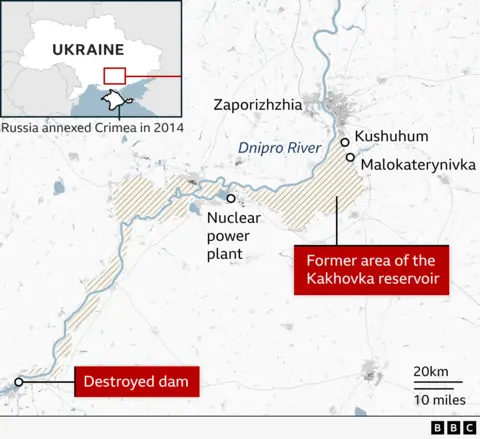
    Malokaterynivka sits just 15km (9 miles) north of the front line in Ukraine’s Zaporizhzhia region.

    If US President Donald Trump succeeds in halting the war, Malokaterynivka is hoping to end up on the right side of that front line.

    I last visited this area in 2023, when Ukraine launched a much-anticipated counter-offensive.

    At the time, Ukrainians dared to dream of winning this war. They had, after all, won the battle of Kyiv and liberated swathes of territory elsewhere.

    But 18 months on, thunder-like artillery exchanges reflect the failure of that operation, and Russia’s dominance.

    The front line here is broadly in the same place – but the broad expanse of river has gone.

    When the Russian-occupied Kakhovka dam downstream was destroyed, this became a vast, uninterrupted expanse of scrubland.

    The barren surroundings reflect the frozen limbo in which Ukraine finds itself. The White House wants to end the war, but it’s not as simple as blowing a full-time whistle.

    “If the front line becomes a border, it would be scary… fighting could break out at any moment,” explains Oleksandr.

    The exposed riverbed separates our location from Russian-occupied territory. Distant sunlight bounces off the metallic Zaporizhzhia nuclear power plant, in Moscow’s grip since 2022.

    Ukraine and the US both want peace, but that is where the consensus seems to end.

    Washington’s vision of it, along with battlefield realities, means Russia will probably keep hold of the Ukrainian land it’s seized.

    Ukraine wants meaningful security guarantees that would prevent invading forces from pushing across the river.

    Instead, Trump has denied Kyiv’s dream of joining the Nato alliance as he focuses on Russia.

    Having watched and reported on Ukraine’s fight for more than three years, it is an especially tough hand for the country to receive.

    There are feelings of betrayal. Commentators criticise either Ukrainian President Zelensky or the new foreign policy of its biggest ally.

    “The border wouldn’t depend on us,” says Oleksandr. “It probably won’t work out, but Seoul is 30km from North Korea, and they somehow live and prosper.”

    BBC/Matthew Goddard Natalya is flanked by two other women at her husband's funeral, with flowers visible in the foreground.BBC/Matthew Goddard

    Natalya (centre) held a funeral for her husband recently, which had to be cut short due to the threat of artillery

    Malokaterynivka’s challenge of finding a new purpose lies at the heart of Ukraine’s future.

    And while politicians talk about talks, Ukrainians continue to fight and die.

    Villagers gather for the funeral of a local soldier, also named Oleksandr. Half of the graves in the cemetery are freshly dug.

    The ceremony cannot last more than 25 minutes because of the threat of artillery. Mourners flinch and duck for cover when his comrades fire off a gun salute.

    “I don’t have hope for a ceasefire,” says his widow Natalya, who nevertheless wants to be proved wrong.

    “They just keep sending more and more of our boys to the front. If only they could find some way to end it.”

    Alongside the river is a disused rail line surrounded by barbed wire.

    “It’s to stop Russian agents from sabotaging the track,” explains Lyudmyla Volyk, who has lived in Malokaterynivka her whole life.

    Trains used to run all the way to Crimea in the south.

    “We hope that one day it will be restored,” says the 65-year-old, optimistically. “And that one day we’ll go to our Crimea.”

    The peninsula’s 11 years of Russian occupation makes it hard to imagine.

    BBC/Matthew Goddard Lyudmyla looks over reservoirBBC/Matthew Goddard

    Lyudmyla looks out over the empty reservoir which has drained her town of life

    President Zelensky insists he won’t sign any agreement which doesn’t include Ukraine, so does Lyudmyla trust him to get a deal which protects her?

    “We want to believe,” she replies after a deep breath.

    If Trump does bring peace to Ukraine, it would be welcomed in many quarters.

    The prospect of uninterrupted nights, sirens falling silent and soldiers returning home is yearned for.

    But as things stand, any relief would quickly be swamped by the unanswered questions of how a ceasefire would hold and who would enforce it.

    Kyiv will see this absence of detail as something still to play for. The problem for Ukraine, is that so will Russia.

    Additional reporting by Svitlana Libet, Toby Luckhurst and Hanna Chornous

    Map

  • How Trump is reshaping the Kennedy Center, moving away from “woke culture” – CBS News

    How Trump is reshaping the Kennedy Center, moving away from “woke culture” – CBS News

    The Kennedy Center’s board voted unanimously to elect President Trump to be its new chair Wednesday afternoon, as the president reshapes the center’s governing body and performances, moving away from what he views as “woke culture,” multiple sources told CBS News. 

    After Mr. Trump announced plans last week to remove the Kennedy Center’s chairman and board of trustees and install himself as chairman, the White House has begun filling board member slots that are open, sources say. 

    New board members include White House chief of staff Susie Wiles; White House deputy chief of staff Dan Scavino; Second Lady Usha Vance; Sergio Gor, director of the White House Presidential Personnel Office; Allison Lutnick, wife of billionaire Howard Lutnick; and Emilia May Fanjul, one source said.  

    Mr. Trump participated in the meeting by telephone and made the case for his vision for the Kennedy Center.

    The board also voted to oust Deborah Rutter, who has served as president of the Kennedy Center since 2014, three sources said. She announced last month that she planned to leave at the end of 2025. Rutter participated in Wednesday’s meeting. 

    The White House started filling a number of open seats this week without fanfare. Some current board members are expected to remain, sources said. 

    Mr. Trump has tapped ally Ric Grenell to be interim executive director, though his tenure was expected to be brief, two of the sources said. 

    But the board on Wednesday named Grenell as president to replace Rutter. 

    The president doesn’t want productions to lean into “woke culture,” as he believes they have in the past. But some programs will proceed as planned, such as Hadyn’s “Creation,” based on the Biblical creation story and performed by the Choral Arts orchestra and symphonic chorus, one source said. 

    And the lineup — theater, music, singing, dance — will continue. But Mr. Trump wants the performances to appeal to what he views as a broader, more inclusive and more balanced audience, instead of those that only appeal to half the country, one person said. 

    Some content on the Kennedy Center website is also expected to be removed, including a reference to the fact that the center is “standing on the traditional land” of the Nactotchtank and Piscataway tribes. 

    The White House considers fundraising for the center to be lackluster, two sources said. The dozens of people on the fundraising team raised more than $90 million last year, while the federal government contributed about $45 million. The rest of its budget came from ticket sales and other proceeds. 

    David Rubenstein, philanthropist and co-founder of the Carlyle Group, has been the chairman of the Kennedy Center’s board of trustees for 14 years and announced that he was stepping down from the board, effective September 2026

    Deborah Rutter, who has served as president of the Kennedy Center since 2014, announced last month that she planned to leave at the end of 2025.

    Mr. Trump has a strained relationship with the Kennedy Center that dates back to his first term in office, when he announced that he and first lady Melania Trump would not attend the Kennedy Center Honors in 2017, after some award recipients that year threatened a boycott. 

    According to its website, the Kennedy Center hosts over 2,200 performances, events and exhibits a year, with over 2 million visitors annually. The center was created by Congress in 1958 and serves as a living memorial to John F. Kennedy. Along with the 36 members appointed by the president, trustees also include ex-officio leaders in government designated by Congress. 

    Kierra Frazier contributed to this report.

    Kierra Frazier contributed to this report.

    Jennifer Jacobs

    Jennifer Jacobs is a senior White House reporter at CBS News.

    Twitter

  • Top N.I.H. Official Abruptly Resigns as Trump Orders Deep Cuts – The New York Times

    Top N.I.H. Official Abruptly Resigns as Trump Orders Deep Cuts – The New York Times

    Advertisement

    SKIP ADVERTISEMENT

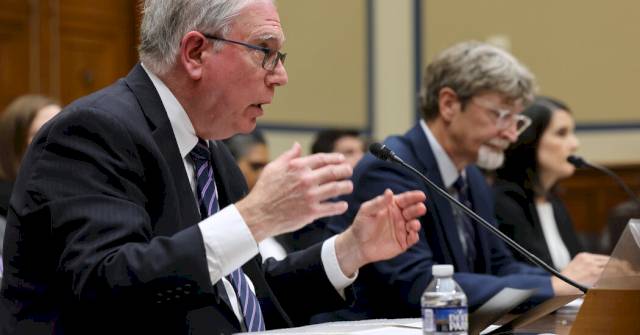
    Dr. Lawrence Tabak, the No. 2 official at the National Institutes of Health, did not give a reason for his departure.

    Dr. Lawrence A. Tabak, gesturing with his hands raised above a sheaf of papers when he testified before a House panel last year. A microphone and water bottle are on the table before him.
    Dr. Lawrence A. Tabak, who resigned from the National Institutes of Health, has weathered past presidential transitions.Credit…Chip Somodevilla/Getty Images

    The No. 2 official at the National Institutes of Health abruptly resigned and retired from government service on Tuesday, in another sign that the Trump administration is reshaping the nation’s public health and biomedical research institutions.

    The official, Dr. Lawrence A. Tabak, a dentist and researcher, was long considered a steadying force and had weathered past presidential transitions. In a letter that Dr. Tabak sent to colleagues on Tuesday, he did not give a reason for his decision. One person familiar with the decision said Dr. Tabak had been confronted with a reassignment that he viewed as unacceptable.

    “It has been an enormous privilege to work with each of you (and your predecessors) to support and further the critical NIH mission,” Dr. Tabak wrote.

    Dr. Tabak resigned at a turbulent time for the institutes, the nation’s premier biomedical research industry, composed of 27 separate institutes and centers that study and develop treatments for diseases like cancer and heart conditions as well as infectious diseases like AIDS and Covid. The N.I.H. spends roughly $48 billion a year on medical research, much of it in grants to medical centers, universities and hospitals across the country.

    President Trump’s decision to slash billions of dollars in N.I.H. grant funding has sparked a bitter court battle. And the Senate on Wednesday voted to advance the nomination of Robert F. Kennedy Jr., a vaccine skeptic and the president’s pick for secretary of the Department of Health and Human Services, which oversees the N.I.H.

    Mr. Kennedy has said he would cut 600 N.I.H. jobs.

    The N.I.H. said it would soon have a statement about Dr. Tabak’s decision.

    Dr. Tabak was not well-known to the public. But his decision to leave is surprising, and destabilizing for an agency that is on the political hot seat. He was viewed as someone who could work across party lines; he had survived the presidential turnovers of both parties and had indicated he expected to stay on after Mr. Trump was elected in November.

    Ordinarily, Dr. Tabak would have ascended to the job of acting N.I.H. director during the transition from one administration to the next. But the Trump administration installed another researcher, Matthew Memoli of the National Institute of Allergy and Infectious Diseases, as acting director. Dr. Memoli criticized Covid vaccine mandates, as did Mr. Kennedy.

    As acting director of the N.I.H. last year, Dr. Tabak pushed back against Republicans’ assertions that a lab leak stemming from U.S. taxpayer-funded research might have caused the coronavirus pandemic. He told lawmakers that viruses being studied at a laboratory in Wuhan, China, bore no resemblance to the one that set off the world’s worst public health crisis in a century.

    Ellen Barry contributed reporting.

    Sheryl Gay Stolberg covers health policy for The Times from Washington. A former congressional and White House correspondent, she focuses on the intersection of health policy and politics. More about Sheryl Gay Stolberg

    Advertisement

    SKIP ADVERTISEMENT