
Updated 1 min read
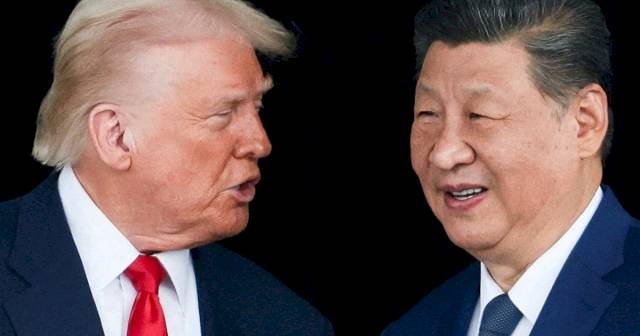
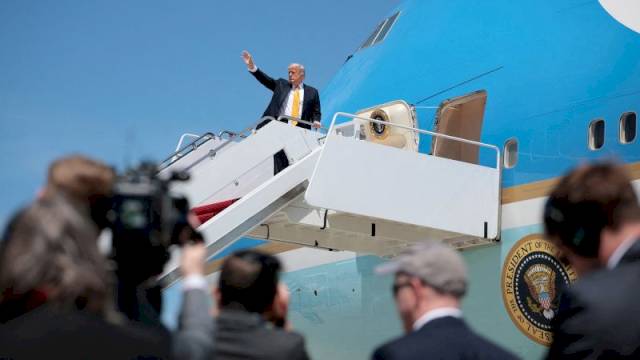
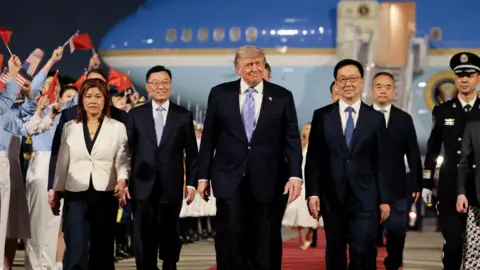
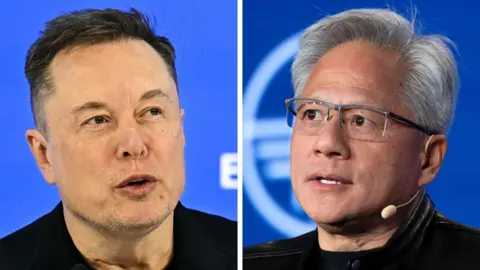
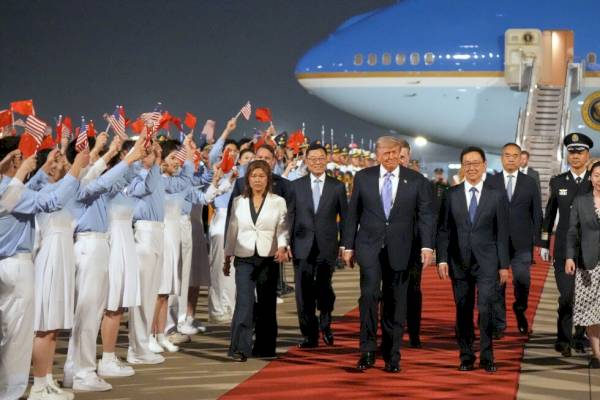
President Trump’s trip to China is underway, and he’s being joined by a handful of some of Big Tech’s most prominent executives. Tesla’s (TSLA) Elon Musk, Apple’s (AAPL) Tim Cook, and Nvidia’s (NVDA) Jensen Huang, a surprise addition to the group, will be in attendance.
The Musk versus OpenAI (OPAI.PVT) trial also continues in its second week on Wednesday. On Tuesday, OpenAI CEO Sam Altman took the stand, laying out his prior misgivings about Musk’s attempts to become CEO of the company. But he also faced questions about allegations that he lied to executives and OpenAI’s board over the years.
Musk’s lawsuit against one of the world’s most valuable private companies has provided a number of details about the inner workings of OpenAI and the relationships between Musk, Altman, president Greg Brockman, former chief technology officer Mira Murati, and former board member and mother of four of Musk’s children, Shivon Zilis.
Looking ahead this week, UAE-based AI chipmaker Cerebras is expected to make a splashy public debut. The company filed paperwork on Monday, increasing its initial public offering to 30 million shares with the goal of raising up to $4.8 billion, Bloomberg reported. The startup counts Amazon (AMZN) and OpenAI (OPAI.PVT) among its customers, and its inital public offering is likely to be the biggest IPO of 2026 so far.
LIVE 13 updates
-
SpaceX, Google in orbital data center talks: Report
Alphabet’s (GOOG) Google and SpaceX (SPAX.PVT) are in advanced discussions to launch data centers in space, the Wall Street Journal reported on Tuesday.
The talks come as SpaceX prepares for what is expected to be the largest initial public offering in history this summer. Orbital data centers have become a big piece of SpaceX’s pitch to prospective investors, with CEO Elon Musk positioning them as the company’s next major commercial product.
A partnership with Google, which already owns 6.1% of SpaceX per the latest filings, would boost that pitch ahead of the company going public.
Google’s interest in orbital computing is not new. Last year the search giant announced Project Suncatcher, the Journal noted, a moonshot initiative aimed at launching prototype satellites by 2027. The company is working with Planet Labs to build those satellites.
-
Financial Times: OpenAI’s vote of confidence in Cerebras comes with a big price tag
The Cerebras IPO slated for later this week looks a lot different from the one planned 18 months. And it’s the AI chipmaker’s relationship with OpenAI (OPAI.PVT) that has made much of the difference.
Cerebras and OpenAI have a deal under which Cerebras will provide OpenAI with 750 megawatts of computing power for three years.
The Financial Times reports:
Gaining access to AI’s commanding heights doesn’t come cheap. Cerebras is handing OpenAI warrants, over time, that could give OpenAI a 10th of the company’s shares. Based on a share price of $155 at the midpoint of its IPO range, that is worth about $5bn. Cerebras is, in other words, giving half of the deal’s profit back in return for joining Altman’s magic circle — presumably hoping that, where OpenAI goes, others will follow.
This is, by now, a well-trodden path for OpenAI. It did a similar deal with Advanced Micro Devices last October; AMD’s shares have since tripled. An earlier alliance with Nvidia, the dominant AI chipmaker, saw Nvidia invest in OpenAI’s stock, through a recent $30bn fundraising. Altman gets access to data centres to train and run his AI models; he also widens the group of companies and investors with a vested interest in helping OpenAI succeed.
-

Amazon to offer 30-minute delivery in dozens of US cities
Amazon (AMZN) is launching its 30-minute Amazon Now service in dozens of US cities. The offering, which ensures customers get deliveries in half an hour, is available in Atlanta, Dallas-Fort Worth, Philadelphia, and Seattle, with plans to expand to other cities, including Austin, Denver, Orlando, and Phoenix.
According to Amazon, the option will allow customers to order items ranging from groceries to electronics, with most areas providing services 24 hours a day.

Velizy-Villacoublay, France – May 28, 2022: Exterior view of the Amazon Logistics delivery agency in Velizy-Villacoublay, serving the south of the Paris region · HJBC via Getty Images Don’t expect to get your deliveries for free, though. Amazon says Prime subscribers will pay $3.99 per order, while non-subscribers will pay $13.99.
Smaller orders will cost Prime members an additional $1.99 charge. Non-Prime members will have to pay a $3.99 fee on similar orders.
“Amazon Now is for when you need or want the convenience of getting your Amazon order delivered in 30 minutes or less,” Udit Madan, senior vice president of Amazon Worldwide Operations, said in a statement.
-
Chip stocks in the red as rally pauses
Chip stocks are having their worst day in seven months.
In a sharp reversal from the massive chip rally over the past couple of days that has driven stocks to record highs, the PHLX Semiconductor index (^SOX) is down roughly 5% on Tuesday.
Shares of AMD (AMD), Micron (MU), and Marvel (MRVL) saw mid-single-digit percentage declines as investor sentiment turned risk-off. Qualcomm (QCOM) stock fell nearly 12%. Intel (INTC), which is up around 430% over the past year, declined 9% on the day.
Chip stocks were a sea of red on Tuesday. Investors were likely taking some profits after a significant run-up in semiconductor names.
The downturn has only made a small dent in the index’s 2026 gains: The SOX remains up 4% over the past five days, 29% over the past month, and 60% since the beginning of the year.
-
OpenAI chief Altman to take stand in OpenAI-Musk trial on Tuesday
Reuters reports:
OpenAI (OPAI.PVT) Chief Executive Officer Sam Altman will take the witness stand on Tuesday and Wednesday, the California court said, in a clash of tech titans over Elon Musk’s lawsuit against the company.
The trial, in its third week, may determine the future of OpenAI and its leadership, at a time when the company has raised hundreds of billions of dollars from large tech companies and investors, seeking to build out its computing power ahead of a potential trillion-dollar IPO.
Musk’s lawsuit alleges Altman and the AI startup persuaded him into giving $38 million to nonprofit OpenAI, only for the organization to abandon its charitable mission to benefit humanity and instead become a for-profit corporation. OpenAI says Musk knew about the for-profit plan but wanted control.
The faceoff has generated interest throughout Silicon Valley and beyond, with testimony at times focusing on the personalities and leadership styles of the two men. Former OpenAI chief scientist Ilya Sutskever testified on Monday that he spent about a year gathering evidence for the ChatGPT maker’s board that Altman had displayed a “consistent pattern of lying,” for instance.
OpenAI CEO Sam Altman (R) and Greg Brockman, OpenAI president and co-founder, arrive at the federal courthouse during proceedings in the trial over his lawsuit against OpenAI in Oakland, California, on April 30, 2026. (JOSH EDELSON / AFP via Getty Images) · JOSH EDELSON via Getty Images -
China’s tech comeback faces a test as Trump-Xi meeting looms: Chart of the Day
Yahoo Finance’s Jared Blikre reports:
Chinese tech stocks have rallied back to a key level, just as the headlines are heating up.
The Invesco China Technology ETF (CQQQ) is pressing into a long-term downward-sloping trend line that starts at its February 2021 peak and captures both the 2025 and 2026 highs.
The ETF is still down nearly 50% from that peak, but a break above the yellow trend line in the chart below would likely generate momentum for the bulls. Still, another technical hurdle looms just overhead: the $60 level around the 2025 high. A rally above that zone could force bearish bets to unwind, potentially leading to a short squeeze.
Invesco China Technology ETF (CQQQ) at a crossroad · Yahoo Finance If the Invesco China Technology ETF rolls over instead, it has minor support near $50 and a slightly deeper support zone around $45.
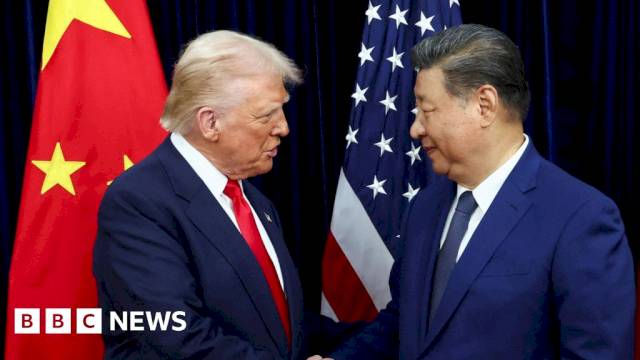
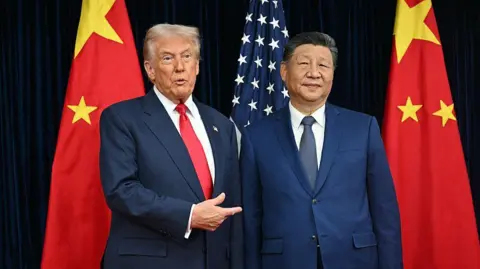
Trump is set to visit China from Wednesday through Friday, with high-stakes talks with Chinese President Xi Jinping expected to focus on trade, AI, chips, and rare earths. China’s 15th Five-Year Plan also gives the setup a policy tailwind, with Beijing prioritizing tech self-sufficiency, AI, robotics, and advanced manufacturing as core growth drivers.
-
Microsoft’s Satya Nadella was never given ‘clarity’ about why OpenAI’s board fired Sam Altman
Microsoft (MSFT) CEO Satya Nadella took the stand in US District Court in Oakland, Calif., on Monday as part of Elon Musk’s ongoing lawsuit against OpenAI (OPAI.PVT).
Nadella testified about his relationship with Musk, Microsoft’s work with OpenAI, and questions about how the companies’ tie-up has benefited Microsoft.
Microsoft CEO Satya Nadella enters a U.S. federal courthouse as the trial in Elon Musk’s lawsuit over OpenAI’s for-profit conversion continues, in Oakland, California, U.S., May 11, 2026. REUTERS/Manuel Orbegozo · REUTERS / REUTERS The CEO also responded to questions about OpenAI’s brief ouster of CEO Sam Altman in November 2023.
Microsoft has been one of OpenAI’s largest backers, investing billions of dollars in the company in exchange for using its technology across Microsoft’s products.
During his testimony, Nadella said that, despite asking for a reason for OpenAI’s firing of Altman, he was never given a full explanation for the move. The CEO also said he wasn’t made aware of the decision to terminate Altman in advance, but was instead pulled out of a meeting and informed of the move.
-
Rocket Lab stock jumps for second day as SpaceX IPO looms
Rocket Lab (RKLB) stock extended its surge for a second consecutive trading day on Monday, as investors continue buying following the company’s strong quarterly report – and with a SpaceX (SPAX.PVT) IPO on the horizon.
Rocket Lab shares rocketed 30% on Friday on the back of strong first quarter results released after the close on May 7th. Monday’s session carried that momentum forward, with shares jumping another 12%, hitting a new all-time high.
With today’s move, Rocket Lab is up an eye-popping 70% year to date.
Q1 results came along the backdrop of a flurry of new deals. CEO Peter Beck said Rocket Lab booked 31 Electron and HASTE rocket missions during the quarter — the most ever signed in a single quarter — and the company now has more than 70 launches in backlog across those programs.
-
Intel CEO touts ‘exciting new products’ with Nvidia
Intel (INTC) stock rose on Monday, a day after CEO Lip-Bu Tan posted on X that the company and Nvidia (NVDA) are working to “develop exciting new products.”
Tan initially wrote the post to congratulate Nvidia CEO Jensen Huang on receiving an honorary doctoral degree in science and technology from Carnegie Mellon University on Sunday. Tan draped the doctoral hood over Huang.
Intel stock was up more than 2% in early trading. The chipmaker’s stock price has rocketed more than 245% year to date and 494% over the last 12 months.
In September, the company and Nvidia announced they are collaborating on products for data centers, including the ability to connect Nvidia’s GPUs to Intel’s CPUs for AI workloads.
The companies are also teaming up to produce Intel chips for consumer PCs that integrate Nvidia’s RTX GPU chiplets into Intel’s system-on-a-chip.
-
Nvidia hits all-time intraday high
Nvidia (NVDA) stock jumped 2.8% on Monday, hitting an all-time high as chip stocks resumed their rally from Friday.
The world’s largest company had a market cap of $5.3 trillion. On Monday, Reuters reported that Nvidia CEO Jensen Huang is not joining President Trump’s trip to China this week.
Several other chip stocks — Micron Technology (MU), Intel (INTC), and Qualcomm (QCOM) — opened at record highs this morning. Semiconductor names have been riding a momentum wave in recent sessions, as memory chips prove to be the latest catalyst in the artificial intelligence boom.
-
AI communication with China in focus as Trump heads to Beijing
When President Trump meets with Chinese President Xi Jinping this week in China, artificial intelligence will be a key agenda item.
My colleague Ben Werschkul reports:
Another key question: whether the US and China use this trip to launch official talks on AI guardrails, as the Wall Street Journal recently reported, amid fears that AI could become an arms race in the digital era.
A top US technology official recently accused China of “industrial-scale distillation campaigns to steal American AI.” Trump officials reiterated over the weekend that this is an active area of concern, but it remains far from certain what the trip will yield.
The US official said AI would likely be a topic of discussion but that China’s record on cybersecurity broken promises means there’s “not a lot of confidence in anything that would be unenforceable and unverifiable.”
But any progress in this area, even the prosaic establishment of more formal communication channels, could be a significant development, the Brookings Institution recently noted.
“The United States and China hardly talk about AI, at least at the official level,” the analysis noted, calling any new communication channels “a crucial first step toward addressing an increasingly high-stakes issue.”
-
Cerebras to raise IPO price range to $150-$160 as demand surges, sources say
United Arab Emirates-based artificial intelligence chipmaker Cerebras Systems is set to raise the size and price of its initial public offering amid hot demand for shares of the AI company, according to Reuters.
Reuters reports:
The company is considering a new IPO price range of $150-$160 a share, up from $115-$125 a share, and raising the number of shares marketed to 30 million from 28 million, said the sources, who asked not to be identified because the information isn’t public yet.
At the top of the new range, Cerebras would raise roughly $4.8 billion, up from $3.5 billion under its original terms, though the figures remain subject to change before pricing, the people said.
The increase follows a broader surge in AI adoption that has driven sharp demand for high-performance chips and turned semiconductors into a key bottleneck in the technology supply chain. Cerebras’ IPO has drawn orders for more than 20 times the number of shares available, the people said, as the chipmaker looks to manage surging interest ahead of its May 13 pricing.
-
Everything you need to know from the first 2 weeks of the Musk v. OpenAI trial
The trial between Tesla (TSLA) CEO Elon Musk and OpenAI (OPAI.PVT) picks back up on Monday.
Musk is seeking damages and a reversal of OpenAI’s transition to a for-profit.
He contends that OpenAI’s CEO Sam Altman and president Greg Brockman duped him into donating millions of dollars to get the company off the ground with the understanding that it would remain a nonprofit. OpenAI, however, says Musk is angry that the company rejected his offer to merge it with Tesla (TSLA) and name him CEO of the new entity.
OpenAI CEO Sam Altman arrives at the Ronald V. Dellums Federal Building on April 30, 2026, in Oakland, Calif. (Benjamin Fanjoy/Getty Images) · Benjamin Fanjoy via Getty Images Yahoo Finance’s Daniel Howley recaps the biggest moments so far in the trial:
OpenAI filed court documents claiming that Musk tried to gauge Brockman’s interest in a settlement before the start of the trial. When Brockman suggested both sides drop their claims against each other, Musk allegedly told Brockman he would turn him and Altman into “the most hated men in America.”
The case will decide the future of OpenAI and whether it will continue to operate as a for-profit entity or revert to a nonprofit structure.
During his testimony this week, Brockman claimed Musk wanted to become CEO of OpenAI because he needed $80 billion to build a city on Mars.
Brockman also disclosed that he holds a roughly $30 billion stake in the AI company, as well as holdings in other Altman-backed companies.