
Ana Swanson has written about international trade for over a decade.
Trump imposes tariffs on steel and aluminum.
Image
President Trump announced sweeping tariffs on foreign steel and aluminum on Monday, re-upping a policy from his first term that pleased domestic metal makers, but hurt other American industries and ignited trade wars with allies on multiple fronts.
The president signed two official proclamations Monday evening that would impose a 25 percent tariff on steel and aluminum from all countries globally. A White House official said in a call with reporters that there would be no exclusions offered, and that the president was directing customs officials to dramatically increase their oversight over such imports.
The measures will be welcomed by domestic steelmakers, who argue they are struggling to compete against cheap foreign metals. As they did during Mr. Trump’s first term, U.S. metal makers have been lobbying the administration for protection, and Trump officials agree that a strong domestic metal sector is essential for U.S. national security.
But the tariffs will invite plenty of controversy. They are likely to rankle America’s allies, like Canada and Mexico, who supply the bulk of U.S. metal imports. And they could incite retaliation on U.S. exports, as well as pushback from American industries that use metals to make cars, food packaging and other products. Those sectors will face significantly higher prices after the tariffs go into effect.
That’s what happened in Mr. Trump’s first term, when he slapped 25 percent tariffs on foreign steel and aluminum. While he and President Biden eventually ended up rolling back those tariffs on most major metal suppliers, they were often replaced with other trade barriers, like quotas. Studies have shown that while the measures helped U.S. metal makers, they ended up hurting the broader economy, because they raised prices for many other industries.
Mr. Trump seemed to disregard that history on Sunday. As he flew to the Super Bowl aboard Air Force One, he said he planned to impose a 25 percent tariff on steel and aluminum on all imports. He also said that he would move forward with so-called reciprocal tariffs, which would raise certain U.S. tariff rates to match those of foreign countries, later this week.
“Very simply, if they charge us, we charge them,” he said.
The promise of steel tariffs have followed other intense trade threats. In his three weeks in office, the president has already threatened more tariffs globally than he did in his entire first term, when he ended up imposing tariffs on foreign solar panels, washing machines, metals and more than $300 billion of products from China.
Since taking office, Mr. Trump has put an additional 10 percent tariff on all products from China, and came within hours of imposing sweeping tariffs on Canada and Mexico that would have brought U.S. tariff rates to a level not seen since the 1940s. Together, those moves would have affected more than $1.3 trillion of goods.
Mr. Trump has also said in recent days that he planned to slap tariffs on Europe, Taiwan and other governments, as well as on a variety of critical industries like copper, steel, aluminum, pharmaceuticals and semiconductors.
American steelmakers welcomed the tariffs. In a statement Sunday, Kevin Dempsey, the president of the American Iron and Steel Institute, said that the group welcomed Mr. Trump’s “continued commitment to a strong American steel industry, which is essential to America’s national security and economic prosperity.”
The president has targeted foreign metals before. In his first term, the president levied tariffs on foreign steel and aluminum globally, angering allies like Mexico, Canada and the European Union.
Mr. Trump reached agreements with Australia, South Korea and Brazil, and rolled back some of those barriers on Canada and Mexico when they signed a revised trade agreement with the United States. The Biden administration later reached agreements with the European Union, the United Kingdom and Japan to roll back some of their trade restrictions.
The new measures will mainly affect U.S. allies. The largest supplier of steel to the United States in 2024 was Canada, followed by Brazil, Mexico, South Korea and Vietnam, according to the American Iron and Steel Institute. Canada is also a major supplier of aluminum to the United States, followed distantly by the United Arab Emirates, Russia and China.
Image
The United States imports very little steel or aluminum directly from China, since Chinese exports have long been blocked by a variety of anti-dumping and subsidy tariffs. But some argue that China’s excess steel production is still flooding other markets and pushing down global prices, leaving U.S. metal makers at a disadvantage in other markets.
Amid its financial struggles, U.S. Steel, the iconic Pennsylvania company, had agreed to be acquired by Nippon Steel of Japan. That merger was blocked by President Biden, who said he wanted to U.S. Steel to remain an American company.
Nazak Nikakhtar, a partner at the law firm Wiley Rein and a former official in the first Trump administration, said that the president was again “making good on his promise to impose tariffs globally and to increase tariffs on steel and aluminum imports, given their criticality to national security.”
She said that the new tariffs would be added to existing tariffs on steel and aluminum, and it remained to be seen if there would be any exceptions, for example for Canada and Mexico.
Some economists argue that tariffs on raw materials like steel are more likely to negatively affect the economy, since they raise prices for other manufacturers.
A study by the nonpartisan International Trade Commission, for example, found that the steel and aluminum tariffs increased the price of imports, and encouraged consumers of steel and aluminum to buy more American metals as opposed to foreign ones. The increase in demand further pushed up metal prices, and allowed American metal makers to expand their production, resulting in $2.25 billion of additional U.S. production of steel and aluminum in 2021.
But the policy had an important downside, the study shows. The higher prices of steel and aluminum translated into higher costs for downstream industries that buy those metals to make other things. The higher costs were particularly painful for companies making industrial machinery, car parts and hand tools.
Altogether, industries that consume steel and aluminum saw their production shrink by $3.48 billion as a result of the tariffs — more than offsetting what the steel and aluminum makers had gained.
Some in the U.S. metal industries say that the levies have not gone far enough. They argue that metal imports from other countries, like Mexico, started to surge shortly after tariffs were rolled back as part of the U.S.-Mexico-Canada Agreement signed in 2020.
Zach Mottl, the chairman of the Coalition for Prosperous America, which supports the metal tariffs, said these trends were evidence that tariffs needed to be expanded, not reduced, to protect downstream industries in the United States as well.
Image
“It’s important to create a market for all the inputs in the supply chain and then the final product, too,” he said.
Others industries are concerned about being caught in the crossfire, and targeted with tariffs as other countries retaliate. China imposed retaliatory tariffs on U.S. exports of liquefied natural gas, coal, farm machinery and other products on Monday in response to the tariffs Mr. Trump put on China last week because of its role in the fentanyl trade.
Mexico, Canada and the European Union have all drawn up lists of American products they could strike with their own levies in response to U.S. measures.
In response to Mr. Trump’s first metal tariffs, for example, the European Union imposed a 25 percent tariff on American whiskey. The American and European governments negotiated a deal to temporarily suspend those tariffs that is set to expire soon. If another agreement is not reached, the European Union is set to double that tariff to 50 percent on April 1.
Chris Swonger, the chief executive of the Distilled Spirits Council of the United States, said in a statement that the tariff would have a “catastrophic outcome” for 3,000 small distilleries across the United States.
“We are urging that the U.S. and E.U. move swiftly to find a resolution,” Mr. Swonger said. “Our great American whiskey industry is at stake.”
Colby Smith contributed reporting.

President Trump announced on social media that he had appointed a member of his first administration, Richard Grenell, as the interim executive director of the Kennedy Center. The president wrote that Grenell, a former ambassador to Germany, acting national intelligence chief and special envoy to the Balkans, shared his vision “for a GOLDEN AGE of American Arts and Culture.”
Image

The Trump administration is appealing an order issued on Jan. 29 by Judge John J. McConnell Jr. of Rhode Island, which instructed the federal government to release billions of dollars in frozen federal funding. The administration has now asked the U.S. Court of Appeals for the First Circuit to stay McConnell’s order while the case is being heard.
Advertisement

A federal judge said he would soon decide whether to order the Centers for Disease Control and Prevention and other health agencies to temporarily restore websites taken down in response to President Trump’s executive order to withdraw information mentioning “gender identity.”
The doctors contend the removal of the web pages, which included information about including sexually transmitted diseases, impedes their ability to treat patients.
Judge John D. Bates of the United States District Court for the District of Columbia heard from lawyers for the activist group Doctors for America and the Justice Department. The doctors group asked for a temporary restraining order that would allow the sites to be restored while the case is being considered. The judge plans to decide later on Monday or Tuesday.


Noah Weiland and Maya Shwayder
Noah Weiland reported from Washington, and Maya Shwayder from inside the federal courthouse in Boston.
A judge is keeping a pause on a program offering federal workers incentives to quit.
Image
A federal judge said on Monday that the Trump administration’s deferred resignation program would remain paused until he ruled on its legality, hours before a deadline for roughly two million federal workers to accept incentives to quit.
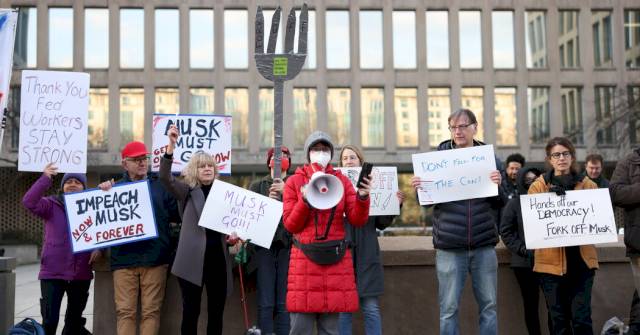
Federal officials had set a deadline of 11:59 p.m. Eastern time on Monday for employees to join the resignation program, known as “Fork in the Road,” part of an Elon Musk-led initiative to drastically slash the size of the federal government. Federal workers who take the offer would receive pay through September, according to the Trump administration.
George A. O’Toole Jr., a U.S. District Court judge in the District of Massachusetts, last week stopped the Office of Personnel Management, the federal government’s human resources agency, from moving ahead with the program until Monday’s hearing, forcing the government to adjust its deadline for employees to accept the offer.
It was not immediately clear when Judge O’Toole would rule.
“The program is NOT being blocked or canceled,” the agency wrote in a social media post last week. “The government will honor the deferred resignation offer.”
The Trump administration has said that more than 65,000 federal workers accepted the deferred resignation offer, representing less than 3 percent of all 2.3 million federal workers, excluding the military and the Postal Service. Mr. Musk, who is spearheading the Trump administration’s efforts to whittle down the federal government, had circulated an estimate that the offer could lure 5 to 10 percent of the federal work force to leave.
Roughly 150,000 federal workers, or 7 percent, voluntarily leave the government every year.
The liberal nonprofit Democracy Forward and government unions representing hundreds of thousands of federal workers — the American Federation of Government Employees; the American Federation of State, County and Municipal Employees; and the National Association of Government Employees — had sued to stop the resignation program. They argued that it was unlawful in part because Congress had not yet appropriated funds to compensate workers the Trump administration was promising to pay.
Congress faces a mid-March deadline for a new spending deal, which could hold up any potential funds used to pay federal workers who resign.
Judge O’Toole last week instructed lawyers representing the Trump administration to contact employees who had received the offer and inform them that the program was paused. The original deadline of 11:59 p.m. last Thursday was pushed back.
Elena Goldstein, a lawyer for Democracy Forward, told Judge O’Toole on Monday that the Trump administration’s resignation program was arbitrary and devised to pressure federal workers without collective bargaining rights. The program, she argued, was a pretense for Mr. Musk to fire people and fill the ranks of government agencies with his associates.
“It was issued in blanket fashion without analysis of which positions were no longer needed or vital to government,” she said, adding that the federal government could continue to change the terms of its offer until the last minute. Personnel officials, she said, appeared to be “making this up as they go along.”
Eric Hamilton, a Trump administration lawyer, defended the program, saying that President Trump’s vows to reshape the federal government may come as a “disappointment” to agency employees, but that the resignation offer was a “humane off-ramp” that temporarily preserved salary and benefits.
The federal personnel office, Mr. Hamilton said, needed to move ahead with a broader reorganization once the deferred resignation program ended, and needed to know conclusively who wanted to participate.
“Holding it open would only inject more uncertainty,” he said.
Trump administration officials have argued that concerns about the legality of the plan were “misplaced,” and that separation agreements would be legally binding.
“Union leaders and politicians telling federal workers to reject this offer are doing them a serious disservice,” McLaurine Pinover, a spokeswoman for the Office of Personnel Management, said in a statement last week. “This is a rare, generous opportunity.”
The vague conditions of the offer, and its uncertain legality, had already caused widespread confusion in the federal work force. The Social Security Administration’s human resources office emailed employees a sample agreement, which featured a stipulation that a lapse in federal funds would not affect the deal. But the agreement also noted that the administration’s obligations “are subject to the availability of appropriations.”
Some federal workers, including those with probationary status who could be fired soon, may find the program attractive, leading them to weigh whether the deal would offer some financial security.
The hearing before Judge O’Toole on Monday was the latest turn in the Trump administration’s blitz of actions seeking to curtail and slash the federal work force. Over the weekend, employees at the Consumer Financial Protection Bureau were ordered to stay home and halt nearly all their work, including their supervision of banks, as Mr. Musk and a team of young aides hunted for large cuts.
Mr. Trump and Mr. Musk have faced a series of legal setbacks in recent days. On Monday, a federal judge said that the White House had defied his order to release billions of dollars in federal grants.
A federal judge in New York restricted access by Mr. Musk’s team to the Treasury Department’s payment and data systems. And a judge in New Hampshire issued an injunction on Monday blocking Mr. Trump’s executive order on birthright citizenship, the third federal judge to do so.
On Friday, just before U.S. Agency for International Development workers were set to have been suspended with pay or laid off, a court issued a temporary order that allowed employees already on administrative leave to be reinstated until the end of this Friday.

Days after a federal judge ordered the Trump administration to reinstate employees at the United States Agency for International Development who were placed on administrative leave, the union representing those employees accused the Trump administration in a court filing of failing to comply with parts of the order. The unions said that some employees placed on leave in January are still locked out of computer systems at the agency.
Image
Advertisement

States sue to stop a $4 billion cut to medical research funding.
Image
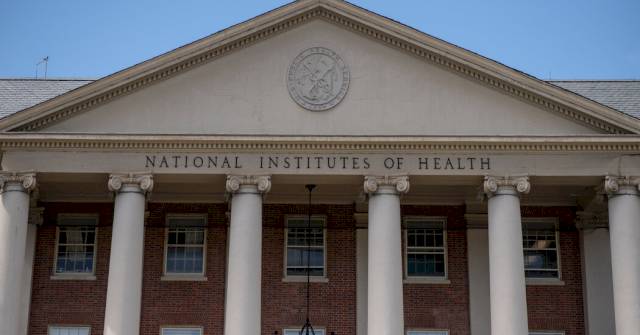
Nearly two dozen states sued the Trump administration and the National Institutes of Health on Monday to block a $4 billion cut to research funding that scientists say would cost thousands of jobs and eviscerate studies into treatments for cancer, Alzheimer’s, heart disease and a host of other ailments.
The funding cuts were to take effect Monday. The attorneys general of Massachusetts and 21 other states filed the suit, arguing the Trump administration’s plan to slash overhead costs — known as “indirect costs” — violates a 79-year-old law that governs how administrative agencies establish and administer regulations.
“Without relief from N.I.H.’s action, these institutions’ cutting-edge work to cure and treat human disease will grind to a halt,” the lawsuit said.
On Capitol Hill, Senator Susan Collins of Maine, the chairwoman of the chamber’s Appropriations Committee, strongly objected to what she called “these arbitrary cuts.” Ms. Collins, a Republican, said that when she called President Trump’s nominee for health secretary, Robert F. Kennedy Jr., to complain, he promised to “re-examine this initiative” if confirmed.
The filing is the latest in a string of lawsuits challenging Mr. Trump’s policies. Also on Monday, a federal judge in Rhode Island ordered the Trump administration to “immediately restore” trillions of dollars in federal grants and loans, including from the N.I.H., that had been frozen under a sweeping directive the president issued, and later rescinded, late last month.
Scientists, medical researchers and public health officials have felt under siege since Mr. Trump became president. In addition to freezing grant dollars and slashing overhead costs, the administration has blocked the Centers for Disease Control and Prevention from publishing scientific information on the threat of bird flu to humans.
The lawsuit filed Monday involves a change, announced Friday by the N.I.H., in the formula that the government uses to determine the share of grant dollars that can go toward overhead costs. Those expenses include lighting, heating and building maintenance, but also the upkeep of sophisticated equipment that is too expensive for any single laboratory to buy on its own.
The plan would cost the University of California system hundreds of millions annually, the system’s president, Dr. Michael V. Drake, said.
“A cut this size is nothing short of catastrophic for countless Americans who depend on U.C.’s scientific advances to save lives and improve health care,” Dr. Drake said in a statement Monday. “This is not only an attack on science, but on America’s health writ large. We must stand up against this harmful, misguided action.”
State officials are also concerned that the cuts could harm their economies. Massachusetts prides itself on being the “medical research capital of the country,” the state attorney general, Andrea Joy Campbell, a Democrat, said in announcing the suit, adding, “We will not allow the Trump administration to unlawfully undermine our economy, hamstring our competitiveness, or play politics with our public health.”
The N.I.H. awarded $4.5 billion in research funds in Massachusetts in recent years, including for research on pancreatic cancer, hypertension and severe asthma. The N.I.H. also sent about $5 billion to New York. The cut is expected to cost the state about $850 million, the lawsuit said.
Last year, the N.I.H. said, $9 billion of $35 billion — or about 26 percent — of grant dollars it distributed went to overhead, or indirect costs. Some academic institutions devote 50 percent or more of their grant dollars to such costs. But the new policy would cap these “indirect funds” at 15 percent, saving $4 billion, the administration said.
Slashing indirect funds was a goal of Project 2025, a set of right-wing policy proposals put forth by the Heritage Foundation as a blueprint for a second Trump administration. The project’s report said the cuts “would help reduce federal taxpayer subsidization of leftist agendas.”
Administration officials and their allies cast the indirect costs as a taxpayer giveaway to elite universities whose large endowments, or outside funding from private foundations, could easily cover those costs.
“President Trump is doing away with Liberal DEI Deans’ slush fund,” Katie Miller, a member of the Elon Musk-led effort to slash the size of the federal government, wrote Friday on social media. “This cuts just Harvard’s outrageous price gouging by ~$250M/ year.”
But Lawrence O. Gostin, an expert in public health law at Georgetown University, said that many smaller academic institutions, including historically Black colleges and universities, do not have extra funds to cover those costs, and would have to scale back medical research if the 15 percent cap remained intact.
An N.I.H. spokeswoman referred questions to its parent agency, the Department of Health and Human Services, which is also named as a defendant in the lawsuit. The department declined to comment, citing the pending litigation.
This is not the first time a Trump administration has moved to cut the funds. In 2017, during Mr. Trump’s first term, a similar proposal would have reduced the overhead payments to 10 percent of the award amount, according to Monday’s lawsuit. The effort faltered.
Congress then acted to “ward off” a future effort and passed a budget bill that prohibited changing the fees from the levels that had been negotiated between federal officials and each research institution, according to the lawsuit.
People familiar with the negotiations said those deliberations are complex, lengthy affairs that involve costs for items like heating bills and personnel, backed by binders full of supporting records. The lawsuit claims that the administration cannot make indiscriminate changes to the action that Congress took. It also said the notice announcing the rate change violated the Administrative Procedure Act in multiple ways.
The proposed changes have been jarring to universities, which had already finalized budgets assuming that the funds would arrive. The changes were announced Friday and were to take effect Monday.
“There just isn’t anywhere near that much discretionary money floating around anywhere,” said Jeremy Berg, a former N.I.H. division director who oversaw general medical research. “The only thing that a university could do is do less research and start firing staff and faculty. And it would be devastating.”
The cuts’ largest effect would hit the University of California system, which the lawsuit said gets $2 billion in N.I.H. research funds for numerous universities and cancer treatment centers. The funds have supported groundbreaking research there, including the invention of gene editing and the first radiation treatment for cancer, according to the lawsuit.
While lawsuits against the Trump administration have tended to be dominated by Democratic-led states, this case also has places that more recently favored Mr. Trump in the election.
They include North Carolina, which gets about $3.7 billion in N.I.H. research funding awarded to schools like Duke, the University of North Carolina and Wake Forest. Dr. Robert Lefkowitz, who is a professor of medicine at Duke and a recipient of the Nobel Prize in Chemistry, said in an interview over the weekend that “a lot of research will just have to stop” if the cuts go through.
“I can’t imagine a better use of taxpayer money,” he said of the funding.
Michigan, a presidential swing state that Mr. Trump carried in November, also sued, citing a probable loss of $181 million in funding to the University of Michigan alone. The lawsuit said the university has 425 N.I.H.-funded trials underway focused on several diseases, “including 161 trials aimed at saving lives.”
The lawsuit also included the presidential battlegrounds of Arizona, Nevada and Wisconsin. The cuts, according to the lawsuit, would carve $65 million from the budget of the University of Wisconsin at Madison, which is studying adult and pediatric cancer, diabetes and degenerative neurological diseases and other conditions.

The White House shields the work of Musk’s team, letting it skirt open records laws.
Image
In October, Elon Musk preached the message of government transparency during a presidential campaign rally he held in Pennsylvania in support of Donald J. Trump, suggesting that nearly all government records should be made public.
“There should be no need for FOIA requests,” Mr. Musk reiterated on social media, referring to the law that gives the public the right to obtain copies of federal agency records: the Freedom of Information Act. “All government data should be default public for maximum transparency.”
But Mr. Musk’s cost-cutting initiative, better known as the Department of Government Efficiency, or DOGE, appears to be heading in the opposite direction.
The White House has designated Mr. Musk’s office, United States DOGE Service, as an entity insulated from public records requests or most judicial intervention until at least 2034, by declaring the documents it produces and receives presidential records.
Katie Miller, an employee for the efficiency initiative, said on X that Mr. Musk’s office “was reorganized under the Executive Office of the President” and was now “subject to Presidential Records.”
That designation has a special legal meaning under a law called the Presidential Records Act. The law shields from the public all documents, communication trails and records from the president, his advisers and staff until five years after that president leaves office.
That law still requires presidents to keep a broad set of written materials created or received by them while executing their duties. Nonetheless, presidents can also dispose of their records after getting a written approval from the archivist at the National Archives, whom a president can remove from office.
On Friday, Mr. Trump fired the nation’s archivist, Colleen Shogan. No cause or reason was cited, Ms. Shogan said in her LinkedIn page post announcing her dismissal.
Harrison Fields, a White House spokesman who also represents Mr. Musk’s team, confirmed that Mr. Musk’s initiative “falls under the Presidential Records Act” but accused critics of categorically opposing Mr. Musk’s measures to cut government spending.
“Democrats continue to veer further from reality in their hysteria over DOGE,” he said. The efficiency initiative, he added, “aligns with its purpose to advise and assist the president on how to make government more efficient.”
Image
Presidents have “complete discretion” over presidential records, said Anne Weismann, a law professor at George Washington University who oversaw public records litigations at the Justice Department at the end of her two decades at the department.
Watchdog groups are likely to challenge the secrecy surrounding Mr. Musk’s operation in lawsuits.
During Mr. Trump’s first term, federal courts recognized the president’s exclusive authority over presidential records by ruling against nonprofits that sought to stop his advisers from using private messengers that automatically delete messages after a certain period.
Critics are concerned that few oversight structures exist if Mr. Trump fails to preserve the records from Mr. Musk’s cost-cutting initiative.
“They are trying to insulate this entity and the enormous power it appears to be wielding from any kind of judicial interference and public scrutiny,” Ms. Weismann said.
If Mr. Trump chooses to get rid of all those records, there is not much recourse, she said, unless Congress decides to overhaul the Presidential Records Act.
Neither Mr. Trump nor Mr. Musk has previously shown much respect for the preservation of government records and the public’s right to see them.
Mr. Trump was known to tear up White House documents and leave them on the floor during his first term, according to several former staff members. Politico reported in 2018 that some administration officials even had to tape back together shredded documents to ensure compliance with federal laws.
Mr. Musk’s commercial aerospace company, SpaceX, faced allegations that it has actively tried to avoid public records requests. Emails written by SpaceX employees to the U.S. Fish and Wildlife Service included a line that declared that they were exempt from public records requests, as they contained “confidential business information and trade secrets.”
Lauren Harper, who leads efforts for a more transparent federal government at the Freedom of the Press Foundation, said that trade secrets are one of the legitimate grounds on which the federal government can deny a public records request or redact portions of documents upon release. But such blanket declarations from private companies do not suffice for redaction or denial and could be interpreted as an implicit effort to intimidate federal officials in charge of releasing documents, Ms. Harper said.
SpaceX did not respond to multiple requests for comment.
The public records law that the White House says Mr. Musk’s team is insulated from might ironically provide a legal remedy to accountability nonprofits seeking paper trails of the DOGE members.
The federal courts have ruled that White House entities that merely advise and assist the president are not subject to the Freedom of Information Act, a powerful law that presumes that government documents are public and must be produced upon written request unless they are subject to an exemption such as risking national security.
But watchdogs could bring a public records lawsuit and argue that Mr. Musk’s cost cutters are functioning as members of a separate federal agency that must answer to the FOIA, Ms. Weismann said.
Jason R. Baron, a former director of litigation at the National Archives, said if courts determined that Mr. Musk’s team was “acting like a federal agency,” not simply assisting and advising the president, then records from his office would be eligible for immediate public access.
That could ultimately cause memos, spreadsheets, even some emails of Mr. Musk and his colleagues to be publicly released, though the federal government has long been slow in fulfilling such requests.
“Despite the words of the White House, substantively to me, it seems to be an agency,” Ms. Weismann said. “It walks like a duck, quacks like a duck. Then it’s a duck.”
Some records related to Mr. Musk’s efforts might be released under FOIA by filing public records requests to individual agencies that receive DOGE emails or memos, but that would surely be a cumbersome and incomplete approach.
At least two nonprofit watchdogs, Citizens for Responsibility and Ethics in Washington and the Center for Biological Diversity, have filed public records requests on Mr. Musk’s team. Both groups said that they would file lawsuits against the Trump administration if it does not answer their records requests.
“I agree with Elon Musk because everything should be transparent,” said Jordan Libowitz, a spokesman for Citizens for Responsibility and Ethics in Washington. “But that’s the opposite of what we’re getting.”
Advertisement
Noah Weiland and Maya Shwayder
A federal judge in Massachusetts on Monday said the Trump administration’s deferred resignation program would remain paused until he ruled on its legality. The news came hours before a deadline for roughly two million federal workers to accept incentives to quit: Federal officials had set an 11:59 p.m. deadline Monday for employees to join the resignation program, known as the “Fork in the Road.”

Resettlement groups sue over Trump’s pause on refugee admissions.
Image
A coalition of some of the nation’s largest refugee resettlement organizations on Monday sued the Trump administration over its indefinite pause of the refugee system, asking a federal court to move swiftly to restart the program.
The lawsuit, filed in federal court in Seattle, aims to immediately revive a system that had thrived for decades under both Republican and Democratic administrations and to restart federal funding for organizations that help refugees resettle in the United States. It is the first suit to challenge the Trump administration’s freeze of the program.
“The impact of these executive actions has been sweeping and harmful for our refugee clients, our staff and our local faith community partners,” Rick Santos, head of the Church World Service, one of the resettlement organizations that filed the suit, said in a statement. “These executive actions have abandoned refugee families both abroad and those who are already a part of our American communities.”
Among those who have been affected by the pause, Mr. Santos said, are two Afghan parents living in Massachusetts whose four children had been set to arrive in January.
“They now do not know if or when their children will be able to come home,” he said.
One of President Trump’s first actions on his first day in office was to freeze the refugee resettlement system with an executive action, contending that the country has seen an influx of immigrants in recent years and that communities across the United States were not in a position to welcome refugees.
He ordered agency leaders at the Homeland Security and State Departments to recommend whether to restart the program within 90 days.
The previously bipartisan refugee admissions program brought in tens of thousands of refugees regularly each year from countries like Burma and Syria. Refugees must prove that they face persecution in their home countries.
Foreign nationals seeking to enter the United States as refugees go through significant vetting, including interviews, security checks, medical screenings and many other forms of scrutiny on their applications.
That changed when Mr. Trump first took office, in 2017. His administration cracked down on illegal immigration at the southern border and restricted asylum claims, while also targeting the refugee system and cutting admissions significantly. By the last year of his first term, Mr. Trump proposed a record low 15,000 refugee admissions.
President Joseph R. Biden Jr. revived the program, and last year saw the arrival of around 100,000 refugees, the highest total in decades.
The new halt on refugee resettlement has quickly had an impact: More than 10,000 refugees were in a pipeline to travel to the United States when it went into effect. Soon after, U.S. officials notified resettlement groups that refugee flights were canceled.
A 22-year-old refugee from Congo whose flight was canceled after a two-year application process to resettle in the United States is one of the plaintiffs in the suit filed on Monday.
“He sold almost all of his possessions, other than the things that can fit in the two bags that they’re allowed to bring with them,” said Melissa Keaney, a lawyer with the International Refugee Assistance Project, who helped file the lawsuit.
“Now they’re in this indefinite period of not knowing how to both rebuild their lives in Nairobi and for how long of a period they should expect it to remain there while the suspension is in place,” she said. “So it’s just been really devastating for refugees who expected to be able to travel imminently and now are seeing their travel canceled.”
The lawsuit also aims to resume federal funding of refugee resettlement organizations, which ground to a halt on Jan. 24, four days after Mr. Trump took office. The groups argue that they rely on those funds to help refugees obtain housing, food and other necessities as they rebuild their lives in the U.S.
Mr. Santos said that his organization, Church World Service, had to put more than half of its U.S.-based staff on furlough because of the pause in funding.
“We have more than 4,000 refugee clients who have arrived in our communities within 90 days of the ban taking effect, who we are now struggling to provide the core services that they are entitled to under U.S. law,” he said. “These services ensure they have safe and affordable housing, medical care and employment support so that they can get a great start and quickly become contributing members of their new communities.”

Pete Hegseth, the defense secretary, signed a memorandum that blocks the recruitment of men and women who report a history of gender dysphoria — the medical term used to describe men and women who do not identify with the gender they were assigned at birth. The memo also blocks any active duty personnel from receiving hormonal therapies or obtaining surgical procedures “associated with affirming or facilitating a gender transition.”
Image
Soldiers with gender dysphoria “have volunteered to serve our country and will be treated with dignity and respect,” Hegseth wrote after noting an executive order signed by President Trump on Jan. 27 that says transgender men and women “cannot satisfy the rigorous standards necessary for military service.” The Pentagon did not immediately respond to questions about the memo.
Advertisement
A federal judge says the White House failed to comply with his order to unfreeze funds.
Image
A federal judge on Monday said the White House has defied his order to release billions of dollars in federal grants, marking the first time a judge has expressly declared that the Trump White House was disobeying a judicial mandate.
The ruling by Judge John J. McConnell Jr. in Rhode Island federal court ordered Trump administration officials to comply with what he called “the plain text” of an edict he issued on Jan. 29.
That order, he wrote, was “clear and unambiguous, and there are no impediments to the Defendants’ compliance with” it.
Judge McConnell’s ruling marked a step toward what could quickly evolve into a high-stakes showdown between the executive and judicial branches, a day after a social media post by Vice President JD Vance claimed that “judges aren’t allowed to control the executive’s legitimate power,” elevating the chance that the White House could provoke a constitutional crisis.
“It’s very rare for a president not to comply with an order,” said Victoria Nourse, a professor at Georgetown University Law Center who served during the Obama and Biden administrations. “This is part of a pattern where President Trump appears to be asserting authority that he doesn’t have.”
But for some of President Trump’s allies, it is the judges ruling against Mr. Trump who are out of bounds.
“Activist judges must stop illegally meddling with the President’s Article II powers,” wrote Mike Davis, who heads the Article III Project, a conservative advocacy group.
Already, more than 40 lawsuits have been filed against the Trump administration challenging Mr. Trump’s brazen moves, which have included revoking birthright citizenship and giving Elon Musk’s teams access to sensitive Treasury Department payment systems. Judges have already ruled that many of these executive actions may violate existing statutes.
Judge McConnell previously ordered the White House to unfreeze federal funds locked up by a memo from the White House Office of Management and Budget that demanded that billions of dollars in federal grants be held back until they were determined to comply with President Trump’s priorities, including with ideological litmus tests.
On Friday, 22 Democratic attorneys general went to Judge McConnell to accuse the White House of failing to comply with his earlier order. The Justice Department responded in a filing on Sunday that money for clean energy projects and transportation infrastructure, allocated to states by the Inflation Reduction Act and the bipartisan infrastructure bill, was exempt from the initial order because it had been paused under a different memo than the one that prompted the lawsuit.
Judge McConnell’s ruling on Monday explicitly rejected that argument.
The judge granted the attorneys generals’ request for a “motion for enforcement” — essentially a nudge. It did not find that the Trump administration was in contempt of court or specify any penalties for failing to comply.
However, the judge was straightforward in his finding that an initial temporary restraining order that he issued Jan. 29 was not being followed.
“These pauses in funding violate the plain text of the T.R.O.,” Judge McConnell wrote. That earlier ruling ordered the administration not to “pause, freeze, impede, block, cancel, or terminate” money that had already been allocated by Congress to the states to pay for Medicaid, school lunches, low-income housing subsidies and other essential services.
It was still not clear how the White House would respond. Harrison Fields, a White House spokesman, suggested the president would ultimately prevail in court.
“Each executive order will hold up in court because every action of the Trump-Vance administration is completely lawful,” he said. “Any legal challenge against it is nothing more than an attempt to undermine the will of the American people.”
But Judge McConnell made clear that White House officials were obligated to comply regardless of how they thought the case might conclude. In his ruling on Monday, the judge quoted an opinion from a previous case noting that “persons who make private determinations of the law and refuse to obey an order generally risk criminal contempt even if the order is ultimately ruled incorrect.”
The showdown is part of a broader effort by Mr. Trump’s opponents to get congressionally approved funding flowing again. Another order requiring that the disputed funds be released was issued last Monday by Judge Loren AliKhan of the District of Columbia. That case was filed by a coalition of nonprofits represented by Democracy Forward.
Skye Perryman, Democracy Forward’s chief executive, said that if there were to be a standoff between the executive and judicial branches, she hoped that the legislative branch would step in.
“That is really a call to action for Congress,” she said. “The judicial branch is not going to be able to stop this unlawful and extreme use of executive power on its own.”
Charlie Savage contributed reporting. Seamus Hughes contributed research.

Trump names Richard Grenell the interim leader of the Kennedy Center as he strengthens his grip.
Image
President Trump announced in a post on social media Monday that he was appointing Richard Grenell as the “interim executive director” of the Kennedy Center in Washington. Mr. Grenell, who was Mr. Trump’s ambassador to Germany during the first Trump administration, is one of his most fiercely loyal apparatchiks.
The president wrote that Mr. Grenell “shares my Vision for a GOLDEN AGE of American Arts and Culture” and would be overseeing “daily operations” to ensure there was no more “ANTI-AMERICAN PROPAGANDA.”
The appointment was just the latest in a series of moves designed to strengthen Mr. Trump’s grip on the performing arts center in Washington.
He kicked off a purge Friday night, when Mr. Trump announced his intent to gut the Kennedy Center’s board and install himself as chairman. He had denounced the center’s programming choices.
On Monday, 18 board members and the board chairman were removed from an official roster on the center’s website. The excised members were appointees of Mr. Trump’s predecessor, Joseph R. Biden Jr. The board’s chairman, David M. Rubenstein, was also removed.
Mr. Rubenstein, a financier who was initially appointed to the board by former President George W. Bush, has given $111 million to the center over the years, making him the biggest donor in its history.
It was not immediately clear what Mr. Grenell’s placement meant for Deborah F. Rutter, the president of the Kennedy Center, who had announced last month that she planned to step down at the end of the year.
During Mr. Trump’s first term he broke with precedent and declined to attend the Kennedy Center Honors after some honorees at the annual awards show criticized him. Mr. Trump is known to have had a friendly relationship with Mr. Rubenstein, and they have dined together in the past. Mr. Rubenstein declined to comment.
The Kennedy Center did not immediately respond to requests for comment about the changes. According to the center’s website, the board currently has 17 members, all of them appointees of Mr. Trump. No chairman is listed.
Mr. Trump stunned the cultural world on Friday when he announced plans to bring the Kennedy Center more firmly under his control.
“At my direction, we are going to make the Kennedy Center in Washington D.C., GREAT AGAIN,” Mr. Trump wrote on Truth Social, his social media platform.
Speaking with reporters aboard Air Force One on Sunday, Mr. Trump defended his plan, saying of the center, “I want to make sure it runs properly.”
“We don’t need woke at the Kennedy Center,” he added. “Some of the shows were terrible. They were a disgrace that they were even put on. So I’ll be there until such time as it gets to be running right.”
The center oversees the Washington National Opera and the National Symphony Orchestra and also presents comedy, hip-hop, ballet and theater, staging some 2,000 performances each year. The center’s budget totaled $268 million last year, including about $43 million in federal aid. The federal money is not spent on programming but on operations, maintenance and capital repair, since the center is a living memorial to former President John F. Kennedy.
Mr. Trump said he had not seen any shows at the center recently. “There was nothing I wanted to see,” he said.
Mr. Trump said in his post on social media that “just last year, the Kennedy Center featured Drag Shows specifically targeting our youth — THIS WILL STOP.”
That appeared to be a reference to a drag-themed show the center hosted last year called “Dragtastic Dress-up,” which was aimed at “LGBTQ+ youth under 18,” according to marketing materials.
The members removed on Monday include some of Mr. Biden’s closest aides — Karine Jean-Pierre, the former White House press secretary, and the political strategist Mike Donilon — as well as artists including the singer and songwriter Jon Batiste.
Hilda L. Solis, a Los Angeles County Supervisor who has been removed from the board, said in a statement that she looked forward to “continuing to champion the arts as a tool for equity, healing, and positive change, both locally and nationally.”
On Monday, the Kennedy Center removed a statement from its website that it issued on Friday in the wake of Mr. Trump’s comments.
“Per the center’s governance established by Congress in 1958, the chair of the board of trustees is appointed by the center’s board members,” the statement had said. “There is nothing in the center’s statute that would prevent a new administration from replacing board members; however, this would be the first time such action has been taken with the Kennedy Center’s board.”
The center has also in recent days scrubbed its site of references to diversity, equity and inclusion efforts. Mr. Trump has taken aim at such programs, issuing an executive order calling the initiatives “illegal and immoral.”
In an interview shortly after Mr. Trump’s inauguration last month, Mr. Rubenstein said he did not expect the Kennedy Center to be a priority for the new administration.
“I don’t think they are focused on the Kennedy Center that much, but I hope they recognize how great it is,” he said.
Mr. Rubenstein expressed optimism about working with Mr. Trump, saying the two had spoken since the election, but not about the center.
“I’ve talked to President Trump over the years about the Kennedy Center,” he added. “He knows its virtues.”
Mr. Rubenstein said at the time that he expected the center’s bipartisan tradition to continue.
“We just try to be as apolitical as possible,” he said. “And it’s worked out for 50 years, and I suspect it will continue.”
Advertisement

The Homeland Security Department wants I.R.S. agents to help with immigration enforcement.
Image
The Department of Homeland Security is asking for the Internal Revenue Service to help crack down on immigration, according to a memo viewed by The New York Times, a move that could suck resources away from the agency’s tax enforcement efforts.
In the memo, Homeland Security Secretary Kristi Noem asked Treasury Secretary Scott Bessent to deputize I.R.S. agents to help with immigration enforcement efforts across the country. That work could include auditing employers believed to have hired unauthorized migrants and investigating human trafficking, according to the memo. Of its roughly 100,000 employees, the I.R.S. has more than 2,100 trained law enforcement officers who help investigate violations of tax law and other financial crimes.
“It is D.H.S.’s understanding that the Department of the Treasury has qualified law enforcement personnel available to assist with immigration enforcement, especially in light of recent increases to the Internal Revenue Service’s work force and budget,” Ms. Noem wrote.
A Treasury Department spokesman did not immediately respond to a request for comment.
The Department of Homeland Security has been pushing other law enforcement agencies’ officers to also help with immigration efforts. But the focus on taking I.R.S. agents away from their primary responsibility could align with an effort by President Trump and Republican lawmakers to weaken the agency’s enforcement.
Much of the Republican ire is aimed at a Biden administration effort to revitalize the I.R.S. with new funding and staffing. Republicans have tried to claw back much of the new money, which was approved by Democrats in Congress in 2022. Mr. Trump has also halted the hiring of new agents and moved to install a new commissioner, Billy Long, to lead the agency. Mr. Long, a former Republican congressman from Missouri, once cosponsored a bill seeking to abolish the I.R.S.
“On Day 1 I immediately halted the hiring of any new I.R.S. agents,” Mr. Trump said at a rally in Nevada soon after he took office. “We’re in the process of developing a plan to either terminate all of them or maybe we’ll move them to the border. I think we’re going to move them to the border.”
Elon Musk and his team have also taken an interest in the I.R.S., with Mr. Musk suggesting on social media that the agency could be deleted. Representatives from the so-called Department of Government Efficiency have sought information about the tax collector’s information technology, with a goal of automating more work to replace the need for human staff members, according to people familiar with the efforts.
Cutting enforcement staffing at the I.R.S. could make it easier for people to avoid paying taxes they owe to the United States government, potentially widening the deficit. The Wall Street Journal reported earlier that D.H.S. was seeking help from Treasury Department staff members at the border.
Trump wants to clear bombs from Gaza, but he’s sidelined the groups that would do it.
Image
President Trump’s proposal to take over Gaza would have to overcome or ignore many serious obstacles, including that forcibly removing its entire population would be a violation of international law.
But aside from legal challenges, there is the hard fact that unexploded munitions litter the territory after months of Israeli bombardment, posing a lethal danger to anyone in Gaza for the foreseeable future.
In his remarks unveiling the idea last week, Mr. Trump suggested that he had thought about it. “We’ll own it and be responsible for dismantling all of the dangerous unexploded bombs and other weapons on the site,” he said.
The president has said he might send the military to Gaza as an occupation force, but federal law prohibits U.S. troops from doing demining missions. Instead, that work falls to the State Department, which provides funding to nongovernmental organizations to do the job.
And that is where the White House has created an unforced problem for itself.
Image
On Jan. 25, the State Department issued a stop-work order to all of the nonprofit organizations it funds to find, remove and destroy unexploded munitions around the world. Many of those charities would almost certainly be called on to clear Gaza once the fighting stops.
The U.N. agency responsible for monitoring global explosive contamination and funding many of those groups has asked the State Department for an exception to its 90-day hold on foreign aid so its lifesaving work could continue. But Secretary of State Marco Rubio rejected that request, according to a U.N. spokesman.
The State Department provided no additional information on its decision.
The issue came up again on Sunday, when Mr. Trump mentioned Gaza on his way to the Super Bowl. “Think of it as a big real estate site, and the United States is going to own it,” he said on Air Force One.
The Israeli military has used a wide array of explosive munitions in Gaza since the Hamas-led attacks in Israel on Oct. 7, 2023, which killed about 1,200 people. Israel’s bombardment of the territory, mostly with U.S.-made weapons, has killed more than 48,000 Palestinians since the start of the war, according to Gaza’s health ministry.
The number of weapons Israel has used against Gaza is not publicly known. But a New York Times investigation in December found that Israel had launched, fired or dropped nearly 30,000 munitions into the territory in the first seven weeks of the war, more than in the next eight months combined.
“Munitions like bombs, rockets or mortars have an inherent failure rate, but when used in an urban environment like Gaza, there is also potential for them to graze their targets instead of striking them squarely,” the bomb-disposal expert Colin King said in an interview. “That can damage, deflect or slow them down enough that their fuzes won’t work properly upon impact, causing them to not detonate and instead become unexploded hazards in an armed and highly unpredictable condition.”
Some bomb-disposal experts have said that as much as 10 percent of the weapons Israel has used in Gaza may have failed to explode and can remain as hazardous duds for decades or even centuries until they are found and cleared.
Image
Locating and extracting deeply buried bombs — such as those Israel has dropped to attack Hamas tunnels — is rarely possible, according to Fenix Insight, a firm co-founded by Mr. King that provides technical support to munitions experts and deminers. Postwar reconstruction often begins with unexploded bombs remaining beneath the surface.
Fenix Insight has analyzed nearly 21,000 separate incidents involving explosive weapons used by Israel and Hamas in Gaza since the war began, Mr. King said, including duds, weapons caches and places where munitions exploded.
Men and women who do such work are commonly called deminers, even though they are trained to clear explosive weapons of all kinds, not just land mines.
The United Nations Mine Action Service has had deminers in Gaza since 2009 and they have remained there throughout the war. Since the cease-fire between Israel and Hamas went into effect on Jan. 19, they have begun surveying the destroyed landscape for unexploded munitions as a crucial first step in their work.
The United States has spent about $5 billion on demining efforts in 125 countries since those efforts began in 1993, according to a recent State Department report.
That was two years before the United States normalized diplomatic relations with Vietnam.
Providing that funding was a sign of good will. American combat operations in Vietnam had ended 20 years earlier, but unexploded U.S. weapons scattered about the country continued to kill scores of civilians every year after — as they did in Cambodia and Laos as well.
Nearly 50 years since the fall of Saigon, American munitions still kill civilians in all three of those Southeast Asian countries. Sometimes children find small round objects and think they are innocent playthings, when they are in fact deadly bomblets.
Image
From 1965 to 1973, the U.S. Air Force dropped nearly 770,000 cluster bombs during the war that released 346 million submunitions, according to military records. About 20 percent or more failed to detonate on impact for a variety of reasons, including poor quality control during production. In some cases, pilots under fire dropped them at such a high speed and low altitude that the bomblets did not arm properly before hitting the ground.
In 2017, President Trump reversed a 2008 policy that would have eliminated cluster munitions from the Pentagon’s arsenal. Then in 2020, his administration made anti-personnel land mines more widely available for U.S. forces to use in combat, undoing roughly 25 years of U.S. policy that had limited the use of those mines to the Korean Peninsula.
In June 2022, the Biden administration reversed the anti-personnel mine decision, but provided them to Ukraine a year and a half later despite its own policy.
The United States is not signatory to an international treaty prohibiting the use of cluster weapons, just as it has never acceded to a similar treaty banning the use of anti-personnel land mines.
The United States has spent about $182 million on helping Ukraine deal with dud Russian weapons since the full-scale invasion of that country in February 2022.
Much of that money passed through the U.S. Agency for International Development, which Elon Musk, empowered by Mr. Trump, has set out to destroy.
Advertisement

Five former Treasury secretaries — all of whom held the role in Democratic administrations — warned on Monday that an effort by Elon Musk’s team to access the department’s sensitive payment disbursement system poses an existential threat to American democracy. “We are alarmed about the risks of arbitrary and capricious political control of federal payments, which would be unlawful and corrosive to our democracy,” the former secretaries wrote in an op-ed published by The New York Times.
The former secretaries who authored the piece were Robert E. Rubin and Lawrence H. Summers, who served in the role under former President Bill Clinton; Timothy F. Geithner and Jacob J. Lew, who served under former President Barack Obama; and Janet L. Yellen, who served under former President Joe Biden.
A federal judge in Rhode Island ordered the Trump administration to “immediately restore frozen funding” already approved by Congress to states who had sued over access to it to comply with his previous court order. While the new order, by Judge John J. McConnell Jr., does not find the government to be in contempt of court, it marks the first time that a court has had to remind Trump’s second-term Justice Department that its orders are to be obeyed.
In its filings, the Justice Department claimed that billions of dollars from the Inflation Reduction Act and the bipartisan infrastructure bill could legally remain frozen, a notion that Judge McConnell rejected. “These pauses in funding violate the plain text” of his initial restraining order, he wrote.
Attorneys general from 22 states filed a lawsuit against the top United States health agency and the National Institutes of Health over a plan to cut $4 billion in research funding that was announced late Friday. Researchers have said the cuts, which are to take effect Monday, will devastate medical research, cost thousands of jobs and put the U.S. behind other nations in medical advances.
The cuts will cap the overhead costs that support medical studies, paying for things like utility costs and the personnel who manage animal research and research oversight. The loss of the money could leave major universities with large funding gaps. “Without relief from N.I.H.‘s action, these institutions’ cutting edge work to cure and treat human disease will grind to a halt,” the lawsuit says.
Hampton Dellinger, the former head of the Office of Special Counsel, has filed a lawsuit against the Trump administration that argues President Trump went beyond his legal authority by firing him before the end of Dellinger’s five-year statutory term. The case could determine whether the president has unilateral authority to fire career civil servants under Article II of the Constitution.
The Office of Special Counsel is a permanent, independent U.S. agency that is entirely separate from investigation-specific inquiries headed by Justice Department special counsels like Jack Smith and Robert Mueller.
Advertisement

Trump’s actions have created a constitutional crisis, scholars say.
Image
There is no universally accepted definition of a constitutional crisis, but legal scholars agree about some of its characteristics. It is generally the product of presidential defiance of laws and judicial rulings. It is not binary: It is a slope, not a switch. It can be cumulative, and once one starts, it can get much worse.
It can also be obvious, said Erwin Chemerinsky, dean of the law school at the University of California, Berkeley.
“We are in the midst of a constitutional crisis right now,” he said on Friday. “There have been so many unconstitutional and illegal actions in the first 18 days of the Trump presidency. We never have seen anything like this.”
He ticked off examples of what he called President Trump’s lawless conduct: revoking birthright citizenship, freezing federal spending, shutting down an agency, removing leaders of other agencies, firing government employees subject to civil service protections and threatening to deport people based on their political views.
That is a partial list, Professor Chemerinsky said, and it grows by the day. “Systematic unconstitutional and illegal acts create a constitutional crisis,” he said.
The distinctive feature of the current situation, several legal scholars said, is its chaotic flood of activity that collectively amounts to a radically new conception of presidential power. But the volume and speed of those actions may overwhelm and thus thwart sober and measured judicial consideration.
It will take some time, though perhaps only weeks, for a challenge to one of Mr. Trump’s actions to reach the Supreme Court. So far he has not openly flouted lower court rulings temporarily halting some of his initiatives, and it remains to be seen whether he would defy a ruling against him by the justices.
“It’s an open question whether the administration will be as contemptuous of courts as it has been of Congress and the Constitution,” said Kate Shaw, a law professor at the University of Pennsylvania. “At least so far, it hasn’t been.”
That could change. On Sunday, Vice President JD Vance struck a confrontational tone on social media. “Judges aren’t allowed to control the executive’s legitimate power,” he wrote.
Image
Professor Shaw said a clash with the courts would only add to a crisis that is already underway. “A number of the new administration’s executive orders and other executive actions are in clear violation of laws enacted by Congress,” she said.
“The administration’s early moves,” she added, “also seem designed to demonstrate maximum contempt for core constitutional values — the separation of powers, the freedom of speech, equal justice under law.”
Pamela Karlan, a law professor at Stanford, added that a crisis need not arise from clashes between the branches of the federal government.
“It’s a constitutional crisis when the president of the United States doesn’t care what the Constitution says regardless whether Congress or the courts resist a particular unconstitutional action,” she said. “Up until now, while presidents might engage in particular acts that were unconstitutional, I never had the sense that there was a president for whom the Constitution was essentially meaningless.”
The courts, in any event, may not be inclined or equipped to push back. So much is happening, and so fast, that even eventual final rulings from the Supreme Court rejecting Mr. Trump’s arguments could come too late. After the U.S. Agency for International Development or the Consumer Financial Protection Bureau are disassembled, say, no court decision can recreate them.
In many cases, of course, the Supreme Court’s six-member conservative majority may be receptive to Mr. Trump’s arguments. Its decision in July granting him substantial immunity from prosecution embraced an expansive vision of the presidency that can only have emboldened him.
Members of that majority are, for instance, likely to embrace the president’s position that he is free to fire leaders of independent agencies.
The court may nonetheless issue an early, splashy ruling against Mr. Trump to send a signal about its power and independence. Striking down Mr. Trump’s order directing officials to deny citizenship to the children of immigrants would seem to be a good candidate, as it is at odds with the conventional understanding of the Constitution and the court’s precedents.
Such a decision would have an added benefit: It would be hard to disobey. From its earliest days, the Supreme Court has been wary of issuing rulings that might be ignored.
“I’m reminded of Marbury v. Madison, when the government did not even bother to show up before the Supreme Court to defend its position — strongly suggesting it would flout any court order against it,” said Amanda Frost, a law professor at the University of Virginia.
Even as the court ruled that the administration of Thomas Jefferson had acted unlawfully, she said, “the court carefully crafted its opinion in that case to avoid a ruling requiring executive branch compliance.”
Much has changed since that 1803 decision, and the Supreme Court’s stature and authority have grown. “Nonetheless,” Professor Frost said, “the Supreme Court may find it hard to defend the laws Congress enacted against executive usurpation when the Republican-controlled Congress refuses to do the same.”
Professor Karlan said she worried that the justices would rule for Mr. Trump for fear that he would ignore decisions rejecting his positions. “The idea that courts should preserve the illusion of power by abdicating their responsibilities would just make the constitutional crisis even worse,” she said.
Mr. Trump has already disregarded one Supreme Court decision, its ruling last month upholding a federal law, passed by lopsided bipartisan majorities, requiring TikTok to be sold or banned. Mr. Trump instead ordered the Justice Department not to enforce the law for 75 days, citing as authority for the move his “unique constitutional responsibility for the national security of the United States.”
Image
Defiance of Supreme Court decisions is not unheard-of. Southern states, for instance, for years refused to follow Brown v. Board of Education, the 1954 decision that banned segregation in public schools, engaging in what came to be known as “massive resistance.”
The Brown decision is now almost universally viewed as a towering achievement. But its enforcement required President Dwight D. Eisenhower to decide to send members of the 101st Airborne Division to Little Rock, Ark., to escort Black students through an angry white mob.
Not all presidents gave the court’s rulings the same respect. In 1832, President Andrew Jackson refused to enforce a Supreme Court decision arising from a clash between Georgia and the Cherokee Nation. A probably apocryphal but nonetheless potent comment is often attributed to Jackson about Chief Justice John Marshall: “John Marshall has made his decision; now let him enforce it.”
Even before this weekend, Mr. Vance has said that Mr. Trump should ignore the Supreme Court. In a 2021 interview, he said Mr. Trump should “fire every single midlevel bureaucrat, every civil servant in the administrative state” and “replace them with our people.”
He added: “When the courts stop you, stand before the country like Andrew Jackson did and say, ‘The chief justice has made his ruling. Now let him enforce it.’”
Chief Justice John G. Roberts Jr. took note of such threats in his year-end report in December.
“Every administration suffers defeats in the court system — sometimes in cases with major ramifications for executive or legislative power or other consequential topics,” he wrote. “Nevertheless, for the past several decades, the decisions of the courts, popular or not, have been followed, and the nation has avoided the standoffs that plagued the 1950s and 1960s.”
“Within the past few years, however,” the chief justice went on, “elected officials from across the political spectrum have raised the specter of open disregard for federal court rulings. These dangerous suggestions, however sporadic, must be soundly rejected.”
Image
That view has many supporters, though some use caveats. “It would be an extremely grave matter for a president to defy an actual (unstayed, in-effect) order of a federal court in a case that is indisputably in the court’s jurisdiction,” Ed Whelan, a conservative legal commentator, wrote on social media.
But considering discrete clashes may be relying on an outdated paradigm.
“One way to look at the administration’s assault on legal barriers is that it is seeking to establish ‘test cases’ to litigate and win favorable Supreme Court decisions,” Bob Bauer and Jack Goldsmith wrote in their Executive Functions newsletter. “But the typical test case is a carefully developed, discrete challenge to statutory or judge-made law with some good faith basis.”
Mr. Goldsmith is a law professor at Harvard and a former Justice Department official in the George W. Bush administration. Mr. Bauer was White House counsel for President Barack Obama. They are students of Article II of the Constitution, which sets out the powers of the president.
Mr. Trump’s executive orders have some features suggesting that they mean to test legal theories in the Supreme Court, they wrote. “But in the aggregate,” they added, “they seem more like pieces of a program, in the form of law defiance, for a mini-constitutional convention to ‘amend’ Article II across a broad front.”
President Trump announced on social media this morning that he had “ordered the immediate dismissal” of the advisory boards of the service academies for the Army, Navy, Air Force and Coast Guard, pledging to appoint new individuals.
“Our Service Academies have been infiltrated by Woke Leftist Ideologues over the last four yers,” he wrote on Truth Social, adding that the the move would help “make the Military Academies GREAT AGAIN!”
Former President Joseph R. Biden Jr. dismissed several Trump-appointed members of the military academy service boards during the first year of his presidency. But Trump’s dismissal of the entire boards of four military services academies is far more sweeping.
There is a fifth service academy — for the Merchant Marine — that Trump did not mention in his post announcing the purge.
The boards of the service academies are made up of members appointed by the president, vice president and congressional leaders, and include bipartisan members of Congress.

A third federal judge blocks Trump’s effort to end birthright citizenship.
Image
A federal judge in New Hampshire issued an injunction Monday blocking President Trump’s executive order on birthright citizenship, the third federal judge to do so. The executive order instructed the government to stop recognizing as citizens any children who are born on U.S. soil to undocumented immigrant parents.
Judge Joseph N. Laplante of the U.S. District Court in New Hampshire said he would issue an injunction immediately, and that he would follow it on Tuesday with an explanatory order detailing his reasoning.
The executive order has already been blocked indefinitely by a federal judge in Maryland, who issued a nationwide injunction last week, and by a similar action by another federal judge in Seattle.
The Trump administration’s crackdown on immigration — both legal and illegal — has prompted at least 10 lawsuits, seven of them challenging his executive order about birthright citizenship.
The federal lawsuit filed in New Hampshire was brought by three state branches of the American Civil Liberties Union, in New Hampshire, Massachusetts and Maine. Two other organizations, the Asian Law Caucus and the State Democracy Defenders Fund, helped file the suit on behalf of several groups that assist immigrants, including New Hampshire Indonesian Community Support.
Cody Wofsy, a lawyer for the plaintiffs, argued in court on Monday that Mr. Trump’s order violated the 14th Amendment, which guarantees citizenship to virtually all persons born on U.S. soil, and that it then “piled on” a violation of the separation of powers clause.
“They say the president needs flexibility to rewrite our citizenship rules, the DNA of this country, and that is just not the Constitution we live under,” Mr. Wofsy told the judge, who was nominated by President George W. Bush.
Drew Ensign, representing the government, argued that children of undocumented immigrants have a divided allegiance, and ties to “a foreign power,” that must be considered in deciding their citizenship status.
The executive order declared that children born in the United States to undocumented immigrants after Feb. 19 would not be treated as citizens. Neither, it declared, would children born to noncitizen parents who were in the United States legally but temporarily, like tourists or seasonal workers with short-term visas.