One thing President-elect Donald Trump can probably count on next year is falling oil prices, thanks to growing global supply.
“Demand is not the primary concern as global oil demand growth is expected to slow from 1.3 million barrels per day this year to 1.1 mbd next year … Instead, the real challenge lies in the excess supply,” Natasha Kaneva, head of the Global Commodities Strategy team at JPMorgan, wrote in a recent note.
Kaneva and her team predict Brent (BZ=F), the international benchmark, which is on track to average roughly $80 for 2024, will tumble to an average of $73 in 2025.
The analysts point to incoming supply from large-scale offshore developments in Brazil, Guyana, Senegal, and Norway.
Brent crude futures (BZ=F) rose to $74.60 a barrel on Tuesday and US West Texas Intermediate crude (CL=F) was up at $71.66 a barrel. For the year, Brent declined 3.2%, while WTI was down 0.1%.
Meanwhile, BofA analysis shows prices could drop to an average of $65 per barrel in 2025, particularly if the Organization of Petroleum Exporting Countries (OPEC) decides to bring barrels back onto the market, a move the oil alliance has repeatedly delayed this year.
“Oil is not going to be in short supply, so we keep more of a bearish stance on oil [in 2025],” Francisco Blanch, head of Bank of America’s global commodities and derivatives research, said earlier this month.
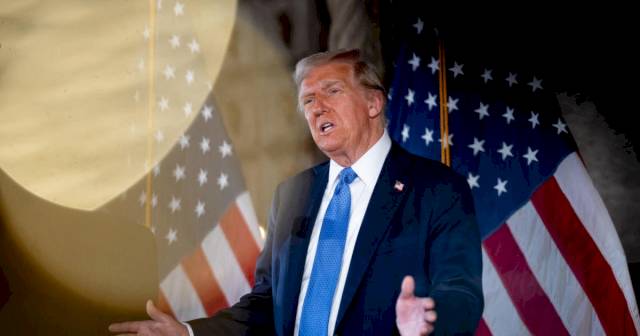
Drill, baby, drill. President-elect Donald Trump speaks during a meeting with the House GOP conference, Nov. 13, 2024, in Washington. (Allison Robbert/Pool Photo via AP, File) ·ASSOCIATED PRESS
Wall Street’s forecasts bode well for Trump’s intention to lower the price of energy through deregulation, among other things. “We’ll soon unleash American energy. And this will be done at levels not seen before, issuing quick approvals for pipelines, drilling, and other infrastructure,” Trump said at a recent press conference.
Growing domestic and foreign supply will likely cap any upward price shocks.
“There’s a much much larger risk of a big price drop to $50 or $60 than there is to something like the $80+ range,” Tom Kloza, OPIS global head of energy analysis told Yahoo Finance. “It would take something on the order of the Russian invasion of Ukraine or a wider mid-Eastern war to really send prices back up to the 2022 or 2023 highs.”
Some analysts point out crude futures could move higher if Trump imposes US sanctions against Iran or Venezuela. But JPMorgan’s Kaneva believes the incoming president will ultimately opt to keep oil prices low to avoid inflation catalysts.
“Any policies that might raise oil price will likely take a backseat to Trump’s key objective of maintaining low energy prices,” she wrote to clients.
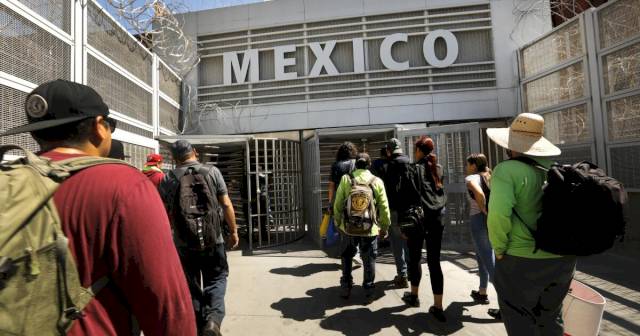
US President-elect Donald Trump’s plans to label Mexican drug cartels “terrorist organizations” could open the door to US military attacks on Mexican soil, analysts warned.
Trump said that he would “immediately” make the designation upon becoming president, putting cartels alongside organizations such as Hamas and Boko Haram. Doing so would give authorities powers to stop money flows to cartels, but also would “provide the legal framework” to permit unilateral attacks in Mexico, one academic told El País, adding he would be unsurprised to learn about “an American missile hitting a methamphetamine laboratory in Badiraguato.”
Mexican President Claudia Sheinbaum warned against the plan, saying “Mexico is a free, sovereign, independent country and we do not accept interference.”
President-elect Donald Trump has made clear his intent to supercharge his “America First” approach to foreign policy in his second term — and Mexico looks set to be at the tip of the spear.
While many of Trump’s predecessors have also followed a “realist” strategy — that is, one in which relative power is at the forefront of international relations and diplomatic success is viewed through how it benefits one’s own nation — the incoming president has displayed an apparent unwillingness to consider the pain that his plans would inflict on targeted countries or the responses this will engender.
Trump’s proposed policies threaten Mexico in three key ways: First, his goal of deporting millions of migrants would put tremendous pressure on Mexico’s economy and society as the country tried to absorb the influx. This would be exacerbated by his second threat, a sharp increase in tariffs, which could devastate the critical export sector of Mexico’s economy. And third, Trump has floated the idea of using U.S. military power to confront narcotraffickers within Mexico — which would directly impinge on Mexico’s sovereignty and could generate more violence on both sides of the border.
But Mexico has several options to push back on Trump by imposing high costs on U.S. interests.
Indeed, Mexican President Claudia Sheinbaum has already signaled how she may counter Trump’s policies. The most obvious tools are ending cooperation on drugs and immigration and imposing tariffs of her own. She could also revoke some of the decades-old tax and labor privileges that have benefited U.S. businesses operating within Mexico. And finally, she could play the “China card” — that is, in the face of worsening U.S.-Mexico ties, Mexico could turn to Washington’s biggest economic rival at a time when Beijing is seeking to assert more influence across Latin America.
Sheinbaum has said she wants to avoid a trade war, but Trump’s threats have led her nonetheless to talk about how a trade war would begin. This trade war, plus other costs Sheinbaum could impose on U.S. investors, would also likely foment a coalition of opposition within the U.S.
If Trump abrogates trade deals and imposes tariffs, he might convince investors to spend their next dollars in the U.S. But if Mexico imposes tariffs, business taxes or investment restrictions, what would happen to investors’ farms and factories already in Mexico?
Trump is not immune to pressure from U.S. businesses. During his first administration, companies successfully opposed Trump’s attempt to close the border, arguing that slowing the flow of immigrants also meant slowing trucks full of goods.
On the issue of border and immigration, while Trump has issued threats, Sheinbaum has stressed the importance of cooperation.
Currently the Mexican government expends significant resources to patrol its own southern border, not to mention dealing with the many potential migrants who gather in its northern cities.
Mexico could demand more support from the U.S. in exchange for this work plus the costs associated with welcoming back the estimated 4 million Mexicans who are currently in the U.S. without proper documentation.
The deportation of undocumented immigrants that Trump has repeatedly promised would require other types of cooperation, such as processing border crossings, and Mexico could slow-walk this process. Mexico has already signaled that it will withhold processing of non-Mexicans.
The two countries have a history of collaboration in addressing the illegal drugs trade — but here too there have also been tensions. For example, toward the end of Trump’s first term, a Mexican general was arrested in the U.S. on drug charges. After a diplomatic uproar, he was returned to Mexico and released.
In late November, Sheinbaum noted that she and Trump had discussed security cooperation “within the framework of our sovereignty.” But Trump’s campaign rhetoric seemed less concerned with Mexico’s sovereignty, floating the idea of sending troops to the border or even deploying them within Mexico to counter narcotraffickers. That would clearly enrage Mexico, with consequences that would extend far beyond a willingness to cooperate on the issues of drug trafficking.
One country that stands to benefit should U.S.-Mexican relations deteriorate is China — an issue that Mexico could exploit.
A U.S.-Mexico trade war could weaken or end any incentive to keep Chinese goods out. Further, if the doors to the United States are narrowed through tariffs and hostile rhetoric, China’s car parts and financial services would clearly become even more attractive to Mexican businesses. A U.S.-Mexican trade war, in short, would augment Beijing’s access to a market on the U.S. border.
In sum, if Trump goes through with his threats, the result will be costs to consumers and businesses, plus a new opportunity for China. This is likely to foment a coalition of industries, investors and consumers and foreign policy experts concerned with China — many parts of which supported Trump’s campaign.
Scott Morgenstern is a professor of political science and past director of the Center for Latin American Studies at the University of Pittsburgh. This article was produced in partnership with the Conversation.
Washington — As President-elect Donald Trump prepares to begin his second term in the White House in just a few weeks, he has suggested that he will use recess appointments to circumvent the Senate confirmation process and quickly install his picks to key positions across the federal government.
The demand has been met with pushback from some Republicans, but there is another way in which Trump could place those loyal to him in high-ranking positions without Senate approval, albeit temporarily: a 25-year-old federal law that sets the rules for presidents to tap acting officials to fill vacant positions that require Senate confirmation.
Enacted in 1998, the Federal Vacancies Reform Act, or the Vacancies Act, limits which government employees can temporarily fill the roughly 1,300 federal offices that require nomination by the president and approval by the Senate.
The playbook wouldn’t be new to Trump, who installed “acting” leaders atop various federal agencies and subagencies in his first term, including the Departments of Defense and Interior and the Environmental Protection Agency.
Some of the president-elect’s nominees are likely to face headwinds in the GOP-led Senate, like Pete Hegseth, his pick to lead the Pentagon and Tulsi Gabbard, who he plans to tap for director of national intelligence. The Vacancies Act could become a key tool for Trump to ensure agencies are staffed with those loyal to him and his agenda.
“Congress has made the policy choice to have about 1,300 positions still require Senate consent,” said Thomas Berry, a legal scholar at the Cato Institute. “But what we have now is that any given time, half or more than half of those are filled not by Senate-confirmed people, not because Congress made that policy choice, but because the Vacancies Act can be pushed to the limit and maybe even beyond its limits, and it’s so easy to have acting officers or sub-delegates essentially act in exactly the same way they would if they were Senate confirmed for years at a time.”
How the Vacancies Act works
Under the Vacancies Act, there are three categories of federal workers who can temporarily fill a position covered by the law:
The “first assistant,” or deputy, to the vacant office
Another administration official who has already won Senate confirmation
An agency employee who has worked there for at least 90 days in the year before the vacancy happened and is at the highest level of the civil service pay scale
The Vacancies Act also sets a time limit for how long an acting official can serve, allowing them to fill the position for 300 days when installed at the beginning of a new administration. Temporary leaders elevated after the start of a term can remain in their role for 210 days, but that cap can be extended if a nomination is pending in the Senate. If a nomination is rejected, returned or withdrawn, the president gets another 210 days.
When Trump took office after he was inaugurated the first time in January 2017, he tapped noncontroversial, longtime civil servants to serve in acting roles while the confirmation process played out, Berry said. He could do the same again for the first days or weeks after he returns to the White House on Jan. 20.
But Berry said the landscape will shift as Trump’s second term progresses. Eventually, there will be Senate-confirmed officials in lower-level positions and those at the highest pay grade who have served in their agencies for more than 90 days. Those officials could be then tapped for acting positions.
“The vacancies people should be more concerned about, the vacancies where Trump has a lot more flexibility, are the ones that occur in the middle of the term, not right on day one,” he said.
Presidents of both parties have installed acting officials in high-ranking positions in their administrations. But with 30 acting secretaries, Trump used more temporary leaders than those who were confirmed during his first four years in the White House, according to research from Anne Joseph O’Connell, a law professor at Stanford University who has extensively studied the Vacancies Act.
How much Trump relies on the 1998 law in the early months of his second term could depend on his legislative priorities. With a Republican-controlled Congress, the president-elect and GOP lawmakers have said they plan to focus on extending Trump’s signature tax reform law, portions of which are set to expire next year, as well as border security. And if a member of the Supreme Court retires, filling that seat would also be a significant priority while Republicans have a Senate majority.
“I assume, given the threat to use the recess appointments clause, that the Senate party leadership is going to work closely with the White House to get the Cabinet or most confirmed quickly through the traditional process, so then the question is, what else will the Senate make a priority?” O’Connell said. “The Vacancies Act offers a second-best pathway for filling [lower-level] agency positions.”
Since winning the White House in November, Trump has rolled out a slew of personnel picks, ranging from those who will serve in his Cabinet if nominated and confirmed by the Senate to candidates for ambassadorships to senior White House staff who do not require Senate approval. One of those candidates, former Rep. Matt Gaetz of Florida, whom the president-elect selected for attorney general, took himself out of consideration after he came under renewed scrutiny for alleged sexual misconduct and illicit drug use, which he denied.
While much of the focus is on Trump’s picks for the most senior roles in his new administration, the leaders of subagencies could be filled through the Vacancies Act or through a delegation of duties to subordinates.
“That strategy can be done at these very influential positions that are just below the secretary level, and that’s why you more often see pushing the boundaries of the Vacancies Act at that level,” Berry said.
Melissa Quinn is a politics reporter for CBSNews.com. She has written for outlets including the Washington Examiner, Daily Signal and Alexandria Times. Melissa covers U.S. politics, with a focus on the Supreme Court and federal courts.
With the new year, shock and indignation that the nation could elect Donald Trump — the cause of the Jan. 6 insurrection — for a second time probably has morphed for many into more nuanced emotions.
In late November, my column leaned into several takeaways, including my decision to avoid left-leaning podcasts and YouTube segments as well as MSNBC and talking heads generally. Reports about ratings suggest I had lots of company.
That said, I have resumed dutifully reading the New York Times and Washington Post out of professional obligation and civic responsibility. We cannot pretend away the daily clown show of abhorrent appointees and reckless pronouncements.
In that same column and at full rant, I pledged to sever contacts with the type of Trump voter I encounter most — affluent men and women who covet low taxes and to hell with everyone and everything else.
More recently, my take-my-ball-and-go-home instincts toward Trump voters collided with the message from Ben Wikler, Wisconsin’s Democratic Party chair.
Wikler was telling me in an interview, as he has told comedian Jon Stewart and many others in his campaign to lead the Democratic National Committee, that we need to understand things through the eyes of lower-income, low-or-no information voters who supported Trump.
To make his case, Wikler sets $50,000 in annual income as the cutoff. People making less may have been getting some form of financial help during the pandemic. Then it ended just as inflation spiked grocery and gasoline prices. Many of them decided to vote for change, any change, not for Trump’s vision. We need to understand and learn from that, Wikler argues.
Thinking about that, and generally about the psychology surrounding defeat, I spoke with an expert, Paula Niedenthal, a psychology professor at the University of Wisconsin-Madison. An expert on human emotions, Niedenthal called my notion of cutting off personal contact with Trump voters a losing idea.
“It’s the wrong direction to go for many, many reasons,” she said. “I would encourage people not to do that. Just avoiding people or saying I’m going to end the relationship, I would argue is a bad idea.”
That said, she added, “Talking about something people don’t want to talk about is also often a bad idea. So, if it works for people to maintain relationships but avoid the topic of politics, I think that’s a great idea if that’s how that works for them. Because there are probably 2,000 other domains that they can talk about.”
She suggested that people who supported Vice President Kamala Harris question their approach in interacting with Trump backers: “What are my motives in engaging them? Am I trying to change their mind? Am I trying to show them that they’re stupider than I am?
“We have to be curious about the other person. If they’re angry, ask them why they’re angry. Or if they have a perspective on what’s important to them, ask them about that, but don’t pretend one knows better what is good for them.”
She also said that it is important that people — I think she means highly educated progressives clustered in places like Madison — not to assume we have the answers.
“People can’t be told what their interests are,” she said. “We need to hear from them what they regard as their most pressing interests, then engage in that rather than telling them … how they are voting against their own best interests.”
University of Wisconsin-Madison psychology Professor Paula Niedenthal says telling Donald Trump voters there is 50 years of research proving that Reaganomics does not help the middle class is unlikely to be persuasive.
UNIVERSITY OF WISCONSIN-MADISON
She added, “Trying to get them more money for some reason may or may not be what their biggest interest is,” Niedenthal said.
Niedenthal referenced Maslow’s hierarchy of needs, a psychological theory that outlines human needs in descending order, starting at the top with basic ones like food and water, then safety and security, love and belonging, esteem, and so forth.
Uppermost needs must be met before others come into play. “If you even think of it in those terms, maybe they need to feel safe first before they can worry about whether trickle-down economics doesn’t work,” she said.
Niedenthal said telling Trump voters there is 50 years of research proving that Reaganomics does not help the middle class is unlikely to persuade. She added, “I think people have to listen to the actual concerns of other people and not tell them what to be most concerned about.”
Niedenthal also emphasized that her research and other research suggests those on the political extremes on both sides are comparatively few.
“It’s like one-tenth of one percent of people who are making a lot of noise,” she said. Niedenthal said she is less interested in those who are “noisy on the fringes, or who are trying to take all the air out of the room.”
“I do think that starting with a sense of modesty and understanding that the differences are trivial compared to the similarities is a good way to approach people,” she said.
“Obviously, the more ideological social scientists will pull on the data … convenient to them, but I think a more unbiased view is that there are more similarities than differences.”
My principal takeaway from all of this is to, at minimum, try to resist painting Trump voters with a single brush.
As the inauguration looms, here’s my plan:
My enmity will endure for country-club Republicans who know but don’t care that climate change, racial and social injustice are all real, who know there is enormous middle-class suffering from decades of deindustrialization. It is, after all, about their own net worth.
My even greater disdain will continue for extremist yahoos who gloat about Trump keeping women and people of color “in their place” and, as they love to boast, “owning the libs.”
But for what is probably the largest segment of Trump voters, the approaches urged by Wikler and Niedenthal are convincing. Better political outcomes in the future will require a better understanding of the perspectives of the non-combatants.
Even if they voted for Trump. Especially if they voted for Trump.
Elon Musk is Tesla (TSLA) CEO in title only nowadays and is keener on wielding power in the incoming Trump administration, one outspoken investor in the electric vehicle maker contended.
“[Elon Musk] certainly is setting the direction and the tone of the business and overseeing the senior executives that are in charge of all the different projects, but in the traditional sense of running a company, like what’s going on in Nvidia [and CEO Jensen Huang], no, I mean, he’s not at all,” Gerber Kawasaki Wealth and Investment Management president Ross Gerber said on Yahoo Finance’s Catalysts (video above).
“I think Tesla shareholders are more than aware that their CEO works for Donald Trump at this point,” Gerber added.
The bromance between Musk and President-elect Donald Trump has been on full display for months.
Trump and Musk have publicly praised each other, and the latter has donated at least $132 million to Trump’s and other Republicans’ campaigns.
For his public support, Trump awarded Musk a role in his administration alongside another ardent supporter, Vivek Ramaswamy, as the head of a newly created Department of Government Efficiency (DOGE).
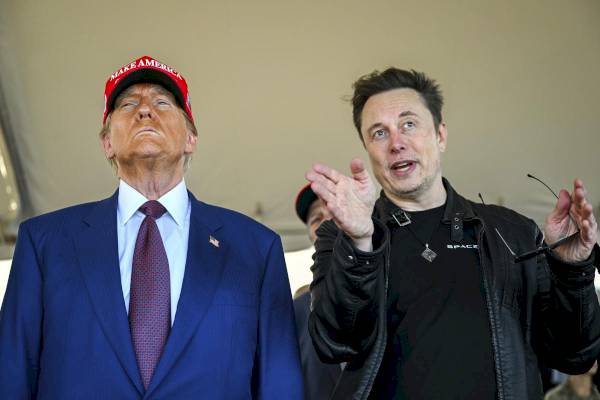
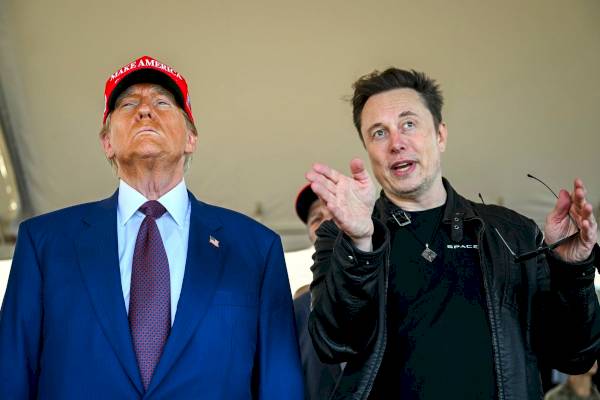
President-elect Donald Trump listens to Tesla CEO Elon Musk as he arrives to witness the liftoff of SpaceX’s Starship mega rocket on a test flight from Starbase, in Boca Chica, Texas, on Nov. 19, 2024. (Brandon Bell/Pool via AP, Archive) ·ASSOCIATED PRESS
Musk has been spending considerable time at Trump’s Mar-a-Lago resort, meeting with world leaders and advising Trump. He even interjected himself into a contentious debt ceiling debate this month, which almost led to a government shutdown.
Nevertheless, the market has rallied since Trump’s November presidential win, particularly sectors that are seen as beneficiaries of his policies. Though the president-elect has not been a fan of green energy and may withdraw the $7,500 EV credit created under the Biden administration, Tesla may be in a favorable position due to its CEO’s connection with Trump.
Tesla stock rose over 1% on Tuesday in premarket trading. Shares have surged 74% since Election Day, outpacing the S&P 500’s nearly 5% gain.
Gerber believes 2025 will prove critical for Tesla and Musk’s preoccupation with the Trump administration means the wider Tesla team must step it up. Only three people are listed as executive team members on Tesla’s investor relations page: Musk, new senior automotive vice president Tom Zhu, and new CFO Vaibhav Taneja.
If not, the stock could be penalized amid signs that execution isn’t first-rate enough to justify Tesla’s heady valuation.
“It’s yet to be seen whether this [Tesla] team can prove themselves,” Gerber said. “The old team at Tesla, which I knew very well, was very capable, but they were all let go in the last year. So a whole new team has taken the reins here, and 2025 is going to be their year to prove if they can deliver because they got a lot of stuff to deliver in the next 12 to 18 months.”
Elon Musk is getting closer and closer to Donald Trump, quite literally, with a new report that the tech billionire is currently renting a cottage on the grounds of the president-elect’s Mar-a-Lago residence in Palm Beach, Florida.
According to The New York Times, Musk is staying at Banyan – a cottage located just several hundred feet from the main house of the estate– which costs at least $2,000 to stay in per night, per sources with knowledge of the costs.
The news comes as concerns continue to grow in Washington about the extent of the SpaceX boss’s influence over Trump, having sat in on personnel meetings, conducted talks with foreign leaders and helped to tank a bipartisan spending bill in congress.
Musk is reportedly staying at Banyan – a cottage located just several hundred feet from Trump’s main house – which costs at least $2,000 to stay in per night (AFP/Getty)
The property contains multiple cottages that have reportedly been used by others in Trump’s inner circle, including Vice President-elect JD Vance, during the transition period.
The Times reports that Musk moved into the cottage around Election Day and watched the results at Mar-a-Lago with Trump and other MAGA cheerleaders including Marjorie Taylor Greene.
He left the property around Christmas and has been expected to return some time in the New Year.
It is unclear how much the tech boss is paying for the cottage, though guests at the Mar-a-Lago club are typically not billed until the end of the stay.
A US Coast Guard boat manned by armed officers patrols the Lake Worth Lagoon off Mar-a-Lago (AFP/Getty)
The ultimate cost of Musk’s stay may come down to the president-elect.
The “best buddy” relationship between the pair appears to be going strong.
Last week Trump posted what appeared to be a personal message to Musk on Truth Social, claiming that fellow billionaire Bill Gates asked to come to Mar-a-Lago.
“Where are you? When are you coming to the ‘Center of the Universe,’ Mar-a-Lago. Bill Gates asked to come, tonight. We miss you and x! New Year’s Eve is going to be AMAZING!!!” Trump wrote.
He signed it “DJT.”
The story comes as concerns continue to grow in Washington about the extent of the SpaceX boss’s influence over Trump (AFP/Getty)
“X” appears to have been a reference to Musk’s son, X Æ A-Xii, who he calls X for short,
While staying at Mar-a-Lago, Musk has been accompanied by at least two of his children — though he is reported to have at least 11 — and their nannies.
The Times also reported that the Tesla boss is known to make inconvenient requests like meals outside the normal kitchen hours.
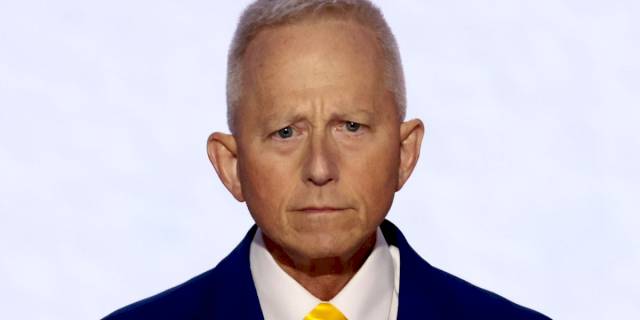
Social media users mocked Rep. Jeff Van Drew (R-N.J.) for a word salad explanation for why he was backing House Speaker Mike Johnson (R-La.) to continue in the leadership role.
Van Drew’s comments on Fox Business contained contradictions and signs of utter subservience to President-elect Donald Trump, critics said.
The congressman ― who defected from the Democrats in 2019 in protest against the first impeachment of Trump and whose Iranian “mothership” claims earlier this month about drone sightings was swatted down by the Pentagon ― was asked if he supported Johnson’s bid to retain the top House job.
Van Drew said: “I am supporting the speaker and let me say, if, you know, I hear from President Donald Trump, who I do speak with relatively regularly and I have a relationship with him, to the contrary, that would change my mind.”
He continued: “Let me say this, I’m a very independent person. So, I get it. I get it. Members of Congress want to express their individual viewpoint, ’We’re a coequal branch of government, etc, etc… but there was a mandate from the people of the United States of America in both the popular vote and the electoral vote to make change.”
It’s time for Republicans to “put our big boy pants on,” “work together and get stuff done,” “stop acting goofy” and focus,” he added.
Watch the Fox Business clip here:
Critics, though, were dubious about his “very independent” claim, given his apparent willingness to ditch his own view if Trump demanded so.