HELLO TO WPINITIATE!HELLO TO WPINITIATE!HELLO TO WPINITIATE!HELLO TO WPINITIATE!HELLO TO WPINITIATE!HELLO TO WPINITIATE!
Blog
-

BLAME THE AI! — The Developer Anthem
AI took every coding job. Then the customer’s website broke.
“BLAME THE AI!” is a dystopian comedy song for every programmer, web developer and software engineer who has ever had to debug AI-generated code.
The robots said coding was dead. Then they met production.
If you have ever prompted, repeated, regenerated five times and still fixed the result yourself, this song is for you.
What is the worst thing AI-generated code has done to one of your projects? Tell me in the comments.
Created by Szabi Kisded / CodeRevolution
Concept, lyrics and video direction: Szabi Kisded
Music created with Suno
Visuals created with Grok ImagineCodeRevolution: https://coderevolution.ro/
Discover WordPress products on WPBay: https://wpbay.com/LYRICS
AI took every coding job!
But one dev remained.
The servers burned, the screens went black,
So I launched a counterattack.
The robots screamed, “Coding is dead!”
I took one sip and calmly said—“Let me guess… the AI wrote it.”
Critical errors filled the map,
Then one last ticket hit my lap:“YOUR SOFTWARE BROKE MY ENTIRE SITE!”
BLAME THE AI!
BLAME THE AI!
WHEN THE CODE GOES WRONG
AND NOBODY KNOWS WHY!PROMPT! REPEAT!
REGENERATE FIVE TIMES!IF IT BREAKS THE WEBSITE—
BLAME THE AI!
“I have replaced every developer.”
Then fix the website.
“I cannot complete that request.”
BLAME THE AI!
BLAME THE AI!
IT TOOK OUR JOBS,
NOW WE FIX WHAT IT WRITES!“Great! Can you customize it for free?”
Sure.
Ask the AI.
#ArtificialIntelligence #Programming #DeveloperHumor
-
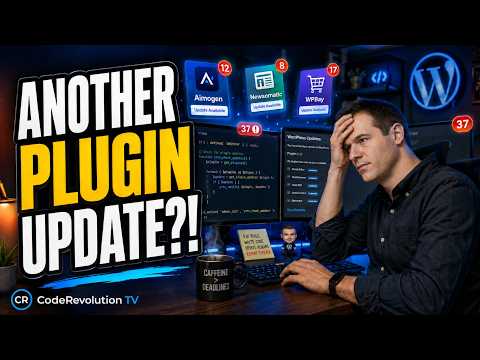
Every WordPress Developer Will Understand This Song
Every WordPress plugin developer knows how this begins:
“Just one tiny update… What could possibly go wrong?”
Another Plugin Update is a comedic WordPress developer song about broken websites, mysterious PHP warnings, support tickets in ALL CAPS, plugin conflicts, cache-clearing rituals, WooCommerce surprises and lifetime support that may actually last a lifetime.
Featuring the wonderfully chaotic world of CodeRevolution, Aimogen, Newsomatic and WPBay.
Discover independent WordPress plugins and themes:
https://wpbay.com/Aimogen – create, edit and automate AI content inside WordPress:
https://getaimogen.com/CodeRevolution:
https://coderevolution.ro/What is the strangest WordPress problem you fixed without understanding why it worked? Tell me in the comments.
00:00 Intro and Verse 1
00:15 Customer angry
00:25 Clear the cache and pray
00:34 Chorus 1 – I build plugins
01:02 Verse 2 – Plugins working
01:14 Customer asks for one more feature
01:26 Chorus 2 – I build plugins
01:55 Bridge – Tested up to yesterday
02:07 Lifetime license, lifetime support
02:17 Final chorus – We build plugins
02:40 New WordPress version available… NO!Created by CodeRevolution.
AI-assisted music and visual production.#WordPress #WordPressDeveloper #PluginDeveloper
-
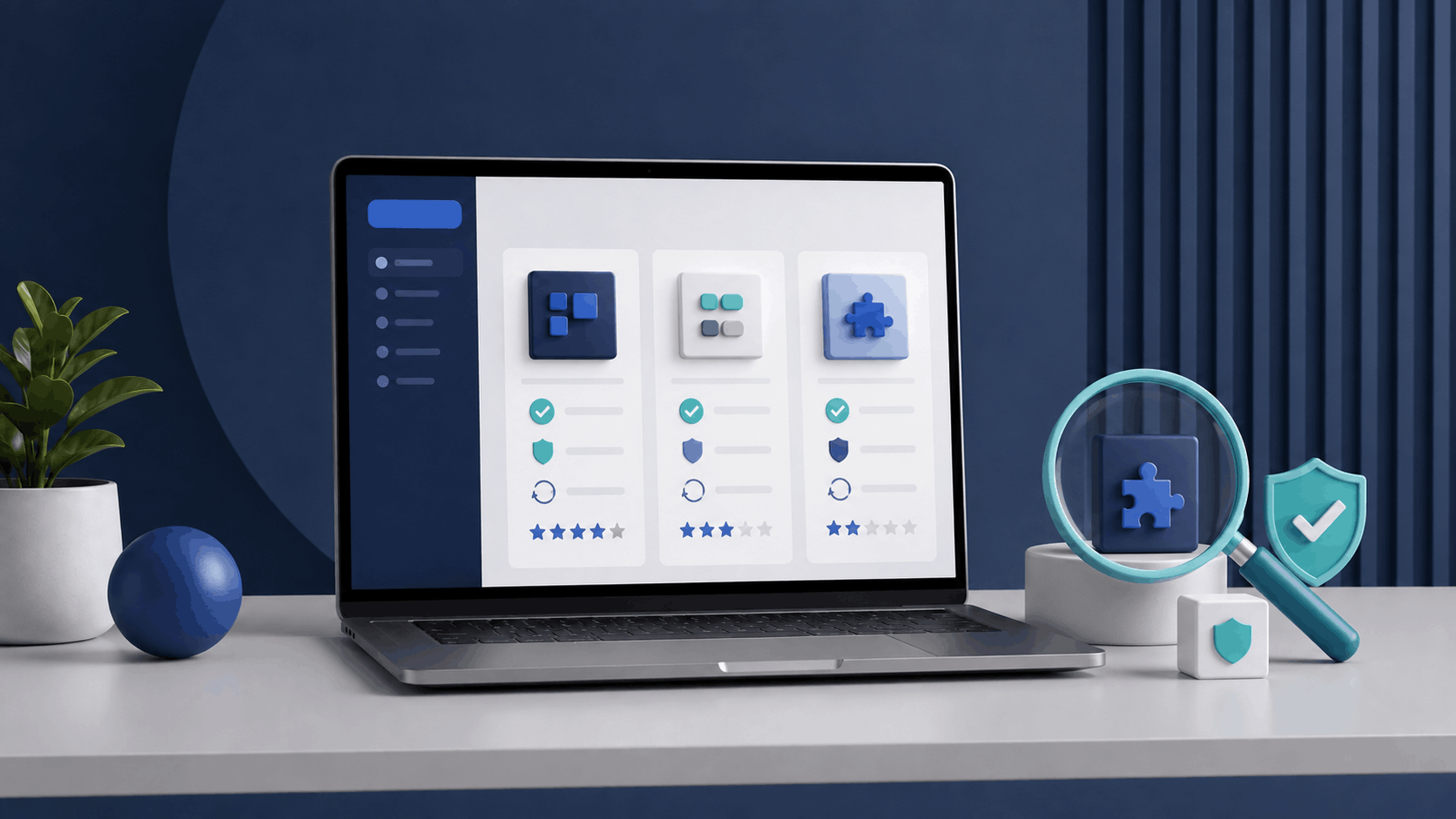
How to Choose a WordPress Plugin You Will Not Regret Installing
Installing a WordPress plugin takes a few seconds. Removing a bad one six months later can take days.
By then, the plugin may have created its own database tables, added shortcodes throughout the site, stored content in a private format or become part of a workflow your team uses every morning. Replacing it is no longer a simple matter of clicking Deactivate.
This is why choosing a plugin deserves more thought than it usually receives.
I have been building WordPress plugins for almost ten years and have released more than 120 of them. I have also tested, reviewed and integrated more third-party products than I could count. The best plugins are not always the ones with the longest sales pages or the most features. They are the ones that solve the required problem without creating a larger one later.
Whether you are installing a free plugin from WordPress.org or buying a premium WordPress plugin, the same basic questions apply. Will it work with your site? Is somebody still maintaining it? What happens to your data if you stop using it? Can you get help when something breaks?
Here is how I evaluate those questions before allowing a plugin onto an important website.
Begin with the problem, not the feature list
It is easy to get distracted by features you were not looking for.
You begin searching for a simple appointment form and, twenty minutes later, you are comparing loyalty programs, employee dashboards, SMS automation and 14 payment gateways. The bigger product starts to look like the better deal, even if most of those features will never be used.
Before opening a marketplace, write down what the plugin actually needs to accomplish. Keep it specific. “I need a booking plugin” is still broad. “Customers must be able to choose one of five services, select an available time, pay through Stripe and receive a calendar invitation” is much more useful.
This gives you a practical test for every product you find. Does it complete that workflow without forcing you to rebuild the website around it?
A focused plugin can be a safer choice than an enormous all-in-one system. More code is not automatically bad, but every unused module adds complexity, potential conflicts and another feature the developer must maintain.
At the same time, do not assemble ten tiny plugins when one well-maintained product can handle the entire job. The goal is not the lowest possible plugin count. The goal is the smallest amount of dependable software needed to run the site.
Check whether the plugin is still alive
A plugin can continue working long after its developer stops maintaining it. That creates a false sense of safety.
Nothing may appear wrong today, but the next WordPress, WooCommerce or PHP update can expose a compatibility problem. An abandoned plugin will also miss security fixes and changes in the services it connects to.
Look at the date of the latest release, but do not judge it in isolation. A simple plugin may genuinely need fewer updates than a payment gateway or an AI integration. The better question is whether the development activity makes sense for the type of product.
Read the changelog. Specific entries such as “fixed compatibility with WooCommerce HPOS” or “added validation to the import endpoint” tell you much more than ten consecutive versions labelled “minor improvements.” WordPress itself has published useful guidance on why a clear changelog builds trust.
Check whether support questions receive answers. They do not all need to be resolved instantly, but weeks of unanswered reports usually indicate that nobody is paying attention.
For a commercial plugin, look beyond the latest update and examine the history. A product maintained steadily for four years gives a different signal from one that launched last month with a large discount and no visible team behind it.
New plugins can be excellent, of course. They simply require more careful testing because they do not yet have a long public record.
Compatibility means more than “works with WordPress”
Most plugin pages display a WordPress version and a PHP requirement. Those are only the beginning.
A WooCommerce extension may also depend on High-Performance Order Storage, Cart and Checkout Blocks, a specific payment gateway or a particular subscription plugin. A page-builder add-on may work with Elementor but fail when experiments or optimized asset loading are enabled. A multilingual site adds another layer. Multisite adds another.
Think about the environment in which the plugin will actually run.
If the site is important, create a staging copy and test there. Use the same theme, PHP version and major plugins as production. Click through the complete workflow rather than only confirming that the plugin activates.
For an e-commerce feature, place test orders. For a form plugin, check email delivery and stored entries. For an import tool, inspect the data it creates. For a caching or performance plugin, check the public site while logged out and on a mobile connection.
Compatibility badges cannot reproduce your exact website. Staging can.
If no staging site is available, at least take a full backup before installation and avoid testing a major operational plugin during the busiest part of the day.
Look closely at where your data goes
The WordPress ecosystem now includes plugins connected to AI services, analytics providers, payment platforms, email tools and remote automation systems. A plugin may look local inside the dashboard while sending content elsewhere for processing.
That is not necessarily a problem. Many valuable features require an external service. The important thing is to understand the arrangement before installing it.
Find out what information leaves the site, which provider receives it, how long it is stored and what happens if the external service becomes unavailable. If customer information, orders, private content or health-related data is involved, this is not a minor technical detail.
Also check the business model. A free plugin that depends on a paid API can be more expensive than a premium self-hosted alternative. A lifetime plugin connected to an external cloud service may eventually impose limits because the developer continues paying for every request.
Some buyers prefer self-hosted products precisely because their data and operational workflow remain inside WordPress. Others are happy to use a hosted service in exchange for easier setup and managed infrastructure. Neither choice is automatically correct, but it should be an informed choice.
Understand what you are actually buying
“Premium plugin” can describe several very different offers.
One product may include lifetime use and one year of updates. Another may stop functioning when the annual license expires. A third may continue working but remove access to updates and support. Some subscriptions include API usage; others charge for it separately.
Read the license and support terms before purchasing, not when the first renewal email arrives.
Pay particular attention to the number of sites covered. A one-site license may be enough for a business owner but restrictive for a freelancer who needs a development copy, a staging site and a production site. Good licensing systems normally recognize staging or local environments, but you should confirm this.
Support also needs a definition. Does the purchase include help with using the advertised features, or will the developer configure the entire website for you? Will they investigate conflicts with other plugins? Does customization cost extra?
A plugin license is normally not a development retainer. Clear boundaries protect both sides.
The refund policy matters too. Digital products cannot always be returned like physical goods, especially after the files have been downloaded or a license has been activated. Read the circumstances under which a refund is available and keep a copy of the product requirements you relied on when purchasing.
Do not judge a plugin only by reviews
Reviews are useful, but the average rating is a poor substitute for reading them.
A plugin with a perfect rating based on nine short comments has less evidence behind it than a plugin with hundreds of detailed reviews and a few unhappy customers. Mature products eventually receive negative feedback simply because they have more users and encounter more unusual environments.
Look for specifics. “Great plugin” tells you very little. A review explaining that the developer fixed a checkout conflict, answered within a day and provided a clean migration path is much more valuable.
Negative reviews can be even more informative. Does the complaint describe a genuine product limitation, an unsupported customization or a user who misunderstood the offer? More importantly, how did the developer respond?
A calm, useful response to criticism is a strong trust signal. Defensive arguments and public blame are not.
Be cautious with reviews published only on the developer’s sales page. Testimonials are naturally selected. Independent marketplace reviews, WordPress.org support discussions and public community conversations provide a broader picture.
Security is not visible in a screenshot
A polished settings page can sit on top of insecure code.
Most WordPress users cannot audit a plugin themselves, and they should not be expected to. Still, there are signals worth checking. Does the developer publish security updates? Is there a responsible way to report a vulnerability? Does the product receive prompt fixes when a problem is discovered? Has the plugin been reviewed by the marketplace distributing it?
The official WordPress security guidance tells developers to validate and sanitize input, escape output, rely on WordPress APIs and keep code up to date. These principles are basic, but failures around them continue to cause real vulnerabilities.
Be especially careful with plugins that manage uploads, user accounts, payments, backups, file editing or code execution. These features have legitimate reasons to perform powerful operations, which also means mistakes can have serious consequences.
Downloading a commercial plugin from an unofficial “GPL club,” file-sharing site or random repository introduces another risk. Even when the original product is licensed under the GPL, the redistributed ZIP may be outdated, modified or bundled with code the real developer never wrote. You also lose access to the original support, licensing and automatic update channel.
The cheapest copy can become the most expensive one after a compromised website.
Find out who stands behind the product
When you install a plugin, you are not only choosing code. You are choosing its maintainer.
Visit the developer’s website. Is there a real company or identifiable person? Is there documentation, a support channel and a history of WordPress work? Can you find other products they maintain?
An independent developer is not inherently riskier than a large company. Some of the best-supported WordPress plugins are built by one or two people who understand every line of the product. Large companies can also discontinue products when priorities change.
What matters is whether the developer behaves like somebody building a long-term product. Clear communication, honest requirements, consistent updates and a visible track record all help.
If the plugin will become critical to your business, ask a pre-sale question. The answer shows more than whether a particular feature exists. It tells you how precisely the team communicates and whether they understand the use case.
Be honest about your own dependency as well. If the plugin disappears next year, can the site keep operating? Can you export the data? Is there a migration path? Business-critical workflows should not become irreversible without a very good reason.
A live demo is helpful, but test the boring parts
Demos are normally designed to show the product at its best. Explore them, but do not spend all your time admiring the dashboard.
Try the task you will perform most often. How many clicks does it require? Can you find the important setting without reading a manual? Does the interface follow normal WordPress patterns or does it feel like an unrelated application squeezed into the admin area?
Then look at the less attractive parts of the product: importing and exporting, deleting data, managing permissions, handling errors and restoring defaults.
These are the areas that determine whether a plugin remains pleasant after the first week.
If the demo gives visitors administrator access, never enter personal information or reuse a password. Public demos are temporary environments and should be treated that way.
Why the marketplace matters
Where you buy a plugin affects what happens before and after the purchase.
A responsible marketplace does more than process a card payment. It defines product requirements, reviews submissions, provides a reliable download and update path, displays support and license terms, handles customer accounts and offers a process for disputes.
This is one reason WPBay reviews plugins, themes and other products before publication. Its submission guidelines require secure coding practices, accurate product information, proper licensing and a functional, finished product. A review cannot guarantee that software will never contain a bug, but it adds an important layer between an uploaded ZIP and the buyer.
WPBay is focused specifically on WordPress plugins, themes, scripts and services. Products remain clearly attributed to their independent developers, while the marketplace provides checkout, invoices, customer accounts and a consistent purchasing environment.
For a buyer, the value is not simply having another place to find plugins. It is being able to compare products under common rules and purchase from the real creator rather than from an unknown redistribution site.
WPBay also allows one-time purchases, monthly or annual plans and different site-license tiers. This gives buyers more choice, but it makes reading the plan details important. Two licenses for the same plugin may differ in site count, included features, updates or support.
You can browse the WPBay WordPress marketplace and evaluate each product using the same questions discussed in this guide.
Free and premium are not measures of quality
There are exceptional free plugins and terrible paid ones. Price tells you how the developer intends to fund the product; it does not prove quality.
A free plugin may be maintained as a community project, supported by donations, funded by a premium version or used to attract customers to a related service. Any of these can sustain excellent development.
A paid plugin may provide better support and more specialized features, but payment alone does not guarantee either.
The relevant question is whether the business model can support the promises being made. If a complex plugin offers lifetime updates, unlimited support, cloud processing and a very low one-time price, something in that equation may eventually change.
Likewise, an annual license is not automatically greedy. Ongoing compatibility, security work and support have ongoing costs. A predictable renewal can be a positive sign when the product is important and the developer uses that revenue to maintain it.
Evaluate the complete offer rather than reacting only to the number on the checkout button.
What I check before installing
After all the details, my decision usually comes down to a short mental review.
Does the plugin solve the exact problem without bringing unnecessary complexity? Is it being actively maintained? Are the compatibility requirements clear? Do I understand where the data is stored and which external services are involved? Can I export or recover the data if I leave? Are the license, update and support terms reasonable? Is there a real developer behind it? Has the download come from an official source?
If the plugin is important, I also want to see it working on staging before it touches production.
No single signal is perfect. Recent updates do not prove security. Thousands of installations do not guarantee compatibility. A marketplace review does not replace your own testing. The purpose is to combine several pieces of evidence until the decision becomes sensible.
That little bit of caution is far cheaper than rebuilding a website around a plugin you should never have installed.
Final thoughts
WordPress owes much of its success to plugins. They allow a small business to add e-commerce, bookings, memberships, automation or complex editorial tools without commissioning everything from scratch.
That flexibility is also why plugin choices have consequences. Every new plugin becomes part of the site’s technical foundation. Some will remain small conveniences; others will eventually hold customer records, business logic and years of content.
Choose them accordingly.
Start with a clearly defined need. Look beyond the feature count. Check maintenance, compatibility, data handling, licensing and the people responsible for the product. Purchase from the original developer or a marketplace that verifies what it publishes. Test important workflows away from the live site.
A good WordPress plugin should make the website easier to operate. If you choose carefully, it can continue doing that for years.
Frequently Asked Questions
How do I know whether a WordPress plugin is safe?
There is no single guarantee. Check whether it is actively maintained, distributed through an official source, supported by an identifiable developer and reviewed by the marketplace or directory hosting it. Test important plugins on staging and keep WordPress, themes and plugins updated.
Are premium WordPress plugins safer than free plugins?
Not automatically. Both free and paid plugins can be well built or insecure. Premium pricing may fund faster support and ongoing development, but the developer’s record and maintenance practices are more meaningful than the price alone.
How many WordPress plugins are too many?
There is no universal number. Twenty focused, well-written plugins can perform better than five enormous ones. Pay attention to code quality, overlapping functionality, database activity and the effect on the site’s real performance rather than plugin count alone.
Should I buy a lifetime or annual WordPress plugin license?
A lifetime license can be good value for a product with low ongoing costs. Annual licensing is often more sustainable for plugins requiring continuous compatibility work, support or cloud services. Read what happens when the license expires before choosing.
Where should I buy premium WordPress plugins?
Buy from the developer’s official website or a reputable marketplace such as WPBay. Avoid unofficial download sites because packages may be outdated or modified, and they normally do not include legitimate support or automatic updates.
What should I test before activating a plugin on a live site?
Test installation, the main workflow, permissions, emails, scheduled tasks, imports or exports and interaction with your theme and other important plugins. For WooCommerce or membership sites, complete a full test transaction on staging.
-
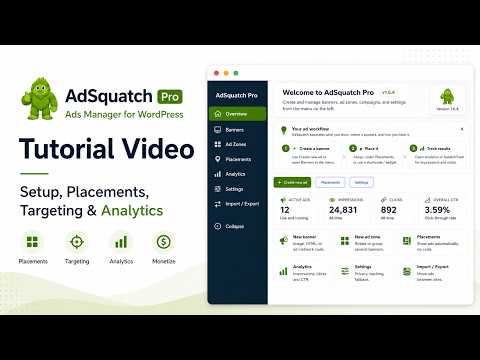
AdSquatch Pro Tutorial – WordPress Ads Manager for Banners, Placements, Targeting & Analytics
In this tutorial, I show how to use AdSquatch Pro, a complete ads manager plugin for WordPress.
Check AdSquatch Pro here: https://wpbay.com/product/adsquatch-pro/
With AdSquatch Pro, you can create banner ads, HTML ads, AdSense ads, affiliate banners, and custom ad campaigns directly from your WordPress dashboard. You can place ads automatically inside your content, in the header, footer, sidebar, WooCommerce pages, bbPress areas, or anywhere using shortcodes, widgets, Gutenberg blocks, or PHP functions.
The video covers the main workflow: creating a new ad, setting up ad zones, assigning placements, using targeting rules, checking impressions and clicks, and managing your ad setup from one place.
AdSquatch Pro is useful if you want to run your own ad system on WordPress, rotate banners, promote affiliate offers, manage direct-sold ads, or sell ad space on your website without relying only on one ad network.
No license key is required and all local analytics stay inside your own WordPress site.
-
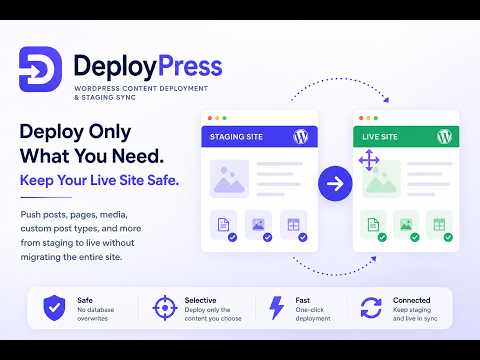
DeployPress Tutorial – Deploy WordPress Pages and Posts Between Staging and Live Sites
DeployPress makes it easy to move individual content between two WordPress websites without migrating the entire database.
Check the plugin here: https://wpbay.com/product/deploypress/
If you develop on a staging, local, or development website, you can connect it to your live site and deploy only the changes you want. Instead of replacing the whole database and risking overwriting users, comments, orders, or other live data, DeployPress transfers only the selected content.
In this tutorial, you’ll learn how to install DeployPress, connect two WordPress sites, configure the synchronization settings, and deploy content with just a few clicks.
You’ll see how to sync pages, posts, media, custom fields, taxonomies, and other related content while keeping both websites connected and ready for future deployments. The video also covers the basic workflow for working with staging and production websites, along with common issues you may encounter during the initial setup.
DeployPress is ideal for WordPress developers, freelancers, agencies, and anyone maintaining multiple websites who wants a faster and safer way to publish content changes without using full migration plugins or database exports.
If you’re looking for a simple deployment workflow that fits naturally into WordPress, this video will help you get started.
-
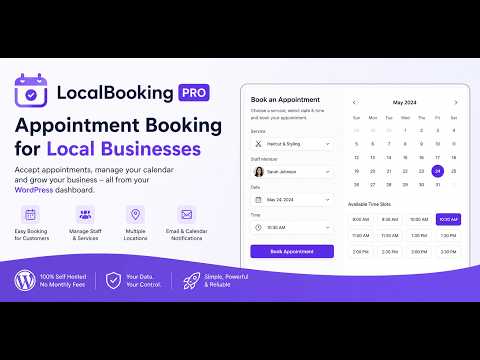
LocalBooking Pro for WordPress – Complete Appointment Booking Plugin Tutorial
Learn how to set up LocalBooking Pro and start accepting appointments directly from your WordPress website.
Check the plugin here: https://wpbay.com/product/local-booking-pro/
In this video, you’ll see how to install the plugin, create your first booking form, configure services and availability, manage appointment requests, and customize the booking experience for your business.
Whether you run a salon, barber shop, clinic, consultancy, repair service, or any appointment-based business, LocalBooking Pro gives you a complete self-hosted booking solution without monthly fees or third-party booking platforms.
In this tutorial:
• Installing LocalBooking Pro
• Creating your first booking form
• Configuring services
• Setting business hours and availability
• Managing bookings
• Email notifications
• Calendar invitations
• Custom fields
• Staff and locations
• Webhook integrations
• Exporting bookings
• WPBay Product Plans overviewLocalBooking Pro keeps everything inside WordPress, giving you full ownership of your customer data and complete control over your booking workflow.
Download LocalBooking Pro on WPBay and start accepting appointments in minutes.
-
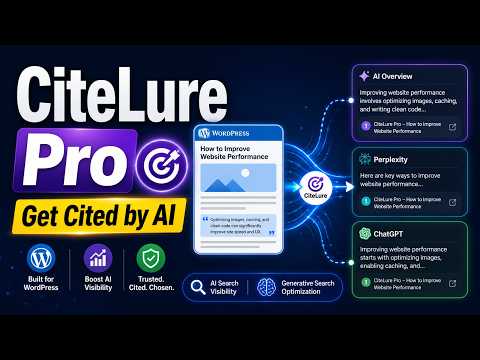
CiteLure Pro: Make Your WordPress Content Ready for AI Search & ChatGPT Citations
Search is changing. People are no longer only clicking Google links, they are reading AI-generated answers from ChatGPT, Perplexity, Gemini, Grok and Google AI Overviews.
In this video, I show you CiteLure Pro, a WordPress plugin built to help your content become easier for AI tools to understand, summarize and potentially cite.
CiteLure Pro extends the free CiteLure plugin with advanced tools for Generative Engine Optimization, including AI summaries, entity mapping, citation briefs, FAQ generation, AI metadata, enhanced llms.txt files, schema, crawler controls, analytics and bulk optimization.
With CiteLure Pro, you can prepare your WordPress posts, pages, products and custom post types for the new era of AI-driven search.
In this video, you will see:
How CiteLure Pro helps with AI visibility
How AI citation briefs work
How entity mapping can improve content understanding
How to generate AI FAQs and metadata
How to use bulk optimization
How llms.txt and AI discovery files work
How to monitor AI crawler activity
Why GEO is becoming important for WordPress websitesCiteLure Pro does not replace traditional SEO plugins like Rank Math, Yoast SEO or AIOSEO. It works alongside them and focuses on a different goal: helping AI systems better understand and reference your content.
The big question is no longer only:
Can your page rank?
It is also:
Can your page be cited by AI?
Get CiteLure Pro here:
https://wpbay.com/product/citelure-pro/Free version on WordPress.org:
https://wordpress.org/plugins/citelure/ -
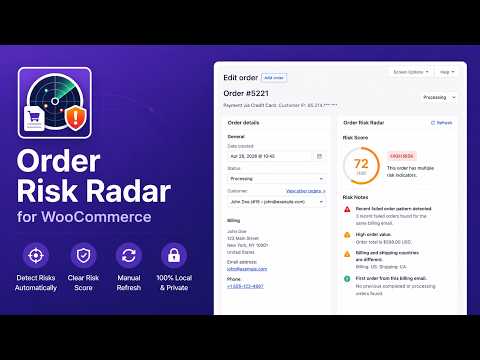
Order Risk Radar for WooCommerce – Product Walkthrough & Features
This video provides a complete walkthrough of Order Risk Radar for WooCommerce.
In this walkthrough you’ll see:
How the plugin integrates with WooCommerce orders
How automatic risk notes are generated
How to manually refresh an order analysis
Available plugin settings
How the plugin helps merchants make faster, better-informed decisionsEverything runs locally inside WooCommerce. No external APIs, no third-party services, and no changes to your checkout or payment flow.