Day 52 of Middle East conflict – Trump says extension of ceasefire with Iran is ‘highly unlikely’
” data-timestamp-html=”
” data-check-event-based-preview data-is-vertical-video-embed=”false” data-network-id data-publish-date=”2026-04-21T01:08:28.255Z” data-video-section=”world” data-canonical-url=”https://www.cnn.com/2026/04/20/world/video/ac360petraeusiran” data-branding-key data-video-slug=”ac360petraeusiran” data-first-publish-slug=”ac360petraeusiran” data-video-tags data-breakpoints=”{“video-resource–media-extra-large”: 660}” data-display-video-cover=”true” data-details data-track-zone=”live-story-lede” data-sticky-anchor-pos=”bottom”>
Ret. U.S Army General David Petraeus says both sides would like to see a deal to end the war with Iran.
02:48 • Source: CNN
Ret. U.S Army General David Petraeus says both sides would like to see a deal to end the war with Iran.
02:48
• Seized ship: Iran’s Foreign Ministry called for the release of the Iranian cargo vessel seized by the US Navy on Sunday, as well as “its sailors, crew and their families.” Iran has vowed to retaliate for the seizure.
• Looming deadline: US President Donald Trump said the ceasefire with Iran ends “Wednesday evening Washington time,” adding it’s “highly unlikely” he would extend it if a deal is not reached before then.
• Status of negotiations: Vice President JD Vance and top US officials are expected to depart Tuesday for Pakistan ahead of a potential second round of talks, according to sources. Trump projected confidence Tehran would come to the table although Iran’s Foreign Ministry earlier insisted there were no negotiations.
• Lebanon-Israel talks: A second round of talks between Israel and Lebanon is scheduled for Thursday, according to Israeli and US officials.

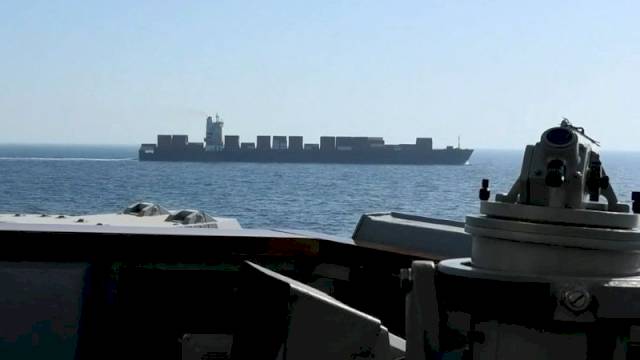
Iran’s Foreign Ministry condemned the seizure of Iranian cargo ship Touska by US forces and called for the “immediate release of the Iranian vessel, its sailors, crew and their families” in a statement published Tuesday.
The US Navy fired on and seized the Iranian-flagged ship Sunday after it tried to get past the US naval blockade in the Gulf of Oman, according to President Donald Trump. Footage released by the military showed a guided-missile destroyer firing on the vessel and Marines rappelling from helicopters onto its deck.
Iran previously vowed to retaliate for the seizure of the ship, which the Foreign Ministry called “extremely dangerous” and “criminal” in its Tuesday statement. It said the cargo was worth “millions,” without specifying what the cargo was.
“There is no doubt that the Islamic Republic of Iran will use all its capacities to defend Iran’s national interests and security and to safeguard the rights and dignity of its citizens,” the statement said.
“It is also clear that full responsibility for any further escalation in the region lies with the United States.”
It is not clear how many people were aboard the ship and whether they are Iranian. CNN has reached out to US Central Command for comment on the nationality of the crew and the status of the cargo ship.
CNN’s Brad Lendon and Teele Rebane contributed reporting.

The US Air Force is extending the life of its A-10 Thunderbolt ground-attack jet until at least 2030, the office of the secretary of the Air Force said on social media Monday.
The service had planned to completely retire the iconic jets, nicknamed the “Warthog,” later this year, though Congress later mandated in the National Defense Authorization Act that the Air Force keep 103 of the twin-engine jets in its fleet, with 2029 projected as its final year of service.
The jets have proven useful in the war in Iran, and Joint Chiefs Chairman Gen. Dan Caine praised the jets and their pilots for the role in spearheading the rescue of two air crew who ejected from their F-15E fighter after it was hit by a missile over Iranian territory.
A-10s played a key role in suppressing Iranian forces trying to get to the downed American flight crew and other US rescue forces that landed in Iran, Caine said.
One A-10 was hit during the rescue and its pilot later ejected after flying the aircraft back over friendly territory, Caine said.
The first A-10 was was delivered to Davis-Monthan Air Force Base, Arizona, in October 1975, according to the Air Force fact sheet, and has seen action in several conflicts since. Its 30mm gatling gun nose cannon produces a “BRRRPPPP” sound and can destroy tanks and decimate infantry firing up to 3,900 rounds a minute, according to an Air Force.
One note: The final class of A-10 pilots graduated earlier this month from training at the Davis-Monthan Air Force Base.
President Donald Trump insisted Monday that Iran is “going to negotiate” ahead of anticipated talks in Pakistan.
Speaking in a short phone interview on “The John Fredericks Show,” a conservative radio program, Trump projected confidence that Tehran would come to the table, while warning of consequences if it does not.
“Well, they’re going to negotiate, and if they don’t, they’re going to see problems like they’ve never seen before,” the president said.
“Hopefully they’ll make a fair deal, and they’ll build their country back up,” Trump continued, adding that when they do so, “they will not have a nuclear weapon.”
Before ending the call, Trump returned to his justification for military action. “And I have to say we had no choice in Iran,” he said. “It wasn’t like we had a choice. We had to do it.”
“We’ve done a great job, and we’ll get it closed out, and everybody’s going to be happy,” he added before hanging up.
CNN’s Brian Todd breaks down night footage of US Marines boarding and seizing an Iranian-flagged cargo ship that tried to bypass the US naval blockade on Sunday.
” data-timestamp-html=”
” data-check-event-based-preview data-is-vertical-video-embed=”false” data-network-id data-publish-date=”2026-04-20T21:52:20.632Z” data-video-section=”world” data-canonical-url=”https://www.cnn.com/2026/04/20/world/video/donald-trump-iran-war-cargo-ship-lead-jake-tapper” data-branding-key data-video-slug=”donald-trump-iran-war-cargo-ship-lead-jake-tapper” data-first-publish-slug=”donald-trump-iran-war-cargo-ship-lead-jake-tapper” data-video-tags data-breakpoints=”{“video-resource–media-extra-large”: 660}” data-display-video-cover=”true” data-details>
Night footage shows US Marines boarding Iranian-flagged vessel
02:37 • Source: CNN
Night footage shows US Marines boarding Iranian-flagged vessel
02:37
The boarding of the disabled Iranian ship was captured in a “carefully edited video released by the US military,” Todd says, and showed US Marines dropping down to the deck of the “Touska” from helicopters.
The ship is now in US custody.
Top US officials are expected to head to Pakistan tomorrow ahead of a second round of peace talks with Iran — but the Iranian Foreign Ministry has said its country does not have plans to reengage the US “for now.”
It comes after US President Donald Trump said the ceasefire between the two countries ends on Wednesday, and that he’s not likely to extend it.
Late Monday, GOP Sen. Lindsey Graham, one of the most hawkish lawmakers on the war, was seen arriving at the West Wing entrance of the White House ahead of the potential talks.
Here’s what’s senior Iranians have been saying today:
- Iran is “taking all aspects into consideration” and “will decide on how to proceed,” Foreign Minister Abbas Araghchi told his Pakistani counterpart Ishaq Dar in a phone call.
- The Iranian Foreign Ministry said “provocative actions” and continued ceasefire violations by the US were a major obstacle to continuing diplomacy.
- Negotiator and Parliament Speaker Mohammad Ghalibaf said Trump is seeking to turn the negotiating table “into a table of surrender or to justify renewed warmongering,” according to a post on X.
- Meantime: Only 16 ships traversed the Strait of Hormuz on Monday, including two Iranian-flagged vessels that entered and one Iranian-flagged cargo ship that exited, according to data from MarineTraffic.com.
Ellie Geranmayeh, Senior Fellow at the European Council on Foreign Relations, spoke today with CNN’s Paula Newton about the fragile state of US-Iran diplomacy.
” data-timestamp-html=”
” data-check-event-based-preview data-is-vertical-video-embed=”false” data-network-id data-publish-date=”2026-04-20T17:14:54.438Z” data-video-section=”tv” data-canonical-url=”https://www.cnn.com/2026/04/20/tv/video/ellie-geranmayeh-iran-war-pakistan-talks-amanpour” data-branding-key=”amanpour” data-video-slug=”ellie-geranmayeh-iran-war-pakistan-talks-amanpour” data-first-publish-slug=”ellie-geranmayeh-iran-war-pakistan-talks-amanpour” data-video-tags data-breakpoints=”{“video-resource–media-extra-large”: 660}” data-display-video-cover=”true” data-details>
Return to war with Iran could be ‘even worse’ than before, warns expert Ellie Geranmayeh
09:10 • Source: CNN
Return to war with Iran could be ‘even worse’ than before, warns expert Ellie Geranmayeh
09:10
CNN’s Mohammed Tawfeeq, Max Saltman and Avery Schmitz contributed reporting to this post.
Sen. Lindsey Graham, one of the most hawkish lawmakers on the Iran war, was seen arriving at the West Wing entrance of the White House on Monday, as the Trump administration ramps up preparations for potential peace talks.
Graham has been an influential voice on foreign policy within Trump’s orbit, particularly on issues related to Iran.
His visit comes as Vice President JD Vance and other top US officials are expected to depart Tuesday for Islamabad, Pakistan, ahead of a possible second round of negotiations with Iran.

Iranian negotiator and Parliament Speaker Mohammad Ghalibaf said Monday that President Donald Trump “seeks to turn this negotiating table — in his own imagination — into a table of surrender or to justify renewed warmongering.”
“We do not accept negotiations under the shadow of threats, and in the past two weeks, we have prepared to reveal new cards on the battlefield,” he said in a post on X.
Ghalibaf’s statement adds to the uncertainty surrounding possible talks in Pakistan. While sources tell CNN that the US delegation intends to head to Islamabad for more negotiations tomorrow, the Iranian Foreign Ministry has said that Iran does not have plans to reengage the US “for now.”
Only 16 ships traversed the Strait of Hormuz on Monday, as captains and ships’ owners remain cautious in the face of the shaky ceasefire.
Nine ships entered the strait Monday, including two Iranian-flagged vessels, one of which was a tanker, according to data from MarineTraffic.com. Meanwhile, seven vessels exited, including one Iranian-flagged cargo ship.
CNN cannot independently verify the data shown on sites like MarineTraffic.com, and shipping data does not always provide a full picture of the number of ships sailing through the strait – some ships might turn their transponders off, and others may be subject to spoofing, changing their signals to mask their location.
Earlier Monday, US Central Command claimed that American forces “have directed 27 vessels to turn around or return to an Iranian port” since the US blockade of Iran’s ports began last week.
” data-timestamp-html=”
” data-check-event-based-preview data-is-vertical-video-embed=”false” data-network-id data-publish-date=”2026-04-20T21:03:34.984Z” data-video-section=”world” data-canonical-url data-branding-key data-video-slug=”hungary-peter-magyar-imply-netanyahu-arrest” data-first-publish-slug=”hungary-peter-magyar-imply-netanyahu-arrest” data-video-tags=”hungary,israel,international criminal court” data-breakpoints=”{“video-resource–media-extra-large”: 660}” data-display-video-cover=”true” data-details>
Hungary’s incoming prime minister implies Netanyahu would be arrested if he visits
00:32 • Source: CNN
Hungary’s incoming prime minister implies Netanyahu would be arrested if he visits
00:32
Hungarian Prime Minister-elect Péter Magyar implied that Israeli Prime Minister Benjamin Netanyahu would be arrested if he came to Budapest due to his active warrant from the International Criminal Court (ICC).
Magyar also said he has informed Netanyahu of his desire to reintegrate Hungary into the ICC system. Incumbent Prime Minister Viktor Orbán cultivated close ties with Netanyahu’s right-wing government and had set Hungary on track to leave the ICC before welcoming Netanyahu to Budapest in 2025.
Netanyahu and former Israeli Defense Minister Yoav Gallant are both subject to an arrest warrant, issued by the ICC in 2024, for alleged war crimes during the war in Gaza. Both men have denied wrongdoing.
As the United States and Iran try to negotiate a peace deal, many Iranians are still being arrested, tortured and executed, according to rights groups.
Those who protested against the regime say they fear what will happen next if it is allowed to remain in power.
CNN’s Jomana Karadsheh reports on what is happening inside the country:

” data-timestamp-html=”
” data-check-event-based-preview data-is-vertical-video-embed=”false” data-network-id data-publish-date=”2026-04-20T19:01:23.712Z” data-video-section=”world” data-canonical-url=”https://www.cnn.com/2026/04/20/world/video/iran-intensifies-crackdown-as-talks-unfold-digvid-vrtc” data-branding-key data-video-slug=”iran-intensifies-crackdown-as-talks-unfold-digvid-vrtc” data-first-publish-slug=”iran-intensifies-crackdown-as-talks-unfold-digvid-vrtc” data-video-tags data-breakpoints=”{“video-resource–media-extra-large”: 660}” data-display-video-cover=”true” data-vertical-orientation=”true” data-details>
Raids and forced confessions: Iran intensifies crackdown as talks unfold
As the governments of the US and Iran try to negotiate a peace deal, many Iranians are still being arrested, tortured and executed according to rights groups. Those who protested against the regime say they fear what will happen next if it is allowed to remain in power. CNN’s Jomana Karadsheh reports.
01:50 • Source: CNN
Raids and forced confessions: Iran intensifies crackdown as talks unfold
01:50

Iran is “taking all aspects into consideration” and “will decide on how to proceed,” Iranian Foreign Minister Abbas Araghchi told his Pakistani counterpart Ishaq Dar in a phone call Monday while addressing issues related to the US-Iran ceasefire.
In a statement, the Iranian Foreign Ministry again expressed appreciation for Pakistan’s “good offices and mediation” in ceasefire talks. But it claimed that “provocative actions” and continued ceasefire violations by the United States were a major obstacle to continuing diplomacy.
The ministry said Araghchi cited US “threats and aggression against Iranian commercial ships,” as well as what it called contradictory positions and threatening rhetoric toward Iran.
The Iranian Foreign Ministry said the two ministers emphasized continuing consultations aimed at strengthening peace and stability in the region.
That sentiment was echoed in a separate statement released by Pakistan’s Foreign Ministry, indicating that diplomatic channels remains open even as the status of a second round of talks between the US and Iran remain uncertain.
Earlier today, US President Donald Trump said he now considers that the ceasefire with Iran will end “Wednesday evening Washington time” and that it’s “highly unlikely” he would extend it if a deal is not reached.

US President Donald Trump said he now considers the ceasefire with Iran over “Wednesday evening Washington time” but that it’s “highly unlikely” he would extend it further if a deal is not reached.
The ceasefire was originally set to expire Tuesday evening ET.
Vice President JD Vance is currently expected to depart Washington on Tuesday to travel to Pakistan and take part in the latest round of talks with Iran on Wednesday, people familiar with the plans told CNN.
If you’re just joining us, here are the latest headlines:
- Trump said that a potential agreement with Iran would be “FAR BETTER than the JCPOA,” referring to former President Barack Obama’s nuclear deal with Tehran.
- Mohammad Mokhber, a member of a body advising Iran’s supreme leader, warned Monday that “any miscalculation” by the US would trigger “final chastisement.”
- Separately, Iranian President Masoud Pezeshkian said today that his country maintains “deep historical mistrust” of the US government, and he criticized what he called “unconstructive and contradictory signals” from American officials. He added that “Iranians do not submit to force.”
- Iran’s foreign minister blamed US “aggression” for the current “insecurity” in the Strait of Hormuz during a phone call with his Russian counterpart.
- Egypt is continuing efforts to bring the US and Iran back to the negotiating table in coordination with Pakistan, a regional source familiar with the talks said.
- Chinese leader Xi Jinping warned that the Strait of Hormuz must be fully open for vessels, in his most explicit comments on the choked waterway, as the US and Iran remain locked in disagreement over the movement of shipping in the Persian Gulf.
- Trump contradicted his own energy secretary, who had warned it may be next year before gas prices come down to pre-Iran war levels. Trump said the prices will fall “as soon as this ends,” referring to the war with Iran.
- Meanwhile, a second round of direct talks between Israel and Lebanon is scheduled for Thursday in Washington, DC, according to both an Israeli official and an official from the US State Department.
CNN’s Simone McCarthy, Sana Noor Haq, Aileen Graef, Alayna Treene, Kevin Liptak, Dana Karni, Jennifer Hansler, Mohammed Tawfeeq and Alejandra Jaramillo contributed to this report.

President Donald Trump said Monday that a potential agreement with Iran would be “FAR BETTER than the JCPOA,” referring to former President Barack Obama’s nuclear deal with Tehran.
“The DEAL that we are making with Iran will be FAR BETTER than the JCPOA, commonly referred to as ‘The Iran Nuclear Deal,’ penned by Barack Hussein Obama and Sleepy Joe Biden, one of the Worst Deals ever made having to do with the Security of our Country,” Trump wrote in a Truth Social post, arguing his approach would prevent Tehran from obtaining a nuclear weapon and ensure broader regional security.
Trump also pointed to the unfreezing of Iranian assets and past financial transfers, while suggesting any arrangement under his administration would differ in structure and outcome. CNN reported Friday that the Trump administration was considering unfreezing $20 billion in Iranian assets, an amount far higher than Obama greenlit as part of that deal.
“It was a guaranteed Road to a Nuclear Weapon, which will not, and cannot, happen with the Deal we’re working on,” Trump went on. “In addition, Hundreds of Billions of Dollars was paid to Iran. If I did not terminate that ‘Deal,’ Nuclear Weapons would have been used on Israel, and all over the Middle East, including our cherished U.S. Military Bases,” the president added.
The Obama-era Iran nuclear deal was brokered in 2015 and aimed to limit Iran’s nuclear program in exchange for sanctions relief. It involved reducing centrifuges and uranium stockpiles, with international inspections.
Trump abandoned the deal and reimposed sanctions in 2018. Before then, the UN nuclear watchdog reported, Iran was abiding by the limits in the deal, in which it pledged never to acquire nuclear weapons.
A combination of Iran’s restrictions on the Strait of Hormuz and the US blockade of Iranian ports has caused shipping through the strait to remain virtually nonexistent.
The above tracking data from MarineTraffic shows vessels in and around the strait between Friday and Sunday. The ships represented by red shapes are tankers, while green shapes represent cargo ships and light blue ones are tugs, service or military vessels.
On Friday, Iran said that it would be reopening the Strait of Hormuz but reimposed its restrictions on the waterway the next day, after the US said it would maintain its blockade.
After Iran’s Islamic Revolutionary Guard Corps (IRGC) declared that the strait was closed again, 13 vessels turned around, according to maritime intelligence group Windward.
No tankers crossed the Strait of Hormuz yesterday, according to tracking data, making it one of the quietest days in the waterway since the conflict began. Some small vessels appeared to enter the channel, but these mainly consisted of tug boats or Iranian-flagged vessels.
Two tankers carrying liquid petroleum gas (LPG) that were heading out of the Persian Gulf abruptly turned around yesterday, according to ship tracking data. The tankers were turned back by Iranian armed forces, Iranian state-affiliated news agency Tasnim reported.
Earlier today, three vessels appeared to have passed into the Persian Gulf, including two tankers that were shown as empty by MarineTraffic.
One laden tanker exited the gulf through the strait early Monday local time, according to MarineTraffic. The Nova Crest, which has a Turkish operator, had left an Iraqi port earlier this month. It has previously been sanctioned by the United Kingdom and European Union for carrying Russian oil.
Mohammad Mokhber, a member of a body advising Iran’s supreme leader, warned Monday that “any miscalculation” by the United States would trigger “final chastisement.”
“We are vigilant that negotiations do not become a cover for a war of attrition strategy and the prolongation of war,” he wrote in a post on X, adding: “Diplomacy is only in the field and authority is desirable for the nation.”
Mokhber, a former acting president, also warned of a “response that may extend beyond the region, transforming the future equations of the world.”
US Vice President JD Vance and other senior US officials are expected to travel to Islamabad, Pakistan, on Tuesday ahead of a potential second round of talks between US and Iranian delegations. Iran has not confirmed it will participate.
President Donald Trump said Monday a ceasefire with Iran is set to expire Wednesday evening, and he called an extension “highly unlikely.”
Iran’s foreign minister has blamed US “aggression” for the current “insecurity” in the Strait of Hormuz during a phone call with his Russian counterpart.
Abbas Araghchi told Sergey Lavrov in a phone call on Monday that Tehran “considered the insecurity in the Strait of Hormuz to be the result of the military aggression of the United States and the Zionist regime,” according to a report by Iranian state media.
“The passage of vessels belonging to other countries through the Strait of Hormuz is carried out in coordination with the competent Iranian authorities,” Araghchi added.
In the call, Lavrov “emphasized the necessity of maintaining the ceasefire and preventing a recurrence of armed confrontation in the Middle East,” according to Russian state news agency TASS.
” data-timestamp-html=”
” data-check-event-based-preview data-is-vertical-video-embed=”false” data-network-id data-publish-date=”2026-04-20T16:38:18.336Z” data-video-section=”world” data-canonical-url data-branding-key data-video-slug=”reopening-strait-of-hormuz-harder-than-blocking-iranian-ports” data-first-publish-slug=”reopening-strait-of-hormuz-harder-than-blocking-iranian-ports” data-video-tags data-breakpoints=”{“video-resource–media-extra-large”: 660}” data-display-video-cover=”true” data-details>
Ex-US general explains why reopening Strait of Hormuz is harder than blocking Iran’s ports
05:21
Retired Gen. Wesley Clark told CNN that reopening the Strait of Hormuz by force is “a much, much tougher problem” for the US than keeping Iran’s ports closed, adding that the waterway is more useful to Iran “than a nuclear weapon.”
“I don’t know if we have a military option really to do it,” he told CNN’s Pamela Brown.
Clark, a former NATO Supreme Allied commander, outlined an array of obstacles the US military is facing:
He noted that the Iranians also have Chinese technology and have “real-time observation of our fleet as we’re moving in” the strait.
He said that if the US were to use force to attempt to reopen the Strait of Hormuz, “this would be a real dogfight if we went in there.”
“This is not the late 1980s. This is not the tanker war. This is something entirely different,” Clark added.
He added, “They know we don’t want to commit ground troops. They know we don’t want to take losses. We don’t want to get our ships close enough to be hit by their missiles … so this is a real tough military problem. That’s unfortunate because that’s driving their stance in the negotiations.”

Iranian President Masoud Pezeshkian said today that his country maintains “deep historical mistrust” of the US government, and he criticized what he called “unconstructive and contradictory signals” from American officials.
“Honoring commitments is the basis of meaningful dialogue,” Pezeshkian wrote Monday in a post on X. He added that the mixed messages from US officials “carry a bitter message; they seek Iran’s surrender.”
“Iranians do not submit to force,” he said.
A second round of direct talks between Israel and Lebanon is scheduled for Thursday in Washington, DC, according to both an Israeli official and an official from the US State Department.
The first meeting between officials from the two countries took place last Tuesday, with Israeli Ambassador Yechiel Leiter and Lebanese Ambassador Nada Hamadeh attending the talks. The talks will again be at the ambassador level, the officials said.
The office of Lebanon’s president said earlier today that the country’s delegation will be led by Simon Karam, a former Lebanese ambassdor to the United States.
“The objective of the negotiation option is to halt hostile actions, end the Israeli occupation of southern areas, and deploy the army up to the internationally recognized southern borders,” President Joseph Aoun said.
He added that US President Donald Trump had “intervened with Israel for a ceasefire and to prepare to launch a negotiations track.”
The State Department official said that the US “welcomes the productive engagement that began on April 14,” adding that “we will continue to facilitate direct, good-faith discussions between the two governments.”
Prior to last week’s talks, Israel and Lebanon had not held direct talks in decades.
Leave a Reply