
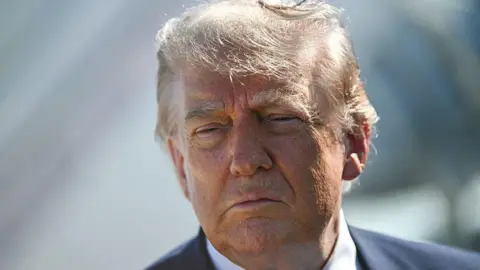




• Where peace talks stand: The US and Iran are signaling progress in efforts to resolve the war, but crucial details of a framework agreement are still under negotiation. President Donald Trump has indicated a deal is close but said the US won’t rush its decision.
• How the deal would work: The framework would give negotiators 60 days to iron out a longer-term agreement, according to a senior Trump administration official. The specific terms surrounding the Strait of Hormuz and Iran’s nuclear program will be critical. Here’s what we know so far.
• Long road ahead: If a deal is reached to end the war and reopen the strait, it will be a lengthy and complex process to alleviate the world’s energy crisis and start lowering prices for consumers.
The framework agreement between the United States and Iran gives the parties “60 days to reach final deal points,” according to a senior administration official.
According to the official, the potential deal would make sure Iran can never possess a nuclear weapon and would commit them to giving up highly enriched uranium, which the president often refers to as “nuclear dust.”
How the stockpile is disposed of remains to be negotiated and would be a part of the next phase of negotiations.
The official said that the deal would reopen the Strait of Hormuz, making sure that it is “de-mined and back open for business” but did not provide specifics on how the critical waterway would function going forward.
“The important part of how this is structured is, if Iran doesn’t perform, they don’t get anything. No dust? No dollars. As the Strait opens, the blockade loosens proportionately,” the official said. “This is ‘trust but verify’ on steroids.”
These details come the day after a call with Gulf and other regional leaders that Trump said “went well.” He said the group discussed all things concerning Iran and related to the memorandum of understanding pertaining to peace. Shortly after that call he said that an agreement had been “largely negotiated” and details would “be announced shortly” but Sunday morning he said that he was not in a rush to finalize anything and believes that time is on his side.
US President Donald Trump said “if” he strikes an Iran deal, it will differ from the one made under former President Barack Obama, saying it “is the exact opposite, but nobody has seen it, or knows what it is.”
“If I make a deal with Iran, it will be a good and proper one, not like the one made by Obama,” he said in a post on Truth Social, saying that deal gave Iran “a clear and open path to a Nuclear Weapon.”
While saying his deal would differ greatly from the Joint Comprehensive Plan of Action negotiated during the Obama administration and insisting it would be the “exact opposite,” Trump said no one knows the full details and the deal isn’t “even fully negotiated yet.”
“Our deal is the exact opposite, but nobody has seen it, or knows what it is. It isn’t even fully negotiated yet. So don’t listen to the losers, who are critical about something they know nothing about. Unlike those before me who should have solved this problem many years ago, I don’t make bad deals!”

While President Donald Trump said a deal is close and both US and Iranian officials are signaling progress in the peace effort, an agreement is not expected to be signed today, a senior US administration official told CNN.
Details of the agreement are still being negotiated, including specific terms around the Strait of Hormuz and Iran’s nuclear program, according to the official. Negotiators are also ironing out details on sanctions relief and unfreezing Iranian assets.
Trump said Sunday that the US won’t rush into a deal and the American blockade of Iranian ports will remain in full effect until an agreement is reached.
Here’s what else we’ve been covering:
- Economic outlook: As momentum builds toward a potential agreement, so are hopes that the conflict’s economic impacts will be abated. But even if a deal is reached to end the war and reopen the Strait of Hormuz, experts expect a logistical nightmare that could keep oil and gas prices stubbornly high for a long time. Top White House economic adviser Kevin Hassett tried to paint a rosier picture in an interview with CBS on Sunday, saying prices will come down soon after the strait and oil refineries reopen.
- Netanyahu weighs in: Israeli Prime Minister Benjamin Netanyahu publicly responded for the first time Sunday to reports of the emerging US-Iran deal, stating that “Iran will never have a nuclear weapon.” Netanyahu said he and Trump are in touch about the negotiations and agree that any final agreement “must eliminate the nuclear danger.”
- Congress reacts: Speaker of the House Mike Johnson predicted that a deal with Iran would bring gas prices down and be “a big thing” for the US midterm elections. GOP Sen. Thom Tillis said a deal would be “doomed to fail” because of a lack of congressional oversight. Democratic Sen. Cory Booker called the potential deal a form of hypocrisy from the Trump administration. And outgoing Rep. Thomas Massie said he would be in favor of a short-term deal with Iran that would allow for more negotiations on the nuclear issue.
- Strait movements: Iran’s Islamic Revolutionary Guard Corps said it had authorized more than 30 vessels to traverse the Strait of Hormuz in the past 24 hours, according to the state-affiliated Fars news agency.
- Key mediators: Pakistan and Qatar have emerged as important mediators between Tehran and Washington, relaying respective peace proposals and counterproposals between the two warring parties.
CNN’s Julia Benbrook, Kevin Liptak, Abbas Al Lawati, Sophie Tanno, David Goldman, Tal Shalev, Eugenia Yosef, Billy Stockwell, Alison Main, Dalia Abdelwahab and Aida Karimi contributed to this report.

Democratic Sen. Chris Van Hollen voiced his concerns regarding President Donald Trump’s potential deal with Iran, claiming he is “digging a hole.”
“Prices are going up, interest rates are going up, and we’re mired in this war in Iran. And when you’re digging a hole, you should stop digging. That’s what this agreement sounds like,” Van Hollen said Sunday on CBS’ “Face the Nation.”
CNN has reported that a deal would potentially include the unfreezing of Iranian assets and the relief of sanctions in exchange for the reopening of the Strait of Hormuz.
The strait “was open before the war started,” Van Hollen said, adding he thinks Iran will retain control over it. “We also know Iran has an even more hardline regime in place now, and we’re talking about releasing some of Iran’s frozen assets. So, look, my view is, as I said, stop digging.”
A US agreement with Iran is not expected to be signed today, a senior administration official tells CNN. According to the official, details of the agreement are still being negotiated.
Iran has committed in principle to reopen the Strait of Hormuz and dispose of its stockpile of highly enriched uranium as part of the agreement with the United States, a separate administration official said.
How exactly the stockpile is disposed of remains to be negotiated, the official added, as does the length of a moratorium on future uranium enrichment.
Sanctions relief and unfreezing Iranian assets would follow only if the Strait reopens and Iran follows through on its commitments to negotiate curbs on its nuclear program, the official said.
The specific dollar amount that Iran would receive as part of the deal have yet to be negotiated, the official said.
This comes the day after President Donald Trump said that an agreement between the United States and Iran had been “largely negotiated,” signaling potential momentum toward ending the monthslong war.
It is still not certain if this draft will turn into a final agreement.

Outgoing US Rep. Thomas Massie said Sunday morning he would be in favor of a short-term deal with Iran that would allow for more negotiations on the nuclear issue.
“I was the author of the first war powers resolution to get us out of Iran,” Massie told NBC News’ “Meet the Press.” “My constituents are hurting. Gas is almost $5 a gallon, diesel is almost $6 a gallon, and the farmers here in Kentucky can’t afford the fertilizer to put on their fields. So, heck yes, I would support it.”
Massie is notably among the few Republicans that diverged from the party line on the matter of the war. That stance, along with Massie’s push to publicly release files related to the activities of convicted sex offender Jeffrey Epstein and other repeated instances of breaking with his party, contributed to President’s Donald Trump’s public chagrin and a successful effort to defeat his 2026 reelection bid.
Trump yesterday said an agreement had been “largely negotiated” although specific terms are still unclear. A regional source with knowledge of the negotiations told CNN that the deal is expected to unfold in two phases, with the first focused on reopening the Strait of Hormuz and the second, lasting 30-60 days, focusing on detailed negotiations over the nuclear issue and other issues.
Massie, who is Libertarian-leaning, seemed to nod at his divergence from the Republican Party on the war, going as far as using some of his colleagues’ skepticism of reports of the deal’s terms as a litmus test for his support of it.
“We don’t know what the terms of it are, but if Lindsey Graham and Ted Cruz were crashing out last night, I’d say it’s probably a pretty good deal,” he said in reference to skepticism from two Republican senators with Iran-hawkish attitudes.

As momentum appears to be building toward a peace agreement between the US and Iran, so too are hopes that the conflict’s significant economic impacts will be abated.
Plenty of uncertainty remains over the exact status of the negotiations and the specific terms of any agreement, including around the Strait of Hormuz, the vital waterway for passage of much of the world’s oil supply.
But if this really, truly is the end of the war and the strait is about to reopen, what happens next? When will prices return to where they were before the war?
Not anytime soon.
First, a logistical nightmare: Once the strait has truly reopened, a complex, multi-step process will have to unfold, including clearing the strait’s existing bottlenecks, drawing down stockpiles, restarting production and making repairs.
What will happen to oil and gas prices: Traders have tried several times to test a new floor for crude, but it hasn’t settled below $94 a barrel since mid-March. Brent crude futures settled at a little over $100 a barrel on Friday, and if traders are optimistic about peace progress, they may try to test the lower limits when trading resumes Monday evening.
JPMorgan analysts, who expect the strait to open toward the beginning of June, expect oil to average $97 a barrel throughout the rest of the year.
Historically, Brent needs to be in the $60 range for $3-a-gallon gas, noted Michael Green, chief strategist at Simplify Asset Management. The futures market currently doesn’t anticipate that happening until 2032.
The longer this peace lasts, and the more evidence that production is rebooting, the lower oil prices could go.
But there’s a lot of “ifs.”
Read our full breakdown of the potential impact on gas prices and the energy market.

On February 28, President Donald Trump announced a “major” attack on Iran, saying the United States’ main objective was “to defend the American people by eliminating imminent threats from the Iranian regime.”
Those threats, he said, included Iran’s nuclear program – a reoccurring sticking point which has also hampered more recent negotiations to end the fighting.
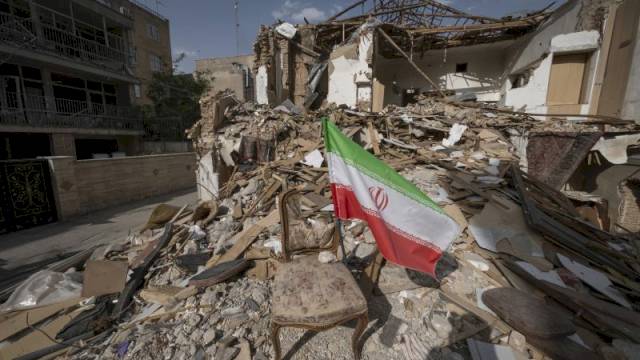
The joint US-Israeli strikes on Iran — which killed then supreme leader Ayatollah Ali Khamenei — resulted in thousands of deaths across the country and caused damage to dozens of museums, historic buildings and cultural sites, according to Iranian media outlets and officials. In response, Iran launched waves of retaliatory strikes across the Middle East and effectively closed the Strait of Hormuz.
Weeks prior to the outbreak of war in February, the Trump administration amassed the largest military buildup in the Middle East since the invasion of Iraq in 2003, triggering warnings about escalating regional violence if a conflict broke out.
At the same time, US envoys were holding regular talks with Iran over a potential new nuclear deal. But those negotiations did little to avert military action, with Trump accusing Iran at the time of rejecting “every opportunity to renounce their nuclear ambitions.”
The start of the war in February also followed mass anti-regime protests in Iran the previous month, fueled by economic discontent amid spiraling costs.
A brutal crackdown by the Iranian regime in response led Trump to promise support for protesters, saying the US was “locked and loaded.”

President Donald Trump said the United States will not “rush into a deal” with Iran, adding that the American blockade of Iranian ports will remain in “full force and effect” until an agreement is reached.
“The negotiations are proceeding in an orderly and constructive manner, and I have informed my representatives not to rush into a deal in that time is on our side,” Trump wrote in a social media post Sunday morning. “Both sides must take their time and get it right. There can be no mistakes! Our relationship with Iran is becoming a much more professional and productive one.”
Trump reiterated that Iran must understand “that they cannot develop or procure a Nuclear Weapon or Bomb.”
The president yesterday said an agreement between the United States and Iran had been “largely negotiated” and that the Strait of Hormuz would be reopened, signaling potential momentum toward ending the monthslong war.
The deal is expected to unfold in two phases, a regional source with knowledge of the negotiations told CNN. In the first phase, Iran will reopen the Strait of Hormuz to its pre-war status with shipping security in the region ensured, and provide assurances that it will not pursue nuclear weapons, the source said. Iran will also be allowed to resume the sale of fuel and oil.
The second phase, lasting 30-60 days, will focus on detailed negotiations over the nuclear issue and other, broader issues, the source said.
Democratic US Sen. Cory Booker expressed his criticism of the deal under negotiation in the US-Iran war, suggesting that the reported parameters expose a form of hypocrisy from the Trump administration after it nixed an agreement formed under the Obama administration.
“(Trump) criticized roundly that the deal that got rid of their nuclear program, or their so-highly-enriched program, involved getting $50 billion for Iran,” Booker, who sits on the Senate Foreign Relations Committee, told CNN’s Jake Tapper on “State of the Union.” “But already, the president’s balance sheet is letting more than $14 billion go through.”
CNN has learned that some metrics of the deal include the unfreezing of some Iranian assets being held in offshore banks. Booker characterized moves in that vein as a double standard that could jeopardize regional stability, pointing out that easing US sanctions could open the door to further enrichment of uranium nearing weapons-grade status.
“The same deal he criticized, he’s already doing worse than,” Booker said. “Giving Iran more money, as he has said, will allow them to do things like fuel their proxies, their terrorist proxies. That’s why this war is wrong.”

GOP Sen. Thom Tillis predicted the deal that President Donald Trump is working to finalize with Iran is “doomed to fail” because it lacks congressional oversight.
Tillis said the deal “doesn’t make sense,” in an interview on CNN’s “State of the Union,” and cast doubt on the likelihood Iran abides by the terms of any agreement.
“We were told about 11 weeks ago by Hegseth and the Department of Defense that they had obliterated Iran’s defenses, and it was just a matter of time before we had the nuclear material. Now we’re talking about a posture where we may accept the nuclear material remaining in Iran. How does that make sense at all?” he asked.
He also said it was “questionable” whether Iran would start clearing out of the Strait of Hormuz before the terms of the deal are established.
“There are a lot of things that need to be explained, and as I’ve said before, any agreement with Iran that isn’t subject to ratification by Congress is going, I think, going to be doomed to fail,” he said.

Israeli Prime Minister Benjamin Netanyahu publicly responded for the first time Sunday to reports of an emerging US-Iran agreement to end the war, stating that “Iran will never have a nuclear weapon.”
The message was posted on X alongside what appeared to be an AI-generated image of Netanyahu and US President Donald Trump.
Later Sunday, Netanyahu added that he and Trump had agreed that any final agreement with Iran “must eliminate the nuclear danger.”
Trump and Netanyahu spoke on Saturday following reports of progress toward a US memorandum of understanding with Iran, amid Israeli concerns that a limited deal that is focused on extending the ceasefire and reopening the Strait of Hormuz would fail to address core issues for Israel, primarily Iran’s nuclear program and stockpile of enriched uranium.
According to an Israeli official, Trump reassured Netanyahu that he would “stand firm” in negotiations on his demand for the dismantling of Iran’s nuclear program and the removal of all enriched uranium from its territory, and would not sign a final agreement without these conditions being met.
This post has been updated with additional comments from Netanyahu.

US President Donald Trump has consistently said that Iran cannot be allowed to have a nuclear weapon.
Indeed, the White House published an account on March 2 entitled “74 Times President Trump Has Made Clear That Iran Cannot Have a Nuclear Weapon.” He has reiterated that many times since.
To that end, US negotiators have sought severe limits on Iran’s ability to enrich uranium as well as the surrender of its existing stockpile of highly enriched uranium, estimated by the International Atomic Energy Agency (IAEA) at 408 kilograms of uranium enriched to 60% – close to weapons grade.
Iran has always maintained that it is not pursuing a nuclear weapon and, as a signatory to the nuclear non-proliferation treaty (NPT), has the right to enrich uranium for peaceful purposes.
Both in negotiations with the US last year and since the conflict began in February, Tehran has resisted long-term suspension of enrichment.
American negotiators proposed a 20-year pause last month, a source familiar with the discussions said. Iran responded with a proposal for a five-year suspension, which the US rejected, according to a US official.
Iran has also resisted sending its enriched uranium abroad, as the US has demanded, and state-linked Iranian media outlets have insisted that a potential document to end the war includes no commitment to hand over stockpiles and postpones nuclear negotiations until after the war ends.
Those negotiations were underway in February when the US and Israel began military strikes against Iran.

Pakistan has emerged as a key mediator between Tehran and Washington amid the tense regional conflict, relaying respective peace proposals and counterproposals between the two warring parties.
The country is well-placed to act as mediator given its cordial ties with both Iran and the United States, with Pakistan’s Army Chief Asim Munir – who US President Donald Trump has called his “favorite field marshal” – leading Islamabad’s efforts.
Pakistan is also home to the largest population of Shia Muslims outside of Iran and unlike Islamic countries in the Gulf region, does not host any US military bases.
Munir met Iran’s Foreign Minister Abbas Araghchi and the country’s chief negotiator Mohammad Ghalibaf in recent days to discuss “preventing escalation” and ending the war, according to Iran’s state news agency IRNA.
Meanwhile, officials from Qatar – a key US ally – also held talks in Tehran earlier this week to support the US in reaching a final deal with Iran, a source with knowledge of the visit told CNN.
Despite the Qatari visit, Iranian Foreign Ministry spokesperson Esmail Baghaei confirmed Pakistani officials would still serve as the official mediators. US Secretary of State Marco Rubio echoed this sentiment on Friday, saying that Pakistan continues to be “the primary interlocutor.”
Oman has also acted as a mediator between the US and Iran, notably as the host of US-Iran nuclear negotiations in Omani capital Muscat before the war broke out. Consultations between Iran and Oman to discuss the Strait of Hormuz are ongoing, Baghaei said earlier this week.
CNN’s Mitchell McCluskey, Mostafa Salem, Jennifer Hansler, Tim Lister and Sophia Saifi contributed reporting.

House Speaker Mike Johnson said the deal with Iran that President Donald Trump is working to finalize will help bolster the GOP in this year’s midterm elections by lowering gas prices, which have skyrocketed since the war began.
“Yeah, it’s a big thing,” he told “Fox and Friends,” weighing in on the political implications of the potential agreement.
Johnson said Republican were hoping to let the economy “take off like a rocket” under the conditions established in Trump’s domestic policy package, which passed with only GOP votes last summer, “and then the Iran skirmish began.”
“So, when this settles out, gas prices come back down to earth, that means your grocery prices come down again because of transport costs and all the rest could be a big factor. The kitchen table issues are going to decide the midterms,” he added.
The Louisiana Republican said he spoke with the president on Saturday night, with Johnson adding he’s “very confident” that the deal will be successful in preventing Iran from developing a nuclear weapon.
Some context: Reopening the Strait of Hormuz, the critical waterway for international oil trade, may not result in an immediate drop in gas prices. Dr. Sultan Al Jaber, CEO of ADNOC, Abu Dhabi’s state oil company, said on Wednesday that full flows through the strait will not return until the first or second quarter of 2027. He noted that it would take at least four months to return oil flow to 80% of what it was before the conflict.

Iran’s Islamic Revolutionary Guard Corps (IRGC) said today that it had authorized more than 30 vessels to traverse the Strait of Hormuz in the past 24 hours, according to the state-affiliated Fars news agency.
The IRGC’s announcement came shortly after a senior Iranian source told CNN the critical waterway was already open, but said “coordination with Iranian relevant authorities must happen to ensure safe transit.”
CNN cannot independently verify the IRGC’s claim, but data from MarineTraffic, a maritime intelligence provider, appears to show several vessels crossing the strait since yesterday, though still fewer than pre-war levels.
On Saturday, US President Donald Trump said the strait “will be opened” as part of an agreement between Washington and Tehran, but he did not explicitly say it would return to unrestricted pre-war navigation.
Iran’s semi-official news agency Tasnim said today the strait “will not return to its pre-war status,” adding that Tehran “continues to emphasize the exercise of its sovereignty over the Strait of Hormuz through various means.”
Iranian state broadcaster IRIB claimed earlier today that 240 vessels are currently waiting to get Iran’s permission to enter the strait.
US Secretary of State Marco Rubio called it “absurd” to suggest that the deal President Donald Trump is teasing with Iran is insufficient.
While on a trip to India, Rubio told reporters that the president’s commitment to stopping Iran from having a nuclear weapon “shouldn’t be questioned by anybody.”
“The idea that somehow this president, given everything he’s already proven he’s willing to do, is going to somehow agree to a deal that ultimately winds up putting Iran in a stronger position when it comes to nuclear ambitions is absurd,” he added.
Trump said Saturday that a broader agreement between the United States and Iran has been “largely negotiated” and that the Strait of Hormuz would be reopened.
Rubio touted “progress” on Sunday, adding, “I’m always cautious when I say that because you can agree to things on paper, they actually have to be implemented.”
“I do think perhaps there is the possibility that over the next few hours the world will get some good news, at least with regards to the straits and with regards to a process that can ultimately leave us where the president wants us to be, and that is a world that no longer has to be in fear or worry about an Iranian nuclear weapon,” he said.
Efforts to broker a deal between the US and Iran are reaching a climax on a hugely symbolic day for Iranians — the anniversary of the 1982 liberation of the city of Khorramshahr, seen as a turning point in the war against Iraq during that decade.
The conflict began in September 1980 when former Iraqi leader Saddam Hussein invaded his neighbor in the wake of the revolution that brought Iran’s clerical leaders to power. The violence, which caused devastating loss for both nations, came to an end in August 1988 with a UN-backed deal.
A host of top officials have issued comments marking the day, which appear as much directed at the US as serving commemorative purpose.
With a deal appearing close, today could also prove a pivotal moment in Iranian history.
“No tyrant has the power to stand against Iran’s devoted and faithful soldiers,” parliamentary speaker and key negotiator Mohammad Bagher Ghalibaf wrote.
In his message marking the anniversary, Ghalibaf praised the “unmatched bravery” of Iranian fighters. “These fighters taught the world that honor and dignity belong to a nation that combines faith, determination, patriotism, and courage with expertise and hard work — and such a nation will never taste the bitterness of defeat,” he said.
Iran’s president echoed Ghalibaf, drawing a direct comparison between the country’s current conflict and that of 44 years ago.
“Khorramshahr today is Iran, the Persian Gulf, and the Strait of Hormuz,” Masoud Pezeshkian said in a post on X. “Resistance, self-sacrifice, and repelling aggression are rooted in the culture of this land.”
Recent progress in mediated talks between Washington and Tehran could mark a “turning point” in efforts to end the Iran war and bring a “new era of stability and prosperity to our region,” a senior Iranian source told CNN today.
President Donald Trump said Saturday that a broader agreement between the US and Iran has been “largely negotiated,” before adding that some details of the deal were still being finalized with Iran and “various other countries.”
The Iranian source praised the role of Middle Eastern nations in helping to mediate between the two warring sides. “We are grateful to our friends and partners in the region for their sincere efforts. It shows that the Middle East is changing and becoming a strong and independent block,” the source said.
Asked about the future of the Strait of Hormuz — which Trump said would be reopened as part of any deal — the official insisted the waterway was already open but said “coordination with Iranian relevant authorities must happen to ensure safe transit.”
The source also warned Trump that renewed military action by the US would lead to an “uncontrollable escalation” in the Middle East and beyond. “Our armed forces are ready to defend our nation’s interests and dignity to the last bullet and soldier,” the source added.

US President Donald Trump told Israeli Prime Minister Benjamin Netanyahu he supports the country’s wish to “maintain freedom of action against threats on all fronts, including Lebanon,” an Israeli official told CNN, amid signs of progress toward a deal to end the Iran war.
In a call with Trump on Saturday evening, Netanyahu “emphasized that Israel will maintain freedom of action against threats on all fronts, including Lebanon, and President Trump reiterated his support for this principle,” the official said on Sunday.
Meanwhile, the US is keeping Israel informed about the latest negotiations between Washington and Tehran for a memorandum of understanding to reopen the choked Strait of Hormuz and “on entering talks for a final agreement regarding the disputed issues.”
Trump made clear in the call that he will “stand firm in negotiations on his consistent demand for the dismantling of Iran’s nuclear program and the removal of all enriched uranium from its territory,” the official said.
The Israeli official added that Trump said he would not sign a final agreement “without these conditions being met.”