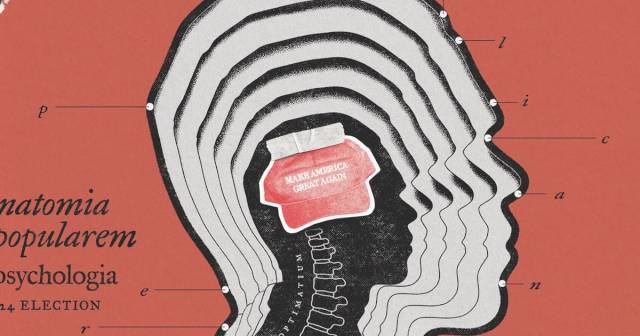
With the new year, shock and indignation that the nation could elect Donald Trump — the cause of the Jan. 6 insurrection — for a second time probably has morphed for many into more nuanced emotions.
In late November, my column leaned into several takeaways, including my decision to avoid left-leaning podcasts and YouTube segments as well as MSNBC and talking heads generally. Reports about ratings suggest I had lots of company.
That said, I have resumed dutifully reading the New York Times and Washington Post out of professional obligation and civic responsibility. We cannot pretend away the daily clown show of abhorrent appointees and reckless pronouncements.
In that same column and at full rant, I pledged to sever contacts with the type of Trump voter I encounter most — affluent men and women who covet low taxes and to hell with everyone and everything else.
More recently, my take-my-ball-and-go-home instincts toward Trump voters collided with the message from Ben Wikler, Wisconsin’s Democratic Party chair.
Wikler was telling me in an interview, as he has told comedian Jon Stewart and many others in his campaign to lead the Democratic National Committee, that we need to understand things through the eyes of lower-income, low-or-no information voters who supported Trump.
To make his case, Wikler sets $50,000 in annual income as the cutoff. People making less may have been getting some form of financial help during the pandemic. Then it ended just as inflation spiked grocery and gasoline prices. Many of them decided to vote for change, any change, not for Trump’s vision. We need to understand and learn from that, Wikler argues.
Thinking about that, and generally about the psychology surrounding defeat, I spoke with an expert, Paula Niedenthal, a psychology professor at the University of Wisconsin-Madison. An expert on human emotions, Niedenthal called my notion of cutting off personal contact with Trump voters a losing idea.
“It’s the wrong direction to go for many, many reasons,” she said. “I would encourage people not to do that. Just avoiding people or saying I’m going to end the relationship, I would argue is a bad idea.”
That said, she added, “Talking about something people don’t want to talk about is also often a bad idea. So, if it works for people to maintain relationships but avoid the topic of politics, I think that’s a great idea if that’s how that works for them. Because there are probably 2,000 other domains that they can talk about.”
She suggested that people who supported Vice President Kamala Harris question their approach in interacting with Trump backers: “What are my motives in engaging them? Am I trying to change their mind? Am I trying to show them that they’re stupider than I am?
“We have to be curious about the other person. If they’re angry, ask them why they’re angry. Or if they have a perspective on what’s important to them, ask them about that, but don’t pretend one knows better what is good for them.”
She also said that it is important that people — I think she means highly educated progressives clustered in places like Madison — not to assume we have the answers.
“People can’t be told what their interests are,” she said. “We need to hear from them what they regard as their most pressing interests, then engage in that rather than telling them … how they are voting against their own best interests.”

University of Wisconsin-Madison psychology Professor Paula Niedenthal says telling Donald Trump voters there is 50 years of research proving that Reaganomics does not help the middle class is unlikely to be persuasive.
UNIVERSITY OF WISCONSIN-MADISON
She added, “Trying to get them more money for some reason may or may not be what their biggest interest is,” Niedenthal said.
Niedenthal referenced Maslow’s hierarchy of needs, a psychological theory that outlines human needs in descending order, starting at the top with basic ones like food and water, then safety and security, love and belonging, esteem, and so forth.
Uppermost needs must be met before others come into play. “If you even think of it in those terms, maybe they need to feel safe first before they can worry about whether trickle-down economics doesn’t work,” she said.
Niedenthal said telling Trump voters there is 50 years of research proving that Reaganomics does not help the middle class is unlikely to persuade. She added, “I think people have to listen to the actual concerns of other people and not tell them what to be most concerned about.”
Niedenthal also emphasized that her research and other research suggests those on the political extremes on both sides are comparatively few.
“It’s like one-tenth of one percent of people who are making a lot of noise,” she said. Niedenthal said she is less interested in those who are “noisy on the fringes, or who are trying to take all the air out of the room.”
“I do think that starting with a sense of modesty and understanding that the differences are trivial compared to the similarities is a good way to approach people,” she said.
“Obviously, the more ideological social scientists will pull on the data … convenient to them, but I think a more unbiased view is that there are more similarities than differences.”
My principal takeaway from all of this is to, at minimum, try to resist painting Trump voters with a single brush.
As the inauguration looms, here’s my plan:
My enmity will endure for country-club Republicans who know but don’t care that climate change, racial and social injustice are all real, who know there is enormous middle-class suffering from decades of deindustrialization. It is, after all, about their own net worth.
My even greater disdain will continue for extremist yahoos who gloat about Trump keeping women and people of color “in their place” and, as they love to boast, “owning the libs.”
But for what is probably the largest segment of Trump voters, the approaches urged by Wikler and Niedenthal are convincing. Better political outcomes in the future will require a better understanding of the perspectives of the non-combatants.
Even if they voted for Trump. Especially if they voted for Trump.
Leave a Reply