Live Updates
Trump’s agenda faces legal challenges as president is set to announce new tariffs
” data-timestamp-html=”
” data-check-event-based-preview data-is-vertical-video-embed=”false” data-network-id data-publish-date=”2025-02-10T15:53:41.680Z” data-video-section=”politics” data-canonical-url=”https://www.cnn.com/2025/02/10/politics/video/former-doge-member-val-hoyle-musk-digvid” data-branding-key data-video-slug=”former-doge-member-val-hoyle-musk-digvid” data-first-publish-slug=”former-doge-member-val-hoyle-musk-digvid” data-video-tags data-breakpoints=”{“video-resource–media-extra-large”: 660}” data-display-video-cover=”false” data-details data-track-zone=”live-story-lede” data-sticky-anchor-pos=”bottom”>
‘It’s about intimidating workers’: Lawmaker who left DOGE caucus speaks out
02:41 – Source: CNN
• Extension on “buyouts” deadline: A federal judge has extended a pause on the deadline set by the Trump administration for federal workers to accept a deferred resignation and temporarily prohibited the government from soliciting more so-called buyouts. This comes as another judge on Monday told the administration it can’t cut off grant and loan payments.
• New tariffs loom: President Donald Trump said he would announce a 25% tariff today on steel and aluminum imports. Trump also said he planned to announce massive new reciprocal tariffs this week, which could match other countries’ tariffs on US goods dollar-for-dollar.
• Trump doubles down on Gaza plans: Trump said explicitly in an interview this weekend that Palestinians would not have a right to return to Gaza under his plan to take US ownership of the strip and rebuild it. Trump is set to meet Tuesday with King Abdullah of Jordan, who has rejected his plan.
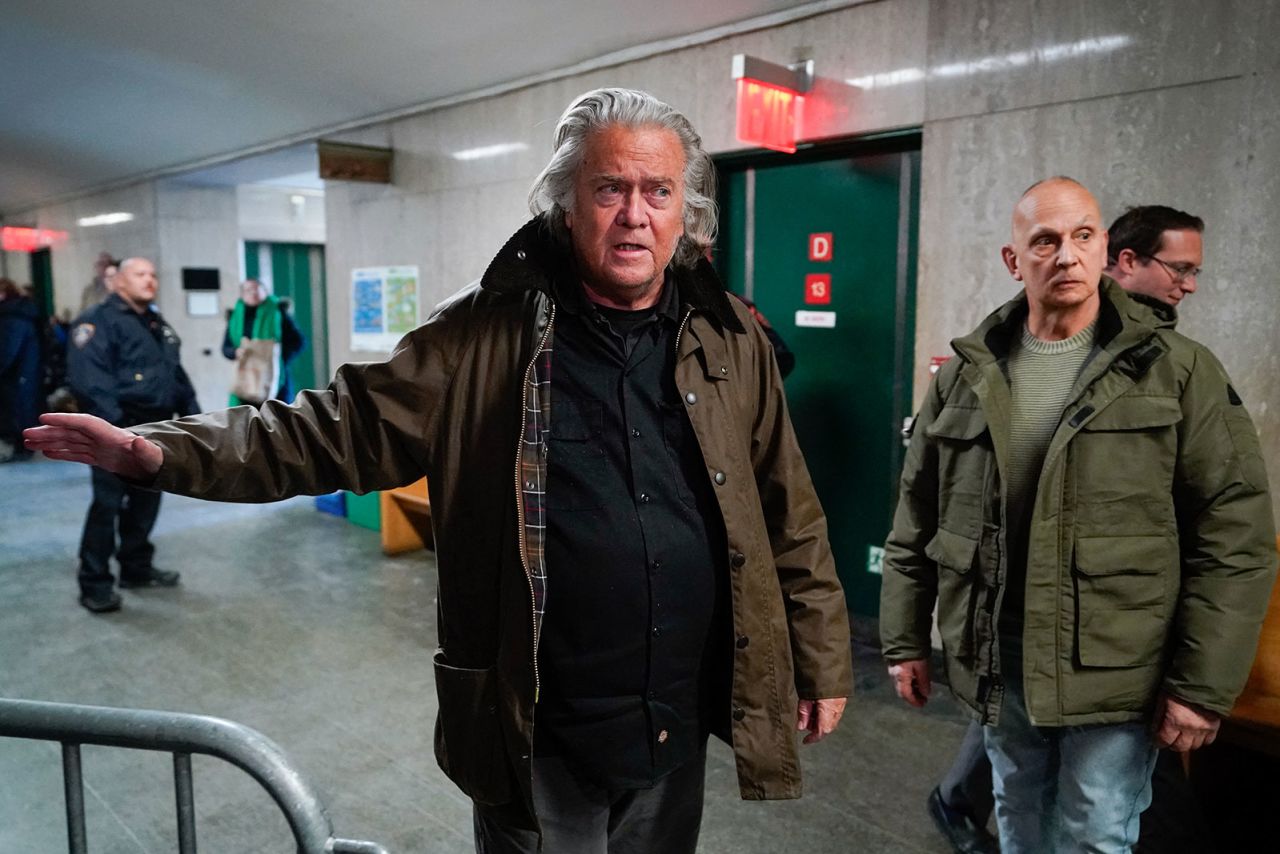
Steve Bannon is in talks to plead guilty to criminal charges related to a fundraising campaign to build a wall along the southern US border, a person familiar with the negotiations told CNN.
Bannon, a right-wing podcast host and the chief executive of Donald Trump’s 2016 presidential campaign, has remained a strident supporter of the president. He served time in prison after being convicted in 2022 for not complying with a subpoena from the House Select Committee that investigated the January 6, 2021, insurrection at the US Capitol.
Talks between Bannon and the Manhattan District Attorney’s office are ongoing and a deal has not been finalized, the person said. A court hearing is scheduled for Tuesday morning, the person added.
A lawyer for Bannon declined to comment. A spokesperson for the district attorney couldn’t be reached.
Republican Sen. John Cornyn said Monday he does not think there is a risk that President Donald Trump‘s administration will ignore federal court rulings against them, referring to the 1805 case of Marbury vs Madison that established judicial review of the other two branches of government.
Asked directly if he is concerned Trump will ignore decisions from federal courts, Cornyn said: “I don’t think that’s a risk. I honestly don’t. For the reason I said. I think to complain about the ruling of an individual district judge that’s been picked by a litigant because they thought that he or she would be more favorable to their cases”
Cornyn, a former Texas state judge and current member of the Senate Judiciary Committee added: “Those cases will be appealed to a circuit court or the Supreme Court that will ultimately decide and I would expect those decisions to be honored.”
Asked if Trump can dismantle federal agencies without Congress’s okay, he didn’t directly answer.
President Donald Trump said he is naming Ric Grenell, a longtime confidant already serving in multiple administration positions, to lead the Kennedy Center on a temporary basis after declaring himself the institution’s chairman late last week.
Some background: Trump on Friday said he was dismissing the Kennedy Center’s board and installing himself as its chairman. On Monday, a roster of previous board members had been scrubbed from the center’s website.
Among the board’s most immediate tasks had been to identify a replacement for the center’s president, Deborah Rutter, who announced last week her intent to step down. The board had retained a headhunting firm to help identify a new leader.
Grenell is currently serving as Trump’s envoy for special missions, a role that recently took him to Venezuela for meetings with the country’s leaders focused in part on releasing detained Americans.
He has also acted as a representative for the Trump administration in California as the state recovers from wildfires in Los Angeles.
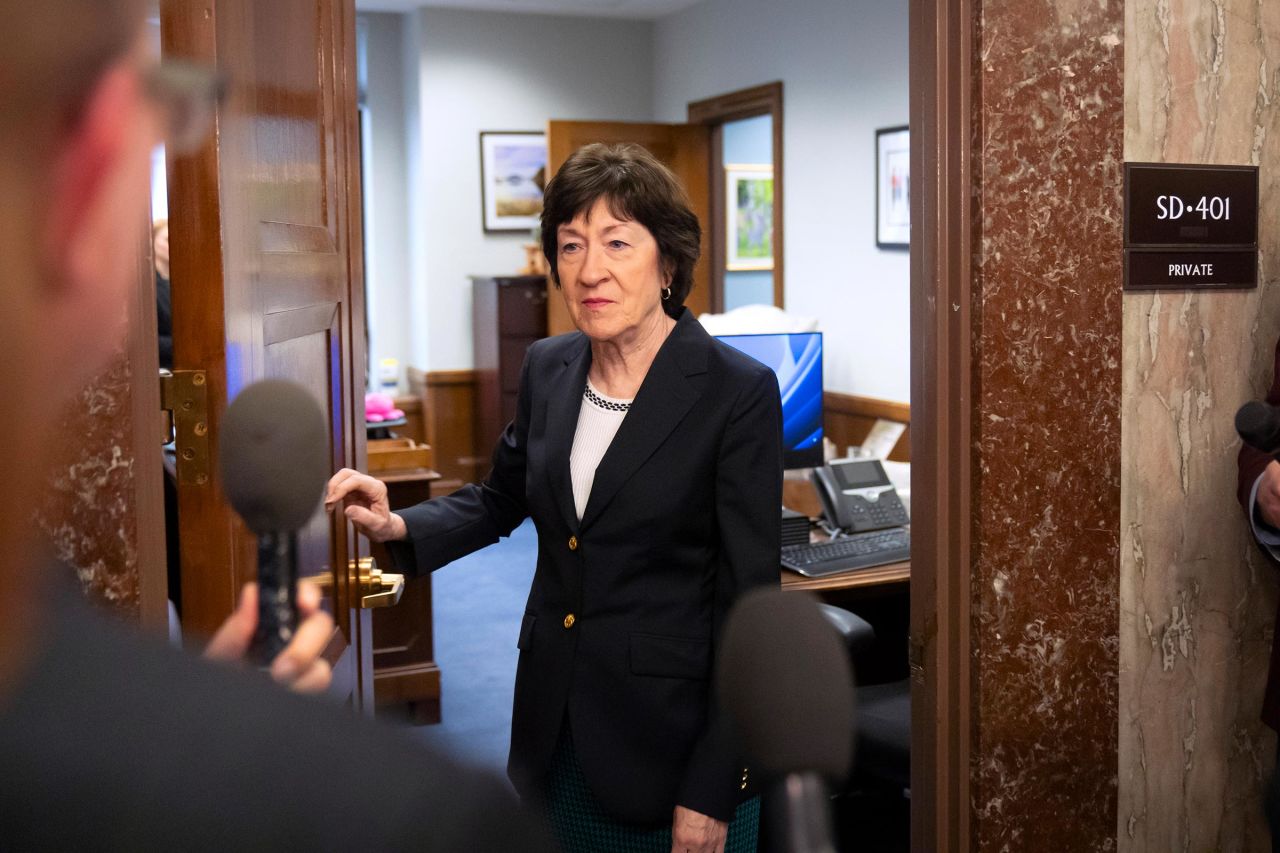
GOP Sen. Susan Collins said for the first time on Monday that she will support Robert F. Kennedy Jr., a big boost for President Donald Trump’s pick to lead the US Department of Health and Human Services.
Collins, who had declined to say how she would vote as she continued to review the nomination last week, told CNN that she plans to support Kennedy.
She was one of the few Republican senators who had not yet said how she would ultimately vote on the nominee. Her statement on Monday signals that Kennedy’s nomination has a path forward, after Sen. Bill Cassidy, another GOP swing vote, said last week he also supports Trump’s pick.
Collins said earlier in the day that she spoke to Kennedy about her “strong opposition” to “arbitrary” cuts to parts of the National Institutes of Health budget that she says could be “devastating” to critical research initiatives.
She told reporters Kennedy said he would “reexamine” the cuts, and “he seemed to understand the concerns I was raising.”
A federal judge has extended a pause on the deadline set by the Trump administration for federal workers to accept a deferred resignation and temporarily prohibited the government from soliciting more so-called buyouts.
The temporary restraining order announced from the bench on Monday by US District Judge George O’Toole will remain in place for now until the judge decides if he should indefinitely pause the offer’s deadline pending further court proceedings over the legality of the buyout program.
Some background: Last week, O’Toole initially extended the deadline until Monday, just before it was set to go into effect.
O’Toole, who was appointed to the bench by former President Bill Clinton, is continuing that earlier extension. The judge is likely to issue a written order in coming hours that more fully explains the terms of his order, but he did not say when that would come before leaving the bench Monday.
Before the rulings, eligible federal workers had until 11:59 p.m. ET on Thursday to decide whether to take the offer, which will generally allow them to leave their jobs but be paid through the end of September.
The pause stems from a lawsuit that the American Federation of Government Employees and several other unions filed in US District Court in Massachusetts. In addition to halting the deadline to decide, the unions also want to “require the government to articulate a policy that is lawful, rather than an arbitrary, unlawful, short-fused ultimatum which workers may not be able to enforce.”
CNN’s Tami Luhby, Alayna Treene and Tierney Sneed contributed reporting to this post, which was updated with background on the case and more about what could come next.
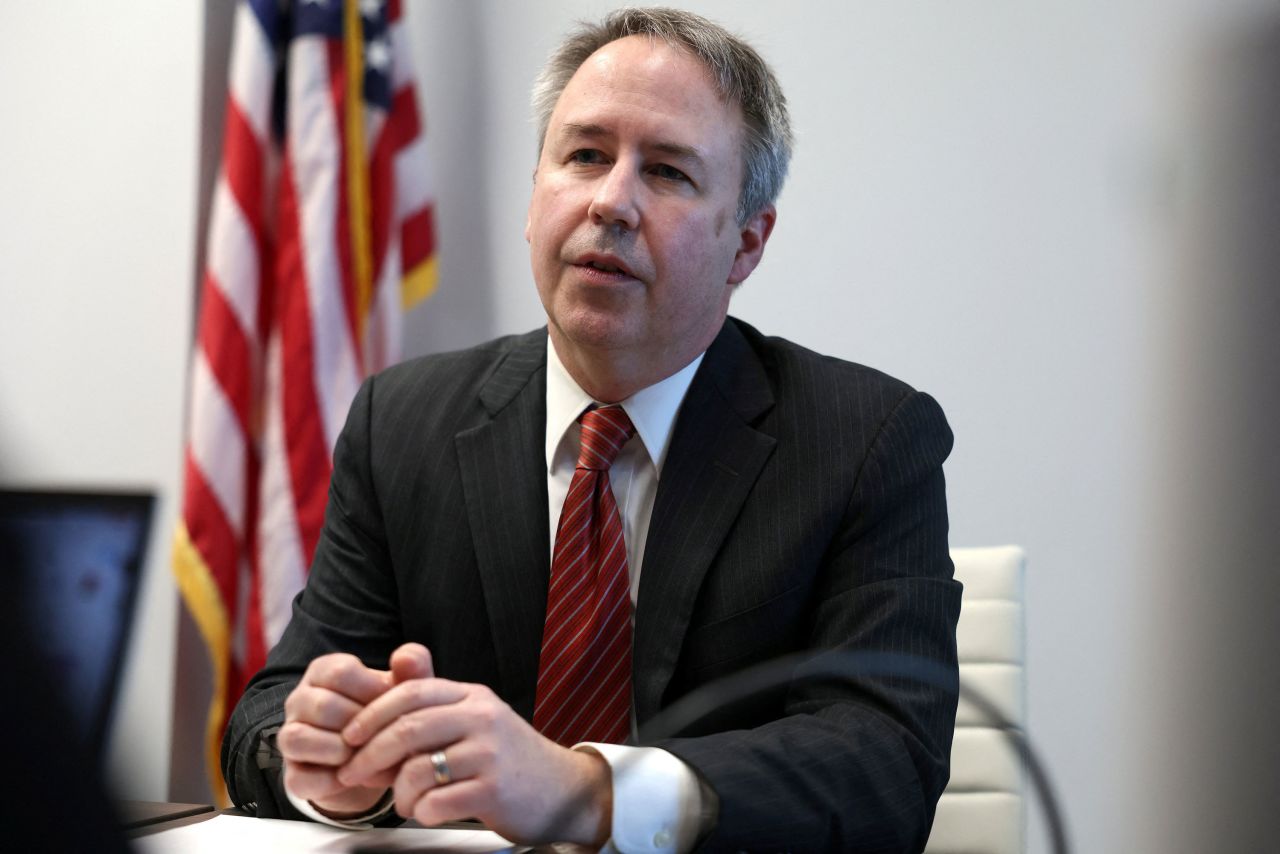
President Donald Trump is removing the head of the Office of Government Ethics from his post, the agency said Monday – the latest example of the president acting against a government watchdog.
The agency’s director, David Huitema, was confirmed to the post by the Senate in November. He had been nominated by President Joe Biden but had languished for more than a year in the Senate before lawmakers confirmed him by a 50-46 vote during a post-election lame-duck session.
A statement on the agency website reads: “OGE has been notified that the President is removing David Huitema as the Director of OGE. OGE is reverting to an Acting Director.”
Read more details here about Huitema’s ouster
President Donald Trump is expected to sign executive orders at 5:30 p.m. from the Oval Office, the White House just said this afternoon.

The Trump administration’s dismantling of the US Agency for International Development and its sweeping freeze on foreign assistance has made it more difficult to track potential misuse of US taxpayer-funded humanitarian assistance, the agency’s independent watchdog said.
This means the money could end up unintentionally going to terrorist groups, according to a new report from the USAID Inspector General’s office.
The reports conclusion appears to undermine President Donald Trump and Elon Musk’s arguments that their moves to abolish the agency will curtail fraud and fraud.
Although the report notes that the office has long “identified significant challenges and offered recommendations to improve Agency programming to prevent fraud, waste, and abuse,” it makes clear that the slashing of USAID personnel as well as the foreign assistance freeze have negatively impacted efforts at oversight.
USAID requires that programs in Afghanistan, Iraq, Lebanon, Pakistan, Syria, the West Bank and Gaza, and Yemen receive “partner vetting,” in order to ensure that taxpayer funds do not end up supporting groups like Hamas, Hezbollah, ISIS, or the Houthis. According to the report, these vetting efforts have ground to a halt because of the reduction in staff at USAID.
In a high-stakes bid that could reshape the future of artificial intelligence, Elon Musk is leading a group of investors that have offered to buy OpenAI, the parent company of ChatGPT, for $97.4 billion.
Musk has long feuded with Sam Altman, the CEO of OpenAI and he has filed a number of legal complaints against the company and Altman, claiming that the AI company and its leadership have misrepresented OpenAI as a philanthropy. Musk claims that OpenAI has broken with its founding charter by seeking to make a profit with its AI tools.
OpenAI is operated by a nonprofit that controls an entity called OpenAI LP, a for-profit company that exists within the larger company’s structure. That for-profit company took OpenAI from effectively worthless to a valuation of around $100 billion in just a few years — and Altman is largely credited as the mastermind of that plan and the key to the company’s success.
The massive investment from Musk, first reported in the Wall Street Journal, could give Musk majority control of the company that rivals his X.AI artificial intelligence company.
Read more here about Musk’s bid for OpenAI
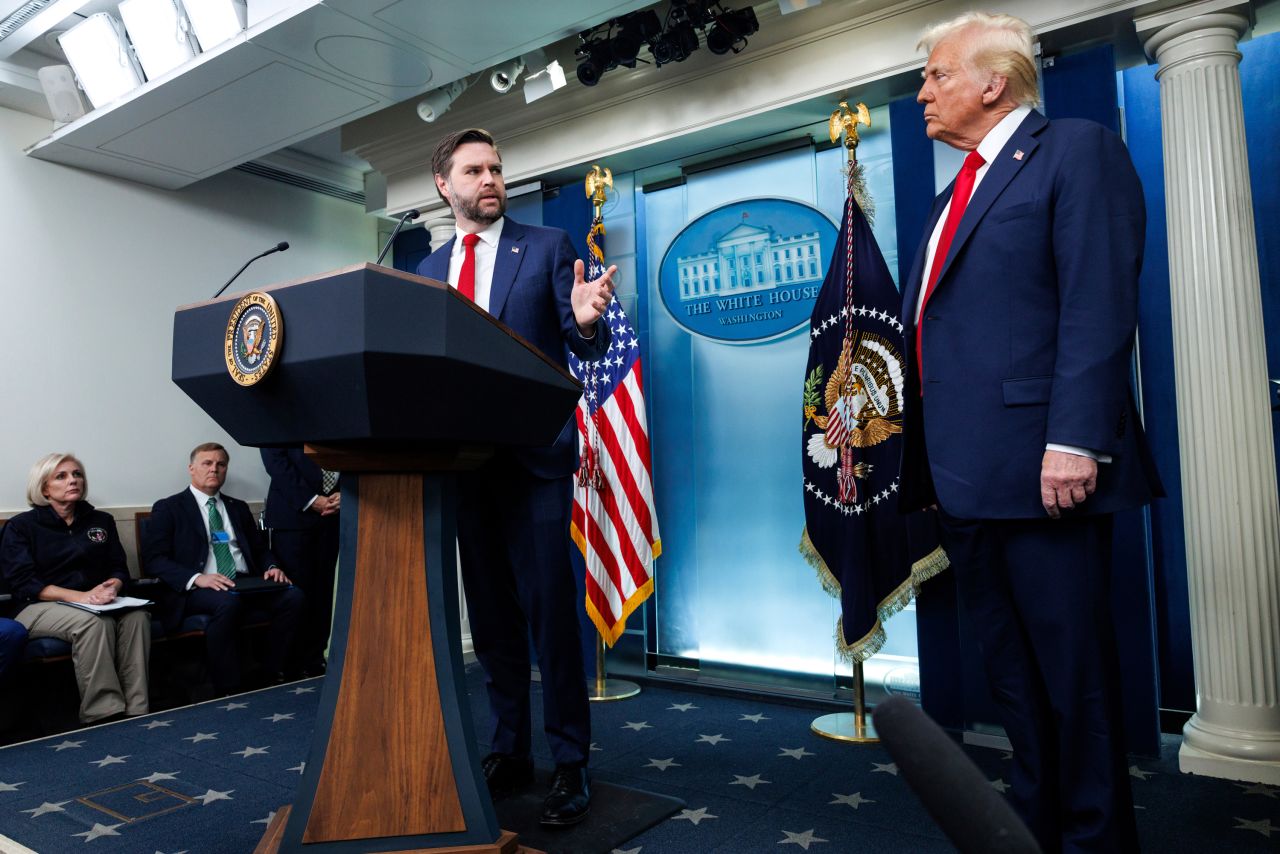
President Donald Trump doesn’t view Vice President JD Vance as his potential successor, but he does consider him “very capable,” he told Fox News’ Bret Baier during a pre-taped interview.
When asked if he sees the vice president as his successor, Trump was quick to respond: “No, but he’s very capable.”
“I think he’s doing a fantastic job. It’s too early, we’re just starting,” Trump added.
Trump swiftly pivoted the conversation to focus on his presidency.
Federal workers told a judge Monday that the Trump administration hasn’t reinstated US Agency for International Development employees who were put on leave, as was ordered by the court late last week.
This is the second time in the past four days where litigants have accused the administration of not complying with federal judges’ orders. It’s not clear yet if that is intentional, and if the examples are merely anecdotal.
Earlier on Monday, in a different case, a federal judge in Rhode Island found that the administration violated the “plain text” of an order unfreezing billions of dollars in federal aid.
In a new filing in the Washington, DC, federal court, federal workers with the Foreign Service and USAID who were put on leave by the administration last week said it doesn’t appear they were reinstated.
Judge Carl Nichols in Washington ordered the administration on Friday to reinstate the USAID workforce that had been put on leave, essentially pausing the Trump administration action as it tries to shut down the foreign aid work globally.
One USAID worker who works on treating HIV-positive patients said she lost access to her government laptop and cell phone at the end of January, and still has no access to federal systems. Others in sworn declarations in court on Monday echoed the same types of difficulties.
Some USAID employees said they weren’t being reinstated until political appointees approved.
As GOP hardliners spent the weekend pushing party leaders to cut deeper into Medicaid in an effort to advance Donald Trump’s tax and border agenda, swing-district Republicans have been warning the president directly that it would cost him control of the House.
Trump’s ability to pass his agenda through a narrowly divided Congress will depend on the outcome of a quickly escalating battle between ultra conservatives and swing-district members over spending cuts. Trump and his Capitol Hill counterparts, Senate Majority Leader John Thune and House Speaker Mike Johnson, are now working to decide how deeply to slash spending on popular — yet expensive — programs like Medicaid, and how much of a potential political firestorm they’re willing to withstand.
That answer, so far, is unclear. House GOP leaders worked throughout the weekend to try to get clarity on just how far their conference and the White House would be willing to go.
Read more here about the GOP battle over Medicaid cuts
Nearly two dozen states sued the Trump administration Monday over cuts to public health research funding.
The Democratic attorneys general of 22 states alleged in the lawsuit that the newly announced cuts “will mean the abrupt loss of hundreds of millions of dollars that are already committed to employing tens of thousands of researchers and other workers, putting a halt to countless life-saving health research and cutting-edge technology initiatives.” The lawsuit also argued cutting funding would have “ripple effects into the private sector.”
The complaint indicated that the states will be seeking a temporary restraining order pausing the cuts, adding to the pile of quick-moving court proceedings challenging President Donald Trump’s aggressive reshaping of the federal government.
Under the challenged plan, funding from the National Institutes of Health known as indirect cost rates would be capped at 15%, from an average of more than 27%. Some research institutions, including Harvard, have rates higher than 60%, according to the NIH, which said in a post on X last week that the policy would save more than $4 billion a year.
Those rates are aimed at covering the various overhead costs — like facility costs, regulatory compliance and administrative support — that research institutions must account for to support their research. If the administration’s plans to cut those rates are not halted, the “cutting edge work to cure and treat human disease will grind to a halt,” the lawsuit, which was filed in Massachusetts federal court said.
NIH’s parent agency, the US Department of Health and Human Services, has the authority to make these changes, its director of communications, Andrew Nixon, told CNN in an email.
The White House also defended the new policy: “Contrary to the hysteria, redirecting billions of allocated NIH spending away from administrative bloat means there will be more money and resources available for legitimate scientific research, not less,” spokesman Kush Desai said.
Sen. Majority Leader John Thune defended Tulsi Gabbard’s nomination to serve as Director of National Intelligence, as Senate Republicans work to confirm her later this week.
At around 5:30 p.m. ET on Monday, the Senate is expected to vote on limiting debate on her nomination, one step closer to confirming the former Democratic congresswoman. Gabbard is one of President Donald Trump’s more controversial nominees, but she has secured the support of several key GOP swing votes, including Sens. Susan Collins and Todd Young.
Thune highlighted her military service and focused on her promise to “rightsize” the Office of the Director of National Intelligence.
“I am glad that Ms. Gabbard plans to focus on identifying and eliminating redundancies and inefficiencies to restore the office to what it was originally designed to be,” he said.
He also said that he was “glad to hear” Gabbard refer to FISA Section 702, a key surveillance and security tool, as essential, after Gabbard seemed to go back and forth on her position on the issue.
“Tulsi Gabbard is a patriotic American. She believes strongly in the mission with which she’ll be tasked, keeping America safe,” he declared.

Ukrainian President Volodymyr Zelensky said Monday that “some serious people” from US President Donald Trump’s team will visit Ukraine this week ahead of a security conference in Germany.
Zelensky did not specify which “serious people” he was referring to.
Speaking from Kyiv, Zelensky said he planned to meet with US Vice President JD Vance at the Munich Security Conference, as well as members of Trump’s team. The conference is taking place between February 14 and 16.
The Ukrainian leader said in his daily address on Monday that he is “preparing for substantive negotiations” with the US and European allies on Wednesday, referring to his country’s security and financial needs.
More background: The European Investment Bank announced on Monday that it, along with the European Commission, is set to approve a 2 billion euros ($2.1 billion) contribution to Ukraine, which includes funds to help restore and protect the country’s energy systems.
Last week, Trump officially appointed 80-year-old retired Gen. Keith Kellogg as his envoy to Ukraine and Russia. Kellogg then announced he would discuss their vision for peace in Ukraine with allies at the Munich Security Conference. The US envoy is then expected, four days later, to visit Kyiv, for his first, long-anticipated trip there, according to Ukrainian state media.
Speaker Mike Johnson downplayed the division between the House and the Senate on Monday over how to advance President Donald Trump’s agenda. The Republican leader is trying to coalesce his narrow majority behind a budget plan that would advance one bill and the Senate forges ahead with its own two-bill strategy.
“I spent a good while talking with Lindsey Graham at the Super Bowl in the suite with the president, and he and I are on the same page,” he told CNN.
Graham, the chair of the Senate Budget Committee, released bill text on Friday for a package that would give $150 billion to the military for defense and $175 billion for border security, with the intention to look at increasing funding for domestic energy and extending the 2017 tax cuts in another package. He is holding a markup on the bill in committee on Wednesday.
“There is no daylight between us. We all want exactly the same thing. We’re working on the best and most effective and efficient way to get there. I continue to believe it is the one-bill strategy,” he said. Johnson added that Graham “understands that,” but that senators “want to move and show some action.”
Graham later said that he prefers one bill, “but reality is something altogether different.” He argued that the Department of Homeland Security needs more funding as soon as possible to implement Trump’s border policies, and that waiting to finalize a more complex, comprehensive package is not acceptable.
Pressed by Raju on how much the Senate is complicating the process, Johnson responded, “I wouldn’t say it’s helpful,” but added, “we all feel the same sense of urgency.”
Meanwhile, the House Freedom Caucus is rolling out its own budget blueprint amid the standoff within the House GOP conference about the path ahead. The caucus wants a two-bill strategy like Senate Republicans, but their bill differs greatly from that plan as well, setting up yet another complication in this process.
Their plan includes $200 billion in border and defense money (about half of what the Senate bill would), a debt ceiling increase to $4 trillion (not in Senate bill) and $486 billion in cuts they say will result in $286 billion in real deficit reduction over 10 years.
This post has been updated with details on the plan of the House Freedom Caucus and comments from Graham. CNN’s Lauren Fox contributed reporting to this post.
The Department of Homeland Security has asked Treasury Secretary Scott Bessent to deputize some workers, including Internal Revenue Service officers, to help with immigration enforcement, according to two memos obtained by CNN.
It’s the latest in a string moves to build out the Trump administration’s immigration enforcement apparatus.
In a memo dated February 7, DHS Secretary Kristi Noem listed department needs relating to immigration enforcement.
The memo states that U.S. Immigration and Customs Enforcement (ICE) is seeking help with building cases that “blend tax, immigration, and money laundering charges” and requesting the IRS partner with DHS to conduct employer investigations, as well as assist in identifying and dismantling financial networks supporting human smugglings, among other asks.
The memo also lists items DHS needs assistance with, such as helping with detention facility pick-ups and escorting and/or supporting interior transportation and removal of migrants
The memo notes that the administration has already extended authority to several Justice Department agencies, certain members of the Texas National Guard, among others.
The memo was first reported by the Wall Street Journal.
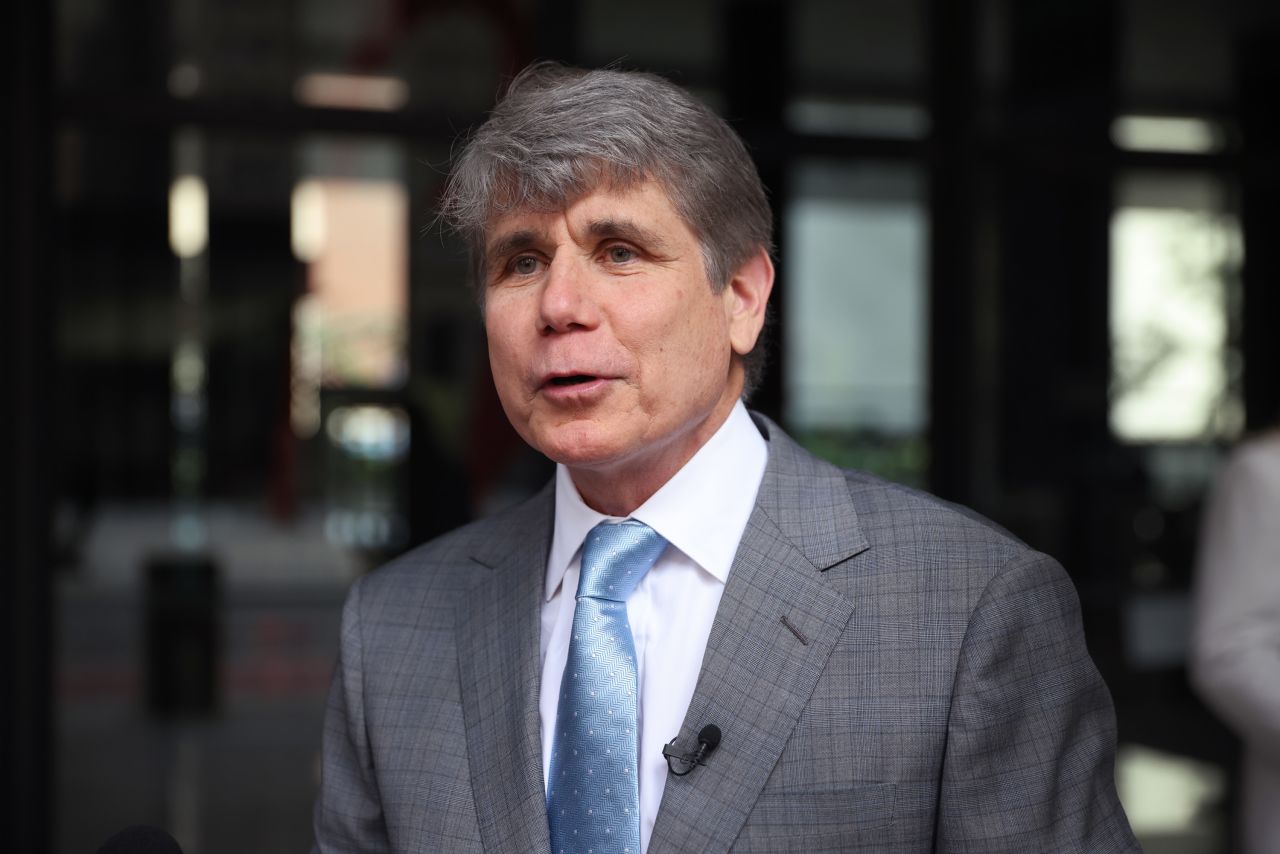
President Donald Trump is planning to pardon former Illinois Gov. Rod Blagojevich on Monday, a source familiar with the matter told CNN, nearly five years after commuting Blagojevich’s 14-year sentence.
Blagojevich served eight years of a 14-year sentence after being accused of attempting to sell Barack Obama’s US senate seat after Obama won the 2008 presidential election.
Axios first reported on the expected pardon.
Trump and Blagojevich, who have known each other for more than a decade, have grown closer in the years since Trump commuted his sentence. Blagojevich has appeared at some Trump campaign events in recent years as well as met with Trump on occasion at Mar-a-Lago.
A federal judge on Monday, for the second time, told the Trump administration it can’t cut off grant and loan payments, after several Democratic-led states complained that the administration wasn’t obeying previous court orders and was still withholding federal funds from some groups.
The latest court order is yet another admonition from the federal judiciary that some of President Donald Trump’s executive actions since he took office four weeks ago may be legally unsound, especially as the president and his appointees try different tactics of stopping outgoing federal payments to non-profit groups and others.
The court’s order is aimed at restoring the flow of federal money to some programs, especially in the environment and health care sectors and at universities.
For instance, the states told the judge on Friday that meetings were canceled and money was being withheld related to climate and pollution grants from the Environmental Protection Agency, a Department of Energy rebate program and solar energy project, Head Start child care programs in Michigan and Vermont, National Institutes of Health work on dementia research, and the University of Washington’s HIV prevention program, among other things.
McConnell also noted that the administration attempting to freeze some federal funds is “likely unconstitutional and has caused and continues to cause irreparable harm to a vast portion of this country.”
Defense Secretary Pete Hegseth ordered an immediate pause of all scheduled or planned medical procedures related to gender transition for US service members in a memo issued last week.
The memo also formally paused the process of transgender individuals joining the military, following President Donald Trump’s executive order banning transgender service members.
The pause on medical procedures includes “newly initiated gender-affirming hormone therapy.”
The memo follows Trump’s executive order last month, which said the “medical, surgical, and mental health constraints” on transgender individuals are “inconsistent” with the needs of the military.
Outside of the physical or medical requirements, Trump’s order also took aim at the personal ethics of transgender service members, saying that their gender transition “conflicts with a soldier’s commitment to an honorable, truthful, and disciplined lifestyle,” and is “not consistent with the humility and selflessness required of a service member.”
Hegseth’s memo said individuals “with gender dysphoria have volunteered to serve our country and will be treated with dignity and respect.”
Leave a Reply