
Putin’s shadow hovers over Munich conference againpublished at 10:46 Greenwich Mean Time
 Paul Kirby
Europe digital editor
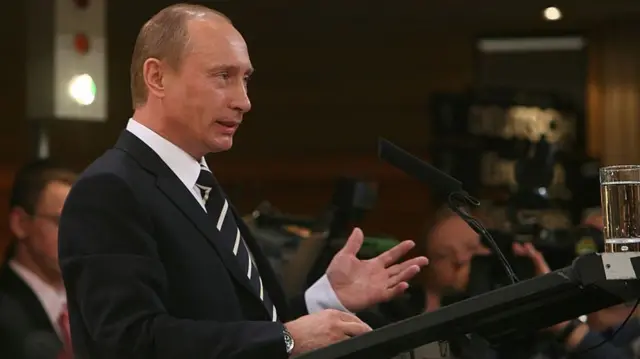 Image source, Getty Images
Putin rejected a US-led “unipolar world” at Munich in 2007, and invaded Georgia a year later
Vladimir Putin is not there, and the organisers of the Munich Security Conference say there is no Russian delegation representing him either, despite what President Trump suggests.
But now that Trump has said he’s talked to Russia’s leader and that peace talks on the war in Ukraine will start soon, he is very much on people’s minds in Munich, yet again.
It was back in 2007 that Putin stunned the world with a speech to the Munich conference that attacked the US and rejected the post-Cold War world order. A year later he invaded Georgia.
In 2022, Munich hosted Ukraine’s Volodymyr Zelensky, five days before Putin sent troops across his borders in a bid to capture Kyiv. Zelensky’s speech to the conference via video-link the following year pleaded for more Western weapons to fight Russia, saying “Goliath must lose”.
Last year’s event was also overshadowed by Putin, when Yulia Navalnaya addressed delegates hours after the death of her opposition leader husband in a Russian jail. Putin and his “horrific regime” should be fought by the international community, she said.
Russia not sending officials to Munich, foreign ministry sayspublished at 10:35 Greenwich Mean Time
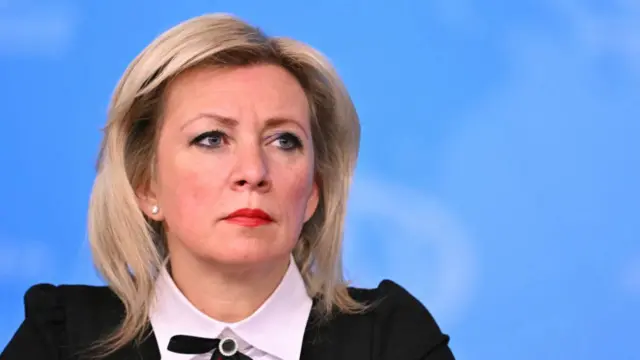 Image source, Getty Images
There will be no Russian delegation at the Munich security conference, according to Russia’s foreign ministry spokeswoman Maria Zakharova.
There had been some uncertainty over whether a Kremlin delegation would attend.
While they had not been expected to, Donald Trump’s remark that talks could be held between Ukrainian and Russian officials at the summit sowed some doubt.
However, neither Moscow or Kyiv had given any indication they expected talks to take place – and the BBC was told earlier that no Russian officials were in attendance.
Ukrainian President Volodymyr Zelensky arrives in Munichpublished at 10:27 Greenwich Mean Time
Daniel Wittenberg
Reporting from Munich
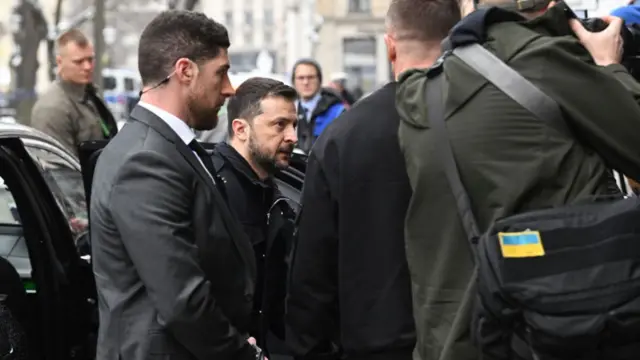 Image source, Getty Images
President Zelensky has just arrived at the Munich Security Conference.
He walked in through the front entrance of the Bayerischer Hof Hotel flanked by security.
The expectation was that he would have met US Vice President JD Vance by now, but that bilateral has reportedly been delayed.
The Ukrainian president is due to appear on the main conference stage later this afternoon.
No contact between US and Russian officials – Kremlinpublished at 10:25 Greenwich Mean Time
Earlier this week, Donald Trump said peace talks would start immediately – but the Russian side says negotiations are not under way quite yet.
It will still take a “number of days” until contact between US and Russian officials is established, the Kremlin says.
Spokesperson Dmitry Peskov told reporters “there is no news yet” on how negotiations between Moscow and DC will be arranged, according to Russian state-owned news agency Tass.
Ukraine on ‘irreversible path’ to Nato, Downing Street sayspublished at 10:09 Greenwich Mean Time
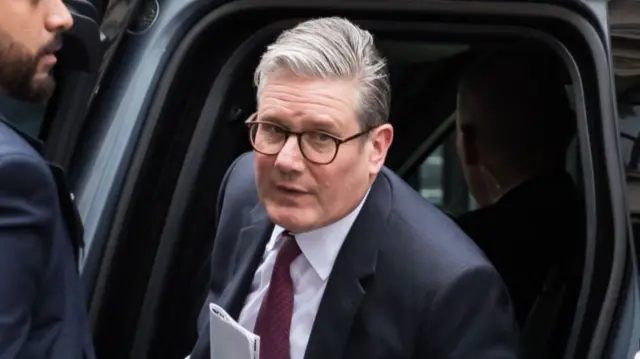 Image source, Getty Images
UK Prime Minister Sir Keir Starmer spoke to President Volodymyr Zelensky this morning, renewing the country’s support for Ukraine “for as long as it’s needed”.
Starmer also “reiterated the UK’s commitment to Ukraine being on an irreversible path to Nato, as agreed by Allies at the Washington Summit last year,” a spokeswoman for No 10 said.
With his words, Starmer echoes those agreed upon by Nato members last year in July when they pledged their support for an “irreversible path” to future membership for Ukraine. A formal timeline for it to join the military alliance was not agreed.
The PM’s comments come a day after US Defence Secretary Pete Hegseth rejected the idea of Ukraine joining Nato when talking to leaders in Brussels earlier in the week.
Images show damage to Chernobyl nuclear plant shieldpublished at 09:52 Greenwich Mean Time
We can bring you more images now from the Chernobyl nuclear power plant – Ukraine says a protective structure at the nuclear power plant has been hit by a Russian drone, but that there are no signs of increased radiation.
These images come from Ukraine’s State Emergency Service.
The International Atomic Energy Agency (IAEA) earlier posted images of a fire on the structure.
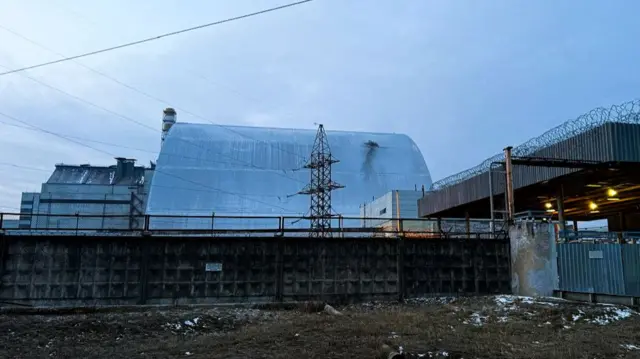 Image source, Reuters/State Emergency Service Of Ukraine
Damage on a protective shield over the remains of a reactor at Chernobyl
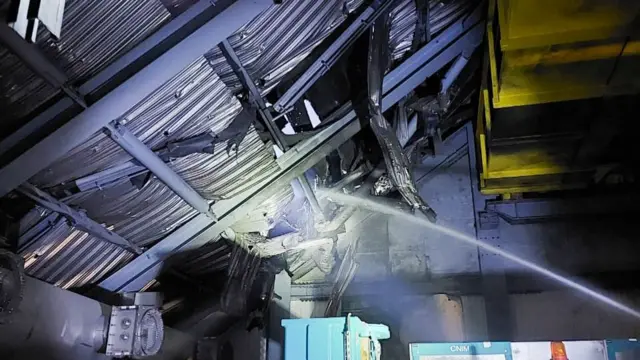 Image source, Reuters/State Emergency Service Of Ukraine
Firefighters at the scene overnight
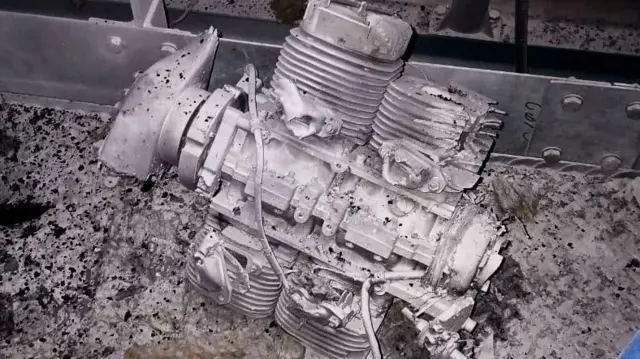 Image source, Reuters/State Emergency Service Of Ukraine
What Reuters describes as an “engine of a Russian kamikaze drone” under the New Safe Confinement protective structure
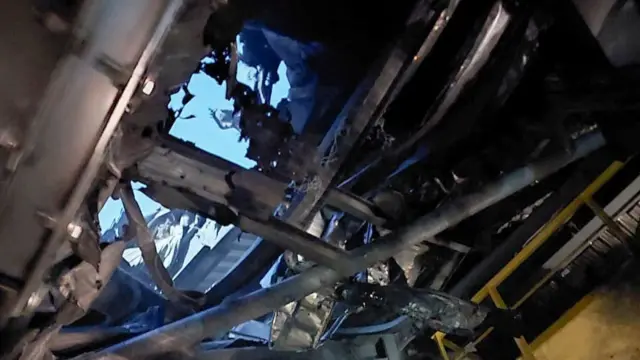 Image source, Reuters/State Emergency Service Of Ukraine
An interior view of the damage
Widespread anger in Munich over Chernobyl strike, Ukraine claimspublished at 09:42 Greenwich Mean Time
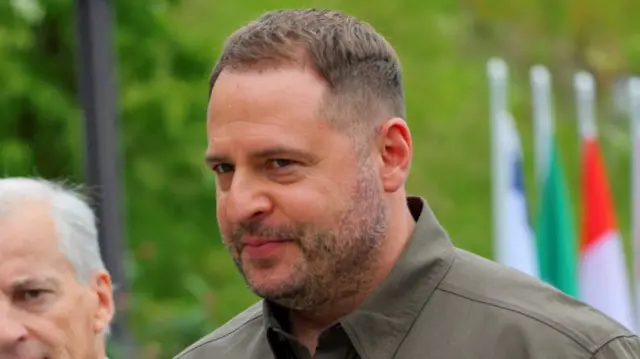 Image source, Reuters
The head of Zelensky’s office, Andriy Yermak, says “everyone” at the Munich Security Conference is “angry” after a protective shield at the Chernobyl nuclear power plant was damaged overnight.
Ukraine says a Russian drone was responsible – Russia is yet to comment.
“Everyone here at Munich is angry at the news. Not concerned, as they often are, but truly angry,” Yermak writes on Telegram. “Because back in the 80s the whole world helped the Kremlin clean up after the tragedy.”
He adds: “The whole world invested in the shelter, and now these Russian idiots fired a drone at it.”
Echoing him, Ukrainian Foreign Minister Andrii Sybiha writes on X: “A Russian drone struck Chernobyl, damaging the New Safe Confinement and causing a fire at the site of one of history’s worst nuclear disasters.
“Leaders gathering today in Munich face a choice: stop Russia or face a global disaster. Russia must be forced to peace through strength.”
Hegseth arrives in Poland after incendiary comments on Ukrainepublished at 09:35 Greenwich Mean Time
 Will Vernon
Reporting from Warsaw
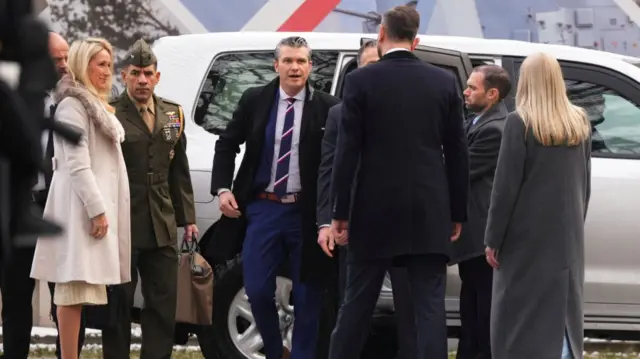 Image source, Reuters
The US Secretary of Defence is in Warsaw for talks with the Polish defence minister and the Polish president as part of his first overseas tour.
Pete Hegseth comes here leaving a trail of incendiary comments in his wake that have alarmed many in this part of Europe. Speaking at meetings in Brussels, he said returning Ukraine to its internationally-recognised borders was “unrealistic”. He cast doubt on Nato’s Article Five on collective defence, and he played down any prospect of Ukraine joining the alliance.
Those comments, together with Donald Trump’s proposals to hold direct talks with Vladimir Putin, led to a cacophony of criticism – that Hegseth and his boss had given Putin what he wanted before peace talks had even begun.
Hegseth yesterday rejected that accusation, saying Donald Trump wouldn’t let anyone turn “Uncle Sam” into “Uncle Sucker”.
But Polish officials have joined their European colleagues in voicing their support for Ukraine. Privately, officials are absolutely furious that the US President appears to be planning to hold talks with Russia without any sign of involvement of European countries, but mostly importantly of all of course, without Ukraine.
But for a country that shares borders with both Ukraine and Russia, Warsaw is also keen to secure the future of the US military presence in Poland.
Vance and Hegseth expected to unveil US plans for Ukrainepublished at 09:23 Greenwich Mean Time
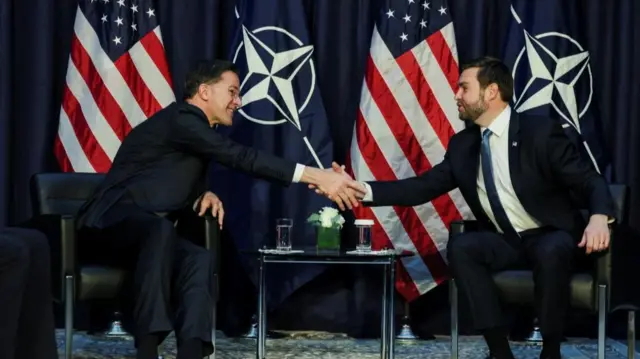 Image source, Reuters
US government officials are continuing their visit to Europe as frictions between the two allies grow following controversial comments on Ukraine.
Vice President JD Vance has now arrived in Munich where he met Nato Secretary General Mark Rutte and is expected to present US plans to end the war in Ukraine later today.
Defence Secretary Pete Hegseth has also arrived in Warsaw where he is meeting members of the Polish government to discuss military arrangements and the situation in Ukraine.
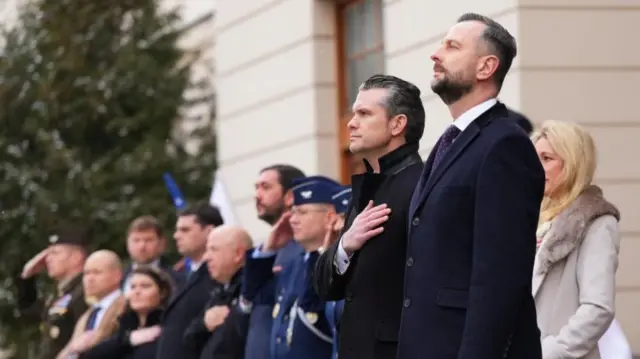 Image source, Reuters
Ukraine braces for new bitter pill to swallow as Zelensky meets Vancepublished at 09:15 Greenwich Mean Time
 Anthony Zurcher
North America correspondent
Volodymyr Zelensky’s goals in his meeting with Vice-President JD Vance seem clear – to encourage the US to continue to stand by Ukraine and keep the beleaguered nation’s best interests in mind as the it tries to negotiate an end to the war.
What the Americans want from this meeting with Zelensky is more uncertain. Vance may try to assure Zelensky that the Ukrainians will be involved in the upcoming peace negotiations, even if lately it seem as though they will be a junior partner.
Zelensky reportedly was not given a heads-up about this week’s call between Vladimir Putin and Donald Trump. The American president, who conducts a free-wheeling style of diplomacy, only contacted his Ukrainian counterpart after the 90-minute US-Russia dialogue had been completed.
Vance, in fact, may be delivering a blunt message – one that Defence Secretary Pete Hegseth said publicly on Monday, even if he later walked it back somewhat.
The US does not envision a Nato that includes Ukraine. And in order to end the war, Ukraine will have to give up territory that is currently under Russian control.
It might be a bitter pill for Zelensky to swallow, but the kind of additional US military aid to Ukraine that it eventually would need to keep up the fight seems unlikely at this point.
Neither Trump nor Republicans in Congress have much interest in keeping the support going. That’s another message Vance may deliver – and it will be a bitter pill for the Ukrainian leader to swallow.
How did we get here?published at 09:05 Greenwich Mean Time
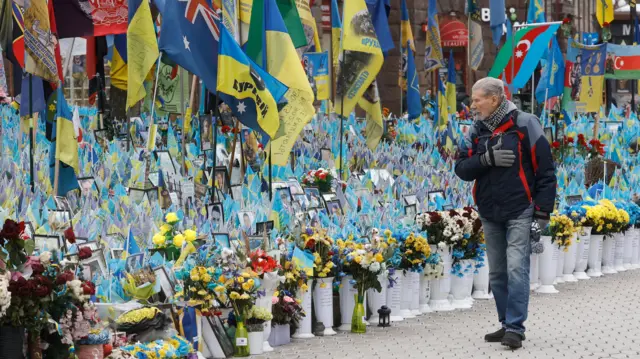 Image source, EPA
After almost three years of Russia’s war in Ukraine, a possible peace deal is front of mind as world leaders gather for the annual Munich Security Conference.
Before it gets under way, let’s remind ourselves how we got here:
- In the run up to the US presidential election, now President Donald Trump promised to end the war in Ukraine within 24 hours of taking office
- That hasn’t happened – but days into Trump’s presidency he told Russian President Putin to “end the ridiculous war” or face new sanctions
- Earlier this week, Trump announced that he and Putin had agreed in a phone call to begin talks to end the war
- Meanwhile, Ukrainian President Volodymyr Zelensky said his country must be involved in negotiations – the Kremlin said Ukraine will “one way or another be taking part”
- Zelensky will be in Munich today, and is due to meet Trump’s Vice-President, JD Vance, and US Secretary of State Marco Rubio
Chernobyl’s radiation levels remain normal – International Atomic Energy Agencypublished at 08:57 Greenwich Mean Time
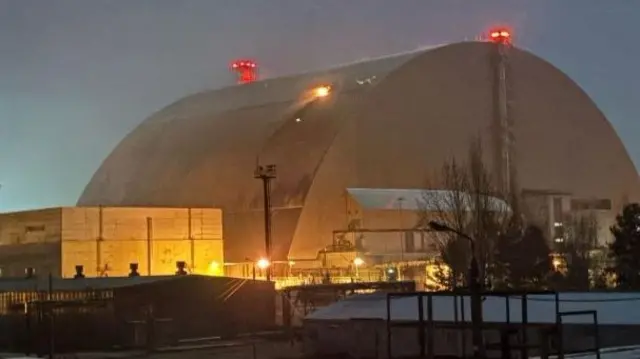 Image source, International Atomic Energy Agency
An image posted online by the IAEA alongside an update on the Chernobyl nuclear power plant
More now on Ukrainian claims that a Russian strike has damaged the protective shield over the Chernobyl nuclear power plant.
The International Atomic Energy Agency (IAEA) says its team on the ground heard an explosion overnight coming from the “New Safe Confinement, which protects the remains of reactor 4” causing a fire.
It says this happened at 01:50 – which, if that is local time in Ukraine, would be 11:50 GMT on Thursday night.
“At this moment, there is no indication of a breach in the NSC’s inner containment. Radiation levels inside and outside remain normal and stable. No casualties reported. IAEA continues monitoring the situation,” the international body says in a message on social media site X, external.
Its director general, Rafael Mariano Grossi, says the incident and a recent increase in military activity around Zaporizhzhia nuclear power plant underline persistent nuclear safety risks, according to the message on social media.
“There is no room for complacency, and the IAEA remains on high alert,” he says.
Europe worries about Trump’s unilateral actions on Ukrainepublished at 08:47 Greenwich Mean Time
 Lyse Doucet
Chief international correspondent
It’s hailed as “the transatlantic partnership.” Wolfgang Ischinger has seen its highs and lows up close as the German diplomat who chaired the Munich Security Conference for 14 years.
And this year it’s at its lowest.
“The biggest worry is what we’ve been trying to build for decades – a rules-based, institutions-based international system – is more or less shattered,” he tells me as the annual Munich Security Conference begins under the shadow of President Trump’s sudden unilateral intervention to end the war in Ukraine.
“The good news is what we’ve all wanted, discussions about how to end this war, have started” says Ischinger, who is now the President of the Munich Security Conference Foundation.
“But there is a lot of worry here in Europe,” he says, reflecting the chorus of criticism from European leaders which is certain to be amplified here in Munich.
Describing himself as an optimist, he emphasises “hopefully we can see at the end of this weekend an agreed path, not a unilateral path by President Trump with President Putin”.
He speaks of the need to avoid a “huge transatlantic crisis of mutual mistrust” with an outcome “that will reinforce the awareness on both sides of the Atlantic that we need each other”.
That’s a huge challenge but with so much at stake for Europe, the mood in Munich is the urgent need to do everything possible to resolve this deepening crisis.
‘Disturbing’ communication between the US and Russia gives Putin what he wantspublished at 08:39 Greenwich Mean Time
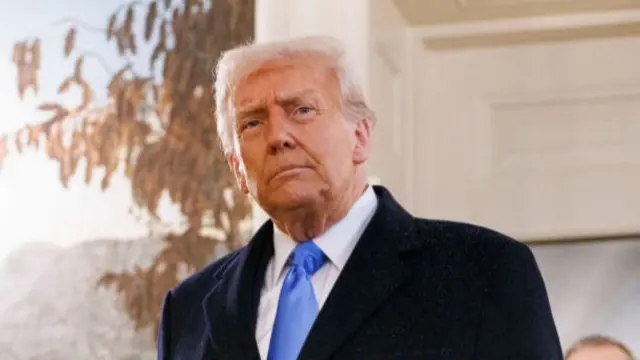 Image source, Getty Images
US President Donald Trump is giving Putin what he wants with the way discussions are taking place, Sam de Bendern, associate fellow at Chatham House and former Nato Ukraine officer, tells the BBC’s 5 Live Breakfast.
“The statements that have been coming out of various US officials in the past few days are striking in one thing – they are using elements of language that is exactly what Vladimir Putin has been saying for years,” de Bendern says.
She adds that throughout the war, communication between Russian and US officials has taken place behind the scenes, but “what is disturbing in the way these discussions have taken place is that Trump has given Putin what he wants, which is a return to the international arena”.
“He agreed to meet him before negotiations even begin; he’s given Putin the prize win of the negotiation,” de Bendern adds.
Ukrainian MP says ‘highly unlikely’ Russia, US will impose bilateral peace dealpublished at 08:25 Greenwich Mean Time
Ukrainian MP Lesia Vasylenko says it is “highly unlikely” Russia and the US will be able to impose their version of peace.
Her comments comes after US Defence Secretary Pete Hegseth told Nato defence ministers yesterday that the Trump administration envisaged Ukraine giving up territory in exchange for peace.
“This is two major superpowers who have a lot of weight over what goes on Ukraine. But let me just remind you that in 2022, when Russia escalated the aggression, Ukraine had no military aid, Ukraine had no financial aid,” Vasylenko tells the BBC’s Newsday programme.
“The world – including the United States – were expecting Ukraine to collapse, and yet we stood. And this is what will happen in this case as well,” Vasylenko says, adding Ukraine is ready to discuss peace talks.
Asked whether regaining all its territory was still a red line for Ukraine in any peace talks, she says it’s a choice for the entire international community.
Organisers say there’s no Russian delegation in Munichpublished at 08:12 Greenwich Mean Time
 Frank Gardner
Security correspondent, in Munich
There is no Russian delegation here at the Munich Security Conference, the organisers say.
US President Donald Trump has said they are at the talks in Munich – it’s possible they could be somewhere else in the city but officials here tell me the German government is unlikely to have given them visas.
Chernobyl’s protective shield damaged by Russian strike – Ukrainepublished at 08:08 Greenwich Mean Time
Ukrainian President Volodymyr Zelensky has claimed a Russian drone armed with a “high-explosive warhead” struck a protective shield over the Chernobyl nuclear plant.
He says initial assessments show the damage to the shelter is “significant” but that “as of now, radiation levels have not increased”.
“The only country in the world that attacks such sites, occupies nuclear power plants, and wages war without any regard for the consequences is today’s Russia. This is a terrorist threat to the entire world,” Zelensky says in a message on social media, external.
And the Ukrainian leader also says that Russia is continuing to expand its army and “shows no change in its deranged, anti-human state rhetoric”.
“This means that Putin is definitely not preparing for negotiations — he is preparing to continue deceiving the world. That is why there must be unified pressure from all who value life – pressure on the aggressor. Russia must be held accountable for its actions,” he says.
A reactor explosion at Chernobyl nuclear power station in 1986 spread radiation across Europe. This plant has long be decommissioned but still contains dangerous radioactive material.
Russia has not yet commented.
Life on the front line: ‘If I wake up in the morning, that’s already pretty good’published at 07:58 Greenwich Mean Time
 James Waterhouse
Ukraine correspondent in Kyiv
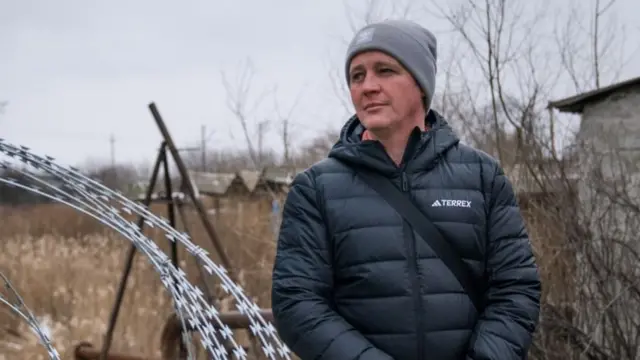 Image source, BBC/Matthew Goddard
As we wait to learn whether a meeting between Ukrainian and Russian officials will actually happen in Munich today, we can bring you comments from one Ukrainian whose town’s future depends on the outcome of potential peace talks.
“I have no plans for the future at all,” says Oleksandr Bezhan, standing next to an empty, frozen paddock where he used to work as a fisherman on the bank of the Dnipro river in southern Ukraine.
“If I wake up in the morning, that’s already pretty good,” he says.
Malokaterynivka sits just 15km (9 miles) north of the front line in Ukraine’s Zaporizhzhia region.
If US President Donald Trump succeeds in halting the war, Malokaterynivka is hoping to end up on the right side of that front line. But ending the war will not be as simple as blowing a full-time whistle.
“If the front line becomes a border, it would be scary… fighting could break out at any moment,” explains Oleksandr.
‘Peace talks far more likely to be in Putin’s favour than Ukraine’s’ – former army commanderpublished at 07:45 Greenwich Mean Time
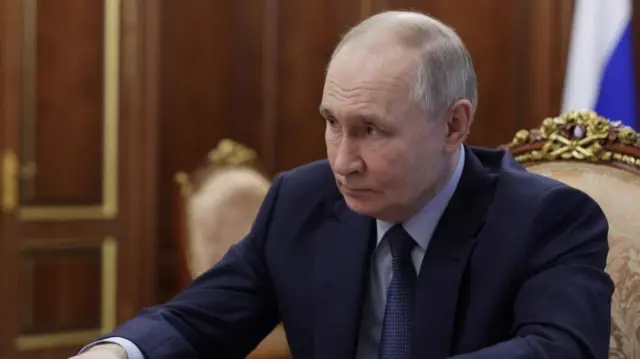 Image source, Getty Images
Russian President Vladimir Putin is unlikely to want to continue fighting in Ukraine due to the “pretty dire economic state” Russia is in, a former British Army officer says.
Richard Kemp, who commanded British troops in Afghanistan, suggests Russia can keep on fighting but “it’s unclear how long it will be able to do this for”.
“I think Russia needs to end the conflict. But I think the outcome of peace talks is far more likely to be in Putin’s favour than Ukraine’s,” Kemp tells BBC Radio 5 Live Breakfast.
“We might end up with an occupied or partially occupied Ukraine and Russia in a position where it can lick its wounds and then potentially rebuild its armed forces, hope to rebuild its economy so that it can start again perhaps on Ukraine or perhaps on somewhere else in the future.”
He adds: “The tragic reality is that its going to look like a victory for Russia than for Ukraine or NATO.”
- For context, since Russia’s invasion of Ukraine in February 2022, the US, UK and EU, along with countries including Australia, Canada and Japan, have imposed more than 21,692 sanctions on Russia, external. US Treasury claims sanctions are damaging Russia, having cut 5% from the economic growth, , externalit might have had between 2022 and 2024
Macron reacts to Trump’s ‘electro-shock’ return as he weighs in on Ukrainepublished at 07:30 Greenwich Mean Time
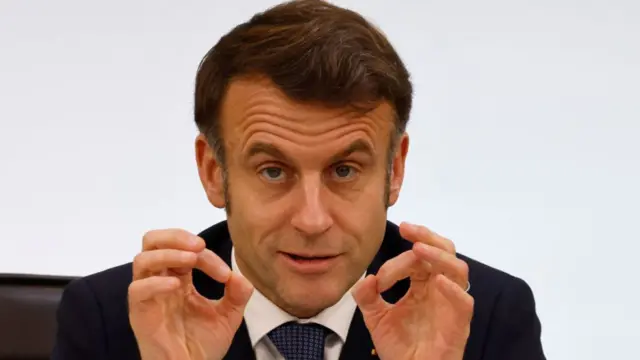 Image source, Getty Images
French President Emmanuel Macron warns that a peace agreement to end the war in Ukraine that was in effect a capitulation to Russia would be “bad news for everyone”, including the United States.
Macron tells the Financial Times, external that only Ukraine’s president Volodymyr Zelensky could negotiate on behalf of his country.
He also agrees with the Trump administration’s position that Europe has a responsibility to ensure Ukraine’s security – adding the US president’s return to the White House has been a “electro-shock”.
Macron also tells its European partners they need to “muscle up” on defence and the economy.
Leave a Reply