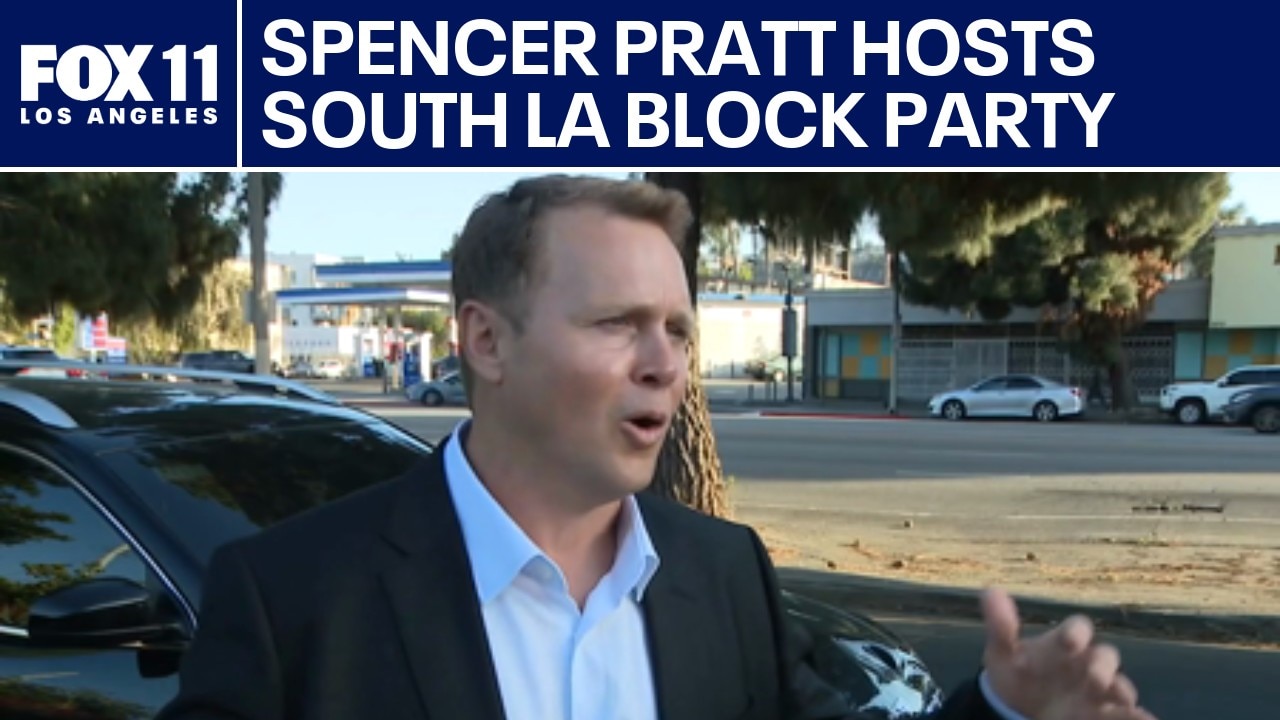
Riverside County Sheriff Chad Bianco, who’s been trailing the frontrunners in the California governor’s race in recent polls, took a swipe at fellow GOP candidate Steve Hilton over the weekend, saying his endorsement from President Donald Trump will keep him from winning independent and Democratic voters in California.
Trump to hold call with regional countries about the situation with Iran
President Donald Trump will hold a call Saturday on the situation with Iran and “leaders from nations including Saudi Arabia, Qatar, the UAE, Egypt, Jordan, Turkey and Pakistan” will join, a regional official told Fox News.
Pinned
Trump says US is ‘getting a lot closer’ to reaching a deal with Iran: report
President Donald Trump said negotiators from the U.S. and Iran are “getting a lot closer” to finalizing a deal, CBS News reported Saturday.
Sources familiar with the talks told CBS News that the latest proposal on the table includes a process to reopen the Strait of Hormuz and the unfreezing of some Iranian assets being held in foreign banks.
Trump also told the network that he believes the final deal will prevent Iran from obtaining a nuclear weapon, otherwise he “wouldn’t even be talking about it.”
“I will only sign a deal where we get everything we want,” Trump reportedly added.
Posted by Greg Norman-Diamond
Sen. Roger Wicker says proposed Iran ceasefire would undo ‘Operation Epic Fury’
Sen. Roger Wicker, R-Miss., warned Saturday that a rumored 60-day ceasefire agreement with Iran would undermine recent U.S. military gains and allow Tehran to regroup.
“The rumored 60-day ceasefire — with the belief that Iran will ever engage in good faith — would be a disaster,” Wicker wrote on X.
“Everything accomplished by Operation Epic Fury would be for naught!” he added.
The Mississippi Republican has emerged as one of the most outspoken GOP voices arguing against a diplomatic settlement with Tehran following recent U.S. military operations and escalating tensions surrounding the Strait of Hormuz.
Wicker previously warned that continued negotiations with Iran could project “weakness” and urged President Donald Trump to allow U.S. forces to continue degrading Iran’s military capabilities.
The comments come as Trump administration officials signal that negotiations with Tehran may be making progress, with Secretary of State Marco Rubio saying Saturday there was “a chance” Iran could accept a deal within days.
Posted by Brittany Miller
Regional diplomat says Trump call with Middle East leaders on Iran was ‘very positive’
A regional diplomat told Fox News on Saturday that President Donald Trump’s call with Middle East leaders regarding Iran was “very positive” and showed signs of diplomatic progress.
“The call was very positive. Good progress is being made,” the diplomat told Fox News chief foreign correspondent Trey Yingst.
“Regional leaders were supportive of the progress and of the breakthrough President Trump achieved with the talks,” the diplomat added.
Earlier Saturday, Fox News confirmed that Trump was expected to speak with leaders from Saudi Arabia, Qatar, the United Arab Emirates, Egypt, Jordan, Turkey and Pakistan regarding the situation with Iran.
The call came amid intensified diplomatic efforts involving the United States, Iran and regional intermediaries as negotiators push for a broader agreement tied to Iran’s nuclear program, sanctions relief and the Strait of Hormuz.
Posted by Brittany Miller
Pakistan says Tehran talks made progress toward ‘final understanding’ in US-Iran crisis
Pakistan said Saturday that talks between army chief Field Marshal Syed Asim Munir and Iranian leaders in Tehran produced progress toward a “final understanding” in efforts to resolve the US-Iran crisis, according to Arab News.
In a statement released after Munir’s visit, Pakistan’s military described more than 24 hours of meetings with senior Iranian officials as “highly productive.”
“The intensive negotiations over the last twenty four hours have resulted in encouraging progress toward a final understanding,” Pakistan’s military said.
Munir met with Iranian President Masoud Pezeshkian, Parliament Speaker Mohammad-Bagher Ghalibaf and Foreign Minister Abbas Araghchi as diplomatic efforts intensified to prevent renewed conflict between Tehran and Washington.
The update came as Secretary of State Marco Rubio suggested Saturday that movement was occurring in negotiations and said there was “a chance” Tehran could accept a deal within days.
Pakistan has increasingly emerged as a key intermediary between the United States and Iran while coordinating with regional partners including Qatar, Oman and China.
Posted by Brittany Miller
Trump to have call with Saudi Arabia, Qatar, UAE, Egypt, Jordan, Turkey and Pakistan, Fox confirms
A regional official told Fox News on Saturday that “President Trump is expected to hold a call with regional countries on the situation with Iran.”
“Leaders from nations including Saudi Arabia, Qatar, the UAE, Egypt, Jordan, Turkey and Pakistan will join the call,” the official said to Fox News chief foreign correspondent Trey Yingst.
Axios reported earlier that the call is expected to happen at 1 p.m. ET.
Posted by Greg Norman-Diamond
Trump to hold conference call with Arab leaders to discuss Iran agreement draft: report
President Donald Trump reportedly will hold a conference call with Arab leaders at 1 p.m. ET to discuss a draft agreement with Iran.
Axios reported, citing two sources familiar with knowledge of the matter, that Trump is looking to discuss the situation with Iran with Gulf leaders.
“I think one of two things will happen: either I hit them harder than they have ever been hit, or we are going to sign a deal that is good,” Trump told Axios earlier Saturday, adding that, “some people would much rather have a deal and others would rather resume the war.”
Trump returned to Washington, D.C., on Friday evening after delivering remarks in Suffern, N.Y. It was unclear if the president was to spend Memorial Day weekend in Bedminster, N.J., but he ultimately came back to the nation’s capital.
Posted by Greg Norman-Diamond
Trump says it’s a ‘solid 50/50’ if he can make Iran deal or ‘blow them to kingdom come’: report
President Donald Trump said he will be meeting with negotiators Steve Witkoff and Jared Kushner later Saturday to discuss Iran’s latest offer to end the war, and that he’s a “solid 50/50” as to whether he’ll be able to make a “good” deal or else “blow them to kingdom come,” according to Axios.
The outlet reported that Vice President JD Vance is also expected to join the meeting with Witkoff and Kushner and that Trump would likely decide by Sunday whether or not to resume combat operations against Iran.
“I think one of two things will happen: either I hit them harder than they have ever been hit, or we are going to sign a deal that is good,” Trump told Axios, adding that, “some people would much rather have a deal and others would rather resume the war.”
Trump said he would only accept a deal that covers issues like uranium enrichment and the future of Iran’s stockpile of highly enriched uranium, Axios also reported.
Posted by Greg Norman-Diamond
US forces acting as ‘iron shield’ to protect American bases, lives from Iranian proxies: Hegseth
Secretary of War Pete Hegseth said Saturday that American forces in the Middle East are “standing as an iron shield to protect American bases and American lives from Iranian proxies.”
Hegseth made the remark in a commencement speech at U.S. Military Academy’s Class of 2026 graduation ceremony in West Point, N.Y.
“Lethality is your calling card and victory our only acceptable end state. Your soldiers must be ready for anything because the world is only getting more complex. Just look at what our soldiers have done in just the last few months alone, we’ve asked our airborne and rapid reaction forces to deploy at a moment’s notice to the Middle East, standing as an iron shield to protect American bases and American lives from Iranian proxies,” Hegseth said.
“This includes American Army units using HIMARS to help sink the Iranian Navy,” Hegseth added, referencing High Mobility Artillery Rocket Systems. “I know the Army loves sinking the Navy. That’s the only Navy you’re currently allowed to sink.”
Posted by Greg Norman-Diamond
US Army met 2026 recruiting goals four months early, Hegseth says
Secretary of War Pete Hegseth said Saturday that “recruitments are up across the joint force” and that “just two days ago, the U.S. Army met its 2026 recruiting goals four months early.”
“A second record year in a row,” Hegseth said during his commencement speech at the U.S. Military Academy at West Point. “That means you’re about to train this group right here and lead 61,500 new soldiers.”
His comments come as the Iran war remains in a tense holding pattern. As U.S.-Iran talks continue without a breakthrough, U.S. officials have warned that without a deal on Tehran’s nuclear program and regional security, U.S. combat operations could rapidly resume.
“You’re in a dangerous line of work, and there is no world in which high intensity conflict exists without great pain, agony, sickness, and human tragedy. In this War Department, we raise up warriors purpose-built not for good weather, blue skies or fancy parades. We’re built to load up on the back of helicopters, C-17s or Strykers in the dead of night, in fair weather or foul, to go to dangerous places, to engage those who would do our nation and our citizens harm and deliver justice in close and brutal combat on behalf of the American people,” Hegseth added in his address.
“But what makes us different is that we don’t fight because we hate what’s in front of us. We fight because we love what’s behind us. Our family, our freedom, and our flag,” he said. “The battlefield does not grade on a curve, and you can’t throw your pronouns at the enemy. Combat is the ultimate test, and our best Americans must ace it.”
Posted by Greg Norman-Diamond
Iran ‘problem’ will be solved ‘one way or the other,’ Rubio says
Secretary of State Marco Rubio said Saturday that U.S. issues with Iran “will be solved as the president’s made clear, one way or the other.”
“There’s been some progress done, some progress made. Even as I speak to you now, there’s some work being done. There is a chance that whether it’s later today, tomorrow, in a couple of days, we may have something to say,” Rubio said regarding a potential deal with Iran.
“But this issue needs to be solved, as the president has said, one way or the other. Iran can never have a nuclear weapon. The straits need to be opened without tolls. They need to turn over their enriched uranium,” Rubio continued.
“These are the president’s points consistently, and his preference is always to deal with it in a diplomatic way. The president’s preference is always to solve problems such as these through a negotiated diplomatic solution. That’s what we’re working on right now. But this problem will be solved as the president’s made clear, one way or the other. We hope it’s done through the diplomatic route,” Rubio added.
Posted by Greg Norman-Diamond
US blockade of Iranian ports hits ‘milestone’ of 100 ships redirected
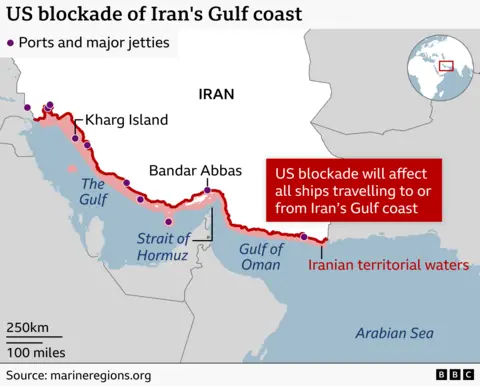
U.S. Central Command announced Saturday that the ongoing military blockade of Iranian ports has “reached the milestone of redirecting 100 commercial vessels.”
“Over the past six weeks, more than 15,000 Soldiers, Sailors, Marines and Airmen have redirected 100 vessels, disabled four, and allowed 26 humanitarian aid ships to pass,” CENTCOM said.
The blockade first went into effect on April 13. “Our service members are doing extraordinary work,” CENTCOM commander Adm. Brad Cooper said in a statement. “They have been highly effective by executing the mission with precision and professionalism, allowing zero trade into and out of Iranian ports which has squeezed Iran economically.”
CENTCOM added that more than 200 aircraft and warships are supporting the effort, including “the Abraham Lincoln Carrier Strike Group, George H.W. Bush Carrier Strike Group, Tripoli Amphibious Ready Group/31st Marine Expeditionary Unit, and multiple guided-missile destroyers.”
“The blockade is being enforced against vessels of all nations entering or departing Iranian ports and coastal areas, including all Iranian ports on the Arabian Gulf and Gulf of Oman,” it also said.
Posted by Greg Norman-Diamond
Qatar’s leader, Trump discuss Pakistan-led efforts to bring end to US-Iran war
Qatar’s Emir Sheikh Tamim bin Hamad al-Thani held a phone call Saturday with President Donald Trump to discuss ongoing Pakistan-led efforts to bring an end to the U.S.-Iran war, according to the Qatar News Agency.
“During the call, they discussed the latest developments in the region, particularly regional and international efforts aimed at consolidating calm and de-escalating tensions, foremost among them supporting the diplomatic efforts led by Pakistan to spare the region further tension and preserve international peace and security,” a report said.
“The call also addressed the importance of continuing dialogue to address current issues, safeguarding maritime security and the safety of strategic waterways, and ensuring the smooth flow of global supply and energy chains,” it added.
Fox News Digital has reached out to the White House for comment.
Posted by Greg Norman-Diamond
Rubio tells India’s PM that US ‘will not let Iran hold the global energy market hostage’
Secretary of State Marco Rubio told Indian Prime Minister Narendra Modi on Saturday that the U.S. won’t let Iran “hold the global energy market hostage.”
“The Secretary and Prime Minister discussed the current situation in the Middle East. The Secretary emphasized that the United States will not let Iran hold the global energy market hostage and affirmed that U.S. energy products have the potential to diversify India’s energy supply,” State Department spokesperson Tommy Pigott said in a statement.
India, which imports nearly 90% of its crude and about half its natural gas from abroad, is the world’s third-biggest oil importer and consumer, FOX Business reported in March.
India’s Reliance Industries, which operates the world’s biggest refining facility, reportedly bought 5 million barrels of Iranian oil after the U.S. temporarily lifted sanctions earlier this year.
FOX Business’ Kyra Colah contributed to this post.
Posted by Greg Norman-Diamond
Israel’s military strikes Hezbollah weapons production site in Lebanon
The Israel Defense Forces said it struck an underground Hezbollah weapons production site in Lebanon overnight.
The IDF said the site in the Bekaa Valley “served the organization’s terrorists for producing weapons intended to harm the civilians of the State of Israel and IDF forces operating in southern Lebanon.”
“In addition, Hezbollah terror organization infrastructure in the Tyre area was struck, from which the organization’s terrorists operated in order to plan and carry out terror attacks against IDF forces,” the IDF also said. “Prior to the strike, steps were taken to reduce harm to civilians, including advance warnings to the population, use of precision munitions, and aerial observations.”
Posted by Greg Norman-Diamond
Qatar’s FM tells Iran that any Strait of Hormuz closure will ‘further deepen the crisis’: report
Qatar’s Prime Minister and Minister of Foreign Affairs Sheikh Mohammed bin Abdulrahman bin Jassim Al-Thani told Iran’s foreign minister in a phone call Saturday that any closure of the Strait of Hormuz will “further deepen the crisis” in the region, a report said.
The state-run Qatar News Agency said during the call with Abbas Araghchi, Al-Thani “reaffirmed the State of Qatar’s unwavering support for efforts aimed at reaching a comprehensive agreement to end the crisis, stressing the need for all parties to engage constructively in order to secure sustainable peace and enduring stability in the region.”
“His Excellency further emphasized that freedom of navigation remains a fundamental principle that cannot be compromised, warning that any closure of the Strait of Hormuz or attempts to use it as a means of pressure would further deepen the crisis and threaten the vital interests of countries across the region,” it continued.
Al-Thani also “underscored the importance of adhering to international law and the principles of good neighborliness, while prioritizing the interests of the region and its peoples in a way that reinforces regional and international security and stability and advances de-escalation efforts,” according to the report.
The call comes as a Qatari negotiation team is in Tehran on Friday and Saturday “to support the U.S. to reach a final deal that would end the war and address outstanding issues with Iran,” an official with knowledge of the visit told Fox News on Friday.
Fox News’ Trey Yingst contributed to this post.
Posted by Greg Norman-Diamond
Former Navy commander says renewed US combat operations against Iran are ‘matter of when’
Retired U.S. Navy Cmdr. Kirk Lippold said Friday that renewed American combat operations against Iran appear increasingly likely, arguing Tehran has shown no willingness to abandon its nuclear program through diplomacy.
Speaking on “America Reports,” Lippold said it is now “a matter of not if, but when the United States is going to recommence combat operations.”
“The president has given the Iranians every opportunity to come to the right answer through diplomatic channels,” Lippold said. “Iran will not give up their nuclear program.”
Lippold’s comments came shortly after Secretary of State Marco Rubio said negotiators had seen some progress in talks with Tehran but cautioned that “there’s more work to be done.”
“The President would prefer to do a good deal,” Rubio said during remarks at a NATO conference in Sweden.
Lippold, the former commanding officer of the USS Cole, suggested President Donald Trump is using ongoing negotiations to give the U.S. military time to “rearm, refuel, and be ready for combat operations.”
He also argued the administration should avoid publicly declaring negotiations over in order to avoid giving Iran time to prepare.
The remarks came as Iranian state media reported that negotiators were not discussing Tehran’s nuclear program at the moment, while a Qatari team remained in Tehran to support talks with the United States.
After a year focused on immigrants here illegally, the Trump administration is now making it harder for legal migrants to stay in the country. It is a risky pivot.
In recent months, the Trump administration has pivoted away from the major immigration sweeps that occurred under Kristi Noem, left, the former homeland security secretary.Credit…Doug Mills/The New York Times
The Trump administration has pulled back its aggressive operations in cities like Chicago and Minneapolis after bad polling indicated the crackdown on illegal immigration was unpopular.
In its wake, however, a new approach is emerging on legal immigration, one that makes it harder for those abroad to enter the United States, and for those already here on a temporary basis to stay. In recent months, Trump administration officials have discussed the legal immigration system as rife with fraud and abuse, and in need of wholesale reform.
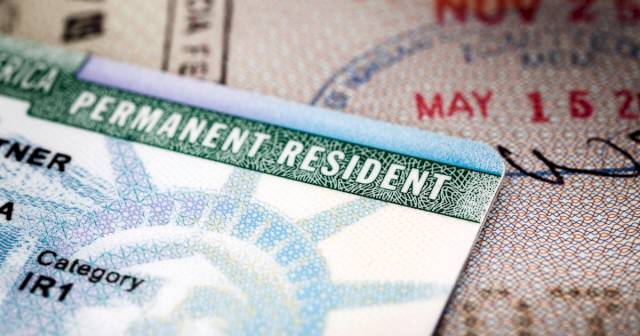
The increasingly tough tack on legal immigration was underscored Friday when the Department of Homeland Security announced a policy requiring most immigrants seeking green cards to leave the United States while they wait long periods of time for their applications to be processed.
Green cards are granted to legal permanent residents who have been vetted by the government and are one step away from becoming citizens. The policy caused immigration attorneys to scramble to understand the scope of a process that had long avoided being targeted.
The announcement followed a broader effort to restrict travel for immigrants from more than 35 countries. The Trump administration paused a lottery program that offered more than 50,000 visas internationally. It halted long-term immigrant visas from 75 countries. And it froze immigration applications for those already in the United States from countries on a restricted travel list, making it harder for those nationals to obtain temporary or long-term ways to stay in the country.
The New York Times previously reported that the Trump administration was working on a policy to make it harder for those who could need public assistance to gain a green card.
“They do not see their legal immigration agenda as being separate and apart from their illegal immigration agenda,” said David J. Bier, the director of immigration studies at the CATO Institute, a libertarian think tank. Mr. Bier, who has written about the benefits of immigration, added: “The legal immigration agenda is an extension of their illegal immigration agenda.”
White House officials said that Mr. Trump was focused on helping Americans, and that his travel ban was intended to block immigration from areas with unstable governments.
“It also includes ensuring Americans have access to good-paying jobs at home, and also stopping aliens from exploiting and abusing our immigration system,” said Abigail Jackson, a White House spokeswoman. “This is the common-sense agenda that the American people elected him to enact.”
Mr. Trump has historically spoken positively of legal routes to the United States.
In his State of the Union address in 2019, he declared his support for legal immigration. “Legal immigrants enrich our nation and strengthen our society in countless ways,” he said. “I want people to come into our country in the largest numbers ever. But they have to come in legally.”
Image
President Trump during the 2019 State of the Union address, in which he declared his support for legal immigration.Credit…Doug Mills/The New York Times
It was a version of a refrain he has repeated while directing his administration to block illegal crossers at the border and mass deport those in the country illegally: The country needs immigrants who arrive legally, especially those who work in specific jobs and have skills needed for large industries.
Mr. Trump’s comments are in line with the long-held American embrace of legal immigration, often considered a key element of U.S. society that entices skilled immigrants to boost American industries and fill the country’s universities. At one point during the 2024 presidential campaign, Mr. Trump even mused that he would like to give green cards to immigrants who graduate from U.S. colleges, a more expansive benefit than what currently exists.
“I think you should get automatically, as part of your diploma, a green card to be able to stay in this country, and that includes junior colleges,” Mr. Trump told the hosts of a popular tech podcast in 2024.
Mr. Trump has typically directed his disdain toward those in the country illegally, and immigrants who cross the border without authorization. His administration has targeted those in the country illegally for deportation, and has suspended asylum protections for those who enter the country without prior authorization.
But the decision Friday to force immigrants to go abroad to await their green card application decisions — potentially separating families, as spouses are forced to wait — clarified the administration’s new push.
“The focus on ‘illegal’ immigration was a lie meant to distract from their true goal of reducing immigration of all kinds, and we are now watching that vision become reality,” said Amanda Baran, a former Biden administration D.H.S. official who worked on legal immigration matters.
Mr. Trump pulled back immigration agents from Minneapolis after polling showed that Americans were growing disillusioned with his administration’s tactics following the deaths of two American citizens protesting the federal immigration crackdown.
It is unclear whether the administration’s clampdown on legal immigration could have harmful political consequences. But recent polling indicates that Americans are supportive of legal immigration.
“Polling shows Americans support legal immigration in a general, amorphous kind of way,” said Mark Krikorian, the head of the Center for Immigration Studies, an organization that backs tougher immigration policies. But, he added, the system is so flawed that Americans would not object to efforts to fix loopholes and root out fraud.
An Associated Press and NORC poll from last September found that nearly 60 percent of Americans believed that legal immigrants were a major benefit to the economy, and about half believed that they were bringing specialized skills to U.S. companies.
Hamed Aleaziz covers the Department of Homeland Security and immigration policy for The Times.
Tom Bateman,travelling with the US Secretary of Stateand
Brandon Livesay,New York
EPA/Shutterstock
US President Donald Trump has said Iran is “getting a lot closer” to reaching an agreement with the US on the war, as Tehran also signalled progress had been made in the past week.
However, both sides have been cautious, and Iran’s foreign ministry spokesperson said the key issue of nuclear weapons would not be part of any initial proposals.
Trump told the BBC’s US partner CBS News he had seen a draft agreement with Iran. When asked whether it was good enough, he said: “I don’t know, I can’t tell you that.”
The president did not give any further details on the draft, but insisted any agreement would “absolutely” prevent Iran from obtaining a nuclear weapon.
“I will only sign a deal where we get everything we want,” he said. “We’re going to have a deal, or we’re going have a situation where no country will ever be hit as hard as they’re about to be hit.”
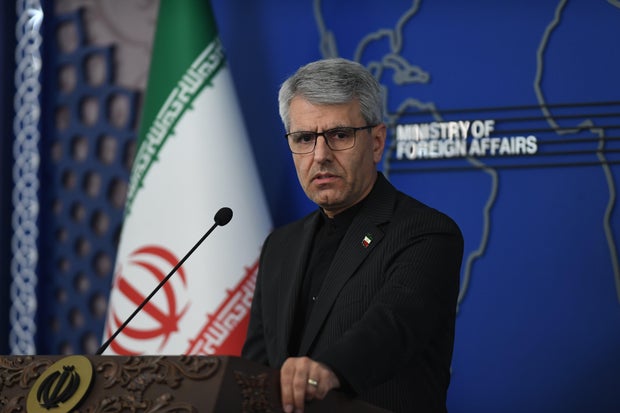
Iranian foreign ministry spokesman Esmaeil Baqaei told state television on Saturday that the US and Iranian positions had been converging in the last week, but warned that did not mean agreements would be reached on key issues and accused the Americans of “contradictory statements”.
“Our plan has been to first draft a memorandum of understanding, or an agreement, in the form of a framework, consisting of 14 points,” he said, according to Reuters news agency.
Baqaei said they were in the process of finalising the memorandum, so further talks could be held within 30 to 60 days “and ultimately a final agreement can be reached”.
Meanwhile, US Secretary of State Marco Rubio was cautiously optimistic.
Speaking on a trip to India, he told the BBC there could be news within the next couple of days, but couldn’t be certain.
Rubio also emphasised the US’s position that Iran must not be allowed a nuclear weapon, and spoke of reopening the Strait of Hormuz without tolls from Iran.
The country also needed to turn over its highly enriched uranium, he said.
Trump is expected to hold a phone call with leaders from Saudi Arabia, Qatar, the United Arab Emirates (UAE), Egypt, Turkey and Pakistan on Saturday, Reuters reported, citing an Arab official.
French President Emmanuel Macron spoke to Trump and the leaders of the UAE, Qatar, Saudi Arabia and Jordan on Saturday about the negotiations with Iran, AFP news agency reported. France is pushing for a negotiated solution, with the number one priority being a complete reopening of the Strait of Hormuz, a source told AFP.
The new sense of momentum comes after the mood appeared to have soured in Washington, with anonymous officials briefing US media on Friday that the administration was preparing for a fresh round of military strikes, although no final decision had been made.
On Friday, the president posted on Truth Social that he would not attend his son Donald Jr’s wedding this weekend so he could remain in Washington DC “during this important period of time”.
Last week, Trump had said the truce was on “massive life support” after rejecting Tehran’s demands, labelling them “totally unacceptable”.
The temporary ceasefire between Iran and the US started in early April.
The US has blockaded Iranian ports since 13 April.
On Saturday, US Central Command (Centcom) said it had redirected 100 vessels, disabled four, and allowed 26 humanitarian aid ships to pass since the blockade began.
Centcom commander Admiral Brad Cooper said its forces had been “highly effective” in “allowing zero trade into and out of Iranian ports which has squeezed Iran economically”.
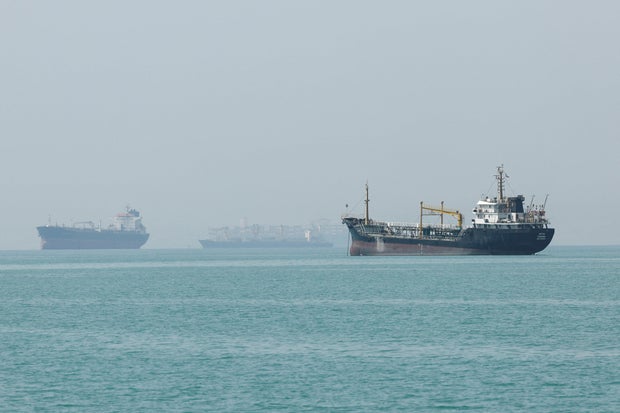
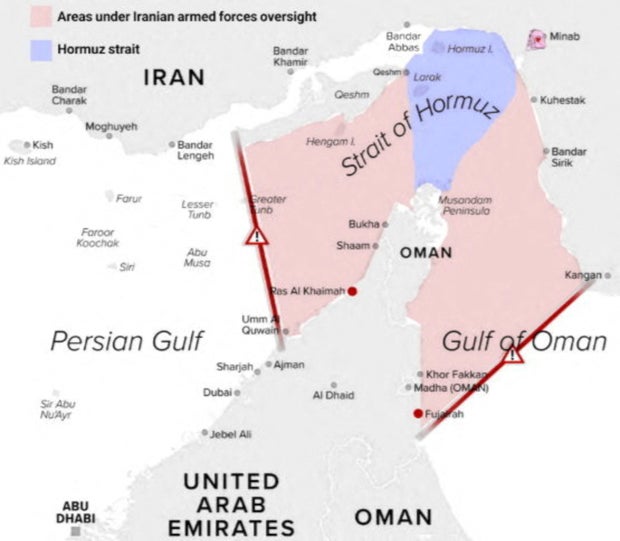
Meanwhile, Iran has claimed military control of an area around the Strait of Hormuz, and has said all transit through the strait “requires coordination with and authorisation from the Persian Gulf Strait Authority”.
The US and Gulf allies have repeatedly rejected Iranian attempts to assert control over the strait, and the US has told ships not to comply with Iran’s rules.
Trump concludes call with Gulf leaders, sources say
President Trump’s Saturday afternoon call with Gulf leaders has concluded, according to U.S. officials.
Counties invited to join the conference call with Mr. Trump to discuss Iran negotiations include Saudi Arabia, Turkey, Egypt, Pakistan, the United Arab Emirates, Jordan, and Qatar, sources familiar with the situation told CBS News.
Wicker, head of Armed Services Committee, calls potential deal “a disaster”
Mississippi Republican Sen. Roger Wicker, the chairman of the powerful Senate Armed Services Committee, referred to a potential deal with Iran as “a disaster.”
Wicker, like Sen. Lindsey Graham, has been a prominent critic of negotiating a deal and has pushed to restart widespread bombing of Iran.
“The rumored 60-day ceasefire — with the belief that Iran will ever engage in good faith — would be a disaster,” Wicker wrote on X. “Everything accomplished by Operation Epic Fury would be for naught!”
Wicker said on Friday that Mr. Trump was “being ill advised to pursue a deal” and the decision would “define President Trump’s legacy.”
Lindsey Graham questions why war started if Trump agrees to a deal, calls it “nightmare” for Israel
Republican Sen. Lindsey Graham questioned on Saturday the wisdom of making a deal with Iran as news began to leak about a potential agreement.
“If a deal is struck to end the Iranian conflict because it is believed that the Strait of Hormuz cannot be protected from Iranian terrorism and Iran still possesses the capability to destroy major Gulf oil infrastructure, then Iran will be perceived as being a dominate force requiring a diplomatic solution,” Graham wrote on X.
Graham, who has been one of the more prominent advocates for the U.S. resuming attacks on Iran, said a deal would cause a significant increase in Iran’s power in the region.
“This combination of Iran being perceived as having the ability to terrorize the Strait in perpetuity and the ability [to] inflict massive damage to Gulf oil infrastructure is a major shift of the balance of power in the region and over time will be a nightmare for Israel,” Graham continued.
“Also, it makes one wonder why the war started to begin with if these perceptions are accurate,” Graham said. “I personally am a skeptic of the idea that Iran cannot be denied the ability to terrorize the Strait and the region cannot protect itself against Iranian military capability.”
Graham added it was “important we get this right.”
Trump to speak to Gulf leaders on Saturday, sources say
President Trump is scheduled to speak with leaders of Gulf countries and other nations on Saturday afternoon in a conference call, three sources told CBS News.
The call is set to discuss the negotiations with Iran, according to U.S. officials familiar with the situation.
Sources previously told CBS News that Mr. Trump is mulling proposals and has not yet made up his mind. A regional official told CBS News that some leaders do not know what option Mr. Trump is leaning toward.
Mr. Trump told CBS News earlier Saturday that if the U.S. and Iran do not come to an agreement, “we’re going to have a situation where no country will ever be hit as hard as they’re about to be hit.”
Trump says Iran and U.S. are “getting a lot closer” to deal
Iran and the United States are “getting a lot closer” to finalizing an agreement between the two countries, President Trump told CBS News on Saturday.
Sources familiar with the negotiations told CBS News that the latest proposal includes a process to reopen the Strait of Hormuz, the unfreezing of some Iranian assets held in foreign banks, and a continuation of negotiations. Mr. Trump declined to provide specifics about the agreement in his interview with CBS, but said that “every day it gets better and better.”
Mr. Trump did say that he believes the final agreement will prevent Iran from obtaining a nuclear weapon, adding that he “wouldn’t even be talking about it” otherwise. Mr. Trump added that the agreement would also result in Iran’s enriched uranium being “satisfactorily handled.”
Sources told CBS News that Mr. Trump is still mulling proposals and has not made up his mind yet. The sources said he is consulting with advisers and talking to foreign leaders, including leaders from Saudi Arabia and other Gulf countries.
“I will only sign a deal where we get everything we want,” Mr. Trump said.
Iran says nuclear issue not part of initial framework with US
Iran said on Saturday that the nuclear issue was not part of an initial framework it was drafting to end the war with the United States.
“At this stage, we will not discuss the details of the nuclear issue… we have decided to prioritise an urgent issue for all of us: ending the war on all fronts including Lebanon,” foreign ministry spokesman Esmaeil Baqaei told state television.
He added that the nuclear file will be “subject to separate discussions” at a later stage.
Pakistan calls meeting with Iranian officials “short but highly productive”
The latest round of discussions between Iranian leaders and Pakistani mediators was “short but highly productive,” according to the Inter-Services Public Relations, the media wing of the Pakistani army.
“The engagements were held in a positive and constructive environment and contributed meaningfully towards the mediation process,” the ISPR said. “The intensive negotiations over the last twenty four hours have resulted in encouraging progress towards a final understanding.”
Field Marshal Syed Asim Munir, who led the talks on Pakistan’s side, met with Iranian President Masoud Pezeshkian; Iranian Parliament Speaker Mohammad Bagher Ghalibaf; Iranian Foreign Minister Abbas Araghchi; and Iranian Interior Minister Eskandar Momeni. Iran’s supreme leader, Mojtaba Khamenei, who hasn’t been seen in public since his father was killed on the first day of strikes, was apparently not involved in the discussions.
No specific details were offered on what the negotiations entailed.
Rubio teases possibility of news on Iran negotiations soon
Secretary of State Marco Rubio offered comments on the negotiations with Iran before a formal dinner at the U.S. Embassy in New Delhi, India, on Saturday, but he didn’t offer much hope about the prospects for success.
“There may be news later today. I don’t have news at this very moment, but there might be some news a little later today,” Rubio said, answering a question from reporters while entering the dinner at the Roosevelt House. “There may not be. I hope there will be, but I’m not sure yet.”
He reiterated that progress had been made, but then immediately tempered expectations.
“There’s been some progress done, some progress made, even as I speak to you now, there’s some work being done,” Rubio said. “There is a chance that, whether it’s later today, tomorrow, in a couple days, we may have something to say, but this issue needs to be solved, as the president said, one way or another.”
U.S. Secretary of State Marco Rubio walks with his wife Jeanette upon their arrival before a reception at the Roosevelt House in New Delhi on May 23, 2026. Julia Demaree Nikhinson/Pool/AFP via Getty Images
Rubio repeated President Trump’s criteria for a deal, including stopping Iran from obtaining a nuclear weapon, reopening the Strait of Hormuz without tolls and turning over enriched uranium.
“This problem will be solved, as the president’s made clear, one way or the other,” Rubio said. “We hope it’s done through the diplomatic route. That’s what we’re working on and perhaps there will be something to talk about on that topic while I’m here on this visit at some point.”
U.S. blockade has now turned back 100 vessels
The U.S. blockade of the Strait of Hormuz has now hit the century mark.
There have now been 100 commercial ships either entering or leaving Iranian ports redirected by the blockade, the U.S. Central Command said on Saturday. The U.S. highlighted the 15,000 service members and 200 aircraft and 20 warships that have taken part in the operation since it began on April 13.
“Our service members are doing extraordinary work,” Adm. Brad Cooper, CENTCOM commander, said in a statement. “They have been highly effective by executing the mission with precision and professionalism, allowing zero trade into and out of Iranian ports which has squeezed Iran economically.”
The U.S. also noted 25 humanitarian aid ships have been allowed to pass the blockade.
Qatar’s leader speaks to President Trump
The Emir of Qatar, Sheikh Tamim bin Hamad Al Thani, spoke to President Trump by phone on Saturday morning, according to the emir’s office, known as the Amiri Diwan.
The conversation took place a little after 7 a.m. Eastern time, according to the Amiri Diwan.
No details on the conversation were provided immediately, but Qatar has been an ally of the U.S. and has been regularly targeted by Iran with missile and drone attacks in retaliation for U.S. and Israeli attacks on Iran.
Qatari officials joined Pakistani mediators in Tehran this weekend in an attempt to broker a peace deal and end the conflict.
Rubio discussed Middle East conflict with Modi on India trip
Secretary of State Marco Rubio, who is visiting India, spoke to Indian Prime Minister Narendra Modi about the crisis in the Middle East on Saturday, specifically energy costs.
“The Secretary and Prime Minister discussed the current situation in the Middle East. The Secretary emphasized that the United States will not let Iran hold the global energy market hostage and affirmed that U.S. energy products have the potential to diversify India’s energy supply,” according to U.S. State Department spokesperson Tommy Pigott.
India is highly dependent on importing oil and gas from the Middle East. Only China imports more crude oil through the Strait of Hormuz, according to the U.S. Energy Information Administration, and 74% of all crude passing through the strait went to just four countries in the first quarter of 2025: China, India, Japan and South Korea.
Rubio also invited Modi to visit the White House, on President Trump’s behalf.
A readout from the Indian side has yet to be released.
Pakistan’s army chief meets with Iranian officials in Tehran
Pakistan’s army chief, a key negotiator in the U.S.-Iran peace talks, met with Iranian officials in Tehran Friday, according to Iran’s semi-official Tasnim News Agency.
Field Marshal Syed Asim Munir met with Iranian Foreign Minister Abbas Araghchi and other Iranian officials “on the latest diplomatic efforts and initiatives to prevent escalation of tensions and end the war,” Tasnim said.
Reuters reported Friday that a Qatari delegation had also traveled to Tehran to engage in talks with the Iranian regime. In its own statement, Iran’s state-run ISNA news agency said the Qatari delegation had “joined the mediation efforts.”
Along with Pakistan, Qatar — a critical U.S. ally that hosts the largest American military base in the Middle East — has also served as an intermediary in peace negotiations.
U.N. conference to review nuclear proliferation treaty ends without deal
A four-week United Nations conference reviewing the treaty to prevent the spread of nuclear weapons ended Friday without agreement as the U.S. and Iran sparred over Iran’s nuclear program.
Vietnam’s U.N. Ambassador Do Hung Viet, who chaired the conference, announced that there was no consensus among the 191 parties to the Nuclear Nonproliferation Treaty on even a watered-down final document.
He told a news conference later that “no one blocked consensus.” But he said “a very important reason” for the failure to reach an outcome was a provision in the final draft that said Iran “can never seek, develop or acquire any nuclear weapons.”
It was the third failure in a row at a conference reviewing the NPT, considered the cornerstone of global nonproliferation and disarmament. At the last treaty review in August 2022, Russia blocked agreement on a final document over its February 2022 invasion of Ukraine and references to Moscow’s occupation of the Zaporizhzhia nuclear power plant, Europe’s largest.
U.N. Secretary-General Antonio Guterres expressed regret at the failure when the “elevated risk posed by nuclear weapons demands urgent action,” spokesman Stephane Dujarric said. He appealed to all countries “to make full use of all available avenues of dialogue, diplomacy, and negotiation to reduce tensions, lower nuclear risks, and ultimately eliminate the nuclear threat.”
The U.S. and Iran have clashed since the opening of the review conference on April 27. The U.S. has accused Iran of showing “contempt” for its commitments under the treaty, while Iran has said U.S. and Israeli attacks on its nuclear facilities violated international law.
Iran is a party to the NPT, which requires countries to open all nuclear sites to inspection by the U.N. nuclear watchdog agency. But Iran has not given inspectors from the International Atomic Energy Agency access to nuclear sites that were bombed by the U.S. last June.
U.S. prepares for new military strikes against Iran
The Trump administration was preparing Friday for a fresh round of military strikes against Iran, according to sources with direct knowledge of the planning, even as diplomacy continued.
No final decision on strikes had been reached as of Friday afternoon.
“Circumstances pertaining to Government” are keeping President Trump from attending his son Donald Trump Jr.’s wedding this weekend, he said in a social media post. The president had planned to spend Memorial Day weekend at his golf property in New Jersey but will now return to the White House.
Some members of the U.S. military and intelligence community canceled their plans for the Memorial Day weekend in anticipation of possible strikes, several sources said.
Defense and intelligence officials began updating recall rosters for U.S. installations overseas as tranches of troops stationed in the Middle East rotate out of theater, part of an effort to reduce the American military footprint in the region amid concern about possible Iranian retaliation.
Lebanon’s health ministry said Israeli strikes killed 10 people on Friday, including six rescuers and a child, as Israel and the Iranian-backed militant group Hezbollah continued to exchange fire despite a ceasefire between Israel and Lebanon.
In a statement, the Lebanese ministry said “six people were martyred”, including two rescuers from the Risala Scouts association and a Syrian girl, in a strike on Deir Qanun al-Nahr village near the city of Tyre.
The association is linked with the Hezbollah-allied Amal movement.
An earlier strike on the southern town of Hanaway on Friday killed four rescuers from the Hezbollah-linked Islamic Health Committee, the ministry said.
Separately, the Israeli military said early on Friday morning that it had killed two people close to the border.
“IDF surveillance identified two armed individuals moving in a suspicious manner hundreds of meters from Israeli territory, in southern Lebanon,” it said in a Telegram post. “…Following their identification and continuous monitoring by the IDF, the armed individuals were struck and eliminated in an aerial strike.”
Hezbollah, meanwhile, said it had targeted Israeli troops and positions inside Lebanon and in northern Israel near the border.
Senate Armed Services chair says “we must finish what we started”
U.S. Sen. Roger Wicker, a Republican from Mississippi, suggested on Friday that the U.S. should not pursue a deal with Iran and instead resume military action, adding, “We must finish what we started.”
Wicker, who is chairman of the Senate Armed Service Committee, said Friday on X that President Trump is being “ill advised to pursue a deal that would not be worth the paper it is written on.”
“Our commander-in-chief needs to allow America’s skilled armed forces to finish the destruction of Iran’s conventional military capabilities and reopen the strait,” Wicker said.
“Further pursuit of an agreement with Iran’s Islamist regime risks a perception of weakness,” he said. “We must finish what we started. It is past time for action.”
Pakistan’s army chief arrives in Tehran
Pakistan’s Army Chief Field Marshal Syed Asim Munir arrived in Tehran on Friday, according to ISPR, the media wing of the Pakistan Armed Forces.
Munir, who has been a key mediator between Iran and the U.S., is expected to meet with senior Iranian officials to discuss issues including the ongoing, indirect Iran-U.S. negotiations that his country has helped to broker.
He was welcomed by Iranian Interior Minister Eskandar Momeni.
Iran’s U.N. ambassador in Geneva warns about humanitarian impact of U.S. blockade
Iran’s ambassador to the United Nations in Geneva has warned the UN High Commissioner for Human Rights about the humanitarian impact of the U.S. blockade on Iranian ports, the Iranian government said Friday in a post on X.
Ali Bahreini told Volker Türk, of Austria, that the blockade violates international law and threatens access to essential goods, medicine and healthcare, Iran said.
The U.S. blockade has been in effect since mid-April. U.S. forces have redirected nearly 100 vessels as it continues to enforce it, according to CENTCOM.
Israeli airstrikes in Lebanon kill 10 including paramedics, child, officials say
Israeli airstrikes on southern Lebanon killed 10 people on Friday including six paramedics and a Syrian girl, Lebanon’s health ministry said.
The first strike hit the village of Hanouiyeh, killing four paramedics working for Hezbollah’s Islamic Health Association and wounding two others including one paramedic, the ministry said.
Another strike Friday on the village of Deir Qanoun al Nahr in the coastal Tyre province killed six people, including a Syrian child and two paramedics from the Al-Rissala Scouts Association, a paramedic group affiliated with Hezbollah’s ally, the Amal movement, the ministry said. Six other people were injured, including three paramedics and a Syrian woman.
The health ministry said the two attacks violated international law.
The Israeli military did not respond to a request for comment. It has previously accused Hezbollah of using ambulances as cover for militant activities, without offering evidence.
Attacks by Israel and Hezbollah have continued despite a U.S.-brokered ceasefire. Lebanon’s health ministry reported earlier Friday that more than 3,100 people have been killed in Israeli attacks and more than 9,430 people have been wounded.
U.S. stocks rise amid prospects of resolution to war
Wall Street stocks rose early Friday, extending a strong period for equities propelled by optimism over corporate earnings and the prospects of a resolution to the Middle East war.
Oil prices edged higher while U.S. Treasury bond yields retreated.
About 20 minutes into trading, the Dow Jones Industrial Average was up 0.7% at 50,643.74.
The broad-based S&P 500 gained 0.6% to 7,492.84, while the tech-rich Nasdaq Composite Index climbed 0.4 % to 26,413.65.
Major U.S. indices have been on a tear since late March, riding higher on a strong first-quarter earnings season and expectations that the U.S.-Israel war against Iran will end and oil prices will retreat.
Briefing.com analyst Patrick O’Hare pointed to reports suggesting the Iran situation “leans more in favor of diplomacy than military action,” while noting that unresolved sticking points include a reopening of the Strait of Hormuz.
“When a peace deal is struck, there is a prevailing expectation that the higher rates and the higher energy prices will fade from the headline view and create an added rationale to keep this bull market running,” O’Hare said.
Oil and gas prices to stay high in Europe until at least end of next year, officials say
Europeans can expect oil and gas prices to remain above what they were before the war for at least until the end of 2027, with prices of other goods also following an upward trajectory, European Union officials said Friday.
Higher energy prices are primarily responsible for driving inflation to a forecast 3.1% for this year and 2.4% for 2027, EU Economy Commissioner Valdis Dombrovskis said. That’s significantly higher than the earlier forecast for this year of 1.9%.
“We expect that this energy inflation will gradually also trickle down to different sectors of the economy,” Dombrovskis said after a meeting of the 21-member eurozone’s finance ministers, who make up the Eurogroup.
European Central Bank President Christine Lagarde said that even if the conflict in the Middle East ended now, “lagging effects” would keep the prices of goods elevated.
“And it’s probably a fact that price levels will be higher at the end of this crisis, when we see the end of the crisis,” Lagarde said.
She said the ECB would take “all the necessary measures” to keep price stability at 2% by paying close attention to the aftereffects of the initial economic shock brought on by the energy price hike. She also pointed to how much oil the EU holds in reserve to meet possible demand.
Death toll from Israeli attacks in Lebanon tops 3,100
More than 3,100 people have been killed by Israeli attacks in Lebanon since March 2, Lebanon’s health ministry said Friday.
The death toll rose to 3,111, while the number of people injured climbed to 9,432, according to the ministry.
Attacks by both Israel and Iran-backed Hezbollah have continued despite a U.S.-brokered ceasefire between Lebanon and Israel announced in mid-April. Hezbollah has rejected the ceasefire.
Lebanon and Israel have engaged in peace talks in Washington, with a fourth round expected to be held in June. Hezbollah opposes those talks and has refused to surrender its weapons as the Lebanese government demands.
Lebanon is forming a military delegation for security talks with Israel at the Pentagon on May 29 — a step that was agreed in the latest round of direct talks earlier this month.
E.U. moves to sanction Iran over Strait of Hormuz blockade
European Union nations moved Friday toward imposing sanctions on Iranian officials and others responsible for blocking the Strait of Hormuz, the E.U. said.
Deeming the blockade “contrary to international law,” E.U. governments took a technical step to extend the scope of its existing Iran sanctions regime allowing for more individuals to be targeted under it.
“The E.U. will now be able to introduce further restrictive measures in response to Iran’s actions undermining the freedom of navigation in the Strait of Hormuz,” the European Council representing E.U. nations said.
Brussels’ punitive measures on Iran previously targeted the country’s military support for Russia in its war against Ukraine and for armed groups across the Middle East. The European Union has also imposed sanctions over human rights violations in the country.
The E.U. did not immediately name any individual or entities that would be targeted by the new sanctions, consisting of travel bans and asset freezes.
E.U. citizens and companies will also be banned from making funds, financial assets or other economic resources available to those listed.
Pakistan’s Army chief, a key U.S.-Iran mediator, heading for Tehran
Pakistan’s Army Chief Field Marshal Syed Asim Munir, who has been a key mediator between Iran and the U.S., departed Friday for a visit to Tehran, security sources told CBS News.
Military officials said Munir was expected to hold meetings with senior Iranian officials to discuss key regional and international issues, including the ongoing, indirect Iran-U.S. negotiations Pakistan has helped to broker.
Pakistan’s efforts toward a diplomatic resolution to the war launched jointly by the U.S. and Israel against Iran on Feb. 28 have ramped up this week, with the Trump administration currently awaiting a reply from Tehran to its latest proposal for a peace deal.
Pakistani Interior Minister Mohsin Naqvi has held meetings already this week in Tehran with senior leadership.
A senior Pakistani official in Islamabad told CBS News on Friday that Naqvi’s meetings had enabled the negotiations to progress “in an important direction,” which is why Munir was coming to join the efforts.
U.S. Secretary of State Marco Rubio voiced very cautious optimism earlier Friday, telling reporters, “I don’t want to exaggerate it, but there’s been a little bit of movement, and that’s good.”
U.S. forces have redirected 97 vessels amid Iran blockade, CENTCOM says
U.S. forces have redirected 97 commercial vessels since the start of the military blockade of Iranian ports and ships associated with the country, U.S. Central Command said Friday.
The U.S. military has disabled another four vessels since the blockade was imposed in mid-April, according to CENTCOM.
The U.S. military has offered continuous updates on the number of ships it has redirected, with slight upticks reported daily as it reiterates it is continuing to impose the blockade and “ensure compliance.”
Iran calls U.S. sanctioning its ambassador in Lebanon “unlawful and shameless”
The U.S. decision to sanction Iran’s ambassador to Lebanon is “unlawful and shameless,” Iran said Friday.
The U.S. announced sanctions Thursday against a group of Hezbollah-affiliated parliamentarians, state security officials, and allies of the militant group, including the Iranian ambassador, for allegedly seeking to preserve the Iranian-backed group’s influence over Lebanese state institutions and obstruct disarmament efforts.
It was the first time Washington has sanctioned sitting Lebanese state security officials, one from the country’s General Security agency and the other a military intelligence officer, both of whom the U.S. Treasury accused of providing Hezbollah with “illicit support” and intelligence during the ongoing conflict.
Iran’s foreign affairs ministry said Friday that the sanctioning of the country’s envoy in Beirut, Mohammad Reza Shaibani, was “yet another example of the lawlessness and disregard of the American ruling establishment for the established principles of international law.”
It also condemned the sanctioning of the Hezbollah representatives.
The U.S. announcement, which, for the first time included a serving Lebanese army officer, came as pressure mounts on Beirut to take more decisive action to disarm Hezbollah, among Iran’s most powerful proxy groups in the region.
Rubio says U.S. and allies “have to have a Plan B” if Iran refuses to open Strait of Hormuz
Speaking to reporters Friday in Sweden after meetings with NATO allies, Secretary of State Marco Rubio said the U.S. and its partners must “have a Plan B” to fall back on if Iran refuses to reopen the Strait of Hormuz.
Rubio said he raised the point with NATO allies and that while a plan B wouldn’t entail NATO as a whole, it could include some allies with interests in the strait — nations Rubio said “have to start thinking” about what to do if Iran refuses to cooperate.
“We all would love to see an agreement with Iran in which the straits are open and they abandon their nuclear ambitions and so forth, their nuclear weapons ambitions. That’s what we would all hope for. And that’s what we’re going to continue to work on, and that’s what work is ongoing, even as I speak to you now in that regard,” Rubio said.
“But, we also have to have a Plan B, and Plan B is — what if Iran refuses to open the straits? What if Iran decides, ‘We refuse to open the straits, we’re going to own the straits, and we’re going to charge tolls for it?’ Okay, at that point, something has to be done about it.”
He said he’d “raised that point today” and “got a lot of nods” from other NATO foreign ministers.
He reiterated, however, the Trump administration’s stance that the U.S. doesn’t need help reopening the strait or clearing it of sea mines, but said the administration would welcome allies’ help.
“We don’t need their help, but they’re willing to do it,” he said.
So far America’s NATO allies, led by the U.K. and France, have begun efforts to build a military coalition that can help ensure safe maritime traffic through the strait, but said such operations will only begin once hostilities in the Iran war are over.
Pakistan Foreign Ministry says “not aware of any visit” to Iran planned by Army chief
Pakistan’s Foreign Ministry spokesman Tahir Andrabi said Friday that he was “not aware of any visit right now” when asked about reports by Iranian state media since Thursday that Army chief Field Marshal Syed Asim Munir, a key mediator between Iran and the U.S., was expected in Tehran.
“I am sure this will be announced in due course, if it is to be announced. I can neither confirm nor deny it now,” Abdrabi said.
“As regards the details of any agreement, our consistent position on this matter is that we do not talk of specifics. As a mediator and as a facilitator, it is the inherent ingredient of our mandate that we remain quiet on the individual positions and the process — also not ascribe any adjective to the process i.e. fast, slow, medium,” said Adrabi, adding that he would “stick to this consistent position.”
Pakistan has served as the primary intermediary between Washington and Tehran during the war, and it has pushed hard to get the two sides back around a negotiating table this week.
Secretary of State Marco Rubio said earlier Friday that there had been “slight progress” in the indirect negotiations, but he acknowledged lingering differences and stressed that he did not “want to exaggerate it.”
New voice of Iran’s negotiating team says country not seeking concessions, “simply demanding our rights”
Iranian Foreign Ministry spokesman Esmaeil Baqaei, who was named Friday by the regime as the new spokesman for the Islamic Republic’s negotiating team, insisted that his country is not seeking “concessions” from the U.S. to end the war, but “simply demanding our rights.”
“We want our rights to be restored. For the past five decades, we have been under what they themselves call ‘crippling sanctions.’ These sanctions have been imposed under various pretexts, mainly what they call the ‘Iranian nuclear threat,’ while in reality there is no nuclear threat from Iran against any actor in the region or the world,” said Baqaei.
He reiterated Iran’s demands for a deal to end the war, which was launched jointly by the U.S. and Israel on Feb. 28, including an “end of the United States’ criminal actions against the Iranian people; sanctions must be lifted, and Iran’s frozen assets must be released and returned to the country.”
Iranian Foreign Ministry spokesman Esmaeil Baqaei speaks during a news conference in Tehran, Iran, in a May 11, 2026 file photo. Shadati/Xinhua/Getty
Baqaei also said the U.S. “must take steps to end” its blockade of Iranian ports and vessels as part of any peace deal, calling it “completely contrary to international law.”
Four paramedics killed in Israeli strike “targeting an ambulance center,” Lebanon’s health ministry says
Four paramedics were killed Friday in an Israeli strike “targeting an ambulance center,” according to Lebanon’s health ministry.
The strike hit the town of Hanawieh in the south of the country, the ministry said, without providing further details.
According to the United Nations’ World Health Organization, there have been 169 attacks on healthcare workers and facilities in Lebanon since Israel ramped up its attacks in the country on March 2.
Israel launched a blistering wave of airstrikes across Lebanon after Iranian-backed Hezbollah started firing rockets across the Israel-Lebanon border in retaliation for the U.S.-Israeli war with Iran. Since that first wave, the airstrikes have continued and Israel has also sent forces over the border to occupy a significant portion of southern Lebanon.
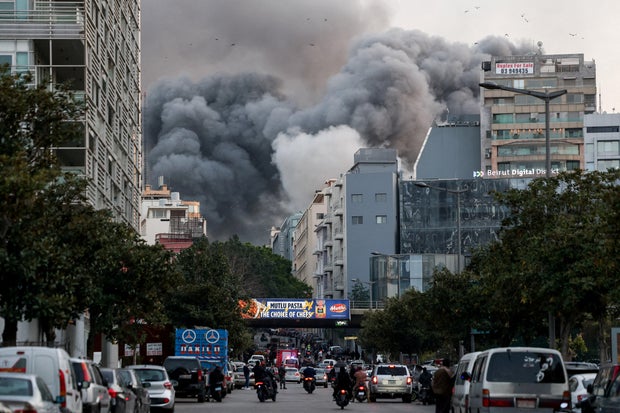
Smoke rises after an Israeli strike in central Beirut’s Bachoura neighborhood, following an escalation between Hezbollah and Israel, amid the U.S.-Israeli conflict with Iran, in Beirut, Lebanon, March 12, 2026. Claudia Greco/REUTERS
Israeli officials insist the operations only target Hezbollah militants and infrastructure in Lebanon, but Lebanon’s health ministry says more than 3,000 people have been killed, many of them women and children, and more than 1 million people displaced from their homes.
The WHO says 116 medical workers have been among those killed in the Israeli strikes.
Israel and Lebanon signed a U.S.-brokered ceasefire in mid-April, but Israel and Hezbollah have continued fighting despite the agreement, which the Iranian-backed group and Israel have accused each other of violating almost daily.
Iran claims 35 more ships pass through Strait of Hormuz in coordination with its military
Iranian state media claimed Friday that 35 vessels had transited the Strait of Hormuz over the past 24 hours in coordination with Iran’s naval forces.
The vessels included oil tankers, container ships and other commercial vessels, according to Iran’s semi-official Tasnim news agency, which said they had all transited the vital waterway after obtaining authorization from the country’s powerful Islamic Revolutionary Guard Corps.
CBS News could not confirm the number of ships that transited the Strait, but open source tracking data shows they remain far below their pre-war levels of about 138 per day.
On Thursday, the U.K. Maritime Trade Operations Center said traffic through the narrow waterway remained significantly reduced over the previous 48 hours, with 13 vessels confirmed to have made the trip. The U.K. military agency said there was significant interference being seen with the automatic identification systems used to track vessels.
Lloyd’s List Intelligence put the number of transits last week at just 26, but it also noted that a cluster of 18 “shadow fleet” tankers – part of Iran’s network of oil and other energy transport ships used to circumvent U.S. sanctions. Lloyds said the vessels were stopped off the coasts of Oman, and Pakistan much further east, outside the U.S. Navy’s blockade line.
Instead of heading into the Gulf of Oman, which leads to the Strait of Hormuz and the Persian Gulf beyond, they appeared to be considering options to avoid U.S. interdiction, Lloyds said.
Data from MarineTraffic.com showed at least one tanker Friday off the coast of Duqm, Oman, which had previously transited the strait during the war. The Cook Islands-flagged asphalt/bitumen tanker Pushpak appeared to reach the area Saturday and was at anchor along with a number of other tankers.
Iran has said repeatedly that it is working with Oman — as the two nations with coastlines in the strait — to create a new mechanism for vessels to coordinate passage.
Lebanon’s army insists soldiers loyal after U.S. sanctions one over alleged Hezbollah links
Lebanon’s military said Friday its soldiers were loyal, after the U.S. announced sanctions that included, for the first time, an army officer accused of sharing information with the Iranian-backed group Hezbollah.
In a statement, the army said it “affirms that all officers and members of the military institution are performing their national duties with utmost professionalism, responsibility, and discipline, in accordance with the decisions and directives issued by the army command.”
It emphasized “the loyalty of military personnel is solely to the military institution and the nation, and that they are committed to fulfilling their national duties without any other considerations or pressures,” adding that it had not been informed of the U.S. sanctions beforehand.
The Trump administration announced sanctions Thursday against what it called nine Hezbollah-linked individuals in Lebanon, including Army Colonel Samir Hamadi, and Khattar Nasser Eldin, an officer with another state security service.
The U.S. said Hamadi and Nasser Eldin had “shared important intelligence” with Hezbollah over the past year.
It marked the first time Lebanese officers have been sanctioned by the United States.
Hezbollah on Thursday condemned the sanctions, calling them “an attempt to intimidate the free Lebanese people in order to bolster the Zionist aggression against our country.”
Israel and Lebanon signed a ceasefire on April 17, but Israel has continued to launch strikes, carry out demolitions and issue evacuation orders in southern Lebanon, saying it is targeting Hezbollah, which has also kept up attacks and described the ceasefire as “appeasement.”
CBS/AFP
“Let’s see if the United Nations still works,” Rubio says as Security Council considers Strait of Hormuz resolution
Secretary of State Marco Rubio said Friday that it “would be lamentable” if a United Nations Security Council resolution on the Strait of Hormuz didn’t pass, adding: “Let’s see if the United Nations still works.”
The draft resolution, tabled by Bahrain, calls on Iran to immediately stop its attacks and threats against vessels in the strait and to end attacks on Persian Gulf states. It also addresses the placement of sea mines in the vital waterway, and Iran’s efforts to impose tolls on commercial ships using the strait.
Speaking to journalists ahead of a meeting of NATO foreign ministers in Sweden, Rubio said the draft resolution had “the highest number of co-sponsors of any resolution ever” at the council, the UN body tasked with maintaining peace and security through legally binding resolutions.
“Unfortunately, a couple of countries on the Security Council are thinking about vetoing it,” he added. “That would be lamentable.”
A similar resolution, also tabled by Bahrain, was vetoed last month by China and Russia, which, like the U.S. and the council’s two other permanent members, can unilaterally block a measure.
“We are doing everything we can though to achieve the sort of global consensus that’s necessary to prevent this from happening,” said Rubio. “Let’s see if the United Nations still works.”
He said “almost every country represented here today” had co-sponsored the resolution, “and if they haven’t, I’m sure they soon will because I don’t know of anyone in the world … that should be in favor of a tolling system in an international waterway.”
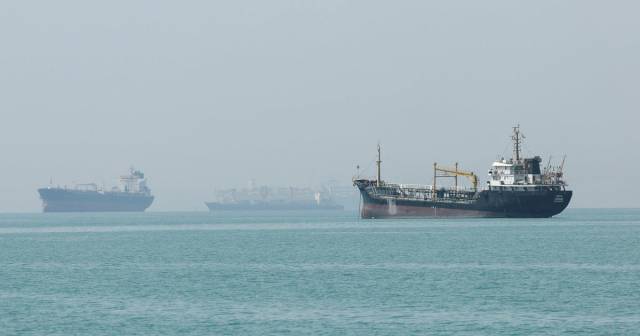
Vessels are seen amid shipping gridlock in the Strait of Hormuz, as seen from Iran, May 22, 2026. Majid Asgaripour/WANA via REUTERS
Iran’s Ambassador Amir Saeid Iravani told reporters in early May that the draft was “deeply flawed, and one-sided.”
Saeid argued the solution to the crisis in the strait is a permanent end to the U.S.-Israeli war with his country, and the U.S. blockade of Iranian ports and vessels.
Rubio says Iran charging for Strait of Hormuz passage “not acceptable”
Rubio said “there is not a country in the world that should accept” Iran’s effort to “create a tolling system” to charge commercial vessels a fee to transit the Strait of Hormuz.
The narrow waterway – through which about a fifth of the global oil supply typically passed prior to the U.S. and Israel launching their joint war with Iran — was open to all ships until the conflict began. Tehran has said it is working in conjunction with Oman, the other nation with a coastline in the strait, “to develop a mechanism” to ensure “transit through the Strait of Hormuz is conducted in the safest possible manner.”
Oman has not confirmed the nature of any coordination with Iran on such a new system.
Rubio said Tehran was “trying to convince Oman” to join “in this tolling system in an international waterway.”
“That’s just not acceptable. It can’t happen,” Rubio said of any Iranian bid to impose regularized demands for payment for ships’ passage. “If that were to happen in the Straits of Hormuz, it will happen in five other places around the world.”
A senior Iranian official argued in a news article published on Thursday that Iran, as a coastal nation of the waterway, was within its rights to impose new restrictions on ships using the Strait of Hormuz due to a “fundamental change of circumstances” brought about by the U.S.-Israeli war launched almost three months ago.
A graphic shared by Iran’s newly created Persian Gulf Strait Authority on May 20, 2026 shows what the authority said would be a “controlled maritime zone” spanning the Strait of Hormuz. Persian Gulf Strait Authority/X
Rubio says “slight progress” in talks with Iran is good, as U.S. awaits Tehran’s response to latest proposal
Secretary of State Marco Rubio said Friday that the U.S. was still waiting for Iran to respond to the Trump administration’s latest terms for a potential peace deal, which were conveyed this week via Pakistani mediators. Tehran confirmed Thursday that it was considering the proposal.
“We await word on those conversations that are ongoing. There’s been some slight progress,” Rubio told reporters in Sweden, where he is attending a NATO summit. “I don’t want to exaggerate it, but there’s been a little bit of movement, and that’s good.”
“The fundamentals remain the same,” he said of the latest U.S. offer. “Iran can never have a nuclear weapon. It just cannot. This regime can never have nuclear weapons, and to achieve that, we’re gonna have to address the issue of enrichment. We’re gonna have to address the issue of the highly enriched uranium. And then added to this, of course, is the issue of the strait.”
U.S. “doing a pause” in $14 billion arms sale to Taiwan over Iran war, Navy’s acting secretary says
The acting secretary of the U.S. Navy said Thursday that arm sales to Taiwan had been put on “pause” to ensure that the American military had sufficient munitions for its Iran operations.
Asked at a congressional hearing about the stalled $14 billion weapons purchase by Taiwan, Acting Secretary Hung Cao said that “right now we’re doing a pause in order to make sure we have the munitions we need for Epic Fury — which we have plenty.”
“But, we’re just making sure we have everything, then the foreign military sales will continue when the administration deems necessary.”
The State Department and the Pentagon did not immediately respond to requests for comment on Cao’s remarks.
President Trump hasn’t committed to following through with the sale, raising concerns over his commitment to support for Taiwan, which China claims as its own territory.
CBS/AFP
House Republicans call off vote on Iran war resolution that appeared to have enough support to pass
Republicans struggled Thursday to find the votes to dismiss legislation that would compel President Trump to withdraw from the war with Iran, delaying planned votes on the matter into June.
The House had scheduled a vote on a war powers resolution, brought by Democrats, that would rein in Trump’s military campaign. But as it became clear that Republicans would not have the numbers to defeat the bill, GOP leaders declined to hold a vote on it. It was the latest sign of the slipping support in Congress for the war that Mr. Trump launched more than two months ago without congressional approval.
“We had the votes without question and they knew it, and as a result they’re playing a political game,” said Democratic Rep. Gregory Meeks, who sponsored the bill.
“The Republican-controlled House continues to behave like a wholly-owned subsidiary of the Trump administration,” House Democratic leaders said in a joint statement. “Republicans cowardly pulled a scheduled vote on a War Powers Resolution—legislation that would have passed with bipartisan support and required the President to end the conflict in the Middle East.”
Republicans in the Senate are also working to ensure they have the votes to dismiss another war powers resolution that advanced to a final vote earlier this week, when four GOP senators supported the resolution and three others were absent from the vote.
The actions by congressional leaders showed Republicans are struggling to maintain political backing for Mr. Trump’s handling of the war. Rank-and-file Republicans are increasingly willing to defy the president over the conflict.
House Republican Leader Steve Scalise told reporters that the vote was delayed to give lawmakers who were absent a chance to vote. House Speaker Mike Johnson did not answer questions from reporters as he exited the House chamber.
CBS/AP
Israeli military says strike killed 2 in south Lebanon
The Israeli military says it carried out an airstrike in south Lebanon Friday that killed two people who were armed and “moving in a suspicious manner” in an area where it’s fighting Hezbollah.
Israel and the Iran-backed group have been regularly trading fire in the country’s south despite a ceasefire that was extended by Israeli and Lebanese authorities last week.
“A short while ago, IDF surveillance identified two armed individuals moving in a suspicious manner hundreds of meters from Israeli territory, in southern Lebanon,” the Israeli military posted on Telegram.
“Following their identification and continuous monitoring by the IDF, the armed individuals were struck and eliminated in an aerial strike,” the post said.
Lebanon’s state-run National News Agency (NNA) reported overnight strikes in the southern Tyre district killed four and wounded two medics at an Islamic Health Committee site.
Since an Israel-Lebanon truce began on April 17, Israel has continued to launch strikes, carry out demolitions and issue evacuation orders in south Lebanon, saying it is targeting Hezbollah, which has also kept up attacks.
Iraq condemns attacks allegedly launched from within country on UAE, Saudi Arabia
Iraq’s prime minister condemned alleged attacks launched from within its borders on Saudi Arabia and the United Arab Emirates.
The UAE said on Tuesday a drone that hit a nuclear plant was launched from within Iraq, while the Saudis said they intercepted three drones entering their airspace from Iraq.
Iraqi Prime Minister Ali Faleh Al-Zaidi said Thursday the country was renewing its “condemnation and renunciation” of the attacks and pledged a joint investigation of both strikes with the UAE and Saudi Arabia.
“We express our rejection of the use of Iraqi territory or airspace as a launching ground for attacks against brotherly and friendly states, and reaffirm Iraq’s role as a meeting point for shared interests,” Al-Zaidi said on X.
There are several Iran-backed militias operating in Iraqi territory separate from the Iraqi government.
New York Giants quarterback Jaxson Dart introduced President Donald Trump at a campaign-style rally for Republican Rep. Mike Lawler in Suffern, New York on Friday, May 22.
Dart’s brief speech drew criticism from one of his teammates – fellow 2025 first-round pick Abdul Carter – who questioned the quarterback’s decision to appear at the event.
“Thought this (expletive) was AI,” Carter wrote in a May 23 social media repost of Dart’s introduction. “What we doing, man?”
Dart didn’t immediately provide a public response to Carter’s social media grievance, and it isn’t clear whether he will.
Meanwhile, veteran Giants offensive tackle Jermaine Eluemunor seemed to imply Carter’s jab wasn’t a big deal, telling the New York Daily News’ Pat Leonard to “relax” in a social media conversation about the edge rusher’s original post.
Eluemunor later said that the Giants’ “locker room is fine” in a post directed at the Boston Globe’s Ben Volin.
Dart spoke only briefly during the rally. He came out on stage with “Eye of the Tiger” blaring in the background before speaking for about a minute and giving way to Trump.
“Big Blue nation, it’s a pleasure to be here,” Dart said, before leading the crowd in the Giants’ “Go, Big Blue!” chant. “What an honor, what a privilege it is to be here and, without further ado, I’m grateful, I’m honored, I’m pleasured to introduce the 45th and 47th president of the United States of America, President Donald J. Trump.”
Dart then shared a handshake and hug with Trump before the president began his speech by showering the 23-year-old quarterback with praise.
“I want to thank Jaxson Dart,” Trump said. “This is going to be a future Hall of Famer in my book. Thank you, thank you Jaxson. Lot of talent.”
The president referred to Dart throughout his speech when discussing his policy goals, including his desire to ban transgender athletes from competing in women’s sports.
“I’m looking at Jaxson,” Trump said. “I’d like to know, is there any woman in the audience that thinks they can tackle that guy? Because I’d like to meet you. I’d like to shake your hand. I don’t know. Jaxson, you think you can play against women OK?”
“Don’t get involved Jaxson,” Trump added. “Don’t answer that question.”
Trump also referred to Dart as a “beautiful guy” with “legs like tree trunks” during his speech.
Dart is coming off a rookie season during which he started 12 games and posted solid numbers. The Ole Miss product had a 4-8 record while completing 63.7% of his passes for 2,272 yards, 15 touchdowns and five interceptions while adding 487 yards and nine touchdowns on the ground. He finished fourth in the NFL’s Offensive Rookie of the Year award voting.
Meanwhile, Carter – the No. 3 overall pick in the 2025 NFL Draft – posted 43 tackles, four sacks and two forced fumbles while finishing fifth in the Defensive Rookie of the Year voting.
The two young Giants stars will have plenty of time to work out their differences ahead of the 2026 NFL season.
USA TODAY Sports’ Nick Brinkerhoff also contributed to this report.
The Trump administration announced Friday its sweeping policy change that will require most immigrants seeking green cards to leave the U.S. first. CBS News’ Camilo Montoya-Galvez has more.
Officials from the U.S. and Iran appear to be nearing a deal to end the ongoing conflict, according to public statements from officials from both nations Saturday.
A potential deal would come after a fragile, almost two-month ceasefire between the two nations and weeks of negotiations.
Secretary of State Marco Rubio told reporters in India on Saturday that “there may be news later today” regarding Iran, though he didn’t specify what the news might be.
Also on Saturday, Iran’s Foreign Ministry spokesperson Esmail Baghaei told state media that “we are very far from and very close to an agreement.” He added that the positions of the U.S. and Iran in negotiations “have become closer, but not to the point of an agreement rather to the point where a solution may be possible.”
President Donald Trump is holding a call with Saudi Arabia, the United Arab Emirates, Egypt, Turkey, Jordan and Pakistan to discuss the situation with Iran, according to two regional officials with knowledge of the talks.
But in a phone call Saturday with Axios, the president resumed previous threats against Iran that have made the ongoing ceasefire tense at times. Trump told the news outlet there was a “50/50” chance of making a “good” deal or “blow[ing] them to kingdom come.”
Trump told the outlet that he would meet with White House negotiators Steve Witkoff and Jared Kushner on Saturday and that he would likely make a decision by Sunday on whether to resume the war.
In a separate interview with CBS News, the president said the two sides are “getting a lot closer” to a deal. He added, “I will only sign a deal where we get everything we want.”
Baghaei told Iranian state media that the current plan was to draft a memorandum of understanding to end the war and then discussions would continue to finalize the agreement in a timeframe of 30 to 60 days. Sen. Roger Wicker, R-Miss., slammed the possibility of an extended ceasefire deal with Iran.
“The rumored 60-day ceasefire — with the belief that Iran will ever engage in good faith — would be a disaster. Everything accomplished by Operation Epic Fury would be for naught!” Wicker, the chair of the Senate Armed Services Committee wrote in a post on X.
On Thursday, there appeared to be renewed energy in ongoing negotiations, with Trump saying the two nations could reach a deal to end the war in just a few days.
Still, on Monday, the president warned in a post on Truth Social that he’d told U.S. military leaders “to be prepared to go forward with a full, large scale assault of Iran, on a moment’s notice, in the event that an acceptable Deal is not reached.”
The war began in late February with joint U.S.-Israeli strikes on Iran and has led to surging oil prices and threats of escalation, including Trump’s statement in April that “a whole civilization will die tonight.”
The conflict has led to the deaths of 13 U.S. service members and cost U.S. taxpayers over $25 billion, per estimates from the Pentagon to U.S. lawmakers last month. Thousands of people have been killed across the region, including more than 3,000 in Iran, according to an official from the country.
 Tom Coulter