Author: admin

  • Live updates: Trump attends Chinese state banquet in his honor – AP News

    Live updates: Trump attends Chinese state banquet in his honor – AP News

    Here’s what we’re following:

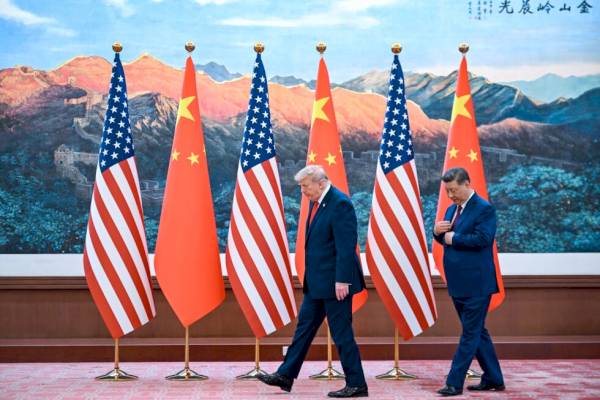
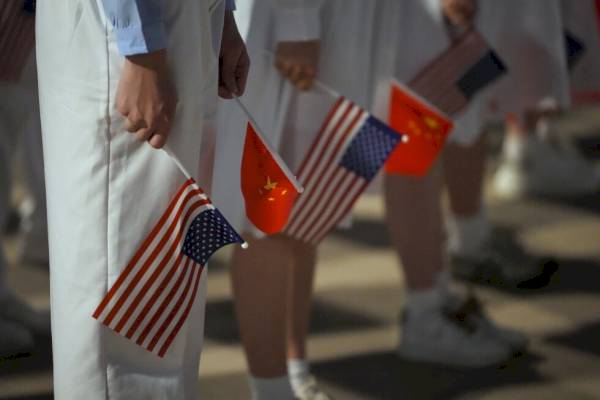
    • U.S. President Donald Trump is in Beijing for a crucial series of meetings with Chinese leader Xi Jinping. Few breakthroughs are expected on divisive issues such as the Iran war, trade, technology and Taiwan.
    • In a closed-door meeting, Xi warned Trump that differences over Taiwan, a self-governed island that Beijing claims as its own territory, could bring the U.S. and China into clashes or conflict. Trump in December authorized an $11 billion arms package for Taiwan, but has not yet moved forward with delivery. Secretary of State Marco Rubio later said U.S. policy toward Taiwan was “unchanged” but warned that it would be “a terrible mistake” for China to take Taiwan by force.
    • Trump hopes to focus talks on trade and deals for China to buy more agricultural products and passenger planes, setting up a board to address their differences and avoid a repeat of the trade war ignited last year after Trump’s tariff hikes.
    • The war with Iran is also likely to be a key topic. Ahead of the meetings, Trump hoped China would use its considerable leverage to prod Iran to agree to U.S. terms to end the two-month-old war or reopen the critical Strait of Hormuz, but he has tempered those calls ahead of the summit.

    China fetes Trump with one of his favorite songs, The Village People’s ‘Y.M.C.A’

    At the state banquet in Beijing, the Chinese military band broke into a tune the president has made his signature walk-off song, the disco hit, “Y.M.C.A.”

    The song was played during a private portion of the dinner, a White House official confirmed. The official spoke on condition of anonymity because they were not authorized to discuss the details of the private portion of the dinner.

    Trump closes his campaign rallies and most official events with the song, which he dances to while throwing slight fist pumps into the air.

    In 2017, “The Stars and Stripes Forever” was played when Trump and Xi inspected Chinese honor guards at the welcome ceremony, an unusual choice intended to impress Trump.

    Military leader in Middle East says US no longer using high-end munitions to take out Iran’s drones

    Adm. Brad Cooper, who leads U.S. Central Command, told the Senate Armed Services Committee on Thursday that American forces have stopped using high-end munitions to shoot down Iran’s drones.

    The nation’s limited stockpiles of expensive weapon systems, including advanced missile interceptors, have become a lightning rod during the Iran war. American forces were using them to defend against Iranian drones. But Cooper says the U.S. military is now using lower-cost munitions.

    The admiral said Iran only has 10% of its drones left. Despite a fragile month-long ceasefire, skirmishes have flared between Iranian and American forces.

    Congressional leaders begin hearing on military posture in the Middle East and Africa

    Senators opened the hearing into the state of forces in the Middle East and Africa by expressing concern about the future of the Iran war and the American presence in Africa.

    “We are 75 days into this war with Iran and I am concerned the president does not have a credible strategy to win,” Sen. Jack Reed, the top Democrat on the Senate Armed Services Committee, said Thursday.

    Sen. Roger Wicker, the Republican chairman of the committee, also said Africa has “increasingly become the epicenter of global terrorism” and stressed that he felt U.S. Africa Command should remain an independent combatant command.

    Top US military leader in the Middle East faces questions from lawmakers

    FILE - Adm. Brad Cooper speaks to members of the media during a press briefing with Defense Secretary Pete Hegseth, left, at the Pentagon, Thursday, April 16, 2026 in Washington. (AP Photo/Kevin Wolf)

    FILE – Adm. Brad Cooper speaks to members of the media during a press briefing with Defense Secretary Pete Hegseth, left, at the Pentagon, Thursday, April 16, 2026 in Washington. (AP Photo/Kevin Wolf)

    Adm. Brad Cooper, who leads U.S. Central Command, is testifying before the Senate Armed Services Committee for the first time since the Iran war began.

    The hearing’s purpose is to review operations in the Middle East and Africa as the Trump administration calls for a historic $1.5 trillion defense budget in 2027.

    Senators are expected to grill Cooper about the war and the effective closure of the Strait of Hormuz, a vital oil shipping corridor off Iran’s coast.

    Lawmakers have been raising concerns about the drawdown of the nation’s critical weapons stockpiles and strategy for an endgame to the war during a fragile ceasefire.

    Selfie-taking moment between tech CEOs Elon Musk and Lei Jun is going viral on Weibo

    The hashtag “Lei Jun and Musk photo together “ drew more than 20 million views on the Chinese social media platform.

    Musk is the CEO of Tesla and SpaceX and owner of the social media platform X, while Lei is CEO of Chinese smartphone maker Xiaomi.

    Some users said Musk’s wink while taking the picture stole the spotlight, with others saying Lei nailed his celebrity chase.

    Discussion of US weapons sales to Taiwan ‘did not feature prominently’ in talks, Rubio says

    Rubio said Xi has raised the issue with Trump in the past, however.

    Rubio also told NBC that the U.S. laid out its position on Taiwan with “strategic ambiguity” because they won’t want to see a conflict over the island, which China wants to reunify with the mainland. It hasn’t ruled out using force to do so.

    “We think it would be a terrible mistake to force that through force or anything of that nature. There would be repercussions for that, globally, not just in the United States. And we kind of leave it there,” Rubio said.

    Rubio says Trump won’t let the Iranians use US gasoline prices as ‘leverage’ for ending the war

    He tried to clarify Trump’s comments that he wasn’t thinking about gasoline prices and U.S. consumers with regard to the Iran war.

    “We’re not going to let Iran use that as leverage,” Rubio told NBC News in an interview. “I think what the president is making clear is, if the Iranians think that they are going to use our domestic politics to pressure him into a bad deal, that’s not going to happen.”

    Rubio said the U.S. is taking “extraordinary measures” to keep gasoline prices lower than in other parts of the world.

    Rubio says nothing changed in US policy toward Taiwan

    President Donald Trump meets with China's President Xi Jinping at the Great Hall of the People, Thursday, May 14, 2026, in Beijing, as Secretary of State Marco Rubio watches. (AP Photo/Mark Schiefelbein)

    President Donald Trump meets with China’s President Xi Jinping at the Great Hall of the People, Thursday, May 14, 2026, in Beijing, as Secretary of State Marco Rubio watches. (AP Photo/Mark Schiefelbein)

    He said in an interview with NBC news that China always raises the issue of the self-governing island, but the U.S. stance did not change in Trump’s meeting with Xi.

    “U.S. policy on the issue of Taiwan is unchanged as of today and as of the meeting that we had here today. It was raised. They always raise it on their side. We always make clear our position and we move on to the other topics,” Rubio said.

    US treasury secretary says the public will hear from Trump this evening or tomorrow on Taiwan

    Treasury Secretary Scott Bessent was asked in a CNBC interview about whether China was pushing the U.S. to limit arm sales to Taiwan, the self-governing island China considers to be part of its own territory.

    Bessent said he’s confident Trump “understands the issues” and will be “very resolute” in his response.

    The treasury secretary did not preview what that response would be as the administration has authorized an $11 billion weapons package for Taiwan.

    “I’m not going to get out ahead of the president,” Bessent said. “You’ll be hearing more from him either this evening, tomorrow.”

    Rubio says Trump raised Iran in talks with Xi but ‘he didn’t ask him for anything’

    “We’re not asking for China’s help. We don’t need their help,” U.S. Secretary of State Marco Rubio said in an interview with NBC News.

    He said China agreed with the U.S. that Iran should not have a nuclear weapon and brought that up in their meetings.

    He said the Chinese told the U.S. team in meetings that, “they are not in favor of militarizing the straits of Hormuz, and they’re not in favor of a tolling system.”

    “It’s good that we have alliance, or at least agreement on that point,” Rubio said.

    Wall Street heads for gains before the bell as Trump and Xi meet

    Wall Street is poised to open with gains Thursday following another record-setting day and developments emerging from President Trump’s summit with Chinese leader Xi Jinping in Beijing.

    S&P futures rose 0.3%, while futures for the Dow Jones Industrial Average climbed 0.7%. Nasdaq futures gained 0.2% early. The S&P and Nasdaq both hit record highs Wednesday.

    Oil prices were effectively unchanged, with no clear ending to the Iran war after more than two months. Some were hoping the Trump-Xi meeting could bring results, after U.S. officials said Beijing could use its close economic ties with Tehran to press Iran to reopen the Strait or Hormuz.

    On Thursday, the White House said Trump and Xi discussed enhancing U.S.-China economic cooperation. Both sides also agreed the Strait of Hormuz must be reopened.

    Read more

    Trump peppers toast with historical references to illustrate US-China ties

    President Donald Trump speaks during a state dinner with China's President Xi Jinping at the Great Hall of the People on Thursday May 14, 2026, in Beijing. (AP Photo/Mark Schiefelbein)

    President Donald Trump speaks during a state dinner with China’s President Xi Jinping at the Great Hall of the People on Thursday May 14, 2026, in Beijing. (AP Photo/Mark Schiefelbein)

    During Donald Trump’s toast at the state banquet with Chinese leader Xi Jinping, the U.S. president said citizens of the United States and China have long shared a “deep sense of mutual respect” and used history to illustrate the point.

    Benjamin Franklin published the sayings of the philosopher Confucius, Trump said.

    Chinese admirers of President George Washington gifted a stone tablet honoring his memory to adorn the Washington Monument. The tablet was inscribed with the words of a Chinese official who called Washington a great general and statesman, Trump said.

    Chinese workers helped lay the railroad tracks that connected the Atlantic and Pacific coasts of the United States while American travelers to China helped spread literacy and modern medicine, he said.

    Trump also noted President Theodore Roosevelt, acting on a request from China’s ambassador, provided money to establish Xi’s alma mater, Tsinghua University.

    What’s for dinner at China’s state banquet

    President Donald Trump, right, seats beside and Chinese President Xi Jinping, center, during a state dinner at the Great Hall of the People on Thursday May 14, 2026, in Beijing. (AP Photo/Mark Schiefelbein)

    President Donald Trump, right, seats beside and Chinese President Xi Jinping, center, during a state dinner at the Great Hall of the People on Thursday May 14, 2026, in Beijing. (AP Photo/Mark Schiefelbein)

    The menu, according to the White House, included some Chinese elements.

    Lobster in Tomato Soup, Crispy Beef Ribs, Beijing Roast Duck, Stewed Seasonal Vegetables and Slow-Cooked Salmon in Mustard Sauce.

    Guests also dined on Pan-Fried Pork Bun, Trumpet Shell-Shaped Pastry and Tiramisu, as well as fruits and ice cream.

    Musk was a draw for selfies at the Trump-Xi banquet

    Elon Musk uses his phone during a state dinner for President Donald Trump and Chinese President Xi Jinping at the Great Hall of the People on Thursday May 14, 2026, in Beijing. (AP Photo/Mark Schiefelbein)

    Elon Musk uses his phone during a state dinner for President Donald Trump and Chinese President Xi Jinping at the Great Hall of the People on Thursday May 14, 2026, in Beijing. (AP Photo/Mark Schiefelbein)

    Before the leaders entered the room, a steady stream of guests approached Elon Musk at his table, snapping selfies with the tech CEO.

    Lei Jun, CEO of Chinese smartphone maker Xiaomi, was seen shaking hands with Musk and taking a selfie with him.

    Trump and Xi could meet up to 4 times in 2026

    U.S. and Chinese officials say Trump and Xi could potentially meet four times in 2026.

    The meetings could include the Group of 20 meeting in Miami and Asia-Pacific Economic Cooperation meeting in Guangzhou later this year.

    Trump invites Xi to visit White House in September

    Trump extended a Sept. 24 invitation to Xi and his wife, Madame Peng, during his reciprocal toast.

    “And we look forward to it,” Trump said.

    He also thanked Xi for his hospitality.

    “This has been an amazing period of time,” Trump said.

    Xi says U.S.-China relationship is most important in the world

    Xi Jinping called for the China and the U.S. to work together as partners rather than rivals in an opening toast ahead of the state banquet that was largely positive though measured.

    “We both believe that China and the U.S. relationship is the most important bilateral relationship in the world. We must make it work and never mess it up,” Xi said.

    Xi noted it was the 250th anniversary of American independence.

    “Achieving the great rejuvenation of the Chinese nation and making America Great Again can go hand in hand,” he said. “Both China and U.S. stand to gain from cooperation and lose from confrontation, should be partners rather than rivals.”

    He then toasted Trump and the audience.

    Trump recounts ‘fantastic day’ in China to open banquet toast

    President Donald Trump speaks during a state dinner with Chinese President Xi Jinping at the Great Hall of the People on Thursday May 14, 2026, in Beijing. (AP Photo/Mark Schiefelbein)

    President Donald Trump speaks during a state dinner with Chinese President Xi Jinping at the Great Hall of the People on Thursday May 14, 2026, in Beijing. (AP Photo/Mark Schiefelbein)

    “This is a great honor. It was a fantastic day,” Trump said. “It really was a magnificent welcome like none other.”

    He described his talks with Xi as “extremely positive conversations” and said everything that they discussed was “all good for the United States and China.

    “And it was a great honor to be with you,” the U.S. president said, referring to his Chinese counterpart.

    Taiwan calls China the ‘only risk’ to regional stability

    “China is currently the only risk to regional peace and stability,” Taiwan’s Ministry of Affairs said in response to Xi’s warning Thursday for the U.S. to be careful.

    “Even during the meeting between the leaders of the United States and China, the People’s Liberation Army continued to send military aircraft and ships to harass and threaten Taiwan in the region,” the ministry said.

    Xi said “Taiwan independence” and cross-strait peace are as irreconcilable as fire and water, while noting the issue was the most important in the bilateral relationship.

    Xi’s wording on Taiwan may indicate Trump didn’t budge

    Xi’s stark warning to Trump over Taiwan may indicate the U.S. president did not make concessions Thursday over the island democracy China claims as its own, an analyst said.

    Any meaningful concession would have been reflected in Beijing’s official readout of the meeting, said William Yang, a senior analyst for Northeast Asia for International Crisis Group.

    “The lack of such mention and the relatively stern tone suggest Trump may not have budged on Taiwan in principle,” Yang said.

    Wen-Ti Sung of the Atlantic Council said Xi’s warning of potential conflict signaled Taiwan remains the Chinese government’s biggest red line.

    “Taiwan is the identity-defining issue in U.S.-China relations: get Taiwan right and we are friends; get Taiwan wrong and we might become foes before you know it,” Sung said.

    What Trump and Xi discussed at the Temple of Heaven

    U.S. reporters were mainly kept far away from the leaders when they toured the UNESCO heritage site.

    But China’s official Xinhua News Agency cited Trump as being impressed to see the Temple of Heaven still standing tall and magnificent after over 600 years, showcasing exquisite Chinese classical architectural art.

    Xi said ancient Chinese rulers held sacrificial ceremonies at the temple to pray for national peace and prosperity.

    Xi said it showed the traditional Chinese thought that “the people are the foundation of the state, and when the foundation is solid, the state is stable,” according to Xinhua.

    Trump said he vividly remembers his 2017 visit to the Forbidden City, Xinhua reported.

    Trump attends Chinese state banquet in his honor

    President Donald Trump, left, and Chinese President Xi Jinping arrive for a state dinner at the Great Hall of the People on Thursday May 14, 2026, in Beijing. (AP Photo/Mark Schiefelbein)

    President Donald Trump, left, and Chinese President Xi Jinping arrive for a state dinner at the Great Hall of the People on Thursday May 14, 2026, in Beijing. (AP Photo/Mark Schiefelbein)

    Chinese President Xi Jinping plate during a state dinner with President Donald Trump at the Great Hall of the People on Thursday May 14, 2026, in Beijing. (AP Photo/Mark Schiefelbein)

    Chinese President Xi Jinping plate during a state dinner with President Donald Trump at the Great Hall of the People on Thursday May 14, 2026, in Beijing. (AP Photo/Mark Schiefelbein)

    The affair brought Trump back to the Great Hall of the People, where he opened his first full day in Beijing in closed-door talks with Xi.

    Inside the hall, round tables were draped with white tablecloths.

    Key members of Trump’s Cabinet including Secretary of State Marco Rubio, Defense Secretary Pete Hegseth and Treasury Secretary Scott Bessent milled about before Trump arrived.

    Chinese premier stresses cooperation in talk with US executives

    Chinese Premier Li Qiang stressed the need for friendship and cooperation in U.S.-China ties as he spoke with U.S. business leaders accompanying President Donald Trump in Beijing.

    Li met executives including Elon Musk, Apple’s Tim Cook and Nvidia CEO Jensen Huang on the sidelines of Trump’s summit with Chinese President Xi Jinping.

    “China and the United States have been able to maintain frank and smooth dialogue and communication and actively safeguard a stable and healthy bilateral relationship” despite international turbulence, Li said.

    Collaboration is needed for “mutual success and shared prosperity,” Li added.

    China’s language shows ‘core’ focus on Taiwan

    China has ramped up its language around Taiwan by noting repeatedly in recent weeks that Taiwan is the “core” of its interests and a key to ensuring a stable relationship with the U.S.

    Trump has demanded Taiwan increase defense spending and in December the White House announced an $11 billion weapons package for Taiwan, the largest ever to the island democracy.

    Ma Chun-wei, an expert in China-Taiwan relations at Taiwan’s Tamkang University, said the elevated defense relationship between the U.S. and Taiwan has caused China to increase its rhetoric over Taiwan.

    “For Xi Jinping, he must show that the Taiwan issue is in China’s hands. He must demonstrate this image, or else he would be criticized,” Ma said.

    Trump and Xi discussed Iran and reopening the Strait of Hormuz

    The leaders were in agreement that the Strait of Hormuz needs to be opened to support global energy needs, according to a readout of their Thursday meeting by a White House official.

    Xi also opposed any implementation of tolls on vessels crossing the strait, which effectively has closed since the start of the U.S. and Israel war against Iran.

    Xi expressed interest in China purchasing more U.S. oil to reduce future Chinese dependence on Gulf oil, according to the official, who was not authorized to comment publicly and spoke on condition of anonymity.

    The leaders also discussed further stemming the flow of fentanyl precursor chemicals into the U.S. and increasing Chinese purchases of U.S. agricultural products.

    China’s commerce ministry open to expanded US cooperation

    China is willing to work with the U.S. to continuously expand its cooperation list, China’s Ministry of Commerce spokesperson He Yongqian said Thursday.

    Chinese Vice Premier He Lifeng and U.S. Treasury Secretary Scott Bessent engaged in “candid, in-depth and constructive” exchanges in South Korea on Wednesday, He said.

    For the next step, China is willing to work with the U.S. to expand their cooperation based on the principles of equality, respect and mutual benefit, He said.

    They also would shorten the problem list while promoting healthy economic and trade ties between the sides, He said.

    Chinese social media finds humor in Trump comment about executives

    A comment by Donald Trump about the U.S. business executives chosen to accompany him to China has become a source of humor on Chinese social media.

    “I didn’t want the second or the third in the company. I wanted only the top, and they’re here today to pay respects to you and to China,” Trump told Xi when the leaders met Thursday.

    Trump’s comments was ranked second in trending topics on Weibo, a social media platform curated by censors.

    The posts included jokes about how the corporate executives were grateful to be there and pictures of them flashing a thumbs-up sign while leaving the Great Hall of the People in Beijing on Thursday.

    Analyst says Xi is setting boundaries

    George Chen, a partner at The Asia Group consultancy, said Xi wants to set clear boundaries on what the U.S. can and cannot do with China.

    Politically it’s all about Taiwan, Chen said, noting Xi’s opposition to independence for the island democracy.

    “He makes the ‘red line’ crystal clear,” he said.

    Chen said Xi has sought to reassure U.S. businesspeople that China is a place they can make money, which could be seen as Xi’s response to Trump’s demand for China to provide a more favorable environment for U.S. firms.

    Chen said Xi suggested the relationship’s “strategic stability” can continue at least for the rest of Trump’s term, which can be perceived as progress.

    Ukraine ties a Russian attack on Kyiv to the Beijing summit

    Ukrainian Foreign Minister Andrii Sybiha tied an overnight attack on Kyiv to the Xi-Trump summit, saying the assault proved Russia was a threat to international security.

    “At the very time when leaders of the most powerful countries are meeting in Beijing, and the world hopes for peace, predictability and cooperation, Putin launched hundreds of drones, ballistic and cruise missiles at the capital of Ukraine,” Sybiha said on Telegram.

    He said there should be “no illusions” about ending the Russian war on Ukraine.

    “Only pressure on Moscow can make him stop,” Sybiha said of Putin, adding that U.S. and Chinese leaders had sufficient leverage to compel Russia to end the conflict.

    Read more here.

    Taiwan thanks the US for support after China warning

    Taiwan said it is grateful for the long-term support of the United States after Xi warned Trump on Thursday about potential “clashes and even conflicts” over the self-ruled island China claims as its own.

    “The government views all actions that contribute to regional stability and the management of potential risks from authoritarian expansion positively and continues to work with the United States in various aspects of our relationship,” said Michelle Lee, a spokesperson for Taiwan’s premier.

    Taiwan has stayed in close contact with the U.S. on national security and diplomacy, Lee said.

    “The U.S. has also repeatedly reiterated its firm and clear position of support for Taiwan,” Lee said.

    Trump and Xi exchange views on the Middle East, state media reports

    Trump and Xi have exchanged views on the situation in the Middle East, the Ukraine crisis and the Korean Peninsula, the official Xinhua news agency reported without providing additional details of the discussion.

    The wars in Iran and Ukraine and relations with North Korea have been sources of tensions between Washington and Beijing.

    Trump and Xi agreed to support each other this year by hosting the APEC Economic Leaders’ Meeting in Shenzhen, near Hong Kong, and the G20 Summit in Florida, Xinhua reported.

    Xi calls for stability in relationship with US

    President Donald Trump, left, stands with Chinese President Xi Jinping at the Temple of Heaven on Thursday May 14, 2026, in Beijing. (AP Photo/Mark Schiefelbein)

    President Donald Trump, left, stands with Chinese President Xi Jinping at the Temple of Heaven on Thursday May 14, 2026, in Beijing. (AP Photo/Mark Schiefelbein)

    Xi said he and Trump agreed to establish a new orientation for U.S.-China relations that is “constructive, strategic and stable.”

    Xi said the bilateral relationship should take this direction for the next three years and beyond, according to China’s official Xinhua news agency.

    Xi said this new strategic orientation should have “limits to competition” and “differences are managed.”

    Xi said both sides should use political, diplomatic and military communication channels to ensure the goals.

    Brett Ratner confirms he is in China for ‘Rush Hour 4′

    The director got to China by flying with Trump aboard Air Force One.

    He told the White House press pool he is in Beijing to prep for filming the fourth installment of the movie series, whichTrump is said to be interested in.

    Ratner directed first lady Melania Trump’s recent movie about her life in the weeks before her husband returned to office.

    Xi says China-US economic ties are win-win, state media reports

    Economic ties between China and the United States are mutually beneficial and win-win in nature, Chinese President Xi Jinping told U.S. President Donald Trump during their talks, according to the Chinese official news agency Xinhua.

    “Yesterday, our economic and trade teams produced generally balanced and positive outcomes. This is good news for the people of the two countries and the world,” Xi said.

    The Chinese president said facts have shown time and again there are no winners in trade wars, calling on both sides to jointly sustain the good momentum they have worked hard to build, Xinhua reported.

    “Where disagreements and frictions exist, equal-footed consultation is the only right choice,” he said.

    Trump concludes tour of Temple of Heaven

    Trump was expected to return to his hotel before he returns to the Great Hall of the People to attend a state banquet in his honor.

    Asian shares mixed and Chinese stocks trade lower

    Asian shares were mixed Thursday as investors closely monitored takeaways from U.S. President Donald Trump’s summit with Chinese leader Xi Jinping in Beijing.

    The Shanghai Composite index lost 1% to 4,199.19. Hong Kong’s Hang Seng gained 0.3% to 26,478.99. Markets in Japan and South Korea were higher, with Tokyo’s Nikkei 225 up 0.2% and Seoul’s Kospi gaining 1%.

    Investors are watching for progress on the Iran war and U.S.-China trade relations from the Xi-Trump summit, as well as possible trade deals on areas such as soybeans, airplanes and chips.

    Trump declines to say if he and Xi discussed Taiwan

    Trump said, “great,” when reporters asked how the talks with Xi went. But that’s about all he said.
    Follow-up questions about whether they discussed Taiwan were asked.
    Trump didn’t answer as he posed alongside Xi for photos after they arrived at the Temple of Heaven.

    XI says door to American business opening wider

    Xi said China’s door of opening to American business will only open wider and wider he told American CEOs on Thursday morning during his meeting with Trump, China’s official Xinhua news agency reported.

    Xi said American companies are deeply participating in China’s reform and opening, with both sides benefiting from this. He said China welcomes the U.S. to strengthen mutually beneficial cooperation with China and believes American businesses will have even broader prospects in China, according to Xinhua.

    Trump said the business leaders he brought along all respect and value China and he encourages them to expand cooperation with China, the report said.

    Trump introduced the business leaders to Xi one by one. The business people said they highly value China’s market, hope to deepen their operations in China and strengthen cooperation with China, the report added.

    Traveling to China as part of the U.S. delegation are some 17 CEOs, including Tesla’s Elon Musk, Apple’s Tim Cook and Boeing’s Kelly Ortberg, the White House says.

    Trump arrives at Temple of Heaven

    The 15th century temple was Trump’s next stop after meeting with Xi at the Great Hall of the People.
    A tour was planned.

    Trump departs Great Hall of the People after talks

    He walked a red carpet down the stairs to his waiting limousine and departed after concluding his talks with Xi.

    Trump’s next stop is the Temple of Heaven, a 15th century site where emperors in the Ming and Qing dynasties worshipped Heaven and prayed for bountiful harvests.

    Trump and Xi wrap up meeting after two hours of talks covering Taiwan, trade and other differences in US-China relations.

    The White House and Chinese state media said the leaders concluded their meeting after about two hours of talks.
    The leaders discussed trade, Taiwan and other differences in the U.S.-China relationship.

    JUST IN: Trump and Xi wrap up meeting after two hours of talks

    Xi warns Trump differences over Taiwan could bring US and China to clashes or conflict, Chinese state media reports

    In a closed-door meeting Xi told Trump that if Taiwan is handled well, U.S.-China relations “will enjoy overall stability,” according to a readout of their bilateral talks published by the official Xinhua news agency.

    If not, however, the two countries risk “clashes and even conflicts, putting the entire relationship in great jeopardy,” Xi was reported to have said.

    JUST IN: Xi warns Trump that differences over Taiwan could bring US and China to clashes or conflict, Chinese state media reports

    Xi says the US and China should be ‘partners rather than rivals’

    The U.S. and China should be “partners rather than rivals,” Xi told Trump ahead of their bilateral talks.

    “I always believed that the common interests between China and the U.S. outweigh their differences,” Xi said. “Cooperation benefits both sides, while confrontation harms both.”

    Xi added that he wanted 2026 to be a “landmark year” in the countries’

    Xi congratulates US for coming 250th anniversary of independence

    The Chinese leader took a moment to note the coming anniversary _ something that is a big deal for Trump.

    The massive months-long celebration is to include a “Great American State Fair” in Washington and a UFC fight night on the South Lawn of the White House.

    “This year marks the 250th anniversary of the founding of the United States. I extend my congratulations to you and to the American people,” Xi said. He added, “I firmly believe the common interests between China and the United States are bigger than our differences.”

    Xi offers more cautionary tone at start of talks

    President Donald Trump meets with China's President Xi Jinping at the Great Hall of the People, Thursday, May 14, 2026, in Beijing. (AP Photo/Mark Schiefelbein)

    President Donald Trump meets with China’s President Xi Jinping at the Great Hall of the People, Thursday, May 14, 2026, in Beijing. (AP Photo/Mark Schiefelbein)

    The leaders offered warm words about each other and hope for the future of U.S-China relations as they opened their bilateral talks.

    But Xi sounded more cautionary about what lies ahead for the world’s biggest economic powers.

    “Cooperation benefits both sides, while confrontation harms both,” Xi said. “The two countries should be partners rather than rivals, achieve success together and pursue common prosperity, and chart a correct path for major-country relations in the new era.”

    Why Xi is asking Trump for US and China to avoid the ‘Thucydides Trap’

    Chinese President Xi Jinping hosts a welcoming ceremony for visiting U.S. President Donald Trump ahead of a bilateral meeting.

    In remarks welcoming Trump, Xi name-checked an ancient Greek historian to express his hopes that the U.S. and China can avoid conflict, saying that history, the world and its people were asking “whether the two countries can transcend the “Thucydides Trap” and forge a new model for relations between major powers.

    ”He was using a term that’s popular in foreign policy studies, referring to the idea that when a rising power threatens to displace an established power, the result is often war.

    It comes from Thucydides’ account of the destructive Peloponnesian War between Athens and Sparta, in which he remarked that “It was the rise of Athens, and the fear that rise engendered in Sparta, that made war inevitable.”

    Trump will soon tour the Temple of Heaven

    Security is tightened at the Temple of Heaven park ahead of U.S. President Donald Trump's visit to Beijing Wednesday, May 13, 2026. (AP Photo/Ng Han Guan)

    Security is tightened at the Temple of Heaven park ahead of U.S. President Donald Trump’s visit to Beijing Wednesday, May 13, 2026. (AP Photo/Ng Han Guan)

    Built in the 15th century, the Temple of Heaven was a site where emperors in the Ming and Qing dynasties worshipped Heaven and prayed for bountiful harvests. The site was inscribed on the UNESCO World Heritage List in 1998.

    Located south of the Forbidden City in Beijing, the site’s design reflects the ancient Chinese belief that heaven is round and the earth is square. A main building there is the Hall of Prayer for Good Harvests, an iconic, blue-tiled building known for its circular design and triple-eaved roof.

    According to UNESCO’s website, it is not only the most complete imperial sacrificial building complex in China but also the world’s biggest building complex for offering sacrifice to heaven.

    Trump says only the ‘top’ American business leaders are part of the US delegation

    China's President Xi Jinping speaks as he meets with President Donald Trump at the Great Hall of the People, Thursday, May 14, 2026, in Beijing. (AP Photo/Mark Schiefelbein)

    China’s President Xi Jinping speaks at the Great Hall of the People, Thursday, in Beijing. (AP Photo/Mark Schiefelbein)

    President Donald Trump listens as he meets with China's President Xi Jinping at the Great Hall of the People, Thursday, May 14, 2026, in Beijing. (AP Photo/Mark Schiefelbein)

    President Donald Trump listens at the Great Hall of the People, Thursday, in Beijing. (AP Photo/Mark Schiefelbein)

    Trump says the White House invited the “top 30″ business leaders in the world on this trip and every one of them said “yes.”

    “I didn’t want the second or the third in the company. I wanted only the top, and they’re here today to pay respects to you and to China,” Trump told Xi during the public portion of their meeting.

    “They look forward to trade and doing business, and it’s going to be totally reciprocal on our behalf,” he said.
  • Republicans grapple with how much to have Trump on the campaign trail for the midterms – NBC News

    Republicans grapple with how much to have Trump on the campaign trail for the midterms – NBC News

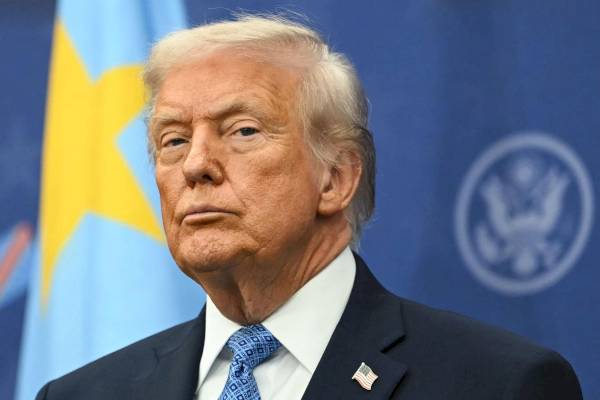
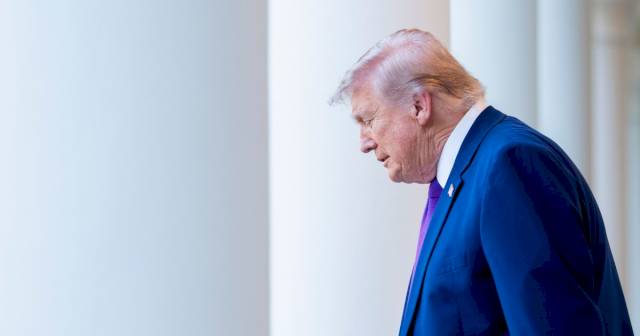
    WASHINGTON — He is the biggest draw in American politics, a sitting president who created a movement that has been steadfastly loyal to him for more than a decade.

    He may also be the most polarizing figure in American politics, now presiding over rising inflation and a Middle East war with no clear end in sight.

    Donald Trump’s capacity to both attract and repel American voters creates a dilemma that Republicans are grappling with ahead of the midterm elections in November: Should he campaign aggressively to hold the party’s slim congressional majority, or hang back lest his presence on the trail boomerang on the people he’s trying to elect?

    There’s no easy answer, interviews with 19 current and former Republican lawmakers and political operatives suggest. Midterm elections are often referendums on the president. That being the reality, it makes no sense to try to hide Trump away until the votes are cast, some Republicans argue.

    “They need him badly,” former House Speaker Kevin McCarthy, R-Calif., said in a reference to congressional Republicans. “They need his money. They need him to drive turnout.”

    “This is about getting our base out; that’s what huge,” said Jeff Kaufmann, chairman of the Iowa Republican Party. “And there is no one better” than Trump at galvanizing Republican voters.

    A complication is that Trump’s winning 2024 electoral coalition has frayed. That year, he won 46% of independent voters, compared with 49% who supported Democratic nominee Kamala Harris, exit surveys showed. In an Economist/YouGov poll this week, only 25% of independents said they had favorable views of Trump, compared with 66% who held unfavorable views.

    One House Republican locked in a competitive race said they have no plans to campaign with Trump or feature him prominently in ads. The lawmaker also said some fellow Republicans are dubious about the National Republican Congressional Committee’s decision to christen its midterm campaign program the “MAGA Majority,” putting Trump front and center.

    “I got a few text messages from people, a few vulnerable members, who were like, ‘Eh, I don’t know if this is the best strategy,’’’ the member said, speaking on condition of anonymity to talk freely. “You can tell some of these folks, on some of the comments they’re making, they’re nervous.”

    A state Republican chairperson conceded that Trump’s presence “can be tough.”

    “I think he can help with things like turnout, but there is some room for backfire on something like that,” the person said. “It would have to be the right audience, and I think folks here would be OK if that did not happen.”

    At minimum, voters are likely to see Trump in full campaign mode in September as he headlines an unusual Republican convention aimed at boosting the party’s midterm election prospects. The Republican National Committee changed its rules this year to stage a convention, separate from the multiday pageant it holds every four years to nominate its presidential candidate.

    “Republicans nationwide are united behind President Trump and his winning agenda,” RNC chairman Joe Gruters said in a statement. “While Democrats remain trapped defending a failed record, voters know which party delivers results. Republicans have the energy, the message, and the strongest turnout force in politics with President Trump leading the charge.”

    Still, uncertainty lingers in Republican circles over whether Trump will indeed plunge in and work to keep Congress in GOP hands.

    He has myriad interests that have little to do with his party’s electoral prospects, including his White House ballroom project and an Ultimate Fighting Championship contest next month on the South Lawn.

    One Republican consultant told NBC News that the White House has not shared a larger plan for the midterms and what candidates should expect from Trump.

    “It would be nice if they had a plan,” the consultant, who has clients in House races, said of the White House political shop. “They’ve given very little guidance to members of Congress or senators as to what to expect. If they do have a plan, they’re just not telling anyone.”

    Another Republican strategist said the White House must do more to sell its accomplishments. A photo-op last month with a DoorDash deliverywoman who turned up at the Oval Office with fast food helped call attention to Trump’s “no tax on tips” policy, but that won’t suffice, the person said.

    “It seems as though Trump’s strategy thus far has been, ‘The Democrats are crazy,’” the strategist said. “He might very well be right, but that’s not something that’s necessarily going to sell, especially when gas prices are $4.50. The message has to be how we’re going to capitalize on the things that we already did.”

    Asked for comment, a White House aide sent a list showing trips that Trump, Vice President JD Vance and Cabinet members have made to various states, demonstrating “how the administration is traveling strategically across the country ahead of the midterms.”

    The White House tally shows that Trump this year has visited Arizona, Georgia, Iowa, Michigan, Nevada, North Carolina, Ohio, Pennsylvania and Texas.

    Trump doesn’t much like to travel, but he signaled he’s ready to do it to stop Democrats from retaking Congress.

    In a recent phone interview with NBC News, he tied his party’s fate to the SAVE America Act, a bill languishing in the Senate that would require proof of citizenship to register to vote.

    “I am on the ballot, and my voters love me,” Trump said. “In many cases, they won’t love the Republican Party if they don’t pass the SAVE America Act. I can only do so much.”

    So far this year, Trump has made 12 stops around the country promoting his policies — the same number at a similar point in his first term ahead of the 2018 midterm elections, an NBC News analysis shows.

    That year, he dramatically ramped up his travel one month out from Election Day. He spent 21 out of 31 days on the road in October 2018, headlining 16 political rallies, three policy events and at least four fundraisers. In the five days leading up to the election, he took part in 10 more rallies.

    When it was all over, Democrats had regained the majority in the House, while Republicans had kept the Senate. Democrats impeached Trump twice over the next three years; he was acquitted in the Senate both times.

    An incentive for Trump to match that frenetic schedule is what might happen if Democrats capture the House. With the power to issue subpoenas and investigate Trump and his Cabinet officials, Democrats would be well positioned to throttle Trump’s agenda.

    “You got to win the midterms, because if we don’t win the midterms, they’ll find a reason to impeach me,” Trump told congressional Republicans in January. “I’ll get impeached.”

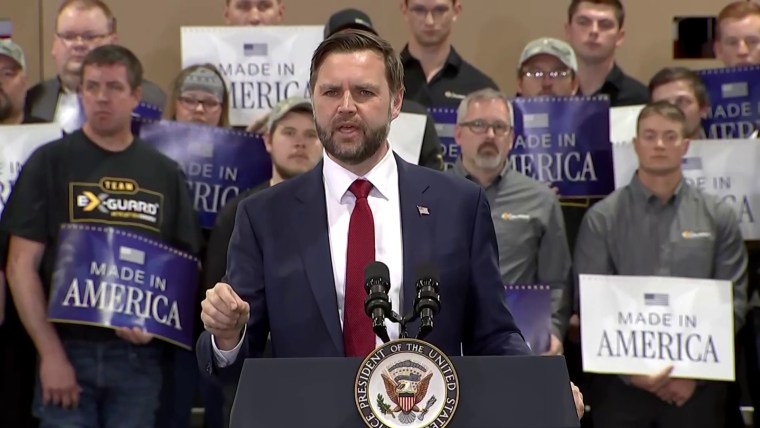
    Vance can fill gaps on the campaign trail, though he’s not as popular a draw as his boss. On Thursday, Vance is scheduled to visit Maine and speak about his efforts to combat fraud, the latest in a series of trips he is making to competitive House districts to boost Republican candidates.

    Vance will be in Maine’s 2nd Congressional District, where former Gov. Paul LePage, who is unopposed for the GOP nomination, will face the winner of next month’s Democratic primary. The state also is home to a Senate race that could help determine control of the Senate. The Republican incumbent, Susan Collins, faces a serious challenge from the expected Democratic challenger, Graham Platner.

    Vance events have typically been, by design, smaller than Trump’s large-scale rallies — a recognition that no one upstages Trump. The vice president’s visit last week to Des Moines, Iowa, for example, attracted several hundred people to a manufacturer’s warehouse. And a Turning Point USA event last month that featured Vance as a headliner caught attention for the number of empty seats inside a University of Georgia arena.

    In an interview with NewsNation, a Turning Point spokesperson blamed the lower-than-expected turnout on “shenanigans” by “left-wing” groups that claimed free tickets to make sure seats went unfilled.

    Republicans’ grip on the congressional majority is tenuous. Democrats can wrest control of the House if they net just three seats. In the Senate, they need to net four seats to overcome Vance’s tiebreaking vote.

    If history is a guide, Republicans may be in for a rough night Nov. 3, whether Trump campaigns actively or not. The sitting president’s party typically loses seats in the midterms; the only question is how many. Republican President George W. Bush described GOP losses in the 2006 midterms as “a thumping.” Democrat Barack Obama called his party’s setback in 2010 “a shellacking.”

    Making matters tougher for the GOP, 14 House Republicans are on the ballot in races considered toss-ups, compared with just four Democrats, according to the nonpartisan Cook Political Report.

    A wild card is the redistricting wars that have taken place. Trump has called upon Republican state legislatures to draw new maps that would create more congressional seats for his party, prompting countermoves in blue states like California.

    Recent court victories, however, have given given Republicans an edge.

    Before he left for his trip to China on Tuesday, Trump told reporters that Democrats have “redistricted for years, and now we took our shot and it looks like we’re going to pick up a lot of seats, and that’s a good thing.”

    Steve Bannon, who was a senior White House aide in Trump’s first term, expects Republicans to keep control of the House but believes they will lose the Senate. Trump’s political base is prepared to punish Senate Republican leader John Thune of South Dakota for failing to pass the SAVE America Act, Bannon said.

    Yet Bannon also described the Iran war as a costly distraction from pocketbook issues.

    “I’m worried about ending this war and getting the focus on the economy,” Bannon said in an interview. “The great economic turnaround is clearly being hindered by this war, and it’s got to be brought to a close. It’s time to wrap this thing up, get everyone home and focus on domestic issues.”

    A question that has long bedeviled sitting presidents is where, exactly, they should travel to maximize their parties’ chances in midterm campaign seasons. At a similar point in 2006, Bush’s approval rating had fallen to the mid-30s, about the same as Trump’s. Like Trump, he was mired in a Middle East war of his own making.

    Ahead of the midterms that year, “Bush campaigned, but it was in places like Utah,” a reliably Republican state, said Alex Conant, a Republican strategist who served in Bush’s White House. “You’re not going to go someplace where all you’re going to do is help turn out Democrats and independent voters that don’t like you.”

    “At the end of the day, the Republican challenge is that Democrats are very motivated and Republicans aren’t,” he added. “Trump helps with the latter but also hurts with the former.”

  • WATCH LIVE: Navy Acting Secretary Hung Cao testifies on budget as Trump discusses Iran with Xi – PBS

    WATCH LIVE: Navy Acting Secretary Hung Cao testifies on budget as Trump discusses Iran with Xi – PBS

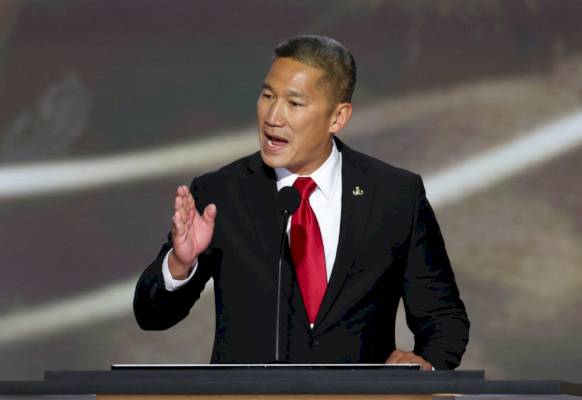
    Acting Navy Secretary Hung Cao is testifying before a House subcommittee hearing Thursday, where he will likely face questions over President Donald Trump’s war in Iran.

    The hearing begins at 10 a.m. EDT. Watch live in the player above..

    Cao, a 25-year Navy combat veteran who ran unsuccessful campaigns for the U.S. Senate and House in Virginia, stepped in to lead the department after the departure of former Navy Secretary John Phelan, who unexpectedly left the post in April.

    No reason was given for Phelan’s departure, which came as the sea service imposed a blockade of Iranian ports and was targeting ships linked to Tehran around the world during a tenuous ceasefire in the war.

    Phelan’s departure is the latest in a series of shakeups of top leadership at the Pentagon, coming just weeks after Defense Secretary Pete Hegseth fired the Army’s top uniformed officer, Gen. Randy George. Hegseth also has fired several other top generals, admirals and defense leaders since taking office last year. Senators have pressed Hegseth on the firings in the last several weeks during hearings about Trump’s military budget request.

    This is a developing story and will be updated.

    A free press is a cornerstone of a healthy democracy.

    Support trusted journalism and civil dialogue.

  • Tech stocks today: Cerebras to stage blockbuster IPO, Trump in China, Musk vs. OpenAI closing arguments – Yahoo Finance

    Tech stocks today: Cerebras to stage blockbuster IPO, Trump in China, Musk vs. OpenAI closing arguments – Yahoo Finance

    Yahoo Finance

    Updated 1 min read

    Tech stocks slid in early trading Thursday, after a positive day Wednesday that saw Nvidia NVDA) and Apple (AAPL) close at all-time highs.

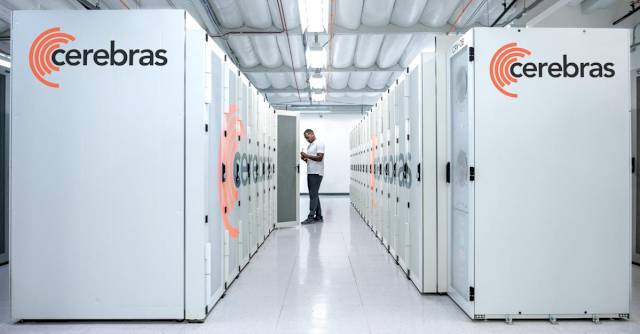
    AI chip maker Cerebras is expected to begin trading today, in what is anticipated to be a the first of many AI company initial public offerings this year. The company filed paperwork on Monday, increasing its initial public offering to 30 million shares with the goal of raising up to $4.8 billion, Bloomberg reported. The startup counts Amazon (AMZN) and OpenAI (OPAI.PVT) among its customers.

    Nvidia’s Jensen Huang, Apple’s Tim Cook, and Tesla (TSLA) Elon Musk, are in China alongside President Trump for his meeting with Chinese President Xi Jinping.

    And lawyers in Musk’s lawsuit versus OpenAI (OPAI.PVT) will lay out their closing arguments on Thursday, after two weeks of testimony that saw OpenAI CEO Sam Altman and president Greg Brockman, Microsoft CEO Satya Nadella, and Musk himself take the stand.

    Musk’s lawsuit against one of the world’s most valuable private companies has provided a number of details about the inner workings of OpenAI and the relationships between Musk, Altman, president Greg Brockman, former chief technology officer Mira Murati, and former board member and mother of four of Musk’s children, Shivon Zilis.

    LIVE 20 updates

    • Dispute over Nvidia’s H200 chips raise stakes for Jensen Huang’s China trip

      Nvidia CEO Jensen Huang will likely seek to open access to China’s AI market on his last-minute trip to the country, accompanying President Trump and a delegation of CEOs. It will be no small feat.

      Reuters has reported that the US will allow about 10 Chinese firms, including Alibaba (BABA), Tencent (TCEHY), ByteDance, and JD.com (JD), to buy Nvidia’s second-most powerful AI chip, the H200. However, no H200 chips have been delivered in the country so far, according to people familiar with the matter.

      BEIJING, CHINA - MAY 14: Tesla CEO Elon Musk checks his phone next to Apple CEO Tim Cook and Nvidia CEO Jensen Huang, as U.S. Secretary of the Treasury Scott Bessent, Secretary of State Marco Rubio and Ambassador to China David Perdue stand prior to a welcome ceremony for U.S. President Donald Trump at the Great Hall of the People on May 14, 2026 in Beijing, China. President Trump is meeting with President Xi Jinping in Beijing to address the Iran conflict, trade imbalances, and the Taiwan situation while establishing new bilateral boards for economic and AI oversight. (Photo by Alex Wong/Getty Images)

      Nvidia CEO Jensen Huang (left) stands with the US delegation and Tesla CEO Elon Musk prior to a welcome ceremony for US President Trump at the Great Hall of the People on May 14, 2026, in Beijing, China. (Alex Wong/Getty Images) · Alex Wong via Getty Images

      Any breakthroughs on the deal from the trip could net Nvidia a windfall, as Huang has estimated that China’s AI market could be worth $50 billion this year.

      Nvidia used to almost completely own China’s advanced chip market, and 13% of the company’s revenue came from the country. But then the US tightened its chip export controls to block China’s access to artificial intelligence.

      The US eased those restrictions somewhat to allow for the limited access to Nvidia’s lower-power chips, with the US government receiving a 25% cut of the proceeds.

      However, no deals have been made as Chinese firms receive guidance from Beijing to focus on homegrown chips and block the orders.

      Read more from Reuters.

    • The Cerebras IPO is a bellwether for AI startups

      Cerebras’ initial public offering this week could value the AI chipmaker at $48.8 billion, making it the biggest IPO in 2026 so far. At those levels, the IPO could send a strong signal about artificial demand to the market.

      “I think it’ll be interesting to see if the market really gives it this valuation, and not only that, but whether it holds up after the fact,” Rainmaker Securities managing director Greg Martin told Yahoo Finance on Wednesday.

      Martin noted that Cerebras has some sovereign risk concerns around its revenue concentration. According to Futurum Group, approximately 86% of Cerebras’ total revenue came from two sources in the United Arab Emirates: 62% of revenue comes from the Mohamed bin Zayed University of Artificial Intelligence, and 24% is derived from Group 42.

      “So it’s not as clean as some of these other AI infrastructure companies,” he said. “So if they’re priced as well, I think it really bodes well for the AI trade and some big potential IPOs going forward in 2026.”

    • Ines Ferré

      Apple stock on track for record close as tech rebounds

      Apple (AAPL) stock was on pace for a record close on Wednesday, up nearly 2% to just under $300 per share as tech stocks rebounded from a sell-off the previous day.

      The shares have been rising alongside some other “Magnificent Seven” names in recent weeks as the AI trade resurges. Apple stock jumped after the company’s most recent quarterly results, released earlier this month, topped estimates on iPhone and China sales. The stock has gained more than 20% since the March 30 market lows.

      Read more.

    • Pras Subramanian

      Ford stock surges as Morgan Stanley gets bullish on energy storage business

      Ford (F) stock surged on Wednesday after Morgan Stanley said Ford’s new energy business could be a winner for the automaker, citing a significant competitive advantage in battery tech.

      Morgan Stanley’s Andrew Percoco wrote in a note published late Tuesday that Ford’s $2 billion battery-storage bet, announced late last year alongside a $20 billion writedown of its electric-vehicle assets, could put a dent in those big losses.

      The main thrust comes from Ford’s deal with Chinese battery maker Contemporary Amperex Technology Co., Limited (CATL).

      “We believe Ford’s relationship with CATL is an under-appreciated strategic competitive advantage for its Energy Storage business [ESS],” the analysts wrote, calling Ford one of the few “semi-vertically integrated domestic ESS suppliers” with access to best-in-class lithium iron phosphate [LFP] technology.

      Percoco argues the ESS business could be worth as much as $10 billion on its own. Ford shares jumped 14% in midday trade a day after the note’s release.

      Read more here.

    • Daniel Howley

      Anthropic debuts Claude for Small Business as it continues its enterprise software push

      Anthropic (ANTH.PVT) is continuing its drive into the enterprise software market with its new Claude for Small Business offering.

      The product, which the company says allows small business owners to add its Claude AI to existing apps, including Intuit’s (INTU) QuickBooks, DocuSign (DOCU), PayPal (PYPL), Microsoft 365 (MSFT), and Google Workspace (GOOG, GOOGL), is Anthropic’s latest effort to expand its services across common enterprise use cases.

      FILE PHOTO: Anthropic logo is seen in this illustration taken March 1, 2026. REUTERS/Dado Ruvic/Illustration/File Photo

      FILE PHOTO: Anthropic logo is seen in this illustration taken March 1, 2026. REUTERS/Dado Ruvic/Illustration/File Photo · Reuters / REUTERS

      According to Anthropic, Claude for Small Business allows users to toggle on Claude within popular apps, where it can perform tasks across payroll, reconciling books, getting business insights, and spotting trends, among other capabilities.

      Anthropic’s services have increased concerns on Wall Street that AI companies will supplant existing software vendors, sending software stocks sliding over the last several months.

      Salesforce (CRM), ServiceNow (NOW), Intuit, DocuSign, and Box (BOX) are among some of the stocks that have declined both year to date and over the last 12 months.

      Read more.

    • Micron just gave chip bulls a $100 billion stress test

      Micron stock recovered on Wednesday, rising more than 3% after the stock faced selling pressure on Tuesday. Yahoo Finance’s Jared Blikre reports:

      Micron (MU) wiped out roughly $100 billion in market value at Tuesday’s low — and chip bulls still bought the dip.

      The stock was tracking its worst day in more than a year before buyers stepped in, turning a near-breakdown into the latest stress test for the AI-memory trade.

      The latest supply scare added fuel to the Micron rebound. Samsung’s labor standoff has raised the risk of an 18-day strike that could hit memory-chip production, reinforcing the buy-the-dip case for MU.

      Micron has become a bellwether for the AI-memory trade, and Tuesday’s flush showed traders are still leaning into that scarcity story instead of walking away from it.

      Read more here.

    • Jake Conley

      French AI lab Mistral working with European banks on answer to Anthropic’s Mythos

      The French artificial intelligence lab Mistral AI is working with European banks to develop and deploy a cybersecurity-focused AI model like Anthropic’s Mythos, per Bloomberg.

      Anthropic’s announcement of the cybersecurity and hacking capabilities of Mythos — and the US lab’s subsequent decision to limit access to just a handful of major US companies — sparked a panic around the consequences of AI powerful enough to find exploits in highly critical software, such as in the financial services industry.

      Mistral has been developing a similar cybersecurity-focused model and is now in discussions with major European banks about access once the model is ready for use, Bloomberg reported.

      While Anthropic has limited access to a small circle of primarily major US companies, the EU is in talks with the company about using the Mythos model to test European banks and other major firms for security violations.

      “We must have control over this technology,” said Mistral CEO Arthur Mensch at a National Assembly hearing in France on Tuesday.

      “You can’t have the French military’s source code scanned by Mythos. That creates such an irreparable dependency that we absolutely must find solutions.”

    • Pras Subramanian

      SpaceX, Google in orbital data center talks: Report

      Alphabet’s (GOOG) Google and SpaceX (SPAX.PVT) are in advanced discussions to launch data centers in space, the Wall Street Journal reported on Tuesday.

      The talks come as SpaceX prepares for what is expected to be the largest initial public offering in history this summer. Orbital data centers have become a big piece of SpaceX’s pitch to prospective investors, with CEO Elon Musk positioning them as the company’s next major commercial product.

      A partnership with Google, which already owns 6.1% of SpaceX per the latest filings, would boost that pitch ahead of the company going public.

      Google’s interest in orbital computing is not new. Last year the search giant announced Project Suncatcher, the Journal noted, a moonshot initiative aimed at launching prototype satellites by 2027. The company is working with Planet Labs to build those satellites.

      Read more here.

    • Financial Times: OpenAI’s vote of confidence in Cerebras comes with a big price tag

      The Cerebras IPO slated for later this week looks a lot different from the one planned 18 months. And it’s the AI chipmaker’s relationship with OpenAI (OPAI.PVT) that has made much of the difference.

      Cerebras and OpenAI have a deal under which Cerebras will provide OpenAI with 750 megawatts of computing power for three years.

      The Financial Times reports:

      Gaining access to AI’s commanding heights doesn’t come cheap. Cerebras is handing OpenAI warrants, over time, that could give OpenAI a 10th of the company’s shares. Based on a share price of $155 at the midpoint of its IPO range, that is worth about $5bn. Cerebras is, in other words, giving half of the deal’s profit back in return for joining Altman’s magic circle — presumably hoping that, where OpenAI goes, others will follow.

      This is, by now, a well-trodden path for OpenAI. It did a similar deal with Advanced Micro Devices last October; AMD’s shares have since tripled. An earlier alliance with Nvidia, the dominant AI chipmaker, saw Nvidia invest in OpenAI’s stock, through a recent $30bn fundraising. Altman gets access to data centres to train and run his AI models; he also widens the group of companies and investors with a vested interest in helping OpenAI succeed.

      Read more here (premium).

    • Daniel Howley

      Amazon to offer 30-minute delivery in dozens of US cities

      Amazon (AMZN) is launching its 30-minute Amazon Now service in dozens of US cities. The offering, which ensures customers get deliveries in half an hour, is available in Atlanta, Dallas-Fort Worth, Philadelphia, and Seattle, with plans to expand to other cities, including Austin, Denver, Orlando, and Phoenix.

      According to Amazon, the option will allow customers to order items ranging from groceries to electronics, with most areas providing services 24 hours a day.

      Velizy-Villacoublay, France - May 28, 2022: Exterior view of the Amazon Logistics delivery agency in Velizy-Villacoublay, serving the south of the Paris region

      Velizy-Villacoublay, France – May 28, 2022: Exterior view of the Amazon Logistics delivery agency in Velizy-Villacoublay, serving the south of the Paris region · HJBC via Getty Images

      Don’t expect to get your deliveries for free, though. Amazon says Prime subscribers will pay $3.99 per order, while non-subscribers will pay $13.99.

      Smaller orders will cost Prime members an additional $1.99 charge. Non-Prime members will have to pay a $3.99 fee on similar orders.

      “Amazon Now is for when you need or want the convenience of getting your Amazon order delivered in 30 minutes or less,” Udit Madan, senior vice president of Amazon Worldwide Operations, said in a statement.

      Read more here.

    • Chip stocks in the red as rally pauses

      Chip stocks are having their worst day in seven months.

      In a sharp reversal from the massive chip rally over the past couple of days that has driven stocks to record highs, the PHLX Semiconductor index (^SOX) is down roughly 5% on Tuesday.

      Shares of AMD (AMD), Micron (MU), and Marvel (MRVL) saw mid-single-digit percentage declines as investor sentiment turned risk-off. Qualcomm (QCOM) stock fell nearly 12%. Intel (INTC), which is up around 430% over the past year, declined 9% on the day.

      Chip stocks were a sea of red on Tuesday.

      Chip stocks were a sea of red on Tuesday.

      Investors were likely taking some profits after a significant run-up in semiconductor names.

      The downturn has only made a small dent in the index’s 2026 gains: The SOX remains up 4% over the past five days, 29% over the past month, and 60% since the beginning of the year.

    • OpenAI chief Altman to take stand in OpenAI-Musk trial on Tuesday

      Reuters reports:

      OpenAI (OPAI.PVT) Chief Executive Officer Sam Altman will take the witness stand on Tuesday and Wednesday, the California court said, ‌in a clash of tech titans over Elon Musk’s lawsuit against ‌the company.

      The trial, in its third week, may determine the future of OpenAI and its leadership, ​at a time when the company has raised hundreds of billions of dollars from large tech companies and investors, seeking to build out its computing power ahead of a potential trillion-dollar IPO.

      Musk’s lawsuit alleges Altman and the AI startup persuaded ‌him into giving $38 million to ⁠nonprofit OpenAI, only for the organization to abandon its charitable mission to benefit humanity and instead become a for-profit corporation. ⁠OpenAI says Musk knew about the for-profit plan but wanted control.

      The faceoff has generated interest throughout Silicon Valley and beyond, with testimony at times focusing on the ​personalities and ​leadership styles of the two men. Former ​OpenAI chief scientist Ilya Sutskever ‌testified on Monday that he spent about a year gathering evidence for the ChatGPT maker’s board that Altman had displayed a “consistent pattern of lying,” for instance.

      Read more here.

      OpenAI CEO Sam Altman (R) and Greg Brockman, OpenAI president and co-founder, arrive at the federal courthouse during proceedings in the trial over his lawsuit against OpenAI in Oakland, California, on April 30, 2026. Billionaire Elon Musk took the stand April 28 to accuse OpenAI and its boss Sam Altman of betraying the AI company's altruistic origins, in a trial that could have far-reaching consequences for the industry and oblige the ChatGPT maker to profoundly revamp its business. The legal clash across the bay from San Francisco is widely seen as a battle of egos pitting the world's richest person against a startup Musk once backed and now trails in the booming AI sector. (Photo by JOSH EDELSON / AFP via Getty Images)

      OpenAI CEO Sam Altman (R) and Greg Brockman, OpenAI president and co-founder, arrive at the federal courthouse during proceedings in the trial over his lawsuit against OpenAI in Oakland, California, on April 30, 2026. (JOSH EDELSON / AFP via Getty Images) · JOSH EDELSON via Getty Images
    • China’s tech comeback faces a test as Trump-Xi meeting looms: Chart of the Day

      Yahoo Finance’s Jared Blikre reports:

      Chinese tech stocks have rallied back to a key level, just as the headlines are heating up.

      The Invesco China Technology ETF (CQQQ) is pressing into a long-term downward-sloping trend line that starts at its February 2021 peak and captures both the 2025 and 2026 highs.

      The ETF is still down nearly 50% from that peak, but a break above the yellow trend line in the chart below would likely generate momentum for the bulls. Still, another technical hurdle looms just overhead: the $60 level around the 2025 high. A rally above that zone could force bearish bets to unwind, potentially leading to a short squeeze.

      Invesco China Technology ETF (CQQQ) at a crossroad

      Invesco China Technology ETF (CQQQ) at a crossroad · Yahoo Finance

      If the Invesco China Technology ETF rolls over instead, it has minor support near $50 and a slightly deeper support zone around $45.

      Trump is set to visit China from Wednesday through Friday, with high-stakes talks with Chinese President Xi Jinping expected to focus on trade, AI, chips, and rare earths. China’s 15th Five-Year Plan also gives the setup a policy tailwind, with Beijing prioritizing tech self-sufficiency, AI, robotics, and advanced manufacturing as core growth drivers.

      Read more here.

    • Daniel Howley

      Microsoft’s Satya Nadella was never given ‘clarity’ about why OpenAI’s board fired Sam Altman

      Microsoft (MSFT) CEO Satya Nadella took the stand in US District Court in Oakland, Calif., on Monday as part of Elon Musk’s ongoing lawsuit against OpenAI (OPAI.PVT).

      Nadella testified about his relationship with Musk, Microsoft’s work with OpenAI, and questions about how the companies’ tie-up has benefited Microsoft.

      Microsoft CEO Satya Nadella enters a U.S. federal courthouse as the trial in Elon Musk's lawsuit over OpenAI's for-profit conversion continues, in Oakland, California, U.S., May 11, 2026. REUTERS/Manuel Orbegozo

      Microsoft CEO Satya Nadella enters a U.S. federal courthouse as the trial in Elon Musk’s lawsuit over OpenAI’s for-profit conversion continues, in Oakland, California, U.S., May 11, 2026. REUTERS/Manuel Orbegozo · REUTERS / REUTERS

      The CEO also responded to questions about OpenAI’s brief ouster of CEO Sam Altman in November 2023.

      Microsoft has been one of OpenAI’s largest backers, investing billions of dollars in the company in exchange for using its technology across Microsoft’s products.

      During his testimony, Nadella said that, despite asking for a reason for OpenAI’s firing of Altman, he was never given a full explanation for the move. The CEO also said he wasn’t made aware of the decision to terminate Altman in advance, but was instead pulled out of a meeting and informed of the move.

      Read more here.

    • Pras Subramanian

      Rocket Lab stock jumps for second day as SpaceX IPO looms

      Rocket Lab (RKLB) stock extended its surge for a second consecutive trading day on Monday, as investors continue buying following the company’s strong quarterly report – and with a SpaceX (SPAX.PVT) IPO on the horizon.

      Rocket Lab shares rocketed 30% on Friday on the back of strong first quarter results released after the close on May 7th. Monday’s session carried that momentum forward, with shares jumping another 12%, hitting a new all-time high.

      With today’s move, Rocket Lab is up an eye-popping 70% year to date.

      Q1 results came along the backdrop of a flurry of new deals. CEO Peter Beck said Rocket Lab booked 31 Electron and HASTE rocket missions during the quarter — the most ever signed in a single quarter — and the company now has more than 70 launches in backlog across those programs.

      Read more here.

    • Daniel Howley

      Intel CEO touts ‘exciting new products’ with Nvidia

      Intel (INTC) stock rose on Monday, a day after CEO Lip-Bu Tan posted on X that the company and Nvidia (NVDA) are working to “develop exciting new products.”

      Tan initially wrote the post to congratulate Nvidia CEO Jensen Huang on receiving an honorary doctoral degree in science and technology from Carnegie Mellon University on Sunday. Tan draped the doctoral hood over Huang.

      Intel stock was up more than 2% in early trading. The chipmaker’s stock price has rocketed more than 245% year to date and 494% over the last 12 months.

      In September, the company and Nvidia announced they are collaborating on products for data centers, including the ability to connect Nvidia’s GPUs to Intel’s CPUs for AI workloads.

      The companies are also teaming up to produce Intel chips for consumer PCs that integrate Nvidia’s RTX GPU chiplets into Intel’s system-on-a-chip.

      Read more here.

    • Nvidia hits all-time intraday high

      Nvidia (NVDA) stock jumped 2.8% on Monday, hitting an all-time high as chip stocks resumed their rally from Friday.

      The world’s largest company had a market cap of $5.3 trillion. On Monday, Reuters reported that Nvidia CEO Jensen Huang ​is not joining President Trump’s trip ‌to China this week.

      Several other chip stocks — Micron Technology (MU), Intel (INTC), and Qualcomm (QCOM) — opened at record highs this morning. Semiconductor names have been riding a momentum wave in recent sessions, as memory chips prove to be the latest catalyst in the artificial intelligence boom.

    • AI communication with China in focus as Trump heads to Beijing

      When President Trump meets with Chinese President Xi Jinping this week in China, artificial intelligence will be a key agenda item.

      My colleague Ben Werschkul reports:

      Another key question: whether the US and China use this trip to launch official talks on AI guardrails, as the Wall Street Journal recently reported, amid fears that AI could become an arms race in the digital era.

      A top US technology official recently accused China of “industrial-scale distillation campaigns to steal American AI.” Trump officials reiterated over the weekend that this is an active area of concern, but it remains far from certain what the trip will yield.

      The US official said AI would likely be a topic of discussion but that China’s record on cybersecurity broken promises means there’s “not a lot of confidence in anything that would be unenforceable and unverifiable.”

      But any progress in this area, even the prosaic establishment of more formal communication channels, could be a significant development, the Brookings Institution recently noted.

      “The United States and China hardly talk about AI, at least at the official level,” the analysis noted, calling any new communication channels “a crucial first step toward addressing an increasingly high-stakes issue.”

      Read more here.

    • Cerebras to raise IPO price range to $150-$160 as demand surges, sources say​​​​​​​​​​​​​​​​

      United Arab Emirates-based artificial intelligence chipmaker Cerebras Systems is set to raise the size and price of its initial public offering amid hot demand for shares of the AI company, according to Reuters.

      Reuters reports:

      The ‌company is considering a new IPO price range of $150-$160 a share, up from $115-$125 a share, and raising the number of shares ​marketed to 30 million from 28 million, said the sources, who asked not to be identified because the information isn’t public yet.

      At the top of the new range, Cerebras would raise roughly $4.8 billion, up from $3.5 billion under its original terms, though the figures remain subject to change before pricing, the people said.

      The increase follows a broader ‌surge in AI adoption that has ⁠driven sharp demand for high-performance chips and turned semiconductors into a key bottleneck in the technology supply chain. Cerebras’ IPO has drawn orders for more than 20 ⁠times the number of shares available, the people said, as the chipmaker looks to manage surging interest ahead of its May 13 pricing.

      Read more here.

    • Everything you need to know from the first 2 weeks of the Musk v. OpenAI trial

      The trial between Tesla (TSLA) CEO Elon Musk and OpenAI (OPAI.PVT) picks back up on Monday.

      Musk is seeking damages and a reversal of OpenAI’s transition to a for-profit.

      He contends that OpenAI’s CEO Sam Altman and president Greg Brockman duped him into donating millions of dollars to get the company off the ground with the understanding that it would remain a nonprofit. OpenAI, however, says Musk is angry that the company rejected his offer to merge it with Tesla (TSLA) and name him CEO of the new entity.

      OAKLAND, CALIFORNIA - APRIL 30: OpenAI CEO Sam Altman arrives to court at the Ronald V. Dellums Federal Building on April 30, 2026 in Oakland, California. Elon Musk invested in OpenAI early on believing it would be a non-profit, but is now suing OpenAI and its CEO Sam Altman for allegedly deceiving him by developing OpenAI into a for-profit company. (Photo by Benjamin Fanjoy/Getty Images)

      OpenAI CEO Sam Altman arrives at the Ronald V. Dellums Federal Building on April 30, 2026, in Oakland, Calif. (Benjamin Fanjoy/Getty Images) · Benjamin Fanjoy via Getty Images

      Yahoo Finance’s Daniel Howley recaps the biggest moments so far in the trial:

      OpenAI filed court documents claiming that Musk tried to gauge Brockman’s interest in a settlement before the start of the trial. When Brockman suggested both sides drop their claims against each other, Musk allegedly told Brockman he would turn him and Altman into “the most hated men in America.”

      The case will decide the future of OpenAI and whether it will continue to operate as a for-profit entity or revert to a nonprofit structure.

      During his testimony this week, Brockman claimed Musk wanted to become CEO of OpenAI because he needed $80 billion to build a city on Mars.

      Brockman also disclosed that he holds a roughly $30 billion stake in the AI company, as well as holdings in other Altman-backed companies.

      Read more here.

  • Trump Approval Rating Drops Below 36%—A New Low – Forbes

    Trump Approval Rating Drops Below 36%—A New Low – Forbes

    May 13Trump’s net approval rating dipped to -18.9, a record low for his second term, in Nate Silver’s Silver Bulletin polling average, following a string of surveys that show Americans have never been more negative about Trump’s job performance.

    Trump has a 58.1% disapproval rating and 38.5% approval rating.

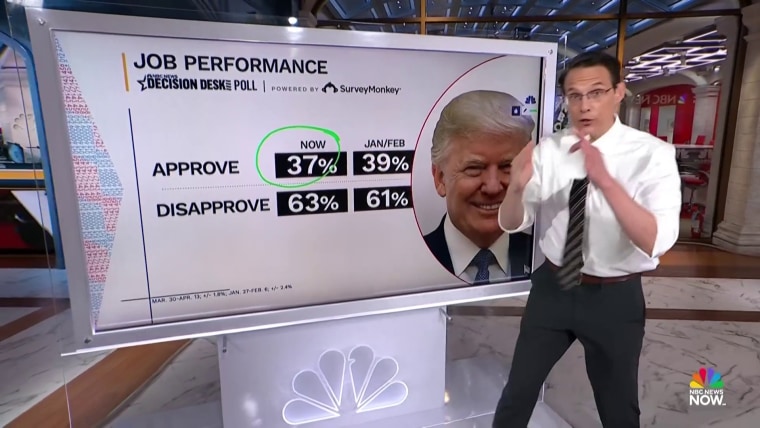
    May 11Trump’s approval rating improved two points, to 36%, from the 34% record low it reached at the end of April in Reuters/Ipsos polling, while 63% said they disapprove of Trump’s job performance (the poll of 1,254 U.S. adults was conducted May 8-11 and has a margin of error of 3).

    Trump’s weekly approval rating hasn’t risen above 36% since the U.S. and Israel attacked Iran on Feb. 28, after previously hovering at around 40% since last summer.

    The war with Iran negatively impacts views of both Trump and Republicans: 66% of respondents, including 30% of Republicans and 73% of independents, said Trump hasn’t clearly explained his goals for the war.

    Three-quarters of respondents, including half of Republicans, said his administration is at least partly to blame for high gas prices, which have gone up 50% since the start of the conflict, while 65% said they believe Republicans are more responsible for the rise in gas prices versus Democrats, and 80% said they expect gas prices to go up more.

    May 10Fifty-three percent of respondents to a Financial Times poll have an unfavorable view of Trump, compared to 41% who have a favorable view, while 51% disapprove of his handling of jobs and the economy (the poll of 3,167 registered voters was conducted May 1-5 and has a 2.1-point margin of error).

    May 6Trump’s disapproval rating has increased two points, to 59%, since March and five points since December in the latest NPR/PBS News/Marist survey and his approval rating has dropped one point, to 37%, from March and December (the latest survey of 1,322 U.S. adults was conducted April 27-30 and has a 3.1-point margin of error).

    His approval rating is a record low in the groups’ monthly polling during Trump’s second term.

    More Americans—including Republicans—disapprove of Trump’s handling of the Iran war and the economy since March.

    His disapproval rating on Iran has increased from 54% in March to 60% among all poll respondents and to 22%, from 15%, among Republicans.

    Sixty-one percent of Americans and 23% of Republicans disapprove of his handling of the economy, up from 58% and 17% in March, respectively.

    May 5Trump had a 41% approval rating and 55% disapproval rating in a Forbes/HarrisX poll that found the majority disapprove of his handling of inflation, the economy and tariffs and trade (the poll of 2,512 U.S. adults has a margin of error of 1.95).

    May 3Only 37% of American adults approved of Trump’s job performance in a new Washington Post-ABC News-Ipsos poll conducted between April 24-28 (a survey of 2,560 adults with a 2 percentage point margin of error), while his disapproval rating reached a new high at 62%.

    The poll found significant disapproval rates for key issues leading up to the midterm elections in November—76% of respondents disapproved of his handling of the cost of living in the U.S., 72% disapproved of his handling of inflation and 66% disapproved of the war with Iran—days after the same pollsters found 61% of adults called the war a “mistake.”

    The poll also shows Democrats maintaining their strongest advantage in the pollsters’ surveys so far for retaking the House, with 49% of respondents saying they would vote for Democratic candidates versus 44% who said they would vote for Republicans—up from a two-point advantage held in February.

    May 1Trump’s approval rating hit a record low of 34% in Pew Research Center polling, at least the third poll this week to show his poll numbers are at an all-time low for his second term (the survey of 5,103 voters was conducted April 20-26 and has a margin of error of 1.6).

    It’s not just Democrats who disapprove of Trump—he is losing support among Republicans and Republican-leaning independents, with 68% approving of the way he is handling his job, down from 73% in January.

    April 29Trump’s approval rating hit a new record low in Reuters/Ipsos polling, sinking to 34%, down two points from the groups’ mid-April poll (the survey of 1,629 U.S. adults was conducted April 24-27 and has a margin of error of 2.9).

    Approval of Trump’s handling of cost-of-living declined two points from the previous poll, to 22%, as gas prices have spiked since the start of the Iran war at the end of February, reaching a four-year high on Thursday at $4.30 a gallon.

    April 29Trump’s approval rating dipped two points from March, to 40%, and his disapproval rating increased five points, to 56%, according to the latest Emerson College survey of 1,000 likely voters conducted April 24-26 (the poll has a margin of error of 3).

    The survey is the latest to show Trump has failed to appease voters’ economic concerns, with his disapproval rating on the economy increasing seven points, to 56%, since this time last year, though his approval rating has improved by one point, to 38%.

    Trump’s approval rating with Hispanic voters has swung dramatically, with 70% disapproving and 29% approving now, compared to a 44% disapproval and 41% approval rating at this time last year.

    April 28Trump’s 42% approval rating is his lowest in the past year and down one point from March, according to an April Harvard CAPS/HarrisX poll, which found support for his actions in Iran is growing, despite concern across both parties about rising gas prices (the online survey of 2,745 registered voters was taken April 23-26 and has a margin of error of 2).

    Eight-five percent of voters are concerned that higher gas prices will lead to an increase in the cost of living, and just over half (52%) of voters say the economy is worse under Trump than it was under President Joe Biden.

    Contrary to most other polls, the survey found 52% support U.S. airstrikes against Iran.

    A plurality, 35%, say the war has no clear direction, but back the U.S.’s efforts to force Iran to give up its enriched uranium.

    April 28Trump’s approval rating dropped one point, to 37%, and his disapproval rating increased five points, to 59%, in the Economist/YouGov’s weekly survey of 1,836 U.S. adults taken April 24-27 (margin of error 3.2), compared to the previous week’s survey.

    April 27Trump’s 44%/53% approval/disapproval rating in Morning Consult’s weekly poll was unchanged from the prior week.

    His approval rating among Republicans remains strong at 86% with six months until the midterm election, though 64% of independents disapprove of his job performance (the poll of 2,201 registered votes was taken April 24-27 and has a margin of error of 2).

    April 19Only 37% of adults had a positive view of Trump’s presidency, according to an NBC News poll, a new low for the network’s in-house polls, while a 63% majority disapproved of his job performance.

    The same poll found most respondents disapproved of how Trump has handled the war in Iran, with 54% strongly disapproving in addition to another 13% who somewhat disapproved.

    A majority of respondents also disapproved of the way Trump was handling economic issues like inflation and cost of living as the Iran war drives up prices for gasoline and other products, with 52% strongly disapproving—up from 44% strong disapproval when this poll was taken in April last year.

    Trump’s approval rating is similar to former President Joe Biden’s at this point in his term. Biden had a 41% approval rating in May 2022, according to Gallup.

    43%. That was Trump’s approval rating in the second week of May 2018, during his first term, according to Gallup.

    Trump began his second term with a 52% approval rating and 43% disapproval rating, according to The New York Times’ polling average. He experienced a sharp drop in support with the announcement of his so-called “Liberation Day” tariffs in April last year, and again since the start of the Iran war at the end of February. His average disapproval rating reached a record high for his second term of 58% on April 22 and has stayed there since, according to The New York Times. Voters’ economic concerns have remained high throughout Trump’s second term, and the Iran war has coincided with an increase in negative views of the economy as gas prices have skyrocketed since the start of the conflict. Trump’s sagging approval rating comes as Democrats have a chance at outperforming Republicans in midterms, with an Emerson poll taken in late April showing Democrats with a 10-point advantage on the generic congressional ballot, though 10% of voters are undecided.

  • China’s Xi warns Trump that differences over Taiwan could lead to conflict – AP News

    China’s Xi warns Trump that differences over Taiwan could lead to conflict – AP News

    BEIJING (AP) — China’s Xi Jinping warned President Donald Trump on Thursday that their two countries could clash over Taiwan if the issue is not handled properly, an unusually harsh admonition that stood in contrast to the American leader’s praise for his counterpart.

    The exchange at a highly anticipated summit in Beijing underscored just how far apart Trump and Xi still are on thorny issues, including the war in Iran, trade disputes and Washington’s relations with Taiwan, which is self-ruled but which China claims as part of its territory.

    It also suggested that Trump’s three-day visit to China is likely to be longer on pageantry and symbolism than substantive political or economic breakthroughs.

    The pair met for about two hours behind closed doors at the Great Hall of the People after an elaborate welcome ceremony featuring booming cannons, a band playing “The Star-Spangled Banner” and China’s national anthem, and hundreds of schoolchildren jumping and waving flowers and American and Chinese flags.

    According to a post on X by Chinese Foreign Ministry spokesperson Mao Ning, Xi told Trump that “the Taiwan question is the most important issue in China-U.S. relations.”

    “If it is handled properly, the bilateral relationship will enjoy overall stability. Otherwise, the two countries will have clashes and even conflicts, putting the entire relationship in great jeopardy,” she wrote.

    That comment followed a brief public exchange before the meeting began in which Trump told Xi: “You’re a great leader. Sometimes people don’t like me saying it, but I say it anyway, because it’s true.”

    “It’s an honor to be your friend,” Trump said before promising that the U.S.-China relationship “is going to be better than ever before.”

    Xi was far more stark in his opening remarks, expressing hope that the U.S. and China could avoid conflict and asking “whether the two countries can transcend the ‘Thucydides Trap’ and forge a new model for relations between major powers.”

    That’s a term, popular in foreign policy studies, referring to the idea that when a rising power threatens to displace an established one, the result is often war. Xi has used the term for years, but using it as Trump offered optimism was noteworthy and foreshadowed his closed-door comments on Taiwan.

    Xi nonetheless struck a more conciliatory tone when describing the overall relationship. “Cooperation benefits both sides, while confrontation harms both,” he said. “The two countries should be partners rather than rivals.”

    Secretary of State Marco Rubio later said U.S. policy toward Taiwan was “unchanged” but warned that it would be “a terrible mistake” for China to take Taiwan by force.

    In an interview with NBC News, Rubio sidestepped Xi’s warning about a potential clash with the U.S. and said that China always raises the issue of Taiwan in talks.

    “They always raise it on their side. We always make clear our position, and we move on to the other topics,” Rubio said while traveling with the president.

    Both emphasized the importance of China-US relations

    After their meeting, Xi took Trump on a tour of the Temple of Heaven, then hosted a state banquet for him. The Chinese leader used his evening toast to note that he and Trump had kept U.S.-China relations “generally stable” in a turbulent world.

    “Achieving the great rejuvenation of the Chinese nation and making America great again can go hand in hand,” Xi said, referring to Trump’s political movement. “We can help each other succeed and advance the well-being of the whole world.”

    In his toast, Trump said his visit had been “a great honor” punctuated by a “fantastic” day. He said matters “all good for the United States and China” were discussed.

    Trump also said Xi would make a reciprocal visit to the White House on Sept. 24 — a date not previously announced.

    The positive tone was reflected in the White House assessment of the earlier meetings, which said both leaders had touched on ways to enhance economic cooperation, including expanding market access for American businesses in China and increasing Chinese investment into U.S. industries.

    The White House readout did not mention Taiwan directly, but, in relation to Iran, said both sides had agreed that the Strait of Hormuz, a crucial waterway for oil and natural gas, must remain open. The strait’s closure has stranded tankers and caused energy prices to spike, threatening global economic growth.

    The war is dominating Trump’s domestic agenda and stoking fears about the prospect of a weakening U.S. economy as November’s midterm elections — when Republicans hope to maintain control of Congress — approach.

    China is the largest purchaser of Iranian oil, and Rubio said in an interview with Fox News that Trump would make the case for Beijing to exert its influence on Iran, noting that administration officials would underscore that “economies are melting down because of this crisis,” which means consumers are “buying less Chinese product.”

    It’s not clear if Trump persuaded Xi to wield his influence. The White House instead said Xi opposed any implementation of tolls on vessels crossing the strait — as Iran has proposed — and expressed interest in China potentially purchasing more U.S. oil to reduce Chinese dependence on Gulf oil in the future.

    Taiwan issues remain contentious

    Xi’s warning about Taiwan reflects China’s displeasure with a U.S. plan to sell weapons to the island. The Trump administration has approved an $11 billion arms package for Taiwan, but has yet to begin fulfilling it.

    The U.S. has a longstanding commitment to help the island defend itself if attacked, but Trump has shown greater ambivalence toward Taiwan, fueling speculation about whether the president could be persuaded to dial back American support.

    Taiwan said after the Xi-Trump meeting that it was grateful for Washington’s “long-term support.”

    “The government views all actions that contribute to regional stability and the management of potential risks from authoritarian expansion positively,” Michelle Lee, a spokesperson for Taiwan’s premier, told reporters. She added that the U.S. “has also repeatedly reiterated its firm and clear position of support for Taiwan.”

    US still hopes to secure trade wins

    The White House has insisted that Trump would not be making the trip without an eye toward securing concrete results, suggesting there could be coming announcements on trade.

    That might include a Chinese commitment to buy U.S. soybeans, beef and aircraft. Trump administration officials also want to work toward establishing a Board of Trade with China to address commercial differences between the countries.

    Trump and Xi discussed trade on Thursday, with Xi saying that China’s door of opportunity will open wider. Xi also met with a collection of U.S. business leaders who accompanied Trump.

    George Chen, a partner at The Asia Group consultancy, said Xi has made his red line “crystal clear” on Taiwan. But Chen said Xi also signaled a welcoming tone on the economic front and a desire to assure the U.S. business community that China is a place where profits can flow.

    The U.S. and China reached a trade truce last year that calmed each side’s threats to impose steep tariffs on the other. The White House says there have been ongoing discussions and mutual interest in extending the agreement.

    The leaders also discussed further stemming the flow of fentanyl precursor chemicals into the United States and increasing Chinese purchases of U.S. agricultural products, according to the White House.

    ___

    Associated Press writers Seung Min Kim and Darlene Superville in Washington, Simina Mistreanu in Bangkok and Kanis Leung in Hong Kong contributed to this report.