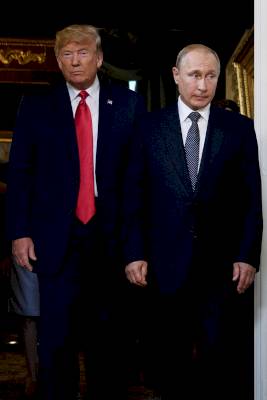
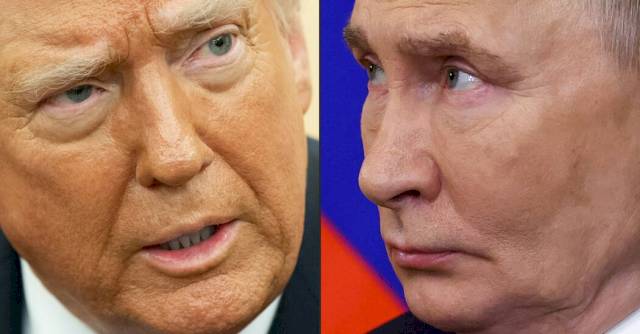
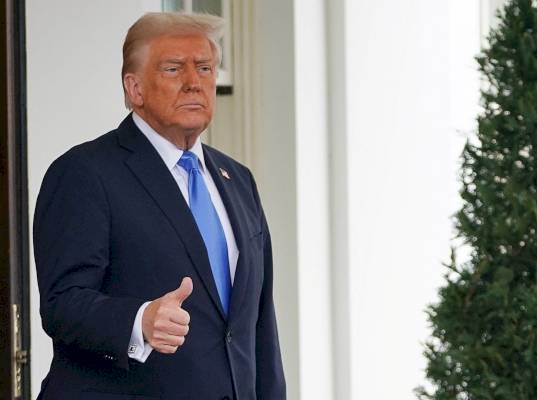
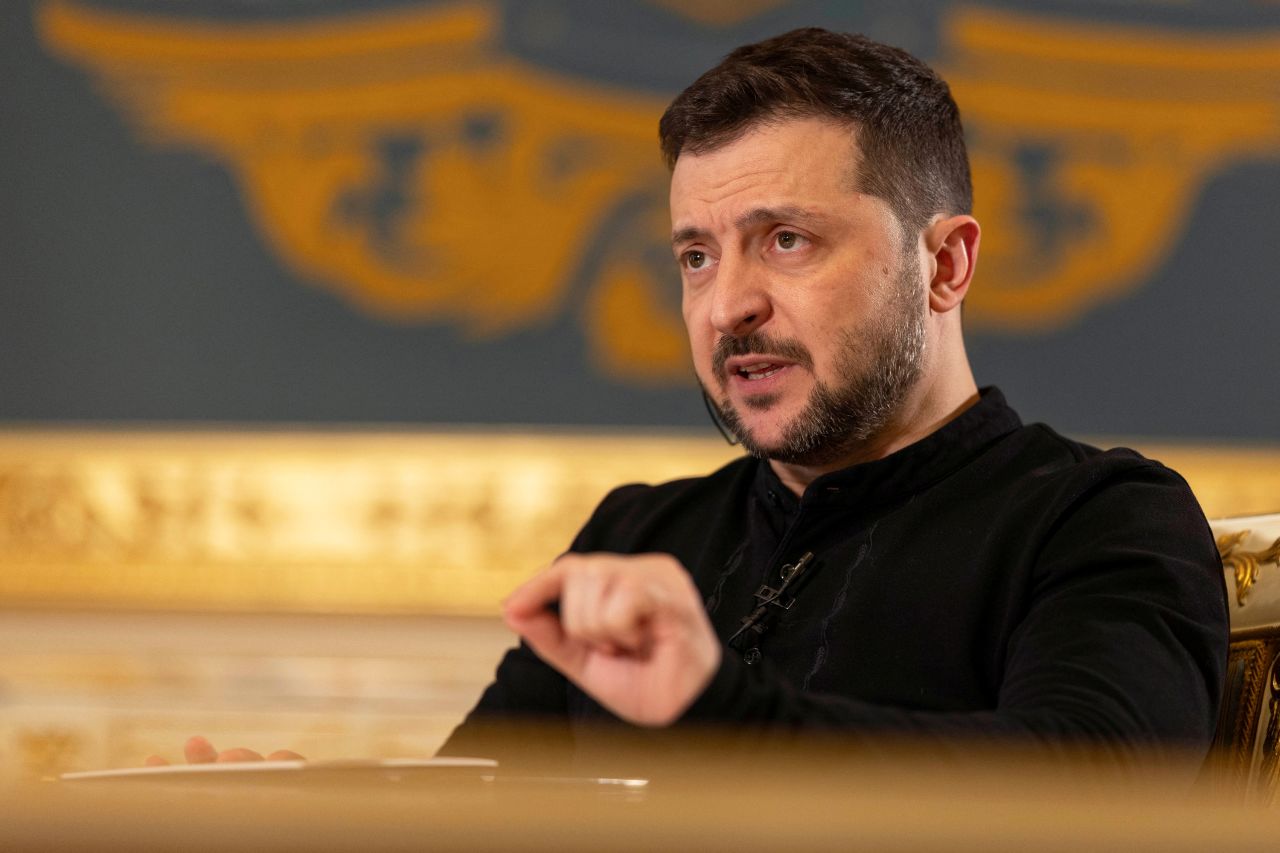
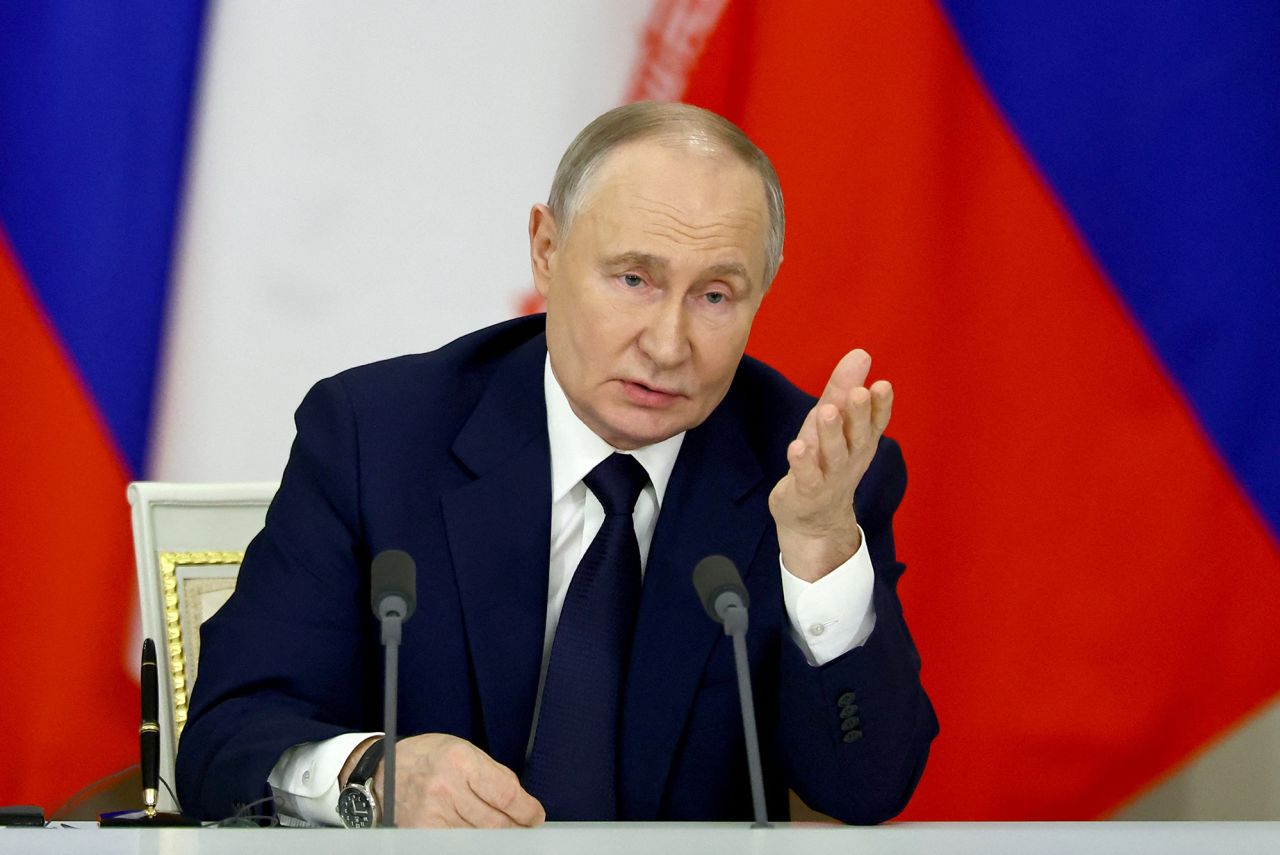
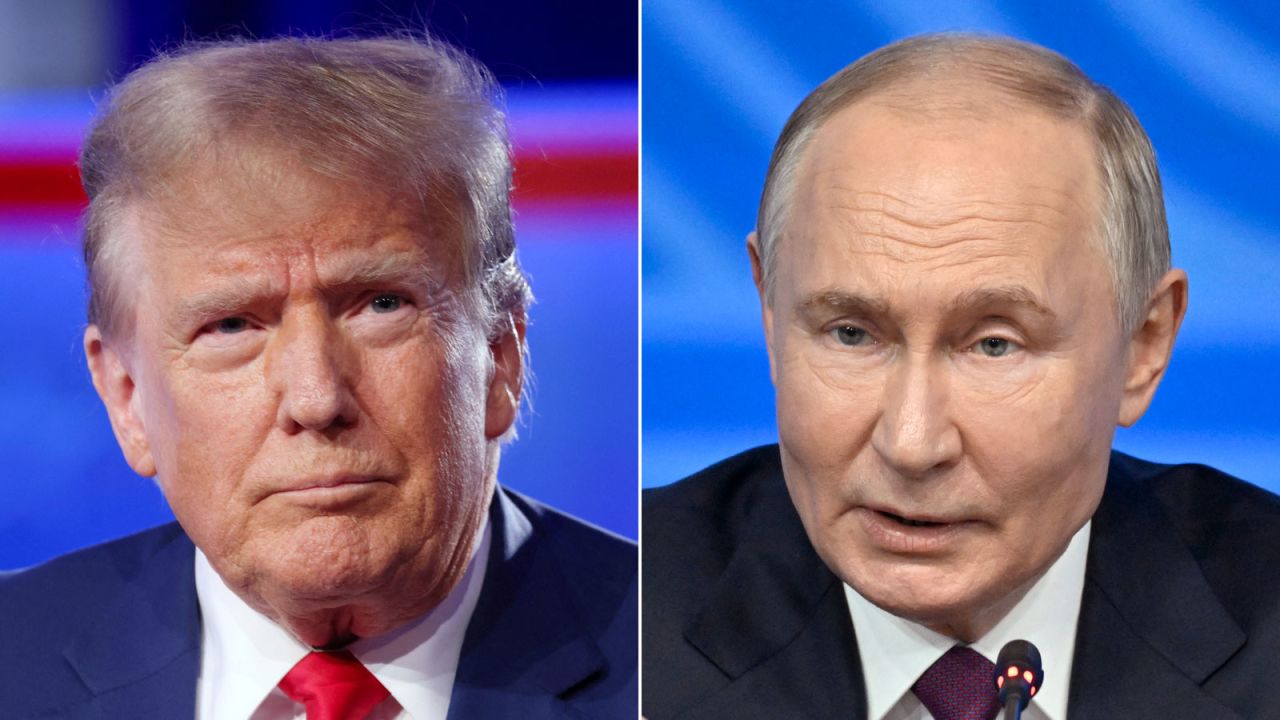
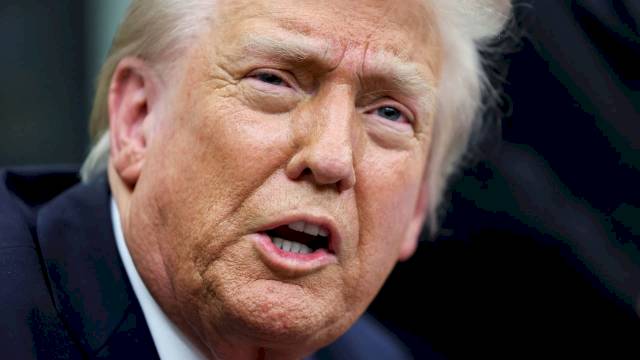
President Trump said on Wednesday that he had a “lengthy and highly productive phone call” with President Vladimir V. Putin of Russia, characterizing it as the beginning of a negotiation to end the war in Ukraine.
It was the first confirmed conversation between the two men during Mr. Trump’s second term, coming as Mr. Trump has made clear to advisers that finding a U.S.-backed end to war that Russia began is a priority for his administration.
“We discussed Ukraine, the Middle East, Energy, Artificial Intelligence, the power of the Dollar, and various other subjects,” Mr. Trump wrote in a social media post.
“We each talked about the strengths of our respective Nations, and the great benefit that we will someday have in working together,” Mr. Trump added. “But first, as we both agreed, we want to stop the millions of deaths taking place in the War with Russia/Ukraine.” (An estimated several hundred thousand deaths have occurred in the conflict, not millions.)
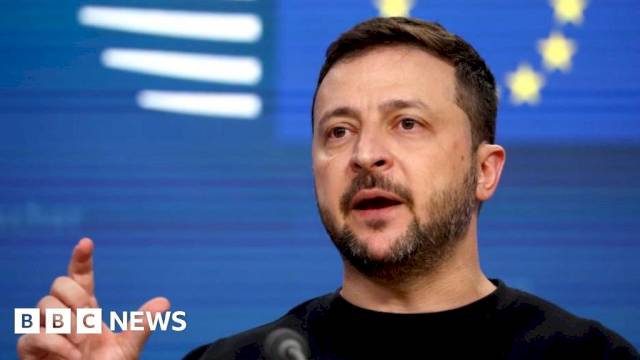
The U.S. president said he planned to inform President Volodymyr Zelensky of Ukraine that both countries planned to “have our respective teams start negotiations immediately.” Mr. Zelensky’s office later said that the Ukrainian president spoke with Mr. Trump for an hour.
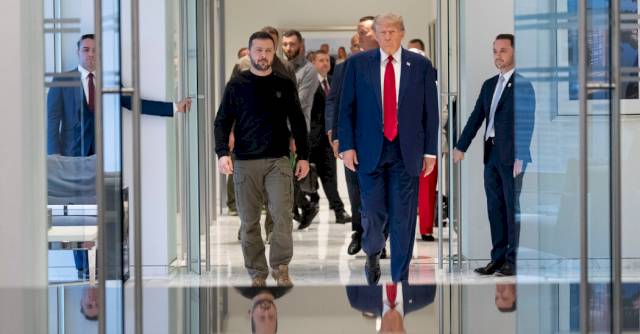
However, Mr. Trump did not say in his social media post how Mr. Zelensky would factor into the negotiations that he and Mr. Putin were setting in motion. Mr. Trump has long been skeptical of Ukraine and has never warmed to Mr. Zelensky.
The Kremlin’s spokesman, Dmitri S. Peskov, told reporters that Mr. Putin’s call with Mr. Trump lasted almost an hour and a half.
He said that the two men agreed to hold a personal meeting and that Mr. Putin invited Mr. Trump to visit Moscow, something that Mr. Trump also alluded to in his social media post. Mr. Putin agreed with Mr. Trump that “the time has come for our countries to work together,” Mr. Peskov said.
On Ukraine, Mr. Putin told Mr. Trump of “the need to eliminate the root causes of the conflict,” Mr. Peskov said. That was a sign that Mr. Putin would not accept a simple cease-fire in Ukraine and would seek broader concessions from Ukraine and the West before he stops fighting.
The Ukrainians appear to be facing an effort in which they have little leverage. The call between Mr. Putin and Mr. Trump came on the same day that the U.S. secretary of defense, Pete Hegseth, speaking at the NATO headquarters in Brussels, said that it was an “unrealistic” objective for Ukraine to restore its borders as they were before 2014, when Russia annexed Crimea. Mr. Hegseth added that the U.S. does not support Ukraine’s desire to join NATO as part of a realistic peace plan.
He also suggested that Europe needed to assume a greater role in its own defense, echoing a point that Mr. Trump has made for many years.
For Mr. Putin, the call was a major milestone, marking the collapse of Western efforts to isolate him diplomatically after he invaded Ukraine nearly three years ago. Ever since Mr. Trump’s re-election in November, the Russian president has heaped praise on Mr. Trump, underlining the Kremlin’s hope that the new American leader could reshape Moscow’s relationship with Washington and back away from supporting Ukraine.
In response to news of the conversation between Mr. Trump and Mr. Putin, the United Nations said Wednesday that it welcomed any efforts leading to peace talks between Russia and Ukraine.
“We would appreciate any efforts to resolve the war in Ukraine that would involve the Russian and Ukrainian sides, so obviously if both of them are willing to be involved in the process, that would be a welcome development,” said U.N. spokesman Farhan Haq.
Mr. Trump wrote in his social media post that the U.S. negotiating team would include Secretary of State Marco Rubio; John Ratcliffe, the C.I.A. director; his national security adviser, Michael Waltz, and his Mideast envoy, Steve Witkoff. Mr. Witkoff was in Moscow this week and retrieved the American schoolteacher Marc Fogel, who was imprisoned for more than three years in Russia.
Mr. Trump did not mention Keith Kellogg, the retired general named by Mr. Trump as his envoy for Russia and Ukraine. Mr. Kellogg has generally taken a more aggressive posture toward Russia than some of Mr. Trump’s informal advisers, and he recently suggested that Mr. Trump could increase sanctions against Russia to force them toward a peace deal.
Mr. Trump has repeatedly refused to say whether he’s spoken to Mr. Putin before Wednesday, although individuals who would know of such a call in the U.S. government were not aware of one, according to people briefed on the president’s conversations.
Mr. Trump has often made admiring remarks about the Russian president, whom he called a “genius” after the invasion of Ukraine in 2022. But in the first week of Mr. Trump’s second term, he was more critical, saying the Russian president should not have invaded Ukraine.
“He can’t be thrilled, he’s not doing so well,” Mr. Trump told reporters in the Oval Office hours after he was inaugurated. “Russia is bigger, they have more soldiers to lose, but that’s no way to run a country.”
Farnaz Fassihi and Julian E. Barnes contributed reporting.
President Trump’s executive order renaming the Gulf of Mexico carries authority only within the United States. Credit…Pete Marovich for The New York Times
The Associated Press on Wednesday accused the White House of violating the First Amendment and called on the Trump administration to stop blocking its reporters from press events.
Julie Pace, the executive editor of The A.P., said in a letter addressed to Susie Wiles, the White House chief of staff, that the White House had blocked A.P. journalists from attending two press events with President Trump on Tuesday: an executive order signing in the Oval Office and an evening press event in the Diplomatic Room.
Ms. Pace said that the White House press secretary, Karoline Leavitt, had earlier informed an A.P. reporter that the news organization’s access to the Oval Office would be restricted if the news organization did not start using the term “Gulf of America” to refer to the Gulf of Mexico. On his first day in office, Mr. Trump ordered U.S. authorities to make the change to official maps in an executive order.
“The actions taken by the White House were plainly intended to punish The A.P. for the content of its speech,” Ms. Pace wrote in the letter. “It is among the most basic tenets of the First Amendment that the government cannot retaliate against the public or the press for what they say. This is viewpoint discrimination based on a news organization’s editorial choices and a clear violation of the First Amendment.”
Ms. Pace said The A.P. was prepared to “vigorously defends its constitutional rights.”
The A.P. had issued editorial guidance on the geographical name change, explaining that it would continue calling the body of water the Gulf of Mexico because Mr. Trump’s executive order only carried authority within the U.S. and had not been recognized by Mexico. The outlet did, however, say it would refer to Denali, the peak in Alaska, as Mt. McKinley, a change Mr. Trump declared in the same order.
At the White House briefing room podium on Wednesday, the press secretary, Karoline Leavitt, talked about the administration’s commitment to the First Amendment while maintaining that the administration was within its rights to single out The A.P.
“It is a privilege to cover this White House,” she said, calling her own role a privilege, too. “Nobody has a right to go into the Oval Office and ask the president of the United States questions.”
She added that other reporters with credentials were not part of the press pool and said, “We reserve the right to decide who gets to go into the Oval Office.”
Asked if the standard was being set for how news outlets would be dealt with if they did not use “Gulf of America,” she did not directly answer but said she’d been clear “that if we feel there are lies being pushed by outlets in this room, we are going to hold those lies accountable.” She maintained that “Gulf of America” is the name for the body of water and said she did not understand why some news outlets were not using it.
First Amendment supporters and freedom of the press groups objected strongly to the Trump administration’s moves on Tuesday. Timothy Richardson, the journalism and disinformation program director at PEN America, a free-expression nonprofit, labeled the actions as “retribution, plain and simple, and a shameful attempt to bully the press into ideological compliance.”
The White House Correspondents’ Association president, Eugene Daniels, said in a statement on Tuesday that the White House “cannot dictate how news organizations report the news, nor should it penalize working journalists because it is unhappy with their editors’ decisions.”
Deborah F. Rutter at the 46th Annual Kennedy Center Honors event in Washington in 2023. She said on Wednesday that she was stepping down as president of the Kennedy Center.Credit…Pool photo by Ron Sachs
President Trump was officially elected chairman of the John F. Kennedy Center for the Performing Arts, he announced on Wednesday, cementing his grip on an institution that he recently purged of Biden appointees.
Mr. Trump posted on social media: “It is a Great Honor to be Chairman of The Kennedy Center, especially with this amazing Board of Trustees. We will make The Kennedy Center a very special and exciting place!”
At the same time, the center’s longtime president, Deborah F. Rutter, announced to staff that she was stepping down, according to an official at the center. Mr. Trump recently named Richard Grenell, who was ambassador to Germany during the first Trump administration, the center’s “interim executive director.” Mr. Grenell visited the center of Wednesday, the official said.
The Kennedy Center did not immediately respond to a request for comment.
The Kennedy Center, which has historically been run by bipartisan boards in the past, posted a revised list of board members on its website on Wednesday that showed how much things had changed.
While the board had been roughly split between Biden and Trump appointees until recently, it is now entirely made up of appointees of Mr. Trump. The new board members include a litany of Trump loyalists, including the president’s chief of staff, Susie Wiles, and Usha Vance, the wife of Vice President JD Vance.
On Jan. 29, President Trump directed the military and the Department of Homeland Security to prepare to expand a migrant operations center at Guantánamo Bay, Cuba.Credit…Doug Mills/The New York Times
A group of legal aid organizations sued the Trump administration on Wednesday, asking that migrants who have been taken to the American military base at Guantánamo Bay, Cuba, have access to lawyers should they want legal representation.
“The isolation of the transferred immigrants at Guantánamo is stark compared to the attorney access protocols provided to ICE detainees in the United States,” the complaint said, referring to Immigration and Customs Enforcement.
It is the second challenge to aspects of President Trump’s policy after a judge prevented the government from moving three Venezuelan men who are being held in immigration detention in New Mexico to the base.
But the new case is significantly broader — and potentially more intrusive — on executive branch operations and raises the question of what rights detained immigrants are entitled to if they are relocated abroad. It asks the court to give immigration lawyers in-person access to the migrants at Guantánamo as soon as possible, and in the meantime, to immediately make remote access available, either by video or telephone.
“This is unprecedented,” said Lee Gelernt, an American Civil Liberties Union lawyer and the lead counsel in the case.
“No president has ever before tried to move immigrants from the U.S. to Guantánamo and prevent lawyers from meeting with them,” he added. “In an administration that has shown little regard for the rule of law, this may be the most flagrantly disrespectful action yet.”
A Justice Department spokesman did not immediately respond to a request for comment.
Any order to provide access to lawyers would create major logistical complications for the military. Human rights lawyers won a similar right to visit and communicate with the hundreds of terrorism detainees the Bush administration brought to the base after the Sept. 11, 2001, attacks so they could represent those who wanted to file lawsuits.
The Trump administration has not released a list of the names of the migrants it sent to the base, and it is holding them incommunicado. As a result, the men cannot currently file lawsuits themselves.
The plaintiffs include four immigrant advocacy organizations that say they want to offer their services to the migrants to help them bring any lawsuits: Las Americas Immigrant Advocacy Center, Raices, American Gateways and Americans for Immigrant Justice.
Several family members of three migrants have joined the suit, saying they want their relatives to have access to lawyers. They identified their relatives through photographs of one of the transfer operations that the government released.
The lawsuit argues that under the circumstances, the legal groups and family members have standing to sue since the detainees cannot file their own cases. A ruling that requires the administration to facilitate the migrants’ access to lawyers is required for several reasons, the plaintiffs contend.
Under the Constitution, detained immigrants facing deportation proceedings on American soil cannot be held incommunicado and denied access to lawyers. The lawsuit argues that the Trump administration cannot eliminate those rights by moving prisoners to foreign soil against their will.
As a result, it says, the migrants can still file habeas corpus lawsuits challenging the legality of their indefinite detention at the base, and with that comes a constitutional right to have lawyers. It also states that the legal organizations have their own First Amendment right to meet with detainees who may want to be represented by those groups.
On Jan. 29, Mr. Trump directed the military and the Department of Homeland Security to prepare to expand a migrant operations center at Guantánamo Bay, saying it would “provide additional detention space for high-priority criminal aliens unlawfully present in the United States.”
Since then, the military has flown dozens of men — all believed to be Venezuelans — from El Paso to the base. Most have been housed in a prison building built by the Bush administration to hold Qaeda suspects in wartime detention, while some are being held in a lower-security building on the other side of the base.
But while the Supreme Court has ruled that Congress authorized the wartime detention operations at Guantánamo, it is not clear what legal authority enables the Trump administration to imprison the migrants at the overseas base.
The U.S. government has long taken migrants picked up at sea to Guantánamo to be processed. But Mr. Trump’s order signals the first time an administration has taken people already detained on American soil — and who therefore have constitutional rights, even if they are in the country unlawfully — to a U.S. facility abroad to be held in continued immigration detention.
In addition to the A.C.L.U., lawyers with the Center for Constitutional Rights and the International Refugee Assistance Project are assisting with the case.
Earlier, the White House press secretary was asked if Trump had signed a conflict of interest waiver for Musk and if they’d release it in the interest of their vow of transparency. Leavitt said she was unfamiliar with the conflict of interest law that makes it a crime for government workers to touch an official matter that affects their personal interests without a waiver, and did not address whether Musk had received one.
Video
On Tuesday, my colleagues Theodore Schleifer and Eric Lipton reported that Elon Musk planned to file a financial disclosure report to the White House, but that it would remain confidential.
Asked how President Trump views Russia, Karoline Leavitt, the White House press secretary, said: as a “great competitor.”
Leavitt was also asked about the White House barring an Associated Press reporter on Tuesday because The A.P. is still referring to the Gulf of Mexico, which Trump has renamed the Gulf of America. The press secretary answered that it was a “privilege” to go into the office to ask the president questions.
Image
Credit…Eric Lee/The New York Times
Karoline Leavitt, the White House press secretary, tells reporters that court injunctions by judges trying to curtail actions taken by Elon Musk’s so-called cost-cutting efforts are part of a “weaponization” against Trump. She holds up a sheaf of papers that she calls documentation verifying claims that Musk made in the Oval Office, without evidence, on Tuesday.
Kathleen Sgamma is president of the Denver-based Western Energy Alliance, which has worked to strip away government protections and rules on extracting fossil fuels on public lands.Credit…Mariam Zuhaib/Associated Press
President Trump has nominated Kathleen Sgamma, a professional advocate for the oil and gas industry, to run the Bureau of Land Management, an agency within the Interior Department that oversees grazing, logging, drilling and wildlife conservation on 245 million acres of public land.
The nomination was received by the Senate on Tuesday and referred to its Committee on Energy and Natural Resources. The committee has not yet scheduled a confirmation hearing for Ms. Sgamma.
Ms. Sgamma is president of the Denver-based Western Energy Alliance, where she has worked for nearly 20 years on behalf of independent oil and gas companies that have sought to strip away government protections and rules on extracting fossil fuels on public lands in Western states.
Her nomination aligns with Mr. Trump’s vision for the Interior Department as a government tool to achieve “energy dominance” by aggressively promoting the extraction of the nation’s oil and gas resources.
Leading the execution of that vision is Interior Secretary Doug Burgum, the former governor of North Dakota who served as a liaison between Mr. Trump and oil and gas companies during Mr. Trump’s most recent presidential campaign. Mr. Burgum helped gather fossil fuel executives last year at Mar-a-Lago for a dinner during which Mr. Trump suggested that industry leaders raise $1 billion for his campaign and that as president he would eliminate Biden-era climate policies.
On Mr. Burgum’s first day as interior secretary, he signed a stack of orders aimed at using all “legal authorities available to facilitate the identification, permitting, leasing, development, production, transportation, refining, distribution, exporting and generation of domestic energy resources and critical minerals.”
In an email to The Times last week, Ms. Sgamma wrote, “We’re pleased that the interior secretary’s orders were so comprehensive and detailed, but they’re just the start of a lot of work to roll back the anti-oil-and-gas policies of the Biden administration.”
The selection of Ms. Sgamma to run the Bureau of Land Management is a 180-degree turn from her predecessor, Tracy Stone-Manning, who sought to enact former President Joseph R. Biden Jr.’s “all-of-government” approach to fighting climate change by opening up public lands to wind and solar development while limiting oil and gas drilling. Ms. Stone-Manning, who had worked as an environmental policy adviser to Congressional Democrats and at an environmental advocacy group, also worked with anti-logging activists in her early 20s and was criticized as an “eco-terrorist” by Senate Republicans.
Ms. Sgamma’s nomination alarmed environmentalists. Athan Manuel, the director of the Sierra Club’s Lands Protection Program, said in a statement, “Big oil C.E.O.s already had a friendly face in the White House, and now they have the B.L.M. on speed dial,” referring to the Bureau of Land Management. “By naming Sgamma to run B.L.M.,” he continued, “Donald Trump is betraying the American people and threatening our public lands, all to keep the promise he made to the corporate polluters at Big Oil.”
At least one Republican lawmaker was quick to praise Ms. Sgamma’s nomination on Wednesday. Representative Lauren Boebert of Colorado, a vocal Trump supporter and frequent Congressional provocateur, said in a statement that Mr. Trump had made a “fantastic selection,” saying that Ms. Sgamma “knows our public lands and their untapped resources as well as anyone. I’ve had the opportunity to work closely with her on several efforts to responsibly manage our lands while also allowing our oil and gas industry to thrive and bring back American energy dominance.”
Karoline Leavitt, the White House press secretary, briefed reporters on the President Trump’s calls with the Russian and Ukrainian leaders. She said she did not know of other countries being involved in Trump’s planned negotiations to end Russia’s war with Ukraine. Asked why Keith Kellogg, Trump’s special envoy for Ukraine and Russia, was not named as part of Trump’s announced team to negotiate a peace deal with Ukraine and Russia, she said he remained “a critical part of this team and this effort” and that he was still “very much” a part of the administration.
Brendan Carr, the chairman of the F.C.C., said the commission would look into D.E.I. practices broadly at many companies it regulates, starting with Comcast.Credit…Pool photo by Jonathan Newton
Brendan Carr, the chairman of the Federal Communications Commission, has ordered an investigation into the diversity, equity and inclusion programs at Comcast, the parent company of NBC News and Universal Studios.
In a letter sent to Brian Roberts, Comcast’s chairman, on Tuesday, Mr. Carr said the F.C.C. would look into D.E.I. practices broadly at many companies it regulated, starting with Comcast.
“I want to ensure that your companies are not promoting invidious forms of discrimination in violation of F.C.C. regulations and civil rights laws,” Mr. Carr said in his letter.
Comcast confirmed it had received Mr. Carr’s letter.
“We have received an inquiry from the Federal Communications Commission and will be cooperating with the F.C.C. to answer their questions,” Jennifer Khoury, a spokeswoman for Comcast, said in a statement. “For decades, our company has been built on a foundation of integrity and respect for all of our employees and customers.”
Greg Watson, a spokesman for Mr. Carr, did not respond to a request for comment.
The investigation into Comcast is the latest in a series of moves by Mr. Carr to bring media companies under regulatory scrutiny. Appointed chairman of the F.C.C. by President Trump, Mr. Carr has ordered investigations into PBS and NPR, examined an interview that “60 Minutes” conducted with former Vice President Kamala Harris and announced an inquiry into the San Francisco radio station KCBS for its coverage of immigration enforcement actions.
While Mr. Carr has ordered investigations into several media entities, the inquiry into Comcast is the first focused solely on D.E.I. His investigation into PBS and NPR focused on corporate sponsorships of news programming, and his inquiry at CBS News is focused on a “news distortion” complaint. Mr. Carr said in his letter that he was starting his D.E.I. push with Comcast because the company covered “a range of sectors regulated by the F.C.C.,” including cable and high-speed internet.
Tom Wheeler, a former chairman of the F.C.C., said in an interview that the recent investigations by the agency fit into a pattern of using the commission’s power to further Mr. Trump’s political agenda.
“It’s clear that what is going on here is — whether it be Comcast and D.E.I. or NPR and PBS, or CBS and the ‘60 Minutes’ interview — is how can you use the coercive authority of regulation to accomplish the goals of your master and mentor, Donald Trump?” Mr. Wheeler said.
Anna Gomez, a Democratic commissioner on the F.C.C., said in a statement in response to Mr. Carr’s investigation into Comcast that the commission should not stoke “partisan culture wars.”
“It is time we return to our core mission — closing the digital divide, fostering innovation and protecting consumers,” Ms. Gomez said.
Dr. Lawrence A. Tabak, who resigned from the National Institutes of Health, has weathered past presidential transitions.Credit…Chip Somodevilla/Getty Images
The No. 2 official at the National Institutes of Health abruptly resigned and retired from government service on Tuesday, in another sign that the Trump administration is reshaping the nation’s public health and biomedical research institutions.
The official, Dr. Lawrence A. Tabak, a dentist and researcher, was long considered a steadying force and had weathered past presidential transitions. In a letter that Dr. Tabak sent to colleagues on Tuesday, he did not give a reason for his decision. One person familiar with the decision said Dr. Tabak had been confronted with a reassignment that he viewed as unacceptable.
“It has been an enormous privilege to work with each of you (and your predecessors) to support and further the critical NIH mission,” Dr. Tabak wrote.
Dr. Tabak resigned at a turbulent time for the institutes, the nation’s premier biomedical research industry, composed of 27 separate institutes and centers that study and develop treatments for diseases like cancer and heart conditions as well as infectious diseases like AIDS and Covid. The N.I.H. spends roughly $48 billion a year on medical research, much of it in grants to medical centers, universities and hospitals across the country.
President Trump’s decision to slash billions of dollars in N.I.H. grant funding has sparked a bitter court battle. And the Senate on Wednesday voted to advance the nomination of Robert F. Kennedy Jr., a vaccine skeptic and the president’s pick for secretary of the Department of Health and Human Services, which oversees the N.I.H.
The N.I.H. said it would soon have a statement about Dr. Tabak’s decision.
Dr. Tabak was not well-known to the public. But his decision to leave is surprising, and destabilizing for an agency that is on the political hot seat. He was viewed as someone who could work across party lines; he had survived the presidential turnovers of both parties and had indicated he expected to stay on after Mr. Trump was elected in November.
Ordinarily, Dr. Tabak would have ascended to the job of acting N.I.H. director during the transition from one administration to the next. But the Trump administration installed another researcher, Matthew Memoli of the National Institute of Allergy and Infectious Diseases, as acting director. Dr. Memoli criticized Covid vaccine mandates, as did Mr. Kennedy.
As acting director of the N.I.H. last year, Dr. Tabak pushed back against Republicans’ assertions that a lab leak stemming from U.S. taxpayer-funded research might have caused the coronavirus pandemic. He told lawmakers that viruses being studied at a laboratory in Wuhan, China, bore no resemblance to the one that set off the world’s worst public health crisis in a century.
Ellen Barry contributed reporting.
After his call on Wednesday with President Trump, Zelensky posted details of the conversation on X. He said he and Trump discussed a plan that would secure continued U.S. support in exchange for access to Ukrainian natural resources and the “preparation of a new document on security, economic cooperation, and resource partnership.” He described the discussion as long and meaningful and said that he and Trump were now “charting our next steps to stop Russian aggression and ensure a lasting, reliable peace. As President Trump said, let’s get it done.”
Todd Blanche, at his confirmation hearing to be the No. 2 Justice Department official, said he is still President Trump’s lawyer, although he is no longer working on any active cases.
“Are you still Donald Trump’s lawyer?” asked Sen. Adam Schiff, Democrat of California.
“My attorney-client relationship with President Trump remains, yes,” Blanche said.
White House press secretary Karoline Leavitt says Tulsi Gabbard, recently confirmed by the Senate, will be sworn in at the White House later as the director of national intelligence.
On his social media website, President Trump said he just spoke to President Volodymyr Zelensky of Ukraine, and that the “conversation went very well.” He said a meeting was being set up in Munich for this week.
The United Nations said it welcomed any efforts leading to peace talks between Russia and Ukraine. “We would appreciate any efforts to resolve the war in Ukraine that would involve the Russian and Ukrainian sides, so obviously if both of them are willing to be involved in the process, that would be a welcome development,” said Farhan Haq, a U.N. spokesman.
Treasury Secretary Scott Bessent arrived in Kyiv and presented President Volodymyr Zelensky of Ukraine with a “partnership document” with proposals to deepen economic ties between the U.S. and Ukraine. They are discussing an agreement that would allow the U.S. to secure rights to Ukrainian natural resources, including rare earth minerals. Bessent said the partnership would provide a “long term security shield for all Ukrainians,” adding, “We would like to further intertwine our shared economics.”
Robert F. Kennedy Jr. during his confirmation hearing in January.Credit…Haiyun Jiang for The New York Times
Robert F. Kennedy Jr., the vaccine critic who spawned a movement he calls “Make America Healthy Again,” moved one step closer to becoming the nation’s health secretary on Wednesday after the Senate voted along party lines to advance his nomination, setting the stage for a final confirmation vote, likely on Thursday.
The 53-47 vote was a stunning show of Republican support for President Trump, who embraced Mr. Kennedy, the scion of a liberal Democratic dynasty, and promised to let him “go wild” on health. And it was a sign of Mr. Kennedy’s strength; in the immediate aftermath of Mr. Trump’s election, many observers thought he would be unable to win confirmation.
Mr. Kennedy’s vocal criticism of vaccination made some Republicans deeply uneasy. During his confirmation hearings, he refused to accept the scientific consensus that vaccines do not cause autism, rejecting large scale studies that have found no link.
But at the same time, Mr. Kennedy declared himself in favor of the measles vaccine and the polio vaccine and vowed not to do anything as health secretary that would prevent or discourage people from taking those shots.
Among the most closely watched votes on Wednesday was that of Senator Mitch McConnell, the Republican leader and the Senate’s lone polio survivor, who voted in favor of moving ahead with the confirmation. That does not mean Mr. McConnell’s final vote is assured; he voted to advance the nomination of Tulsi Gabbard as director of National Intelligence, but voted against confirming her on Wednesday.
Mr. McConnell did not have a customary courtesy visit with Mr. Kennedy, and he had warned that “anyone seeking the Senate’s consent to serve in the incoming administration would do well to steer clear” of “efforts to undermine public confidence in proven cures.” Polio survivors were watching his vote closely.
Senator Lisa Murkowski Republican of Alaska, whose support for Mr. Kennedy was also uncertain, also voted in favor. Ms. Murkowski told Mr. Kennedy during his confirmation hearing that vaccination campaigns had been essential to the survival of Alaska’s native people.
Both Mr. McConnell and Ms. Murkowski had kept their plans a tight secret. Still, it was clear going into Wednesday’s vote that the nomination would move forward. Mr. Kennedy had already won the support of two other key Republicans: Senator Susan Collins of Maine, who along with Ms. Murkowski is one of the few remaining Republican centrists, and Senator Bill Cassidy of Louisiana, who chairs the Senate Committee on Health, Education, Labor and Pensions. That panel oversees the Department of Health and Human Services, which Mr. Kennedy, if confirmed, would lead.
Mr. Cassidy, a doctor, is an ardent proponent of vaccines. Early in his medical career, he cared for a young woman who required an emergency liver transplant because of her infection with hepatitis B, a disease that vaccines can prevent— a story he recounted when Mr. Kennedy testified before the health committee.
“Since then, I have tried to do everything I can to make sure I never have to speak to another parent about their child dying due to a vaccine-preventable disease,” Mr. Cassidy said in that hearing. He later had heated exchanges with Mr. Kennedy about vaccines and autism, and declared himself in a quandary over how to vote.
But in the end, Mr. Cassidy backed the nomination after winning certain concessions, including a promise from Mr. Kennedy to give Congress advance notice of any vaccine policy changes.
The Senate voted along party lines to advance the nomination of Robert F. Kennedy Jr. to be health secretary, setting the stage for a final confirmation vote, most likely on Thursday. The 53-47 vote demonstrated once again President Trump’s grip on the Republican party, as well as the power of Kennedy and his “Make America Healthy Again” movement.
The budget blueprint envisions a bill that would add more than $3 trillion to the deficit over a decade.Credit…Samuel Corum for The New York Times
House Republicans released a plan on Wednesday for enacting President Trump’s sweeping fiscal agenda, laying out initial budget targets for a bill that would cut taxes, slash spending on health care for the poor and raise the debt limit.
The budget blueprint calls for legislation that would add roughly $3 trillion to the deficit over a decade while imposing deep cuts in spending on health care and food programs for low-income people. That would help pay for $4.5 trillion in tax cuts, a huge sum that Republican tax writers have nevertheless said will constrain their and Mr. Trump’s ambitions. It also calls for raising the debt limit, the statutory cap on what the government can borrow to finance its debt, by $4 trillion, a heavy lift among anti-spending conservatives.
House Republicans have struggled for months to come up with the numbers they released Wednesday, and even now have yet to make major decisions that would determine whether it can win approval given their razor-thin majority. Fiscal hawks have clashed with moderates in the party over how much spending to cut and how much more the United States can borrow.
They rushed out their plan on Wednesday just as the Senate Budget Committee was meeting to consider its own, much narrower fiscal blueprint, having decided to move forward ahead of the House given the many divisions that have delayed action there. The Senate plan is focused on increasing spending on immigration enforcement and the military.
Republicans in Congress must agree to a budget outline to unlock a special legislative procedure, known as reconciliation, that allows them to blow past Democratic opposition in the Senate and push through a fiscal package on a simple-majority vote.
At the center of the differences between the chambers is whether to try to pass a tax cut quickly. House Republicans want to, while Senate Republicans have made clear they are happy to take their time with the tax code. Many of the tax cuts enacted in 2017 during Mr. Trump’s first term expire at the end of the year, creating a hard deadline for Congress to extend them or effectively impose a tax hike on many Americans.
But simply preserving current tax rates on individuals, as well as large and popular tax benefits like the child tax credit, could cost more than $5 trillion over a decade. Cutting taxes any further would add to that price tag, and Representative Jason Smith, the Ways and Means chairman, has in recent days complained that even a $4.7 trillion budget for the tax cuts would be insufficient.
The $4.5 trillion maximum for tax cuts set by the House budget plan would require Republicans to rein in their plans. They have already discussed the possibility of extending some of the 2017 tax cuts only temporarily and are planning to ignore many of Mr. Trump’s ideas for additional tax cuts, like not taxing overtime pay.
Republicans trying to squeeze their favorite tax cuts into the bill, including lawmakers from New York and New Jersey who want to lift the limit on the state and local tax deduction, will now have to compete for precious budget space.
At the same time, House Republicans plan to pursue deep cuts to Medicaid, the health care program that covers nearly 90 million Americans. The plan instructs the Energy and Commerce Committee, which oversees Medicaid, to come up with at least $880 billion in cuts, more than half of the reductions laid out in the budget outline. Cutting spending on programs for poor Americans while approving tax cuts that provide their largest benefits to the rich could pose a political problem for Republicans, some of whom have worried about deeply cutting Medicaid.
The outline also calls for $300 billion in new spending on defense and immigration enforcement. House Republicans now plan to consider it in the Budget Committee on Thursday.
As the Senate votes to advance Robert F. Kennedy Jr.’s nomination as health secretary, two Republicans whose support was in doubt, Senator Mitch McConnell of Kentucky and Senator Lisa Murkowski of Alaska, both voted to advance his nomination to a final confirmation vote.
The Kremlin confirms that President Vladimir V. Putin of Russia and President Trump talked. Dmitri Peskov, the Kremlin’s spokesman, said the call lasted an hour and a half, and Putin invited Trump to visit Moscow.
President Trump posted on Truth Social that he just had a “highly productive” call with President Vladimir V. Putin of Russia. He said that he authorized a team to start immediately negotiating toward a peace deal with Ukraine.
Image
Credit…Kristina Kormilitsyna/Sputnik
Today’s procedural vote, which is expected to pass, would set up a final confirmation for Robert F. Kennedy Jr. as early as Thursday morning.
The Senate is now deciding on whether to advance the nomination of Robert F. Kennedy Jr. as health secretary to the floor for a final confirmation vote.
Tulsi Gabbard during her confirmation hearings in January. In Ms. Gabbard, President Trump will have someone aligned with his foreign policy views.Credit…Eric Lee/The New York Times
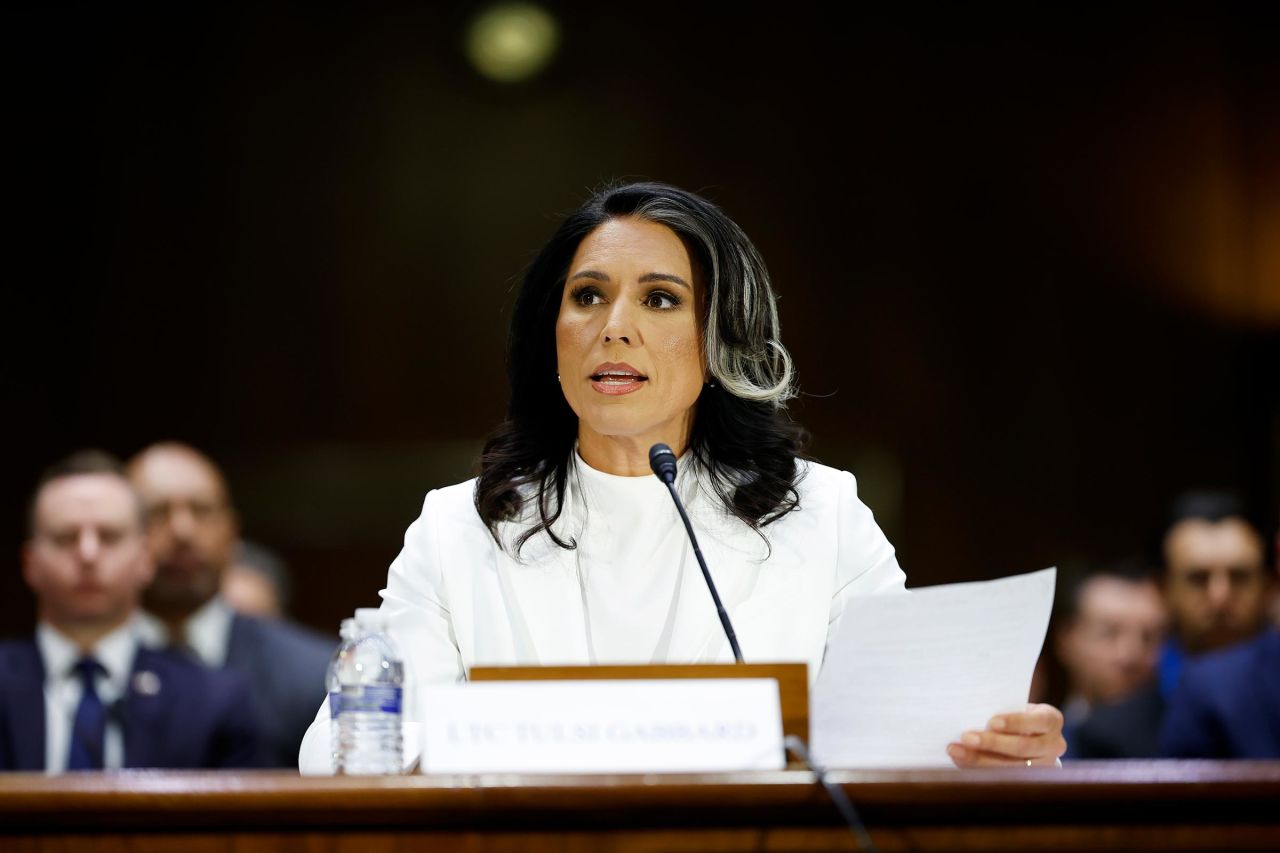
The Senate on Wednesday confirmed Tulsi Gabbard to be the next director of national intelligence in a 52 to 48 vote that demonstrated President Trump’s political control over Republican lawmakers.
Ms. Gabbard had one of the most contentious confirmation hearings of all of the president’s nominees. A number of Republican senators joined Democrats in asking tough questions about her previous support of Edward Snowden, a former government contractor who released reams of classified data, and her skepticism about warrantless wiretaps of overseas communications.
Her defense of Bashar al-Assad, the former Syrian dictator, and her sympathy toward President Vladimir V. Putin of Russia also gave some Republican lawmakers pause.
But in the end only one Republican was willing to oppose her. Senator Mitch McConnell, Republican of Kentucky and the former majority leader, voted against her.
Mr. McConnell said he voted against her because the director of national intelligence should not be someone “with a history of alarming lapses in judgment.”
“Entrusting the coordination of the intelligence community to someone who struggles to acknowledge these facts is an unnecessary risk,” he said in a statement.
Mr. McConnell has taken stances against several of Mr. Trump’s nominees, but so far has not persuaded many in his caucus to join him.
Before the floor vote, the Republican members of the Senate Intelligence Committee fell in line and backed Ms. Gabbard’s confirmation. Some, like Senator Susan Collins of Maine, highlighted Ms. Gabbard’s pledges to streamline the office. Others, like Senator Todd Young of Indiana, emphasized her vows to hold accountable people who leaked classified information and to help reauthorize overseas surveillance programs.
That support from skeptics paved the way for Ms. Gabbard’s confirmation by the full Senate. Republicans cited her military experience — Ms. Gabbard is a lieutenant colonel in the Army Reserve — and her support of Mr. Trump’s agenda.
“She has been a consumer of intelligence for many years, giving her valuable insight into the intelligence needs of our government and military,” said Senator Shelley Moore Capito, Republican of West Virginia.
Democrats remained united against her. Senator Chuck Schumer of New York, the minority leader, said Ms. Gabbard was not qualified. He said that in a secret vote, she would have received little Republican support. He said he was troubled by her “long record of weakness” against Russia.
“We simply cannot in good conscience trust our most classified secrets to someone who echoes Russian propaganda and falls for conspiracy theories,” Mr. Schumer said.
Mr. Schumer said there was pressure on Republicans to support Ms. Gabbard. In recent weeks, supporters of Mr. Trump have made huge numbers of calls on behalf of Ms. Gabbard. Some members of Mr. Trump’s coalition see Ms. Gabbard as a key voice in their movement and have demanded more traditional Republican senators back the president’s choices.
The Office of the Director of National Intelligence’s most important job, arguably, is overseeing the President’s Daily Brief, an intelligence summary assembled each morning. In Ms. Gabbard, Mr. Trump will have someone aligned with his foreign policy views supervising those updates.
During his first term, Mr. Trump grew irritated when briefers lingered too long on Russian influence operations. He often wanted briefings focused on economics and trade. He also liked the agency’s insights on world leaders he was meeting, or with whom he hoped to make deals.
Ms. Gabbard shares Mr. Trump’s skepticism of mainstream views of Russia as a grave national security threat. She also, like Mr. Trump, is deeply critical of the long overseas wars the United States became embroiled in during the George W. Bush administration.
Still, there are limits to the office’s power and influence. While it sets broad goals for collecting intelligence, the individual spy agencies have latitude to set their own collection targets and collection goals.
Those limits, along with Ms. Gabbard’s commitment to rein in the office’s work, persuaded Republican lawmakers that opposing her nomination was not worth the political risk.
Ms. Gabbard’s fierce opposition to foreign wars, and frequent appearances on Fox News, have made her a darling of the Trump wing of the Republican Party. Elon Musk, the president’s ally, attacked at least one senator, Mr. Young, who was thought to be wavering on his support for Ms. Gabbard. Mr. Musk initially called Mr. Young a “deep state puppet,” then retracted his comment after speaking with him. Mr. Young denied he had spoken to Mr. Musk about Ms. Gabbard but later announced his support for her.
Ms. Gabbard has said her first moves will be to depoliticize the organization, a frequent refrain among Mr. Trump’s nominees. She has cited the faulty intelligence about weapons of mass destruction in Iraq as one example. She has said information from intelligence agencies was used to falsely portray Mr. Trump as a puppet of Mr. Putin.
She has also criticized former intelligence officials for a letter suggesting that material from Hunter Biden’s laptop could be Russian disinformation.
Some former officials expect her to halt the work of the Foreign Malign Influence Center, which watches for threats against the election from adversaries.
She is also expected to press intelligence agencies to scour their files for any information on the assassination of President John F. Kennedy that has not yet been released.
The Senate voted 52 to 48 to confirm Tulsi Gabbard to be director of national intelligence, a position overseeing the 18-agency intelligence community and a top adviser to President Trump on matters of national security. Senator Mitch McConnell was the lone Republican to join all Democrats in opposition of her confirmation.
Gabbard, a former Democratic House representative, faced bipartisan concerns about her lack of intelligence experience and sympathetic statements about the former Syrian dictator, Bashar al-Assad, and President Vladimir V. Putin of Russia. Her confirmation was the latest sign that Republicans, facing intense pressure from President Trump and his supporters, are willing to drop serious reservations and capitulate to his wishes.
Senator Lisa Murkowski, Republican of Alaska, opposed the Pete Hegseth’s nomination for defense secretary but just voted for Tulsi Gabbard for director of national intelligence. McConnell’s no vote may be the only Republican dissent on the nomination.
Image
Credit…Tierney L. Cross for The New York Times
Many expected this opposition from Senator Mitch McConnell. He refused to make public statements about how he would vote, something that the White House feared would open the door for additional Republican opposition. His decision to keep quiet until votes were cast allows the former Republican leader to register his opposition without escalating a feud with the Trump administration.
While Republicans used much of the floor time this morning to support the nomination of Robert F. Kennedy Jr. as health secretary, Senator John Thune, the majority leader, attacked Democrats for their failure to support Tulsi Gabbard as director of national intelligence. He noted that, as a former member of the minority party, she and Kennedy “probably agree” with Senate Democrats on “a lot of the positions that they hold.”
Senator Mitch McConnell, Republican of Kentucky, votes against Tulsi Gabbard’s confirmation as director of national intelligence.
US President Donald Trump says Russia’s Vladimir Putin has agreed in a phone call to begin negotiations to bring the war in Ukraine to a “successful conclusion”.
Pentagon chief Pete Hegseth tells NATO leaders in Brussels that ending the war is a top priority for Trump but adds that a return to Ukraine’s 2014 borders is “an unrealistic objective”.
A Ukrainian tank passes by a burning car near the Russian-Ukrainian border, Sumy region, Ukraine, on Aug. 14, 2024. Evgeniy Maloletka/AP hide caption
toggle caption
Evgeniy Maloletka/AP
President Trump says he spoke with the presidents of Russia and Ukraine in separate phone calls Wednesday, discussing the two countries’ war and other issues.
“We agreed to work together, very closely, including visiting each other’s Nations,” and to start negotiations on the war immediately, Trump said of his call with Russian President Vladimir Putin in a social media post. He said they discussed
He then followed with a post saying his conversation with Ukrainian President Volodymyr Zelenskyy “went very well” and that Zelenskyy “wants to make PEACE.”
The Russian and Ukrainian governments, in individual statements afterward, each confirmed the calls with Trump and agreed to negotiate.
The Kremlin
Defense Secretary Hegseth on the administration’s vision
U.S. Defense Secretary Pete Hegseth speaks during a meeting of the Ukraine Defense Contact group at NATO headquarters in Brussels, Wednesday. Omar Havana/AP hide caption
toggle caption
Omar Havana/AP
The conversations came as Trump’s new defense secretary, Pete Hegseth, laid out the administration’s ideas about European defense and the future of Ukraine in a meeting in Brussels.
While the United States remains committed to NATO and defending partners in Europe, he said, “the United States will no longer tolerate an imbalanced relationship which encourages dependency. Rather, our relationship will prioritize empowering Europe to own responsibility for its own security.”
Hegseth went further to detail the administration’s positions on how to end the Russia-Ukraine war, which later this month will hit the three-year mark. He was speaking to Ukraine’s backers gathered for a meeting at NATO headquarters.
“We must start by recognizing that returning to Ukraine’s pre-2014 borders is an unrealistic objective,” Hegseth said, referring to the year Russia annexed Crimea from Ukraine.
“The United States does not believe that NATO membership for Ukraine is a realistic outcome of a negotiated settlement,” he said.
Both statements could dash hopes in Ukraine, which has fought a costly war to defend and regain its territory, and has pushed to join NATO.
He said Trump “intends to end this war by diplomacy and bringing both Russia and Ukraine to the table.”
European leaders will watch for more detailed pronouncements on U.S. foreign policy as Vice President JD Vance, Secretary of State Marco Rubio and other officials attend the Munich Security Conference later this week.
This is a developing story that may be updated.
Danielle Kurtzleben contributed reporting from Washington, D.C., Teri Schultz from Brussels, Joanna Kakissis from Kyiv, Ukraine, Charles Maynes from Moscow and Willem Marx from London.
• The latest on Trump’s Cabinet: The Senate voted to confirm Tulsi Gabbard as the top intelligence chief today, a major win for Trump as she had been among the most controversial of his Cabinet picks. Sen. Mitch McConnell was the only Republican to vote against her nomination. The Senate also voted to advance Robert F. Kennedy Jr.’s nomination as secretary of health and human services, paving the way for his confirmation this week.
The American Civil Liberties Union filed a lawsuit against the Trump administration over lack of access to legal services for migrants transferred to Guantanamo Bay, Cuba, from the United States, requesting immediate access to those detainees.
Last week, the Trump administration began transporting migrants to the naval base on US military aircraft, a move that sparked backlash from immigrant advocates and prompted fears of prolonged detention without legal representation. Dozens of migrants who were in government custody in the US have since been sent to the facility.
Wednesday’s lawsuit seeks immediate in-person access to migrant detainees, as well as video, and telephone access. Plaintiffs include some family members of the detainees and legal organizations who want access to offer representation.
The lawsuit,filed in the US District Court for the District of Columbia, argues that the detainees have a First Amendment right to counsel and similarly legal organizations have their own First Amendment right to meet with detainees who may want their representation.
A federal court over the weekend temporarily blocked the administration from sending three Venezuela immigrants to Guantanamo. The attorneys in that case argued that the Venezuelans fit the profile of those the administration was sending to the facility.
The administration is also facing other lawsuits over its agenda:
Executive order banning transgender girls and women in sports: Two transgender girls who attend high school in New Hampshire are challenging the administration’s executive order banning transgender girls and women from participating in sports, according to a court filing. The teens, Parker Tirrell and Iris Turmelle, previously sued New Hampshire education officials over a state law prohibiting them from competing on girls’ sports teams at their public high schools. On Wednesday, their attorneys GLAD Law and the ACLU of New Hampshire filed an amended complaint asking the court to expand the case nationally to challenge Trump’s executive order.
Merit Systems Protection Board chair sues after firing: Cathy Harris, who was chairperson of the independent Merit Systems Protection Board, is asking the court to reinstate her to her job quickly, as the types of federal workers whose complaints she would have handled are fired across the federal government. The Merit Systems Protection Board is the primary agency for federal civil servants to lodge complaints, especially about their supervisors in the federal government. Harris says she received a one-sentence email telling her she was terminated this week. But Harris alleges she can only be removed from her office by the president if she was negligent or malfeasant, and that her 7-year term should end in 2028.
CNN’s Eric Levenson and Katelyn Polantz contributed to this report.
Dr. Lawrence Tabak, longtime deputy director of the National Institutes of Health and a former acting director, retired abruptly from the agency on Tuesday.
In a brief email addressed to “Friends and Colleagues” and obtained by CNN, Tabak, who was a dentist and biomedical scientist, said his retirement was effective immediately. He didn’t give a reason for his departure, which stunned his colleagues.
In a separate email, sent Wednesday and obtained by CNN, acting NIH Director Dr. Matthew Memoli thanked Tabak and praised him for his years of service in his many roles throughout the agency.
“He has helped shape important policy decisions at NIH over four administrations,” Memoli wrote. “He has guided NIH through complex issues and will be sorely missed.”
One colleague who asked not to be identified because they were not authorized to speak with the media described Tabak as a dedicated career public servant and said it felt unsettling not to have him there to help with continuity between administrations.
Another NIH source who asked not to be named said “people are surprised and sad” about the news.
Insiders at the agency said Wednesday that they believed the resignation was forced and that it wouldn’t have been Tabak’s preference to retire. “He’d want to be there to support leadership,” said one source, who asked not to be identified.
CNN has reached out to Tabak and the NIH.
Some context: Tabak’s resignation comes as the Trump administration planned to significantly reduce the amount it underwrites nationally at both public and private universities for funding the overhead costs of research programs.
Under the administration’s plan, funding from the NIH, known as indirect cost rates, would be capped at 15% from an average of more than 27%. Some research institutions, including Harvard, have rates higher than 60%, according to the NIH, which said in a post on X that the policy would save more than $4 billion a year.
CNN’s Katherine Dillinger, Katelyn Polantz and Veronica Stracqualursi contributed reporting.
The Consumer Financial Protection Bureau has terminated contracts with multiple expert witnesses it had hired in cases against companies accused of hurting consumers, CNN has learned.
The decision to suddenly cancel the contracts suggests that the consumer watchdog no longer plans to pursue these enforcement actions under the Trump administration.
The expert witnesses requested anonymity to avoid retaliation. Another expert witness hired to pursue a case against a debt buyer told CNN they had been working on the case for several years before the termination notice on Tuesday.
“It’s pretty ludicrous,” this witness said.
The CFPB did not respond to a request for comment.
What is an expert witness? When the CFPB prepares to file a lawsuit against a company, it typically hires professors, researchers and others as experts to evaluate the evidence and testify against financial institutions. The moves come just days after CFPB leadership told employees to “stand down” on all work, including fighting financial abuse.
The newly-constituted board of the Kennedy Center for the Performing Arts in Washington, DC, just elected President Donald Trump the chair of the board, two sources familiar with the matter tell CNN.
“It is a Great Honor to be Chairman of The Kennedy Center, especially with this amazing Board of Trustees. We will make The Kennedy Center a very special and exciting place!” Trump said on Truth Social Wednesday.
CNN has reached out to the Kennedy Center for comment.
Trump on Monday named Ric Grenell, a longtime confidant already serving in multiple administration positions, to lead the performing arts center on a temporary basis after declaring himself the institution’s chairman late last week.
House Freedom Caucus member Chip Roy, a Republican from Texas, on Wednesday appeared to be not on board with the GOP budget resolution, telling reporters that he had wanted more in spending cuts but that he’s open to hearing from the GOP leadership about its plans.
The House plan released Wednesday morning calls for at least $ 1.5 trillion in spending cuts — with a goal of $2 trillion, which if not reached would force lawmakers to cut $500 billion from their tax plans.
He was skeptical that the $2 trillion goal would be achieved and said that “there’s a lot of variables in this that we still got to go work out.”
“So, yeah, one and a half is lower than I want it to be. But it’s a floor, so I’m listening. But what else are they going to do?” Roy added.
Todd Blanche, President Donald Trump’s pick for deputy attorney general, told lawmakers Wednesday that he does not support the release of part of former special counsel Jack Smith’s report on the classified documents case he brought against Trump.
“Mr. Blanche, I understand everybody can say generically that they’ll follow the law. But, I’ve asked you a simple question about whether you’ll preserve evidence, and you can’t say ‘yes.’” Schiff said.
“No. I hope every single DOJ attorney, political, career, or anybody would say they would follow the rules,” Blanche responded.
Blanche, who represented Trump in both of the cases brought by Smith, as well as the New York hush money criminal case in which Trump was convicted, told Schiff he has “an attorney-client relationship with President Trump” but that “there’s no active matters” he’s currently representing Trump on.
He went on say that he didn’t think there would be a “blatant” conflict of interest at play if he was involved in the Justice Department’s review of those three cases.
Democratic Sen. Chris Coons slammed Defense Secretary Pete Hegseth on Wednesday for ruling out the possibility that Ukraine could join NATO.
“I think giving that away proactively as a piece of negotiations going forward is a bad idea, strategically,” he told CNN.
Hegseth said in remarks before a meeting of the Ukraine Defense Contact Group earlier in the day that the US “does not believe that NATO membership for Ukraine is a realistic outcome of a negotiated settlement.”
Coons, a top Democrat on the Foreign Relations committee, defended Ukraine for fighting “bravely, persistently, effectively” against Russia and pushing back “the second largest, most capable military on the planet when that war began.” He also said the Ukrainians “deserve a say about their future.”
White House press secretary Karoline Leavitt said she was not aware of any preconditions set for a possible meeting between Donald Trump and Vladimir Putin, after the US president announced on Wednesday that both leaders agreed to visit each other’s countries.
She added: “That doesn’t mean they don’t exist.”
“I was just talking with the president and our national security team, I wasn’t made aware of any conditions, but if they exist, I’m happy to provide those,” Leavitt told CNN’s Kaitlan Collins.
Leavitt also said that retired Gen. Keith Kellogg, the president’s envoy to Ukraine and Russia, is still part of the administration — despite Trump not listing him among those leading the negotiations between the two nations.
In November, Trump nominated Kellogg to serve as assistant to the president and special envoy for Ukraine and Russia, writing on Truth Social that, “Together, we will secure PEACE THROUGH STRENGTH.”
President Donald Trump spoke with both Russian President Vladimir Putin and Ukrainian President Volodymyr Zelensky today, one day after the release of Marc Fogel from Russia.
Here are some of the most recent developments on relations between the US and Eastern European countries:
US teacher wrongfully detained in Russia: Fogel, an American teacher detained for more than three years in Russia, is back in the United States. He was welcomed back by Trump on Tuesday night after the White House secured his release in an “exchange.” Accused Russian money launderer Alexander Vinnik is being released from US custody in exchange for Fogel, a Trump administration source told CNN Wednesday.
Inside Fogel’s release: Special Envoy to the Middle East Steve Witkoff said he met a man named Kirill while working on Fogel’s release. Sources with knowledge of the exchange said he was referring to Kirill Dmitriev, the CEO of the Russian Direct Investment Fund and a close Putin ally. Witkoff was on the ground in Russia for six to seven hours total, he said. While in the country, Witkoff also met with Putin himself, two sources said. The US envoy did say that Putin “had to approve” the release.
American released from Belarus: Another American was released the day after Fogel — this time from Belarus. This American, who was not named out of a request for his privacy, was among a group of three political prisoners who were freed. The other two included Andrei Kuznechyk, who worked for US-backed Radio Free Europe/Radio Liberty, and Alena Maushuk. The American, who was detained in September 2024, is the second US citizen released from Belarus under the Trump administration. Belarusian President Alexander Lukashenko “didn’t get anything for this exchange,” Chris Smith, a deputy assistant secretary of state for European affairs who handles the Belarus portfolio, told CNN.
Trump speaks with Putin: The two leaders discussed the exchange of Russian and American citizens, Kremlin spokesperson Dmitry Peskov said. But, a bigger topic of the 90-minute call was the war in Ukraine, Trump said on Truth Social. “We have also agreed to have our respective teams start negotiations immediately” on resolving the war, Trump said. Peskov added Trump had expressed his desire to put an end “to hostilities in Ukraine as soon as possible.” During the call, Putin invited Trump to Moscow, the Kremlin said.
Call with Ukraine’s leader: After his conversation with Putin, Trump talked to Zelensky for about an hour, the Ukrainian presidency said. The US president said earlier on Truth Social that he was going to inform Zelensky about his call with Putin. Trump said on social media the call “went very well” and that they “discussed a variety of topics having to do with the War.”
Also on the war in Ukraine: Defense Secretary Pete Hegseth said during a meeting of the Ukraine Defense Contact group at NATO headquarters that it is “unrealistic” to expect Ukraine’s borders to revert to before the 2014 annexation of Crimea. He also ruled out Kyiv’s membership into NATO and reaffirmed that no US troops will be deployed to Ukraine.
CNN’s Kevin Liptak, Jennifer Hansler, Sean Lyngaas, Kit Maher, Piper Hudspeth Blackburn, Alayna Treene, Anna Chernova, Christian Edwards, Kaitlan Collins, Betsy Klein, Haley Britzky and Matthew Chance contributed reporting to this post.
Ten percent of FBI employees are in their probationary period and at risk of being fired, the FBI Agents Association said in a letter today to congressional leaders, urging Capitol Hill to work with President Donald Trump to protect their jobs.
Among the employees on probation are nearly 1,000 special agents, that are already involved in field operations, who have gone through extensive training and background checks at the FBI academy, a total cost of around $300,000 per agent, the letter says.
Another 2,600 analysts and professional staff are also at risk.
The letter comes amid dramatic cuts to the federal work force. CNN has reported that the Trump administration is planning widespread layoffs soon, an effort that could disproportionately affect probationary employees who are easier to terminate.
“We urge you to work with President Trump to ensure that federal personnel policies do not hinder the FBI’s mission, and that Special Agents completing their probationary periods do not face termination or placement on administrative leave solely due to their probationary status,” the letter adds.
An unnamed American citizen was released from prison in Belarus on Wednesday, top State Department officials told CNN.
The American — who was not named out of a request for his privacy — was among a group of three political prisoners who were freed. The other two included Andrei Kuznechyk, who worked for US-backed Radio Free Europe/Radio Liberty and Alena Maushuk.
President Donald Trump had teased the release of another US citizen on Tuesday after the release of Marc Fogel from Russia.
The American, who was detained in September 2024, is the second US citizen released from Belarus under the Trump administration. Anastassia Nuhfer had been detained in December 2024 and was released in January.
Smith claimed that this “was a unilateral gesture by the Lukashenka authorities,” saying they are looking to improve ties with the US.
Belarusian President Alexander Lukashenko “didn’t get anything for this exchange,” Smith said. “They are looking to improve their ties with us, and they’re making smart choices by releasing these Americans and other political prisoners in in order to open a political dialogue with our side.”
Exiled Belarusian opposition leader Sviatlana Tsikhanouskaya thanked US President Donald Trump, Secretary of State Marco Rubio and the US State Department “for their joint efforts in making this happen.”
Some background: Under the first Trump administration, the US had sought diplomatic rapprochement with Belarus. Those efforts were put aside after Lukashenko self-proclaimed electoral victory and massive crackdown on protesters and civil society in August 2020, which Trump administration officials condemned at the time.
Lukashenko’s government continues to detain more than a thousand political prisoners, and the US has hit Belarus with a slew of sanctions for its support of Russia’s war against Ukraine and its crackdown on civil society.
CNN’s Christian Edwards contributed reporting to this post, which was updated with the statement from Sviatlana Tsikhanouskaya.
President Donald Trump’s promised reciprocal tariffs will be announced before Indian Prime Minister Narendra Modi’s visit on Thursday, the White House said Wednesday, after the president previewed the planned action this weekend.
Asked whether the tariffs would be announced prior to Modi’s visit, White House press secretary Karoline Leavitt told reporters, “I do believe it will come before the prime minister’s visit tomorrow, and I will let the president discuss the details on the reciprocal tariff front, but this is something he believes strongly in.”
Trump said on Sunday that reciprocal tariffs could hit just about “every country” and would be on top of a 10% across-the-board tariff that went into effect last week on top of other tariffs on Chinese goods and stricter 25% tariffs on steel and aluminum he announced Monday.
Leavitt said Wednesday the move would be aimed at matching existing tariffs on American goods.
What other officials have said: White House National Economic Council Director Kevin Hassett told CNN that “there’s a lot of development going on” and there was “no hard news to announce right at this moment” on reciprocal tariffs. He declined to say when to expect the president to impose them.
Hassett’s words mirrored those of White House trade adviser Peter Navarro, who told CNN’s on Tuesday that government officials are taking the time to study and uncover what they deem instances of unfair trade policies.
CNN’s Elisabeth Buchwald contributed reporting to this post.
GOP Sen. Lisa Murkowski, a key Senate swing vote, announced in a post on X that she will support Robert F Kennedy Jr.’s confirmation to lead the Department of Health and Human Services.
The Alaska lawmaker said that Kennedy “has made numerous commitments to me and my colleagues, promising to work with Congress to ensure public access to information and to base vaccine recommendations on data-driven, evidence-based, and medically sound research.”
In a lengthy post, Murkowski wrote, “I intend to support Robert Kennedy Jr.’s confirmation as Secretary of Health and Human Services.”
Ukrainian President Volodymyr Zelensky spoke with US President Donald Trump on the phone Wednesday — a conversation that occurred after Trump talked with Russian President Vladimir Putin. Trump said in an earlier Truth Social post that he was going to inform Zelensky of his conversation with the Russian leader.
Trump said the call with Zelensky “went very well,” according to a readout posted to social media.
The call between Zelensky and Trump lasted for about an hour, according to Sergii Nykyforov, a spokesperson for the Ukrainian president.
Zelensky said in a social media post he had a “meaningful conversation” with Trump, and he is working with the US president to achieve a “lasting, reliable peace” after nearly three years of Russia’s full-scale invasion. He said they also discussed Trump’s earlier call with Putin.
Trump’s call with the Russian leader: Trump and Putin talked about a variety of topics, including Russia’s war in Ukraine. Trump administration officials said they hoped the exchange could portend renewed efforts to end the conflict, which is about to enter its fourth year.
Trump for weeks had been signaling his desire to speak with Putin as he works to resolve the Ukraine conflict.
This post has been updated with details about the call between Trump and Zelensky.
A key Senate Democrat is pushing for an independent watchdog investigation into the “legality and scope” of the agreement allowing Elon Musk and his aides to access sensitive or classified government information as part of their ongoing work for to reduce the size of the federal workforce, according to a new letter obtained by CNN.
The letter from Sen. Chris Murphy, a Democrat from Connecticut, specifically asks the Government Accountability Office (GAO) to investigate the Trump administration’s move to designate Musk and his associates as “special government employees,” noting the title does not afford them “carte blanche access to government data and servers.”
The letter from Murphy underscores how Musk’s actions have stirred a five-alarm fire among Democrats in Congress, with Republicans far more muted in their response.
The GAO has already agreed to a separate request from Senate Democrats to investigate the Musk-backed Department of Government Efficiency’s access to the US Treasury payment system, a GAO spokesperson told CNN.
Baxter said she did not have a timeline for when the GAO probe would be complete.
Democratic Sens. Elizabeth Warren of Massachusetts and Ron Wyden of Oregon — the ranking members on the banking and finance committees, respectively — last week asked GAO to investigate what information DOGE members had accessed at the Treasury’s payment system and whether Trump political appointees had pressured career officials to grant that access.
Mindful of that scrutiny and attention on Musk — from Congress, to the courts, to the citizenry — President Donald Trump summoned him to answer questions from the Oval Office on Tuesday where he assured there would be transparency.
During the call, Putin “expressed readiness” to receive American officials and supported Trump’s assertion that the time has come for both countries to “work together,” Kremlin spokesperson Dmitry Peskov told reporters.
Peskov said that Trump had expressed his desire to put an end “to hostilities in Ukraine as soon as possible.”
Barack Obama was the last US president to visit Russia, when he attended the G20 Summit in St. Petersburg in 2013.
An in-person meeting yesterday: United States Special Envoy to the Middle East Steve Witkoff met privately with Putin while in Moscow on Tuesday, two sources familiar with the meeting told CNN.
When asked by CNN on Wednesday if he had met with Putin, Witkoff replied, “That’s for the president to comment on.” He added that Putin pardoned Marc Fogel and “had to approve it,” noting his direct involvement in the American prisoner’s release from Russia.
Earlier, when CNN asked who Witkoff met with on the ground in Russia, Witkoff pointed to a man named Kirill. Sources with knowledge of the exchange said he was referring to Kirill Dmitriev, the CEO of the Russian Direct Investment Fund and a close Putin ally. Both Dmitriev and the Russian Direct Investment Fund are under US sanction.
The Senate voted 53-47, on party lines, to break a filibuster on Robert F. Kennedy Jr.’s nomination to lead the Department of Homeland Security, paving the way for a confirmation vote on Thursday morning at the latest.
Absent a time agreement with Democrats, the Senate will vote on Kennedy confirmation 7 a.m. ET on Thursday. At that time, they will also vote to break a filibuster on Howard Lutnick’s nomination to be Secretary of Commerce.
With several key swing Republicans, including Sen. Susan Collins and Sen. Bill Cassidy, saying that they will back Kennedy’s nomination, he is expected to be confirmed.
This post has been updated with more details on the timing of the vote on Kennedy’s confirmation.
Republican Sen. Mitch McConnell, after voting against Tulsi Gabbard’s nomination to be director of national intelligence, said he did not vote for her because she has “a history of alarming lapses in judgment.”
The former Senate majority leader outlined key responsibilities of the director of national intelligence, including managing the nation’s secrets. McConnell said he felt that Gabbard “failed to demonstrate that she is prepared to assume this tremendous national trust.”
“Beginning today, the brave men and women of America’s intelligence community will turn to Director Gabbard for principled leadership and sounder judgment in the service of America’s interests and national security. I join all of them in hoping that she rises to the immense responsibilities of her office,” McConnell said in the statement.
Senate Democrats praised McConnell for breaking with his party on Wednesday and voting against Gabbard’s nomination to be director of national intelligence.
Democratic Sen. Peter Welch of Vermont said he’s “impressed” with McConnell, saying the Kentucky Republican chose correctly between loyalty to Trump or to national security. “A lot of my Republican colleagues are very loyal to Trump and fearful of straying,” he added.
McConnell also joined his Republican colleagues Sens. Susan Collins and Lisa Murkowski in voting against Defense Secretary Pete Hegseth last month.
This post has been updated with reactions from Democratic senators to McConnell’s vote.
Gabbard will be sworn in at the White House later Wednesday, press secretary Karoline Leavitt said. She is Trump’s 14th nominee to be confirmed since January 20th.
Gabbard, one of the president’s more controversial picks, faced concerns from several Republican senators over her lack of support for Ukraine, her shifting position on FISA Section 702 — a key surveillance and security tool — her 2017 meeting with former Syrian President Bashar al-Assad, and her past support for Edward Snowden.
Several key swing Republican senators, including Sens. Susan Collins, Lisa Murkowski and Todd Young, ultimately decided to back her confirmation. McConnell was the only Republican to vote against confirming Gabbard.
On Monday night, Murkowski acknowledged in a statement that she still had “concerns about certain positions [Gabbard] has previously taken,” but added that Gabbard “brings independent thinking and necessary oversight to her new role.”
Senate Majority Leader John Thune defended Gabbard’s nomination in a speech on the Senate floor Monday afternoon, in which he highlighted her military service and focused on her promise to “rightsize” the Office of the Director of National Intelligence. “I am glad that Ms. Gabbard plans to focus on identifying and eliminating redundancies and inefficiencies to restore the office to what it was originally designed to be,” he said.
He also said that he was “glad to hear” Gabbard refer to FISA Section 702 as essential, after Gabbard seemed to go back and forth on her position on the issue.
This post has been updated with more reporting on the vote on Gabbard’s nomination. CNN’s Kevin Liptak contributed reporting to this post.
Trump administration officials said they hoped the exchange could portend renewed efforts to end the conflict in Ukraine, which is about to enter its fourth year.
In a readout of the conversation posted on Truth Social, Trump said, “We discussed Ukraine, the Middle East, Energy, Artificial Intelligence, the power of the Dollar, and various other subjects.”
Trump for weeks had been signaling his desire to speak with Putin as he works to resolve the Ukraine conflict.
“A single can change the course of history,” Kirill Dmitriev, the CEO of Russian Direct Investment Fund and a close Putin ally, told CNN’s Matthew Chance.
“Today, the leaders of the U.S. and Russia have possibly opened a door to a future shaped by cooperation, not confrontation,” Dmitriev said.
Dmitriev had met with US Special Envoy to the Middle East Steve Witkoff on the ground during his efforts to return the detained American teacher Marc Fogel from Russia, sources with knowledge of that exchange said
Trump’s predecessor, President Joe Biden, hadn’t spoken to his Russian counterpart in nearly three years.
The Wednesday call lasted for nearly 90 minutes, the Kremlin said. Kremlin spokesperson Dmitry Peskov told reporters that the two leaders discussed the exchange of Russian and American citizens “among other topics.” He called the conversation “quite positive and constructive.”
CNN’s Fred Pleitgen, Anna Chernova, Christian Edwards, Matthew Chance and Michael Rios contributed reporting to this post.
This post has been updated with additional reporting about the call and with comments from the Kremlin.
Things are moving very fast when it comes to efforts to end the war in Ukraine.
Unfortunately for Kyiv, it is not in the driving seat.
The news that the leaders of the two most heavily armed nuclear nations – Russia and the US – have held a seemingly constructive and cordial 90 minute phone call is, at face value, a welcome step towards a more peaceful world.
Donald Trump and Vladimir Putin clearly have a good working relationship, in marked contrast to the previous occupant of the White House, Joe Biden.
So for now, the temperature has been lowered – but this positive move may well come at Ukraine’s expense.
The words of Pete Hegseth, the US defence secretary, earlier today will have come as an ice cold shower to many in Ukraine, dashing a lot of their hopes for a secure future, free from the menace of further Russian invasions.
They are also a blow to some of Kyiv’s closest backers in Nato who wanted to keep the pressure on Moscow in the hopes of exhausting its faltering economy.
Pete Hegseth laid out in crystal clear terms where the US stands on peace for Ukraine, in words that will no doubt be welcomed by Moscow.
No US troops for Ukraine in any future security arrangement.
No likelihood of Ukraine joining NATO.
No realistic possibility of returning to its pre-2014 borders, when Russia occupied and annexed Crimea and backed insurgents in the Donbas.
These were all clearly stated goals made by President Volodymyr Zelensky and his government and they come on top of a dire situation on the battlefield, where Russia’s superior numbers are enabling it to slowly push deeper into Ukrainian territory.
This is all in stark contrast to the oft-repeated and now rather hollow sounding Western mantra of sustaining Nato support for Ukraine “for as long as it takes”.
Trump wants an early end to this war, even if it means forcing Ukraine to swallow some very bitter pills indeed.
He sees the war as Europe’s problem and for Europe to sort out.
He has other priorities, like securing America’s southern border or focussing on trade, tariffs, China and the Pacific.
More details of US peace proposals will likely emerge at this weekend’s high-level Munich Security Conference, due to be attended by US Vice President J D Vance and Zelensky.
It is more than possible that a deal can eventually be reached involving thousands of European and non-European peacekeeping troops, or some kind of aid-for-minerals deal with Washington that gives the US access to Ukraine’s substantial deposits of rare earth minerals like lithium.
But for now, 12 February will go down in Ukraine’s calendar as a tough day when a new and unwelcome reality took hold.
You have a preview view of this article while we are checking your access. When we have confirmed access, the full article content will load.
President Trump says he wants to make a deal for minerals from Ukraine in exchange for aid. That followed a long effort by Ukrainian officials to appeal to Mr. Trump’s transactional nature.
President Volodymyr Zelensky of Ukraine had a Trump Tower meeting last September, before Donald J. Trump returned to the presidency.Credit…Doug Mills/The New York Times
Constant Méheut, reporting from Kyiv, Ukraine, spoke to a dozen current and former American and Ukrainian officials and business leaders for this article.
To Ukraine, they are a chit to play in an ongoing appeal to President Trump for more financial and military support. To Mr. Trump, they should be overdue payment for billions of dollars committed to Kyiv’s war effort.
Either way, Ukraine’s vast and valuable mineral resources have suddenly become a prominent component in the maneuvering over the country’s future.
Over the past week, Mr. Trump has repeatedly pushed the idea of trading U.S. aid for Ukraine’s critical minerals. He told Fox News on Monday that he wanted “the equivalent of like $500 billion worth of rare earths,” a group of minerals crucial for many high-tech products, in exchange for American aid. Ukraine had “essentially agreed to do that,” he said.
For Ukraine, it is a hopeful sign that Mr. Trump, a longtime skeptic of American aid to Kyiv, might find a path to maintaining support that he finds palatable. But it’s still possible that the famously mercurial president will change his mind, and even his statements about a deal have been ambiguous about whether he wants Ukraine’s minerals for past or future aid — or a combination of both.
Mr. Trump’s proposal followed a campaign launched by Kyiv in the fall to appeal to the U.S. president’s business-oriented mind-set by discussing lucrative energy deals and emphasizing that defending Ukraine aligned with American economic interests.
The campaign included a meeting between Mr. Trump and President Volodymyr Zelensky and trips to the United States by Ukrainian officials to pitch deals for exploiting deposits of lithium and titanium — vital for producing technologies like electric batteries. It also involved getting backing from influential political figures like the Republican senator Lindsey Graham.
Thank you for your patience while we verify access. If you are in Reader mode please exit and log into your Times account, or subscribe for all of The Times.
Thank you for your patience while we verify access.
Two transgender girls who attend high school in New Hampshire challenged the Trump administration’s recent executive order banning transgender girls and women from participating in girls’ sports, according to a court filing.
The teens, Parker Tirrell, 16, and Iris Turmelle, 15, previously sued New Hampshire education officials over a state law prohibiting them from competing on girls’ sports teams at their public high schools. On Wednesday, their attorneys GLAD Law and the ACLU of New Hampshire filed an amended complaint asking the court to expand the case nationally to challenge Trump’s executive order.
Chris Erchull, senior staff attorney at GLBTQ Legal Advocates & Defenders, one of the plaintiffs’ representatives, said the executive order and others “amount to a coordinated campaign to prevent transgender people from functioning in society.”
“School sports are an important part of education — something no child should be denied simply because of who they are,” Erchull said in a news release. “Our clients Parker and Iris simply want to go to school, learn, and play on teams with their peers.”
Last week, Trump signed an executive order titled “Keeping Men Out of Women’s Sports” and declared, “The war on women’s sports is over.” The order threatens to rescind federal funding from educational programs that allow transgender girls to participate in girls’ sports, in part by using Title IX, which prohibits discrimination on the basis of sex in education.
Other executive orders in the first few weeks of the Trump administration have targeted transgender women in the military and in the federal prison system. Those have similarly faced legal challenges; a federal judge last week blocked the administration from enforcing the order seeking to have transgender women detained in men’s prison facilities.
The participation of transgender girls and women in sports has raised questions about the balance between inclusion and fairness on the playing field. Twenty-five states across the country have passed laws banning transgender youth from participating in sports consistent with their gender identity, according to the Movement Advancement Project, a nonprofit think tank.
According to the lawsuit, Parker plays on her high school’s soccer team, and Iris wants to try out for her school’s tennis team. A news release from the two includes quotes explaining in simple language why they want to play sports.
“I love playing soccer and we had a great season last fall,” said Parker. “I just want to go to school like other kids and keep playing the game I love.”
“The chance to try out for tennis means new teammates, new friends, and a sense of fun and belonging,” Iris said. “I just want the same opportunities as other girls at my school.”
Their suit against the New Hampshire law remains ongoing. In September, a US District Court ordered the state to allow both teens to play sports with the girls’ team while the litigation plays out.
This page either does not exist or is currently unavailable.
From here you can either hit the “back” button on your browser to return to the previous page, or visit the ABCNews.com Home Page. You can also search for something on our site below.
U.S. President Donald Trump looks on, as he signs executive orders in the Oval Office of the White House in Washington, U.S., Feb. 10, 2025.
Kevin Lamarque | Reuters
President Donald Trump could announce his reciprocal tariff plan before he meets with Indian Prime Minister Narendra Modi on Thursday, the White House said Wednesday.
“I do believe it will come before the prime minister’s visit tomorrow,” press secretary Karoline Leavitt told reporters at the White House when asked about Trump’s forthcoming announcement.
She added, “I will let the president discuss the details on the reciprocal tariff front, but this is something he believes strongly in.”
Trump said Sunday that he planned to slap reciprocal tariffs on “every country” that imposes import duties on the U.S.
“Very simply it’s if they charge us, we charge them,” he said on Air Force One, NBC News reported.
House Speaker Mike Johnson, R-La., said Wednesday that he believes Trump is considering exemptions from his reciprocal tariffs for the pharmaceutical and auto industries, Reuters reported.
The apparently imminent move would underscore the extent to which Trump is making tariffs a core component of his economic agenda.
In his first month in office, Trump imposed broad import duties on China, Canada and Mexico. He paused the tariffs on the two U.S. neighbors for 30 days after they struck agreements on policing illegal crossings and drug trafficking at their respective borders.
On Monday, Trump signed an order to impose 25% tariffs on steel and aluminum imports.
Reuters, citing government officials, reported Monday that Modi is preparing to cut its tariffs in multiple sectors ahead of his meeting with Trump, as India seeks to avoid a potential trade war with the U.S.
Modi is set to meet with multiple Trump administration officials during his trip to Washington, D.C., including Elon Musk, who leads Trump’s so-called Department of Government Efficiency.
Modi’s discussion with Musk is expected to focus in part on Musk’s private business ventures, including the expansion of Starlink and Tesla in India, a government official told CNBC.