Please enable JS and disable any ad blocker
• EU rebuffs Trump: The European Union decided against expanding its naval operations around the Strait of Hormuz despite President Donald Trump’s criticism of allies for not supporting the US in securing the vital waterway.
• Diplomacy stalled: Iranian officials have reached out to Trump’s Middle East envoy and other administration officials, attempting to reopen a diplomatic channel, but Trump said he did not want to negotiate now, senior White House officials told CNN.
• US Embassy: Videos geolocated by CNN appear to show air defense systems engaging a projectile around 600 meters from the US Embassy compound in Baghdad early Tuesday. Also, Abu Dhabi has suspended operations at a massive gas field after a drone attack.
• Latest toll: The death toll keeps rising since the war started on February 28. Separately, US Central Command said that around 200 US troops have been wounded or injured in seven countries.
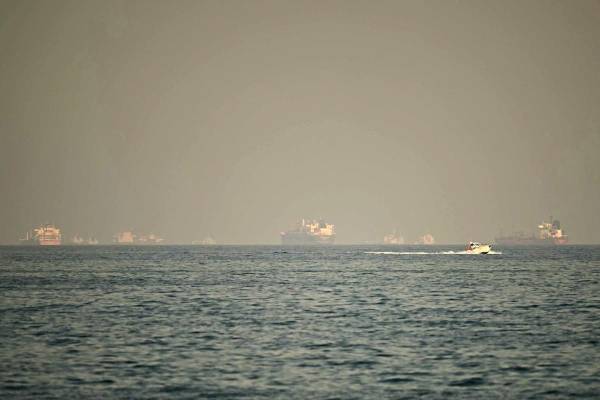
A tanker has reported being struck by an “unknown projectile whilst at anchor” late Monday near the key Emirati oil port of Fujairah, the UK Maritime Trade Operations (UKMTO) centre said early Tuesday.
The vessel was hit in the Gulf of Oman, 23 nautical miles east of Fujairah, and suffered minor structural damage, said the maritime authority with responsibility for the region. No crew injuries or environmental damage were reported and structural damage is minimal.
Fujairah is a vital oil export route which bypasses the Strait of Hormuz, which has been effectively closed since the war with Iran began. The Fujairah oil terminal port and adjacent Fujairah Oil Industry Zone (FOIZ) have been repeatedly targeted by Iran.
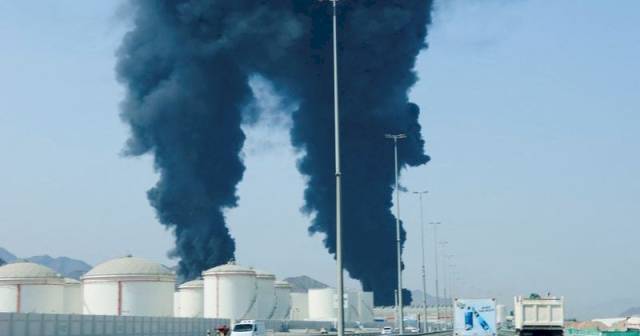
Fujairah authorities said Tuesday they were working to control a fire which had broken out in the FOIZ as a result of a drone strike.
The tanker attacked on Monday becomes the 21st vessel to report an incident in and around the Arabian Gulf, Strait of Hormuz and Gulf of Oman since the war began, according to previous UKMTO figures.
A fire in the laundry spaces of the aircraft carrier USS Gerald R. Ford last week burned for more than 30 hours and left dozens of the service members aboard with smoke inhalation, the New York Times reported Monday, citing unnamed sailors and military officials.
The Navy revealed the fire aboard America’s largest warship in a release last week, saying it was contained, not combat-related, and left two sailors with non-life-threatening injuries.
It said combat operations aboard the 100,000-ton ship, deployed in the Red Sea during the war with Iran, were unaffected by the fire.
But conditions for the crew and air wing of about 4,500 aboard the $13-billion ship are far from ideal. The Times reported that some 600 sailors had lost their beds in the fire and are sleeping on tables or floors and many have not been able to do laundry.
CNN has reached out to 5th Fleet, which is responsible for the Persian Gulf and Red Sea, for comment on the NYT reporting.
The Ford’s current deployment, now in its 10th month, has also been plagued by problems with the ship’s toilets. NPR first reported those problems in January, with dozens of calls made for outside plumbing help over the past few years, and at least a dozen made during its current deployment.
Since leaving its Norfolk, Virginia, homeport last June, the Ford has gone across the Atlantic to the Mediterranean, back across the Atlantic to the Caribbean to support operations in Venezuela, and now back to the Middle East.
The Times reported that if the current deployment lasts until mid-April, it will be the longest of a US aircraft carrier since the Vietnam War.

Strikes continued in the Middle East on Tuesday morning, with attacks targeting the US Embassy and a luxury hotel in Iraq’s Baghdad, and the United Arab Emirates temporarily closing its airspace amid attacks on oil facilities.
Catch up on the latest:
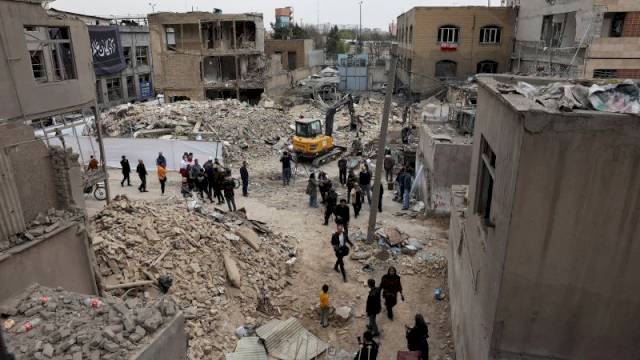
Iran: The Israeli military said it had “begun a wide scale wave of strikes” in the capital Tehran, targeting regime infrastructure. The Iranian Red Crescent said early Tuesday that relief workers were trying to reach a Tehran resident trapped under rubble, and the state affiliated Mehr news agency reported an explosion was heard in the capital.
Lebanon: The Israeli military also said it had begun an “additional wave of strikes” on Hezbollah targets in the capital Beirut. It follows Israel launching an expanded ground operation in the country’s south on Monday.
Israel’s emergency services reported missile fire toward Israel but there were no reported casualties or impacts. The Israeli military also said its defensive systems were intercepting missiles launched from Iran.
Iraq: The US Embassy and the Al-Rasheed Hotel in Baghdad were targeted by drones early Tuesday, according to video geolocated by CNN and Iraqi officials. Video appeared to show air defenses shooting down a projectile near the embassy. The Majnoon oil field in southern Iraq also came under attack, Iraq’s army chief spokesperson said.
United Arab Emirates: The General Civil Aviation Authority temporarily closed the country’s airspace “amid rapidly evolving regional security developments,” state media reported early Tuesday. Abu Dhabi authorities also suspended operations at the massive Shah gas field following a drone attack which ignited a fire. And authorities in the city of Fujairah said a fire broke out in the Fujairah Oil Industry Zone (FOIZ) as a result of a drone strike.
Kuwait: Air defenses were responding “hostile missile and drone threats” and the armed forces warned citizens that “any explosions” heard “are the result of air defense systems intercepting hostile targets.”
Saudi Arabia: The defense ministry said it had intercepted and destroyed about a dozen drones in the eastern parts of the country.
Authorities in the Emirati city of Fujairah said a fire has broken out in the Fujairah Oil Industry Zone (FOIZ) as a result of a drone strike.
An “advanced fire” broke out in the same area Monday after it was targeted by a drone attack.
The FOIZ hosts the Middle East’s largest commercial storage capacity for refined oil products, with a capacity of about 70 million barrels.
It sits next to the Fujairah oil terminal port, which has suffered damage from three drone incidents this month, according to local officials. Fujairah, located on the Gulf of Oman, is a vital export route which bypasses the Strait of Hormuz.
The graphic below shows ship tracking data around the Strait of Hormuz.
Video from social media, geolocated and verified by Reuters news agency, shows smoke and flames rising from the Al‑Rasheed Hotel in Baghdad, following a drone attack.
The hotel is located in Baghdad’s heavily fortified Green Zone, which houses government offices and diplomatic missions, including the US Embassy.
Iraq’s Ministry of Interior confirmed that a drone fell on the Al-Rasheed Hotel early Tuesday local time.
The strike comes as videos, geolocated by CNN, shows an explosion close to the vicinity of the US Embassy in Baghdad. Other videos show a projectile consistent with a drone impacting the area near the embassy, and air defense systems engaging a projectile over Baghdad around 600 meters away from the embassy compound.
Earlier, the spokesperson for the Commander-in-Chief of Iraq’s armed forces Sabah al-Numan said the headquarters of the US Embassy, the Al-Rasheed and the Majnoon oil field in southern Iraq had come under attack.
Abu Dhabi authorities have suspended operations at the massive Shah gas field while they assess damage from a drone attack which ignited a fire, the Abu Dhabi media office said in a post to social media Tuesday.
The Shah gas field, about 180 kilometers (112 miles) southwest of Abu Dhabi city, is one of the largest in the world, with the capacity to produce 1.28 billion standard cubic feet of gas per day, according to its operator, the state-owned Abu Dhabi National Oil Company (ADNOC).
The fire has since been contained and no injuries have been reported, the media office said.
The United Arab Emirates’ energy and transport infrastructure have been repeatedly targeted by Iran throughout the war.
The UAE’s General Civil Aviation Authority temporarily closed the country’s airspace “amid rapidly evolving regional security developments,” state media reported early Tuesday.
On Monday, an “advanced fire” broke out at the UAE’s Fujairah petroleum industrial zone after it was targeted by a drone attack, according to the Fujairah Media Office.
Meanwhile, CNN’s Nic Robertson reports from Kuwait City, which has also come under fire from Tehran.
• Source: CNN ” data-fave-thumbnails=”{“big”: { “uri”: “https://media.cnn.com/api/v1/images/stellar/prod/nic-thumbnail-20260317012634555.png?c=16×9&q=h_540,w_960,c_fill” }, “small”: { “uri”: “https://media.cnn.com/api/v1/images/stellar/prod/nic-thumbnail-20260317012634555.png?c=16×9&q=h_540,w_960,c_fill” } }” data-vr-video=”false” data-show-html=”” data-byline-html=”
” data-timestamp-html=”
” data-check-event-based-preview data-is-vertical-video-embed=”false” data-network-id data-publish-date=”2026-03-17T01:24:31.508Z” data-video-section=”world” data-canonical-url=”https://www.cnn.com/2026/03/16/world/video/ac360-iran-strikes-persian-gulf-neighbors-as-trump-seeks-more-help-with-strait-of-hormuz” data-branding-key data-video-slug=”ac360-iran-strikes-persian-gulf-neighbors-as-trump-seeks-more-help-with-strait-of-hormuz” data-first-publish-slug=”ac360-iran-strikes-persian-gulf-neighbors-as-trump-seeks-more-help-with-strait-of-hormuz” data-video-tags data-breakpoints=”{“video-resource–media-extra-large”: 660}” data-display-video-cover=”true” data-details>
Iran strikes Persian Gulf neighbors as Trump seeks more help with Strait of Hormuz
01:46 • Source: CNN
Iran strikes Persian Gulf neighbors as Trump seeks more help with Strait of Hormuz
01:46
Videos geolocated by CNN appear to show air defense systems engaging a projectile over the Iraqi capital, around 600 meters from the US Embassy compound in Baghdad early Tuesday local time.
In one video, streaks of anti-air rounds consistent those fired from US Counter Rocket, Artillery, and Mortar systems (C-RAM) can be seen. An explosion consistent with an interception of a projectile is then seen in the sky.
Another video shows the moment a projectile consistent with a drone impacts the area near the US Embassy. In the clip, air defense rounds can be seen streaking through the sky, before what appears to be a drone impacts the ground. A large explosion can then be heard in the video, taken around 1,000 meters from the embassy.
A voice in the background can be heard saying “There it is, there it is. It hit, it hit, it hit, it hit.” The voice then says “what is that? A flying drone?”
The embassy has come under attack before. On Saturday, two drones struck the US Embassy in the capital, a security official told CNN. Video geolocated by CNN on Saturday showed smoke and flames rising from a building in the vicinity of the compound.
They include the headquarters of the US Embassy in Baghdad, the Majnoon oil field and the Al-Rasheed International Hotel, Sabah al-Numan said in a statement posted by the Iraqi Prime Minister’s Office on X.
The post has been updated with more details from Baghdad.
You may be hearing a lot about the US strikes Friday on Kharg Island, which is an economic lifeline for Iran, handling roughly 90% of the country’s crude exports. CNN’s Erin Burnett and military analyst Col. Cedric Leighton discuss what it means below. You can also learn about Kharg Island’s significance and the strikes’ impact here.
• Source: CNN ” data-fave-thumbnails=”{“big”: { “uri”: “https://media.cnn.com/api/v1/images/stellar/prod/leighton-20260317001107361.jpg?c=16×9&q=h_540,w_960,c_fill” }, “small”: { “uri”: “https://media.cnn.com/api/v1/images/stellar/prod/leighton-20260317001107361.jpg?c=16×9&q=h_540,w_960,c_fill” } }” data-vr-video=”false” data-show-html=”Erin Burnett Out Front” data-byline-html=”
” data-timestamp-html=”
” data-check-event-based-preview data-is-vertical-video-embed=”false” data-network-id data-publish-date=”2026-03-17T00:12:22.266Z” data-video-section=”world” data-canonical-url=”https://www.cnn.com/2026/03/16/world/video/ebof-cedric-leighton-kharg-island” data-branding-key data-video-slug=”ebof-cedric-leighton-kharg-island” data-first-publish-slug=”ebof-cedric-leighton-kharg-island” data-video-tags data-breakpoints=”{“video-resource–media-extra-large”: 660}” data-display-video-cover=”true” data-details>
A deep dive on Kharg Island following U.S. strikes
04:19 • Source: CNN
A deep dive on Kharg Island following U.S. strikes
04:19
The Fujairah oil terminal port in the United Arab Emirates suffered damage from three drone incidents this month, local officials said.
CNN’s Eleni Giokos explains why the site is important:
• Source: CNN ” data-fave-thumbnails=”{“big”: { “uri”: “https://media.cnn.com/api/v1/images/stellar/prod/118022-fujairahimportance-thumb.jpg?c=9×16” }, “small”: { “uri”: “https://media.cnn.com/api/v1/images/stellar/prod/118022-fujairahimportance-thumb.jpg?c=9×16″ } }” data-vr-video=”false” data-show-html=”” data-byline-html=”
” data-timestamp-html=”
” data-check-event-based-preview data-is-vertical-video-embed=”false” data-network-id data-publish-date=”2026-03-16T21:59:17.069Z” data-video-section=”business” data-canonical-url=”https://www.cnn.com/2026/03/16/business/video/strait-of-hormuz-oil-hub-iran-strikes-bypass-route-war-digvid-vrtc” data-branding-key data-video-slug=”strait-of-hormuz-oil-hub-iran-strikes-bypass-route-war-digvid-vrtc” data-first-publish-slug=”strait-of-hormuz-oil-hub-iran-strikes-bypass-route-war-digvid-vrtc” data-video-tags=”vertical” data-breakpoints=”{“video-resource–media-extra-large”: 660}” data-display-video-cover=”true” data-vertical-orientation=”true” data-details>
Iranian strikes on UAE oil hub threaten key Strait of Hormuz bypass route
CNN’s Eleni Giokos reports on the significance of the Fujairah oil terminal port in the United Arab Emirates after local officials say the hub suffered damage from three drone incidents this month.
01:22 • Source: CNN
Iranian strikes on UAE oil hub threaten key Strait of Hormuz bypass route
01:22
Iranian officials have reached out directly to the president’s Middle East envoy, Steve Witkoff, and others in the Trump administration in recent days attempting to reopen a diplomatic channel, two senior White House officials told CNN on Monday.
But President Donald Trump advised the team that he did not want to negotiate now, the officials said. And Iranian Foreign Minister Abbas Araghchi, who the White House officials said tried to reach Witkoff, denied he had any contact with the president’s envoy in recent days.
“My last contact with Mr. Witkoff was prior to his employer’s decision to kill diplomacy with another illegal military attack on Iran. Any claim to the contrary appears geared solely to mislead oil traders and the public,” Araghchi wrote on X on Monday.
The dueling accounts — and Trump’s instruction to his team — reflect how the war is likely to proceed apace in the near term. Axios and Drop Site News were first to report on the dueling accounts of reachouts.
“The president has said he is willing to talk, but not at this time, as he wants to see Operation Epic Fury continue unabated,” one of the White House officials said.
Some US allies in the Middle East have also told the White House they would assist in trying to mediate negotiations on Iran’s nuclear program and a possible end to the war, but they have been rebuffed for now, the White House officials said.
The White House officials said that part of the reason Trump is not currently interested in engaging with the Iranians is because the administration is not confident that Iran’s new supreme leader, Mojtaba Khamenei, “is actually in charge,” as one of the officials characterized it.
Trump on Monday told reporters that he doesn’t know if Khamenei — who has not appeared in public in the days since the announcement of his appointment — is even alive.
“I mean, a lot of people are saying that he’s badly disfigured — they’re saying that he lost his leg. … Other people are saying he’s dead, nobody’s saying he’s 100% healthy,” Trump said.
“So that could be for a lot of different reasons. We don’t know … if he’s dead or not. Now that he’s announced … nobody’s seen him, which is unusual,” the president continued.
Some American, European and Asian diplomats are growing increasingly frustrated with the Trump administration’s refusal to use traditional diplomatic channels when it comes to the Iran war — particularly as President Donald Trump himself is leading a pressure campaign to secure support to reopen the Strait of Hormuz.
US and allied diplomats CNN spoke to didn’t have a clear answer when asked who is leading the administration’s effort to shore up support to reopen the critical waterway at the working level.
“DJT?” one US diplomat said, suggesting that the president himself is leading the charge.
Secretary of State Marco Rubio has been actively engaged, but he has done so primarily in his role as acting national security adviser, three diplomatic sources said. And while there is ongoing dialogue within military channels, by White House officials, and through Trump’s own direct calls to foreign leaders, there does not appear to be a robust diplomatic dialogue to tee up and inform those discussions. Some diplomats believe it is handicapping the effort’s effectiveness.
“If there was more diplomatic engagement on the US side, they might be able to get a more positive outcome,” said one European diplomat.
A White House official said Trump and Rubio both lean on the foreign policy apparatus, but that this is also an administration that leads foreign policy from the top, adding that the American people elected Trump, not unnamed bureaucrats in government, to run foreign policy.
Some European diplomats visited DC last week but soliciting their support for opening the strait was not mentioned in their meetings, according to two sources familiar with the mater.
The senior US diplomat added that even making efforts to double down on diplomatic efforts that Trump has clearly prioritized are not met with enthusiasm within the administration. And voicing any criticism of how the effort is unfolding could lead to “getting your head cutoff,” they added.
Though officials said the situation is not unusual and it’s not new for career diplomats to be sidelined from the administration’s most sensitive and pressing foreign policy efforts.
“The State Department has not quickly, somehow found their relevance,” said a second European diplomat jokingly, indicating that the lack of State Department involvement is not surprising at this point in Trump’s second term.
The State Department did not immediately respond to a request for comment.
CNN’s Isa Soares spoke with Julianne Smith, a former US ambassador to NATO, about the US effort to secure to the Strait of Hormuz.
• Source: CNN ” data-fave-thumbnails=”{“big”: { “uri”: “https://media.cnn.com/api/v1/images/stellar/prod/julianne-smith-20260316195819601.jpg?c=16×9&q=h_540,w_960,c_fill” }, “small”: { “uri”: “https://media.cnn.com/api/v1/images/stellar/prod/julianne-smith-20260316195819601.jpg?c=16×9&q=h_540,w_960,c_fill” } }” data-vr-video=”false” data-show-html=”” data-byline-html=”
” data-timestamp-html=”
” data-check-event-based-preview data-is-vertical-video-embed=”false” data-network-id data-publish-date=”2026-03-16T19:47:40.011Z” data-video-section=”world” data-canonical-url data-branding-key data-video-slug=”middle-east-tensions-julianne-smith-l031602pseg1-cnni-world-fast” data-first-publish-slug=”middle-east-tensions-julianne-smith-l031602pseg1-cnni-world-fast” data-video-tags=”cnni-fast” data-breakpoints=”{“video-resource–media-extra-large”: 660}” data-display-video-cover=”true” data-details>
Trump urges allies to help secure Strait of Hormuz
04:00 • Source: CNN
Trump urges allies to help secure Strait of Hormuz
04:00

President Donald Trump claimed twice today that he had recently spoken to a former US president who praised his actions in Iran, saying: “I wish I did what you did.”
Trump declined to identify which of his four living predecessors it could have been — or offer any evidence about whether such a conversation actually took place.
“Was it George W. Bush?” a reporter asked the president in the Oval Office.
“No,” he replied.
“Was it Bill Clinton?” a reporter asked.
“I don’t want to say,” Trump said.
Four former presidents are living: Bill Clinton, George W. Bush, Barack Obama and Joe Biden.
A spokesman for Clinton told CNN that no recent conversations have taken place between Clinton and Trump — about Iran or anything else.
Aides to Bush, Obama and Biden offered similar sentiments on Monday, saying there is no record of any communications with Trump.
CNN’s Kevin Liptak and Kaitlan Collins contributed to this report.
President Donald Trump took questions about Iran and the Middle East after signing an executive order at the White House today.
Here are the toplines:
- The president said he will “soon” announce countries that have agreed to help the US reopen the Strait of Hormuz, even as he acknowledged many allies have so far rejected his overtures.
- Asked whether he was surprised he wasn’t briefed that Iran could strike neighboring countries, Trump told reporters, “No, the greatest experts — nobody thought they were going to hit.”
- The war won’t be finished this week, Trump said, but that it “won’t be long.” The US president said that the conflict will be “wrapped up soon.”
- Trump’s trip to China this month will be delayed by “a month or so,” he said. “We’ve got a war going on. I think it’s important that I be here,” Trump said. The president has urged China to help reopen the Strait of Hormuz.
- Meantime, Vice President JD Vance deflected when pressed about his past criticism of intervening in the Middle East, instead saying he trusts the president “to get the job done.”
CNN’s Samantha Waldenberg, Adam Cancryn, Maureen Chowdhury and Aditi Sangal contributed reporting to this post.

We’ve been bringing you reporting on strikes across the Middle East today, as Israel has continued its attacks on Iran and Lebanon, and Tehran has kept up a stream of retaliatory strikes.
CNN is keeping a tally of the reported deaths in the region, though we are not able to independently verify these figures. So far today, fresh deaths have been reported in the United Arab Emirates, Lebanon, Iraq and Iran.
Here’s what we know about the latest number of people killed in the region since February 28:
- Iran: Iranian authorities have not updated the country’s official death toll in over a week, but Iran’s foreign minister said today that “hundreds of Iranian civilians,” including more than 200 children, have been killed since the conflict began. Iran’s ambassador to the UN said last Tuesday that more than 1,300 people have been killed in Iran in that time. The US-based Human Rights Activists News Agency (HRANA) said yesterday that 1,330 civilians, including at least 206 children, have been killed, as well as 1,122 military personnel. Another 613 people have also died, HRANA said, but it has not yet been determined if they were civilian or military.
- Lebanon: At least 886 people have been killed in Lebanon since Israel began attacking the country on March 2, the Lebanese health ministry said today. Of those killed, 111 were children, it said.
- Iraq: Two security sources told CNN today that at least 47 people have been killed in Iraq since the conflict began, the majority of them soldiers from the Popular Mobilization Force (PMF). A French soldier was also killed in an attack on a military base in Iraqi Kurdistan on Thursday.
- Israel: At least 15 Israelis have been killed since the conflict began. This includes nine who were killed in a direct missile hit on a residential building on the city of Beit Shemesh, and two Israeli soldiers who were killed in southern Lebanon on March 8.
- US: 13 US service members have been killed since the start of the conflict, including six who died when their refueling aircraft crashed in Iraq on Thursday. A further six US service members were killed in an Iranian strike that hit a makeshift operations center in Kuwait on March 1.
- UAE: One person was killed after a missile landed on a vehicle in Abu Dhabi, United Arab Emirates, officials said today. Previously, the UAE’s defense ministry said that six people of Emirati, Pakistani, Nepalese, and Bangladeshi nationalities have been killed as a result of “attacks.”
- Kuwait: At least six people have died in Kuwait. This includes an 11-year-old girl who died from injuries sustained when shrapnel fell on a residential area on March 4.
- Oman: An Indian national died after an unmanned boat attacked the oil tanker he was working on 52 nautical miles off the Omani coast, the Oman News Agency reported. Additionally, two foreign nationals were killed in a drone “crash” in Oman’s Sohar district, the country’s defense ministry said Friday.
- Saudi Arabia: Two people were killed after a military projectile struck a residential facility in the city of Al-Kharj on March 8, the Saudi Civil Defense said.
- Bahrain: One person was killed after debris from an intercepted missile sparked a fire on a “foreign vessel” in Bahrain’s Salman Industrial City, Bahraini state media said. Separately, a 29-year-old Bahraini woman died after an Iranian strike on the capital Manama, according to Bahrain’s Ministry of Interior.
CNN’s Charbel Mallo, Sophie Tanno, Helen Regan, Tal Shalev, Tamar Michaelis, Kaanita Iyer, Haley Britzky, Nechirvan Mando, Aqeel Najim, Lex Harvey, Jessie Yeung, Laura Sharman, Ibrahim Dahman and Mohammed Tawfeeq contributed to this reporting.

President Donald Trump suggested Monday that his trip to China this month to meet with Xi Jinping could be delayed by “a month or so.”
“We’re speaking to China. I would love to, but because of the war, I want to be here,” the president told reporters at the White House.
“We have requested that we delay it a month or so, and I’m looking forward to meeting with him,” Trump said. “We’ve got a war going on. I think it’s important that I be here. So it could be that we delay it a little bit, not much.”
Press secretary Karoline Leavitt told reporters earlier Monday that the trip could be delayed.
The possible delay comes as Trump has urged China to help reopen the Strait of Hormuz, telling the Financial Times in an interview Sunday that the US would like to know Beijing’s position on that before the summit.
“I think China should help too because China gets 90% of its oil from the Straits,” Trump told the Financial Times.
Foreign ministers from EU countries discussed options to secure the Strait of Hormuz but decided against expanding their naval operations in the region.
It comes after President Donald Trump has appealed for European allies to support the US’s efforts to secure the vital waterway after Iran effectively closed it.
“Europe has no interest in an open-ended war,” Kaja Kallas, the EU’s top diplomat, told journalists in Brussels on Monday evening after the meeting. She noted that the EU’s Red Sea naval force, Operation Aspides, already “plays a key role in safeguarding the freedom of navigation.”
“There was in our discussions a clear wish to strengthen this operation, but for the time being, there was no appetite in changing the mandate of the Operation Aspides for now,” she said. “This is not Europe’s war, but Europe’s interests are directly at stake.”
EU energy ministers also met in Brussels, where they addressed similar issues.
After that meeting, Commissioner for Energy and Housing Dan Jørgensen said the EU’s “top priority” is to reduce people’s energy bills as the conflict in the Middle East drives up energy prices.
“We need to turn this difficult moment into an opportunity to step forward,” Jørgensen said, as he encouraged European partners to become less “dependent on volatile global energy markets.”
US President Donald Trump again offered a vague timeline for the duration of the war with Iran, saying it will be “wrapped up soon.”
He was asked by a reporter in the Oval Office this afternoon if the US could finish the war this week.
President Donald Trump on Monday again expressed his surprise at Iran’s retaliatory attacks against surrounding Gulf nations.
Asked whether he was surprised he wasn’t briefed that Iran could strike neighboring countries, Trump told reporters, “No, the greatest experts — nobody thought they were going to hit. They were, I wouldn’t say friendly countries. They were like neutral. They lived with them for years.”
Iran has launched retaliatory attacks on several countries in the Middle East, including, Qatar, Saudi Arabia, the United Arab Emirates, Bahrain and Kuwait.
President Donald Trump said Monday that he will “soon” announce countries that have agreed to help the US reopen the Strait of Hormuz, even as he acknowledged many allies have so far rejected his overtures.
“There are a couple, we’ll be announcing some names soon,” he said from the Oval Office. “There are some that really were right up front.”

Trump has pressed several US allies for aid in securing the Strait of Hormuz, which Iran has effectively shut down since the US and Israel attacked more than two weeks ago. The closure has since sparked a global energy crisis, pushing oil prices sharply higher.
But few countries have said they’re willing to help the US as of now, Trump said.
“What does surprise me is they’re not eager to help,” he said, arguing that nations that rely heavily on the strait for oil, like China and Japan, “should be thanking us.”