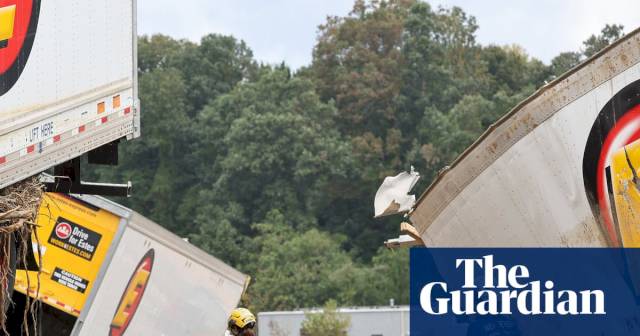
Sweeping changes may be in store at the Federal Emergency Management Agency (Fema), the nation’s frontline emergency response coordinator, that experts warned could further erode US capacity to handle disasters as the risks of extreme weather fueled by the climate crisis continue to rise.
Fears about a fundamental overhaul of Fema’s form and function have been brewing since Donald Trump returned to the White House. After castigating the agency over claims that it was too expensive and “doesn’t get the job done”, Trump set to gutting Fema as an early priority for his second term.
A long-awaited proposal on the agency’s future, released this week by a council appointed by Trump, doubled down on the president’s calls to claw back federal spending on disasters and push responsibility onto states and local governments.
“It is time to close the chapter on Fema,” the 12-member “Fema Review Council” wrote in its final report, which was quickly ushered to the president’s desk after a public presentation on Thursday. The recommendations, they added, were guided by one key doctrine: “Disaster response should be locally executed, state or tribally managed, and federally supported.”
Co-headed by Markwayne Mullin, the homeland security secretary and Pete Hegseth, the defense secretary, the committee framed their ideas as essential upgrades that will tighten Fema’s sprawling mission and add efficiency and transparency to a chaotic and challenging recovery process.
But their report largely failed to address how these reforms would meet the increasing needs of an emergency management system that is already struggling to keep pace with extreme weather events fueled by the climate crisis.
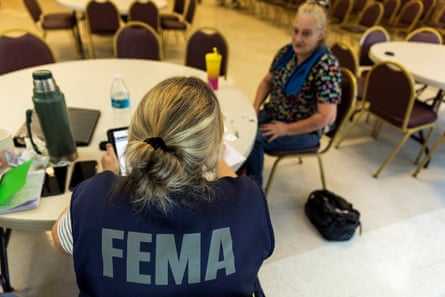
“The Fema review council completely missed the moment we are in right now,” said Shana Udvardy, senior climate resilience policy analyst at the Union of Concerned Scientists, adding that the administration had already “done its best to break Fema down”.
Emergency management has long been complicated, with vaguely defined areas of responsibility for preparation and recovery sprawled across multiple levels of government and a matrix of non-profits, businesses and individuals.
But the sharp rise in extreme events has added more pressure to a system already pushed to the brink. Costs have quickly climbed, while affected communities are left to grapple with long, painful recoveries.
“I think it is universally agreed that anything we can do to make our programs more efficient and cost-effective is a good thing,” said Dr Andrew Rumbach, a senior fellow at the Urban Institute. But, he added, small governments are far from equipped to pick up the slack. Many don’t even have dedicated emergency management departments. “They rely a lot on Fema, and on federal expertise to help them,” Rumbach said. “I think that this is going to be really a challenging proposition for them.”
A new funding model
The committee’s report contained 150 recommended actions, Kevin Guthrie, a member of the committee and the executive director of the Florida division of emergency management, said during Thursday’s presentation. All served to cast Fema into “more of a supporting role”, he added.
The transformed agency would require states to meet higher thresholds for the disaster declarations that unlock federal support, would leave evacuation and emergency shelter at the local level and would severely cap payouts to affected homeowners and renters.
Guthrie said declarations should only be requested during events that have truly “broken the back of local and state government” and that administrative costs were chewing through a growing share of the assistance that Fema provides.
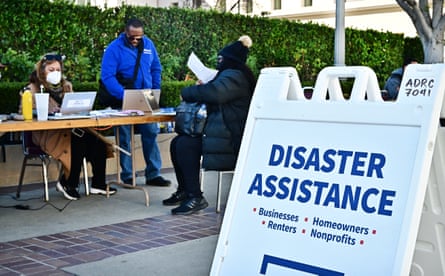
They also proposed a new funding model for Fema’s public assistance program, which supports local infrastructure repair, debris removal and other costs of recovery, opting instead for a lump-sum payment issued within 30 days based on projected damages.
Other recommendations include fewer federal environmental and historical reviews, audits and inspections, which it said could be handled by local entities, and suggested the private market should take a primary role in the National Flood Insurance Program (NFIP), a federal program that provides coverage when waters rise.
The federally subsidized flood insurance is required for homeowners with mortgages in areas labeled as high-risk, but the government’s risk assessments are severely outdated and costs are mounting. The program is carrying over $20bn in debt.
Neptune Flood, an insurance company that’s pushed for more private participation, saw its stock surge 22% Thursday, after the committee published their recommendations.
Along with greater reliance on the private sector, the report also pushed for more integration with volunteer or faith-based organizations and increasing personal accountability. “It is the responsibility of every American to embrace their individual responsibility to lessen this burden by being prepared for disasters,” the council wrote.
The council spent little time, however, discussing how the disasters themselves were changing. The word “climate” appears just a single time in the 74-page report, with no reference to the crisis that’s supercharging extreme events.
In the first half of 2025, damage from weather and climate disasters across the nation totaled more than $101bn, according to Dr Adam Smith, who tracked the data for Noaa until the federal database that cataloged these costs was discontinued by the Trump administration last May.
At the end of last year he told the Guardian it was “by far the most costly first half of any year on record dating back to 1980”. Smith now works as the senior climate impacts scientist for the non-profit Climate Central, where he is continuing to build the database.
“There was a real lack of focus on the fact that we are in this climate crisis right now,” Udvardy said. “I think it also gives you a sense of the type of people that weren’t at the table,” she added, noting the lack of minority voices who disproportionately bear the brunt when catastrophes strike.
The committee claimed their recommendations were rooted in the results of an extensive public outreach campaign – including a nationwide survey of local agencies, listening sessions in 13 cities with 4 tribal nations – but those meetings happened behind closed doors and there was limited documentation provided about them. Few minority voices were included.
In addition to Mullin and Hegseth, the comprises current and former officials hailing from Texas, Mississippi, Louisiana, Florida, Virginia, a former chair of the Republican National Committee, a sheriff from Florida’s Miami-Dade county, and the mayor of Tampa, Florida. One member, Robert J Fenton Jr, has spent decades at Fema and now heads the Pacific regional office, and was outspoken about how bureaucracy had slowed operations.
The plans also fail to reflect the serious changes that have already occurred at Fema over the last year, according to Udvardy.
Effect on disaster preparedness
Before Trump took office, a federal analysis created for Congress advised more investments in the federal disaster workforce to ensure shorter deployments, more support and better training to would curb widespread burnout.
Trump instead cut hundreds of millions of dollars in national preparedness funding in 2025. Fema also lost roughly a third of its full-time staff – experienced leaders among them – to firings, retirements and resignations last year.
The president has denied far more disaster declaration requests than his predecessors and taken more time to make those decisions, causing lags in the distribution of urgently needed aid.
Sabotaging Our Safety, an advocacy group made up of disaster recovery experts and former Fema employees gave the agency a failing grade ahead of the report’s release, noting that leadership positions remain vacant, the shrunken workforce is overloaded, training exercises are delayed and there’s still not a strategic plan in place ahead of what could be a devastating hurricane season.
“The Trump administration spent over a year dismantling Fema piece by piece, and now their own handpicked council is endorsing the wreckage,” said Rafael Lemaitre, a former director of public affairs at Fema, who now serves as an advisory council member for Sabotaging Our Safety, in a written statement. “You cannot cut your way to a capable disaster response agency.”
Rumbach said the report would at least provide more clarity on what the administration is planning, so local officials can try to prepare.
States and local emergency managers have expressed frustration this year as funding has stalled, networks have been severed during staff cuts, and the administration has changed course during chaotic shifts in leadership.
Mullin, who was confirmed to head DHS in March after Kritsi Noem, the former secretary, was dismissed from the position, has changed course from some of her more controversial policies, along with attempting to re-hire workers and fund some lapsed programs. The administration generally has softened its rhetoric about Fema’s future, walking back calls to fully eliminate it, instead pushing to tighten its mission.
The plans provided by the council are, however, still just recommendations. Half of the plans would need to be backed by legislation, according to the council’s analysis. Four require new policies or regulations to be written. A single recommendation – to reduce administrative costs – could be completed with an executive order from the president.
But after more than a year of work and two extended deadlines, the council’s report turned up few surprises, largely backing positions the Trump administration had already taken. Acknowledging that there is still a need for improving essential systems to protect communities across the US, Rumbach said he had hoped to hear more about how to make mitigation more effective, to build better resilience at all levels of government.
“A lot of the presentation was focused on post-disaster programmatic implementation versus the big question – how do we make disasters cost less in this country – especially in an era when we know that the hazards themselves are getting worse?”
Leave a Reply