Cuba

The indictment of Raúl Castro is an extraordinary escalation of the administration’s pressure on Cuba.
Image
The Justice Department on Wednesday unsealed an indictment against Raúl Castro, the 94-year-old former president of Cuba, charging him with murder and a conspiracy to kill U.S. citizens stemming from the fatal downing 30 years ago of two planes.
The indictment, issued in Federal District Court in Miami, was an extraordinary escalation of the Trump administration’s multifaceted pressure campaign against Cuba’s Communist government. It also accused five others involved in the downing of the planes.
The charges, which were built on an earlier case first filed in 2003, brought to bear on Mr. Castro, the brother of Fidel Castro, the powers of the American criminal justice system at a moment of high tension with Cuba and saddled him with a maximum penalty of life in prison.
They also laid the grounds for potential action by the military to remove him from the country through a means similar to how U.S. Special Operations forces used an indictment against Nicolás Maduro, the former leader of Venezuela, to swoop into Caracas in a brazen operation in January and capture him.
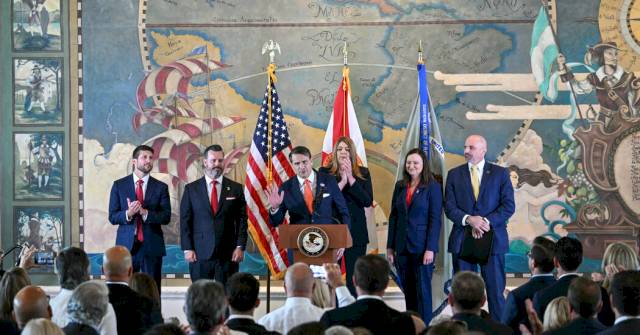
The superseding indictment was secretly returned last month and was announced at a news conference in Miami by Acting Attorney General Todd Blanche and Jason A. Reding Quiñones, the U.S. attorney for the Southern District of Florida.
They accused Mr. Castro and the others, including former Cuban pilots, of killing four people who died when the Cuban military shot down two planes in 1996 run by Brothers to the Rescue, a Cuban exile group that used aircraft to look for Cubans fleeing the country by sea. Fidel Castro took responsibility for downing the planes shortly after they were shot down, claiming that the organization had dropped anti-regime leaflets over Havana in earlier flights.
“My message today is clear,” Mr. Blanche said. “The United States and President Trump does not — and will not — forget its citizens.”
Echoing that theme, Mr. Quiñones said that Cuba’s Communist government had acted with impunity for decades, but that the indictment would finally hold some of its leaders accountable.
“Those who kill Americans,” he said, “cannot simply wait out American justice.”
When asked by reporters if the indictment was a prelude to U.S. military action in Cuba, Mr. Blanche said that decision was up to Mr. Trump and his foreign policy team.
In the 30 years since the planes were downed, Cuban American lawmakers, exile activists, survivors of the episode and family members of the victims have called for Raúl Castro, who was the minister of defense at the time, to be criminally charged. But Mr. Blanche had little to say when asked by reporters why an indictment in the case was returned now.
“Believe me, the thing which is most true is that for 30 years that has elapsed since then, the delay in justice has been the biggest injustice that has taken place,” José Basulto, who ran Brothers to the Rescue, said in an interview this year.
Ernesto Soberón Guzmán, Cuba’s ambassador to the United Nations, told The New York Times on Wednesday that the charges against Raúl Castro were an attempt by the Trump administration to create a pretext for military action against Cuba.
“I cannot call it another word than a circus — a circus they are now mounting as one more action to justify military aggression against Cuba,” Mr. Guzmán said in an interview.
He added that Brothers to the Rescue had violated Cuban airspace 25 times before the Cuban military shot down its planes, and that Cuban officials had repeatedly pleaded with U.S. authorities to stop the group’s flights over Cuba, including in a letter from Fidel Castro to President Bill Clinton, a point supported by declassified U.S. documents from the time.
“How many deliberate and serious violations of U.S. airspace would any U.S. government allow before taking action?” he asked.
While the investigation into Mr. Castro had been going on for weeks, Mr. Blanche and Mr. Quiñones chose to unseal the charges on Wednesday. It coincided with Cuban Independence Day, commemorating the end of the U.S. military occupation of the island in 1902.
The indictment of Mr. Castro came at a moment of rising crisis for Cuba as the country’s oil supplies for domestic use and power plants have been exhausted. It also followed an unusual visit by John Ratcliffe, the C.I.A. director, who met with senior Cuban officials, including Mr. Castro’s grandson, about a week ago. In the talks, he warned the government that it had to make economic changes and stop allowing Russia and China to operate intelligence posts on its soil.
Jack Nicas contributed reporting.

Cuba is out of gas, prices are soaring and electricity is scarce.
Image
The charges against former President Raúl Castro come during a period of extraordinary hardship in Cuba.
It has been in economic free-fall for several years, and has had several nationwide power outages. Food prices have soared, and the tourism industry has cratered.
The crisis worsened considerably this year when President Trump cut off much-needed oil shipments from Venezuela, after U.S. forces removed that country’s president and took control of its oil industry. Mr. Trump also imposed an effective blockade on fuel shipments to Cuba from any country.
Cuba ran out of jet fuel, and airlines canceled flights. Transportation has largely come to a standstill as black-market gas prices have risen.
Last week, the Cuban government said the country had run out of oil reserves. Its officials have lashed out at the United States, saying it has deliberately inflicted pain on Cuba and violated its sovereignty by blocking oil shipments.
Cuba produces oil domestically, but far less than what it needs to function. As a result, even Havana, the capital, has been experiencing blackouts that can last 24 hours.
Residents interviewed in Havana last weekend said people had resorted to banging pots and pans to protest the blackouts. That tactic, they said, usually resulted in power being restored — proving, in their view, that the government could control which neighborhoods got power and when.
People described a daily quest for food, since it was impossible to run a refrigerator long enough to freeze meat or keep food fresh. They described buying food in small, affordable daily increments: five eggs one day, a pound of pork the next, three pounds of chicken on the day after that.
On a recent Monday, the power was on for just one hour, said a woman who lives in Havana and who did not want her name published, fearing retribution from the police. Things were a little better the next day: The power stayed on for two hours.

Florida Republicans on Capitol Hill were calling on President Trump to seize Raúl Castro as he did Nicolás Maduro, the Venezuelan leader who U.S. forces captured and brought to New York to face federal charges. “Pay attention, and look what happened to Maduro,” said Representative Maria Elvira Salazar, whose district includes downtown Miami.

Edward Wong has reported on international news and foreign policy for more than two decades, and has covered three secretaries of state.
Rubio gets closer to his longtime goal of transforming Cuba.
Image
Secretary of State Marco Rubio’s parents emigrated from Cuba to the United States three years before Fidel Castro seized power through a Communist revolution in 1959.
They were looking for economic opportunities. Mr. Rubio’s father, Mario, eventually found work in Florida as a bartender, and his mother, Oriales, as a hotel maid, cashier and Kmart stock clerk.
Yet, Mr. Rubio talks about dismantling the Communist government with the same passion that galvanizes many political exiles who left the island after the revolution. The indictment of the Raúl Castro, 94, the patriarch of the family, is in line with Mr. Rubio’s enduring mission, and it is just the latest in a series of efforts by the U.S. government to weaken Havana that Mr. Rubio has supported or engineered.
“President Trump is offering a new path between the U.S. and a new Cuba,” Mr. Rubio said in a brief video address on Wednesday that was directed at the Cuban people.
“The reason you are forced to survive 22 hours a day without electricity is not due to an oil blockade by the U.S.,” Mr. Rubio said in Spanish. “The real reason you don’t have electricity, fuel or food is because those who control your country have plundered billions of dollars, but nothing has been used to help the people.”
Within Mr. Trump’s cabinet, Mr. Rubio’s focus on Cuba stands out, but it is par for course in the Cuban American milieu of South Florida. There, fiery anti-Communist politics are the norm, and casual banter can revolve around the ways in which the United States might one day oust the leaders in Havana.
“Rubio emerges out of the anti-Cuban politics of Miami,” Benjamin J. Rhodes, a former deputy national security adviser to President Barack Obama, told The New York Times last December.
Mr. Rhodes managed Mr. Obama’s policy of trying to restore, to a degree, U.S. economic and diplomatic ties with Cuba. Mr. Rhodes discussed the policy at the time with Mr. Rubio, who was a U.S. senator representing Florida.
“He’s always been rooted in a regime-change policy toward Havana,” Mr. Rhodes said. “It’s core to his identity.”
Mr. Rubio was one of the architects of the Trump administration’s military campaign against Venezuela, which resulted in U.S. forces seizing Nicolás Maduro, the country’s leader, and bringing him to New York to stand trial on drug trafficking charges. In 2020, the Justice Department got a grand jury indictment against Mr. Maduro.
The aggression against Venezuela was in part aimed at knocking down the pillars of Cuba’s Communist government. Venezuela was the main supplier of oil for Cuba, and the Trump administration has pressured the country’s new ruler, Delcy Rodríguez, an ally of Mr. Maduro, to halt shipments to the island. As a result, Cuba’s economy has come under greater strain than it has seen in decades.
In 2019, during the first Trump administration’s efforts to unseat Mr. Maduro by trying to encourage an uprising, Mr. Rubio told NPR that a weakened Cuba would be a welcome “byproduct” of a change in Venezuela’s government, even if it were not “the central rationale” for pushing out Mr. Maduro. “Anything that’s bad for a Communist dictatorship is something I support,” he said.
Months ago, Mr. Rubio began speaking directly with Raúl Guillermo Rodríguez Castro, a grandson of Raúl Castro, to try to negotiate an economic opening with Cuba that would include some political concessions. U.S. officials were pushing in early March for the Castro family to remove President Miguel Díaz-Canel, which would allow the Trump administration to argue it had successfully engineered political change in Cuba, The New York Times reported.
At the time, U.S. officials were willing to tolerate the Castros staying in power behind the scenes as long as they agreed to guide the country through economic changes pushed by the Trump administration. But U.S. officials have grown impatient with the slow pace of negotiations and what they see as stubbornness on the part of the Castro family.
Republican lawmakers who have called on the Trump administration to exert more pressure on Cuba’s Communist government celebrated the indictment. “Today is a glorious day,” Representative Maria Elvira Salazar, Republican of Florida, said at a news conference on Capitol Hill.
Representative Carlos Giménez, another Florida Republican, said the charges against Raúl Castro send a clear message that Washington was “laser focused” on the Western Hemisphere. “We will not tolerate dictatorships in our hemisphere,” he added. “We will be fighting for the people.”

The indictment had bipartisan support locally, even though some Democrats questioned the highly publicized nature of the announcement. “It’s a great day no matter your party,” said Daniella Levine Cava, the mayor of Miami-Dade County, who is a Democrat. She added: “Look, it was coldblooded murder. It was state sanctioned. It means too much to leave it be. You’ll have to pursue justice. It’s also a tremendous symbol for the future. Obviously, people are celebrating today, but they’re anxious to know how will this lead to change of the regime. Certainly, it’s not the end.”
Supplemental Graphic
Payout Fund

Police officers who defended the Capitol on Jan. 6 sue to block Trump’s $1.8 billion fund.
Image
Two police officers who defended the Capitol against a pro-Trump mob on Jan. 6, 2021, sued the Trump administration on Wednesday to try to block the creation of a nearly $1.8 billion fund that they say will be used to reward the rioters and right-wing militia groups who tried to stop Congress from certifying the election results that day.
The lawsuit, filed by former Officer Harry Dunn of the U.S. Capitol Police and Officer Daniel Hodges of Washington’s Metropolitan Police, alleges that the Trump administration has created a “slush fund to finance the insurrectionists and paramilitary groups that commit violence in his name.” It names as defendants President Trump as well as acting Attorney General Todd Blanche and Treasury Secretary Scott Bessent.
The suit contends the administration has exceeded its statutory authority by creating the fund without the authorization of Congress.
Trump administration officials have portrayed the fund as a way to compensate people who claim they were unfairly targeted for prosecution by the Biden Justice Department and Democrats, but it has generated widespread opposition, including from some Republicans. Critics see it as nothing more than a pipeline to funnel taxpayer money to Mr. Trump’s allies.
“Although Trump and his cronies have been secretive about the fund’s ends, reporting leaves no doubt that it will be used, among other purposes, to pay the nearly 1,600 people charged with attacking the Capitol on Jan. 6, 2021,” the lawsuit says.
Mr. Dunn and Mr. Hodges were among the officers who testified before Congress about the violence they witnessed during the attack.
More than 150 officers were injured during the violence. Some were hit in the head with baseball bats, flagpoles and pipes. One lost consciousness after rioters used a metal barrier to push her down as they marched to the building.
Upon winning a second term in office, Mr. Trump issued nearly 1,600 pardons and 14 commutations for those involved in the assault on the Capitol.
Mr. Dunn is running as a Democrat for a congressional seat in Maryland.
Iran
The Senate votes to take up a measure to force Trump to end the Iran war.
Image
The Senate on Tuesday agreed to take up a measure that would force President Trump to end the war in Iran or win authorization from Congress to continue it, after a handful of Republicans joined Democrats in pushing forward with a resolution the G.O.P. has managed to block for months.
Senator Bill Cassidy, the Louisiana Republican who lost his primary over the weekend after Mr. Trump targeted him for defeat, was the latest member of his party to switch his vote and side with Democrats in an effort to limit the president’s war powers. That, combined with the absences of several other Republicans, was enough to push the resolution forward.
The vote was 50 to 47 to advance the resolution, allowing it to be debated and receive a vote in the coming weeks. It was the eighth attempt by Democrats and a single Republican to rein in Mr. Trump’s war powers since he began the military campaign, now in its third month, which a majority of Americans say he should never have launched.
Senator John Fetterman of Pennsylvania was again the only Democrat to vote with Republicans to beat back the measure, while Mr. Cassidy was one of four Republicans who sided with Democrats to push it forward. Mr. Cassidy said after the vote that the Trump administration had “left Congress in the dark on Operation Epic Fury,” referring to the administration’s name for the operation.
“In Louisiana, I’ve heard from people, including President Trump’s supporters, who are concerned about this war,” he added in a statement. “Until the administration provides clarity, no congressional authorization or extension can be justified.”
The sliver of G.O.P. skepticism to the president’s handling of the Iran conflict widened last week, fueled in part by Mr. Trump ignoring a statutory deadline to seek permission from Congress to carry on combat operations past 60 days. In both the House and Senate, efforts to advance a war powers resolution were narrowly defeated.
Image
On Tuesday, Senators Lisa Murkowski of Alaska and Susan Collins of Maine, both of whom rejected the administration’s claim that the fragile cease-fire between the United States and Iran has pushed off the 60-day deadline, joined Senator Rand Paul of Kentucky, who opposes foreign military intervention, in voting with Democrats to bring the measure to the Senate floor.
It was not immediately clear when the Senate could vote on passage of the war powers resolution, which, even if approved by both chambers, would still be subject to an all-but-certain veto.
With three G.O.P. senators absent — Tommy Tuberville of Alabama, Thom Tillis of North Carolina and John Cornyn of Texas — the majority was unable to beat back the resolution as they have seven times since the war began. Still, Mr. Cassidy’s defection was the latest sign of growing Republican resistance to Mr. Trump’s handling of the conflict and to his refusal to engage with Congress on it.
“The momentum is moving our way slowly,” said Senator Tim Kaine of Virginia, the Democrat leading the weekslong effort to pressure Republicans into voting to end the war.
Image
Democrats have for months argued that passage of such a measure would send a message to Mr. Trump that popular opinion for the operation had soured.
“What the president cares about is his own popularity, and when Congress, even including members of his own party, start to vote against him,” Mr. Kaine added.
The House was expected to vote on a similar measure in the coming days. Lawmakers in that chamber just barely defeated a war powers resolution last week on a tie vote, after two Republicans, frustrated by the president ignoring the legal deadline to seek permission from Congress to carry on fighting past 60 days, defected to join Democrats to move ahead with the measure.
The vote fell as the cease-fire looked increasingly shaky. Mr. Trump said Monday that he would hold off launching any new major attacks on Iran to allow more time for diplomacy. But he has threatened to order a “full, large-scale assault” if Iran does not agree to terms acceptable to the White House.
Disagreement between the United States and Iran over the future of Iran’s nuclear program and the Strait of Hormuz have slowed talks. Iran has mostly barred transit through the major global shipping route since the opening days of the war, driving up the cost of oil and gas and fueling frustration in the United States over the war because of the spike in energy prices.
Mr. Kaine said he expected the Senate would not take the next procedural vote on his war powers resolution until after the Memorial Day recess. He added that he hoped hearing from constituents would make Republicans who voted against it on Tuesday think twice about whether they would continue to stand by the war.
“People are going to hear an earful when they get home about gas prices,” he said.
More Administration News

Kennedy fires the leaders of an influential health panel.
Image
The Trump administration has fired two leaders of the U.S. Preventive Services Task Force, an influential panel of experts who determine what medical screenings and procedures insurance companies must cover for millions of Americans at no cost.
The two leaders, Dr. John Wong and Dr. Esa Davis, received letters notifying them of their firings on May 11. The New York Times obtained copies of the letters.
In the letters, Health Secretary Robert F. Kennedy Jr. wrote that he had “directed a review” of U.S.P.S.T.F. appointments “to ensure clarity, continuity, and confidence in the Department’s exercise of its appointment and supervisory responsibilities, and to protect the integrity of the Task Force’s work.” He goes on to say that Dr. Wong’s and Dr. Davis’s appointments are terminated “effective immediately” in order to “avoid uncertainty that could jeopardize the validity of future Task Force actions.”
The task force assesses scientific evidence and makes recommendations on a wide range of medical services, including mammograms, colonoscopies, depression screenings and more. Under the Affordable Care Act, most insurance plans must fully cover services that it assigns an “A” or “B” grade. That gives the panel significant influence over the care Americans can afford.
The letters say the terminations are not related to the leaders’ performance and that they are free to reapply for positions on the task force.
In response to a request for comment, Andrew Nixon, a spokesman for the Department of Health and Human Services, referred to the letters. Dr. Wong and Dr. Davis did not immediately respond to requests for comment.
Public health experts have been worried for much of the past year that Mr. Kennedy would summarily remove members of the task force as he did last year with a panel that reviews vaccines.
Aaron Carroll, the president of AcademyHealth, a nonpartisan group that promotes evidence-based health policy and previously urged Mr. Kennedy not to interfere with U.S.P.S.T.F., said the task force’s credibility depended on “transparent and rigorous procedures” both for appointing members and for evaluating evidence.
By firing its leaders before their terms had ended, the Trump administration is “tampering with the critical infrastructure” that makes it possible for Americans to trust government health care systems, Dr. Carroll said.
Last month, Mr. Kennedy said he planned to reform the panel, which he called “lackadaisical and negligent.” Over the past year, Mr. Kennedy has undermined the task force’s work by indefinitely postponing its last three meetings and not replacing members whose terms were scheduled to end in December.
The committee issued fewer recommendations last year because it was unable to meet, and it did not publish a legally mandated annual report to Congress on gaps in scientific evidence — a report that helps guide what research the federal government funds.
This is a breaking news story. Check back for updates.


China warns against new U.S. tariffs while confirming summit deals.
Image
The Chinese government on Wednesday sought to draw a line on trade tensions with the United States, saying that both sides had agreed not to raise tariffs further while signaling that it could retaliate if Washington did so again.
China also confirmed for the first time that it would buy American beef and Boeing airplanes, two deals that President Trump touted after his summit with China’s leader, Xi Jinping, last week.
In a statement on Wednesday, China’s Ministry of Commerce said that Beijing had agreed to buy 200 Boeing planes, a transaction that would mark the largest single Chinese purchase of the American manufacturer’s aircraft in nearly a decade. The ministry also confirmed that Beijing had approved American slaughterhouses to resume exporting beef to China, giving a green light to more than 600 U.S. companies after an initially muddled notice last week.
The announcements came in a online posting by the Ministry of Commerce five days after the two leaders’ meeting in Beijing. Mr. Trump and other American officials have since hailed the summit’s success and the commercial commitments secured from Beijing.
But critical points of friction remained unresolved, particularly over tariffs. Mr. Trump, for his part, told reporters afterward: “We didn’t discuss tariffs.”
On Wednesday, China’s commerce ministry pushed back on that account, saying the U.S. and China had “engaged in in-depth discussions on tariffs” during the latest negotiations. The ministry added that it hoped Washington would “honor its commitments” and ensure that U.S. tariff levels on Chinese goods would “not exceed the level stipulated” during talks last fall in South Korea, when the two sides had agreed to a tariff truce.
It was the second time a Chinese official said tariffs were discussed during last week’s talks, a sign that Beijing may be laying the groundwork for retaliation in the future, said Dan Wang, China director at Eurasia Group.
“It reflects a base line for China that tariffs cannot go up,” Ms. Wang said. “Trump tried to downplay it. China will likely retaliate if tariffs do go up.”
Mr. Trump and Mr. Xi agreed to a yearlong truce in October that left tariffs on Chinese goods at 30 percent. But in February, those tariffs, along with Mr. Trump’s so-called reciprocal tariffs on other countries, were struck down after the Supreme Court ruled them illegal. The White House responded by imposing a 10 percent tariff on all imports under a temporary trade clause known as Section 122.
U.S. Treasury Secretary Scott Bessent has since said the administration plans to revive the tariffs through investigations into forced labor and industrial overcapacity under Section 301, another trade provision. Experts have argued that the investigations are directed at China.
Mr. Trump, meanwhile, has preferred to emphasize the handful of trade wins.
Boeing, in particular, has long sought to regain its footing in the Chinese market, and Kelly Ortberg, the company’s chief executive, was among the American business leaders who accompanied Mr. Trump to Beijing. Nearly one in seven commercial planes in operation today flies in China.
But Boeing’s relationship with Beijing deteriorated after the worldwide grounding of the 737 MAX aircraft following two crashes less than five months apart that killed a total of 346 people. In 2020, citing the coronavirus pandemic, China canceled an outstanding order for 29 of the jets.
Boeing resumed deliveries to China in 2024, but those shipments stalled last year as Mr. Trump raised tariffs on Chinese goods.
It remains unclear which aircraft models Beijing has agreed to purchase.
Mr. Trump and Boeing have said that Beijing would reopen its market to the American aerospace company. But Chinese officials initially avoided comment.
That changed on Wednesday. “Aviation is a key area for deepening mutually beneficial cooperation between China and the United States,” the commerce ministry said in its statement.
Speaking to reporters aboard Air Force One on Friday, Mr. Trump said that China had agreed to purchase “approximately 400, 450 engines, 200 planes and a promise of up to 750 if they do a good job.”
It also remains unclear how much American beef China will ultimately buy after reinstating the registration of U.S. beef suppliers.
In the end, Beijing granted licenses to 690 American companies, after a confusing turn of events that briefly seemed as though official had reversed course and approved about 200.
Still, the restoration of the U.S. beef trade may prove more symbolic than substantial. Beijing has been trying to shield domestic cattle farmers from a flood of imported meat.
Murphy Zhao contributed reporting, Ruoxin Zhang and Li You contributed research.
Leave a Reply