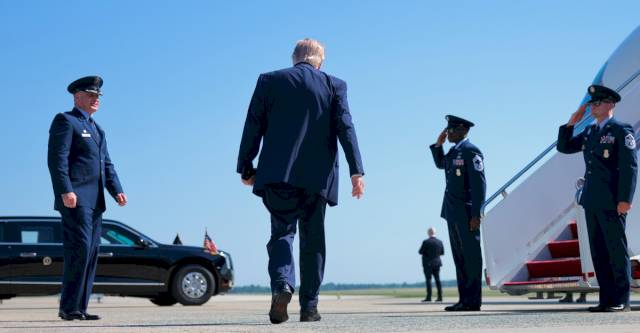
He seems to hope to slip away without Americans noticing the magnitude of this defeat.
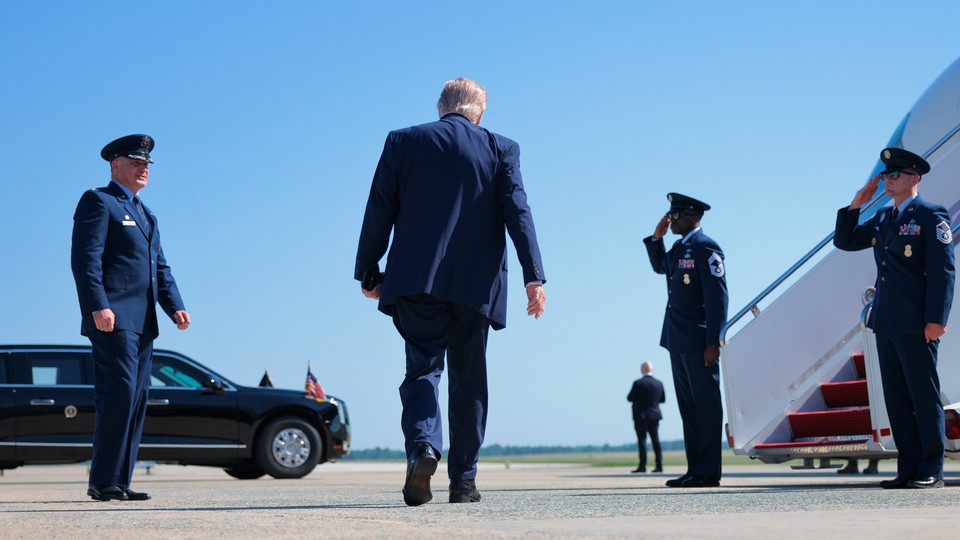
The outlines of President Trump’s endgame in the Iran war are now emerging. In a phone call with Israeli Prime Minister Benjamin Netanyahu yesterday, Trump reportedly explained that the United States was negotiating a “letter of intent” with Iran that would “formally end the war and launch a 30-day period of negotiations” on Iran’s nuclear program and the reopening of the Strait of Hormuz. The purpose and effect of such an agreement should be clear: The United States is walking away from the crisis. Trump may launch another limited strike to look tough and satisfy the demands of the war’s supporters, but it would be a performative gesture. Endgame in this case is a euphemism for “surrender.”
Trump has blinked many times in the confrontation with Iran—ever since March 18, when Israel attacked the Pars gas field and Iran retaliated with a strike against Qatar’s most important natural-gas-production facility. Trump then called for a halt on U.S. and Israeli targeting of Iran’s energy infrastructure, and the war effectively ended.
Trump’s repeated threats to resume attacks since then have proved to be bluffs. The leaders in Tehran have been calculating for two months that Trump would not launch another attack, and for this reason they have made no concessions despite the damage they suffered from 37 days of relentless strikes. On the contrary, their terms for a settlement are those of a victor: They demand war reparations, no limits on uranium enrichment, recognized control of the strait, and an end to sanctions.
Robert Kagan: Checkmate in Iran
For Trump to respond to this defiance by now calling for another 30 days of cease-fire and talks is a tacit admission of defeat. If he does launch a performative attack in the next few days, the Iranians will understand it for what it is. No one believes that he is going to resume a full-scale war a month from now. Among other reasons, with 30 more days to heal, rearm, and fill its coffers with tolls, Iran will be a more formidable adversary.
In 30 days, moreover, the new Iranian strait regime may already be firmly in place. As the Institute for the Study of War reports, Iran has been using the cease-fire period to “normalize” its control over the strait by “compelling oil-importing countries” to establish transit agreements with Tehran and charging fees on vessels from nations without such deals. According to Iranian officials, the new strait regime will give Iran’s strategic partners, such as Russia and China, priority and allow nations friendly to Iran, such as India and Pakistan, to negotiate their own transit agreements. Vessels associated with nations that Iran regards as an adversary will be denied access to the strait entirely.
Several nations, including South Korea, Turkey, and Iraq, are reportedly already negotiating at least temporary transit agreements. Now that Trump has made clear he has no intention of fighting to reopen the strait, the stampede to get good terms with Tehran will begin. All nations heavily dependent on energy from the Persian Gulf will want to cut their deal quickly to get the oil and gas and other commodities flowing and rescue their battered economy. Those nations currently allied with the United States and friendly to Israel will feel pressure to distance themselves and make their peace with Iran. The international sanctions against Iran will collapse, and even more money will pour into the country’s accounts as its newly central role in the global economy becomes normalized. By the end of 30 days, most of the world will have a stake in the new arrangement and will oppose any resumption of hostilities, even in the unlikely event that Trump wanted to go back to war.
Trump no doubt hopes that he can slip away without Americans noticing the magnitude of this defeat. The financial markets may stabilize if it is clear that oil will eventually start flowing again through a reopened strait, even if under the new Iran-controlled system. A major strategic setback for the United States need not affect Wall Street. The president may also hope that he can change the subject by launching another military operation, this time against the government in Cuba. And the news media have indeed begun writing more about Cuba than about the unfolding disaster in Iran.
Missy Ryan: Trump ditched hearts and minds in the Iran war
According to one U.S. official, Netanyahu’s “hair was on fire” after the call with Trump—for good reason. The Iran war may end up as the single most devastating blow to Israel’s security in its brief history. On the present trajectory, Iran will emerge from the conflict many times stronger and more influential than it was before the war. It will exercise leverage with dozens of the richest nations in the world, all of which will have an acute interest in keeping Iran happy. They will be unlikely to take Israel’s side in any conflict that it has with Tehran or with its proxies in Lebanon and Gaza, because Iran will have the means to punish them if they do. Israel will emerge more isolated than it has been at any time in its history—and not least from its only reliable protector, the United States. When Trump turns his back on Israel, as he must do to implement this policy, MAGA will gladly follow. The bipartisan anti-Israel consensus in the United States will grow and harden.
Will Israel go gentle into this good night? That is the wild card that may disrupt the financial markets’ dreams of a new stability in the Gulf. A stronger, richer, more influential Iran will mean new life for Hamas and Hezbollah. It will mean the end of the Abraham Accords, as the Gulf States will have to make their own peace with Tehran so that their economies can survive. Trump says that Netanyahu “will do whatever I want him to do.” But can Israel stand by while Iran replaces the United States as the arbiter of power in the region?
Most likely, the new normal in the Persian Gulf will be chronic instability and frequent disruptions in shipping. That’s what happens when the hegemon cedes hegemony.
Leave a Reply