” data-timestamp-html=”
” data-check-event-based-preview data-is-vertical-video-embed=”false” data-network-id data-publish-date=”2026-05-30T12:21:49.606Z” data-video-section=”world” data-canonical-url data-branding-key data-video-slug=”iran-us-negotiations-amb-gary-grappo-intv-053005aseg2-cnni-world-fast” data-first-publish-slug=”iran-us-negotiations-amb-gary-grappo-intv-053005aseg2-cnni-world-fast” data-video-tags data-breakpoints=”{“video-resource–media-extra-large”: 660}” data-display-video-cover=”true” data-details data-track-zone=”top” data-sticky-anchor-pos=”bottom” data-tabcontent=”Content”>

The US-Iran ceasefire deal hangs in limbo as Trump continues threats
3:27 • Source: CNN

The US-Iran ceasefire deal hangs in limbo as Trump continues threats
3:27
• Ready to resume combat: The US military is ready to resume combat in the Persian Gulf if required and is more strongly placed to do so than on day one of the conflict, Defense Secretary Pete Hegseth told reporters on Saturday.
• Potential deal: US President Donald Trump is considering a tentative agreement that would open the Strait of Hormuz and start nuclear talks with Iran, but he has not given any indication of a decision after he met with advisers Friday.
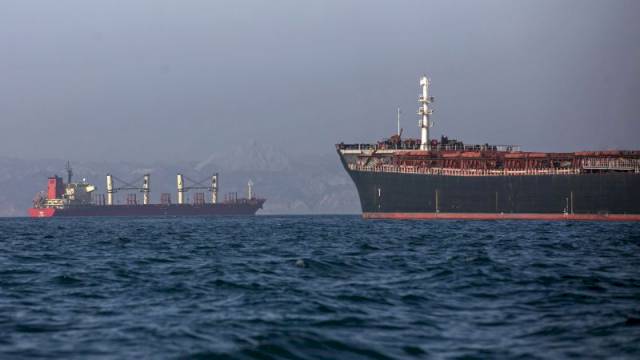
• In the strait: The US military on Friday disabled a Gambian-flagged vessel that was heading to Iran by firing a missile into its engine room, US Central Command announced Saturday.
• Hezbollah attacks: Hezbollah launched barrages of rocket and drone fire at northern Israel, forcing schools to close and a hospital to move underground. As Israeli troops advance farther into southern Lebanon, the military has warned of intensified attacks from the Iran-backed militant group.

Iran and the United States reached a tentative agreement to turn the existing ceasefire into a more long-lasting settlement, US officials said Thursday.
But on Friday, President Donald Trump made a series of demands — on the Strait of Hormuz, Iran’s nuclear program and the unfreezing of Iranian assets held overseas – that did not go down well in Tehran.
So it appears that the memorandum of understanding (MoU) is still, at best, a work in progress.
Here’s where things stand:
Strait of Hormuz: Both sides regard agreement on navigation through the waterway as a first step, after three months of paralysis that has caused a sharp spike in the price of crude oil and other commodities.
Iran’s nuclear program: It’s only when the MoU is signed that the clock starts ticking on a 60-day negotiation period to address Iran’s nuclear program, including the fate of its stockpile of highly enriched uranium. Trump said that Iran’s stockpiles will be unearthed in a joint US-Iranian operation and destroyed – an assertion quickly repudiated by Iranian state media.
Iran’s frozen assets: Tehran is demanding the immediate unfreezing of billions of dollars in assets held in banks overseas. But a senior US official told CNN last week that the unfreezing of Iranian assets would occur only once the Strait of Hormuz has reopened.
Sanctions: As with Iran’s frozen assets, sanctions imposed on Iran will only be lifted once the Strait of Hormuz is open and fully functioning again, a US official told CNN. The economy is suffering from a huge array of international sanctions, most of them imposed by the US and Europe.
Lebanon: It’s unclear how or whether the conflict between Israel and Hezbollah in Lebanon will be addressed in any memorandum. Over the past week, Iranian officials have stressed that the MoU will apply to the “end of the war on all fronts, including Lebanon.” But Trump told Israeli Prime Minister Benjamin Netanyahu last week that he supports the country’s wish to “maintain freedom of action against threats on all fronts, including Lebanon,” an Israeli official said.

Israel closed schools along its northern border and moved a hospital underground as Hezbollah launched barrages of rocket and drone fire at northern Israel.
The military’s Home Front Command announced that schools in the border communities would close on Sunday and Monday, while outdoor gatherings would be limited to 50 people. Beaches in northern Israel are also closed.
Israel’s Ministry of Health also announced that the Galilee Medical Center in the northern city of Nahariya would shift its operations to its protected underground complex. The hospital is approximately six miles from the Israel-Lebanon border.

On at least 15 different occasions on Saturday, the Israel Defense Forces (IDF) said it had detected projectiles launched from Lebanon into northern Israel. Many of the projectiles were intercepted, the IDF said, while others landed in open areas. The IDF warned on Saturday afternoon that there could be an increase in fire toward northern Israel “following the advancement of IDF operations in southern Lebanon.”
Hezbollah claimed 24 attacks on Israeli targets on Saturday, marking an uptick in activity. Eight of the attacks were inside Israel, Hezbollah said, using rockets and explosive drones, while 16 targeted areas in southern Lebanon.

The Israeli military said today it is preparing for attacks from Lebanon toward northern Israel as its troops advance further into southern Lebanon in operations against Hezbollah.
Here’s what to know about the Iran-backed militant group:
Origins: Hezbollah emerged from the rubble of Israel’s 1982 invasion of Lebanon, when Israeli forces took almost half of Lebanon’s territory, including Beirut. Israel’s operation resulted in more than 17,000 deaths, according to contemporary reports and an Israeli inquiry into a massacre at the Beirut refugee camp of Sabra and Shatila, one of the bloodiest events in the region’s recent history.
Rise to prominence: A band of Shia Islamist fighters trained by Iran burst onto Lebanon’s fractious political landscape. Eventually, in 1985, militants coalesced more formally around a newly founded organization: Hezbollah. The group made no secret about its ideological allegiance to Tehran and received a steady flow of funds from the Islamic Republic. It became a participant in Lebanon’s civil war, which ended in 1990, and led a fight against Israeli forces occupying southern Lebanon, ultimately driving them out in 2000.
Terror designation: In Lebanon, Hezbollah is officially considered a “resistance” group tasked with confronting Israel, which Beirut classifies as an enemy state. Much of the Western world has designated Hezbollah a terrorist organization.
Battered condition today: Hezbollah, once seen as a potent deterrent against a direct confrontation with Iran, now appears barely a shadow of the force it once was. Battered by years of relentless Israeli assaults, it has seen its most senior leaders assassinated, its southern Lebanese strongholds overrun and its fearsome missile arsenal depleted.
CNN’s Eugenia Yosef and Tim Lister contributed to this reporting.
The US military on Friday disabled a Gambian-flagged vessel that was heading to Iran by firing a missile into its engine room, US Central Command announced today.
CENTCOM said the M/V Lian Star was en route to an Iranian port in the Gulf of Oman when the US military issued “more than 20 warnings” that it was violating the US blockade of Iranian ports.
This marks the fifth commercial ship that CENTCOM has disabled since the blockade began, according to the post. More than 100 vessels have also been redirected.
When asked for additional information on the Friday incident, CENTCOM said it had nothing further to add.
This post has been updated with additional information.

US President Donald Trump continues to weigh a tentative agreement with Tehran. As Trump has offered various justifications for starting the war with Iran, he has repeatedly cited its nuclear program, which has also been a key sticking point in negotiations to end the conflict.
Washington was in talks with Tehran about its nuclear program before the US and Israel struck Iran. Trump has expressed his desire to ensure Iran “never have a nuclear weapon,” despite Iran’s insistence that it was not pursuing this.
A Congressional Research Service (CRS) report on Iran and nuclear weapons says that there were concerns about Iran’s uranium enrichment since the early 2000s.
In 2015, Tehran signed the Joint Comprehensive Plan of Action (JCPOA), which capped uranium enrichment for 15 years and facilitated UN-led inspections to ensure adherence to the deal.
Trump abandoned the JCPOA in 2018, during his first term.
A US assessment of Iran’s nuclear weapons capability published in 2024 said that while “Iran (was) not building a nuclear weapon,” it had, however, “undertaken activities that better position it to produce one, if it so chooses.”
The US and Israel’s June 2025 strikes on Iran’s nuclear facilities was assessed by US intelligence to have buried much of Iran’s highly enriched uranium stockpile at Esfahan, but didn’t destroy it, despite administration statements that Iran’s nuclear program was “obliterated.”
The highly enriched uranium that Iran currently is determined to have could reach weapons-grade purity within weeks or even days, according to some nuclear experts — if Iran has an operational enrichment facility.
However, just days after the strikes on Iran, the head of the United Nations’ nuclear watchdog, Rafael Grossi, told CNN that Tehran was not days or weeks away from having a nuclear weapon. Iran shut out international nuclear inspectors the following month.

As US President Donald Trump is still withholding any announcement on whether a possible peace deal has been reached with Iran, Defense Secretary Pete Hegseth told an international forum on Saturday that the “status as of right now is that any deal will be a good deal.”
Yesterday, Trump met with advisers in the White House Situation Room, where they discussed a tentative agreement that would open the Strait of Hormuz and start nuclear talks with Iran.
And in Tehran, there’s been little official reaction to the demands made by Trump on Friday for the tentative agreement.
Catch up on other headlines here:
- Hegseth’s warning: The US military is ready to resume combat in the Gulf if required and is more strongly placed to do so than on day one of the conflict, according to US Defense Secretary Pete Hegseth.
- Strait of Hormuz updates: The Persian Gulf Strait Authority, Iran’s new body to force shippers to comply with its rules around the Strait of Hormuz, has vowed to continue its operations “without interruption” after being added to the US Treasury sanctions list. Also, a floating object thought to be a naval mine has been sighted in the strait, according to Omani authorities.
- In Lebanon: The Israeli military said it is preparing for attacks from Lebanon toward northern Israel as its troops advance further into southern Lebanon in operations against Hezbollah. Despite the US-mediated ceasefire agreed by the governments of Israel and Lebanon in April, clashes between Hezbollah and Israeli forces have intensified.
- Gas prices: Gas prices in the United States reached an average of $4.35 a gallon on Saturday, according to data from AAA. That’s down four cents from Friday and 17 cents from a week ago. Prices are still up 46% since the start of the war.
- Cryptocurrency seizure: US Treasury Secretary Scott Bessent said the US has seized about $1 billion in Iranian cryptocurrency.
CNN’s Billy Stockwell, Dalia Abdelwahab, Brad Lendon, Tim Lister and Eugenia Yosef contributed reporting.
Gas prices in the United States reached an average of $4.35 a gallon on Saturday, according to data from AAA. That’s down four cents from Friday and 17 cents from a week ago.
Americans have paid more at the pump since the start of the war with Iran in late February. The war triggered a disruption in global oil prices, as the Strait of Hormuz has remained closed and energy facilities have paused production.
On Friday, Brent crude prices settled at $91.89 a barrel, while US crude closed at $87.86 — both down from hovering around $100 a barrel when talks stalled during the war. Oil prices have come down amid hopes that the US and Iran will reach a deal to reopen the Strait of Hormuz, which accounts for about one-fifth of the world’s oil supplies.

The Israeli military has said it is preparing for attacks from Lebanon toward northern Israel as its troops advance further into southern Lebanon in operations against Hezbollah.
Despite the US-mediated ceasefire agreed by the governments of Israel and Lebanon in April, clashes between Hezbollah and Israeli forces have intensified.
The Israel Defense Forces urged people in northern Israel to remain vigilant on Saturday after saying it had recorded 20 launches from Lebanon since midnight. Some projectiles were intercepted and others fell in open land; no injuries were reported.
Hezbollah said on Saturday it had fired rockets at the northern Israeli town of Kiryat Shmona “in defense of Lebanon and its people, and in response to the Israeli enemy’s violation of the ceasefire.”
Altogether, Hezbollah claimed 14 attacks Saturday: 12 in southern Lebanon and two inside Israel.
The IDF re-issued evacuation warnings on Saturday to residents of 13 villages, ordering people to move north of the Zahrani river, some 40 kilometers (25 miles) north of the border.
The intensifying combat between Israel and Hezbollah may put at risk any agreement between the United States and Iran, which is insisting that it include a ceasefire in Lebanon. US President Donald Trump told Israel’s Prime Minister Benjamin Netanyahu last week that he supported its “freedom of action against threats on all fronts, including Lebanon,” an Israeli official told CNN.
Netanyahu said Friday that Israeli forces had crossed Lebanon’s Litani River, which runs around 30 kilometers (about 19 miles) north of the countries’ border.
Response from Lebanon: Meanwhile on Saturday, Lebanon’s Prime Minister Nawaf Salam accused Israel of “not only targeting specific areas, but … carrying out a policy of comprehensive destruction and practicing mass displacement” inside the country.
This post has been updated with developments.
A floating object thought to be a naval mine has been sighted in the Strait of Hormuz, according to Omani authorities.
“Due to the sighting of a floating object suspected to be a naval mine west of the Inshore Traffic Zone in the Strait of Hormuz” within Omani territorial waters, “the Maritime Security Centre urges all seafarers, fishermen, and vessels to exercise the utmost caution while navigating in the area,” the Centre posted on X.
“All maritime users are advised to keep a safe distance from any suspicious objects and report them immediately to the relevant authorities.”
The US military said it had struck mine-laying boats near southern Iran on Monday.
On Friday, US President Donald Trump demanded Iran remove all mines in the Strait of Hormuz as part of an agreement to end the conflict.
There’s been little official reaction in Tehran to the demands made by US President Trump on Friday for an agreement that would end the conflict in the Gulf.
In a social media post, Trump said Iran “must agree that they will never have a Nuclear Weapon or Bomb,” that the “Hormuz Strait must be immediately open” without any tolls or restrictions on traffic, and that mines laid by Iran in the waterway must be “terminated.”
He also suggested that the US blockade of Iranian ports would be lifted as part of a memorandum of understanding currently being negotiated through mediators.
“As predicted, the President of the United States is betraying diplomacy for the third time,” said Mohsen Rezaie, an adviser to Iran’s Supreme Leader, Mojtaba Khamenei, on Saturday.
Iran has accused the US of twice attacking it in the middle of negotiations.
“By continuing the naval blockade and making excessive demands in negotiations, he has once again proven that he is not inclined toward negotiation and is pursuing other objectives,” Rezaie said on X.
“Talks with the US are ongoing and there are still minor disagreements,” said a member of Iran’s negotiating team, Saeed Ajorloo.
“If the final text is approved, we will enter a 60-day dialogue about the details,” Ajorloo said in a television interview that was reposted on Telegram by Iran’s chief negotiator, Mohammad Bagheri Ghalibaf.

The US military is ready to resume combat in the Gulf if required and is more strongly placed to do so than on day one of the conflict, according to US Defense Secretary Pete Hegseth.
“We’re focused on being postured and prepared to re-engage if we have to,” Hegseth said during a visit to Singapore on Saturday, but US President Donald Trump would prefer not to.
The president’s goal was that Iran must not be capable of having a nuclear weapon, Hegseth said, and “those goal posts haven’t shifted at all.”
He said that the Iranians “are coming in our direction. The talks have been productive. I think they know where it needs to go.”
“They want to say that they control the strait (of Hormuz) but we do,” Hegseth added.
Earlier, while attending the Shangri-La Dialogue in Singapore, Hegseth said that Trump was being patient in making sure any peace pact with Iran ensures that it will not acquire a nuclear weapon.
“If Iran doesn’t want to make a great deal that ensures they don’t get a nuclear weapon, they can deal with” the US military, Hegseth said, adding that weapons stockpiles were enough to get the job done.
” data-timestamp-html=”
” data-check-event-based-preview data-is-vertical-video-embed=”false” data-network-id data-publish-date=”2026-05-30T03:40:36.000Z” data-video-section=”world” data-canonical-url data-branding-key data-video-slug=”hegseth-iran-intl-hnk” data-first-publish-slug=”hegseth-iran-intl-hnk” data-video-tags data-breakpoints=”{“video-resource–media-extra-large”: 660}” data-display-video-cover=”true” data-details>

Any peace deal with Iran will be a “good deal,” says Hegseth
0:15 • Source: CNN

Any peace deal with Iran will be a “good deal,” says Hegseth
0:15
As President Donald Trump is still withholding any announcement on whether a peace deal has been reached with Iran, Defense Secretary Pete Hegseth told an international forum on Saturday that “status as of right now is that any deal will be a good deal.”
Trump is being patient in making sure any peace pact with Iran ensures that it will not acquire a nuclear weapon, Hegseth said in a question-and-answer session after a speech to the Shangri-La Dialogue in Singapore.
“If Iran doesn’t want to make a great deal that ensures they don’t get a nuclear weapon,” then Iran can “deal with” the US military, Hegseth said.
The US defense chief said American forces are fully prepared to resume hostilities if so ordered, and that weapons stockpiles are enough to get the job done.
Hours after President Donald Trump concluded a Situation Room meeting with his national security team on Iran, the White House has not indicated what – if any – decision he came to.
“The Situation Room meeting has concluded and lasted approximately two hours. President Trump will only make a deal that is good for America and satisfies his redlines. Iran can never possess a nuclear weapon,” a White House official said in a statement issued at about 6 p.m.
When Trump first announced the meeting shortly before 11 a.m. today, he said the purpose was “to make a final determination,” and laid out a number of conditions he expected Iran to agree to in a possible deal to end the war.

Before US President Donald Trump met with advisers in the White House Situation Room on Friday, he said he was prepared to make a “final determination” on a tentative deal to reopen the Strait of Hormuz and begin talks on Iran’s nuclear program.
The officials spoke for roughly two hours, according to a person familiar with the matter, but no announcement has been made since the meeting’s conclusion earlier today.
As we await further news, here are other Iran headlines you should know:
- What Tehran is saying: Foreign Ministry spokesperson Esmaeil Baghaei said Friday that Iran and the US are still in contact, but a memorandum of understanding between the two nations has not yet been finalized. There has been no definitive word that Iran’s Supreme Leader Mojtaba Khamenei has approved a potential deal.
- Strait of Hormuz updates: The Iran war is having a disproportionate impact on the world’s most vulnerable nations due to higher fuel and fertilizer prices and risks to jobs and livelihoods, several international economic organizations have warned. Meanwhile, the Persian Gulf Strait Authority, Iran’s new body to force shippers to comply with its rules around the Strait of Hormuz, has vowed to continue its operations “without interruption” after being added to the US Treasury sanctions list.
As negotiators progress toward a potential deal in Iran, another regional conflict is raging. Israel is expanding its military operations in southern Lebanon, saying it is targeting Hezbollah, the Iran-backed paramilitary group that operates in the country.
Here’s some of the latest news out of Lebanon:
- Civilian impact: In the last week, Israel’s offensive has killed or injured 11 children a day on average, the UN children’s agency said Friday, highlighting the toll on civilians in the country. People there described feelings of anguish and uncertainty in recent interviews.
- Historical sites: Israeli strikes have also targeted regions in southern Lebanon with biblical significance, threatening historical and archaeological sites.
- Diplomatic call: US Secretary of State Marco Rubio held a call with Lebanese President Joseph Aoun on Friday, who stressed the need for a ceasefire deal that would help secure the country’s stability, according to a post on the presidency’s X account. The US State Department said Rubio emphasized that Hezbollah is “entirely responsible for the ongoing fighting” and that the US supports the Lebanese government in its efforts to secure peace.
CNN’s Kevin Liptak, Mustafa Qadri, Sana noor Haq, Eyad Kourdi, Billy Stockwell and Dalia Abdelwahab contributed reporting.
US Treasury Secretary Scott Bessent said the US has seized about $1 billion in Iranian cryptocurrency.
“I believe that we have seized about a billion dollars in crypto,” Bessent said Friday during a panel at the 2026 Reagan National Economic Forum. “Just outright grabbed the wallets.”
Bessent continued: “Some of them may be, like, typing in right now and might not realize that their wallet has been grabbed.”

The Persian Gulf Strait Authority, Iran’s new body to force shippers to comply with its rules around the Strait of Hormuz, has vowed to continue its operations “without interruption” after being added to the US Treasury sanctions list.
On Wednesday, the US Treasury said the creation of the authority was a new attempt by Iran’s Islamic Revolutionary Guard Corps to “monetize its campaign of state-sponsored terror by extorting vessels transiting the Strait of Hormuz.”
While condemning the US move, PGSA said in a message to Washington, “You failed to gain control of the Strait of Hormuz through warfare and diplomacy, and you will not achieve it through sanctions either.”
It added that statistics detailing the first month of PGSA’s operations will be published soon.

President Donald Trump’s meeting in the Situation Room to make a “final determination” on a tentative Iran deal concluded after roughly two hours, a person familiar with the matter said.
Despite Trump’s earlier suggestion that the meeting would end with a decision, it remained unclear afterward whether he planned to sign off on the emerging agreement with Iran to open the Strait of Hormuz and start nuclear talks.
Participants in the session included Secretary of State Marco Rubio and Vice President JD Vance.
The Iran war is having a disproportionate impact on the world’s most vulnerable nations due to higher fuel and fertilizer prices and risks to jobs and livelihoods, several international economic organizations have warned.
The heads of the International Energy Agency, International Monetary Fund, World Bank Group and World Trade Organization also forecast further economic damage over the summer months if the Strait of Hormuz, through which about 20% of the world’s oil supply typically passes, is not reopened.
The group met yesterday to discuss their institutions’ response to the impacts of the war, which they said was generating “substantial and highly asymmetric impacts on energy supplies, food security and economic activity.”
A resident in Lebanon’s ancient coastal city of Tyre has described her feelings of anguish and uncertainty amid Israel’s recent evacuation warnings and subsequent airstrikes in the city.
The coastal strikes come as Israel expands its military operations in Lebanon, with the Israeli military striking what it said was “Hezbollah infrastructure” in Tyre on Thursday after issuing what appeared to be its largest evacuation warning for the city.
The UN children’s agency (UNICEF) said today that Israel’s offensive in Lebanon has killed or injured 11 children a day on average in the past week, highlighting the toll on civilians in the country.
More strikes were reported in southern Lebanon earlier today, with the country’s state-run National News Agency (NNA) reporting that civil defense teams recovered the bodies of four people, including children, after an airstrike hit a residential house in the town of Adloun.
Another airstrike on the outskirts of Adloun resulted in the deaths of eight Syrian nationals, NNA reported. The Israeli military told CNN it was not aware of any airstrikes on Adloun today.
This post has been updated to note a response from Israel’s military.

Iran’s Foreign Ministry spokesperson Esmaeil Baghaei said today that Washington and Tehran are still in contact but a memorandum of understanding between the two nations has not yet been finalized.
US President Donald Trump said earlier he was meeting with advisers in the White House Situation Room to determine whether to agree to a deal with Iran. CNN reported Thursday that the sides had reached a tentative agreement to open the Strait of Hormuz and begin a 60-day negotiation window on Tehran’s nuclear program, but that the terms still needed Trump’s sign-off.
Trump said Friday that as part of any agreement, Iran “must agree that they will never have a Nuclear Weapon or Bomb” and that the “Hormuz Strait must be immediately open” without any tolls or restrictions on traffic, among other stipulations.
Baghaei said the future of the choked Strait of Hormuz will depend on the countries of Oman and Iran, as both nations have a plan to manage passage through the waterway.
The Iranian official added that current US-Iran talks are focused on ending the war, and nuclear issues are not currently being discussed.
This post has been updated with additional quotes from Baghaei.
Leave a Reply