
Here’s the latest.
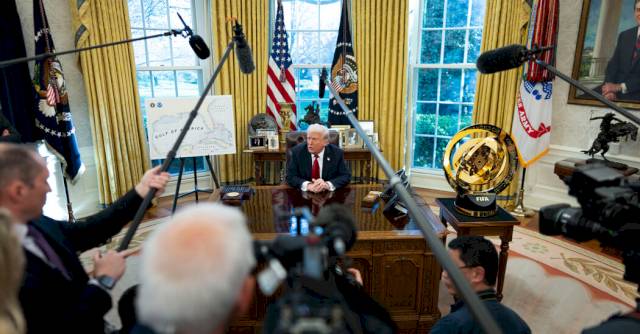
President Trump said in a middle-of-the-night social media post early Thursday that he would come after the European Union and Canada if they banded together to “do economic harm” to America, opening a new front in the unfolding trade war. Mr. Trump on Wednesday said that all cars and certain automobile parts that are shipped into the United States would be subject to a 25 percent tariff.
“If the European Union works with Canada in order to do economic harm to the USA, large scale Tariffs, far larger than currently planned, will be placed on them both in order to protect the best friend that each of those two countries has ever had!” Mr. Trump wrote.
Mr. Trump’s post creates a new problem for the European Union, which is already trying to respond to his tariffs on steel, aluminum, autos and potentially a broader array of goods and services.
The United States is by far Europe’s most important trading partner, and the prospect of worse trading conditions has left the European Union scrambling to negotiate. But the Trump administration has showed little appetite to strike a deal so far.
“In the end, as it is said, one hand cannot clap,” Maros Sefcovic, the trade commissioner for the European Union, has said.
That has left Europeans seeking to strike new alliances and deepen existing trading relationships. And concerns about President Trump’s shifting stance on military support have driven partners like the European Union and Canada closer together. Canada is already working toward providing industrial support for Europe’s rearmament push.
European Commission officials did not immediately comment on Mr. Trump’s post.
Here’s what else to know about the fallout from Mr. Trump’s tariffs:
-
The tariff details: The auto levies are set to go into effect on April 3 and will apply to cars and trucks as well as important parts like engines, transmissions and electrical components that are shipped into the United States. That includes vehicles from American brands whose automobiles are assembled outside of the country, including in Canada or Mexico.
-
Supply chains scrambled: Nearly half of all vehicles sold in the United States are imported, as well as nearly 60 percent of the parts in vehicles assembled in the United States. That means the tariffs could have serious implications for the North American auto industry, which has become intertwined through decades of tariff-free trade.
-
Auto stocks wobble: The stocks of major Detroit carmakers, which build some of their vehicles in Canada and Mexico, were rattled in early trading on Wall Street. Shares in General Motors, which imports many of its best-selling cars and trucks from Mexico, opened down more than 7 percent. Ford, which is less reliant on imported cars, fell about half a percent. Shares in Tesla, which is expected to suffer less from tariffs than its competitors because all the cars that it sells in the United States are made in California and Texas, rose about 1 percent.

President Emmanuel Macron of France said at a news conference Thursday that he had told Trump this week that tariffs were “not a good idea,” and said Europeans would respond by reciprocating in hopes of getting the U.S. president to reconsider. He added that Trump’s political calculus in imposing tariffs on America’s closest allies was confounding. “At a moment when President Trump is asking Europeans to make a bigger military effort to ensure our own security, it’s not the moment to impose tariffs on us — that’s not coherent,” he said.
Macron warned that the auto tariffs would hit growth on both sides of the Atlantic and would fan inflationary pressures in the United States, adding that the U.S. stock market had sent a clear signal that “it’s not good economic policy.” France would work with the European Commission on a “riposte,” he added, the goal of which would be “to find an accord to dismantle the tariffs.”

How major car brands are affected by Trump’s tariffs.
Image
The tariffs on cars and auto parts that President Trump announced on Wednesday will have far-reaching effects on automakers in the United States and abroad.
But there will be important differences based on the circumstances of each company.
Tesla
The company run by Mr. Trump’s confidant, Elon Musk, makes the cars it sells in the United States in factories in California and Texas. As a result, it is perhaps the least exposed to tariffs.
But the company does buy parts from other countries — about a quarter of the components by value in its cars come from abroad, according to the National Highway Traffic Safety Administration.
In addition, Tesla is struggling with falling sales around the world, in part because Mr. Musk’s political activities and statements have turned off moderate and liberal car buyers. Some countries could seek to retaliate against Mr. Trump’s tariffs by targeting Tesla. A few Canadian provinces have already stopped offering incentives for purchases of Tesla’s electric vehicles.
General Motors
The largest U.S. automaker imports many of its best selling and most profitable cars and trucks, especially from Mexico where it has several large factories that churn out models like the Chevrolet Silverado. Roughly 40 percent of G.M.’s sales in the United States last year were vehicles assembled abroad. This could make the company vulnerable to the tariffs.
But unlike some other automakers, G.M. has posted strong profits in recent years and is considered by analysts to be on good financial footing. That could help it weather the tariffs better than other companies, especially if the levies are removed or diluted by Mr. Trump.
Ford Motor
Ford is much less reliant on imported cars than many of its rivals. It makes about 80 percent of the vehicles it sells in the United States in the country. As a result, it would be relatively insulated from the 25 percent tariffs on imported vehicles.
But the company is still dependent on foreign factories for major parts like engines. A Ford factory in Ontario, for example, makes engines for some of its pickup trucks. Ford has been losing billions of dollars on electric vehicles. One of its three battery-powered models, the Mustang Mach-E, is produced at a factory near Mexico City.
Image
Stellantis
The company that owns Chrysler, Dodge, Jeep and Ram, uses overseas factories, in Mexico in particular, to assemble some popular models like Ram pickup trucks. Another model, the Chrysler Pacifica minivan, is made in Ontario.
Stellantis, which was created by the 2021 merger of Fiat Chrysler and Peugeot, has also been struggling with sluggish sales and is searching for a new chief executive. Those challenges put the company, along with some others like Nissan, at greater risk, especially if the tariffs stay in place for months or years.
Toyota
Like other Japanese automakers, Toyota is very dependent on the United States and sold 2.3 million cars in the country last year. About 1 million of those vehicles were made in other countries, many of them in Canada, Mexico and Japan. That could be a big problem for the company and automakers like Subaru and Mazda, with which Toyota works closely.
But Toyota, the world’s largest automaker, is in a better position than other automakers. It is profitable and considered by analysts to be one of the best-run companies in the global auto industry.
Volkswagen
Europe’s largest automaker could be really hurt by tariffs because it has just one factory in the United States, in Chattanooga, Tenn., where it makes the Atlas and ID.4 sport utility vehicles. It imports many of its cars, including Audis and Volkswagens from Mexico and Porsches from Germany.
Image
The company has struggled financially in recent years because its sales have fallen sharply in China, where domestic automakers have grown quickly by introducing lots of affordable electric and hybrid vehicles. Volkswagen had hoped to make inroads in the United States but Mr. Trump’s latest tariffs could make that difficult task even harder.
Hyundai and Kia
The South Korean stablemates have made impressive sales gains in the United States in recent years. The companies have also invested in a new electric vehicle factory in Georgia that is starting to increase production, which could help them avoid tariffs on some models.
On Monday, Hyundai’s executive chair, Euisun Chung, announced at the White House with Mr. Trump that his company would invest another $21 billion in the United States, including in a new steel factory in Louisiana. Even though Hyundai and Kia now has three factories in Georgia and Alabama, they will not be able to avoid tariffs on the hundreds of thousands of cars they import into the United States. Many of those vehicles came from South Korea, which negotiated a trade agreement with the United States in 2007 that was updated during Mr. Trump’s first term.
Advertisement

Tesla, whose chief executive, Elon Musk, has taken a leading role in the Trump administration, may suffer less than other automakers under the tariffs announced Wednesday because it makes all the cars that it sells in the United States in California and Texas. That means that Tesla vehicles will not be subject to tariffs, although the company will still see its production costs rise because of tariffs on imported parts.
Trump said that Musk had not influenced his decision to impose tariffs. “He’s never asked me for a favor in business whatsoever,” Trump said at the White House.

Jim Reid of Deutsche Bank wrote in a note to clients: “The more you listen to the current U.S. administration, the more you appreciate that they are prepared to sacrifice near-term market performance and economic growth if it’s required to meet their longer-term objectives.” The trouble is, as I wrote last week, hardly any economists buy the idea that these policies will help in the long run, either.

Germany criticized Trump’s auto tariffs, saying they will make make cars more expensive. “The announcements of high tariffs on cars and car parts are bad news for German automakers, for the German economy, for the E.U., but also for the U.S.,” Robert Habeck, Germany’s economy minister, said in a statement.
Image

BritishAmerican Business, a trade group for transatlantic businesses, urged Britain to not retaliate for Trump’s latest tariffs and keep trying to negotiate a deal that would exempt the country. “Unlike other trading relationships, the U.S. and U.K. do not have a trade imbalance, nor is there a significant disparity in wage structures or labour standards, and if anything, the U.K. is at a disadvantage with its higher energy costs,” said Duncan Edwards, the chief executive.
British government officials haven’t suggested they would retaliate. Jonathan Reynolds, the business and trade minister, said that “this is a time for cool heads and pragmatism.”
Advertisement
Among the automaker shares that were hit hard on Thursday were India’s Tata Motors, which owns the British company Jaguar Land Rover, and Germany’s Porsche. These luxury carmakers import all the cars they sell into the U.S. For brands like Jaguar, which sell expensive cars but a relatively low volume of them, there’s little they can do to avoid these tariffs because it would be uneconomical to set up production in the U.S.

A stoic President Claudia Sheinbaum of Mexico, in her first reaction to Washington’s tariffs on foreign-made cars, trucks and auto parts, said that “we are always going to protect Mexico.” The Mexican government, she added, will issue “an integral response” to all U.S. tariffs — which so far also include levies on steel and aluminum — impacting the country on April 3. “That does not mean we close the door on the United States on April 3rd,” she said. “The door is open for talks with the U.S. government.”

President Trump threatened retaliation should Canada and European countries coordinate against U.S. tariffs, but Prime Minister Mark Carney of Canada has previously said that he doesn’t believe this kind of coordination would be a good idea, and that Canada won’t be pursuing coordination with allies.
On March 17, while in London, Carney said: “We take our own decisions with respect to our trade relationship with the United States. We’re not trying to organize coordinated retaliation.” He added that such an approach would not be “helpful to the overall process.”
Image

The White House press secretary, Karoline Leavitt, declined to say this morning when the Trump administration would unfurl the other tariffs it has promised to impose on lumber and pharmaceuticals. Instead, she touted President Trump’s upcoming April 2 announcement of “reciprocal” tariffs, saying the focus is on countries “that have been ripping off the United States.”
Leavitt added that these tariffs are going to “be more conservative than many people are expecting.”
Advertisement

Major U.S. stock indexes inched down at the start of trading this morning, with the S&P 500 roughly 0.5 of a percent lower after a loss of more than 1 percent on Wednesday. Shifting tariff policies are still driving sentiment on Wall Street; investors are weighing the potential economic effects of President Trump’s tariffs, especially his new tariffs on imported cars and some car parts, which he announced after markets closed on Tuesday.
Shares in many of the biggest carmakers are taking a hit today, including the major American companies that build some of their vehicles in Canada and Mexico. General Motors tumbled about 9 percent in early morning trading. Shares of Stellantis, which produces cars under the Chrysler, Jeep, Dodge and Ram brands, fell more than 3 percent, and Ford was nearly 2 percent lower. Tesla, which is expected to suffer less from tariffs than its competitors because all of the cars it sells in the United States are made in California and Texas, saw its stock rise about 1 percent.
Liz Alderman, who covers the European economy, reported from Paris.
Germany says that Europe must respond to President Trump’s auto tariffs.
Image
President Trump’s sweeping tariffs on automobiles drew a sharp reaction on Thursday from Germany, which called on the European Union to hit back with a “firm response” to measures that would “harm the U.S. and the E.U., and global trade as a whole.”
Mr. Trump announced on Wednesday that he would impose a 25 percent tariff on cars and car parts shipped to the United States, putting pressure on America’s top trade allies around the globe. The tariffs, which he said were permanent, will go into effect on April 3.
The United States is a crucial market for Germany’s auto industry, which ships vehicles from automakers like BMW, Mercedes-Benz and Volkswagen to American dealers.
“It must be clear that we will not back down,” Robert Habeck, Germany’s economy minister, said in a statement on X. “Strength and self-confidence are required.”
He added that Germany would support the European Commission, the European Union’s executive arm, as it negotiates with the United States to find a solution that averts a tariff spiral.
France’s finance minister, Eric Lombard, called Mr. Trump’s action “very bad news” and said the only alternative was for Europe to increase its own tariffs on U.S. auto imports.
Mr. Trump’s announcement, which will apply both to finished cars and trucks that are shipped to the United States and to imported auto parts, sent shares of German automakers tumbling on Thursday. Shares of the Italian luxury carmaker Ferrari and the Swedish manufacturer Volvo also slumped. The rout encompassed European auto parts makers as well as the tire producers Pirelli and Continental.
One of the companies facing the greatest pain is the German carmaker BMW. It said in a statement Thursday that a trade war “would not have any benefits,” and called on the European Union and the United States to “promptly find a trans-Atlantic deal that creates growth and prevents a spiral of isolation and trade barriers.”
The prospect of a drawn-out trade war would have wide-ranging effects. “The impacts of this move are clearly detrimental, and are likely to trigger further and fresh retaliatory actions by affected nations,” analysts at Bernstein said in a note to clients.
Automakers have the choice of absorbing the cost of the tariffs or passing them on to consumers, the analysts noted. Prices could rise up to $12,000 per car, and “the resulting inflation could pressure the Trump administration into backing down,” they wrote.
Mr. Trump’s tariffs are hitting the European auto industry at a time when it is facing a transformation and increased international competition, the European Automobile Manufacturers’ Association said in a statement.
“European automakers have been investing in the U.S. for decades, creating jobs, fostering economic growth in local communities, and generating massive tax revenue for the U.S. government,” said the group’s director general, Sigrid de Vries. “We urge President Trump to consider the negative impact of tariffs not only on global automakers but on U.S. domestic manufacturing as well.”
Hildegard Müller, the president of Germany’s main lobby group for the automobile industry, VDA, called the tariffs “a fatal signal for free and rules-based trade.”
The tariffs “represent a considerable burden for both companies and the closely interwoven global supply chains of the automotive industry — with negative consequences for consumers in particular, including in North America,” Ms. Müller said in a statement.
“The risk of a global trade war, with negative consequences for the world economy and growth, prosperity, jobs and consumer prices, is very high,” she added.
Melissa Eddy contributed reporting.
Global auto stocks tumble as investors assess the hit from tariffs.
Image
Shares in automakers around the world wobbled on Thursday after President Trump announced plans to impose a 25 percent tariff on imported cars and some parts beginning next week.
The stocks of major Detroit carmakers, which build some of their vehicles in Canada and Mexico, were rattled in early trading. Shares in General Motors, which imports many of its best-selling cars and trucks from Mexico, opened down more than 7 percent. Ford, which is less reliant on imported cars, fell about half a percent.
The S&P 500 index opened roughly 0.4 percent lower, after a loss of more than 1 percent on Wednesday.
Shares in Tesla, which is expected to suffer less from tariffs than its competitors because it makes all the cars that it sells in the United States in California and Texas, rose about 1 percent. Mr. Trump said Wednesday that Elon Musk, Tesla’s chief executive who has taken a leading role in the White House, had not influenced his decision to impose tariffs.
Among the hardest hit shares on Thursday were carmakers based in Germany, Japan and South Korea, which sell many of their cars in the United States and rely on complex supply chains that cross borders, including from production sites in Mexico and Canada.
Shares in Germany’s Volkswagen, Europe’s largest automaker, fell 2 percent. Other German carmakers like Mercedes-Benz and BMW dropped 2 to 4 percent in European trading.
Stellantis, the parent of Chrysler, Fiat, Jeep, Peugeot and Ram, saw its European shares fall nearly 5 percent.
The stocks of Japan’s Toyota Motor, Honda Motor and Nissan Motor all fell about 2 percent in Tokyo. Shares in South Korea’s Hyundai Motor and Kia fell 3 to 5 percent in Seoul.
Shares in India’s Tata Motors slumped nearly 6 percent. The company owns the British company Jaguar Land Rover, which imports all of the luxury cars it sells in the United States. Germany’s Porsche, whose stock dropped 4 percent, also imports all of the cars it sells in America.
Nearly half of all vehicles sold in the United States are imported, as well as nearly 60 percent of the parts in vehicles assembled there. For many foreign carmakers, the United States is a critical market: Nearly one of every three Porsches, and one of every six BMWs, is shipped there. German companies also export about $8 billion in car parts to the United States.
“Since all countries in the world are affected, it is likely to be difficult for countries like Germany to redirect cars to third countries and sell them there,” analysts at Commerzbank wrote in a note.
BMW warned this month that it expected that trade conflicts could cost the company $1 billion this year.
The slump in auto stocks pulled down benchmark stock indexes in big exporting countries. Germany’s DAX fell nearly 1 percent, while South Korea’s KOSPI dropped 1.4 percent and Japan’s Nikkei 225 was down 0.6 percent.
There were signs of jitters in other markets. The price of gold, which has been setting records as investors sought a haven from trade and geopolitical uncertainty, jumped more than 1 percent, rising further above $3,000 per ounce. Analysts at Goldman Sachs raised their forecast, saying they expected gold to hit $3,300 by the end of the year.
U.S. Treasury yields ticked higher, as traders considered the inflationary impact of the tariffs, which could add thousands of the dollars to the cost of imported cars. The yield on 10-year bonds rose slightly, to 4.37 percent.
On Wednesday, Mr. Trump said he expected the auto tariffs to be permanent. Still, many financial analysts believe that the economic damage could be so severe that the tariffs would be scaled back.
“We think it is unlikely that the new tariff regime will last, given the widespread damage they will do across industries and the inflationary impact on the U.S. economy,” analysts at Bernstein wrote.
But investors have recently been wrong-footed by the administration’s aggressive trade approach, which also includes steep additional tariffs on all U.S. imports of goods from China and a large share of goods from Canada and Mexico. Mr. Trump and his advisers have said that a recession is possible, stressing that the short-term pain would be worth it in the long term.
“It is hard to judge the duration of such chainsaw-like policies if these cause a market slump that does not appear to be transitory,” the Bernstein analysts added.
Advertisement

Trump’s punishing tariffs stun America’s automaker allies.
Image
Mexico deployed thousands of National Guard troops to the border to deter migrants from reaching the United States. South Korea said it would invest $21 billion in expanding U.S. manufacturing. Japanese officials descended on Washington, offering to invest $1 trillion in the United States and buy more American natural gas.
None of that was enough to prevent one of those countries’ biggest tariff concerns from becoming a reality on Wednesday, when President Trump declared that automobiles and car parts imported to the United States would face a 25 percent tariff starting on April 3.
Mexico, Japan and South Korea, along with Canada, account for about 75 percent of U.S. vehicle imports. Beyond direct exports, Japanese and South Korean automakers also manufacture many of the vehicles in Mexico and Canada that ultimately land in the American market, leaving them particularly exposed to the tariffs.
The tariffs will also hit Europe, particularly Germany, whose three largest carmakers make up nearly three-quarters of the European Union’s automotive exports to the United States.
In the near term, Mr. Trump’s new tariffs are expected to scramble foreign automakers’ production operations and drag on their earnings.
Shares in Japan’s Toyota Motor, Honda Motor and Nissan Motor all fell about 2 percent in Asia trading on Thursday. The stock prices of South Korea’s Hyundai Motor and Kia, as well as Mazda Motor and Subaru — two smaller Japanese manufacturers particularly dependent on U.S. sales — fell between 3 and 6 percent.
Shares in Germany’s Volkswagen, Europe’s largest automaker, fell 1.5 percent. Other German carmakers like Mercedes-Benz and BMW dropped 2 to 3 percent in European trading.
However, if the tariffs are prolonged — or even permanent, as Mr. Trump has said they will be — they will likely have far-reaching and damaging effects on the economies of the United States’ North American neighbors and key allies in Europe and Asia.
For Japan and South Korea, automobiles are the top export to the United States. Mexico, in addition to cars, produces tens of billions of dollars worth of automobile parts each year that are exported to its northern neighbor. In Canada, auto manufacturing and auto parts are the country’s second-biggest export by value. Last year, European automakers’ shipments across the Atlantic were worth more than $40 billion.
Image
For countries heavily affected by Mr. Trump’s tariffs, economists warned that the new taxes on cars could significantly curb economic growth this year. In the longer term, the tariffs could prompt a carving out of domestic production in countries where the industrial base is heavily reliant on automakers and their supply chains.
In recent years, Japanese and South Korean automakers, as well as European brands — which account for 18 percent of U.S. car imports — have become increasingly reliant on the American market. That is in part because of stagnant demand in their home countries, but also because they are facing heightened competition from local competitors in the world’s biggest car market, China.
This dynamic helps to explain why some of the countries fought intensely to try to secure exemptions from the tariffs.
Japanese officials and lobbyists have argued their case in Washington, highlighting substantial Japanese investment in the United States and warning that tariffs would raise prices for American consumers. In a meeting with Mr. Trump last month, Japanese Prime Minister Shigeru Ishiba said Japan would aim to increase investment in the United States to about $1 trillion by buying more products like American liquefied natural gas.
In Mexico, officials deployed about 10,000 National Guard troops to the U.S.-Mexico border in response to Mr. Trump’s persistent condemnation of illegal migration to the United States. They also handed over to the United States dozens of top cartel operatives and worked to crack down on fentanyl production.
Hyundai in South Korea said earlier this week it would invest $21 billion in expanding U.S. manufacturing. After Mr. Trump praised the announcement as a sign that his policies were working to create more American jobs, many in the industry were looking to see if Hyundai’s pledge would sway the president’s tariff calculus.
It apparently didn’t.
Image
Peter Navarro, the senior counselor to the president on trade and manufacturing, singled out Japan, South Korea and Germany, when speaking to reporters on Wednesday. Those countries, he said, had undermined the ability of U.S. companies to sell their cars overseas.
Japanese brands shipped 1.37 million vehicles to the United States last year, while South Korean automakers exported 1.43 million. In addition, 821,000 light vehicles sold in the United States last year were assembled in the European Union, according to JATO, a research firm. Conversely, U.S. automakers have a minimal presence in Japan, South Korea and Germany — a reality that has vexed Mr. Trump since his first term as president.
Still, foreign officials, who felt they were willing to negotiate with the Trump administration, were stunned by the Wednesday announcement.
“Japan has made significant investments in America and created a significant number of jobs. We do not do this for all countries,” Japan’s prime minister, Shigeru Ishiba, said during a meeting at Parliament. Mr. Ishiba said he was “strongly requesting” that the 25 percent tariff on automobile imports not be applied to Japan.
While Canadian officials have been in close touch with their American counterparts since Mr. Trump’s election in November, Canada was given no advance warning or details of the president’s announcement. “This is a direct attack,” Mark Carney, the Canadian prime minister, said at a campaign stop.
In Mexico, Francisco González, the executive director of the country’s National Auto Parts Industry Association, said that he was “shocked” by the tariff announcement. Earlier this week, the incoming U.S. ambassador to Mexico, Ronald Johnson, had told Mr. Trump he was “encouraged” by the increase in support he had seen from the Mexican government.
Ursula von der Leyen, the president of the European Commission, said that the bloc would continue to try to negotiate with the Trump administration “while safeguarding its economic interests.”
The organization that represents German automakers said the tariffs would be “a dire signal for free and rule-based trade” that will have “negative consequences especially for consumers, including in North America.”
For now, companies and officials are left to consider their options and come up with new plans.
In Canada, Mr. Carney had promised help for workers and auto-related industries if Mr. Trump did, in fact, go ahead with tariffs, including a 2 billion Canadian dollar ($1.4 billion) fund to reshape the sector for a future without the United States.
Image
A number of car companies in Asia have been trying to accelerate shipments to the United States before the tariffs Mr. Trump was threatening would take effect. Those automakers are also beginning preparations to ramp up production to the extent they can at the manufacturing plants they operate inside the United States.
However, Michael Robinet, a vice president at the automotive intelligence provider S&P Global Mobility, said that few automakers outside of America’s big three brands — General Motors, Ford Motor and Stellantis — have excess production capacity in the United States. That means that if they want to make more vehicles, they would have to build new factories, which would take years to complete.
For now, Mr. Robinet said, the tariffs would mean chaos for automakers and higher prices for consumers in the United States.
“There’s a belief from some in the government that automakers will simply absorb the added costs,” Mr. Robinet said. However, automakers’ margins are ill-equipped to handle that burden, he said. “Vehicle prices will go up without doubt,” he said, “it’s just a matter of how and when and how much.”
Jack Ewing and Eshe Nelson contributed reporting.


Damien Cave and Steven Erlanger
Damien Cave often covers global affairs. He is based in Vietnam. Steven Erlanger has been covering European diplomacy and trade for decades, and is based in Berlin.
News Analysis
Rattled by Trump, America’s allies shift to economic defense mode.
Image
President Trump’s unexpected plan to impose a 25 percent tariff on cars and car parts imported into the United States will not only disrupt supply chains. It will also fuel anger and alienation — and pressure to retaliate — among American allies across the globe.
Many of the countries most affected by the new levies, such as South Korea, Japan, Germany, Mexico and Canada, are already reeling from the Trump team’s disregard for free trade deals already signed and his threats to long-established security relationships.
Prime Minister Mark Carney of Canada said on Wednesday that Trump’s move on tariffs was “a direct attack.” Ursula von der Leyen, president of the European Commission, said the result would be “bad for businesses” and “worse for consumers.” Robert Habeck, Germany’s acting economics minister, said, “It is now important for the E.U. to respond decisively to the tariffs — it must be clear that we will not back down in the face of the U.S.”
Other leaders reacted in muted terms, hinting that they were still considering how to respond, with another round of tariffs, in addition to this one, expected in early April.
“We need to consider what’s best for Japan’s national interest,” Prime Minister Shigeru Ishiba of Japan told Parliament on Thursday. “We’re putting all options on the table in considering the most effective response.”
The tariffs, which threaten both American and foreign carmakers, increase the likelihood of a global trade war. A chain reaction of economic nationalism with tariffs and other measures — perhaps adding costs for finance and services — could suppress economic growth globally, spread inflation and add rancor to already testy negotiations with Washington about security.
The Trump White House has sought to use every tool of American power, including its military support and consumer market, to extract what Mr. Trump sees as a better deal for Americans. But for countries that have spent decades trusting America and tying their economies and defense plans to Washington’s promises, this feels like a moment of reversal.
American influence, long built on pronouncements about values and the shared riches of free trade, has hardened into what many analysts describe as “all stick, no carrot.” In the Trump team’s thinking, critics argue, American gains require pain for others — friends included.
“Everything is a status competition or a dominance competition,” said Andrew Kydd, a political scientist at the University of Wisconsin who incorporates psychology into studies of international relations. “I think this is characteristic of extremists of all stripes — everything is about exploitation and domination, and to think otherwise is to be blind or naïve.”
As a result, he added, other countries “have to take seriously the articulated goals, however alarming.” That includes threats to seize Canada, Greenland and the Panama Canal, plus demands for economic submission to tariffs that weaken the economies of allies.
The European Union, which governs trade policies for its 27 member states, has been working for months on proposals for counter-tariffs if necessary. Those are designed to target areas of the United States that supported Mr. Trump in the last election. The United States is the E.U.’s largest trade partner, with nearly a trillion dollars of two-way trade last year, so new tariffs and counter-tariffs will have a dramatic impact on both sides, and sharply increase market uncertainty.
Image
European Union officials have already announced plans to place new tariffs on many American goods — from lingerie to soy products — by mid-April, while lifting suspension of previous countermeasures imposed on earlier tariff fights over steel and aluminum.
That first wave, meant to hit American whiskey and motorcycles, was delayed to allow for more negotiations and over fears of a stark American response that could crush European wine and Champagne exports.
More potent measures are now likely to follow.
Ms. von der Leyen said late Wednesday that the European Union would “continue to seek negotiated solutions, while safeguarding its economic interests.”
European countries, especially Germany, export many more cars to the United States than they import. Anger about this disparity has been a regular theme for Mr. Trump since the 1980s, long before he went into politics, when he often complained about the numbers of German and Japanese cars on American streets.
The United States is the most important export market for Germany’s auto industry, and the largest three German carmakers make up about 73 percent of the European Union’s automotive exports to the United States.
Armin Laschet, a conservative who may become Germany’s next foreign minister, said a robust response to the tariffs must come from the European Union.
Image
Canadian officials — with an election weeks away — have issued a similar call for action. On Wednesday, Mr. Carney’s campaign brought him to the bridge at the border with Detroit over which $300 million worth of auto parts cross daily. He unveiled a series of promises for the auto industry including a two billion Canadian dollar ($1.4 billion) fund to reshape it for a future without the United States.
“We will defend our workers, we will defend our companies, we will defend our country, and we will defend it together,” he said.
In Asia, officials had hoped for softer tariff treatment based on factories already being built in the United States at great expense. “We invest in America, employ people, and pay the highest wages,” Mr. Ishiba, the Japanese prime minister, said.
Image
And yet, at a moment when economic and military threats seem to be converging for Japan, analysts said his hands were tied: Because inflation is rising with a weakened Japanese yen, Japan cannot afford a trade spat that drives up consumer prices even further. And with a more militarized China on Japan’s doorstep, sending armed ships to assert its claims to disputed islands in recent days, the prime minister is most keen to get a clear commitment from Mr. Trump to defend Japan’s security. Defense Secretary Pete Hegseth is scheduled to arrive in Tokyo this week.
So far, the Trump administration has sent conflicting signals to America’s largest Asian ally. While Secretary of State Marco Rubio has reaffirmed support for Japan, the president himself has publicly questioned the two nations’ security alliance.
“We are very much constrained at this moment,” said Ken Jimbo, a professor of international politics and security at Keio University.
South Korea finds itself in a similar position; it has deepened its diplomatic and military dependence on the United States in recent years, as anti-Chinese sentiment rose among its people, and to strengthen deterrence against North Korea.
South Koreans’ fundamental trust in the alliance will survive the latest tariffs, in part because the penalties didn’t target South Korea only but also hit competitors, said Park Won-gon, an expert in South Korea-U.S. relations at Ewha Womans University in Seoul.
But cars are one of South Korea’s biggest export items, totaling $71 billion last year, and the United States was the destination for nearly half. The government called for a meeting with the car industry on Thursday to discuss a response to the tariffs.
“The U.S. tariffs are expected to pose significant challenges for our automobile companies exporting a large volume to the U.S. market,” said Ahn Duk-geun, South Korea’s trade minister.
On news portals from the left and right, many Koreans expressed outrage that the tariffs were landing just a few days after Hyundai Motor, a South Korean conglomerate, said it would invest $21 billion to expand manufacturing in the United States.
William Choong, a senior fellow at the ISEAS – Yusof Ishak Institute in Singapore, said that for many Asian allies, it feels as if the United States is a police commander “that sticks his Glock down the back of the junior cop — i.e. regional countries — and starts shaking him down for cash and other valuables.”
Ian Austen contributed reporting from Windsor, Ontario; Choe Sang-Hun from Seoul; Martin Fackler from Tokyo; Emiliano Rodríguez Mega from Mexico City, Mexico; Jeanna Smialek from Brussels; and Melissa Eddy and Christopher F. Schuetze from Berlin.
Advertisement
Tariffs on foreign cars could bring factories to the U.S. but raise prices for consumers.
Image
President Trump said on Wednesday that he would impose a 25 percent tariff on cars and car parts that were imported into the United States, a move that is likely to raise prices for American consumers and throw supply chains into disarray as the president seeks to bolster U.S. manufacturing.
The tariffs will go into effect on April 3 and apply both to finished cars and trucks that are shipped into the United States and to imported parts that are assembled into cars at American auto plants. Those tariffs will hit foreign brands as well as American ones, like Ford Motor and General Motors, which build some of their vehicles in Canada or Mexico.
Nearly half of all vehicles sold in the United States are imported, as well as nearly 60 percent of the parts in vehicles assembled in the United States. That means the tariffs could push up car prices significantly when inflation has already made cars and trucks more expensive for American consumers.
During remarks at the White House, Mr. Trump said the tariffs would encourage auto companies and their suppliers to set up shop in the United States.
“Anybody who has plants in the United States, it’s going to be good for,” he said.
But the auto industry is global and has been built up around trade agreements that allow factories in different countries to specialize in certain parts or types of cars, with the expectation that they would face little to no tariffs. That has been particularly true for North America, where national auto sectors have been stitched together by trade agreements since the 1960s.
Mexico is the largest source of vehicle imports in the United States, followed by Japan, South Korea, Canada and Germany.
Stock markets fell on news that the auto tariffs would be imposed. Shares of major carmakers tumbled further in after-hours trading, after the White House clarified that the tariffs would also cover imported auto parts. General Motors was down nearly 7 percent and Ford and Stellantis were more than 4 percent lower after the markets closed. Tesla’s stock fell 1 percent in extended trading.
Mr. Trump argues that the tariffs will increase domestic auto production, but it’s not clear how fast he can accomplish that goal. Tariffs can encourage companies to use more products from the United States and expand production, but new factories typically take several years and can cost billions of dollars to construct.
The additional costs that tariffs will introduce could also backfire economically, harming the U.S. auto industry by squeezing its profits and slowing its sales.
The measure could also set off more trade clashes with foreign countries that send many cars to the United States. And it could invite retaliation on American exports, including cars and agricultural products.
Peter Navarro, the senior counselor to the president on trade and manufacturing, told reporters Wednesday that “foreign trade cheaters have turned America into a lower-wage assembly operation for foreign parts.” He added, “That threatens our national security because it’s eroded our defense and manufacturing industrial base.”
Mr. Navarro singled out countries including Germany, Japan and South Korea, saying they had undermined the ability of U.S. companies to sell their cars abroad. “It’s simply, simply not fair, and that’s going to change,” he said.
Some groups praised the tariffs. In a statement, the president of the United Auto Workers union, Shawn Fain, said the tariffs would “end the free-trade disaster that has devastated working class communities for decades.”
“Ending the race to the bottom in the auto industry starts with fixing our broken trade deals, and the Trump administration has made history with today’s actions,” he said.
But others said the auto tariffs would hurt the United States as well as other countries.
“Throwing away tens of thousands of jobs on both sides of the border will mean giving up North America’s auto leadership role,” Candace Laing, president of the Canadian Chamber of Commerce, said. “This tax hike puts plants and workers at risk for generations, if not forever.”
The tariffs have the potential to devastate auto and auto parts manufacturing in Canada, which employs about 125,000 people directly and accounts for about 10 percent of the country’s manufacturing output. About 80 to 90 percent of Canadian production is exported.
Canada’s prime minister, Mark Carney, called the announcement “a direct attack,” and said that because of the tariffs the historic ties between Canada and the United States “are in the process of being broken.” Mr. Carney said he would gather his cabinet on Thursday to determine what steps Canada would take in response.
The situation is similarly dire in Mexico, where automotive manufacturing accounts for about 5 percent of the country’s economic activity and employs about one million people, according to Capital Economics.
General Motors manufactures some of its Chevy Silverado and GMC Sierra full-size pickup trucks in Mexico. Toyota’s Tacoma pickup and two Stellantis models, the Ram pickup and Jeep Compass sport utility vehicle, are also made there. Factories in Canada make the Silverado, Toyota’s RAV4 sport utility vehicle, the Honda CR-V and other popular models.
The administration said the 25 percent tariff would apply to both cars and car parts made in Canada and Mexico, despite the U.S. trade agreement signed with those nations. It created a small exception to those levies, saying any content or materials that originated in the United States but were incorporated into cars finished in Canada and Mexico would be exempt.
Otherwise, White House officials indicated that there would be no exemptions, and Mr. Trump said Wednesday that he expected the tariffs to be permanent.
Given the size and importance of the auto industry, the effect of the tariffs will cascade through the economy.
About one million Americans are employed by auto and parts manufacturers, according to the Bureau of Labor Statistics, and two million more are employed at dealers that sell cars and parts. And cars are often the single biggest purchase for American families, meaning that additional costs from tariffs could weigh heavily on consumers.
Mr. Trump’s decision to impose car tariffs escalates his aggressive trade approach. Since coming into office, he has put an additional 20 percent tariff on all U.S. imports from China. He also imposed a 25 percent tariff on almost all goods from Canada and Mexico, before exempting roughly half of those imports, which trade under the rules of the North American trade agreement.
Mr. Trump plans to introduce more levies next Wednesday, when, he has said, he will announce “reciprocal tariffs” that match the high tariffs and other trade barriers that other countries impose on American exports. Mr. Trump said on Wednesday that the tariffs would be “very fair” and “very nice.”
“We’re going to make it very lenient,” he said. “I think people are going to be very surprised.”
Mr. Trump’s car tariffs will be imposed under an old trade case from his first term, which used a national-security-related legal authority known as Section 232. In 2019, his administration carried out an investigation into car imports and concluded that they threatened national security.
In a presidential proclamation on Wednesday, Mr. Trump said the national security concerns had only “escalated” since then. He said revisions he had made in his first term to U.S. trade agreements with South Korea, Canada and Mexico “had not yielded sufficient positive outcomes.”
In a call with reporters on Wednesday, a White House representative rebutted concerns that the auto tariffs could result in a major uptick in car prices, pointing to Mr. Trump’s push to secure a new tax deduction for interest payments on auto loans, which would be limited to American cars.
But most analysts have predicted sharp price increases from tariffs. Before the details were announced, Jonathan Smoke, chief economist at Cox Automotive, a market research firm, estimated that a 25 percent tariff on goods from Mexico and Canada would add $3,000 even to the cost of a car built in the United States, since automakers depend on many foreign components.
Tariffs would add $6,000 on average to the prices of cars made in Mexico or Canada, a category that includes vehicles like the Toyota Tacoma pickup, gasoline and electric versions of the Chevrolet Equinox, and several models of Ram pickups, according to Cox estimates.
Mr. Smoke said higher prices would deter buyers and force automakers to curtail production. He estimated that U.S. factories would produce 20,000 fewer cars per week, or about 30 percent less than usual.
“By mid-April we expect disruption to virtually all North American vehicle production,” Mr. Smoke said Wednesday on a conference call with clients and reporters. “Bottom line: lower production, tighter supply and higher prices are around the corner.”
There could be a temporary benefit for companies, including Ford, Hyundai and Stellantis, that have large numbers of unsold vehicles on dealer lots. Vehicle shortages caused by tariffs will allow them to clear inventory without cutting prices. But the benefit would be short-lived.
Carmakers may be able to blunt some of the impact from tariffs because they have designed factories to produce different models on the same assembly line.
“Changes in production are always an option,” said Jörg Burzer, a member of the management board at Mercedes-Benz who oversees production at the German automaker.
But it will not be possible for Mercedes to completely avoid the impact of tariffs, which will add substantially to the prices for new cars. Tariffs “would definitely add to the cost, that’s clear,” Mr. Burzer said in an interview in Berlin last week.
In an effort to appease the Trump administration, some foreign carmakers have pledged to expand their manufacturing operations in the United States.
Hyundai Motor said during an event with Mr. Trump at the White House on Monday that it would invest $21 billion in the United States over the next four years. The South Korean company, which already has large factories in Georgia and Alabama, said the new investments would include a factory in Louisiana to produce steel for Hyundai, Kia and Genesis cars.
Mercedes, which produces S.U.V.s in Alabama, plans to expand its U.S. operations, Ola Källenius, its chief executive, said in an interview in Rome this month. “We are 100 percent committed to the United States and will continue to be so and are poised to do more,” he said, without giving specifics.
Simon Romero, Ian Austen and River Akira Davis contributed reporting.
Leave a Reply