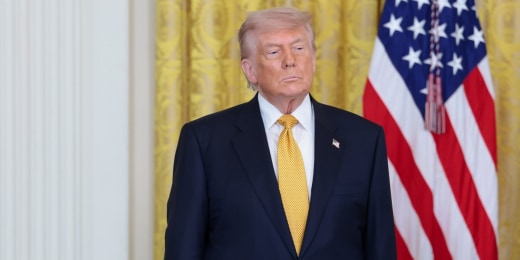
Rep. Julia Letlow, endorsed by Donald Trump, is projected to be the top vote getter in the Louisiana Republican primary for U.S. Senate.
Cassidy fell out of favor with Trump after being one of seven GOP senators who voted to convict him during his second impeachment trial.
Trump has been actively endorsing challengers against Republican critics ahead of the 2026 midterm elections.
President Donald Trump scored another victory May 16 in his quest to purge the Republican Party of critics and dissidents ahead of the 2026 midterm elections.
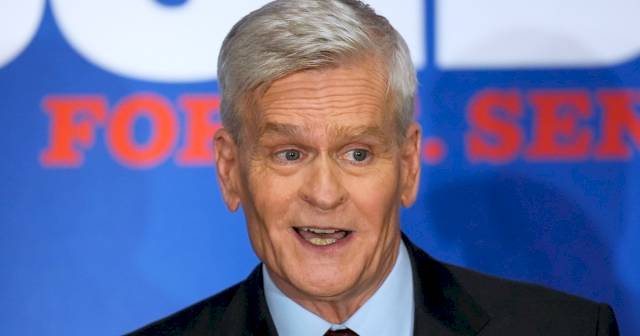
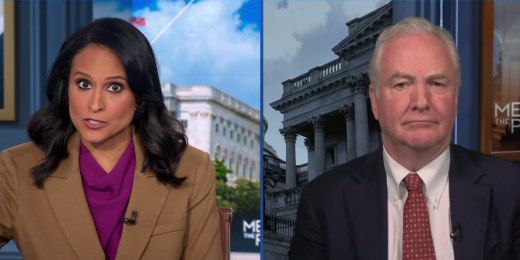
Rep. Julia Letlow, the Trump-endorsed candidate, is projected to be the top vote getter in the Louisiana Republican primary for U.S. Senate, besting incumbent Sen. Bill Cassidy, according to Reuters and NBC News.
Cassidy, a two-term senator, trailed Letlow and state Treasurer John Fleming for much of the GOP contest, according to the polls.
Preliminary election results show Cassidy, a 68-year-old physician, coming in third place behind Fleming, a former Trump administration official from the president’s first term. With over 90% of the Pelican State tally counted, Letlow was holding steady with about 44% of the vote versus Fleming’s roughly 28% and Cassidy’s approximately 25%.
Under Louisiana law, if no candidate clears the 50% threshold the top two finishers run again in a June 27 runoff.
Cassidy is the first GOP congressional incumbent facing Trump’s notorious ire to outright lose their reelection bid this year. Others who’ve publicly criticized the president or opposed nominees and actions of his returning administration, such as Sens. Mitch McConnell, of Kentucky, and Thom Tillis, of North Carolina, have chosen retirement in 2026.
Cassidy’s record is highly rated among conservative-leaning groups but he fell out with Trump after being one of the seven GOP senators who voted to convict him during the second impeachment trial stemming from the Jan. 6, 2021 riot led by the president’s supporters at the U.S. Capitol.
He also had chastised administration officials, such as Health and Human Services Secretary Robert F. Kennedy Jr., in public hearings and questioned the qualifications of Casey Means, the administration’s pick for surgeon general who had to withdraw after being grilled over a lack of support for vaccines.
Trump’s so-called revenge tour across Republican primaries nationwide comes amid declining poll numbers with large swaths of voters outside of his coalition.
‘Disloyal disaster’: Trump blasted Cassidy as voters went to polls
Trump called out Cassidy again as Pelican State voters were flocking to the polls, further underscoring his commitment to dislodging GOP dissenters. He referred to the incumbent senator as a “sleazebag” and “terrible guy” who is bad for the state.
“Senator Bill Cassidy of Louisiana is a disloyal disaster,” Trump said in the May 16 social media post.
Cassidy was on Trump’s good side during his 2020 reelection bid and received the president’s endorsement. That turned for the worse, however, after the Louisiana Republican voted to convict Trump during his second impeachment trial.
“I don’t really think President Trump likes me that much,” Cassidy told reporters last week. “But we work really well together.”
Louisiana Sen. Bill Cassidy was one of the few Republicans who tried to hold Donald Trump accountable after the Jan. 6, 2021, attack on the U.S. Capitol.
“When you participate in democracy, sometimes it doesn’t turn out the way you want it to. But you don’t pout, you don’t whine, you don’t claim the election was stolen,” Cassidy said as applause from supporters overtook him in a speech after his loss. “You don’t manufacture some excuse. You thank the voters for the privilege of representing the state or the country for as long as you’ve had that privilege, and that’s what I’m doing right now.”
Back in February of 2021, Cassidy was one of just seven GOP senators to side against the then former president in the impeachment trial over an incitement of insurrection charge that drove Republicans apart. At that point, weeks removed from winning his seat once again, it seemed possible that by the time Cassidy was up for re-election, if he decided to run at all, Trump would no longer dominate Republican politics as he faced severe backlash over the tumultuous end to his presidency, and his false claims of voter fraud and a stolen 2020 election that spurred a mob of his supporters to storm Capitol Hill.
“Our Constitution and our country is more important than any one person,” Cassidy said in explaining his vote. “I voted to convict President Trump because he is guilty.”
Most of Cassidy’s Republican colleagues went a different direction, and gave Trump a free pass. In doing so, they provided him with a path back to power that he seized upon almost immediately. Cassidy suffered the consequence of his choice Saturday night in a reliably Republican state.
“Louisiana was not pleased with that vote. They took that as a sign that he had turned his back on the Louisiana voters,” GOP Rep. Julia Letlow told reporters before saying that Trump, who endorsed her to replace Cassidy, is “the best president of my lifetime.”
More than five years removed from a second impeachment trial and acquittal, Trump’s influence over the Republican party is as fierce as ever, a march out of the political wilderness that saw him take back the White House and win every presidential battleground in the 2024 election. Republicans in Congress uneasy with him after Jan. 6 have by and large gathered behind him. Almost all of those who felt differently have either lost office or found themselves largely excommunicated from the party.
Facing voters in an election for the first time since his vote, Cassidy contended the kind of storm that made the unlikely already seem impossible.
Since his last win, Republicans overhauled the state’s wonky style of elections, meaning that Cassidy needed to win over the kind of GOP voters who are the backbone of Trump’s base of support if he wanted to continue on in Washington. His third place finish in the GOP primary this weekend showed how tall an order that was.
Trump publicly coaxed Letlow to enter the race, endorsing her before she even officially announced, giving Cassidy a stark challenge. The state’s GOP governor also backed Letlow, making a bleak campaign for Cassidy even lonelier.
Cassidy adjusted his tune as the president returned to power. In a telling moment early during Trump’s second term last year, Cassidy, a physician, ended up supporting Robert F. Kennedy Jr. as the administration’s leader for health and human services despite clear public concerns about the Trump pick’s anti-vaccine record.
The only Republicans still in Congress today who defied Trump on impeachment have all been saved by unique circumstances, benefiting from different state election practices or representing seats that they alone, as relative moderates, may be able to hold. The rest have either skipped running again or been rejected by voters.
That track record underlines a trend that’s been borne out by Trump’s second term in the White House. Republicans have seen firsthand what happens to those who challenge or defy the president. And even amid a presidency relying heavy on the kind of executive authority that is typically anathema to the GOP, accountability has been few and far between.
Federal campaign finance records show that more than $17 million in outside spending went towards trying to influence Saturday’s primary in Louisiana, with a large amount of that opposing Letlow. That money couldn’t even help get Cassidy to a one-on-one primary runoff. Instead he watched his fellow Republicans side with Letlow and state treasurer John Fleming, both of whom made it to that next stage. Fleming, a former member of Congress who served in Trump’s first administration, loaned his campaign more than $10 million as he tried to prove to voters that he was the real Trump acolyte instead of Letlow.
Fleming’s campaign emphasized his allegiance to Trump in the aftermath of Jan. 6 when the president’s political future seemed so tenuous, claiming on its website that “John stood by President Trump until the end of his first term, and was the last staffer to leave the White House on January 20, 2021.” His campaign even touted that Fleming “was MAGA long before MAGA was cool.”
It’s rare for this kind of loss to happen to a senator, any senator, in recent years. One has to go all the way back to 2012 when Richard Lugar lost a Republican primary in Indiana, to find an incumbent who lost a primary battle after having been elected to the statewide seat before.
When Cassidy took the stage Saturday amid defeat, he gave the kind of speech that was humble, self-effacing, but still with enough implicit sharp elbows towards the president to try and acknowledge why the Louisiana senator had just been rejected by voters. He made appeals to character, integrity and the ideals of leadership, stressed the lofty ideals that are supposed to tie the nation together — the same kind of tone Trump’s opponents struck back in the 2016 Republican primary, as they dropped out, one by one, and brought the country, and the party, to where it is today.
Cassidy’s loss comes just a few weeks after Trump got revenge on some of the Indiana GOP state senators who had defied him late last year and voted down a plan to dismantle the state’s two Democratic congressional districts.
All of that underlines that Trump’s control over Republicans may be sacrosanct still, even if his ability to sway the kind of general election voters his party needs this fall to keep control of Congress may be more fragile and tenuous.
For now though, Trump has called on Republicans to oust those he’s deemed not fit to be a part of his party time and again.
They’re still more than willing, in most cases, to oblige him.
Trump celebrated Cassidy’s defeat, saying in a social media post overnight that the senator “voted to impeach me on preposterous charges that were fake then, and now, are criminally insane!”
“His disloyalty to the man who got him elected is now a part of legend,” Trump said.
Hunter Woodall covers politics for MS NOW. He’s reported on politics and presidential campaigns for The Associated Press and CBS News and reported on Congress for The Minnesota Star Tribune.
Only the Taiwanese people can decide their future, Taiwan’s president said Sunday, afterPresident Donald Trump appeared to raise doubts about long-standing U.S. policy on his trip to China.
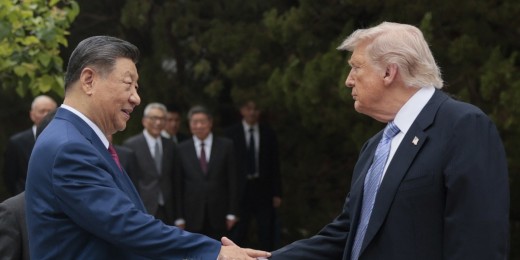
Trump said he had not yet decided whether to proceed with arms sales to Taiwan, a self-ruling democracy that Beijing has vowed to control by force if necessary, after his summit with Chinese President Xi Jinping in Beijing.
Trump also said Friday he was “not looking to have somebody go independent” when asked about whether the U.S. would come to Taiwan’s rescue in the event of a Chinese invasion. “We’re supposed to travel 9,500 miles to fight a war. I’m not looking for that,” he told Fox News, adding that he wants both sides to “cool down.”
Taiwan’s President Lai Ching-te said Sunday that the term “Taiwan independence” means the island neither belongs to nor is subordinate to Beijing, adding that only the Taiwanese people can decide their future.
Speaking at an event to mark the 40th anniversary of his party’s founding, Lai did not refer directly to Trump in his speech or answer questions shouted at him by reporters.
Taiwan “is a sovereign and independent democratic nation, and is not subordinate to the People’s Republic of China,” its foreign ministry said Saturday in a statement.
During Trump’s visit to Beijing, Xi called Taiwan “the most important issue in China-U.S. relations,” according to Chinese state media, warning that if not handled properly, the two sides could face “clashes and even conflicts.”
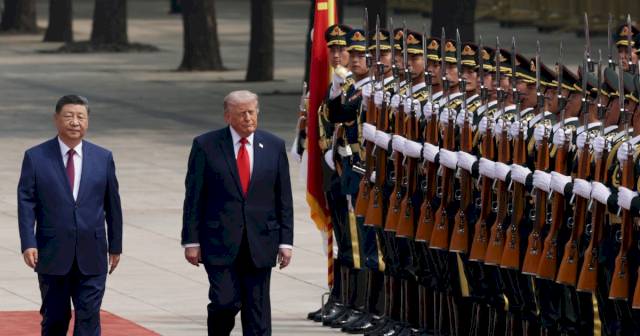
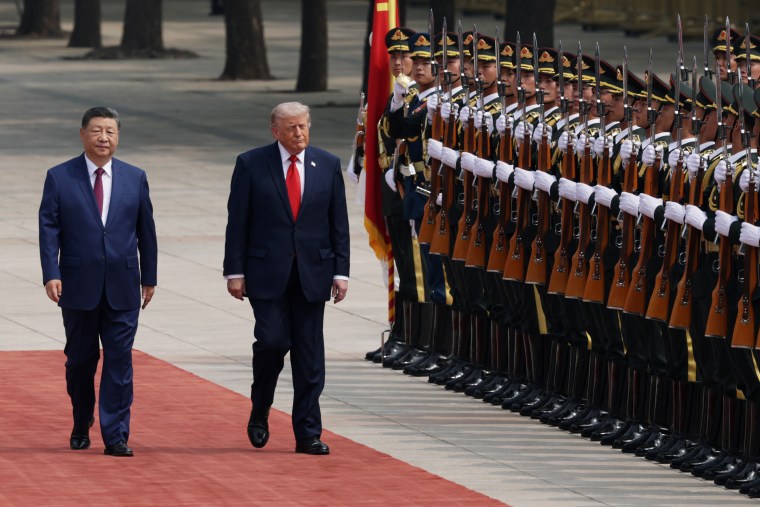
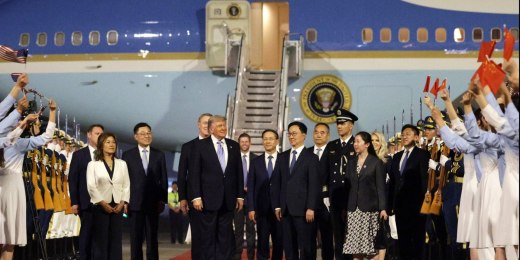
President Donald Trump reviews an honor guard with Chinese President Xi Jinping on May 14.Alex Wong / Getty Images
Mishandling Taiwan would mean “putting the entire relationship in great jeopardy,” Xi told Trump during the meeting, according to a readout from China’s foreign ministry.
Like most countries, the U.S. has no formal relations with Taiwan, but it is the island’s biggest international backer and arms supplier, a stance that has led to pressure from China.
The U.S. has no mutual defense treaty with Taiwan and has long maintained a policy of “strategic ambiguity” when it comes to whether its military would defend the island directly in the event of a Chinese attack.
Trump said Friday that he had not yet made a “determination” on whether a proposed $14 billion arms package to Taiwan will move forward.
“I’ll make a determination over the next fairly short period,” Trump told reporters on Air Force One while en route to Alaska, adding that he would need to speak with Lai before making a final decision.
Trump said that he spoke “a lot” about Taiwan with Xi during their summit and that he does not believe there is a risk of conflict with China over the Beijing-claimed island.
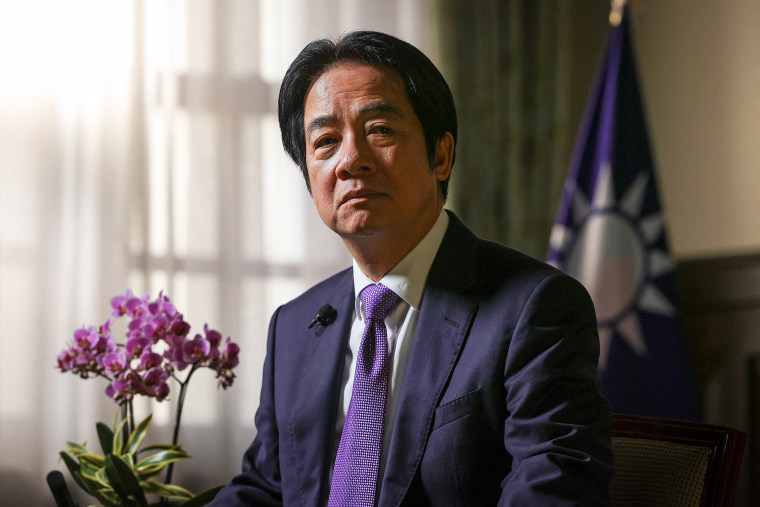
Taiwan’s President Lai Ching-te speaks with AFP in Taipei in February.Yu Chen Cheng / AFP via Getty Images
Despite the sharper language, Trump administration officials have said repeatedly that U.S. policy on Taiwan is not expected to change.
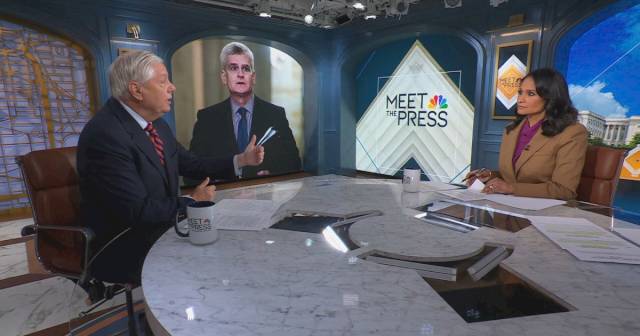
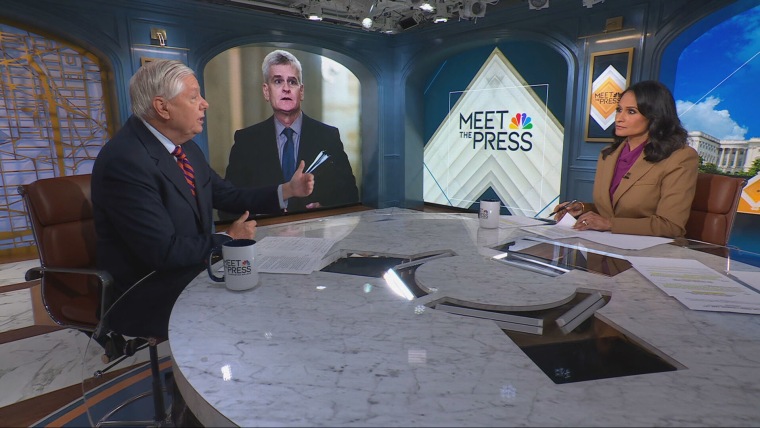
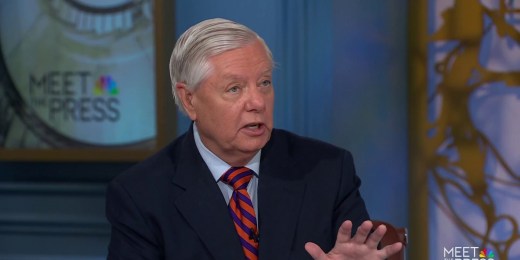
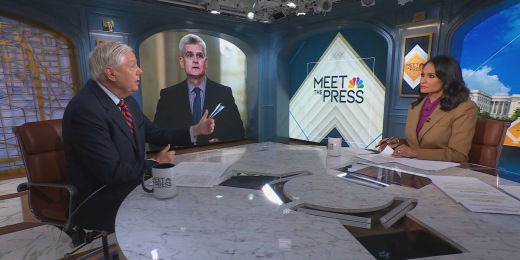
Sen. Lindsey Graham, R-S.C., told NBC News’ “Meet the Press” on Sunday that it was for Trump to decide whether arms sales should continue, but encouraged him “to make Taiwan strong so we can deter aggression.”
He warned that “if you give an inch” to China on Taiwan, “I think they’ll take a mile, but we’re not looking for war, we’re not looking for conflict. I want to keep the status quo.”
He also told moderator Kristen Welker that the U.S. should approve a package of “tariffs and sanctions” against China that would apply in the event of an invasion.
Taiwan’s presidential office spokesperson Karen Kuo said Saturday that the office had received “multiple reaffirmations” from the U.S., including from Trump and Secretary of State Marco Rubio, “that the consistent U.S. policy and position toward Taiwan remain unchanged.”
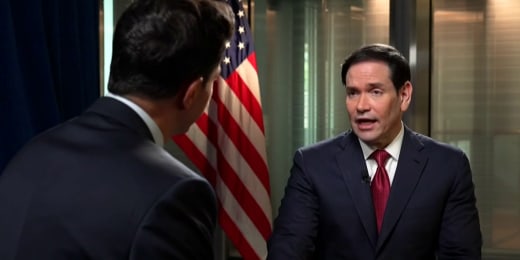
Rubio told NBC News on Thursday that Washington’s policy toward the island had not changed following Trump’s meeting with Xi in Beijing.
After the interview, Taiwan’s Foreign Ministry said Foreign Minister Lin Chia-lung thanked the U.S. for repeatedly expressing support for peace and stability across the Taiwan Strait, according to Taiwan’s government-funded Central News Agency.
FORSUBSCRIBERS
Key takeaways from Trump’s trip to China
03:08
Taiwan was never conquered by the Chinese Communist Party when it took control of mainland China in 1949. The defeated Kuomintang fled to the island and established de facto self-rule there.
Reclaiming the island, 100 miles from the coast of China, has been a long-term policy goal for Beijing. Taiwan’s China-friendly opposition leader visited Beijing in April ahead of Trump’s visit, saying the top priority must be averting a war.
Trump “didn’t indicate in the slightest that he was going to bat for Taiwan,” H.A. Hellyer, a senior associate fellow at the Royal United Services Institute, a defense and security think tank in London, told NBC News.
“The broader approach of the United States has been, ‘Let’s focus our attention on our hemisphere, where we expect to have primacy as compared to everybody else,’” he said. But the supporting argument for that, he added, means that others, like China, “will have primacy in their region.”
He offered no reason for the move, which blindsided NATO, but his decision came amid an escalating dispute with German Chancellor Friedrich Merz over the U.S.-Israeli war on Iran, and Trump’s anger that European allies have been reluctant to get involved in the conflict in the Middle East.
The second Trump administration has “really been a nail in the coffin when it comes to how American allies worldwide view American power,” added Hellyer.
Workers renovating one of Washington DC’s most historically symbolic sites in a project ordered by Donald Trump may be risking their safety as they race to finish on time for the US’s 250thanniversary celebrations, a union monitoring the site has warned.
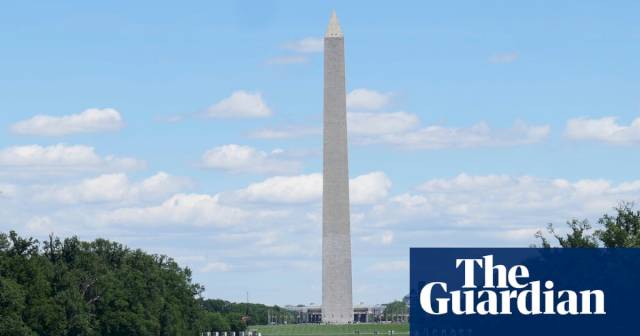
Trade union scrutiny has focused on the reflecting pool on the US capital’s National Mall – scene of Martin Luther King’s 1963 “I have a dream speech” – after it was drained of water and fenced off from the public to allow contractors the chance to upgrade it by 4 July.
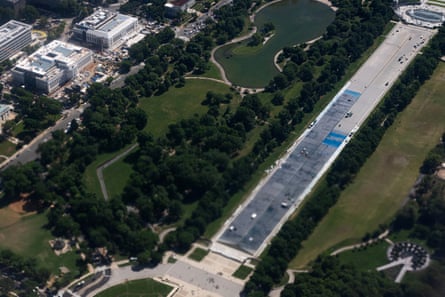
The pool, a Washington landmark since it was dug in 1922, is currently the site of frenetic repair activity, its usual watery surface occupied instead by vehicle and work equipment. Tourists visiting the area have found their view obscured by black tarpaulin.
Leaks and algae blooms have for decades dogged the 2,000ft pool, which sits between the Lincoln and George Washington memorial monuments, turning its water green and confounding previous expensive government-commissioned repair schemes, including one commissioned by Barack Obama’s administration.
Last month, the Trump administration – vowing to solve the problem once and for all – awarded a no-bid contract to waterproof and repaint the pool to a Virginia-based company, Atlantic Industrial Coatings.
The president told journalists the company had successfully carried out work on a swimming pool at his golf club in Sterling, Virginia. In a patriotic flourish, he ordered the firm to repaint the pool’s floor “American flag blue”.
Other companies that do similar work have expressed indignation over being denied the chance to compete for the contract, according to Herbert Zaldivar, the business development director of the International Union of Painters and Allied Trades, who has visited the site as an observer.
Now the award is threatening to boomerang amid disclosures that Trump drastically understated the contract’s cost, and reports that officials at the Department of the Interior – which has responsibility for the site – are dissatisfied with the company’s work.
The New York Times reported that interior department staff members had complained of bubbles and small holes appearing in one of the layers meant to waterproof the pool. Documents also revealed concerns over varying shades of blue mottling the pool’s flooring, resulting from an uneven application of tinted waterproofing and fears that a 22 May deadline for completion of the work may be missed.
Meanwhile, the contract’s true cost – which Trump initially told journalists would be $1.8m – has been revealed to be $13.1m. Amid the controversy, Trump has distanced himself from the company, contradicting previous statements by denying that he had ever used it, and insisting he was not involved in awarding the contract.
An aerial view of the ongoing renovations to the Lincoln Memorial reflecting pool, as workers add a layer of blue paint in Washington DC on Friday. Photograph: Aaron Schwartz/Reuters
Visiting the site on a blustery day last week, Zaldivar said he had been contacted by union-affiliated companies anxious to know why the usual bidding process had been circumvented.
“I’m here to verify if the company is in compliance and following the right guidelines,” the union representative said. “It’s very rare that a job like this, which is a publicly funded contract, doesn’t go to a competitive bid.
“This didn’t go through the right processes, so we lost the chance for a union-affiliated contractor to be part of the competition.”
The federal government has powers to award contracts on a non-competitive basis, but only when there is a risk of competition causing “serious injury” to the government.
Atlantic Industrial Coatings, which is described on its website as a “woman-owned advanced coatings application company”, has never previously been awarded a federal government contract, according to official databases.
Zaldivar said he was concerned for the safety of the workers on the project, none of whom had been willing to talk to him. “They are afraid to touch the subject, although I will continue to come and try to have conversations with workers,” he said. “With this project, they are trying to rush on a timescale that is most likely to leave some liability with the contractor.
“The chemicals are hazardous. My concern is usually the level of risk when it’s rushed. Are workers taking the rightful steps to protect themselves?”
Richard Jones, a company supervisor working on the site, answered “no comment” to a series of questions posed by the Guardian and referred all inquires to the National Park Service. “That’s who we have a contract with,” he said.
A spokesperson for the Department of the Interior – the park service’s parent agency – said: “There is no merit to these accusations. Like every federal agency, we follow all laws and regulations designed to ensure fair treatment and safety in the workplace.
“Unlike Barack Obama’s over $35m, 18-month long failed effort to fix the reflecting pool – which failed immediately, President Trump is an expert builder and will get this job done for many generations to come.”
Surveying the cordoned-off scene from near the Lincoln Memorial, Al Havinga, a retired civil servant with the US Environmental Protection Agency on a cycle ride with two friends, voiced fears about air pollution arising from the coating materials being used.
“All this stuff is volatile,” he said. “People are breathing in poisonous chemicals. There’s no consideration to the risk to the public in applying this stuff. I would guess they are using volatile organic chemicals. There’s no information on that. It’s opaque.”
Tourists visiting from afar voiced a mixture of disappointment and bewilderment at the sight. “It’s hugely disappointing and ruining the historical integrity,” said Michelle Criswell, a federal government worker from Oklahoma City touring the site with her husband, Michael, referring to the site’s importance in the campaign for Black civil rights.
Criswell, who is African American, added: “I came here for the history and had been looking forward to seeing this site for a while and that’s what I see – a row of black tarp. I feel that everything that’s being done is being done intentionally.”
The sketch show’s season finale on May 16 opened with a “Christmas Carol”-style sketch, in which President Donald Trump (played by James Austin Johnson) took a nap in the Oval Office and imagined himself being visited by a ghostly Epstein, played by host and former cast member Ferrell.
“Don’t worry, Donald: It’s me, your best friend, Jeffrey Epstein!” he said.
After the pair did some catching up, Ferrell’s Epstein said he and Trump had “some fun times together.” He then showed Trump a few visions of the future, starting with Kristi Noem (Ashley Padilla) at her new job: selling vacuum cleaners on HSN.
“It’s the best way to clean up that mess your dog made, besides a gun,” she said.
Next up was a vision of Pete Hegseth (Colin Jost) hosting a podcast with FBI Director Kash Patel (Aziz Ansari), while Patel was drinking from a giant beer bong. Epstein also informed Trump that six months in the future, the war in Iran is over, and “we came in second.”
“Just remember, no matter how many wars you start, or how bad you tank the economy as a distraction, people will always associate you with me. And that, my dear, close friend, is a beautiful thing,” Ferrell’s Epstein said, leading them to launch into a performance of “Just the Two of Us.”
The sketch marked a comeback for Johnson’s impression of Trump, who, in an unusual move for the show, had not been featured in the last two “SNL” episodes. The May 9 cold open focused on Matt Damon as Supreme Court Justice Brett Kavanaugh, who bonded at a bar with Jost’s Hegseth and Ansari’s Kash Patel. Ansari, in a surprise appearance, debuted his impression of the FBI director on the previous week’s “SNL.”
Ferrell hosted the “SNL” season finale with musical guest Paul McCartney. The “Anchorman” star began his monologue with a bit where Chad Smith of the Red Hot Chili Peppers came out and pretended to be him, only for Ferrell to take over and act like he was totally thrown off.
McCartney ultimately joined Ferrell on stage, but extended the bit by acting like he still thought Ferrell was Smith. “I have a question: What do you think you’re doing, Chad?” the Beatles legend asked from the audience.
When will ‘SNL’ return for Season 52?
The May 16 finale tied a bow on the 51st season of “SNL.” Coming off a milestone anniversary season, and after a summer shakeup to its cast, the show this year brought in a mix of reliable, returning hosts like Ariana Grande and Melissa McCarthy and first-timers like Sabrina Carpenter and Finn Wolfhard.
But Season 51 may be remembered as the season of Ashley Padilla. In her second year on “SNL,” Padilla racked up one memorable sketch after another, from one about a woman with a terrible haircut to another about an annoying coworker who keeps awkwardly butting in during lunch. The comedian, who has also played Karoline Leavitt on the show, is widely considered the breakout star among the show’s recent additions, and in April, former “SNL” writer Robert Smigel praised her on X as “a miracle.”
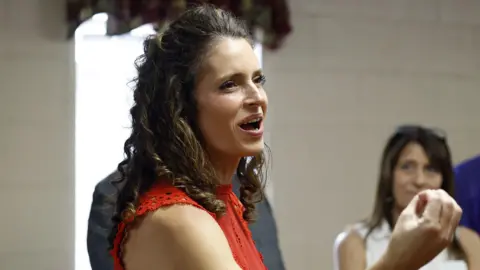
Trump-backed challenger defeats Republican senator who voted to convict president
Tyler Kaufman/Getty Images
Julia Letlow will advance to a runoff next month
A Trump-backed challenger has defeated a two-term Republican senator who voted to convict the president at his 2021 impeachment trial.
Congresswoman Julia Letlow will advance to a runoff next month, ousting incumbent Bill Cassidy, who President Donald Trump branded a “disloyal disaster” ahead of Louisiana’s high-stakes contest on Saturday.
State treasurer John Fleming, another Trump-aligned candidate, also advanced to the Republican runoff for Louisiana’s Senate seat.
The top two candidates, Letlow and Fleming, will face off again in late June as neither won a simple majority. The candidate who wins the runoff will then run against a Democratic candidate in the general election.
Cassidy, 68, was one of seven Senate Republicans who voted to convict Trump when the president was impeached after the 6 January attack on the Capitol in 2021. Trump was acquitted after the Senate voted 57-43, short of the two-thirds majority required.
Of the seven Republicans who voted to convict him, only three still serve in the Senate: Lisa Murkowski of Alaska, who survived a primary challenge in 2022; Susan Collins of Maine; and Bill Cassidy.
During his re-election campaign, the Louisiana senator sought to repair his strained relationship with Trump.
“I don’t really think President Trump likes me that much, but we work really well together,” Cassidy told reporters last week, pointing to several bills he sponsored that were later signed into law by the president.
But Trump had made it clear he wanted Cassidy gone, and in January encouraged Letlow, 45, to challenge the senator.
“I want to say thank you to a very special man – the best president this country has ever had, President Donald Trump,” Letlow said in a speech after the late evening results.
In his election night remarks, Cassidy did not mention Trump by name. But he did allude to the president and his false claims that the 2020 election had been stolen.
“When you participate in democracy, sometimes it doesn’t turn out the way you want it to,” Cassidy told supporters in Baton Rouge. “But you don’t pout. You don’t whine. You don’t claim that an election was stolen from you.”
American leaders, he said, should not be focused on loyalty to one individual, but rather to the wellbeing of the general public.
“And if someone doesn’t understand that and attempts to control others through using the levers of power, they’re about serving themselves,” he said. “They’re not about serving us. And that person is not qualified to be a leader.”
Trump cheered the results on Truth Social, his social media platform, writing, “it’s nice to see that his political career is OVER!”
“That’s what you get by voting to Impeach an innocent man,” the president added in another post.
With the contest now headed to a runoff, it remains unclear whether Trump will stay actively engaged in the race.
Letlow, who became the first Republican woman elected to represent Louisiana in Congress in 2021, won 45% of the vote in the primary, US media report.
Flaming, her rival in the June primary runoff, previously was a representative for Louisiana in Congress and also worked in the first Trump administration.
Fleming narrowly beat Cassidy with around 28% of the vote, compared to Cassidy’s 25%, according to US media.
“Yesterday, the people of Louisiana proved that a grassroots conservative can still compete, and win, even when the political establishment and outside dark money groups spend millions of dollars trying to destroy him,” Fleming said in a statement on Sunday.
When Ángel Linares heard a strange buzz followed by an explosion, his first thought was that neighbours were setting off fireworks to celebrate the new year.
Then his windows shattered, the building’s walls shook and its facade was ripped off, sending him flying on to the ground of an apartment suddenly reduced to rubble. His 85-year-old mother, Jesucita, feared Venezuela’s northern coast had been devastated by an earthquake, like the one she remembers from 1967.
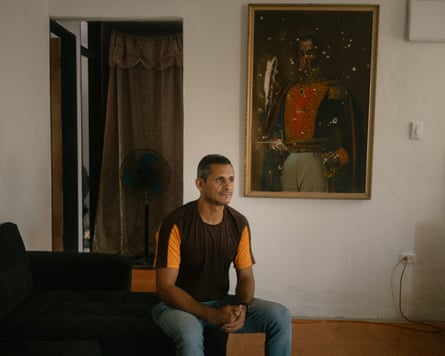
Ángel Linares, 48, in his rebuilt apartment in Catia La Mar. Photograph: Andrea Hernández Briceño/The Guardian
Next door, Elizabeth Herrera jumped out of bed in her pyjamas and realised something more sinister was afoot when the post-explosion silence was filled with the sound of gunfire: “Tah-tah-tah-tah-tah-po-po-tah-tah-tah.”
“Is it a coup? … I don’t believe ‘Papá Trump’ would have dared to invade,” Herrera remembers her husband speculating as their housing estate’s panicked residents struggled to make sense of the mayhem just before 2am on 3 January.
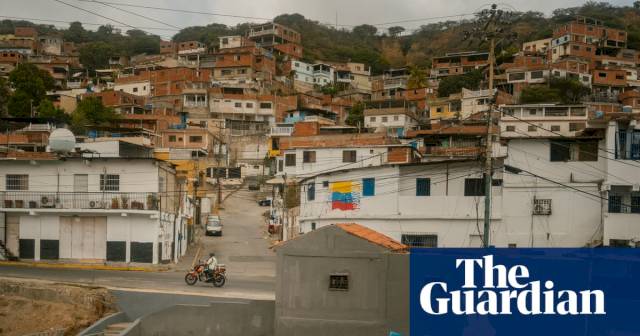
All four residents of the Urbanización Rómulo Gallegos project in Catia La Mar, a seaside town 20 miles north of Caracas, were wrong. Donald Trump had indeed ordered an invasion of Venezuela, albeit a lightning-fast one to abduct the country’s then president, Nicolás Maduro.
Damaged buildings in the Urbanización Rómulo Gallegos housing project in Catia La Mar. Photograph: Ángel Linares
Their community found itself at the eye of the storm as air-to-surface missiles rained down on defence and radar systems and radars along the country’s Caribbean coast and helicopter-borne Delta Force fighters swept south towards the capital. “They were 10 minutes that felt like an interminable hour,” said Herrera, who lost two elderly neighbours during the attack that was apparently targeting military installations on a nearby hill.
She recalled her autistic son’s anguish as they rushed out into the darkness and sheltered in a nearby school. “Mummy, are we the baddies? Are Venezuelans the baddies? Are they going to kill us?” he asked.
“I told him, ‘No, it’s probably just an issue between the White House and Miraflores,’” she replied, referring to Venezuela’s presidential palace.
Elizabeth Herrera outside her home in Catia La Mar. Photograph: Andrea Hernández Briceño/The Guardian
“So why are they shooting at us?” her son insisted. “In his autistic mind … it made no sense that if this was a thing between governments, why were the missiles falling here?”
More than four months after Operation Absolute Resolve, Herrera and her neighbours are far from the only ones still trying to make sense of Trump’s intervention and its impact on the future of a country already reeling from years of poverty, hunger and repression.
Across Venezuela, ordinary citizens, opposition activists, diplomats, businesspeople and members of Maduro’s movement are trying to fathom the bewildering new era ushered in by the autocrat’s capture and Trump’s unexpected decision to recognise his vice-president, Delcy Rodríguez, who has held power since.
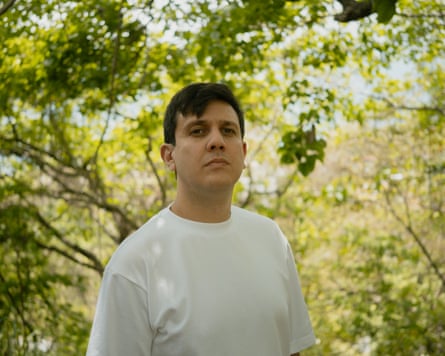
“Everything is so confusing …. This feels sometimes like an illusion,” said Jesús Armas, a former political prisoner and ally of the exiled opposition leader and Nobel laureate, María Corina Machado, who had hoped to take power but has been sidelined from Venezuela’s post-Maduro transformation.
Jesús Armas.
Changes have undoubtedly occurred since Maduro’s 13-year rule was brought to an end during a two-and-a-half hour blitz that left scores of Cuban and Venezuelan troops and at least three civilians dead.
After years of increasingly despotic rule, which deepened after Maduro was accused of stealing the 2024 presidential election, an incipient political thaw has descended.
Murals of Maduro have been painted over, his portraits quietly removed from some government offices, and foreign journalists are being allowed into the country for the first time since the 2024 vote.
A mural of Nicolás Maduro and his wife Cilia in Catia La Mar. Photograph: Andrea Hernández Briceño/The Guardian
Hundreds of political prisoners have been freed and dissidents have emerged from hiding or returned from exile to continue their push for a transition back to democracy.
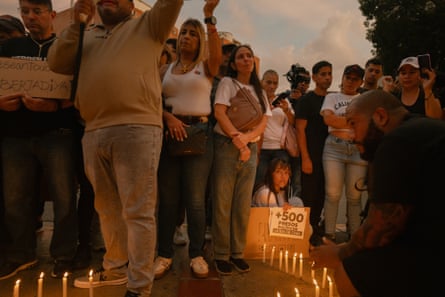
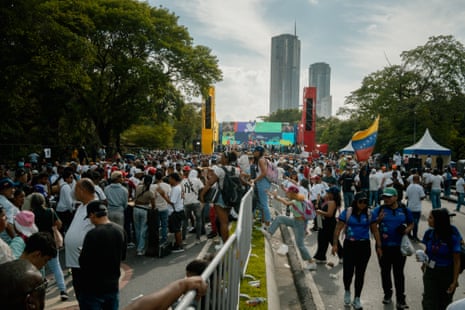
On a recent evening, hundreds of people gathered outside Venezuela’s most notorious political prison – a shopping mall-turned-torture centre called El Helicoide – for a previously unthinkable protest to demand fresh elections and the release of the estimated 500 detainees remaining.
“People have lost their fear,” said Jeisi Blanco, a human rights campaigner, as colleagues chalked the names of those still incarcerated on the pavement under the gaze of police who filmed participants but did not intervene.
Jeisi Blanco holds a sign that says “+500 political prisoners far from home” outside El Helicoide. Photograph: Andrea Hernández Briceño/The Guardian
“They aren’t just statistics, they are people with stories and with families who have spent more than three years behind bars,” she said.
Activist writes the names of political prisoners still incarcerated in a vigil outside El Helicoide
“We’re going to bring back freedom … and I know Venezuela will be a democracy in the next few months,” he said, insisting Machado would return in the coming weeks to tour Venezuela, rally supporters and complete its political transformation.
US officials also celebrate what many here call the “new political moment” enabled by Trump’s audacious, although, to many, illegal raid. “The president likes action. He also likes deals, and he likes progress, and we’re seeing all of that in a very short period of time,” said Jarrod Agen, the director of Trump’s national energy dominance council, after arriving in Caracas on the first US commercial flight to the oil-rich country in more than seven years.
Jarrod Agen speaking to reporters in Caracas. Photograph: Andrea Hernández Briceño/The Guardian
“We’re moving at Trump speed … I’m super excited,” he said, flanked by smiling Venezuelan officials who have spent years at loggerheads with their US counterparts.
But alongside the excitement and optimism there is bafflement and trepidation about the fact that Maduro’s rendition led not to fully fledged regime change or democratisation, but to a peculiar rapprochement between the fallen dictator’s authoritarian allies and their longtime foes in Washington.
Trump has repeatedly praised Rodríguez as a “terrific” partner, while Venezuela’s new leader has given no indication that fresh elections are coming. “I don’t know, some time,” she deflected when asked recently when a vote might be held.
Caracas-based diplomats voice astonishment at the political handbrake turn performed by Maduro’s supposedly anti-imperialist successors, who have rolled out the red carpet for Trump officials – and allowed Venezuela to be turned into what some have called a US protectorate – with virtually no explanation.
“It’s the theatre of the absurd, it’s Beckett,” said one foreign envoy, recalling how, after Japan’s 1945 surrender to allied forces, Emperor Hirohito urged citizens to “bear the unbearable and endure the unendurable” to salvage their nation’s future.
Supporters gather to hear Delcy Rodríguez speak at a rally in Caracas in April. Photograph: Andrea Hernández Briceño/The Guardian
Rodríguez’s team had offered no such justification for embracing Trump, the diplomat said: “They just went from A to B without explaining why.”
Experts say the once improbable marriage of convenience between Washington and Caracas is rooted in Trump’s desire to secure access to Venezuela’s vast oil reserves and for a foreign policy “win” amid the debacle in Iran, and Rodríguez’s determination to retain power and save the political movement Hugo Chávez founded more than 25 years ago.
“The purpose is not to be the cat’s paw of the United States, to be a partner of the United States,” said Tom Shannon, a US diplomat who has worked with Venezuela since the 90s.
“The purpose is to maintain and preserve the Bolivarian revolution, to the extent that it can be preserved, and to do what has to be done in order for that revolution to be preserved and for the political leadership that has defined it to be able to survive.”
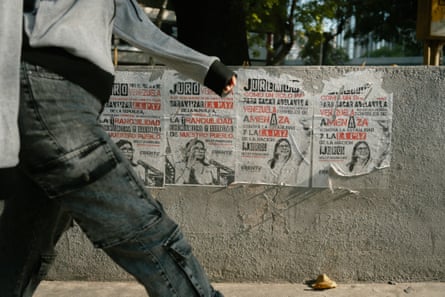
A man walks past posters celebrating Delcy Rodríguez in Caracas. Photograph: Andrea Hernández Briceño/The Guardian
“I’m sure she feels it to be humiliating,” he said of Rodríguez, whom he has met numerous times. “She finds herself in a position that I’m sure she sees as politically complicated and difficult, but historic in terms of the trajectory of the Bolivarian revolution.”
For opponents of the movement, who blame it for an economic and humanitarian disaster that has forced about a quarter of the country’s population to flee abroad, the détente and incomplete transition have left a bitter taste.
Sitting outside her home, next to a government memorial to the victims of Trump’s attack, Herrera recalled her initial exhilaration at what seemed like imminent change, even as parts of her housing estate lay ruined.
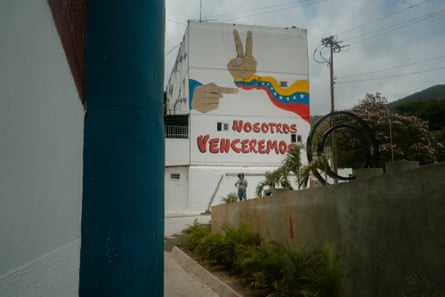
“I thought it was all over … I thought, thank goodness we’re going to escape this situation which is strangling us,” she said, a freshly painted government mural behind her bearing the message: “We will prevail”.
Elizabeth Herrera standing in front a government mural bearing the slogan ‘We will prevail’. Photograph: Andrea Hernández Briceño/The Guardian
But as the days passed, the excitement turned to dismay. “On the news they talk about how much oil they’ve taken and how much gold … yet we’re stuck in the same place … [If Trump came here] I’d ask him to think about Venezuelans and not just the natural resources that Venezuela has,” she said.
“I feel hope but I also feel fear … Our fear is harbouring hope that the situation is going to change and then this not happening.”
Sitting on a sofa beside a shrapnel-pocked portrait of Venezuela’s liberation hero Simón Bolívar, Jesucita Linares said her main worry was a repeat attack.
In preparation, she has turned her shopping trolley into an emergency go-bag filled with clothes and medicine. “I’ve been asking God for this never to happen again,” said Linares. “But you never really know.”