Opinion | Trump passport: Free entry to the narcissists’ hall of fame The Washington Post
Author: admin
-
Trump, Xi meeting to be packed with slew of hot topics – The Center Square
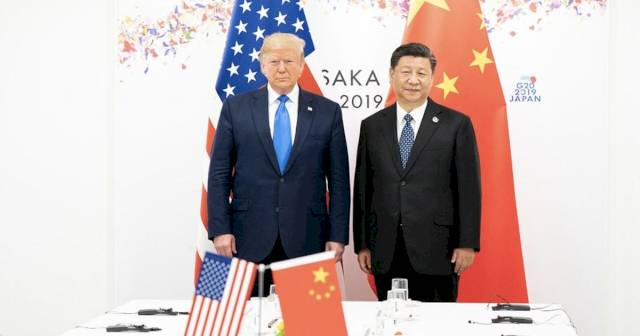
(The Center Square) – After postponing a scheduled trip to China from March to May due to the U.S. strikes on Iran, President Donald Trump is set to visit the country for the first time since 2017 and is heading into the meeting with a long agenda.
While the two countries are often seen at odds, Trump maintains he has a good relationship with Chinese President Xi Jinping.
The two leaders are expected to cover several topics during the two-day visit, including trade, technology, human rights, security and Iran.
The president heads into the meeting with a trade deficit with China of $202.1 billion in 2025, according to the Office of the United States Trade Representative. China is the third-largest trade partner with the U.S. Trump has tried to close that gap with his tariffs, but has run into legal roadblocks in court over the legality of his tariff policies.
Last fall, when the two leaders met, they agreed on a handful of key trade issues, including China’s purchase of American soybeans and a rare earth deal.
Trump has even proposed establishing a Board of Trade between the two nations to address the trade deficit, among other things.
Aside from trade, technology will likely be another top issue during the visit, with the U.S. and China locked in a race for artificial intelligence. Trump is reportedly inviting several tech CEOs to attend meetings with the leaders.
Despite trade being a top issue with China, Iran and Russia, particularly Iran, will likely be a topic of discussion as China has been aligned with the Islamic Republic.
Before the U.S. Naval blockade of Iranian ports, China was Iran’s largest oil customer, accounting for about 90% of Iran’s oil exports, according to the U.S.-China Economic and Security Review Commission.
Iranian crude oil accounts for about 12% of China’s total crude oil imports, according to the Center for Global Energy Policy at Columbia. However, China imports nearly half of its crude oil from Middle Eastern countries, including Saudi Arabia, United Arab Emirates, Oman, Kuwait and Qatar.
With nearly 50% of China’s crude oil imports relying on transit through the Strait of Hormuz, Trump will likely lean on China’s influence with Iran to put pressure on the Islamic Republic to clear the vital waterway.
The president could also use the visit to discuss China’s reported military support of Iran. In April, the president wrote in a Truth Social post that “China have agreed not to send weapons to Iran,” however, following the implementation of the blockade on Iranian ports, U.S. forces intercepted a ship inbound for Iran carrying what Trump describes as a “gift” from China to Iran.
Trump told reporters he was “a little surprised” at China after what he thought was an “understanding” with Xi.
When Trump and Xi met last fall, Trump made fentanyl a key focus of their meeting. Before the meeting, the president imposed a 20% tariff on China for not taking adequate action to curb the production of the chemicals to make fentanyl.
Following the meeting, the president felt confident that China would curb the flow of trafficked chemicals, so he sliced the tariffs in half to 10%.
Trump also has vowed to bring some of China’s human rights abuses back into the spotlight, with the imprisonment of political prisoners. The president has vowed to address the imprisonment of high-profile individuals, including Ezra Jin Mingri, a Christian pastor; Hong Kong political activist Jimmy Lai; and Gulshan Abbas, a Uyghur doctor.
The leaders are scheduled to meet in Beijing May 14-15. Trump previously indicated Xi plans to travel to the U.S. for another meeting.
-
How the Trump White House works against itself in its efforts to prevent overdoses – The Guardian
Within just a few weeks, the Trump administration has proposed multiple contradictory policies related to overdose prevention – some that could help save lives and others that experts say could further strain health resources and put people at risk for overdose.
These policies include a new prohibition on funding for fentanyl test strips, which help people avoid overdoses; proposed budget cuts that would gut the country’s overdose prevention efforts; and an ambitious drug control strategy that will be impossible to implement if the aforementioned cuts go through.
An April letter from the Substance Abuse and Mental Health Services Administration (Samhsa) indicated the agency would no longer fund test strips for fentanyl and other dangerous adulterants that are “intended for use by people using drugs”. Dr Nabarun Dasgupta, director of the University of North Carolina’s Opioid Data Lab, said defunding test strips “is a win for the cartels”, noting that it will take away people’s ability to identify impure products and flag it to their dealers.
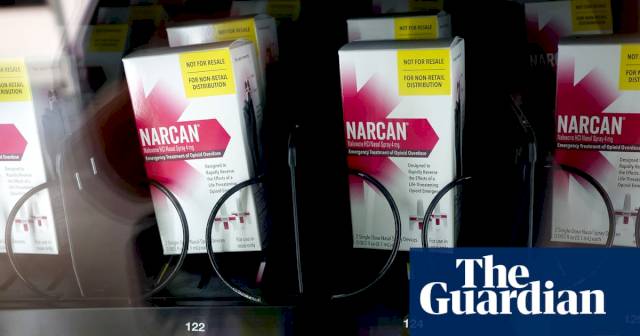
This is the latest in a series of Trump administration attacks on harm reduction – a public health strategy first pioneered by Aids activists that helps people reduce the inherent risks that come with sex and drug use. Over the past few years, public health departments across the country have helped people prevent overdoses by ramping up harm reduction interventions such as test strips, which allow people to test their drug supply and avoid overdosing; nasal naloxone, an easy-to-administer nose spray that can reverse opioid overdoses; and public health messaging to “never use alone”, which helps ensure someone is there to administer naloxone in case of an overdose.
The Trump administration appears to be stripping away these interventions one by one.
In January, the Centers for Disease Control and Prevention (CDC) moved to block “never use alone” messaging while simultaneously ensuring that it would still consider supporting fentanyl test strips. Now Samhsa is stripping funding for fentanyl test strips, which can help people avoid overdosing altogether, while emphasizing that it will continue to support naloxone access. Dasgupta said it was ironic that the administration is agreeing to fund medication that can reverse an overdose, but not test strips that can prevent the overdose from happening in the first place.
“It just doesn’t make any sense,” Dasgupta said.
The picture gets even more confusing in the context of the Trump administration’s other recent policy announcements. In April, it proposed budget cuts that, if enacted, would strip away $10bn in funding for addiction and overdose prevention and research, according to the Drug Policy Alliance. The following month, the White House announced an ambitious National Drug Control Strategy.
Maritza Perez Medina, director of federal affairs for the Drug Policy Alliance, said she agrees with many aspects of the strategy, which expands access to naloxone and treatment, but questioned: “If you support these things, then why are you defunding them?”
Medina said that Medicaid cuts under the One Big Beautiful Bill Act will already lead hospitals to close and reduce the availability of addiction treatment.
For this policy to be implemented, Congress will have to reject Trump’s proposed budget cuts, says Richard Baum, former acting director of the White House’s national drug control policy under Trump and others. The apparent contradiction between the two proposals stems from a lack of coordination between government agencies. Baum said that the drug control policy is largely informed by the office of national drug control policy, whereas the office of management and budget is behind the White House’s budget proposal.
The drug strategy includes initiatives to expand technology to help with drug interdiction, as well as wastewater surveillance to help track what’s in the drug supply. The Trump administration has cut funding for similar initiatives in the past. Dasgupta finds the focus on wastewater surveillance particularly perplexing given the attack on test strips. Wastewater contains urine that can provide clues as to what drugs people are taking, but it’s not a complete picture.
“Things that disappear in urine, like nitazines, will not be showing up in wastewater at any reliable level,” Dasgupta said.
Nitazines are ultra-potent synthetic opioids that have become more common in the drug supply in the wake of international crackdowns on fentanyl.
“The drug supply changes from hour to hour in the same location, and what your individual patient is taking is not something that you can just guess from the aggregate,” Dasgupta said. Tools that allow individuals to check their drugs, like test strips, can actually help people change behavior and avoid danger.
Medina agreed that with test strips “they may choose not to take that drug. They may choose to use slower. They may choose to use with a friend.”
The White House and the office of national drug control policy did not respond to the Guardian’s request for comment.
Dasgupta pointed to individual drug-checking services, including test strips and more advanced mass spectrometry testing, as more in line with precision medicine and the latest in medical technology than wastewater surveillance. Notably, he called the drug strategy “kind of weak sauce”, because it emphasizes technology that was cutting edge a decade ago. He added: “We have better tools now.”
-
Supreme Court’s junior justice goes on solo tear as Trump fights put her at odds with the bench – Fox News
NEWYou can now listen to Fox News articles!
Justice Ketanji Brown Jackson stood out from her colleagues this week when she broke with them to rail against the high court’s decision to fast-track its landmark order dismantling a key provision in the Voting Rights Act.
But Jackson’s solo dissent was far from the first time the Biden-appointed justice has been on an island, as she has routinely blasted the court for not asserting more judicial authority over President Donald Trump’s executive actions and drawn rebukes from her colleagues for taking what they have viewed as flawed positions.
Ideological divides over high-profile cases have been common. The trio of liberals has remained unified against the Trump administration by opposing decisions, including on the interim docket, to curb universal injunctions, allow states to ban transgender medical treatments for minors, permit Trump to fire members of independent agencies, authorize the government to cancel immigrants’ temporary protected status and more.
But even in some of those cases, Jackson goes on solo diatribes, highlighting a deeper internal divide within the liberal bloc.
WHY JUSTICE JACKSON IS A FISH OUT OF WATER ON THE SUPREME COURT
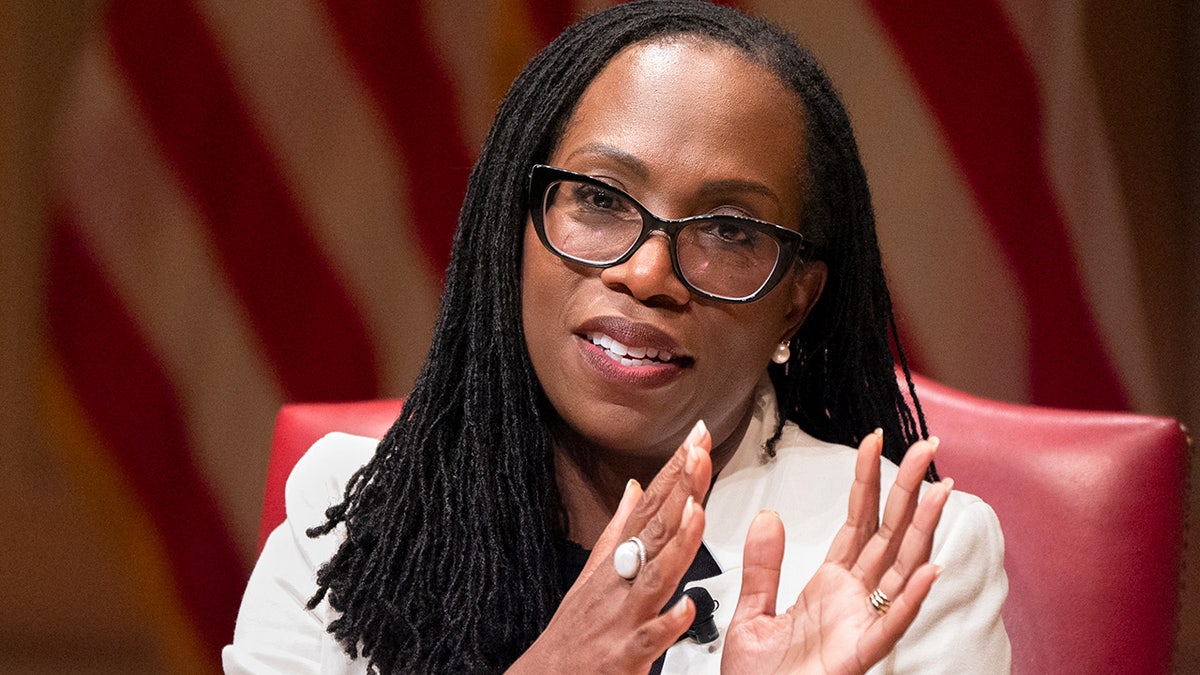
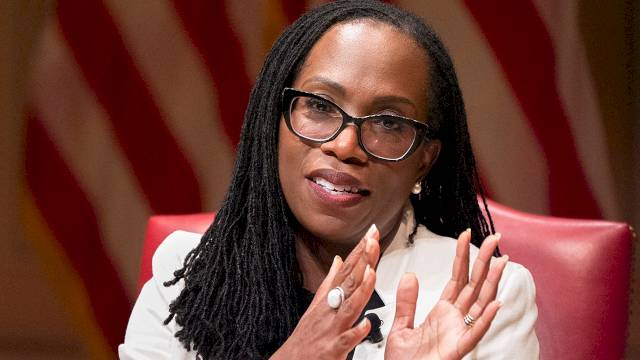
Supreme Court Justice Ketanji Brown Jackson speaks to the 2025 Supreme Court Fellows Program at the Library of Congress in Washington, D.C., on Feb. 13, 2025. (JACQUELYN MARTIN/POOL/AFP via Getty Images)
Below are five recent times Jackson gave lone opinions.
1. Louisiana redistricting judgment
The Supreme Court struck down Louisiana’s map last month, finding 6-3 it contained an unconstitutional racial gerrymander.
Upon request, the Supreme Court also decided 8-1 to fast-track the landmark decision — handing it down immediately rather than in roughly a month like it usually does — allowing several red states to more quickly attempt to implement new congressional lines after the high court weakened Section 2 of the Voting Rights Act by limiting the role race may play in congressional redistricting.
Jackson, the bench’s most junior justice, broke with her eight colleagues in that decision, saying the court improperly “[dove] into the fray” of active elections by handing its judgment down immediately.
“Not content to have decided the law, it now takes steps to influence its implementation,” Jackson wrote.
LATEST SCOTUS LEAK A GIFT TO LIBERALS ‘SALIVATING’ OVER CONTROL OF HIGH COURT NARRATIVE: EXPERTS
Justice Samuel Alito, joined by Justices Clarence Thomas and Neil Gorsuch, wrote a scathing concurrence for the sole purpose of ripping apart Jackson’s dissent, saying her claims were “groundless and utterly irresponsible.”
2. Universal injunctions
The Supreme Court is still weighing Trump’s signature plan to severely limit birthright citizenship, but it first entertained the subject last year by addressing how lower courts across the country uniformly issued nationwide injunctions against the plan. The high court decided 6-3 to ban such injunctions but left room for judges and plaintiffs to deploy other methods when seeking widespread relief.
Jackson gave a rogue, separate dissent in the case, drawing eyebrow-raising jabs from Justice Amy Coney Barrett.
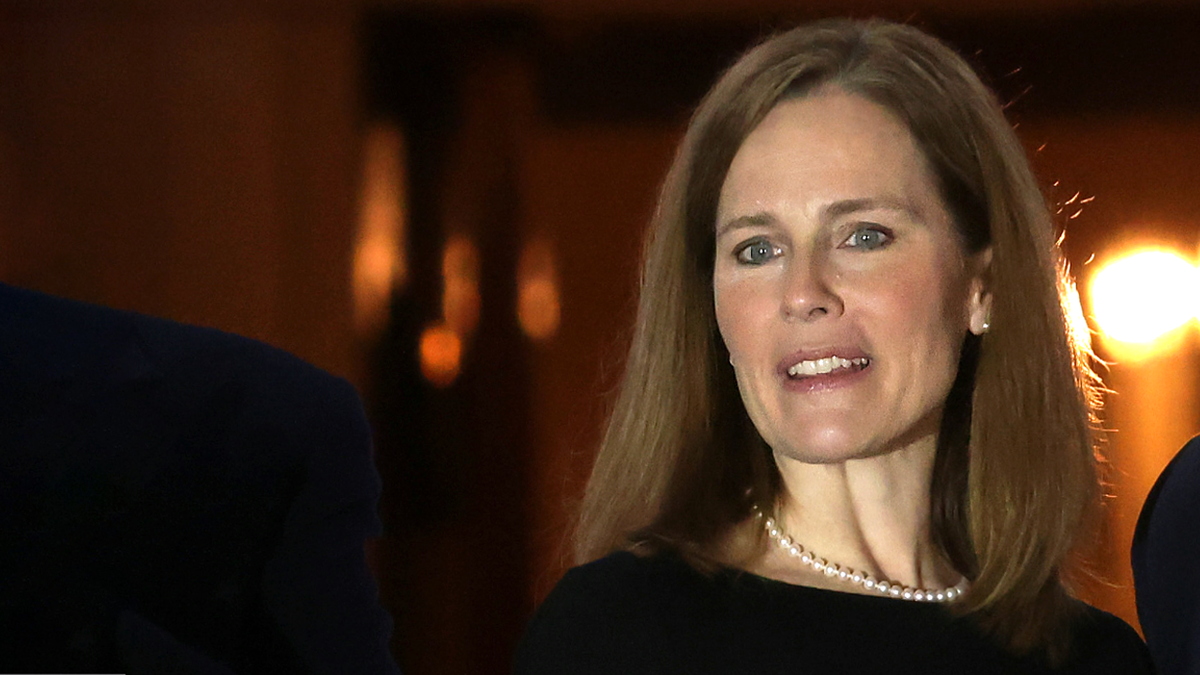
Justice Amy Coney Barrett delivered remarks at the Seventh Circuit Judicial Conference at the Swissotel hotel in Chicago, Illinois, on Aug. 18, 2025. (Getty Images)
“We will not dwell on Justice Jackson’s argument, which is at odds with more than two centuries’ worth of precedent, not to mention the Constitution itself,” Barrett wrote in the court’s opinion in 2025. “We observe only this: Justice Jackson decries an imperial Executive while embracing an imperial Judiciary.”
Jackson wrote that nationwide injunctions should be permissible because the courts should not allow the president to “violate the Constitution.”
Barrett disagreed.
“She offers a vision of the judicial role that would make even the most ardent defender of judicial supremacy blush,” Barrett wrote.
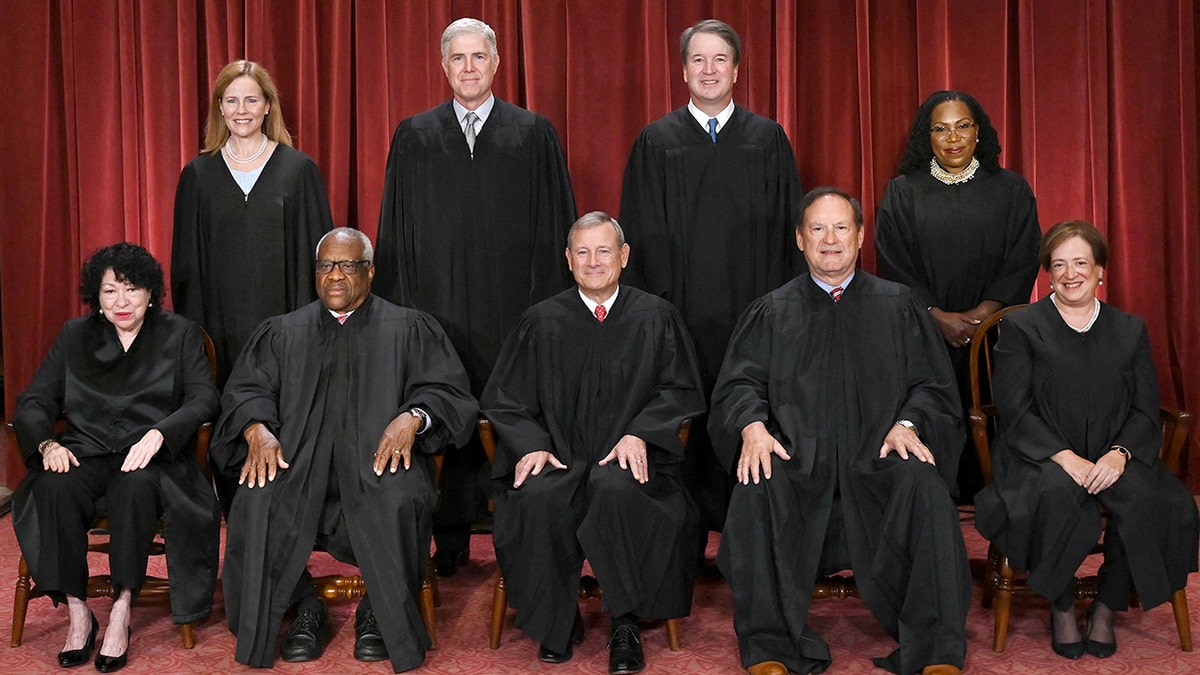
Justices of the US Supreme Court pose for their official photo at the Supreme Court in Washington, DC on October 7, 2022. (OLIVIER DOULIERY/AFP via Getty Images)
3. National Institutes of Health grants
The high court fractured last August in dual 5–4 decisions that allowed the National Institutes of Health to cancel nearly $800 million in research grants.
Jackson, in one of her most memorable one-person dissents, appeared to boil over with frustration, observing that the majority “bends over backward to accommodate” the Trump administration.
“This is Calvinball jurisprudence with a twist. Calvinball has only one rule: There are no fixed rules,” Jackson wrote. “We seem to have two: that one, and this Administration always wins.”
Some of the canceled grants were geared toward research on diversity, equity and inclusion; COVID-19; and gender identity. Jackson argued the grants went further and that “life-saving biomedical research” was at stake.
4. Colorado conversion therapy case
When the Supreme Court sided 8-1 with a Christian counselor who challenged Colorado’s ban on counseling minors about sexual orientation and gender identity — which the state barred as conversion therapy — Jackson was the lone dissenter, warning that “to be completely frank, no one knows what will happen now.”
Jackson said the key free speech decision defied “treatment standards” and bucked the medical profession, leading an unlikely colleague, Justice Elena Kagan, to openly reject her dissent.
Kagan, an Obama appointee, said Jackson’s view “rests on reimagining—and in that way collapsing—the well-settled distinction between viewpoint-based and other content-based speech restrictions.”
5. Reasonable suspicion for police
In a lower profile case about police stops, Jackson conspicuously found in April that the high court overstepped its authority by improperly meddling in a lower court’s assessment of how Washington, D.C., police decided to stop a man in a suspicious vehicle.
The Supreme Court reversed the decision by the lower court, saying it should have weighed the “totality of the circumstances” surrounding the vehicle and approved of an officer’s decision to briefly detain the man.
The decision was 7-2, but Justice Sonia Sotomayor opposed the ruling while also opting against joining Jackson’s dissent. Jackson accused the majority of trying to “wordsmith” and interfere with a typically routine evaluation of a police stop.
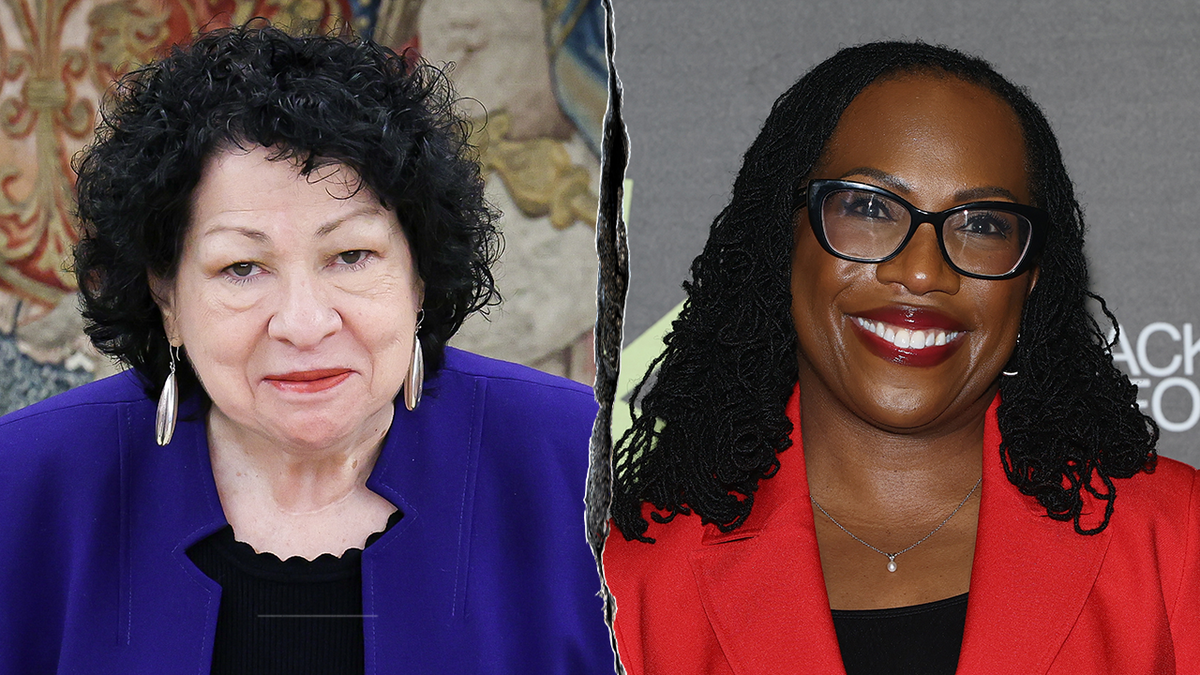
Justices Sonia Sotomayor and Ketanji Brown Jackson are pictured together. (Getty Images)
“I cannot fathom why that kind of factbound determination warranted correction by this Court,” Jackson wrote.
Jonathan Turley, George Washington University law professor and Fox News contributor, said in an op-ed this month that Jackson has “quickly developed a radical and chilling jurisprudence.”
Despite establishing herself as an outlier, Jackson also has a swathe of supporters from civil rights groups to celebrities. She has been showered with praise on “The View,” nominated for a Grammy for her audiobook and drawn encouragement from Democratic lawmakers.
CLICK HERE TO DOWNLOAD THE FOX NEWS APP
Jackson said during her appearance this year on “The View” that “criticism is part of the job.”
“Dissents are an opportunity for the justices who disagree with the majority to really describe their view of the law but also their concerns,” Jackson said, adding that “you hope that your view will prevail in the long run.”
Fox News Digital reached out to the Supreme Court’s press office for comment.
Ashley Oliver is a reporter for Fox News Digital and FOX Business, covering the Justice Department and legal affairs. Email story tips to ashley.oliver@fox.com.
-
This Trump-Xi Summit Will Actually Matter – Bloomberg.com
We’ve detected unusual activity from your computer network
To continue, please click the box below to let us know you’re not a robot.
Why did this happen?
Please make sure your browser supports JavaScript and cookies and that you are not blocking them from loading. For more information you can review our Terms of Service and Cookie Policy.
Need Help?
For inquiries related to this message please contact our support team and provide the reference ID below.
Block reference ID:0a50809e-4c72-11f1-9194-baa80aabd662
Get the most important global markets news at your fingertips with a Bloomberg.com subscription.
-
Midwest Pump Prices Are Spiking at Worst Possible Time for Trump – Bloomberg.com
We’ve detected unusual activity from your computer network
To continue, please click the box below to let us know you’re not a robot.
Why did this happen?
Please make sure your browser supports JavaScript and cookies and that you are not blocking them from loading. For more information you can review our Terms of Service and Cookie Policy.
Need Help?
For inquiries related to this message please contact our support team and provide the reference ID below.
Block reference ID:0b5f6a0f-4c72-11f1-932a-4bfd0f217391
Get the most important global markets news at your fingertips with a Bloomberg.com subscription.
-
Iran war could make Trump’s trip to China a bit chillier than his first-term visit – AP News
WASHINGTON (AP) — Weeks before his trip to China, President Donald Trump was already predicting on social media that his Chinese counterpart, Xi Jinping, would “give me a big, fat hug when I get there.”
But Beijing’s deep economic ties to Iran, as well as trade tensions over tariff threats stretching back to Trump’s first term, could crimp the good feelings when Trump flies to Beijing this week — even though the Republican president has for years effusively praised Xi, making it clear he sees China’s leader as a competitor strong enough to warrant his respect and admiration.
Trump isn’t fond of long plane rides or extended stretches away from the White House or his properties in Florida and New Jersey. He is expected to only spend parts of three days on the ground in China.
There will be plenty of pomp, but the grandeur is not expected to rival Trump’s first visit to China in 2017, which Beijing dubbed a “state visit-plus.”
“Even before this whole conflagration with Iran, they weren’t going to go state visit-plus like last time, just because things are tense,” said Jonathan Czin, a former director for China at the National Security Council during the Biden administration.
Xi’s ‘better understanding’ of Trump
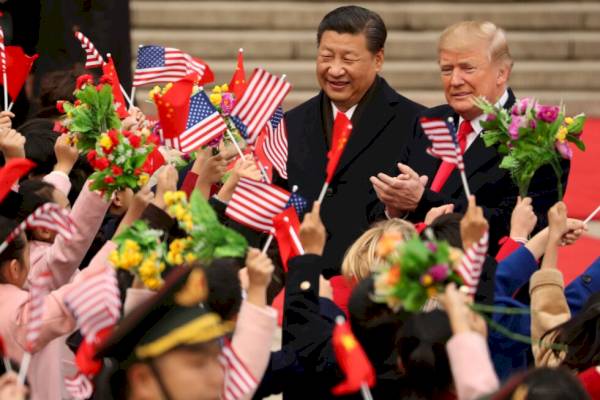
On Trump’s first-term trip, China rolled out the red carpet for his arrival, with a band playing military music and children waving flags and chanting “Welcome.”
Xi offered a tour of the Forbidden City. Trump and first lady Melania Trump even had a private dinner there. Trump was the first foreign leader since the People’s Republic of China was founded in 1949 to experience what was once reserved for emperors.
The following morning brought another welcome ceremony at the Great Hall of the People and featured a military parade. There also was a state banquet in Trump’s honor with video highlights from the Chinese leader’s previous visit to Florida and a clip of Trump’s granddaughter Arabella singing in Chinese.
Beijing does not offer this level of spectacle to most visiting foreign leaders. When British Prime Minister Keir Starmer visited the Forbidden City in January, Xi did not attend and the site remained open to the public. Starmer had to contend with tourists.
Ali Wyne, senior U.S.-China research and advocacy adviser for the Washington nonprofit the Crisis Group, said the “Chinese delegation will likely do its utmost to ensure that Trump leaves Beijing believing that he has just concluded the most extraordinary state visit of his two presidencies.”
But, he said, the “pomp and circumstance would serve a different role now than they did when he first visited Beijing” because “Xi has a much better understanding of Trump, and the administration’s own national security strategy and national defense strategy recognize China as a near-peer.”
Expectations for what gets accomplished could be lower this time, said Czin, now a fellow at the Brookings Institution. He predicted that the Chinese may not offer major breakthroughs on trade or anything else because they are “working backward from our midterm elections” with the theory that the closer they get to Election Day “the more leverage they are going to have.”
The GOP is focused on retaining control of Congress, even as polling shows most Americans are unhappy with Trump’s economic policies and believe that the United States went too far in Iran. Still, the White House argues that Trump’s previous firm hand with Beijing on tariffs — which the Supreme Court subsequently struck down — means the U.S. will remain in a strong position.
“President Trump cares about results, not symbols,” White House spokesperson Anna Kelly said. “But even still, the president has a great relationship with President Xi, and the upcoming summit in Beijing will be both symbolically and substantively significant.”
Trump and Xi may see a lot of each other this year
Trump could meet with China’s leader four times in eight months.
After his visit to Beijing, Trump plans to host Xi at the White House. Trump might also attend the November Asia-Pacific Economic Cooperation meeting in Shenzhen, China. And Xi could come to the Group of 20 summit the following month at Trump’s resort in Doral, Florida.
Czin noted that Xi also is not very fond of travel, meaning not all of the planned encounters may happen. He said China’s leader also does not “do personal connections” like the kind Trump relishes, noting Xi led a Chinese military purge in January that included replacing officials with long-standing personal ties to his family.
Wyne, though, said Xi also “appreciates that he is unlikely to deal with another U.S. president who admires him as greatly and embraces as narrow a view of strategic competition.”
That means Xi may “attempt to pocket as many economic and security concessions from Trump as possible,” Wyne said.
Trump has long praised Xi
Trump told The Wall Street Journal’s editorial board in 2024 that Xi “was actually a really good … I don’t want to say ‘friend.’ I don’t want to act foolish. ‘He was my friend.’ But I got along with him great.”
Trump even suggested at the time that military force might not be required to ensure that Chinese troops do not encroach on Taiwan, simply because China’s leader “respects me,” despite Trump more recently discussing potentially selling arms to Taiwan.
Trump has continued to praise the bilateral relationship since returning to the White House, even after his Beijing visit, originally scheduled for March, was postponed due to the early stages of the Iran war.
He unsuccessfully prodded China to get involved in reopening the Strait of Hormuz after Iranian forces choked it off and disrupted global economies. But China did use its leverage as the largest purchaser of Iranian oil to encourage Iran to agree to what has been a fragile ceasefire.
Beijing has strong economic ties to Tehran, and the war could hurt its economy, which was already projected to grow more slowly. If China can help establish lasting peace, though, that might boost its standing in negotiations on trade issues with the Trump administration.
Trade issues a sticking point
During his 2017 visit, Trump announced $250 billion in nonbinding trade deals, some of which never materialized. A round of trade deals announced in 2020 and worth $200 billion mostly never came to fruition before Trump’s first term ended.
More recently, Trump’s announcement last year of steep global tariffs prompted China to cut off purchases of U.S. soybeans and clamp down on exports of rare earth minerals needed by American factories.
Tensions have eased somewhat since the U.S. reached a trade truce last fall that has limited tariffs on both sides. The administration has continued to make reducing the U.S. trade deficit with China a priority, insisting it can do so while still working to encourage trade between the two countries.
“I expect great stability in the relationship,” Treasury Secretary Scott Bessent said. “But that doesn’t mean our trade deficit can’t continue dropping.”
Kelly, the White House spokeswoman, said Trump “doesn’t travel anywhere without bringing deliverables home to our country.”
“Americans can expect the president to deliver more good deals for the United States while in China,” she said.