Author: admin

  • How do we get more men to join the anti-Trump resistance? | Saul Austerlitz – The Guardian

    How do we get more men to join the anti-Trump resistance? | Saul Austerlitz – The Guardian

    In Donald Trump’s first term, my Brooklyn-based activist group had the peculiar dynamic of being started by two men while being composed of about 65% women. Since November 2024, our group has doubled in size, and the gender imbalance has tipped even further: we are now about 80% women.

    Almost 18 months into Trump’s second term, it is abundantly clear that the appetite for anti-Trump, pro-democracy activism has not dimmed at all. And yet, there is a substantial portion of the populace that, in my experience as an activist, seems to have lost its fervor for the fight.

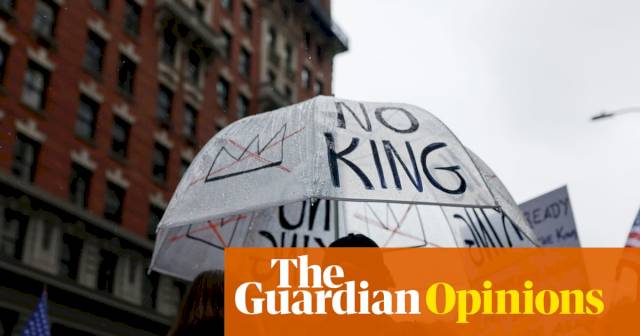
    If I see two other men’s faces at one of my group’s events, it feels like we’ve had a pretty good masculine turnout. Bigger events like the No Kings rallies feature more men, but nearly everywhere we go under Trump 2.0, there is a notable paucity of men. “When we look at the demographics of Resistance 2.0 there is overwhelming consistency,” writes Dana R Fisher, who studies civic engagement at American University. “Participants are predominantly white, highly-educated, female, and middle-aged.” During Trump’s first term, things were similar: Laura Putnam and Theda Skocpol reported that women comprised “70% of the participants and most members of the leadership teams”. There is also a well-documented gender gap in Trump support.

    So where did all the men go, and how can we get them on board?

    Some men have veered right. Some have burned out, their engines flooded by a terror that the work of protecting democracy goes on and on, world without end. Some have retreated to tend their own gardens: work, children, art, vinyl collections. (I will refrain from offering any gender-related thoughts about who might be better acclimated to the prospect of thankless, all-important work.)

    Underscoring all of these is a quiet belief held by some men – especially white men – that however bad things may get – and have already gotten – in the United States, however much everything from the Dobbs decision overturning abortion to ICE violence may make for a crueler, uglier country, they will personally remain OK. Too many have a metaphorical sign up in their cubicles that reads “Your Emergency Is Not My Crisis.”

    And it is a vicious cycle: the more women and non-binary people do the overwhelming majority of resistance work, the more men take in the wrong-headed message that this work is not for them. The truth is, the arrival of any new man in these spaces is cause for celebration. My co-leaders and I have a special emoji that we reserve for a new man joining our group.

    Here we have arrived once more at that place organizers like myself regularly find ourselves: the junction of what should be and what is. Should men need personalized invitations to participate in the work of building a better world? Absolutely not. But do men need to be invited? Seems like the answer might be yes.

    The women leading this work everywhere I go are heroic in their courage, their vigor and their determination. But I am a resolute believer in the big-tent approach to political change, and making sure that 50% of the population plays a role in this fight is crucial to assembling a pro-democracy majority in a moment of unprecedented peril. We need everyone right now, and men are conspicuous in their absence. (Next up: people in their 20s.)

    My unscientific conclusion is that the men who have already drifted away, whatever their reasons, are unlikely to come back. Instead, now is an ideal time to extend an invitation to the men in our circles who hover on the edges, shouting fruitlessly at their TV screen or social-media feed, not knowing yet how much good they can do – or how much better they will feel – if they take action.

    My co-leaders – six women – and I have recently gotten to thinking about what we might do to break men out of their morass of hopelessness and torpor. Working on the principle that you should always ask a busy person if you want to get something done, we have been targeting fathers of school-age children for deeper immersion in our work. I became an activist because I could not stomach abandoning my children to the collapse of American democracy. And while not every father is a viable candidate for us – I don’t think we are going to win JD Vance over – we at least share a common language. The future is the place where our children will live.

    Perhaps it is time for men like me to organize spaces where men can take a tentative first step toward participating in the communal and organizing work that is the lifeblood of a country under terrible strain.

    This past Sunday, I hosted about half a dozen men at my apartment to eat pizza, drink beer, and talk about our experiences. Some of the men had already been doing this work for years; for others, the pizza and the beer were their first step forward. We ended our get-together with a concrete request: reach out tonight to three men you know are frustrated by the state of the country, and ask them to join you for the next activist work you plan to participate in. If we want to triumph over the forces of authoritarianism, we will have to do it, painstakingly, one person at a time. Draft those invitations.

    What’s giving me hope now

    Last Friday, our group hosted a May Day picnic in Brooklyn’s Prospect Park that eventually transformed into an evening Shabbat dinner. More than 100 people came by over the course of the day, including 25 new members who joined our email list after the event. Sharing challah and frittatas and chocolate chip cookies on a balmy evening with old friends and new ones, grizzled organizing veterans and fresh-faced newcomers, was just the uplift I needed. As strangers, we are doomed. Building community is how we will keep democracy alive.

  • Checkmate in Iran – The Atlantic

    Checkmate in Iran – The Atlantic

    It’s hard to think of a time when the United States suffered a total defeat in a conflict, a setback so decisive that the strategic loss could be neither repaired nor ignored. The calamitous losses suffered at Pearl Harbor, the Philippines, and throughout the Western Pacific in the first months of World War II were eventually reversed. The defeats in Vietnam and Afghanistan were costly but did not do lasting damage to America’s overall position in the world, because they were far from the main theaters of global competition. The initial failure in Iraq was mitigated by a shift in strategy that ultimately left Iraq relatively stable and unthreatening to its neighbors and kept the United States dominant in the region.

    Defeat in the present confrontation with Iran will be of an entirely different character. It can neither be repaired nor ignored. There will be no return to the status quo ante, no ultimate American triumph that will undo or overcome the harm done. The Strait of Hormuz will not be “open,” as it once was. With control of the strait, Iran emerges as the key player in the region and one of the key players in the world. The roles of China and Russia, as Iran’s allies, are strengthened; the role of the United States, substantially diminished. Far from demonstrating American prowess, as supporters of the war have repeatedly claimed, the conflict has revealed an America that is unreliable and incapable of finishing what it started. That is going to set off a chain reaction around the world as friends and foes adjust to America’s failure.

    President Trump likes to talk about who has “the cards,” but whether he has any good ones left to play is not clear. The United States and Israel pounded Iran with devastating effectiveness for 37 days, killing much of the country’s leadership and destroying the bulk of its military, yet couldn’t collapse the regime or exact even the smallest concession from it. Now the Trump administration hopes that blockading Iran’s ports will accomplish what massive force could not. It’s possible, of course, but a regime that could not be brought to its knees by five weeks of unrelenting military attack is unlikely to buckle in response to economic pressure alone. Nor does it fear the anger of its populace. As the Iran scholar Suzanne Maloney noted recently, “A regime that slaughtered its own citizens to silence protests in January is fully prepared to impose economic hardships on them now.”

    Some supporters of the war are therefore calling for the resumption of military strikes, but they cannot explain how another round of bombing will accomplish what 37 days of bombing did not. More military action will inevitably lead Iran to retaliate against neighboring Gulf States; the war’s advocates have no response to that, either. Trump halted attacks on Iran not because he was bored but because Iran was striking the region’s vital oil and gas facilities. The turning point came on March 18, when Israel bombed Iran’s South Pars gas field and Iran retaliated by attacking Qatar’s Ras Laffan Industrial City, the world’s largest natural-gas-export plant, causing damage to production capacity that will take years to repair. Trump responded by declaring a moratorium on further strikes against Iran’s energy facilities and then declaring a cease-fire, despite Iran’s not having made a single concession.

    The risk calculus that forced Trump to back down a month ago still holds. Even if Trump were to carry out his threat to destroy Iran’s “civilization” through more bombing, Iran would still be able to launch many missiles and drones before its regime went down—assuming it did go down. Just a few successful strikes could cripple the region’s oil and gas infrastructure for years if not decades, throwing the world, and the United States, into a prolonged economic crisis. Even if Trump wanted to bomb Iran as part of an exit strategy—looking tough as a way of masking his retreat—he can’t do that without risking this catastrophe.

    If this isn’t checkmate, it’s close. In recent days, Trump has reportedly asked the U.S. intelligence community to assess the consequences of simply declaring victory and walking away. You can’t blame him. Hoping for regime collapse is not much of a strategy, especially when the regime has already survived repeated military and economic pummeling. It could fall tomorrow, or six months from now, or not at all. Trump doesn’t have that much time to wait, as oil climbs toward $150 or even $200 a barrel, inflation rises, and global food and other commodity shortages kick in. He needs a faster resolution.

    But any resolution other than America’s effective surrender holds enormous risks that Trump has not so far been willing to take. Those who glibly call on Trump to “finish the job” rarely acknowledge the costs. Unless the U.S. is prepared to engage in a full-scale ground and naval war to remove the current Iranian regime, and then to occupy Iran until a new government can take hold; unless it is prepared to risk the loss of warships convoying tankers through a contested strait; unless it is prepared to accept the devastating long-term damage to the region’s productive capacities likely to result from Iranian retaliation—walking away now could seem like the least bad option. As a political matter, Trump may well feel he has a better chance of riding out defeat than of surviving a much larger, longer, and more expensive war that could still end in failure.

    Defeat for the United States, therefore, is not only possible but likely. Here is what defeat looks like.

    Iran remains in control of the Strait of Hormuz. The common assumption that, one way or another, the strait will reopen when the crisis ends is unfounded. Iran has no interest in returning to the status quo ante. People talk of a split between hard-liners and moderates in Tehran, but even moderates must understand that Iran cannot afford to let the strait go, no matter how good a deal it thought it could get. For one thing, how reliable is any deal with Trump? He all but boasted of replicating the Japanese surprise attack on Pearl Harbor by approving the killing of Iran’s leadership amid negotiations. The Iranians cannot be sure that Trump won’t decide to attack again within a few months of striking a deal. They also know that the Israelis may attack again, as they never feel constrained from acting when they perceive their interests to be threatened.

    And Israel’s interests will be threatened. As many Iran experts have noted, the regime in Tehran currently stands to emerge from the crisis much stronger than it was before the war, having not only retained its potential nuclear capacity but also gained control of an even more effective weapon: the ability to hold the global energy market hostage. When the Iranians talk of “reopening” the strait, they still mean to keep the strait under their control. Iran will be able not only to demand tolls for passage, but to limit transit to those nations with which it has good relations. If a nation behaves in a way that Iran’s rulers don’t like, they will be able to exact punishment merely by slowing, or even threatening to slow, the flow of that nation’s cargo ships in and out of the strait.

    The power to close or control the flow of ships through the strait is greater and more immediate than the theoretical power of Iran’s nuclear program. This leverage will allow the leaders in Tehran to force nations to lift sanctions and normalize relations or face penalties. Israel will find itself more isolated than ever, as Iran grows richer, rearms, and preserves its options to go nuclear in the future. It may even find itself unable to go  after Iran’s proxies: In a world where Iran wields influence over the energy supply of so many nations, Israel could face enormous international pressure not to provoke Tehran in Lebanon, Gaza, or anywhere else.

    The new status quo in the strait will also occasion a substantial shift in relative power and influence both regionally and globally. In the region, the United States will have proved itself a paper tiger, forcing the Gulf and other Arab states to accommodate Iran. As the Iran scholars Reuel Gerecht and Ray Takeyh wrote recently, “The Gulf Arab economies were built under the umbrella of American hegemony. Take that away—and the freedom of navigation that goes with it—and the Gulf states will ineluctably go begging to Tehran.”

    They will not be the only ones. All nations that depend on energy from the Gulf will have to work out their own arrangements with Iran. What choice will they have? If the United States with its mighty Navy can’t or won’t open the strait, no coalition of forces with just a fraction of the Americans’ capability will be able to, either. The Anglo-French initiative to police the strait after a cease-fire is a bit of a joke. French President Emmanuel Macron has made it clear that this “coalition” will operate only under peaceful conditions in the strait: It will escort ships, but only if they don’t need an escort. Yet with Iran in control, the strait is not going to be safe again for a long time. China presumably has some influence over Tehran, but even China cannot force open the strait by itself.

    One effect of this transformation may be an expanding great-power naval race. In the past, most of the world’s nations, including China, counted on the United States to both prevent and address such emergencies. Now the nations in Europe and Asia that depend on access to the Persian Gulf’s resources are helpless against the loss of energy supplies that are vital to their economic and political stability. How long can they tolerate this before they start building their own fleets, as a means of wielding influence in an every-nation-for-itself world where order and predictability have broken down?

    The American defeat in the Gulf will have broader global ramifications as well. The whole world can see that just a few weeks of war with a second-rank power have reduced American weapons stocks to perilously low levels, with no quick remedy in sight. The questions this raises about America’s readiness for another major conflict may or may not prompt Xi Jinping to launch an attack on Taiwan, or Vladimir Putin to step up his aggression against Europe. But at the very least America’s allies in East Asia and Europe must wonder about American staying power in the event of future conflicts.

    The global adjustment to a post-American world is accelerating. America’s once-dominant position in the Gulf is just the first of many casualties.

  • Trump thinks he’s flying to Beijing with leverage. China spent 6 years making sure he doesn’t have any – Fortune

    Trump thinks he’s flying to Beijing with leverage. China spent 6 years making sure he doesn’t have any – Fortune

    Air Force One will land in Beijing on May 14. President Trump expects to land with leverage in his briefcase. He should think again.

    On May 4, U.S. Treasury Secretary Bessent appeared on Fox News to plead with China to help reopen the Strait of Hormuz and relieve pressure on the international oil markets. While Bessent was busying himself on Fox News, China was busy making friends by supplying those in distress with much-needed oil and other commodities.

    This story goes back further than the blockade of the Strait of Hormuz. In December 2018, the long arm of Washington reached into Vancouver International Airport to order the arrest of Meng Wanzhou — the CFO of China’s telecommunications giant Huawei and the daughter of its founder — over Iran-sanctions charges. Six months later, Washington put Huawei on its Entity List and cut China off from the U.S. semiconductor supply chain. Beijing snapped to attention. Fearing that Washington could one day choke off other critical resources, Chairman Xi quietly built one of the world’s largest commodity buffers. For example, Beijing amassed a 1.4-billion-barrel strategic crude reserve, roughly 115 days of seaborne imports.

    Fast forward to today, China is deploying its stockpile to supply those in distress with much-needed commodities, including oil. Sinopec and Sinochem have been reselling West African crude to refiners across Asia. On the gas side, Chinese majors have resold a record 1.31 million tons of LNG so far this year to the likes of South Korea, Thailand, Japan, Indonesia, and India. Beijing has been lending a hand to its Asian neighbors while the U.S. has been doing the opposite with its blockade of the Strait of Hormuz. The diplomatic dividend is exactly what one would expect: Seoul, Tokyo, and Jakarta have all sent Beijing a thank-you note and pivoted away from Uncle Sam.

    When we move away from physical molecules to the realm of diplomacy, Iranian Foreign Minister Abbas Araghchi flew into Beijing on May 6, where he was warmly welcomed by Foreign Minister Wang Yi. That same week, China’s Foreign Ministry openly dismissed Secretary Rubio’s threat of secondary sanctions, calling the U.S. measures illegal unilateral actions that lacked U.N. authorization.

    While Washington raises walls, Beijing is opening doors. On May 1, Chinese tariffs on imports from all 53 African countries with which China holds diplomatic relations plunged to zero. Europeans now enter China visa-free. India’s Modi government is fast-tracking minority Chinese investment in seven strategic sectors. China’s DeepSeek AI went open source, giving the world’s developers free access to a frontier Chinese AI model. While Washington is tightening export controls on America’s AI enterprise, China is open for business.

    And then there is Beijing’s ace: rare earths. Beijing’s control of neodymium, praseodymium, samarium, europium, gadolinium, and yttrium oxides is virtually total. Every advanced weapons system, every electric drivetrain, every wind turbine, every smartphone in the United States runs through China’s critical materials. To replenish its weapons stockpiles that have been depleted due to America’s proxy war against Russia and its open warfare against Iran, the U.S. Department of Defense now needs Beijing’s permission to restock. The rules of the road are being rewritten, and they are being rewritten in Beijing.

    The verdict is in. The Alliance of Democracies’ Democracy Perception Index, which was released on May 8, puts China’s net global perception at +7%. Meanwhile, the international perception of the U.S. has collapsed. Two years ago, it sat comfortably at +22%. Today, it has plunged to a dismal -16%. It is clear that Trump will be tiptoeing through the tulips with Xi and coming home empty-handed.

    The opinions expressed in Fortune.com commentary pieces are solely the views of their authors and do not necessarily reflect the opinions and beliefs of Fortune.

    Join us at the Fortune Workplace Innovation Summit May 19–20, 2026, in Atlanta. The next era of workplace innovation is here—and the old playbook is being rewritten. At this exclusive, high-energy event, the world’s most innovative leaders will convene to explore how AI, humanity, and strategy converge to redefine, again, the future of work. Register now.

  • Why war on Iran may be ‘accelerating end of US hegemony’ and damaging Stargate – South China Morning Post

    Why war on Iran may be ‘accelerating end of US hegemony’ and damaging Stargate – South China Morning Post

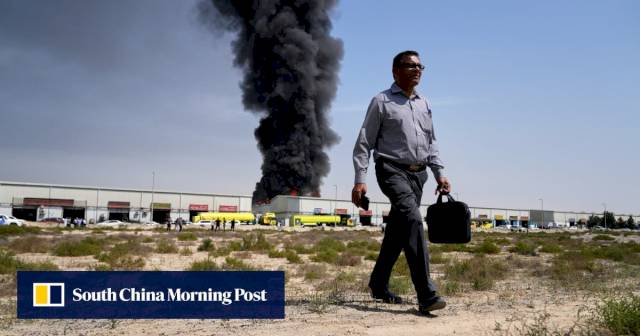
    US President Donald Trump’s US$500 billion Stargate AI project is being undermined by

    the war with Iran, a conflict that is accelerating the decline of the United States, according to Chinese analysts.

    The project, designed to cement US dominance in the field of artificial intelligence, was announced in January last year, shortly after Trump’s return to power, and involves leading companies such as OpenAI, SoftBank and Oracle.

    A critical component of this plan was building the world’s largest AI data centre cluster in the United Arab Emirates.

    But Li Wei, associate dean of the school of international relations at Renmin University, said the war had struck at the heart of the policy after Iran attacked data centres in the UAE.

    “Trump’s first priority upon taking office was the Stargate project,” Li told the China Macroeconomy Forum in Beijing on Saturday.

    “Last May, he visited the Middle East specifically to ground this project in the region. Currently, Iran’s attacks on computing centres in the UAE have cast uncertainty over Stargate’s Middle Eastern expansion.”

  • Rapid changes in power have become the new normal in American politics. Here’s why – CNN

    Rapid changes in power have become the new normal in American politics. Here’s why – CNN

    President Donald Trump’s tumbling approval ratings are raising the odds that the 2026 midterm elections will extend one of the most powerful trends in 21st-century American politics.

    The president’s steady decline in popularity has increased the chances that Democrats in November could recapture the House of Representatives, and maybe the Senate too.

    If Democrats flip either chamber, it will continue the extraordinary run of volatility that has seen control of the House, the Senate or the White House change hands between the parties in 11 of the 13 elections since 2000. By contrast, control of either congressional chamber or the White House flipped in just five of the final 13 elections of the 20th century and only seven of the last 20 stretching back to 1960.

    Each time voters recoil against the party in power, political analysts usually focus on the immediate choices made by the president and his party in Congress. But the pattern of rapid reversals has become so entrenched that it appears driven less by tactical decisions than by deeper forces in the economy, society and the electorate that show no sign of abating.

    “Five or six years from now, if we are having this conversation, it will probably be 14 out of 16 elections with people voting for change,” said Doug Sosnik, a former White House political adviser for Bill Clinton, who has tracked the trend.

    Part of the explanation for this volatility is that whenever they do win power, both parties usually have only managed to scratch out small majorities. These smaller majorities leave them with little cushion for the midterm losses that have always been common for the president’s party.

    “The midterm loss phenomenon is not new to the 21st century, but often the party in power absorbed the losses” and preserved its majority, said Brandice Canes-Wrone, a Stanford University political scientist and senior fellow at the conservative Hoover Institution. Now, she said, “the majorities are so tight” that even small reversals flip control.

    A similar dynamic is evident in the White House’s revolving door. Each party has reliably locked down so much of the Electoral College that small shifts in the handful of swing states now decide elections.

    But while narrow congressional and Electoral College margins can explain the frequent shifts in power, that raises another question: What explains the narrow margins?

    Supporters of then-nominee Donald Trump react to early election results in the 2016 presidential election, at the New York Hilton Midtown.

    In their book “Identity Crisis,” UCLA political scientist Lynn Vavreck and co-authors John Sides and Michael Tesler, argued that the 2016 election culminated a long-term shift in the basic conflict between the parties from economic to cultural issues. Around polarizing questions including on immigration, racial diversity and LGBTQ rights, they wrote, Trump tilted the axis of political debate “to competing visions of American identity and inclusiveness.”

    “For most of our lifetime, politics was contested over the New Deal issues —the size and role of government,” Vavreck said. “Those days are so gone. We are not (primarily) fighting over the tax rate anymore. In 2016, Trump raised these identity-inflected issues (and) now … we are fighting about who deserves to be an American.”

    A political order grounded in such clashing visions of the nation’s identity, Vavreck and her colleagues argued, makes it harder for most voters to envision shifting their support from one party to the other. When “the differences between the parties in the early 1990s” centered on the role of government, more voters who leaned toward one party could imagine living in a country governed by the other “and not hate it,” she said.

    “It wasn’t a personal and divisive existential crisis about what it means to be an American. So now that it is, it is harder for voters to make that crossover,” Vavreck said.

    Amid these changes, political professionals largely agree that the combined share of the electorate immovably locked down for either party has grown through the 21st century to around 85% or even slightly more, reducing the number of swing voters. (In “Identity Crisis,” the authors memorably called this the “calcification” of American politics.)

    Paradoxically though, the large number of voters firmly anchored in either party has increased the clout of the smaller group that is not. Swing voters tend to be the Americans who place less priority on the cultural and ideological firefights between the parties than on their own immediate economic circumstances — about which they have been persistently negative for years.

    “That last 15% is dissatisfied, disengaged, not in the cultural wars, and are pretty much voting against whoever is in power,” said Sosnik. Those disaffected voters, as I’ve written, increasingly express their discontent not only by switching their vote, but also by whether they vote at all.

    Micah Roberts, a Republican pollster who is part of a bipartisan team that surveys economic attitudes for CNBC, said voters who don’t strongly identify with either party “are consistently pessimistic.”

    “There is not a year since 2017 when independents were positive about the current state of the economy,” Roberts said.

    People shop at a local supermarket in the Sugar Hill neighborhood in the Manhattan borough of New York on April 9.

    Economists and political strategists agree that many voters, especially those without a college degree, feel it has become far more difficult to get ahead than it was for their parents, as income inequality has widened since the 1970s. Josh Bivens and two colleagues at the left-leaning Economic Policy Institute recently calculated that the incomes of average families would be as much $30,000 higher today if workers at the very top had not claimed such a growing share of total national income since then.

    “Rising income inequality is the main reason that affordability feels out of reach for too many U.S. families,” they wrote.

    The slowdown in wage growth has frustrated working families for years and contributed to the 21st century’s endemic political instability, most analysts agree. But the sharp spike in inflation after Covid-19 raised these concerns to a crisis level. Instead of treading water, many families now feel they are slipping beneath it. Though other economic indicators such as the unemployment rate and stock market are positive, Roberts said, today “the only economic report that ordinary, everyday Americans pay attention to is the price on the gas station billboard or the price at the bottom of their grocery bill.”

    Those frustrations boosted Trump in 2024 when Democrats were in the White House, but now that undiminished anxiety looms as the biggest 2026 threat for Republicans.

    “We’re a quarter of the way through the 21st century and neither political party has figured out how to satisfy voters’ basics needs while we are playing on this new field,” Vavreck said. “This is where we are going to be probably for the rest of my lifetime.”

    The dome of the US Capitol on November 11, 2025.

    Shifts in presidential strategy have also fed the persistent instability. With only occasional exceptions, the presidents since 2000 have centered their legislative agendas primarily on massive partisan bills (from Barack Obama’s Affordable Care Act to Trump’s One Big Beautiful Bill Act) that they typically pass through the special reconciliation process with little, if any, support from the other party.

    “Both parties now use the reconciliation process when they have full control of government to jam through their agenda on a partisan basis,” said former Republican Rep. Charlie Dent, now executive director of the Aspen Institute’s congressional program. “It’s almost as if they’ve given up on trying to pass big bipartisan bills.”

    Whatever the policy merits of these highly partisan bills, the political impact has been to trigger intense opposition from the other party. Neither recent Republican nor Democratic presidents have followed a more incremental strategy of seeking to broaden their support by starting their terms with limited, bipartisan legislative plans. Even when presidents have pursued bipartisan compromises — as Biden did on his big infrastructure and semiconductor manufacturing bill — they have found that their partisan moves overshadowed that outreach.

    Canes-Wrone pointed to another reason why new presidents now stir immediate backlash: They are deemphasizing legislation at all in favor of advancing their agenda through aggressive executive action. “It is very easy when you are operating more unilaterally to overreach,” she said.

    President Donald Trump speaks to members of the media after signing executive orders in the Oval Office of the White House, in May 2025.

    Cycles of such sustained instability have been rare in American politics. In the 20 years before the Civil War from 1840 to 1860, ten of eleven elections produced shifts in control. Many political analysts find even more similarities to the period from 1876 to 1896, which saw eight change elections over eleven.

    Like today, that late 19th century stretch was defined by wrenching changes — the transition from an agricultural to industrial economy, fierce battles between management and labor, and rapid urbanization, all punctuated by a massive immigration wave. Then, as now, many voters saw the two parties as incapable of delivering economic and social stability amid the tumult.

    What could break today’s cycle? Bivens, like Sosnik, believes that politics is unlikely to stop shaking until living standards for average families more steadily improve. The catch-22, Bivens says, is that implementing policies that might generate such broadly based gains will require one side to hold power for a longer stretch than now seems possible.

    “In order to make the big policy change to get us out of the trap we’re in … it would require a sustained period of governance, which would require a lot of popular support, and popular support on a sustained basis is really hard when you haven’t solved the problem,” Bivens said. “How to solve that timing problem is a real conundrum.”

    Canes-Wrone is more optimistic that a president who focused on incrementally building support with a moderate agenda intended to reassure and gradually solidify swing voters could construct a more lasting advantage. If a new president “didn’t overreach, then we are in a different world,” she said. “The question is whether once you are in office you can restrain yourself.”

    Sean Wilentz, a Princeton University historian who specializes in 19th-century US politics, points toward a different possible endpoint. The eras of stability when one party established a lasting advantage over the other, he noted, have almost always come after a crisis that discredited the other side and allowed a new president to expand and solidify his coalition.

    The period of turbulence before 1860 ended when Abraham Lincoln and Republicans led the Union to victory in the Civil War; the late 19th-century upheaval gave way to sustained Republican dominance after the panic of 1893 undercut the Democrats then controlling Washington. Similarly, Franklin D. Roosevelt’s vigorous response to the Depression powered 36 years of Democratic advantage in Washington. “Crises help make presidents one way or another,” Wilentz said.

    The financial crisis of 2008, Wilentz believes, similarly offered Democrats a chance to reorder politics. But, he argued, the reluctance of first George W. Bush and then Obama to hold Wall Street and the wealthy fully accountable “blew up both parties” and ignited the free-floating populist backlash against “elites” and a “rigged system” that elevated the tea party, Trump and Bernie Sanders — and has unsettled both coalitions.

    Now, Wilentz says, the political system may remain unstable until another crisis emerges that provides a future president another chance to build a more durable coalition. “Maybe that’s what we are waiting for — a shock like that,” Wilentz said. “If I was betting about the next 10 years, I wouldn’t bet against it.”

    In the meantime, the safest bet is that voters will continue ricocheting between the parties, searching for answers neither seems able to provide.
  • Opinion | My organization fought Trump’s FTC and won. Here’s how – MS NOW

    Opinion | My organization fought Trump’s FTC and won. Here’s how – MS NOW

    By  Angelo Carusone

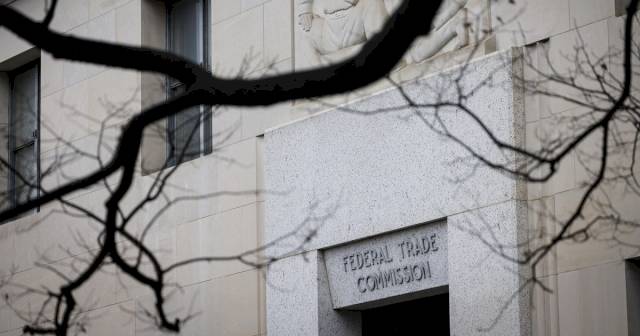
    On Tuesday, the Federal Trade Commission walked away from its investigation of Media Matters for America. For the first time in nearly three years, my organization is not under investigation by a hostile federal authority or state attorney general. That alone is news. But how we got to this place — and the looming threats to us and freedom of speech writ large — is the bigger story.

    The Trump administration has built a playbook for punishing critics and controlling the media and others: layering regulatory threats, retaliatory investigations, and lawsuits on top of targets until they buckle. Most cave; many submit in anticipation of the attack, just to avoid the gauntlet.

    Too many media companies have enabled this onslaught.

    In less than 17 months, Trump has ramped up his assault on the press. Consider a few such examples: this administration has replaced the Pentagon press corps with sycophants and propagandists, sidelined Associated Press reporters who refused to use Trump’s preferred term for the Gulf of Mexico, and stripped $1.1 billion from public broadcasting. Trump has called on the FCC to revoke licenses of broadcast networks over unfavorable coverage, and the agency’s chair has used regulatory pressure to marginalize critics. The president even inserted himself in a merger fight that ended with his political allies in control of CNN.

    Too many media companies have enabled this onslaught. ABC and CBS both settled lawsuits that Trump had filed before his reelection that legal experts stated had no merit. To secure approval for its merger with Skydance, Paramount also agreed to install a so-called “bias monitor” at CBS News. And two major advertising companies, facing FTC review of their proposed merger, acquiesced to aconsent decree prohibiting political boycotts.

    Media Matters has been operating inside this new reality even before Trump’s second term. In 2023, Elon Musk filed his self-described “thermonuclear” lawsuit against us for our report documenting that brand advertisements were appearing alongside pro-Nazi content on X.

    Goaded on by Stephen Miller, now Trump’s deputy chief of staff, the attorneys general of both Missouri and Texas began parallel investigations into Media Matters in sync with Musk’s lawsuit. We defeated them both. (Missouri’s former attorney general Andrew Bailey is now co-deputy director of the FBI.)

    When Trump returned to office, the federal government joined in. Even before he was nominated, FTC Chair Andrew Ferguson foreshadowed his intent to use the agency to go after those he believed were involved in advertiser boycotts on social media. That’s why when the FTC issued a civil investigative demand in May 2025, we didn’t wait. We went on offense, suing to block the retaliatory investigation, just as we had pushed back against the state authorities.

    Our lawsuit was not just about protecting ourselves.

    The FTC ran the same play against much larger companies. They capitulated. We didn’t. We knew that in this environment, the process is the punishment; the pain is the point. In a 2025 speech, Ferguson even alluded to the real goal of his investigative powers: “Those tools are expensive when applied to you even if we don’t win at the end of the day, so knuckle under.” 

    Our lawsuit was not just about protecting ourselves. Hidden behind the FTC’s claims of advertiser boycotts and antitrust violations was a far more sinister idea: that no one can go to court to stop a government investigation, no matter how questionable its intent. Had the FTC prevailed, it would have further consolidated power in the hands of an increasingly lawless administration.

    But this week, after nearly a year of litigation, the FTC relented and agreed to a practically unprecedented settlement in our favor. The commission withdrew its investigation and committed not to pursue Media Matters in a similar manner in the future. And this settlement came after we had beaten the agency in court several times, securing injunctive relief and reinforcing case law that will make it harder for the FTC to use the same moves against others. Some of our cases have established critical legal precedents, which already have been cited in 28 legal battles regarding the Trump administration’s overreach.

    These decisions have and will protect other organizations, like newsrooms and civil society groups, from clearly unlawful retaliatory investigations

    The Trump administration does not have the law on its side, which is a part of the reason it’s so cowardly and consequential when entities fold in the face of their attacks. This kind of capitulation by the government is rare, and it matters, but the fight is not over. The whole point of this approach is the one-two punch: state power on side, civil litigation on the other. We have, for now, beaten back one of those vectors. The other is Elon Musk’s existential lawsuit, where this all began. That litigation has cost us more time and money than all three government investigations combined.

    Whether the pressure comes from a federal agency or the richest man on earth, the goal is identical: Deter scrutiny, punish dissent, and make journalism too expensive to do. Different tools, same goal. But we all must continue to fight.

    Angelo Carusone

    Angelo Carusone is the president of Media Matters for America. 

  • For Trump’s commission on religion, ‘there is no separation of church and state’ – Los Angeles Times

    For Trump’s commission on religion, ‘there is no separation of church and state’ – Los Angeles Times

    One member calls for a Presidential Medal of Freedom for a baker who refused to create a wedding cake for a same-sex couple.

    Another calls for court interventions by the Department of Justice on behalf of Amish parents fighting New York vaccine requirements and Catholic nuns challenging that state’s requirement that they accommodate hospice patients’ gender identities.

    And the chair of the Religious Liberty Commission is calling for a federal hotline with this automated recording: “There is no separation of church and state.”

    These are just some of the recommendations that members of the advisory panel formed by President Trump last year want to see included in the commission’s final report.

    That report is still in the works, but commissioners had an opportunity to describe their wish lists during their most recent meeting in April. There was little dissent as the commissioners, most drawn from Trump’s base of conservative Christian supporters, covered the items they want in the report.

    Their ideas reflect the prevailing perspectives on the definition of religious liberty among many conservative Catholic and evangelical activists: increasing avenues for religious expression in public schools, expanding opportunities for faith-based organizations to receive public money, and allowing for religious-based exemptions in areas ranging from labor law to classroom lessons to healthcare mandates.

    Such views have also been reflected in Supreme Court decisions issued in recent years by its conservative majority.

    Commission’s views criticized

    Critics of the commission say it embodies a one-sided perspective of Trump’s supporters and is threatening a well-established constitutional separation of church and state.

    A lawsuit by a progressive interreligious coalition argues that the commission fails to comply with federal law requiring advisory panels to feature diverse members and viewpoints.

    The lawsuit echoes criticism that most commissioners are conservative Christian clerics and commentators; one is an Orthodox Jewish rabbi. The coalition says members have asserted that America is specifically a Judeo-Christian or Christian nation and notes that most commission meetings took place at the Museum of the Bible in Washington, an institution with Christian leadership.

    The Republican administration is asking a federal court to dismiss the lawsuit. The government is citing legal technicalities and contending that the law does not define how a commission should be fairly balanced or whose viewpoints should be represented.

    Another entity created by Trump — the Task Force to Eradicate Anti-Christian Bias — issued a report saying Christians faced discrimination under the administration of President Biden in areas such as education, tax law and prosecution of antiabortion protesters. Progressive groups said that report failed to document systemic discrimination, focused on causes favored by conservative Christians and amounted to advocacy rather than an investigation.

    In a further interlocking of Trump-related initiatives, several members of the Religious Liberty Commission are scheduled to take part in a May 17 prayer event marking the country’s upcoming 250th birthday. Several also participated in a recent Bible-reading marathon staged largely at the Museum of the Bible.

    Harmony and tension

    The commission has mostly featured agreement among members, with one dramatic exception. One commissioner, Carrie Prejean Boller, was ousted in February after a contentious hearing on antisemitism.

    Commission Chair Dan Patrick said Prejean Boller sought to “hijack” the hearing, in which she had sharp exchanges with witnesses about the definition of antisemitism and defended commentator Candace Owens, denying her record of antisemitic statements. Prejean Boller, a Catholic, contended that she was wrongly ousted for expressing her beliefs.

    In other hearings, witnesses described how they defied workplace regulations that they said conflicted with their conservative religious values on gender, abortion, COVID-19 vaccines and more. Some said they were prevented, at least temporarily, from displaying a religious symbol at work or trying to sing a Christian song at a school talent show.

    At the hearing devoted to antisemitism, Jewish witnesses spoke of being harassed and threatened at campus pro-Palestinian protests against Israel. The commission has also heard from Hindu, Muslim, Sikh and other witnesses.

    Even so, critics said the commission mostly focused on conservative Christian and right-leaning political grievances.

    The Rev. Paul Brandeis Raushenbush, president of the progressive Interfaith Alliance, one of the groups suing over the commission’s composition, said the panel’s omissions are as significant as what it focuses on.

    He said the commission has failed adequately to address such issues as anti-Muslim efforts in Texas and elsewhere, and also the rise of antisemitism on the right, not just the left.

    Raushenbush said he is especially worried about the commission chair’s challenging the very notion of church-state separation.

    Patrick, a Republican who is the Texas lieutenant governor, repeatedly denounced a concept that is embedded in Supreme Court precedent.

    “We need to say there is no separation of church and state,” Patrick said at the April meeting. “That’s a lie.” He suggested printing “a million bumper stickers” to that effect.

    No one at the commission meeting disagreed.

    Trump made similar comments at a prayer event at the White House in 2025. “They say separation between church and state,” he said. “I said, all right, let’s forget about that for one time.”

    While the phrase “separation of church and state” does not appear in the Constitution, 20th century decisions by the Supreme Court cited Thomas Jefferson’s description of the 1st Amendment as creating “a wall of separation between church and state.” The court applied the 1st Amendment’s prohibition of any church “establishment” to the states in addition to the federal government, citing the 14th Amendment’s ban on states denying citizens’ rights.

    Courts have since wrestled with how to balance freedom of religion and freedom from government-sponsored religion.

    Schools, vaccines and workplaces

    Patrick has advocated for prayer and Ten Commandments postings in public schools.

    “I don’t have any malice towards anyone that doesn’t believe in any type of faith,” Patrick told fellow commissioners. “That’s fine. That’s what America is about. But these organizations that are pushed by some ideology and pushed by someone’s bank account who wants to remove God from our country? We need to push back.”

    On other issues, various commissioners called for requiring schools and workplaces to post notices of the rights of religious expression and exemptions.

    Some called for restoring full pay and pension benefits for military service members who were discharged for refusing COVID-19 vaccines.

    Bishop Robert Barron of the Catholic Diocese of Winona-Rochester, Minn., called for allowing religious groups such as Catholic Charities to receive federal money without compromising on traditional church teachings about the family.

    He also said Catholic immigrants in detention should have humane treatment and access to sacraments and that immigration agents should not disrupt worship services in enforcement actions. The administration last year eliminated a policy against immigration enforcement in sanctuaries, which other religious leaders said should not occur at any time.

    Kelly Shackelford, president and chief executive officer of the legal organization First Liberty Institute, called for new requirements that governments pay all legal bills if they lose a religious liberty case. He said many individuals lack the money to challenge the government in court.

    “That would be a huge shifting of power in favor of citizens,” he said.

    Smith writes for the Associated Press.

    More to Read

  • Taiwan fears Trump will speak off-script on its fate in Beijing – Los Angeles Times

    Taiwan fears Trump will speak off-script on its fate in Beijing – Los Angeles Times

    TAIPEI, Taiwan — A resolute Secretary of State Marco Rubio took to the White House lectern Tuesday and declared the United States, under President Trump’s leadership, had launched a bold new operation to reopen the Strait of Hormuz, based on the principle that international waterways must remain free.

    An hour later, Trump walked it all back, ending the complex military endeavor after less than a day.

    It was just the latest evidence to America’s allies that the word of the U.S. government is subject entirely to the president’s whims. And such is the worry fueling concerns in Taipei ahead of Trump’s state visit to China this week.

    Privately, senior administration officials have assured Taiwanese leadership ahead of the trip that Trump has no intention of changing long-standing U.S. policy on the island, two sources familiar with the discussions said — a stance of “strategic ambiguity” that has avoided any declarative statements on Taiwanese independence since it was coined by Henry Kissinger 55 years ago.

    A White House official was definitive that U.S. policy toward Taiwan “remains the same as the first Trump administration.”

    “The U.S. One China policy, as our cross-strait policies are collectively known, is based on the Taiwan Relations Act, the three U.S.-PRC Joint Communiques and the Six Assurances to Taiwan,” the official said. “There is no change to our policy with respect to Taiwan.”

    But Chinese officials told The Times that their president, Xi Jinping, intends to raise the matter as a top priority, knowing that only one person — Trump himself — speaks for the administration today.

    Whether Xi can leverage the intimacy of a private audience to shift Trump’s stance, potentially linking it to other U.S. objectives, is the source of significant concern here.

    Taiwanese officials fear even the most subtle rhetorical change in policy from Trump could imperil a delicate status quo that has held, to its benefit, for decades. They have similarly sought assurances that the administration will follow through on a pending U.S. arms sale worth over $10 billion, which received approval from Taiwan’s legislature on Friday.

    “The most serious scenario would be if President Trump were to make an impromptu statement, such as, ‘I oppose Taiwanese independence,’ particularly if he were to link this to trade, the Iran issue, or a summit agreement,” said Chienyu Shih, of the Institute for National Defense and Security Research in Taiwan. “This would constitute a rhetorical concession of substantial significance to Beijing.”

    Rubio told reporters at his news conference Tuesday — with a similar confidence he expressed on the Iran file — that China understands Washington’s long-standing position on the island.

    “I’m sure Taiwan will be a topic of conversation. It always is. The Chinese understand our position on that topic — we understand theirs,” Rubio said.

    “I think both countries understand that it is in neither one of our interests to see anything destabilizing happen in that part of the world,” he added. “We don’t need any destabilizing events to occur with regards to Taiwan, or anywhere in the Indo-Pacific. And that’s to the mutual benefit of both the United States and the Chinese.”

    Trump has suggested a willingness to shift U.S. policy on Taiwan before.

    During his initial campaign for the presidency in 2016, Trump openly questioned the One China policy, drawing ire from Beijing for suggesting he might endorse Taiwanese independence. He accepted a call from Taiwan’s president after his victory and would later support significant arms sales to Taipei.

    And yet, at a 2017 meeting with Xi, Trump vacillated, telling the Chinese leader he could “deal with” the Taiwan issue in “a matter of months,” according to the Wall Street Journal. The Chinese were reportedly so flabbergasted by the comment that they dismissed it as rhetorical flourish.

    “There is concern that the conversation between the two leaders could veer into sensitive territory on the topic of Taiwan,” said Brian Hart, deputy director of the China Power Project at the Center for Strategic and International Studies, “but there are many in the administration who would still appreciate the importance of general continuity in U.S. policy.”

    U.S. support for Taiwan’s democratic movement used to be a matter of principle. Today, Washington sees it as a matter of national security. Over 60% of semiconductors are produced in Taiwan, including 90% of the world’s most advanced chips. And it is viewed as the clasp of the first island chain guarding against Chinese maritime expansion.

    A robust debate between Taiwan’s Cabinet and the opposition in parliament ended Friday not over whether to accept U.S. defense equipment, but over how much to spend. The Legislative Yuan approved $24 billion in purchases — including a defense package passed by Congress in December and the pending arms sale — falling short of Taipei’s $40-billion proposal.

    Anticipation for the president’s state visit is high here in the capital city, where local news is filled with questions over the influence Trump’s war in Iran might have on his appetite for supporting Taiwan.

    Chinese defense analysts have seen the war as a sign of U.S. weakness. But Taiwanese defense experts have taken away a different lesson: cheap equipment from a lesser military, such as dumb mines thrown in a strait, may just be enough to paralyze a superpower.

    The latest U.S. National Security Strategy, released by the Trump administration in December, emphasized the importance of support for Taiwan and the status quo.

    But the Taiwanese took note that the strategy also called for an end to forever wars in the Middle East, offering little preview of the president’s sudden strategic pivot on Iran in February, launching a war few saw coming.

    What Trump chooses to say in China “might be difficult to predict,” said Jyh-Shyang Sheu, a scholar of Chinese politics and military capabilities based in Taiwan.

    But “in Taipei, we are still focusing on the U.S. policy,” he added, “more focusing on what he does instead of what he says.”

    More to Read