Author: admin

  • Trump administration strikes deal to renovate East Potomac, other D.C. golf courses – The Athletic – The New York Times

    Trump administration strikes deal to renovate East Potomac, other D.C. golf courses – The Athletic – The New York Times

    President Donald Trump’s plan to turn East Potomac Golf Links in Washington, D.C., into a “championship-level course” took a step forward Friday after half a dozen private and public entities reached a deal to overhaul the site.

    In a Friday night statement, the National Park Service said it will partner with National Links Trust, Fazio Design, First Tee of Greater Washington, D.C., Western Golf Association and the Evans Scholars Foundation to begin “immediate renovations” of East Potomac, as well as Langston Golf Course and Rock Creek Park Golf. It said the group will turn them “into the country’s premier public golf courses, while keeping them affordable and accessible for all.”

    “Following this renovation, which will incorporate themes of the original Walter J. Travis design, East Potomac Golf Links will offer a top-tier 18-hole championship golf course capable of hosting pre-eminent tournament golf and offering players — of all abilities — an incredible experience in the heart of the Nation’s Capital and the National Mall,” the statement said.

    Secretary of the Interior Doug Burgum will oversee the project. The announcement indicated that the National Park Service will renovate East Potomac Golf Links and make other infrastructure improvements across East Potomac Park, while National Trust Links will be involved in renovations at Langston and Rock Creek.

    The statement also referenced a potential partnership with the Washington Commanders at Langston, tying it to the NFL franchise’s plans to build a stadium. Alongside the course reworks, the statement announced the creation of a caddie academy by the Evans Scholars Foundation at East Potomac and a training school at Langston overseen by First Tee.

    “We are pleased that Washington, D.C.’s municipal golf courses … will now remain open, accessible, and affordable for the residents and communities that depend on them,” National Links Trust co-founders Mike McCartin and Will Smith said in a statement released Friday night. “National Links Trust will continue operating all three courses, and we are committed to building on the progress we have made over the past five years.”

    The Trump administration’s efforts to redevelop East Potomac Golf Links date to December 2025, when it moved to terminate a 50-year lease NPS granted the National Links Trust in 2020 to operate the course. Management of Langston and Rock Creek likewise fell under that agreement.

    Those plans have faced legal challenges, with opponents referencing Congress’ 1897 declaration establishing the course. The legislative decree stated East Potomac would be “forever held and used as a park for the recreation and pleasure of the people.” Trump administration officials have justified their plans by saying NLT failed to complete necessary renovations on time, but lawmakers and the nonprofit have said those claims conflict with the lease terms.

    The DC Preservation League and two Washington residents filed for an injunction to block the plan in February, arguing that the proposed changes would create a venue with inflated maintenance costs. They also said it would be beyond the skill level of most recreational players, putting it in conflict with Congress’ initial intent.

    “For months, the administration has said over and over again that it had no plan for redesigning East Potomac. This agreement lays bare the administration’s plan to destroy East Potomac and build a professional-style course on its ruins. There is still active litigation that will continue,” a source involved in the litigation told The Athletic, speaking on background because they were not authorized to speak publicly.

    Beyond the access concerns, the lawsuit included photographs showing the National Park Service had begun dumping 30,000 cubic yards of “unlawful and possibly hazardous” fill at East Potomac. The plaintiffs contended that the fill contains wires, pipes, bricks and other material from Trump’s ongoing demolition of the White House’s East Wing.

    That debris, the plaintiffs said, contains lead and asbestos, common building materials at the time of the East Wing’s construction and its most recent renovation in 1942. They cited an ongoing lawsuit against NPS that challenged the lack of an environmental assessment to identify carcinogens and lead in the East Wing project, as well as comments by Treasury Secretary Scott Bessent, who said on “Meet the Press” in October that “parts of the East Wing could have been asbestos.”

    A pile of debris from the East Wing renovation sits at East Potomac Golf Links.

    Trucks have been dumping debris from the East Wing renovation at East Potomac since last fall. (Tasos Katopodis / Getty Images)

    Democracy Forward, a legal organization “that advances democracy and social progress through litigation, policy and public education, and regulatory engagement,” has been representing the plaintiffs in that case.

    Washington news outlet NOTUS reported last week that the administration intended to shut down East Potomac on May 3, to the surprise of leaseholder NLT. In response, the DC Preservation League and Democracy Forward requested an emergency stay on Sunday to halt those plans. The case is being heard in the District Court for the District of Columbia.

    Administration officials have maintained that they have not solidified what the course redesigns will look like, which opponents have seized on as evidence that the plans are being handled carelessly from both a legal and environmental standpoint.

    Connections: Sports Edition Logo

    Connections: Sports Edition Logo

    Connections: Sports Edition

    Spot the pattern. Connect the terms

    Find the hidden link between sports terms
  • ‘Largely slop’: Trump’s new counterterrorism strategy is scant on substance but heavy on enemies – The Guardian

    ‘Largely slop’: Trump’s new counterterrorism strategy is scant on substance but heavy on enemies – The Guardian

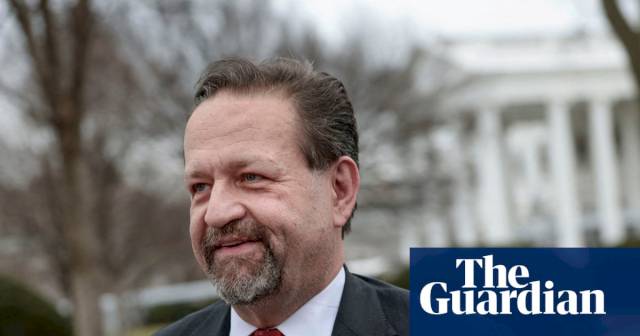
    When Donald Trump’s counter-terrorism “czar”, Sebastian Gorka, introduced the Trump administration’s long-awaited counter-terrorism strategy on a call with journalists on Wednesday, he also reportedly described critics of the administration’s war in Iran as “testicularly challenged”.

    The at-times bizarre 16-page memo Gorka authored is only slightly more subtle – taking rhetorically charged swings at the president’s enemies, the Biden administration, transgender people and some Islamist groups, while offering little clarity about the threat posed by political violence domestically or abroad or any specific plans to address it.

    “President Trump has affected a complete revision of how we defeat threats to America predicated on national sovereignty and civilizational confidence and the objective of destroying the groups who would kill Americans or hurt our interests as a free nation,” the document claims. “This applies to cartels, Jihadists, left-wing violent extremists, state actors and state sponsors, or any future terror threat.”

    Political and security analysts slammed the memo as “largely slop”, “utterly unhinged” and an “exercise in gaslighting, partisanship and obsequiousness”.

    “It’s the opposite of ‘speak softly and carry a big stick’. It’s more like ‘yell loudly to conceal your small stick’,” Colin Clarke, director of the Soufan Center, a security thinktank, wrote in a series of blistering posts about the document. “And it’s transparent to our allies and adversaries.”

    The memo is largely scant on substance and does not lay out a roadmap for carrying out its prescriptions. It identifies what it labels “three major types of terror groups” as priorities: “narcoterrorists and transnational gangs”, “legacy Islamist terrorists”, and “violent left-wing extremists, including anarchists and anti-fascists”. It makes no mention of far-right or white supremacist ideology, which has consistently been behind incidents of domestic political violence, but singles out “radically pro-transgender” and “anti-American” ideology for “neutralization”. It claims immigration has turned Europe into an “incubator of terror threats” and called on European allies to “halt its willful decline”. And it accuses past administrations of having “weaponized” the intelligence community, pledging to keep the intelligence apparatus from being used as a political tool “against innocent Americans” even as it outlines a plan that appears to do exactly that.

    With regard to groups on the left it broadly dubs “violent secular political groups”, the document vows: “We will use all the tools constitutionally available to us to map them at home, identify their membership, map their ties to international organizations like Antifa, and use law enforcement tools to cripple them operationally before they can maim or kill the innocent.”

    Critics described the document, which makes half a dozen references to the Biden administration’s supposed failures, as both “completely Trumpian” and an “alarming” escalation in rhetoric. They particularly warned about the expanded use of a terrorism framework as pretext to deny the basic civil and political rights of targeted individuals.

    Nadia Ben-Youssef, advocacy director of the Center for Constitutional Rights, noted that the strategy openly embraces state violence and political repression, and normalizes extraordinary measures like illegal military strikes, renditions, deployment of the military and immigration enforcement agents, and digital surveillance.

    “The document follows in the Trumpian tradition and that of the broader rightwing movement by explicitly articulating an extremist worldview, and openly promoting policy and a vengeful executive unbounded by law,” she said. “It overtly dehumanizes communities, and lauds executive action that has violated the constitution and international law.”

    The strategy collapses a swath of disfavored communities and the broader political left “into ‘terrorists posing an existential threat to the US’”, Ben-Youssef added. “[It] can only be understood as a political project to criminalize dissent, demonize migrants, target Muslim communities, and label transgender people and their allies as acceptable targets of marginalization, repression and violence.”

    It should come as little surprise that such an extraordinary document should come from Gorka, a far-right commentator whose selection as senior director for counter-terrorism drew ridicule and consternation even from within the ranks of the right.

    For all that is unprecedented about the administration, however, Ben-Youssef and others argued that Trump is only expanding upon a flawed and dangerous counter-terrorism apparatus the administration has inherited from previous ones.

    “The document unfortunately builds off of decades-long elements of US counter-terrorism policy,” said Chip Gibbons, policy director at the civil liberties group Defending Rights & Dissent. “A lot of people are very shocked by the language about leftwing extremists, anarchist extremists. And it is very shocking. But that language is not new.”

    Trump may be unique in his willingness to crush democracy and dissent, Gibbons added. “But he’s doing so using tools that were handed to him and were created and sharpened over the last couple of decades.”

  • Top climate research center at risk of cuts sues Trump administration – Scientific American

    Top climate research center at risk of cuts sues Trump administration – Scientific American

    Denver, Colorado

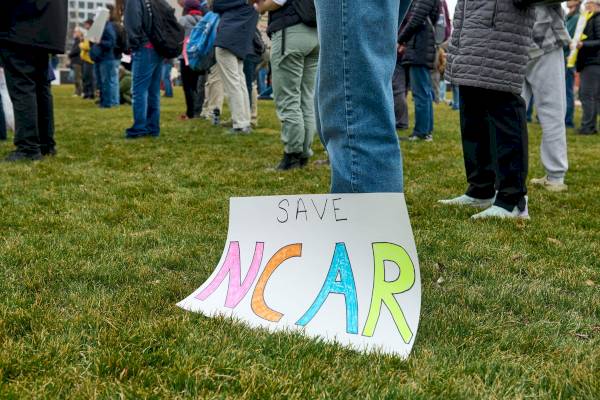
    In one of the highest-profile battles yet between the US research community and the administration of President Donald Trump, lawyers faced off in a Colorado courthouse yesterday over the future of a research centre that has been called the global ‘mothership’ of climate science.

    Under Trump, the US government has said that it will take steps to dismantle the National Center for Atmospheric Research (NCAR) in Boulder, Colorado, alleging that it promotes climate alarmism. The organization that manages NCAR — a coalition of around 130 universities called the University Corporation for Atmospheric Research (UCAR) — sued the government in March to stop NCAR’s break-up.


    On supporting science journalism

    If you’re enjoying this article, consider supporting our award-winning journalism by subscribing. By purchasing a subscription you are helping to ensure the future of impactful stories about the discoveries and ideas shaping our world today.


    Researchers say that NCAR is a crucial global resource whose models underpin much of modern atmospheric science, including artificial-intelligence studies aimed at decoding and predicting extreme weather. “Losing NCAR would mean losing decades of institutional knowledge, something that cannot be plugged back in two or four or even ten years from now,” says Angeline Pendergrass, an atmospheric scientist at Cornell University in Ithaca, New York.

    At the heart of the legal fight is whether the US National Science Foundation (NSF), which provides the bulk of NCAR’s funding through a contract with UCAR, is moving too quickly and without authority to hand off pieces of NCAR — including a supercomputing centre in Cheyenne, Wyoming — to public and private institutions.

    A lawyer representing the NSF argued in court that no final decisions had been taken; an NSF spokesperson told Nature that he had nothing further to add.

    Documents released as part of the UCAR lawsuit show that last November, the White House’s budget office told the NSF to begin restructuring NCAR to align the centre’s mission “more closely with Administration priorities”. The news became public in December. By January, the NSF asked for proposals on how NCAR should be reorganized, including a request for public comments by 13 March. But the documents show that well before that deadline arrived, on 12 February, the NSF told NCAR officials that the agency had already decided to transfer the stewardship of its supercomputing centre elsewhere. “That’s remarkably fast for a consequential decision such as this,” says Carlos Javier Martinez, a climate scientist at the Union of Concerned Scientists in Cambridge, Massachusetts.

    On 3 April, UCAR asked a US district court judge to freeze the plans to give away the supercomputing centre. “This is a sham process,” Michael Purpura, a solicitor at the Hueston Hennigan law firm in Newport Beach, California, argued on UCAR’s behalf at the 7 May court hearing.

    Representing the NSF, solicitor Marianne Kies argued that despite the actions taken so far, the agency had not made any decisions on the future of the supercomputing centre or the rest of NCAR. “A final decision has not been made to transfer stewardship,” said Kies, who works with the US Department of Justice in Washington DC. “It’s not the case that NSF failed to follow procedure — it’s just that the need to follow procedure has not been triggered yet.”

    The judge, R. Brooke Jackson of the US District Court of Colorado, told both sides that he would issue a decision “as promptly as possible.” If he finds in favour of the NSF, the process of handing off the supercomputing centre will carry on. If he finds in favour of UCAR, that transfer is likely to be put on hold until the parties work out some other arrangement. Whatever the ruling, the broader battle over the future of NCAR — including its aeroplane fleet, space-weather studies and climate-modelling teams — will probably continue to play out.

    Scientists and other people who use NCAR data could see “ripple effects” caused by the current uncertainty, including on weather forecasts and the people who rely on them, says Amanda Staudt, executive director of the American Meteorological Society in Boston, Massachusetts. “Major changes like those proposed by NSF can be very disruptive.”

    An uncertain future

    The NSF created NCAR in 1960 at the request of US universities that wanted a shared centre for atmospheric research but did not have the resources to support such a centre on their own. NCAR currently operates under a five-year, US$938-million contract between UCAR and the NSF that ends in 2028.

    Members of the US Congress from Colorado have been trying to stop any moves towards breaking up NCAR, but so far have not succeeded. One possible strategy could be for Congress, which controls government spending, to add language into upcoming funding legislation that directs the NSF to keep NCAR intact.

    In the hearing, UCAR argued that there has already been substantial harm to NCAR in the form of a ‘brain drain’. Scientists have been leaving the atmospheric research centre because of uncertainty around its future. Kies, representing the government, argued that any such departures have been premature because no “final agency action” has been taken.

    The leading candidate to take over the supercomputing centre is the University of Wyoming in Laramie, which already partners with NCAR to run the facility. The centre includes a supercomputer named Derecho, which began operations in 2023. Since then, it has been used to study phenomena such as wildfire spread and severe storms.

    It’s “puzzling” that the NSF would invest millions of dollars into a new supercomputer in 2023, around the same time the agency renewed UCAR’s contract, showing confidence in the consortium, Martinez says. “And now, we see all of this change,” he adds. “It begs the question of, why?”

    This article is reproduced with permission and was first published on May 8, 2026.

    It’s Time to Stand Up for Science

    If you enjoyed this article, I’d like to ask for your support. Scientific American has served as an advocate for science and industry for 180 years, and right now may be the most critical moment in that two-century history.

    I’ve been a Scientific American subscriber since I was 12 years old, and it helped shape the way I look at the world. SciAm always educates and delights me, and inspires a sense of awe for our vast, beautiful universe. I hope it does that for you, too.

    If you subscribe to Scientific American, you help ensure that our coverage is centered on meaningful research and discovery; that we have the resources to report on the decisions that threaten labs across the U.S.; and that we support both budding and working scientists at a time when the value of science itself too often goes unrecognized.

    In return, you get essential news, captivating podcasts, brilliant infographics, can’t-miss newsletters, must-watch videos, challenging games, and the science world’s best writing and reporting. You can even gift someone a subscription.

    There has never been a more important time for us to stand up and show why science matters. I hope you’ll support us in that mission.

  • What is Donald Trump’s current approval rating? See the most recent polls – The Arizona Republic

    May 9, 2026, 5:02 a.m. MT

    President Donald Trump’s approval rating slightly dipped in most polls, nearing record-low levels in some of them, as U.S. strikes in Iran continue and challenges to his tariff policies intensify.

    On Thursday, May 7, the U.S. military launched “self-defense strikes” on Iranian targets following “unprovoked” attacks from the Islamic Republic on U.S. Navy vessels passing through the Strait of Hormuz.

    No U.S. assets were struck, but U.S. forces hit Iranian military facilities behind the attacks, U.S. military officials said in a statement, adding that the United States does not want to see an “escalation” of the fighting.

    Iran says it launched attacks on U.S. Navy assets after American forces tried to seize an Iranian oil tanker. U.S. forces on Wednesday, May 6, struck an Iranian oil tanker, disabling the vessel.

    The president called the attacks a “trifle” but said the ceasefire agreement between the two nations still holds.

    Secretary of State Marco Rubio visited Pope Leo XIV at the Vatican on Thursday following a weeks-long feud between President Trump and the pope in which the president called the first American-born pontiff “weak” on crime and accused him of “endangering” Catholics with his opposition to the Iran war.

    During his visit, Rubio gifted the head of the Catholic Church a crystal football, and Leo offered the secretary of state a pen made of olive wood. They also discussed “the situation in the Middle East and topics of mutual interest in the Western Hemisphere,” State Department spokesperson Tommy Pigott said in a statement following the meeting.

    Just hours after the meeting, Rubio hit Cuba’s military regime and elites with more sanctions, using authority granted to him by President Trump in an executive order he signed last week. The humanitarian crisis on the communist-run island was on the agenda of Rubio’s meeting with the pope.

    And in another blow to President Trump’s trade agenda, a federal court ruled Thursday against a 10% global tariff the president imposed this year to replace tariffs struck down by the Supreme Court.

    Here’s what to know about Trump’s approval rating, including how they are decided and how Trump’s ratings compare with his first term and past presidents.

    What is Donald Trump’s approval rating?

    Here are the latest approval ratings released about Trump’s administration:

    • The New York Times’ daily average of polls showed a 38% approval and 58% disapproval as of May 8.
    • The Economist shows that 36% of people are favorable of Trump and 57% are unfavorable of him, according to the latest update from May 8.
    • A Rasmussen Reports poll from May 8 showed 42% approval and 56% disapproval of Trump.
    • Reuters/Ipsos poll from April 24-27 reported that 34% of those surveyed gave him a favorable approval rating of his performance in office and 64% gave an unfavorable rating.
    • Morning Consult poll conducted April 24-27 showed 45% of voters approve of Trump’s performance, while 53% disapprove.
    • Real Clear Polling‘s average of polls from April 20 to May 7 shows a 40.5% approval rate and a 56.3% disapproval rate.
    • The American Research Group poll from April 21 showed 32% of people approve and 63% disapprove.
    • A poll from the Associated Press and NORC showed 33% of people approve and 67% disapprove of Trump as of April 16.

    How does Trump’s approval rating compare with his 1st term?

    Trump had a final approval rating of 34% when he left office in 2021. His approval average during his first term was 41%.

    How does Trump’s approval rating compare with past presidents?

    • Joe Biden – 40%
    • Donald Trump (first term) – 34%
    • Barack Obama – 59%
    • George W. Bush – 34%
    • Bill Clinton – 66%
    • George H.W. Bush – 56%
    • Ronald Reagan – 63%
    • Jimmy Carter – 34%
    • Gerald Ford – 53%
    • Richard Nixon – 24%

    Are presidential approval ratings accurate?

    Data agency Gallup notes that these approval ratings are a “simple measure, yet a very powerful one that has played a key role in politics for over 70 years.”

    A president’s approval rating reflects the percentage of Americans polled who approve of the president’s performance. Anything can impact a president’s rating, such as legislation passed, actions and elections.

    According to ABC News, an approval rating doesn’t just represent how well the administration is doing for the general public, but could determine the outcome of an upcoming election for a politician or how much they get done during their time in office.

    While these ratings are easy to understand, Quorum says some analysts believe they are not as useful as they once were due to extreme partisanship and the polarized political climate.

    “Presidential approval ratings have always been partisan, with members of the president’s party offering more positive assessments than those in the opposing party,” according to the Pew Research Center. “But the differences between Republicans and Democrats on views of the president have grown substantially in recent decades.”

    USA TODAY Network reporter Maria Francis contributed to this article.

  • ‘The FDA is a complete mess’: Trump makes fate of agency chief unclear as public trust plummits – The Guardian

    ‘The FDA is a complete mess’: Trump makes fate of agency chief unclear as public trust plummits – The Guardian

    Donald Trump has signed off on a plan to fire Marty Makary, the commissioner of the US Food and Drug Administration (FDA), the Wall Street Journal reported on Friday, after a series of high-profile agency decisions put the FDA head in the crosshairs of the White House and Republican lawmakers.

    Makary’s tenure at the FDA has been marked by several controversial decisions on drugs and vaccines amid plummeting staff morale over layoffs and the appointments of divisive officials. Recent political clashes include abortion, drugs and vaping, but decisions to pull back publications on the safety of shingles and Covid vaccines, among other immunization decisions, have also rocked public health. There have also been concerns about the transition from two clinical trials to one, the commissioner’s new priority review vouchers and “data-free” regulatory decisions.

    Trump’s plan to fire Makary is not yet final and may still change, the Journal reported. Makary, “an embattled, paranoid leader”, is “one more high-profile misstep” away from losing his job, Bloomberg News reported on Monday. He is on “thin ice” with the White House because he is “not the best fit” to manage staff and navigate bureaucracy, according to Notus.

    Trump “upbraided” Makary and made a series of calls over the weekend to pressure him into approving fruit-flavored vapes for the first time after Makary overrode agency scientists to halt the approval, according to the Wall Street Journal. The new flavours, reportedly part of Trump’s plan to appeal to younger voters, were approved on Tuesday. The news release does not include any comments from Makary, which is unusual, and attributes moves like these to “President Trump’s leadership”.

    Vaping is a divisive issue in public health, since it can be used as a smoking cessation aid but it also carries its own health risks. But the greater risk is political interference – or even the appearance of it – in regulatory decisions, experts say.

    The FDA was previously known for its stability and predictability, especially because the drug development process is a multi-year process, said Peter Lurie, executive director of the Center for Science in the Public Interest and a former FDA associate commissioner.

    “Public trust is built up not over months, but over decades. On the other hand, you can destroy it in mere months,” Lurie said. “In a very short period of time, they have managed to undermine years of trust that the agency has built up with the public and industry because of their unpredictable practices and the general chaos.”

    There has been sharp backlash from the public to new restrictions on vaccines and how they are brought to market – and leaders are aware of the unpopular decisions, Lurie said. “Vaccines have really gotten their attention. They do understand that they’ve gone too far for the American people on vaccines.”

    FDA officials reportedly stopped the publication of research on the safety of shingles and Covid vaccines, reporting revealed this week. The research on the safety of Covid vaccines was withdrawn by the authors after being accepted by the journal Vaccine, Angela Rasmussen, co-editor of the journal and a virologist at the Vaccine and Infectious Disease Organization at the University of Saskatchewan in Canada. Vinay Prasad, the top US vaccines regulator, decided to pull the study, which showed that “the benefits of vaccination outweigh the risks”, according to Stat News.

    “I think we’re going to start seeing a big pattern of this,” Rasmussen said of top-level interference with research publication. “It just seems like this is the tip of the iceberg, and the FDA is just a complete mess.”

    The FDA may serve as a testing ground for leaders to override experts and staff since most people don’t pay attention to the inner workings of the FDA, Rasmussen said.

    “They see what they can get away with administratively, and see what people notice,” she said. While the FDA is “incredibly boring” to many members of the public, it’s also “really powerful from a regulatory perspective”, Rasmussen said. “So you could do something totally boring that nobody pays attention to and, boom, millions of people don’t have access to a drug or vaccine that they need.”

    Makary is causing “political headaches” for the White House, especially around decisions like the rejection of a melanoma treatment from the drugmaker Replimune, according to a column in the Wall Street Journal.

    “I think that article in the Wall Street Journal is the ninth article they’ve posted in that opinion section, begging for Replimune’s approval,” Makary told CNBC on Tuesday. “I don’t work for Replimune, I work for the American people, and I stand by the scientists at the FDA.”

    Senator Ron Johnson, a Republican from Wisconsin, said in March that he was investigating the FDA for rejections of rare disease treatments.

    The FDA’s “mismanagement and bungled drug reviews” had “chilled investments in life-saving, innovative cures”, opening the door to international competitors like China, Darin LaHood, a Republican representative from Illinois, said at the House ways and means committee budget hearing last month.

    It’s “very important that we have a vibrant, efficient FDA,” and “I intend to take that up with Dr Makary,” LaHood told Robert F Kennedy Jr, secretary of the US Department of Health and Human Services.

    Kennedy defended the record of the FDA and Makary in particular, taking a swipe at the very lawmakers in the hearing.

    “Everybody goes after him because the industry is so powerful. They own Congress, they own the media, and they can beat up Marty Makary because he’s trying to do change over there,” Kennedy said.

    Abortion has been another key flashpoint at the FDA. For months, Republicans in Congress have demanded action on mifepristone, one of two medications frequently used for abortion, pointing to Makary as a stumbling block in their attempts to restrict access to the medication. Senator Josh Hawley, a Republican from Missouri, introduced a bill in March to remove FDA approval of mifepristone for abortion entirely.

    A string of hirings, firings, rehirings, and refirings, as well as the appointment of inexperienced officials had created a “massive upheaval that has been an ongoing feature of daily work at FDA ever since the new administration began”, Lurie said. “It’s just endless chaos.”

    There have been several directors of the FDA’s Center for Drug Evaluation and Research (CDER). Despite criticizing the role of industry at the agency, leaders first chose George Tidmarsh, a biotech industry veteran, to lead CDER. Tidmarsh was soon ousted – and sued by a company alleging he used his position to affect their business. Richard Pazdur, a respected cancer drug regulator, accepted the role and then quit after a month.

    “That was probably about the only personnel decision that made people within the agency happy, but its rapid reversal had the end effect of depressing morale still further,” Lurie said. The current acting CDER director, Tracy Beth Høeg, is a sports medicine physician with “no expertise”, critics say.

    Turmoil has also rocked the FDA’s Center for Biologics Evaluation and Research (CBER). Vinay Prasad, until recently the head of CBER, is known for clashing with the industry, and he was fired and then rehired last year; he departed the agency again at the end of April. Makary reportedly went to bat for Prasad, and the two worked closely to create a new vaccine approval framework, including for Covid shots, which they announced in a journal article instead of through the usual agency processes.

    Prasad overruled center scientists when he decided to limit Covid vaccines and again when the agency refused to consider Moderna’s new flu vaccine, a decision that was quickly reversed after public outcry.

    That flu vaccine, which is based on messenger RNA (mRNA) technology, works better than other flu shot options for people over the age of 50, according to new research published in the New England Journal of Medicine on Wednesday.

    Prasad also tangled publicly with uniQure, the company creating a gene therapy for Huntington’s disease, soon before he was ousted for a second time.

    A new program called the commissioner’s priority voucher, a program to make one-day regulatory decisions, has also drawn criticism and questions.

    “It’s just a matter of time before the wrong thing gets approved or before the right thing doesn’t get approved, and people die as a result,” Rasmussen said. “There is nothing we should be doing to the regulatory process that speeds it up at the expense of being able to actually evaluate and regulate drugs.”

    The agency’s decisions were supposed to be based on science alone, balancing between safety and effectiveness, Lurie said. Especially with promises to speed up the reviews, “that’s just completely contrary to the way the agency is operated,” Lurie said. “That increases the likelihood of making a mistake.”

    Makary, previously a professor and surgeon at Johns Hopkins, came to prominence by critiquing Covid boosters. As FDA head, he’s seen as a respectable white coat in the White House, but Makary has also promoted dangerous conspiracy theories. HIV “very well may have come from a lab”, Makary said on a far-right podcast in November. “Where did Lyme disease come from? I can tell you with a high degree of probability it came from lab 257 on Plum Island,” he added, referring to a theory that the bacteria was created in a secret military lab. (The bacteria that causes Lyme disease circulated long before then.)

    Makary was a featured speaker at the first HHS conference on women’s health in March. He focused on potential links between disruptions to the microbiome and long-term health, criticizing such diverse potential causes as c-sections and antibiotics. Makary invoked his own young son at home. “Luckily, he did not need a c-section,” he said, though “sometimes you need ’em.” And, he said, his son “is not getting antibiotics unless he’s on his deathbed or suffering”.

  • The Iran war has changed. Trump’s talking points have not – CNN

    The Iran war has changed. Trump’s talking points have not – CNN

    Like Lucy with the football, President Donald Trump keeps teasing that a deal to end the war with Iran is nearly over.

    It’s one of a series of Iran talking points he has been repeating for months.

    The war itself has changed — evolving from one of shock and awe to a monthlong ceasefire in which each side has imposed a costly blockade on the other.

    But Trump’s talking points have stayed the same. The ideas he repeats include the key points that the US is in charge; Iran’s military is devastated; and things are going to be over pretty soon.

    All this makes it very difficult to know how seriously to take his assurances about the proximity of a deal.

    The White House messaging on the war has been ineffective, if dour polling is to be believed, but Trump’s own adherence to his script has been unshakeable.

    “It’ll be over quickly,” Trump said during a tele-rally for a Republican candidate in Georgia this week.

    “I think it’s got a very good chance of ending, and if it doesn’t end, we have to go back to bombing the hell out of them,” he told PBS earlier in the week.

    It’s a tease he has employed over and over again since the US and Israel first attacked Iran.

    “Very soon,” he told reporters on March 9.

    The specific timeframe has slipped from the four to six weeks Trump projected early in the campaign, but it has always remained just off in the distance.

    Back in April, CNN’s “Inside Politics” made a montage of times Trump had said the war would be over soon. He hasn’t stopped the tease in the weeks since.

    A woman walks past symbolic belongings laid on the ground at Valiasr Square in Tehran on April 24, 2026, in tribute to the schoolgirls in Minab killed during the initial February 28 airstrikes on Iran.

    Trump has not shied away from using the word “war” to describe military conflict, which remains unauthorized by Congress. But he prefers to describe it as something less.

    “I call it a skirmish because that’s what it is, it’s a skirmish. And we’re doing unbelievably well,” Trump said at the White House on Wednesday.

    The word skirmish is relatively new, but the idea around it has been a constant.

    “This is a short excursion into something that should have been done for 47 years,” he told reporters on March 7 on Air Force One.

    “So we did a little detour and it’s working out very nicely,” he said at the White House on May 4.

    • Source: CNN ” data-fave-thumbnails=”{“big”: { “uri”: “https://media.cnn.com/api/v1/images/stellar/videothumbnails/78055652-23289747-generated-thumbnail.jpg?c=16×9” }, “small”: { “uri”: “https://media.cnn.com/api/v1/images/stellar/videothumbnails/78055652-23289747-generated-thumbnail.jpg?c=16×9″ } }” data-vr-video=”false” data-show-html=”” data-byline-html=”

    ” data-timestamp-html=”

    PUBLISHED

    ” data-check-event-based-preview data-is-vertical-video-embed=”false” data-network-id data-publish-date=”2026-05-08T22:07:59.210Z” data-video-section=”politics” data-canonical-url data-branding-key data-video-slug=”how-trump-refers-to-the-iran-war-3box” data-first-publish-slug=”how-trump-refers-to-the-iran-war-3box” data-video-tags data-breakpoints=”{“video-resource–media-extra-large”: 660}” data-display-video-cover=”true” data-details>


<p>President Trump has at various points called the Iran war by various names, including a “skirmish,” a “detour,” an “excursion.”</p>
<p>” onload=”this.classList.remove(‘image__dam-img–loading’)” onerror=”imageLoadError(this)” height=”1080″ width=”1920″></picture>     </div>
<div>
<p>How Trump refers to the Iran war                 </p>
<p><span>                                                                                     0:12                             </span>                                 <span> • Source:                                      <a target=CNN


<p>President Trump has at various points called the Iran war by various names, including a “skirmish,” a “detour,” an “excursion.”</p>
<p>” onload=”this.classList.remove(‘image__dam-img–loading’)” onerror=”imageLoadError(this)” height=”1080″ width=”1920″ loading=”lazy”></picture>     </div>
<div>
<div>
<p>How Trump refers to the Iran war</p>
</p></div>
<p>                                                    0:12          <span>         </span>  </p>
</p></div>
</p></div>
</p></div>
<p data-uri= “They have no navy — totally wiped out — they have no air force — totally wiped out — they have no anti-aircraft capability — totally wiped out — no radar. They have no leaders. The leaders are wiped out. The whole thing — and then I read the papers and they say how well they’re doing. They’re not doing well,” Trump said May 5 at the White House.

    A day earlier, he said the same thing.

    “They have no navy, they have no air force, they have no anti-aircraft equipment, they have no radar, they have no nothing. They have no leaders, actually. Their leaders — the leaders happened to be gone also,” he said May 4.

    It’s a talking point Trump has repeated ad nauseam, both before the April 7 ceasefire and since.

    Here’s an example from his gaggle with reporters on March 20 in arguing the US had already essentially won the war:

    “We’ve knocked out their navy, their air force. We’ve knocked out their anti-aircraft. We’ve knocked out everything. We’re roaming free. From a military standpoint, all they’re doing is clogging up the strait. But from a military standpoint, they’re finished,” he said back then.

    A journalist stands next to the wreckage of a vehicle during the visit to a car service center in eastern Tehran that was hit by a missile strike, on March 28, 2026.

    The seriousness of talks between Iran and the US has been the subject of much conjecture as they have ebbed and flowed during the war. Multipoint proposals brokered by Pakistani interlocutors have morphed into a simpler set of principles. (Some reports suggested the proposal fit onto one page, but Trump has said there’s more to it than that.)

    It’s also unclear what would happen in the long term to Iran’s nuclear program. Trump has long said a major goal of the war is to make sure Iran can never have a nuclear weapon.

    But Trump’s talking point is that Iran’s leadership wants a deal.

    “They want to make a deal. We’ve had very good talks over the last 24 hours, and it’s very possible that we’ll make a deal,” Trump said Wednesday at the White House.

    At a different Wednesday event, he said something very similar.

    “We’re dealing with people that want to make a deal very much, and we’ll see whether or not they can make a deal that’s satisfactory to us. We have it very much under control,” he said.

    He has been talking about how the Iranians want to make a deal for months. No deal has materialized.

    “They want to make a deal,” he said on March 21.

    • Source: CNN ” data-fave-thumbnails=”{“big”: { “uri”: “https://media.cnn.com/api/v1/images/stellar/videothumbnails/78396464-15653034-generated-thumbnail.jpg?c=16×9” }, “small”: { “uri”: “https://media.cnn.com/api/v1/images/stellar/videothumbnails/78396464-15653034-generated-thumbnail.jpg?c=16×9″ } }” data-vr-video=”false” data-show-html=”” data-byline-html=”

    ” data-timestamp-html=”

    PUBLISHED

    ” data-check-event-based-preview data-is-vertical-video-embed=”false” data-network-id data-publish-date=”2026-05-08T22:13:49.066Z” data-video-section=”politics” data-canonical-url data-branding-key data-video-slug=”trump-often-says-iranians-want-to-make-a-deal” data-first-publish-slug=”trump-often-says-iranians-want-to-make-a-deal” data-video-tags data-breakpoints=”{“video-resource–media-extra-large”: 660}” data-display-video-cover=”true” data-details>


<p>President Trump frequently says the Iranians want to make a deal, and that they want it more than he does.</p>
<p>” onload=”this.classList.remove(‘image__dam-img–loading’)” onerror=”imageLoadError(this)” height=”1080″ width=”1920″></picture>     </div>
<div>
<p>Trump often says the Iranians want to make a deal                 </p>
<p><span>                                                                                     0:11                             </span>                                 <span> • Source:                                      <a target=CNN


<p>President Trump frequently says the Iranians want to make a deal, and that they want it more than he does.</p>
<p>” onload=”this.classList.remove(‘image__dam-img–loading’)” onerror=”imageLoadError(this)” height=”1080″ width=”1920″ loading=”lazy”></picture>     </div>
<div>
<div>
<p>Trump often says the Iranians want to make a deal</p>
</p></div>
<p>                                                    0:11          <span>         </span>  </p>
</p></div>
</p></div>
</p></div>
<p data-uri= At that time, before the ceasefire, which was meant to help foster a deal, Trump argued the war was going according to his plan. “We are weeks ahead of schedule,” he said back then. (He’s not using that talking point anymore.)

    Days later, on March 26, he was agitated that Iranians were not willing to agree to a US proposal and making threats on Truth Social:

    “The Iranian negotiators are very different and ‘strange.’ They are ‘begging’ us to make a deal, which they should be doing since they have been militarily obliterated, with zero chance of a comeback, and yet they publicly state that they are only ‘looking at our proposal.’ WRONG!!!”

    The situation has changed since then. There is a ceasefire, but Iran has gained leverage by shutting down the Strait of Hormuz. But the talking point remains the same.

    President Barack Obama speaks during a news conference regarding a nuclear deal with Iran, in the East Room of the White House on July 15, 2015.

    I’ve written about this before, but Trump continues to talk about the nuclear deal struck between multiple countries and Iran during the Obama administration. He repeats it often.

    “Other presidents should have done this,” he said Tuesday at the White House. “Forty-seven years, they’ve (presidents) been toying with these stupid people (Iran’s leaders). In many cases, stupid people. They should have been done by Obama. He went the other way. He was giving him cash. He sent plane loads — a Boeing 757 took the seats out and put green, green cash, $1.7 billion in the plane.”

    Those claims, which bend the facts of the Obama-era deal, are frequent talking points for Trump.

    “The DEAL that we are making with Iran will be FAR BETTER than the JCPOA, commonly referred to as ‘The Iran Nuclear Deal,’ penned by Barack Hussein Obama and Sleepy Joe Biden, one of the Worst Deals ever made having to do with the Security of our Country,” he said April 20 on social media.

    While intelligence assessments before the war did not suggest Iran was on the cusp of obtaining a nuclear weapon, Trump has argued the war was necessary to avert nuclear war.

    “I can tell you, the Middle East would have been gone, Israel would have been gone, and they would have trained their sights on Europe first and then us because they’re sick people. These are sick people,” Trump said on May 5 at the White House. “And we’re not going to let lunatics have a nuclear weapon.”

    The consistency of Trump’s talking points makes it hard to tell when he’s repeating the script and when he might be saying something new about negotiations on an end to the war.

    CNN’s Dugald McConnell and Emily Condon contributed to this report.