Author: admin

  • 59% of Americans say Trump is using his office for personal gain – YouGov

    59% of Americans say Trump is using his office for personal gain – YouGov

    Donald Trump remains deeply unpopular, with less than 40% of Americans approving of how he’s handling his job as president — as has been the case for 10 consecutive Economist / YouGov Polls. This week’s poll finds that 37% strongly or somewhat approve of Trump’s job handling and 57% disapprove, for a net job approval of -21.

    Trump’s net approval has been below -20 for four consecutive Economist / YouGov Polls. His average net approval over the past three weeks is -22, near the record low for his second term set last week.

    Several questions in this week’s Economist / YouGov Poll shed light on Americans’ disapproval of Trump. About half (53%) of Americans say that America’s standing in the world has worsened since Trump became president again in 2025. That’s double the share who say that America’s standing has improved (26%).

    Most Democrats (90%) and a majority (57%) of Independents say that America’s standing has worsened since Trump took office in 2025. In contrast, a majority (62%) of Republicans say it has improved and only 13% say it has worsened. Among Republicans, there is a divide between those who say they are MAGA supporters and those who say they are not. While three-quarters (76%) of MAGA Republicans say the U.S.’s standing has improved in Trump’s second term, only 29% of non-MAGA Republicans say the same. In fact, more non-MAGA Republicans say America’s standing has worsened since Trump retook office than say it has improved (39% vs. 29%).

    Many Americans also say that Trump has been self-serving during his presidency. A majority (59%) think that Trump is using his office for personal gain. Only 30% think he is not. The share of Americans who say Trump is using the presidency for his own benefit has grown since the Economist / YouGov Poll last asked this question in November 2025. At that point, 56% thought he was using his office for personal gain and 32% thought he was not.

    Almost all Democrats (93%) and nearly two-thirds (64%) of Independents say Trump is using his office for personal gain. In contrast, over two-thirds of Republicans (71%) say he is not while only 19% say he is. MAGA Republicans overwhelmingly say that Trump is not using his office for personal gain (82% vs. 11% who say he is), but non-MAGA Republicans are about evenly split (41% vs. 44%).

    One example of the ways that Trump’s presidency could personally benefit him is a $10 billion lawsuit he brought against the IRS after an unauthorized leak of his tax returns. The attorney general, appointed by Trump, is in charge of the IRS’s defense in the lawsuit. Nearly two-thirds (64%) of Americans say the IRS should not pay Trump $10 billion. Only 19% say it should. Majorities of Democrats (92%), Independents (68%), and Republicans who do not identify as MAGA supporters (59%) say the IRS should not pay Trump. In contrast, a majority of MAGA Republicans (58%) say the IRS should pay $10 billion to Trump; 23% say it shouldn’t.

    Image: Getty

    What do you really think about President Trump, American politics in general, and everything else? Share your reality, join the YouGov panel, and get paid to share your thoughts. Sign up here.

    Subscribe to the YouGov newsletter

    Related content

    Trump’s job performance, Iran, the economy, and more: May 15 – 18, 2026 Economist/YouGov Poll

    Few Americans approve of Trump’s handling of Iran

    A rising share of Americans say the economy is getting worse

    Trump’s sustained approval slump, AI, Iran, voting, and more: May 9 – 11, 2026 Economist/YouGov Poll

    Most Americans say AI development is moving too fast and twice as many are AI pessimists as AI optimists

    Donald Trump’s net approval is holding steady near Joe Biden’s worst numbers

    YouGov Behavioral: Viewership Trends by US Political Party

    How many Americans think they could beat Donald Trump in a fight?

    Inflation, Trump approval and safety, and the Voting Rights Act: May 1 – 4, 2026 Economist/YouGov Poll

    Only one-quarter of Americans support letting states draw districts to help minority candidates get elected

    Most Americans think Trump is at a higher risk of assassination than other recent presidents were

    Americans are worried about inflation and don’t like how Trump is handling it

    While both political parties are unpopular, Democrats have a lead in the race for Congress

    Most Americans say partisan gerrymandering should not be allowed

    The share of Americans who strongly approve of Donald Trump’s job handling hits a new low for his second term

    Gerrymandering, political parties, and Donald Trump’s weakening support: April 24 – 27, 2026 Economist/YouGov Poll

    We asked Americans what they think about 22 Palantir statements on tech and society

    MAGA Republicans are far more likely to support helping U.S. allies when thinking of help that allies might provide to the U.S.

    The pope, the president, the war with Iran, Ukraine, Israel, and more: April 17 – 20, 2026 Economist/YouGov Poll

    Support for military aid to Ukraine is higher than that for military aid to Israel

    Most Americans want the U.S. to make a deal to end the war with Iran as quickly as possible

    Pope Leo XIV’s views on the Iran war have more support among Americans than do Donald Trump’s

    A majority of Americans support legalizing marijuana use. Support is highest among middle-aged Americans

    Iran, Trump’s health, gas prices, and more: April 10 – 13, 2026 Economist/YouGov Poll

    Americans’ evaluations of gas prices are tied more to their views about the Iran war than to price changes in their state

    48% of Americans say Trump is suffering modest or significant cognitive decline

    Most Americans approve of the U.S. ceasefire with Iran

    Iran, Trump’s approval, inflation, taxes, spending, Bondi, and more: April 3 – 6, 2026 Economist/YouGov Poll

    Bipartisan majorities say they pay too much in taxes, but views on spending are more divided

    Inflation is Americans’ most important political issue — and one where Trump is particularly unpopular

    The U.S.’s war with Iran remains unpopular

    Democrats are starting to like congressional Democrats again

    Men and Republicans are more likely to take hawkish positions when they come with the label ‘hawk’

    Trump’s record-low approval, Iran, the shutdown, and more: March 27 – 30, 2026 Economist/YouGov Poll

    Republicans get more blame than Democrats for the partial shutdown

    Most Americans oppose sending ground troops to Iran

  • Few Americans approve of Trump’s handling of Iran – YouGov

    Few Americans approve of Trump’s handling of Iran – YouGov

    Iran

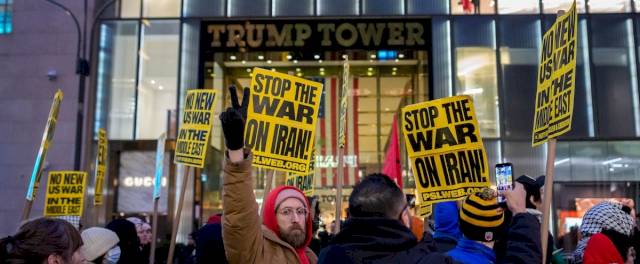
    Americans are dissatisfied with the situation in Iran, the latest Economist / YouGov Poll finds. Twice as many Americans oppose the war in Iran as support it (60% vs. 30%). Support for the war has changed little since just after it began in early March. Assessments of Trump’s handling of the situation in Iran are similarly negative, with 59% disapproving of his handling and 31% approving. Democrats disapprove of Trump’s handling by 92% to 5%. Republicans approve by 71% to 24%. Among Independents, 62% disapprove and 19% approve.

    Many Americans expect the war in Iran to last beyond the next month: 37% expect it will last a year or more and 46% say it will last more than a month but less than a year. Twice as many believe the U.S. is winning the war with Iran as think Iran is (32% vs. 16%); 38% say neither country is winning. By a similar margin, Americans think the U.S. is more likely to eventually win the war than say Iran is (37% vs. 13%); 29% believe neither will be the eventual winner.

    Russia and Ukraine

    Nearly two-thirds (65%) of Americans sympathize more with Ukraine in its conflict with Russia, while only 4% say their sympathies lie more with Russia. Slightly more expect Russia will be the eventual winner of the war than think Ukraine will (21% vs. 16%); however, more Americans anticipate neither country will win than say either will. Support for increasing U.S. military aid to Ukraine is currently higher than it has been in recent months: 33% are in favor of doing so compared to 24% who want to maintain current levels of military aid, 10% who want to decrease it, and 12% who want to stop all aid to Ukraine.

    Half (51%) of Americans disapprove of Trump’s handling of the situation with Russia and Ukraine; far fewer — 28% — approve. Looking back at the summit held last year between Trump and Vladimir Putin, many Americans believe Putin got more out of the summit than say Trump got more out of it (33% vs. 9%); 23% believe Putin and Trump got an equal amount out of the summit.

    Image: Getty (Adam Gray / Stringer)

    What do you really think about President Trump, American politics in general, and everything else? Share your reality, join the YouGov panel, and get paid to share your thoughts. Sign up here.

    Subscribe to the YouGov newsletter

  • Trump halts ‘major attack’ on Iran, but ready to strike if Tehran won’t give up nuclear weapon plans – Fox News

    Trump halts ‘major attack’ on Iran, but ready to strike if Tehran won’t give up nuclear weapon plans – Fox News

    Trump halts ‘major attack’ on Iran, but ready to strike if Tehran won’t give up nuclear weapon plans

    President Donald Trump halted a planned “major attack” on Iran on Tuesday in pursuit of a possible peace deal, but warned the U.S. remains poised to strike if negotiations fail. The standoff continues as Iran holds onto its nuclear weapons aspirations and Washington presses for guarantees that Tehran will not develop a nuclear weapon.

    Pinned

    G7 finance chiefs call for reopening Strait of Hormuz, warn on global imbalances

    Reopening the Strait of Hormuz is imperative, G7 finance ministers said Tuesday, underscoring the economic stakes of disruption in one of the world’s most important energy corridors.

    In a joint statement, the finance chiefs from Canada, France, Germany, Italy, Japan, the United Kingdom and the United States said they remained committed to stable energy markets and urged countries to avoid arbitrary export restrictions.

    Keeping Hormuz open and energy markets stable is a priority not only for the region, but for the broader global economy, the Group of Seven allies stressed as President Donald Trump pushes Iran toward peace and reopening the Strait of Hormuz.

    G7 ministers said in a joint statement that it was “imperative” to ensure a return to free and safe transit through the Strait of Hormuz and ease strains on energy, food and fertilizer supply chains.

    Trump said on Monday he had paused a planned attack against Iran after Tehran sent a peace proposal to Washington, and that there was now a “very good chance” of reaching a deal limiting Iran’s nuclear program.

    But other G7 countries have expressed frustration that Washington and Israel launched strikes against Iran without considering the economic impact, and the foreseeable closure of the Strait of Hormuz, a vital waterway for energy markets.

    Officials from three Gulf countries attended Tuesday’s meeting in Paris to discuss the crisis, and Lescure said that the IMF and the World Bank should do more to support the most vulnerable countries from the impact of the conflict, especially on food supplies.

    Reuters contributed to this report.

    Vice President JD Vance said Tuesday that President Donald Trump is still pursuing a diplomatic deal with Iran but remains “locked and loaded” to restart the military campaign if nuclear talks collapse.

    “It takes two to tango,” Vance told reporters at the White House daily press briefing Tuesday. “We are not going to have a deal that allows the Iranians to have a nuclear weapon.

    “So as the president just told me, we’re locked and loaded. We don’t want to go down that pathway. But the president is willing and able to go down that pathway if we have to.”

    The administration sees two paths forward, according to Vance: a negotiated agreement that permanently blocks Iran from obtaining a nuclear weapon, or renewed U.S. military action.

    “We think the Iranians want to make a deal,” Vance said. “The president of the United States has asked us to negotiate in good faith. And that’s exactly what we’ve done.”

    But Vance warned that diplomacy will not come at the cost of Trump’s core demand that Tehran never obtain a nuclear weapon.

    “There’s an option B, and the option B is that we could restart the military campaign to continue to prosecute the case, to continue to try to achieve America’s objectives,” Vance said. “But that’s not what the president wants. And I don’t think it’s what the Iranians want either.”

    Trump says Gulf leaders knew he was ‘getting ready to attack’ Iran without being told

    President Donald Trump remains steadfast in keeping his war plans to himself.

    “They knew I was getting ready to attack,” Trump told reporters at the White House ballroom construction site. “I didn’t tell them. I never tell anybody when.

    “But they knew that we were very close. I would say we were, I was an hour away from making the decision to go today, and we would probably not be talking about a beautiful ballroom today. We’d be talking about that.”

    But Gulf leaders had an inkling, Trump added.

    “So they called up, they had heard I made the decision and said, ‘Sir, could you give us a couple of more days because we think they’re being reasonable?’”

    Breaking News

    Trump says China’s Xi promised not to send weapons to Iran

    President Donald Trump said Chinese President Xi Jinping personally promised him that Beijing would not send weapons to Iran, as Trump warned Tehran still had some ability to retaliate despite what he described as devastating U.S. strikes on Iran’s military.

    “President Xi has promised me that he’s not sending any weapons to Iran,” Trump told reporters during a White House ballroom construction huddle with reporters.

    “That’s a beautiful promise. I take him at his word. I appreciate it.”

    Trump said he and Xi had “an amazing time” during his China visit and suggested Beijing shared U.S. concerns about keeping oil lanes open.

    “We got along very well before this, but President XI and I had a really an amazing time,” Trump added. “I think you’d say the same thing, but he promised that he’s not sending any weapons.

    “And, you know, if you think about it, he gets 40% of his oil” from the Strait of Hormuz, Trump said of Xi. “He’s not sending oil boats and, you know, tankers in with 20 destroyers alongside of them.

    “He does want it open, like me. I want it open and we’ll get it open.”

    Rubio urges UN to help ‘stop Islamic Republic of Iran’s unlawful mining and tolling of the Strait’

    Secretary of State Marco Rubio spoke with United Nations Secretary-General António Guterres on Tuesday about U.S. efforts to confront Iran’s activity in the Strait of Hormuz, the State Department said.

    “The Secretary further discussed U.S. efforts to stop the Islamic Republic of Iran’s unlawful mining and tolling of the Strait of Hormuz, including a draft UN Security Council resolution, presented by the United States and Bahrain with the support of other Gulf partners,” State Department spokesman Tommy Pigott wrote in a readout of the call.

    “The Secretary emphasized the overwhelming support of a broad base of UN members for these efforts.”

    Rubio discussed advancing President Donald Trump’s vision for a “back-to-basics” United Nations that is “leaner and more accountable.”

    Trump on higher gas prices: ‘It won’t be much longer’

    President Donald Trump is urging Americans to hang on amid rising gas prices as he tries to complete the mission in the Middle East of ridding Iran of nuclear weapons aspirations.

    “I appreciate everybody putting up with it for a little while,” Trump told reporters at the White House ballroom construction site Tuesday. “It won’t be much longer.”

    Trump pointed to the rising stock market in showing how the money experts are expecting peace with Iran.

    “We just hit a new high in the stock market – everything’s going good,” Trump said. “I’m sorry, but we have to go down and take a little journey down to we have to do something with Iran. We cannot let them have a nuclear weapon.”

    The price of gas “is peanuts” compared to the threat of a nuclear Iran, but noted he is a deflationary, energy-conscious president.

    “You know, I had gasoline down to $1.85 in Iowa,” Trump said. “I was in Iowa, and the stations had it at $1.85. But I was down to, in many cases, less than $2 a barrel, a gallon. And then I said to myself, this is great.”

    Treasury sanctions Iran-linked companies, shadow fleet vessels under ‘Economic Fury’

    The Treasury Department on Tuesday announced sanctions on more than 50 companies, individuals and vessels tied to Iran’s sanctions-evasion networks, targeting what officials described as a shadow banking and shipping system that helps generate revenue for Tehran.

    “Iran’s shadow banking system facilitates the illicit transfer of funding for terrorist purposes,” Treasury Secretary Scott Bessent said in a statement. “As Treasury systematically dismantles Tehran’s shadow banking system and shadow fleet under Economic Fury, financial institutions must be alert to how the regime manipulates the international financial system to wreak havoc.”

    The action, taken by Treasury’s Office of Foreign Assets Control under its “Economic Fury” campaign, designates a prominent Iranian foreign currency exchange house and associated front companies accused of overseeing hundreds of millions of dollars in transactions for sanctioned Iranian banks.

    Treasury said Iranian exchange houses collectively facilitate billions of dollars in foreign currency transactions each year, helping the regime and its armed forces evade sanctions, access the international financial system and move funds from oil and petrochemical sales.

    OFAC also blocked 19 vessels allegedly involved in Iranian petroleum and petrochemical shipments to foreign customers, which Treasury said have generated hundreds of millions of dollars in revenue.

    Breaking News

    Treasury Secretary Bessent: ‘No money for terror’ must come with ‘no room for excuses’

    Treasury Secretary Scott Bessent delivered a forceful message Tuesday: cutting off terrorist financing must remain central to U.S. national security strategy.

    “If we are serious about ‘no money for terror,’ then there must also be ‘no room for excuses,’” Bessent said in his opening statement at the No Money for Terror conference in Paris, France.

    Bessent framed sanctions not as “acts of aggression,” but as President Donald Trump‘s “instruments of peace” designed to change behavior, disrupt illicit networks, and prevent terror groups from accessing the money that sustains them.

    “The United States is hardly alone in facing the scourge of terrorism, especially from Iran,” Bessent said. “Yet, too often, we seem to be alone in our resolve to thwart it.

    “As President Trump brings renewed vigor and focus to this fight, crushing the threat of terrorism compels all of you to step up and join us in rooting out the financing that sustains it — from shell companies that are embedded within Europe, to shadow banking networks that lurk across the Middle East, and drug cartels across the Western Hemisphere.

    “For at their core, sanctions are not acts of aggression, they are instruments of peace. Their purpose is not to condemn nations or people to indefinite isolation, but to create the conditions that can hasten a change in behavior.”

    GOP Rep. Van Orden: House members should face DOJ probe over classified leaks

    Rep. Derrick Van Orden, R-Wis., says House Armed Services Committee members cannot be trusted with classified information.

    “There are several members of this committee that have proven to not be capable of maintaining classified material and secrets that safeguard our nation,” Van Orden said during Tuesday’s committee hearing. “And we are not capable of doing our constitutionally mandated congressional oversight if we cannot be exposed to classified information.”

    Unauthorized disclosures of classified information should be investigate by the Justice Department, he says, warning that leaks could endanger U.S. troops during the Iran war.

    Van Orden said Chairman Mike Rogers, R-Ala., and ranking member Adam Smith, D-Wash., recently sent committee members a memo about “another unauthorized disclosure of classified material” by a member of the panel.

    He said the leaks explain why he was not offended that only the Gang of Eight was briefed on Operation Midnight Hammer.

    Van Orden said the committee should not stop at sending warning memos and called for criminal accountability.

    “I believe that the Department of Justice should be actively investigating members of this committee for the criminal unauthorized disclosure of classified material,” he said. “If anybody were to be killed because somebody is trying to run for a higher office, they should be held accountable. It’s reprehensible.”

    CENTCOM Commander Adm. Brad Cooper declined to say whether Iran’s blockade of the Strait of Hormuz amounts to an act of war, telling lawmakers the military is operating under an “international armed conflict” framework.

    “So I defer to the department as well as the White House and any characterization of how we execute business,” Cooper told the House Armed Services Committee during a Tuesday hearing. “From a combatant command standpoint, from my perspective, we execute the orders as given. And today, the legal umbrella that we’re operating under is international armed conflict.”

    The answer stopped short of calling the blockade itself an act of war, even as U.S. officials have described the Strait of Hormuz as a vital international waterway and warned that Iran cannot be allowed to use it as leverage.

    Cooper’s remarks came during a tense hearing in which lawmakers pressed defense officials on the administration’s Iran strategy, civilian casualty investigations and the status of the Strait. Democrats repeatedly accused the Pentagon of refusing to give direct answers as the conflict enters a more dangerous phase.

    CENTCOM Commander Adm. Brad Cooper pushed back Wednesday after Rep. Adam Smith, D-Wash., pressed him to acknowledge U.S. responsibility for a strike that Smith said killed more than 150 schoolgirls in Tehran, insisting the investigation remains ongoing and that American forces do not deliberately target civilians.

    Cooper rejected Smith’s claim of bombing civilians, telling the House Armed Services Committee that the U.S. does not intentionally target civilians and that “the Iranian people” are not the enemy.

    “Congressman, to reiterate, the United States does not deliberately target civilians. Full stop,” Cooper said. “And nor are the Iranian people our enemy. The IRGC is the adversary in this case.”

    Smith cut in, accusing the military of stalling and asking whether Cooper would “acknowledge that that mistake was made and that we were responsible for it.”

    Cooper responded that the inquiry is still underway and said the case is not straightforward because of the school’s location.

    The investigation is ongoing,” Cooper said. “As soon as it is complete, I’m happy to be — it’s a complex investigation. The school itself is located on an active IRGC cruise missile base. It’s more complex than the average strike. As soon as we’re complete, I’m fully committed to transparency, given your important oversight role and the other members here.”

    Iran, like its terrorist proxies in the Middle East, has been accused of using civilians as human shields.

    “So that’s a no, we will not take responsibility for something we very obviously did,” Smith replied.

    The exchange grew sharper when Smith asked Cooper whether it was appropriate for a senior official to use the phrase “no quarter” to describe U.S. operations in Iran.

    Cooper avoided directly endorsing or condemning the phrase, saying military leaders are bound by the law of armed conflict.

    “I think it’s appropriate, as military leaders, we follow the law of armed conflict and our constitutional responsibilities. And that’s what we’ve done,” Cooper said.

    “Is no quarter following the law or not?” Smith pressed on.

    Cooper answered, “I would agree that we follow the law, sir.”

    Breaking News

    Congressional report lists 42 US aircraft lost or damaged in Iran war

    A new post citing the Congressional Research Service says the U.S. has lost or sustained damage to 42 aircraft so far in the war with Iran.

    Preston Stewart, a military commentator, posted on the CRS tallies.

    The figures, if confirmed, would point to a significant toll across both manned and unmanned platforms, with drones accounting for the largest share of the listed losses.

    The list comes as President Donald Trump has claimed Iran’s air force and navy are “completely gone” and warned that Tehran will not be allowed to obtain a nuclear weapon.

    The Pentagon has not immediately released a full public accounting matching the aircraft-by-aircraft breakdown cited in the post.

    The UAE Ministry of Defense said Tuesday that air defense systems intercepted six hostile drones over the past 48 hours, including drones tied to a May 17 attack on the Barakah Nuclear Energy Plant that officials said originated from Iraqi territory.

    The ministry said the drones attempted to target “civilian and vital areas” in the country.

    “The air defense forces succeeded in intercepting and neutralizing the hostile targets with the highest levels of readiness and efficiency, without recording any human casualties or impact on the safety of vital facilities,” the ministry wrote in a post on X, according to a translation from Arabic.

    The announcement came as UAE officials said technical tracking from the Barakah incident showed three drones were involved in the earlier attack.

    Two were intercepted, while a third struck an electrical generator outside the plant’s internal perimeter, according to the ministry.

    “In the context of completing the investigations related to the brazen attack on the Barakah Nuclear Energy Plant on May 17, 2026, the results of technical tracking and monitoring confirmed that the three drones, two of which were successfully engaged, while the third struck an electrical generator outside the internal perimeter of the plant on that date, in addition to the drones intercepted later, were all originating from Iraqi territory,” the ministry wrote.

    The ministry said the UAE “reserves its full right” to take necessary steps to protect its sovereignty and national security under international law. It added that the armed forces remain fully prepared “to deal with any threats targeting the security of the state and its national capabilities.”

    Trump: ‘I’m not going to let the world be blown up on my watch; it’s not going to happen’

    President Donald Trump remains resolute in his Iran war goal objective being achieved: “Iran will never have a nuclear weapon.”

    “Whether it’s popular or not popular, I have to do it — because I’m not going to let the world be blown up on my watch,” Trump told reporters in a media scrum at the site of the White House ballroom construction Tuesday. “It’s not going to happen.”

    Trump bashed Democrat obstruction attempts in trying to stop him.

    “I’m in the middle of a negotiation – I’m saying you cannot have a nuclear weapon – and it comes over the wire that the Democrats want to stop Trump from further negotiations,” Trump said. “They want to stop Trump from, if he has to, giving them another slap.

    “They want to have a nuclear weapon to blow up the Middle East and to blow up, frankly, the world. It’s not going to happen.”

    Ultimately, Trump vows to keep his military attack plans close to the vest.

    Breaking News

    Trump: ‘We may have to give ’em another big hit’

    President Donald Trump issued another urgent warning for Iran’s delay tactics Tuesday from the White House ballroom construction site.

    “They’re begging to make a deal,” Trump told reporters during a question-and-answer session.

    “I hope we don’t have to do the one, but we may have to give them another big hit.

    “I’m not sure yet. You’ll know very soon.”

    Trump has paused Tuesday’s plan for a “major attack” on Iran.

    “I was an hour away” from striking Iran on Tuesday, Trump continued.

    “It would have been happening right now.”

    “The ships are all loaded. They’re loaded to the brim, and we’re all set to start.”

    Breaking News

    CENCOM Commander Cooper: Strait of Hormuz blockade has ‘turned away 88 ships’

    Adm. Brad Cooper, the commander of U.S. Central Command, told House lawmakers that a U.S.-led maritime blockade of Iran has effectively stopped trade in and out of Iranian ports, saying Tuesday that 88 ships have been turned away as part of a pressure campaign tied to ongoing negotiations.

    “The ceasefire continues,” Cooper said during a House Armed Services Committee hearing on Middle East posture for CENTCOM and AFRICOM. “And consistent with the president’s direction, we’ve established a highly effective maritime blockade of Iran.”

    Cooper said the operation has produced “zero trade into Iranian ports and zero trade out of Iranian ports,” arguing that the blockade is “squeezing Iran economically and creating powerful leverage for the ongoing negotiations.”

    Cooper described the blockade as both an enforcement measure during the ceasefire and a tool designed to increase economic pressure on Tehran.

    “To date, we’ve turned away 88 ships,” Cooper told the committee.

    President Donald Trump is holding the stronger hand in the standoff with Iran, according to retired Vice Adm. Robert Harward, arguing the White House has both the military leverage and the time to force Tehran into concessions.

    “The president has time on his hands. He controls the narrative. He controls the strike capabilities,” Harward told co-hosts Bill Hemmer and Dana Perino on Fox News’ “America’s Newsroom” on Tuesday morning. “I don’t see it as negotiations. It really is capitulation.”

    Harward said Trump has made clear Iran “will not have a nuclear weapon” or the material needed to build one, while also demanding that Tehran keep the Strait of Hormuz open to free commerce.

    “He can take his time, let the blockade and the economic sanctions continue to erode the economy of Iran,” he continued. “All those things work in his favor, and he can strike whenever he wants to.”

    “When you talk about resilience, the IRGC, the entity that controls the country, may have resilience, but the Iranian people are suffering miserably.”

    Trump is meeting with his National Security Council on Tuesday, but peace or war is in the hands of the leftovers of the IRGC leadership, ultimately, he concluded.

    “At the end of the day, the real center of gravity is the IRGC,” he said.

    “We’re going to have to need a government in Iran that not only hands over the nuclear material, stops threatening the Straits of Hormuz, but quits exporting the Islamic revolution throughout the region.”

    Qatar’s foreign ministry spokesperson said Tuesday there were no special arrangements in place for the export of energy products, but that the closure of the Strait of Hormuz had added complexity to supply chains in the region.

    Oil prices did fall Tuesday, with global benchmark Brent crude dropping 1.5%, after U.S. President Donald Trump said he had paused a planned attack on Iran to allow for negotiations to end the war in the Middle East.

    Treasury Secretary Scott Bessent extended a sanctions waiver by 30 days to allow “energy-vulnerable” countries to continue purchasing Russian seaborne oil.

    In the U.S., a record 9.9 million barrels were drawn from the Strategic Petroleum Reserve last week, Energy Department data showed, bringing stockpiles down to about 374 million barrels, the lowest point since July 2024.

    U.S. crude inventories are expected to fall about 3.4 million barrels in the week to May 15 in weekly data from the Energy Information Administration due out Wednesday.

    Trump has long promised oil prices will fall quickly once Iran and the U.S. come to peace and the Strait of Hormuz allows blocked tankers to finally move.

    Reuters contributed to this report.

    Breaking News

    Explosions heard on Iran’s Qeshm Island for neutralization of unexploded munition

    Explosions were heard Tuesday on Iran’s Qeshm Island, according to Iranian state-linked media, prompting initial uncertainty before reports the blasts were tied to the neutralization of unexploded munition.

    Iran’s Mehr news agency first reported that explosions had been heard on the island. A subsequent report by Tasnim, citing an official, said the explosions were caused by the neutralizing of unexploded munition. President Donald Trump remains ready to trigger a restart to military operations.

    Qeshm Island sits in the Strait of Hormuz, a strategically sensitive waterway at the mouth of the Persian Gulf.

    There were no immediate reports of casualties or damage. Details remained limited, and Iranian officials had not issued a broader public statement on the incident as of the initial reports.

    Reuters contributed to this report.

    President Donald Trump said Monday he is delaying a planned military strike on Iran after Gulf allies urged him to give negotiations more time, saying there is a “very good chance” of reaching a deal to end the war without renewed U.S. attacks.

    “We were getting ready to do a very major attack [Tuesday], and I put it off for a little while — hopefully maybe forever,” Trump said, “because we’ve had very big discussions with Iran, and we’ll see what they amount to.”

    “There seems to be a very good chance that they can work something out,” Trump told reporters at the White House. “If we can do that without bombing the hell out of them, I’d be very happy.”

    The announcement marked the latest shift in Trump’s handling of the fragile ceasefire reached in mid-April. For weeks, the president has warned Iran that fighting could resume if it did not accept a deal, while repeatedly setting deadlines and then backing away from them.

    Over the weekend, Trump warned that “the Clock is Ticking” and said Iran needed to move “FAST, or there won’t be anything left of them.”

    Trump first disclosed the pause in a social media post Monday, saying he had ordered the U.S. military to be ready “to go forward with a full, large scale assault of Iran, on a moment’s notice” if an acceptable deal is not reached.

    He later told reporters that Gulf allies, including Qatar, Saudi Arabia and the United Arab Emirates, asked him to delay the strike by two to three days because they believe talks with Iran are close to producing an agreement.

    Trump called the delay a “very positive development,” though he acknowledged past moments when diplomacy appeared close to succeeding before collapsing.

    “But this is a little bit different,” Trump said.

    This Associated Press contributed to this report.

    Live Coverage begins here
  • Trump endorses Paxton in Texas Republican primary, boosting effort to oust Sen. Cornyn – PBS

    Trump endorses Paxton in Texas Republican primary, boosting effort to oust Sen. Cornyn – PBS

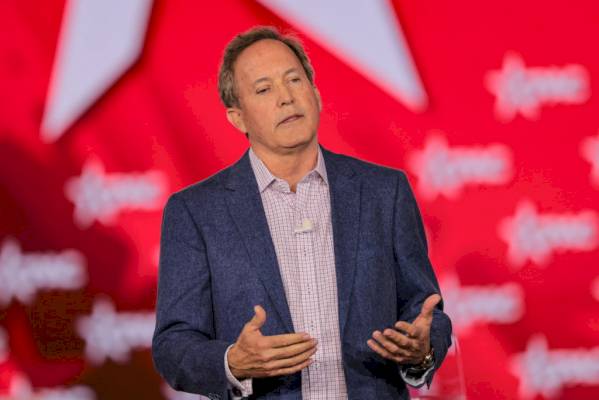
    ALLEN, Texas (AP) — President Donald Trump on Tuesday endorsed Texas Attorney General Ken Paxton, supercharging his effort to oust incumbent Sen. John Cornyn in a Republican primary runoff.

    “Ken is a true MAGA Warrior who has ALWAYS delivered for Texas, and will continue to do so in the United States Senate,” Trump wrote on social media.

    When news of the endorsement broke, Paxton supporters began cheering and dancing to “YMCA,” a Trump campaign anthem, at an event in Allen, Texas, where the attorney general was scheduled to speak.

    Paxton and Cornyn qualified for the May 26 runoff after a March 3 primary, while Rep. Wesley Hunt finished third and did not advance.

    Although the four-term Cornyn has backed Trump’s agenda in Washington, Paxton pitched himself as a political warrior for the Make America Great Again movement. Trump’s endorsement puts him at odds with his party’s establishment, which is convinced that Cornyn is the better candidate for November’s general election. The Democrats nominated Texas State Rep. James Talarico as their candidate for Senate.

    In response to Trump’s endorsement, Talarico said in a statement that “it doesn’t matter who wins this runoff. We already know who we’re running against: the billionaire mega-donors and their corrupt political system.”

    Cornyn’s campaign did not immediately respond to a request for comment. On Monday, the senator said he believed that Trump had decided not to weigh in with an endorsement.

    “I think the president doesn’t want to disappoint some of his own political base, and some of the Paxton people have been talking to him and encouraged him to support him, I think that was a bridge too far for the president so he’s just opted to say out of the race,” he said.

    Cornyn also argued that Paxton is a liability in a general election, where Democrats hope to flip the seat blue, and “Ken Paxton would hand it to them on a silver platter.”

    Trump, in his social media post, said Cornyn was “a good man” but “he was not supportive of me when times were tough.” He complained that “John was very late in backing me in what turned out to be a Historic Run for the Republican Nomination.”

    The runoff between Cornyn and Paxton had been shaping up as a bitter and expensive battle for the future of the Republican Party, and one that was diverting resources from other competitive races elsewhere in the country.

    Trump frustrated some Republicans by declining to endorse earlier in the race. On the Friday before the March 3 primary, he said that he had “pretty much” decided whom to support — but declined to say who — when asked by reporters on a visit to Corpus Christi.

    On the day after the primary, Trump promised to make an endorsement and said he would expect the candidate without his support to drop out. Paxton had said that he would not leave the race.

    WATCH: Tamara Keith and Amy Walter on Trump’s power in pushing out ‘disloyal’ Republicans

    Trump has had an at-times cool relationship with Cornyn, notably after the senator suggested in 2023 that Trump could not win the presidency again in 2024 and that his “time has passed him by.”

    Cornyn also was an early critic of Trump’s plan for a border wall between the U.S. and Mexico — a project he now supports.

    A former state attorney general and state Supreme Court judge, Cornyn was first elected to statewide office 36 years ago. His understated style and judge’s temperament contrast with the fiery rhetoric of Trump and his Make America Great Again movement.

    Cornyn has had support from Senate Republican leadership, including South Carolina Sen. Tim Scott, chairman of the National Republican Senatorial Committee, who warned that “it is a strong possibility we cannot hold Texas if John Cornyn is not our nominee.”

    Some Republican leaders have worried the party will need to spend much more money to defend the seat if Paxton is the nominee — money they could be spending on Senate races in more competitive states. Paxton was acquitted in a 2023 impeachment trial on corruption charges. He also reached a deal in 2024 to end a long-running securities fraud case.

    Trump stoked the competition on Feb. 27 in Corpus Christi, noting there’s “a little bit of a race,” while acknowledging their attendance.

    “We have a great attorney general, Ken Paxton. Where’s Ken? Hi, Ken,” Trump said. He continued, “And we have a great senator, John Cornyn. Hi, John.”

    “It’s going to be an interesting one, right? They’re both great people,” he added.

    Trump mentioned the third candidate, Hunt, after running through the long list of Texas lawmakers present.

    “Another friend of mine who is doing very well, Wesley Hunt,” he said. “Wesley Hunt, what a good job.”

    Beaumont reported from Des Moines, Iowa, and Bedayn reported from Austin, Texas.

    A free press is a cornerstone of a healthy democracy.

    Support trusted journalism and civil dialogue.

  • Trump endorses attorney general Ken Paxton in Texas Senate primary – The Guardian

    Trump endorses attorney general Ken Paxton in Texas Senate primary – The Guardian

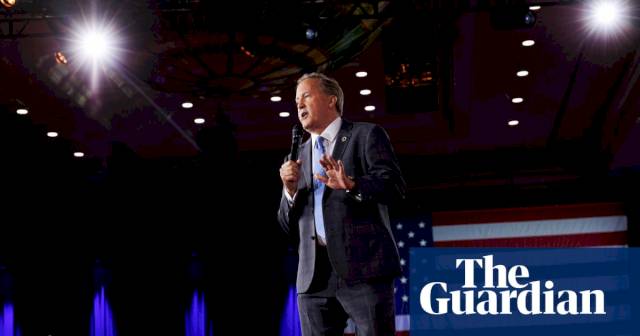
    Donald Trump has endorsed the Texas attorney general, Ken Paxton, in the state’s Republican primary, bolstering his bid to unseat the incumbent US senator, John Cornyn.

    The US president praised Paxton, a hardliner who has pitched himself as a political warrior for Trump’s Make America Great Again movement, as an “America First Patriot” in a post on social media on Tuesday.

    The intervention, which comes ahead of next week’s May primary runoff, comes despite warnings from other leading Republicans that Cornyn would be a stronger candidate in November’s general elections.

    Democrats have nominated the Texas state representative, James Talarico, as their candidate for Senate. Recent polls have put Talarico, with his blend of faith-based populism, bipartisan appeal and generational energy, in a tight race with Cornyn and Paxton.

    “Ken is a true MAGA Warrior who has ALWAYS delivered for Texas, and will continue to do so in the United States Senate,” Trump wrote on Truth Social.

    But Paxton has been embroiled in a series of controversies. He was acquitted in a 2023 impeachment trial on corruption charges. He also reached a deal in 2024 to end a long-running securities fraud case.

    Cornyn, an old guard Republican, and Paxton face a 26 May runoff after neither secured a majority in their three-way March primary election.

    Both candidates had tried to position themselves as closely to Trump as possible. Cornyn introduced legislation last week to rename a highway after the president, declaring that “nearly 1,800 miles of open road” would “forever be known as the Trump Interstate”.

    “I am incredibly honored to have President Trump’s COMPLETE AND TOTAL ENDORSEMENT,” Paxton wrote on social media on Tuesday.

    Cornyn “is a good man, and I worked well with him, but he was not supportive of me when times were tough”, wrote Trump, adding that the US senator – who has represented Texas in Washington since 2002 – was “very late” in backing his run for the White House.

    The prevailing Republican candidate will come up against an ambitious campaign by Democrats to flip the seat, in a reliably Republican state.

    Talarico has emerged as a rising star in the Democratic party, and an effective fundraiser: his campaign said it raised $27m in the first three months of 2026, the largest-ever sum for a US Senate candidate in the first quarter of an election year.

    Cornyn said: “It is now time for Texas Republican voters to decide if they want a strong nominee to help our GOP candidates down ballot and defeat Talarico in November, or a weak nominee who jeopardizes everything we care about.”

    In a statement, Talarico said it “doesn’t matter” who wins the Republican run-off. “We already know who we’re running against: the billionaire mega-donors and their corrupt political system,” he said.

    Texas congresswoman Jasmine Crockett, a Democrat who lost the party’s nomination for US Senate to Talarico, said she was a “bit speechless” when informed by the Guardian at an event in south LA on Tuesday morning that Trump had endorsed Paxton.

    “Ken Paxton is a disaster,” said Crockett, speaking from Dulan’s soul food restaurant, where she endorsed HHS secretary Xavier Becerra for governor of California. “This is the crème de la crème of the Republican Party nowadays.”

    Asked about Trump’s decision to weigh into the race, Vice-President JD Vance suggested that being “out of step” with Trump was “not a good place to be, politically”.

    “I’ve known John Cornyn a long time,” Vance told the White House press briefing. “But unfortunately, when it really counted, Ken Paxton was there for the country and for the president, and that’s why he ultimately earned the president’s endorsement.”

    Reuters contributed reporting

  • Why Does Donald Trump Refuse to Defend America? – The Atlantic

    Why Does Donald Trump Refuse to Defend America? – The Atlantic

    This article was featured in the One Story to Read Today newsletter. Sign up for it here.

    Some of Donald Trump’s favorite world leaders have been scoundrels, bullies, and dictators. He keeps a picture of himself with the Russian autocrat Vladimir Putin on the wall of the White House. He claims to have fallen “in love” with the North Korean dictator Kim Jong Un. He publicly supported Hungary’s Viktor Orbán, who has been chased from power, and Brazil’s Jair Bolsonaro, who is now under house arrest for the next two decades. He just returned from China and gushed about how the General Secretary of the Chinese Communist Party, Xi Jinping, is a “great leader” whom he’s honored to have as “a friend.”

    The China summit also showed, yet again, that such men can both intimidate and flatter Trump into taking their side, even against the United States.

    Trump’s own FBI calls China’s recent cyberattacks and influence operations against U.S. government agencies, businesses, and academic institutions “a grave threat to the economic well-being and democratic values of the United States.” But when asked whether he had discussed these attacks with Xi, the president not only waved the question away but seemed almost eager to absolve China as a nation no better or worse than America: “I did. And he talked about attacks that we did in China. You know, what they do, we do too. It’s, like, the spying; they’re talking about, Oh, the spying. I said, ‘Well, we do it too.’”

    When pressed for a clarification, Trump went on: “I’m talking about spying. The question was asked of me yesterday, I guess, ‘What about the fact that China is spying in the United States?’ I said, ‘Well, it’s one of those things because we spy like hell on them too.’”

    Trump was then asked about concerns that China was inserting code in crucial systems that control various parts of American infrastructure, such as energy, communications, and water. “You don’t know that,” he answered. “I’d like to see it, but it’s very possible that they do. And we’re doing things to them. I told them, ‘We do a lot of stuff to you that you don’t know about, and you are doing stuff to us that we probably do know about.’ We do plenty. It’s a double-edged sword.”

    Instead of saying that these cyberattacks were real threats and that the country’s national-security professionals were working to stop them, the president of the United States gave an answer that just as easily could have come from a Chinese official: Secret code in your power grid? You don’t know that. We’d like to see the proof. But you Americans do plenty of things to us that we probably don’t even know about.

    This would be less startling if Trump had always been soft on China, but for years, he has preened as a China hawk. During his first two presidential campaigns, he pounded China as an existential threat to the U.S. economy, a rogue power stealing America’s intellectual property and sending its graduate students to the United States to infiltrate our universities. “China’s theft of American technology, intellectual property, and research,” read a White House statement in 2020, “threatens the safety, security, and economy of the United States.”

    Trump, after getting a private talking-to from Xi, now wants to know why any of this is a big deal. After all, everyone does it. (Perhaps I take this somewhat personally because I was a federal employee when China hacked the Office of Personnel Management in 2015, and all of my personal data, including my security-clearance forms, are now likely sitting in a computer in Beijing.)

    This isn’t the first time that Trump has cowered rather than admit a dictatorship is trying to harm the United States. Shortly after Trump took office in early 2017, the Fox News host Bill O’Reilly pressed the president about his professed respect for Putin. “He’s a killer,” O’Reilly protested. Trump nodded a bit and then said: “There’s a lot of killers. We got a lot of killers. What, you think our country’s so innocent?”

    Trump would top this appalling moral equivalence a year later at a summit with Putin in Helsinki. A hangdog Trump stood next to Putin and affirmed that he, as the president of the United States, took the word of a Russian dictator over the conclusions presented to him by loyal Americans that Russia tried to meddle in the 2016 elections, a well-substantiated charge that Trump has always hated because it implies that he won the presidency only with foreign help. “I have great confidence in my intelligence people,” he said, “but I will tell you that President Putin was extremely strong and powerful in his denial today.”

    Putin, for his part, smiled approvingly, and understandably so: Trump was singing lyrics Putin could easily have written. The American president made these remarks after meeting with the Russian president privately, a risky move that he repeated when he met with Xi privately in Beijing. (Aides can keep records, and even intervene if discussions go off the rails, which is why presidents and other top officials usually try to avoid meetings without them.) Likewise, when Putin came to Alaska at Trump’s invitation last summer, the presidents again met privately, and Trump again emerged parroting the Russian leader’s talking points.

    This kind of behavior goes beyond mere apple-polishing. Almost any time Trump talks to a foreign strongman, he seems both charmed and intimidated, and ends up defending his autocratic friend rather than his country. These dictators appear to bring out a kind of neediness in Trump: In China, Xi took him on a tour of a private garden, and like a swooning teenager on a date in a nice restaurant, Trump asked whether the Chinese leader ever took other foreign guests to the same place.

    The people around Trump support these equivocations because anyone who opposes Trump’s ideas in the White House will be shown the door; any Republican who speaks up in Congress will be primaried out of their seat. Trump, in his second term, will not change. He will never take a robust stand against America’s top-line enemies: He saves that kind of rancor for our allies. When he does take aim at hostile regimes, he chooses lesser powers such as Iran, whose leaders he does not know and whose military is no direct threat to the United States.

    We do not know what Trump said to Xi behind closed doors. More important, we will likely never know what was said to him. But whatever it was, both Xi and Putin clearly know how to press the American president into taking their side, including making excuses for espionage against the United States and endangering American friends in Taiwan and Ukraine.

    The president’s supporters defend this sort of fawning over dictators from time to time, saying that Trump is just making deals and playing multidimensional chess. But nearly a decade of this kind of embarrassing behavior suggests that Trump’s constant equivocations do not reflect strategy or realism. They are instead evidence of his lack of a moral compass—and his meekness in the presence of powerful autocrats.