Author: admin

  • Immigration scams surged as Trump’s sweeps lured desperate people to eager defrauders – Minnesota Reformer

    Immigration scams surged as Trump’s sweeps lured desperate people to eager defrauders – Minnesota Reformer

    This story was originally published by ProPublica

    As an asylum-seeker living in the U.S., Jasmir Urbina worried as she watched violence break out amid the military-style immigration sweeps across the country. Then she read about legal residents being arrested at immigration court and wondered when federal agents would set their sights on her city.

    Urbina had fled Nicaragua in 2022 and legally resided with her husband, a fellow asylum-seeker, in New Orleans while reporting to immigration agents for check-ins as she awaited her day in court. Finally, the date was approaching, in late November 2025. Days later, the Trump administration would flood the region with federal officers in “Operation Swamp Sweep.”

    Urbina, 35, began searching for a Spanish speaker who could help her, and said she stumbled on a Facebook post advertising the services of Catholic Charities, a prominent aid organization whose services include assisting immigrants. After a few clicks, she connected via WhatsApp with “Susan Millan,” who claimed to have a law degree. The woman’s photo looked professional, showing a small library in the blurry background, according to a screenshot Urbina shared with ProPublica. The asylum-seeker said she discussed her predicament with the woman she thought was an attorney.

    Millan told Urbina the ordeal could be settled over a virtual hearing with U.S. immigration authorities. Millan sprinkled in details about her own life — a sick husband, two kids, a supportive church — so Urbina felt comfortable. In an interview, Urbina said she completed paperwork to be sent to U.S. Citizenship and Immigration Services, for a fee. Millan’s organization asked her for documentation, including five character references; for another fee, it would submit these up the line. Through the payment app Zelle, Urbina and her husband paid nearly $10,000, according to her financial records, money they had set aside to buy their first home.

    On Nov. 21, Urbina made the case that a “credible fear” was keeping her from going home. In the virtual hearing, which lasted five minutes, she said she spoke to a man dressed in a green uniform, stitched with what looked like government insignia, seated in front of an American flag. A day later, via WhatsApp, Millan told her she “won residency.” Her documents would be in the mail.

    In an instant, Urbina’s fears had been assuaged. She asked if she should still attend her court date, Nov. 24. “No, don’t worry,” she remembers the woman replying. “There’s no need.”

    But when Urbina asked to speak with someone in a message to Millan’s phone number the next day, according to screenshots she shared with ProPublica, the WhatsApp chat fell silent. After two days, she suspected she’d been duped and wrote in anger: “God is with us and He fights for His children; today you messed with the wrong person and you will get your payment from the Most High, you cowards.”

    There was no attorney named Susan Millan associated with Catholic Charities, and the deceit was just one example of hundreds that the group has become aware of when desperate immigrants eventually reach the real organization.

    “There’s a reason why we have a good reputation,” said Chris Ross, vice president of migration and refugee resettlement services at Catholic Charities. “And so for someone to be trading on that goodwill with nefarious intent is very frustrating.”

    Urbina had fallen prey to “notario fraud,” in which scammers provide legal advice, often by saying they’re public notaries or other legal professionals. In many Latin American countries, a public notary is the equivalent of a lawyer, and notario fraudsters rely on this mistranslation to fake credentials.

    Urbina shared documents that detail how she was lured into the scam, and ProPublica corroborated her story with her husband and Catholic Charities. After Urbina told local and federal authorities she had been tricked out of her day in court, Immigration and Customs Enforcement switched her scheduled December virtual check-in to an in-person meeting. When she showed up, agents arrested her. In January, she said, officers shackled her hands and feet and loaded her on a plane to Nicaragua.

    She’d been scammed, then deported.

    A spokesperson with the Department of Homeland Security, which oversees ICE, did not respond to questions about Urbina’s case but said, “Anyone caught impersonating a federal immigration agent will be prosecuted to the fullest extent of the law.” New Orleans police did not answer ProPublica’s questions about a complaint she filed.

    Scams like those that destroyed Urbina’s dreams are on the rise, federal data analyzed by ProPublica shows, as profiteers seize on the fear and confusion wrought by President Donald Trump’s immigration crackdown.

    Complaints of immigration scams have doubled since Trump was elected, ProPublica found in analyzing more than 6,200 complaints filed with the Federal Trade Commission by victims and advocates over the last five years.

    From the start of 2021 through the election in fall of 2024, the FTC — the nation’s top consumer protection agency — fielded about 960 immigration complaints per year, such as reports of fake attorneys offering services or people impersonating federal officers. In 2025, the commission received nearly 2,000 complaints.

    In all, at least $94.4 million was reported stolen in complaints to the FTC over five years. That number is certainly an undercount, as not all immigrants report wrongdoing for fear of deportation, and not every report included dollar amounts.

    The spike in complaints is so severe that many states and legal organizations have alerted the public about them. California’s and North Carolina’s attorneys general released statements in late 2025, as did the American Bar Association and AARP. In June 2025, the New York City Council passed legislation increasing notario fraud penalties, and a similar law passed in Florida.

    “Immigration scammers contribute to a lawless environment, undermining our immigration system,” said Zach Kahler, a spokesperson for Citizenship and Immigration Services, the agency Urbina falsely thought had awarded her residency. Online, the agency provides guides on how to spot immigration fraud and warns consumers that it does not use WhatsApp. The agency tells people who think they’ve been scammed to complain to the FTC.

    Old problem, new sophistication

    Scams targeting those mired in the U.S. immigration system are not new, but advocates say predators have become more sophisticated, using technologies like artificial intelligence and targeted ads. At the same time, immigrants have become increasingly anxious about speedy mass deportations, creating a bonanza for those looking to cash in.

    “I believe AI is being utilized in these scams pretty effectively. People think they’re talking to a real person, or the logos and stuff look pretty professional to the untrained eye,” said Ross, of Catholic Charities.

    Many victims say they were duped by scammers who had professional-looking photos, wore immigration uniforms and staged realistic virtual hearings.

    A review of the image of the person named Millan who was supposedly helping Urbina suggests that it was AI-generated.

    Ross added: “The biggest thing is the desperation — that’s really what’s driving this.”

    In San Diego, attorneys working for the city have been impersonated by scammers. City Attorney Heather Ferbert told ProPublica her office has forwarded these cases to the FBI and warned residents to be on the lookout for advertisements that promise a government official or lawyer can help with immigration proceedings. The FBI declined to comment.

    “When you add the title and you add the government weight behind it — the city attorney’s office, the district attorney’s office, for example — the targets are sort of lulled,” Ferbert said. “We’ve heard stories where they promise that they can solve their immigration problems for them. No real lawyer is ever going to promise an outcome to you.”

    Other scams extend beyond impersonating lawyers. The FTC complaints include a case in which people posing as Department of Homeland Security immigration officers received more than $600,000 from a family by claiming one of the relatives’ identities had been stolen and they needed to pay to protect it. In West Virginia, a “federal agent” threatened to deport a college student who was close to graduating unless they paid nearly $4,000 in gift cards.

    “They claimed that if I did not comply immediately, I would be arrested, detained or deported,” wrote the student, who was legally residing in the U.S. on a student visa. The student, whose name was not disclosed in federal data, used prepaid Dollar General gift cards and then went broke and turned to family for help.

    Immigrants from India and Bangladesh were told they had failed to update a necessary form and would be arrested and deported immediately unless they shared their Social Security numbers. Other scammers claimed the government had intercepted packages full of money and drugs addressed to immigrants, who were told to make a payment or face arrest.

    ‘Well-oiled machine’

    Most victims find the fake attorneys advertising on Facebook or TikTok. Facebook’s parent company, Meta, has pledged to delete scam accounts and announced new tools to track them.

    Charity Anastasio, practice and ethics counsel for the American Immigration Lawyers Association, said the ads are often pay-per-click and targeted at Spanish-speaking users.

    “They’ve designed such a well-oiled machine,” Anastasio said.

    The ads appealed to those in deportation proceedings, clinging to any means to stay in the U.S., but also those who may have wanted to get their paperwork in order ahead of Trump’s crackdown, said Adonia Simpson, an attorney with the American Bar Association.

    “A lot of people are trying to preemptively get representation to see what their options are,” Simpson told ProPublica. “The enforcement has been a big driver. It’s caused a lot of people to be very fearful.”

    The White House declined to comment.

    In October 2024, 56-year-old José Aguilar, who had been granted temporary protected status under George W. Bush’s administration, was in just that position when he came upon a Facebook ad. The advertiser claimed to work for Jorge Rivera, a well-known Miami immigration attorney, and promised Aguilar they could get him permanent residency. It would take $15,000. ProPublica sought comment from the real Rivera, who is not accused of wrongdoing; he did not respond.

    A leather factory worker in Minnesota who had fled El Salvador, Aguilar cobbled together the money in installments through loans from friends and that year’s tax refund. Over several months, he had four video calls with the fake attorney and two calls with immigration agent impersonators. He was initially skeptical but became convinced when they sent him videos of residency cards with the Citizenship and Immigration Services logo.

    “Don’t try to deceive me, because I’m borrowing money, I’m a man of faith, and I’m a person who has had a heart transplant, so I can’t get angry because it hurts me,” Aguilar remembered saying.

    “No, don’t worry, sir,” Aguilar said the scammer responded. “This is real. It’s super real.”

    During one of their last conversations, Aguilar says the scammer appealed to their shared Christian faith, thanking God for approving the paperwork and earning him residency.

    By February 2025, the scammers had stopped responding. A month later, Aguilar realized he was probably never going to get the residency cards and contacted an attorney who confirmed he had been duped. Aguilar, who has two young daughters, says his family is subsisting on food banks and relies on donations for rent.

    “It’s unforgivable,” Aguilar said. “Even bringing God into it.”

    Mother and daughter torn apart

    For Mariela, an undocumented Honduran mother of three, financial stress began long ago. In 2021, the father of her children headed for the U.S. along with one of their daughters, seeking construction work. Two years later, when she traveled 2,000 miles in blistering heat to join them, she broke her arm in three places after falling into the Rio Grande while crossing the border. ProPublica is withholding her last name because she fears being deported.

    And then, in October 2025, immigration agents detained her 20-year-old daughter. Desperate, the mother reached out to what she thought was a Catholic Charities Facebook page.

    She was pulled into a scheme involving a man who posed as a priest, another posing as an immigration judge, and another posing as Oscar Carrillo, an attorney licensed in Texas who practices tax law.

    The real Carrillo told ProPublica he began getting calls from frustrated immigrants last spring, all of them Spanish speakers who claimed they had been referred by Catholic Charities. When he realized his name and photo were being misused, he alerted the FBI and FTC. The State Bar of Texas has posted a public warning on its webpage about Carrillo impersonators.

    “Most of these clients, because of their immigration status, are afraid to report this to the police,” Carrillo said. “I feel sorry for these clients. We’re not talking about wealthy individuals.”

    In January, after her daughter was deported, Mariela realized the fraudsters had cheated her out of more than $18,000 over three months.

    She said she had borrowed $3,000 from an uncle in Honduras, another $1,500 from a cousin, a few thousand from her boss, and another $2,000 from a friend from her Honduran hometown who had also emigrated to the U.S. In addition, she burned through her savings and her daughter’s.

    Public alerts, little recourse

    Since the beginning of Trump’s second term, local law enforcement, advocacy groups, state attorneys general and law firms have published notices warning immigrants about an uptick in scams.

    “Our best advice is to make direct contact, outside of social media channels, with the organization you’re seeking help from,” said Kevin Brennan, vice president for media relations at Catholic Charities. “Call the organization on the phone or visit an office in person.”

    Scammers show no signs of retreat.

    In April, three months after her deportation to Nicaragua, Urbina received a call from someone claiming to be a lawyer. He said that he’d been referred to her by a bishop with Catholic Charities and that he’d help her obtain immigration papers.

    The stress of being scammed and separated from her husband, who remains in the U.S., had taken a toll. “I’ve been through a lot of things, one right after the other,” Urbina said. She’s living with her mother in a remote village, afraid to step outside in a country where the government has ramped up surveillance of those who previously moved to the U.S.

    Desperate, she gave the “lawyer” her personal information.

    After earlier saying his help would be free, he then asked for money, she said.

    “Where did you get my number?” she asked.

    Intrigued but skeptical, Urbina followed up with WhatsApp messages, hoping he might really be an immigration attorney.

    She never heard from him again.

  • U.S. and Iran trade fire and threats as Trump’s bid to open Hormuz rattles truce – NBC News

    U.S. and Iran trade fire and threats as Trump’s bid to open Hormuz rattles truce – NBC News

    The ceasefire in the Middle East was in peril Tuesday after the United States and Iran traded fire and threats over President Donald Trump’s new mission to force open the Strait of Hormuz.

    Trump’s “Project Freedom” aims to use the U.S. military to break Tehran’s chokehold on the critical waterway, which has throttled international shipping and sent energy prices soaring.

    But Iran’s aggressive effort to retain its grip on the strait saw it attack U.S. ships, hit a neighboring Gulf state for the first time in weeks and come under American fire itself.

    The U.S. military said Tehran’s forces attacked U.S. Navy and commercial ships with cruise missiles, and launched drones and small boats at the vessels under U.S. escort, but that no American ships were struck. Trump said the U.S. destroyed eight Iranian boats.

    Two U.S.-flagged merchant vessels made it through the strait, the U.S. military said, with shipping giant MAERSK confirming Tuesday that one of its vehicle carriers was escorted out “under U.S. military protection.”

    Iran denied there had been any successful crossings of commercial vessels or oil tankers, and said none of its navy ships suffered damage.

    Top officials sounded defiant Tuesday.

    While the situation in the strait was clearly “unbearable” for America, Iran has “not even begun yet,” Parliamentary Speaker and lead negotiator Mohammad Bagher Ghalibaf said in a post on X.

    Events in the strait make clear that there is “no military solution to a political crisis,” Foreign Minister Abbas Araghchi also said in a post on X late Monday. He added “Project Freedom is Project Deadlock.”

    Vessels in the Strait of Hormuz near Bandar Abbas, Iran
    Vessels in the Strait of Hormuz near Bandar Abbas, Iran, on Monday.Amirhosein Khorgooi / WANA via Reuters

    The escalating tensions raised questions about whether the ceasefire that began on April 8 was at risk or effectively over.

    “Well, I can’t tell you that,” Trump responded when asked that question late Monday in an interview on the “The Hugh Hewitt Show.”

    He warned that Iranian forces would be “blown off the face of the Earth” if they attack American ships, in a separate interview with Fox News.

    The hostilities in the strait also involved a South Korean-operated ship, which suffered damage after an explosion and fire on Monday.

    Trump called on South Korea “to join the mission” in a TruthSocial post, as he blamed Iran for taking “some shots” at the ship.

    Meanwhile the United Arab Emirates, a key U.S. ally in the Gulf, said it engaged 12 ballistic missiles, 3 cruise missiles and 4 drones fired from Iran. The attack sparked a fire at an oil facility and injured three Indian nationals, officials said, drawing widespread condemnation.

    Iran did not explicitly confirm or deny the attack, but said Tehran had no plan to target its neighbor. Araghchi, the foreign minister, warned both the U.S. and U.A.E. against “being dragged back into quagmire.”

    Pakistan, a key mediator in stalled peace talks, urged the two sides to keep their cool.

    It’s “absolutely essential that the ceasefire be upheld and respected, to allow necessary diplomatic space for dialogue leading to enduring peace and stability in the region,” Prime Minister Shehbaz Sharif said in a post on X.

    The markets responded to the latest dramatic events with oil prices retreating but remaining well above $100 a barrel, while average gas prices in the U.S. climbed slightly to $4.48 a gallon.

  • Donald Trump’s current approval rating; Trump approval rate today – Asbury Park Press

    May 5, 2026, 6:31 a.m. ET

    As of May 5, 2026, major polling groups such as RealClearPolitics and Ballotpedia report that the president’s approval rating is approximately 39%. While about 4 out of 10 people approve of his job performance, roughly 6 out of 10 do not.

    Donald Trump approval ratings today

    Here’s latest data:

    • Ballotpedia has Trump with a 41.0% approval rating.
    • RealClearPolitics has Trump with a 38.9% approval rating.
    • Washington Post/ABC News-Ipsos has Trump with a 37% approval rating.
    • The Economist/YouGov has Trump with a 37% approval rating.
    • CNN/SSRS has Trump with a 35% approval rating.

    Trump approval rating with Republicans

    While 85% of Republicans still support the president, fewer of them say they “strongly” approve compared to last year. Experts say his core followers are still loyal, but he is struggling to keep the support of Independent voters.

    Lowest presidential approval rating

    The record for the lowest individual approval rating in a single poll belongs to Harry S. Truman, who hit 22% in February 1952.

  • First Thing: Tensions rise over Hormuz as Trump threatens to blow Iran ‘off the face of the earth’ – The Guardian

    First Thing: Tensions rise over Hormuz as Trump threatens to blow Iran ‘off the face of the earth’ – The Guardian

    Good morning.

    Donald Trump has again raised the stakes in the Gulf region with the Monday launch of “Project Freedom” to open a route through the strait of Hormuz. More than 800 ships and roughly 20,000 crew members remain stranded in the region.

    Just hours after the operation began, the US military said it destroyed six small Iranian boats and interceptedIranian cruise missiles and drones – a claim that was denied by Iran – and Iran attacked the United Arab Emirates with drones and missiles, setting the oil port of Fujairah on fire.

    Trump then threatened that Iran would be “blown off the face of the earth” if it attacked any US vessels in Hormuz.

    • Have any vessels made it out of the strait? US Central Command (Centcom) said two US-flagged merchant vessels had “successfully transited” the strait, but Iran has denied this claim. Late on Monday, the container shipping company Maersk said the Alliance Fairfax, a US-flagged vehicle carrier, left the Gulf. Shipping industry experts remain skeptical about whether vessels will be able to travel safely to and from the Gulf under Trump’s plan.

    • This is a developing story. Follow the liveblog here.

    US supreme court expedites Voting Rights Act ruling, allowing Louisiana Republicans to redraw maps for midterms

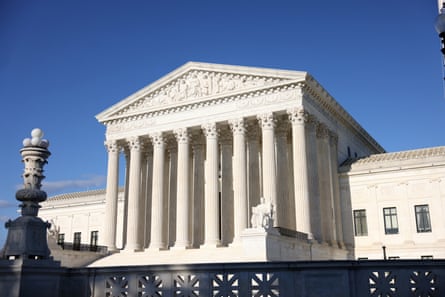
    The US supreme court building
    The court gutted section 2 of the Voting Rights Act less than a week ago. Photograph: Gage Skidmore/Zuma Press Wire/Shutterstock

    The US supreme court on Monday allowed a recent ruling that gutted a key part of the Voting Rights Act to take effect ahead of schedule – a procedural move that helps Louisiana Republicans redraw their congressional maps before this year’s midterm elections.

    Justice Ketanji Brown Jackson strongly criticised the court for departing from its usual procedure of waiting 32 days to formally issue its judgment to the lower court. “The court’s decision to buck our usual practice under Rule 45.3 and issue the judgment forthwith is tantamount to an approval of Louisiana’s rush to pause the ongoing election in order to pass a new map,” she wrote.

    • How will this play into the overall battle for Congress? Red states, including Alabama and Tennessee, are rushing to revise their congressional maps after the original supreme court decision. On Monday, Ron DeSantis, the Florida governor, signed a gerrymandered congressional district map into law that gives Republicans an electoral advantage in four additional races in November’s midterm elections.

    • How are Democrats fighting back? Eight candidates have been added to their slate of top contenders vying to reclaim a Democratic House majority in November’s midterm elections.

    • When do voters head to the polls? Ohio voters will today select candidates before November’s midterm elections, including the candidates for Ohio’s Senate special election. Indiana voters also go to the polls today, with seven Republican state senators battling for re-election against candidates backed by Trump.

    In other news …

    A composite image of Blake Lively, wearing a flowered gown, posing on the red carpet against a backdrop of flowers, and Justin Baldoni wearing a blue and white flowered shirt.
    The legal spat between Blake Lively and Justin Baldoni is over. Composite: AFP, NBC, Getty Images
    • Blake Lively and Justin Baldoni have settled their legal dispute from the production of their 2024 film It Ends With Us, putting an end to a highly anticipated trial before it began.

    • Zohran Mamdani and other local officials condemned Immigration and Customs Enforcement (ICE) after federal officers dragged a man out of a hospital building, prompting a crowd of protesters to gather outside and clash with police.

    • A US judge on Monday apologized for the “legally deficient” treatment of the man accused of attempting to assassinate Trump at the White House correspondents’ dinner.

    • The rapper Kid Cudi has fired MIA from his tour after the British artist went on a rant about being a Republican on stage in Dallas.

    Stat of the day: 70% of voters believe climate action can lower the cost of living

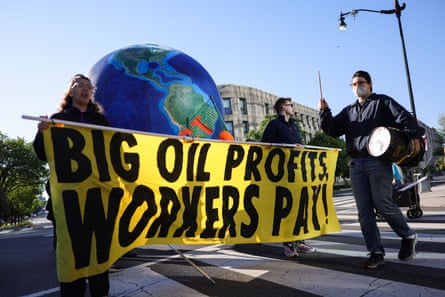
    Two climate activists hold up a yellow sign reading ‘big oil profits, workers pay!’ Behind them is a large globe. Another worker bangs a drum to the side.
    Climate activists block a highway ramp near the offices of the American Petroleum Institute (API) in Washington DC on 1 May 2026. Photograph: Bryan Dozier/Zuma Press Wire/Shutterstock

    An influential group of progressives has put forward a “working-class climate agenda” seeking to counter claims that climate policy is politically toxic amid a cost of living crisis. A recent survey found that 70% of voters – including 65% of Republicans – believe climate action can lower the cost of living, a finding that suggests working people may be receptive to green policies, they say.

    Culture pick: Ex-Vampire Weekender Rostam on what it means to be Iranian-American

    Rostam Batmanglij holds an acoustic guitar while sitting between two other guitars against a backdrop of a faded American flag
    ‘What is my relationship to the American flag? What is my relationship to American citizenship?’ Batmanglij asks. Photograph: Matthew Weinberger

    Rostam Batmanglij explores his relationship with American culture and his American citizenship as an Iranian American in his third solo album, American Stories, fusing together Americana with sounds of the Middle East.

    Don’t miss this: The man who blew up a nuclear power station and disappeared

    An orange and black illustration of a man cycling away from two nuclear reactors that are cracking.
    Rodney Wilkinson became the most wanted saboteur in South African history. Illustration: Daria Lada/The Guardian

    In December 1982, Rodney Wilkinson set off four bombs in the Koeberg nuclear power station in South Africa, in an act of defiance against the apartheid state that made him the most wanted saboteur in South African history. Then he got on his bicycle and rode away, disappearing for more than 40 years. How did he do it?

    … or this: The battle to flip Ohio

    A man mows a green strip of lawn next to a line of houses, some with American flags out front, in Middletown, Ohio.
    Some people in Ohio say they’re tired of timeworn political promises. Photograph: Scott Olson/Getty Images

    Ohio lies at the center of Democrats’ hopes of retaking control of Congress in the midterm elections and hobbling Trump’s legislative agenda. They’re hoping that voters, frustrated with rising gas prices and the war in Iran, will vote against the Republicans who supported Trump’s policies.

    Climate check: The ‘point of no return’ for New Orleans

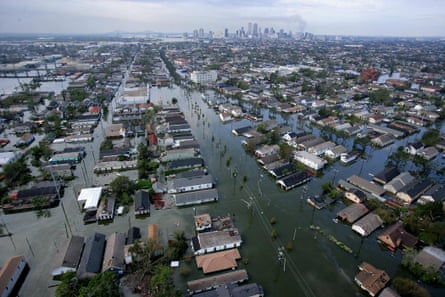
    An aerial view of the streets of New Orleans in deep water after Hurricane Katrina.
    Rising sea levels and the rampant erosion of wetlands in southern Louisiana will swallow up the New Orleans area within a few generations, a study concluded. Photograph: Reuters

    New Orleans may be surrounded by the Gulf of Mexico before the end of this century, a study has concluded, with rising sea levels and the rampant erosion of wetlands threatening to swallow up the city within decades. The study’s authors are recommending that the process of relocating residents out of city begin immediately.

    Last Thing: The Met Gala red carpet

    Sabrina Carpenter poses in her costume dress made out of film from the film Sabrina.
    Sabrina Carpenter attends the 2026 Met Gala. Photograph: Mike Coppola/Getty Images

    “Fashion is art” at the 2026 Met Gala, with stars such as Hailey Bieber and Kim Kardashian wearing sculpted numbers while others such as Gigi Hadid choosing to turn their bodies into a canvas. This year’s event was funded by honorary chairs Jeff Bezos and Lauren Sánchez Bezos, prompting protests.

    Sign up

    First Thing is delivered to thousands of inboxes every weekday. If you’re not already signed up, subscribe now.

    Get in touch

    If you have any questions or comments about any of our newsletters please email newsletters@theguardian.com

  • How popular is Donald Trump in Europe? April 2026 – YouGov

    How popular is Donald Trump in Europe? April 2026 – YouGov

    YouGov European tracker series looks at Donald Trump’s popularity in Britain, Denmark, France, Germany, Italy and Spain

    United Kingdom

    April’s tracker poll found that 11% of Britons had a favourable opinion of Donald Trump and 86% had an unfavourable opinion.

    This represents a notable decrease in popularity since March’s survey, with the number of Britons holding a favourable view 3 points lower and the number with an unfavourable view 5 points higher.

    France

    April’s tracker poll found that 13% of French people had a favourable opinion of Donald Trump and 80% had an unfavourable opinion.

    These scores are within the margin of error of those for March’s survey, and therefore represent little change.

    Germany

    April’s tracker poll found that 8% of Germans had a favourable opinion of Donald Trump and 87% had an unfavourable opinion.

    These scores are within the margin of error of those for March’s survey, and therefore represent little change.

    Italy

    April’s tracker poll found that 7% of Italians had a favourable opinion of Donald Trump and 86% had an unfavourable opinion.

    This represents a notable decrease in popularity since March’s survey, with the number of Italians holding a favourable view 5 points lower and the number with an unfavourable view 6 points higher.

    Spain

    April’s tracker poll found that 11% of Spaniards had a favourable opinion of Donald Trump and 85% had an unfavourable opinion.

    This represents a slight decrease in popularity since March’s survey, with the number of Spaniards holding a favourable view 4 points lower and the number with an unfavourable view remains largely the same.

    Denmark

    April’s tracker poll found that 4% of Danes had a favourable opinion of Donald Trump and 94% had an unfavourable opinion.

    These scores are within the margin of error of those for March’s survey, and therefore represent little change.

    See the full results here

    Interested in taking YouGov surveys? What do you think about Donald Trump, his impact on the world, and everything else? Have your say, join the YouGov panel, and get paid to share your thoughts. Sign up here.

    Interested in commissioning YouGov research? We connect in real-time with real people around the world to gather their thoughts, behaviours, and opinions, to ensure that our research data is powered by reality. Explore our survey services here.

    Photo: Getty

    Subscribe to the YouGov newsletter

  • The Trump admin is trying to stop state climate lawsuits. It isn’t working. – E&E News by POLITICO

    The Trump admin is trying to stop state climate lawsuits. It isn’t working. – E&E News by POLITICO

    The Trump administration has escalated its bid to protect the oil industry from costly climate litigation — even after its earlier efforts faced decisive setbacks in federal court.

    In its latest push, the Department of Justice on Monday sued Minnesota in federal court, claiming the state’s lawsuit seeking payment from oil companies for contributing to climate change undermines federal authority and burdens U.S. energy development.

    The argument has fallen flat with judges in two other federal courts, who rejected DOJ lawsuits that sought to prevent Michigan and Hawaii from filing climate liability cases. Like Minnesota’s, those lawsuits seek to hold the oil industry financially responsible for the effects of climate change. If the states’ cases are successful, they could cost the oil industry billions.

    “This naked political intimidation tactic should meet the same fate,” said Richard Wiles, president of the Center for Climate Integrity, which backs climate lawsuits against the oil and gas industry. “This is a desperate effort to shield the architects of Big Oil’s decades-long climate deception from facing accountability.”

    DOJ’s lawsuit against Minnesota advances an industry priority and follows President Donald Trump’s directive last April ordering the department to take “all appropriate action to stop” the growing number of climate lawsuits. There are more than two dozen climate liability cases working their way through state courts nationwide.

    Under former Attorney General Pam Bondi, whom Trump ousted last month, DOJ sued Michigan and Hawaii to prevent the states from filing climate lawsuits, arguing the actions would complicate U.S. energy policy. Both states filed suit, regardless, and two federal judges this spring dismissed the administration’s complaints.

    The judges said the federal government had not demonstrated a concrete injury. But DOJ has argued that it won the Michigan case because it forced the state to “content itself” with raising allegations against the oil industry that haven’t been tried before.

    Michigan also filed its case in federal court. That’s a departure from most of the other climate liability lawsuits, which have been filed in state court, and the oil industry has spent years trying to move those cases to federal benches.

    DOJ under Bondi also sued New York and Vermont in an effort to invalidate state laws creating “climate superfunds” that seek payment from energy producers for greenhouse gas emissions. Those lawsuits are pending.

    The department’s lawsuit against Minnesota is the first of its kind filed under acting Attorney General Todd Blanche.

    Minnesota Attorney General Keith Ellison, a Democrat, filed the state’s lawsuit in 2020 against Exxon Mobil, Koch Industries and the American Petroleum Institute, alleging they misled the public about the dangers of global warming for decades to “pad their own pockets.”

    The state’s complaint claims the industry violated Minnesota state laws against consumer fraud, deceptive trade practices and false statements in advertising. DOJ’s lawsuit says that federal law — not state — controls regulation of greenhouse gases.

    Ellison, who said he will move to have DOJ’s lawsuit dismissed, said the state still wants to go to trial with its climate liability case “because Big Oil has pulled every procedural trick in the book to delay facing the consequences of their unlawful actions.”

    Pat Parenteau, emeritus professor at the Vermont Law and Graduate School, who has provided pro bono advice to one of the law firms behind the climate cases, called DOJ’s claim that Minnesota’s lawsuit interferes with federal authority “worthy of 4 Pinocchio’s, if not an SNL skit.”

    He added the lawsuit comes on the heels of EPA’s decision to repeal the endangerment finding, removing the linchpin of the agency’s climate regulations.

    It’s “another example of Trumpian lawfare intended to harass and intimidate blue states from enforcing their valid consumer protection laws,” Parenteau said.

    Minnesota’s lawsuit is one of dozens of challenges from state and local governments that want oil and gas companies to foot the bill for the costs of addressing floods, wildfires and other effects of a warming planet. Most of the lawsuits accuse the fossil fuel industry of deceiving the public about the effects of burning fossil fuel.

    The oil industry has convinced several judges — including in California and Washington state — to put the cases on hold because the Supreme Court recently agreed to review a separate climate liability lawsuit filed by Boulder, Colorado.

    In that case, the oil industry has asked the high court to find that federal law precludes local governments from suing fossil fuel producers for global greenhouse gas emissions. A decision is not expected until 2027.

    The Trump administration isn’t alone in its campaign to stop climate liability cases.

    DOJ’s lawsuit against Minnesota comes two weeks after Republicans in Congress introduced legislation to shield oil companies from being held liable for the burning of their products and as several red states have granted legal immunity to the industry.

    Utah Gov. Spencer Cox, a Republican, in March became the first governor to sign a law that provides a legal shield to corporations and individuals for causing climate-related harm. In Iowa, Gov. Kim Reynolds, also a Republican, last Thursday signed legislation to bar climate change lawsuits.

    DOJ’s lawsuit says Minnesota’s case has “ignited a conflict among the states.”

  • Trump may seek to review AI models before launch – Fortune

    Trump may seek to review AI models before launch – Fortune

    Good morning. Word on the street is that Sam Altman wanted to spin out OpenAI’s robotics division ahead of the company’s expected IPO, but the board wouldn’t let him. (They “might have to remain consolidated on the balance sheet,” per the WSJ. Ahem.)

    Instead, the AI firm might attempt an Alphabet-like holding company arrangement—as if OpenAI’s corporate structure isn’t convoluted enough as it is.

    OK folks, wrong answers only: What should the name of OpenAI’s holding company be? Reply with your best shot.

    Today’s tech news below. —Andrew Nusca

    P.S. The one-liner of the week award goes to Lisa Ann Walter (Abbott Elementary), who at a protest outside last night’s tech-infused Met Gala in New York City—which included Sergey Brin, Mark Zuckerberg, Evan Spiegel, Adam Mosseri, Stuart Butterfield, and Jeff Bezos in their finery—called the Amazon founder “Temu Lex Luthor.”

    P.P.S. But wouldn’t it be Amazon Basics Lex Luthor? I digress.

    Want to send thoughts or suggestions to Fortune Tech? Drop a line here.

    Trump may seek to review AI models before launch

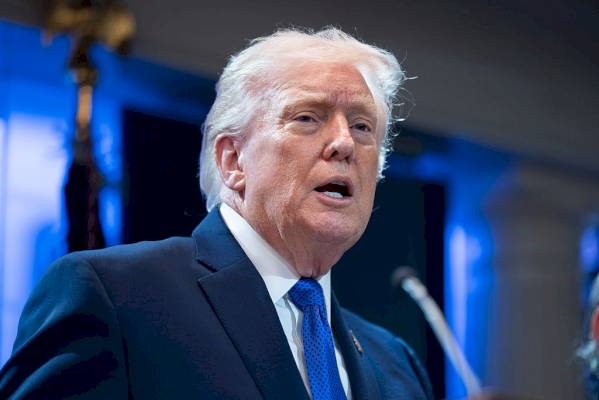
    President Donald Trump in Washington, D.C. on May 4, 2026. (Photo: Kent Nishimura/AFP/Getty Images)

    President Donald Trump in Washington, D.C. on May 4, 2026.

    Kent Nishimura/AFP—Getty Images

    The Trump administration is reportedly considering imposing government oversight on AI models before they’re released.

    A new New York Times report says administration officials are discussing an executive order to create an AI working group made of tech execs and government officials to, among other things, institute a formal government review process for new AI models. 

    If such a procedure were implemented, it would mark a complete reversal in the Trump administration’s laissez-faire approach to AI regulation.

    It’s not an unprecedented step…if you look beyond U.S. borders, anyway. The U.K. currently reviews frontier AI models through its AI Security Institute (AISI) for national security, misuse, and societal risks.

    But Trump—who has previously called British tech regulations “sad,” “strange,” “insane,” and “crazy” and rolled back Biden-era regulations asking software developers to evaluate the safety of their AI models—may be trying to find his footing with an American electorate who is consistently more concerned than excited about AI’s potential.

    That’s not all. The administration is interested in “a review system that would give the government first access to AI models” for military intelligence reasons, according to the Times—say if “a devastating AI-enabled cyberattack were to occur.” 

    Can you feel the excitement? —AN

    Musk pays $1.5 million to settle Twitter SEC allegations

    Elon Musk has agreed to pay $1.5 million (or about 0.0002% of a conservative estimate of his net worth) to the U.S. Securities and Exchange Commission to settle allegations that he failed to properly disclose his growing stake in the social media company formerly known as Twitter.

    Musk doesn’t admit to the allegations by settling. The proposed arrangement, subject to court approval, would conclude the SEC’s lawsuit about the matter.

    The SEC was initially looking for quite a bit more—some $200 million. It would have been the largest penalty the agency levied against someone for allegedly blowing the deadline on filing a beneficial ownership report.

    The agency’s argument was that Musk’s failure to disclose his 5% stake in Twitter (now X, and owned by Musk since 2022) by the necessary deadline cost shareholders more than $150 million. Once Musk disclosed the magnitude of his stake, Twitter’s shares jumped by 27%.

    It certainly didn’t help that Musk stood up SEC lawyers who came to Los Angeles for his deposition, opting instead to attend a SpaceX rocket launch. (He offered to cover their travel expenses. What a mensch.)

    Musk isn’t out of the woods on Twitter’s legal matters. He still faces a class-action investor suit over the blown deadline. —AN

    Palantir posts fastest revenue growth ever

    The data analytics firm named for J.R.R. Tolkien’s seeing stone just saw its fastest revenue growth in a quarter—ever.

    Palantir on Monday released its fiscal Q1 results and it’s a barn-burner. Revenue was up 85% from the previous year to $1.63 billion, roundly beating Wall Street estimates of $1.54 billion. 

    The defense contractor saw government revenue leap 84% to $687 million and U.S. commercial revenue up 133% to $595 million. Net income came in at $871 million.

    What’s more, the Alex Karp-led company raised its full-year 2026 revenue guidance to 71% year-over-year growth. 

    “Our financial results now demonstrate a level of strength that dwarfs the performance of essentially every software company in history at this scale,” Karp wrote in a letter to investors, later adding: “Palantir is now literally one of the most impactful companies on the planet.”

    It’s not all roses. It was only a week ago that Palantir found itself in hot water as employees criticized the company’s commitment to civil liberties. Meanwhile some analysts say Palantir may not be hiring enough software engineers and sales reps to keep pace with business growth. 

    In his letter, Karp was unfazed. Palantir, he wrote, demonstrates “a hiring discipline that is too rare in the software industry today.” —AN

    More tech

    Musk v. Altman: Greg Brockman testifies that his OpenAI stake is now worth about $30 billion.

    Cisco to acquire Astrix Security, which makes software to control AI agent permissions, for a reported $400 million.

    New Mexico v. Meta: State attorneys ask the judge to declare Meta a public nuisance, order it to pay $3.7 billion, and require it to revamp its apps to protect children.

    Sierra fundraises at a $16 billion valuation. A $950 million round led by Tiger and GV for the Bret Taylor and Clay Bavor-founded AI firm.

    Lattice Semiconductor to acquire AMI for $1.65 billion. The latter makes firmware for cloud and AI applications.

    Anthropic’s Jack Clark: There’s a 60%+ chance that AI systems will build themselves by 2029 😅

    Peter Thiel invests in Panthalassa, which hopes to power floating data centers with ocean wave energy.