Author: admin

  • Trump presses Kansas City BBQ restaurant owner on whether Patrick Mahomes will start Week 1 of NFL season – Fox News

    Trump presses Kansas City BBQ restaurant owner on whether Patrick Mahomes will start Week 1 of NFL season – Fox News

    The idea behind President Donald Trump hosting the owner of Slap’s BBQ of Kansas City at the White House on Monday was to put attention on the Small Business Summit in Washington, but the sports-fan-in-chief quickly turned the conversation to his concern for Patrick Mahomes.

    “The most important thing, how’s Mahomes doing?” Trump asked Slap’s president Joe Pearce about the Kansas City Chiefs quarterback. “Is he OK?”

    “He’s OK,” Pearce said without hesitation, suggesting he really knows.

    “You tell the people we love him,” Trump added.

    TRUMP PRAISES BRITTANY MAHOMES FOR ‘STRONGLY DEFENDING’ HIM ON SOCIAL MEDIA

    Kansas City Chiefs quarterback Patrick Mahomes calls out signals on the field at Arrowhead Stadium

    Kansas City Chiefs quarterback Patrick Mahomes reacts during the third quarter against the Washington Commanders at GEHA Field at Arrowhead Stadium on Oct. 27, 2025. (Jay Biggerstaff/Imagn Images)

    Of course he does. The Mahomes family, starting with the quarterback’s mother Randi and his wife Brittany are known Trump supporters while brother Jackson at one point was thrilled to get a selfie with the president. Mahomes has avoided making a public endorsement for Trump but obviously the family’s general inclination is not a secret.

    So, obviously, the president is hoping for good news on Mahomes, who is recovering from a torn ACL and LCL in his left knee, an injury he suffered last December as perhaps the biggest blow to the disappointing Chiefs 2025 season.

    But Trump wanted more than a general answer. He pressed Pearce further.

    CHIEFS DOCTOR REVEALS WHEN PATRICK MAHOMES IS EXPECTED TO RETURN TO THE FIELD

    “So, he’ll start Game 1, you think?” Trump asked.

    Donald Trump standing next to Brittany and Patrick Mahomes

    Donald Trump stands with Brittany and Patrick Mahomes in a photo from AP Newsroom/Getty Images. (AP Newsroom/Getty Images)

    Now, it should be noted that brothers Joe and Mike, who founded Slap’s, are big dudes. So did the president think one of them was actually Chiefs coach Andy Reid?

    Joe and Mike know Baby Backs. But they don’t know if Mahomes will be ready for the regular season or not.

    TRAVIS KELCE TALKS CRUSHING PATRICK MAHOMES SEASON-ENDING INJURY

    They tried anyway.

    “We’re hopeful,” the brothers said in unison.

    Great.

    The fact is there is actually some good news for Trump to chew on without it being served up by the BBQ guys. Over the weekend, Reid gave reporters a positive report on Mahomes.

    “Yeah, I know he’s doing a lot of stuff right now,” Reid said. “That’s what I can give you. He is throwing the ball, and he does it on his own so he’s not getting in any trouble here.”

    Patrick Mahomes receiving assistance after injury at Arrowhead Stadium

    Kansas City Chiefs quarterback Patrick Mahomes receives assistance after an injury during the fourth quarter against the Los Angeles Chargers at Arrowhead Stadium in Kansas City, Mo., on Dec. 14, 2025. (Jay Biggerstaff/Imagn Images)

    The Chiefs begin their Offseason Team Activities (OTAs) on May 26. Is it possible Mahomes, five months post-operative, might be able to participate in some of those?

    CLICK HERE FOR MORE OUTKICK SPORTS COVERAGE

    “We’ve got to see on that,” Reid said. “He is in a good position to be able to do some things. There’s some rules and regulations that go with that. So, we just have to make sure we’re on top of that part, but if he can do some things, Phase Two remember, is there’s no contact, no offense versus defense.”

    Mahomes has spent most days rehabilitating in the Chiefs’ training facility. He’s posted an Instagram video of himself taking drops although not at full speed.

    “He’s in a position where he can do everything I think,” Reid said.

    FOLLOW ARMANDO SALGUERO ON X: @ARMANDOSALGUERO

    Armando Salguero is OutKick’s Senior NFL Writer.

  • From Truth Social to judicial decisions: Groups challenging Trump’s actions get help from his posts – CBS News

    From Truth Social to judicial decisions: Groups challenging Trump’s actions get help from his posts – CBS News

    Washington — As Justice Department lawyers work to defend President Trump’s second-term policies in scores of lawsuits, the president’s proclivity for posting on social media is providing a trove of evidence for lawyers challenging his actions in court.

    In at least a dozen cases out of hundreds that have been filed, judges have pointed to social media posts from Mr. Trump or senior members of his administration in their rulings against the government on a range of issues.

    Some of the decisions came in First Amendment challenges stemming from actions the Trump administration has taken against law firms, news outlets and international students protesting against Israel. Others arose from attempts to withhold federal benefits and grants, fire scores of federal workers and end temporary deportation protections for immigrants from certain countries.

    In one ruling blocking subpoenas issued by the U.S. Attorney’s Office in Washington, D.C., to the Federal Reserve, U.S. District Judge James Boasberg referenced more than 100 of Mr. Trump’s social media posts that denounced Fed Chairman Jerome Powell and found that the justifications for the subpoenas were pretext.

    “A mountain of evidence suggests that the dominant purpose is to harass Powell to pressure him to lower rates,” Boasberg wrote of the subpoenas in his March decision. “For years, the President has publicly targeted Powell because the Fed is not delivering the low rates that Trump demands.”

    Jeanine Pirro, the U.S. attorney in Washington, announced last month that her office is dropping its probe into Powell and renovations of the Fed’s headquarters.

    “We say, let him keep talking. Let him keep tweeting,” said Skye Perryman, president and CEO of Democracy Forward, a legal organization that has filed hundreds of lawsuits against the administration. “Because every time that the president engages in or his associates and administration officials engage in this type of brash rhetoric, it is often helping us in court and exposing for both the court and the American people that the administration is taking a range of actions that are motivated, often unconstitutionally motivated, by the president’s own viewpoint or retribution agenda.”

    One lawsuit brought by Democracy Forward lawyers on behalf of small businesses and nonprofit organizations last November challenged the Agriculture Department’s suspension of Supplemental Nutrition Assistance Program benefits during the government shutdown. A federal judge pointed to Mr. Trump’s venting on Truth Social as evidence that the administration withheld the food aid for political reasons.

    Mr. Trump had declared that the benefits “will be given only when the Radical Left Democrats open up government, which they can easily do, and not before!”

    “This Court is not naïve to the administration’s true motivations,” U.S. District Judge John McConnell wrote in his decision. “Far from being concerned with Child Nutrition funding, these statements make clear that the administration is withholding full SNAP benefits for political purposes. Such ‘unjustifiable partisanship’ has infected the USDA’s decision-making, rendering it arbitrary and capricious.”

    The White House defended Mr. Trump’s use of social media and attacked lower court judges who have ruled against the administration.

    “The American people love and value President Trump’s transparency. His posts aren’t the problem — the problems are the unrelenting, unlawful rulings issued by lower court judges pushing their own policy agenda who are clearly triggered by President Trump’s agenda,” Abigail Jackson, a White House spokeswoman, said in a statement to CBS News. “President Trump will not waver when implementing the America First initiatives he was elected on.”

    Shining a light on decisionmaking

    Since returning to the White House, the president has sought to use federal dollars as leverage against entities he has long criticized. In April 2025, the Trump administration said it would be freezing more than $2 billion in federal grants to Harvard University, citing the school’s treatment of Jewish students and antisemitism on campus.

    Harvard sued, alleging that the moves to halt and then end the grants altogether were made in response to its refusal to comply with a slew of demands made by the Trump administration. U.S. District Judge Allison Burroughs ruled in favor of Harvard in September, finding in part that the administration retaliated against it in violation of the First Amendment. The Justice Department has appealed that decision.

    Citing Mr. Trump’s social media posts after the administration announced its funding freeze, Burroughs wrote that those statements, among others from senior officials, “corroborate that the government-initiated onslaught against Harvard was much more about promoting a governmental orthodoxy in violation of the First Amendment than about anything else, including fighting antisemitism.”

    Mr. Trump had called Harvard a “joke” that “should no longer receive Federal Funds,” and lambasted the school for “hiring almost all woke, Radical Left, idiots and ‘birdbrains’ who are only capable of teaching FAILURE to students.”

    Nikhel Sus, chief counsel for Citizens for Responsibility and Ethics in Washington, said the contents of Mr. Trump’s posts, and his willingness to speak openly on all manner of topics, are causing trouble for the Justice Department as it seeks to defend the administration in court. But for the public, the musings provide a window into the president’s motivations.

    “If the president is going to take a particular action and then he wants to speak to the American people through some social media channel or through the press in ways that are honest and the real reason behind a particular policy, even if they hurt the government’s legal case, I think that’s a good thing, because courts should not have to guess about why the president or the executive branch is taking a particular stance or adopting a particular policy,” he said. “To the extent that the government is making major decisions, it owes the American people an explanation of why it is making those decisions and it owes them an honest explanation.”

    Similar to the decision to strip Harvard of federal funds, Mr. Trump signed an executive order that sought to keep National Public Radio and the Public Broadcasting Service from receiving public dollars because of what the president said was biased reporting.

    The two news outlets argued the president’s directive violated the First Amendment because it discriminated and retaliated against them based on their viewpoint and editorial choices. Mr. Trump had often railed against PBS and NPR on social media, claiming they were a “Radical Left Disaster, and 1000% against the Republican Party!” and “arms of the Radical Left Democrat Party.”

    U.S. District Judge Randolph Moss ruled the president’s executive order was unconstitutional and permanently blocked the Trump administration from enforcing it, finding that it targeted the outlets for viewpoints Mr. Trump dislikes.

    “On this record, there can be no doubt that the Executive Order does not target Plaintiffs merely because they have a viewpoint or consistent perspective and therefore fail to live up to some yet-to-be-attained platonic ideal of ‘unbiased’ journalism, but because he views their speech as unfavorable to him and the Republican party,” he wrote.

    Moss continued: “To be sure, the President is entitled to criticize this or any other reporting, and he can express his own views as he sees fit. He may not, however, use his governmental power to direct federal agencies to exclude Plaintiffs from receiving federal grants or other funding in retaliation for saying things that he does not like.”

    Out-of-court statements generally are not admissible in court, according to the federal rules of evidence. But the statements by an opposing party are an exception. In the legal challenges against the Trump administration, those are typically from the president or senior officials.

    “With this administration, where President Trump has taken a maximalist view of his authority as the president, his position is that the president has ultimate control over the entire executive branch,” Sus said. “So falling from that reasoning, statements he makes about things that his administration does and the executive branch does would bind the Department of Justice in litigation against the federal government.”

    X and the 2020 election

    The president has faced legal issues before as a result of his social media posts and public statements, most notably relating to the 2020 election and his alleged efforts to subvert the transfer of presidential power.

    Civil lawsuits and the federal indictment related to the Jan. 6, 2021, assault on the U.S. Capitol relied in part on Mr. Trump’s tweets repeating false claims that he won the 2020 election and alleging election fraud in key battleground states. In those cases, then-special counsel Jack Smith and a group of Democratic lawmakers and U.S. Capitol Police officers argued that through his postings and public comments, the president deceived his supporters about the outcome of the 2020 election and fomented violence at the Capitol.

    Smith’s prosecution of Mr. Trump ended after he won the 2024 election. But a recent decision from U.S. District Judge Amit Mehta allowed the civil suit to proceed after finding the president fell short of showing he was engaged in official acts and therefore is not immune from suit for that conduct.

    Mehta evaluated nearly three dozen tweets from Mr. Trump related to the Jan. 6 attack and the 2020 election to determine whether they constituted official conduct — an analysis undertaken after the Supreme Court’s 2024 decision finding a former president is immune from prosecution for official acts that occurred while in the White House. He said that nearly all of these social media postings fell outside Mr. Trump’s duties as president and were the unofficial actions of a candidate trying to hold onto office.

    A “Trumpian characteristic”

    As Mr. Trump leans on social media to make pronouncements about personnel and policies — and level insults against his perceived political enemies — judges have been left grappling with how to evaluate his posts.

    During an October hearing in a challenge to the president’s decision to federalize members of the Oregon National Guard and send them to Portland, U.S. District Judge Karin Immergut questioned Justice Department lawyers about the use of Truth Social posts from the president as justification for the deployment.

    “Really? A social media post is going to count as a presidential determination that you can send the National Guard to cities? I mean, is that really what I should be relying on?” Immergut asked.

    The president had said in a Sept. 27 post that he was directing Defense Secretary Pete Hegseth to send troops to “protect war ravaged Portland, and any of our ICE facilities under siege from attack by Antifa, and other domestic terrorists.”

    Similarly, when a federal judge considered Mr. Trump’s bid to fire Lisa Cook from the Federal Reserve Board of Governors last year, she found that Cook did not receive notice and an opportunity to contest the allegations against her that prompted her removal. Mr. Trump had written on Truth Social last August that Cook “must resign, now!!!” and included a link to a news article about a referral letter to the Justice Department claiming she committed mortgage fraud. 

    Five days after his message, Mr. Trump shared on Truth Social a letter informing Cook she was being fired.

    “The Court is highly doubtful that Cook should have been required to piece together the evidentiary basis for a ‘for cause’ removal from a scattered assortment of social media posts and news articles,” U.S. District Judge Jia Cobb wrote last September. “Even if the notice provided had been sufficient, Cook’s due process rights were nevertheless likely violated because she was not given a ‘meaningful opportunity’ to be heard.”

    Members of the Supreme Court, too, questioned whether Mr. Trump’s social media post constituted sufficient notice.

    “This whole case is irregular, starting with the Truth Social notice or thinking of it as notice at all,” Justice Sonia Sotomayor told Solicitor General D. John Sauer during oral arguments in January. “It certainly didn’t invite an opportunity to be heard.”

    Justice Ketanji Brown Jackson later asked Cook’s lawyer, Paul Clement, about how the Fed governor would receive information about the allegations against her and the chance to contest them.

    “Are you conceding that a posting on social media is sufficient notice in a situation like this when the president is seeking to remove a governor for cause?” she asked, later pressing Clement about what to do if Cook didn’t have a Truth Social account.

    The Supreme Court has not yet said whether Cook can remain in her job, but appeared likely to reject the president’s attempt to oust her.

    Ted Boutrous, a lawyer with the firm Gibson Dunn who has litigated scores of First Amendment cases, said Mr. Trump’s use of social media to make official announcements has become more pronounced in his second term, leaving courts wrestling with how to interpret his posts.

    “He’s using Truth Social and these posts to make declarations and announce decisions as president, and so that’s where the courts seem to be going with these issues,” he told CBS News. “When that’s the chosen means of communication, then we should all be able to rely on them for better or worse.”

    Beyond Mr. Trump, senior administration officials have also found their social media posts factoring into decisions from judges.

    In March, U.S. District Judge Paul Friedman ruled in favor of the New York Times in its challenge of the Pentagon’s new restrictive press policy, finding in part that the rules discriminated on the basis of viewpoint in violation of the First Amendment.

    Friedman cited a broadside shared to X by chief Pentagon spokesman Sean Parnell calling the New York Times and other news outlets “Trump-hating” and “obsessed with destroying anyone committed to President Trump’s agenda.” Parnell and another member of the Pentagon’s press team also lambasted the Washington Post on social media over its reporting, including calling for “severe punishment” of its reporters.

    Journalists who signed the Pentagon’s new press policy, meanwhile, were praised by officials on social media.

    “The undisputed evidence reflects the Policy’s true purpose and practical effect: to weed out disfavored journalists — those who were not, in the Department’s view, ‘on board and willing to serve,’ — and replace them with news entities that are. That is viewpoint discrimination, full stop,” Friedman wrote.

    Boutrous, who represented the New York Times and NPR, said the social media posts are direct evidence of viewpoint hostility, which is a violation of the First Amendment.

    “It’s really a Trumpian characteristic in that putting hostility and viewpoint discrimination on the record is extremely rare,” he said, adding, “it’s very unusual and it’s very powerful.”


  • Opinion | Trump’s new ‘humanitarian’ Strait of Hormuz operation is a ruse – MS NOW

    Opinion | Trump’s new ‘humanitarian’ Strait of Hormuz operation is a ruse – MS NOW

    President Donald Trump announced on Sunday the launch of what he called “Project Freedom,” an effort to use the U.S. military  to help “guide” ships that have been left stranded in the Strait of Hormuz by Iran’s effective closure of the waterway. 

    But, typical of Trump’s policy rollouts, this operation has been so slapdash that it has been difficult to assess whether the plan’s flaws are a sign of incompetence or darker motives. Either way, Iran’s attempted attacks on U.S. forces and merchant ships Monday were an immediate sign that Trump’s new plan could unravel the ceasefire and set the war in motion again.

    Trump described his ship-guiding operation for vessels stuck in the Strait of Hormuz as a “humanitarian gesture” so that they can “freely and ably get on with their business.” He also warned that any “interference” would “have to be dealt with forcefully.” This is no small task. According to U.S. Central Command, the operation will involve the use of destroyers, more than  100 aircraft and about 15,000 service members.

    “Project Freedom” could be seen as a way for the U.S. to try to build up a greater presence around the strait.

    Iran responded by saying it would not allow U.S. forces or commercial ships to pass through the strait without its authorization, and Ali Abdollahi, an Iranian military commander, called for “all commercial ships and oil tankers to refrain from any attempt to transit without coordination with the armed forces.” 

    Iran tried to make good on that threat on Monday — the first day of Trump’s operation. According to CENTCOM, after U.S. destroyers passed through the strait with commercial ships following behind them, Iran fired cruise missiles and launched drone attacks against them. The missiles and drones were intercepted and did not land hits. Six Iranian fastboats were also sent after the commercial ships but were destroyed by U.S. forces, according to CENTCOM. The Washington Post reported that Adm. Brad Cooper, head of CENTCOM, “would not say whether the exchange of strikes meant the ceasefire was over.”  

    One can already see why Trump’s “humanitarian” operation will likely fail. In order for an estimated 2,000 stuck ships, which represent over 80 countries in total, to feel safe leaving the Persian Gulf, their crews would need to hear from more than just one party of the conflict that it’s OK to pass through. If they don’t hear that from both parties, then they risk being caught in the crossfire. 

    Already, maritime trade organizations have pointed out that they have scant details to assess the safety of trying to pass through the strait. Some oil tanker captains have reported that their companies continue to believe the strait is too dangerous to pass through. Hapag-Lloyd, a large container shipping company with many ships stuck in the Persian Gulf, said its “risk assessment is unchanged.” 

    Oil prices initially fell after Trump’s announcement, but they surged again after Monday’s outbreak of violence, a sign of quickly declining public faith in the operation.

    “Project Freedom” could be seen as the Trump administration’s desperate bid to find a winning narrative about a war that has spiraled out of its control. In this scenario, we can imagine the administration coming up with the idea of a so-called humanitarian mission to sound productive and authoritative and to give Trump a sense of movement as a negotiated end to the conflict remains out of reach. It also functions as a (short-sighted) tactic to try to bring down global oil prices by suggesting that maritime trade in the region could start back up.

    At the same time, “Project Freedom” could be seen as a a way for the United States to try to build up a greater presence around the strait and to shift power dynamics in the waterway in its favor. As naval experts have observed, the U.S. doesn’t have the assets in the region to provide full-fledged conventional military escorts to the many ships in the area. Thus, U.S. forces may, in reality, be using ship-guiding as a cover for testing Iran’s limits and trying to see how much, if any, of the waterway it can claim for itself under the auspices of a “humanitarian” operation. 

    The issue with that strategy, of course, is that it dramatically increases the likelihood of confrontation with Iran, which sees its control of the strait as its trump card against the U.S. In other words, Trump’s new plan seems to be a recipe for undoing the fragile peace he has formed with Iran. In his mission to find a leg up on the country, Trump may be digging himself further into a hole.

    Zeeshan Aleem is a writer and editor for MS NOW. He primarily writes about politics and foreign policy.

  • Opinion | The one weird trick to lower gas prices the Trump administration hates – MS NOW

    Opinion | The one weird trick to lower gas prices the Trump administration hates – MS NOW

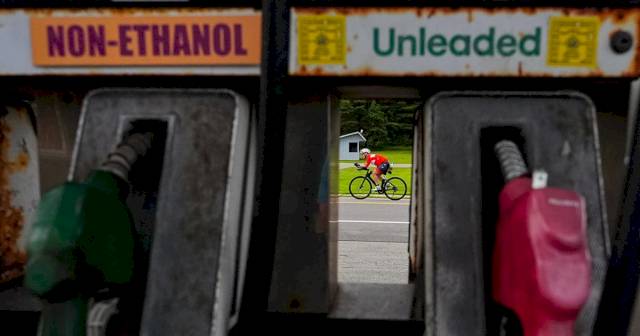
    Since President Donald Trump began the war on Iran in February, gas prices in the United States have risen more than $1.40 a gallon, to a national average of $4.45, according to AAA. Even a temporary ceasefire hasn’t stopped the pain at gas stations across the country. Reports of drone and missile attacks Monday kept the world guessing, investors skittish and oil prices high, leaving little hope of relief soon.

    Mind you, this is all the opposite of the “energy independence” that Trump promised in his re-election campaign. By prioritizing oil and natural gas, ensuring that the U.S. continues its reliance, this administration has made the country more vulnerable to the volatility that Trump’s war sparked. And by implementing policies that reverse the renewable energy revolution that had been underway, the Trump administration and its Republican allies have made it that much harder to wean ourselves off the fossil fuels holding the global economy hostage.

    The Trump administration has made it that much harder to wean ourselves off the fossil fuels holding the global economy hostage.

    In many ways, the U.S. has been fortunate. Over the past decade, the U.S. has recorded huge upticks in oil and natural gas production, largely driven by the development of shale oil fracking. The industries’ growth is such that America is a net exporter, with annual liquefied natural gas exports worth more than soybean or corn exports. That surge has helped the U.S. weather the energy crisis kick-started by Trump’s war better than many countries dependent on oil no longer flowing through the Strait of Hormuz.

    Our geographic location also has upsides: Iran’s closure of the strait hasn’t affected oil shipments arriving to the U.S. from Mexico and Canada, which account for more than 60% of U.S. petroleum imports. But our reliance on fossil fuels still has drawbacks. As I’ve explained before, the price consumers pay at the pump is tied to the global oil market, which remains volatile. With demand for oil greatly outstripping supply, the U.S. simply doesn’t produce enough to match the millions of barrels unable to make it out of the Persian Gulf.

    The countries most affected by the strait’s closure are worried about their vulnerabilities — and, to their credit, some have been taking steps in recent years to address them. Many are increasing reliance on renewable sources of energy, including expansion of solar. (As Heatmap reported in March, the raw materials that go into solar panels and batteries have also been affected by the war, but that mostly affects new production.)

    Europe is no stranger to war driving up oil and gas prices and was considering alternative energy sources even before Russian President Vladimir Putin attacked Ukraine. The European Union countries that have ramped up their renewable energy output over the years have been better able to stave off steep hikes in electricity prices. As activist Bill McKibben recently said in a Democracy Now interview: “Sunlight has to travel 93 million miles to reach the Earth, but none of those miles go through the Strait of Hormuz.” 

    As with so many things, the best time to have begun making the switch away from fossil fuels was yesterday.

    Meanwhile, the U.S. has whipsawed in and out of renewables as political administrations changed. Since last January, the Trump administration has been systematically rolling back policies designed to encourage electric vehicle production as well as reducing fuel efficiency standards for gas-powered cars. The net effect is the federal government fostering even more dependence on gasoline and other refined petroleum products.

    The White House focus on fossil fuels has come at the detriment of companies that had begun planning on an increased market for green technology. The shift has created, as The Wall Street Journal put it this spring, an electric vehicle rust belt, leaving manufacturers who had bet on electric vehicles scrambling to roll back their investments. The result is that instead of the U.S. being positioned to take advantage of increased demand for renewable energy, Trump’s war against Iran stands to benefit China far more than the U.S.

    The trend in oil futures prices suggests that prices at U.S. gas stations — like airfares — are going to be high for a while. (“It’s gonna be years,” one economist told my MS NOW colleague Alex Witt on air over the weekend.) Even when the Strait of Hormuz reopens, Iran has shown how much damage can be done if cargo shipments at sea are restricted.

    As with so many things, the best time to have begun making the switch away from fossil fuels was yesterday. But the pain of watching their bank accounts drain into their gas tank may persuade more Americans that the shift away from fossil fuels is worth it.

    Hayes Brown is a writer and editor for MS NOW. He focuses on politics and policymaking at the federal level, including Congress and the White House.

  • US Secret Service shoots gunman near White House – Al Jazeera

    US Secret Service shoots gunman near White House – Al Jazeera

    The suspect has been taken to hospital following the shooting in Washington

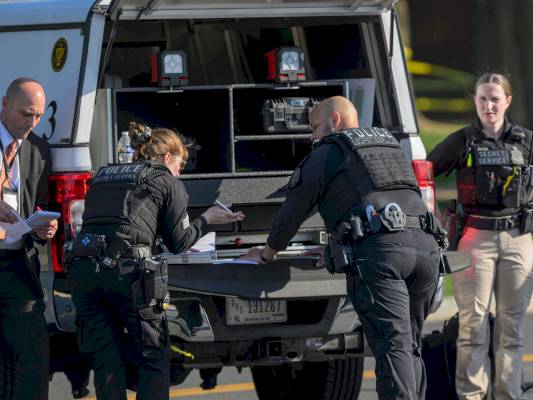
    The United States Secret Service said it returned fire at a gunman near the White House, wounding him and briefly triggering a lockdown.

    An investigation has been launched by the Washington DC Metropolitan Police Department following the shooting, which took place on Monday. The incident comes after an alleged assassination attempt on United States President Donald Trump at the White House correspondents’ dinner last month.

    Recommended Stories

    list of 3 items

    end of list

    Secret Service Deputy Director Matthew Quinn said the shooting occurred after plainclothes agents identified a “suspicious individual” they believed was carrying a firearm. Agents briefly followed the man and called for backup. When uniformed Secret Service officers arrived, the suspect attempted to flee and opened fire. Agents shot back, wounding the man, who was taken to hospital. A weapon was recovered from the suspect.

    A child was shot during the exchange, but his injuries were not life-threatening. It is not clear who shot the minor, but Quinn said investigators believe he was struck by the suspect.

    Quinn said the Secret Service will “find out” whether the gunman was targeting Trump.

    The Secret Service also said there was no evidence that the suspect intended to target US Vice President JD Vance’s motorcade, which passed through the area shortly before the incident.

    Recent attempt on Trump’s life

    On April 25, Trump and First Lady Melania Trump were evacuated from the correspondents’ dinner after a gunman allegedly attempted to assassinate the president. The incident is considered the third assassination attempt against Trump since 2024.

    The suspect, Cole Tomas Allen, 31, is in custody and has been charged with attempting to kill Trump, discharging a firearm during a crime of violence, and illegally transporting guns and ammunition across state lines. He was arrested after allegedly firing a shotgun in the direction of the stairs leading to the ballroom.

    Investigators also accuse Allen of shooting a Secret Service agent, who was wearing a bulletproof vest. He has not yet entered a plea.

  • Minneapolis immigrants still feeling the sting of Trump’s largest crackdown yet – NPR

    Minneapolis immigrants still feeling the sting of Trump’s largest crackdown yet – NPR

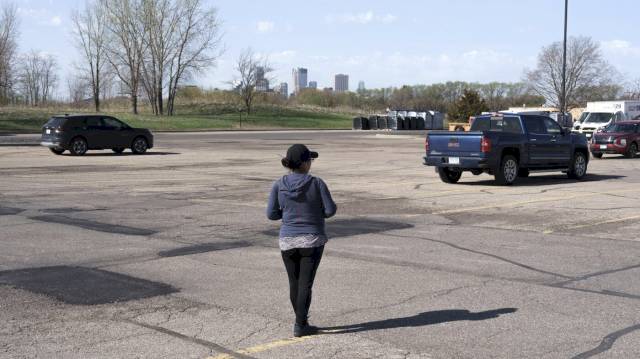
    R, a day laborer from Ecuador who cleans houses for a living, waits for work outside a Home Depot in the Twin Cities, MN on April 22, 2026. Although she has returned to work following Operation Metro Surge, R has seen both a decline in work opportunities as well as a decrease in hourly wages being offered.

    R, a day laborer from Ecuador who cleans houses for a living, waits for work outside a Home Depot in the Twin Cities, Minn. Although she has returned to work following Operation Metro Surge, R has seen both a decline in work opportunities as well as a decrease in hourly wages being offered. Tim Evans for NPR hide caption

    toggle caption

    Tim Evans for NPR

    MINNEAPOLIS — Three months ago, masked ICE agents in unmarked vehicles descended on the Twin Cities as part of Operation Metro Surge, the Trump administration’s largest and most aggressive crackdown yet of immigrants.

    The agents arrested thousands of undocumented immigrants, in what the Border Patrol commander then in charge there, Gregory Bovino, called a “turn and burn” strategy. Agents also threatened journalists and activists documenting the arrests, and shot and killed two U.S. citizens — Renee Good and Alex Pretti.

    Back then, community members, fed up with the presence of ICE agents in their city, took to street corners across the city with whistles around their necks, ready to alert their neighbors of the presence of federal immigration agents. Neighborhoods created a network of volunteers who drove migrants to work, doctors’ appointments and brought people food who were too afraid to leave their homes.

    Today Minneapolis looks different. The crackdown has receded, and arrests of immigrants have dropped 12%. Commander Bovino was forced to retire, and the neighborhood watches that tracked ICE SUVs are no longer as active. But the surge left a mark that enforcement statistics can’t capture, including a hollowed-out local economy that immigrants and their neighbors say they are struggling to rebuild.

    A sign reading “A person was stolen from us by ICE here” hangs from a utility pole at Powderhorn Park in the wake of Operation Metro Surge in Minneapolis, Minn. on April 10, 2026.

    A sign reading “A person was stolen from us by ICE here” hangs from a utility pole at Powderhorn Park in the wake of Operation Metro Surge in Minneapolis, Minn. on April 10, 2026. Tim Evans for NPR hide caption

    toggle caption

    Tim Evans for NPR

    Mourners visit the memorial site for Alex Pretti, who was shot and killed by federal agents in January during Operation Metro Surge, in Minneapolis, Minn. on April 24, 2026.

    Mourners visit the memorial site for Alex Pretti, who was shot and killed by federal agents in January during Operation Metro Surge, in Minneapolis, Minn. on April 24, 2026. Tim Evans for NPR hide caption

    toggle caption

    Tim Evans for NPR

    “We were left traumatized,” said Y, a woman who asked NPR to identify her by her middle initial because she worries speaking out will affect her ongoing immigration case.

    NPR talked to nine immigrants about how Operation Metro Surge upended their lives and how they’re adapting today.

    Together, their stories map what the crackdown left behind: shuttered restaurants, households rationing groceries, mounting debt, mental health woes, and and, for some, a serious reckoning with whether to leave the United States to return to their home countries.

    The seamstress

    On the evening of January 13th, Y was headed home from one of her two jobs as a seamstress.

    Life was going well and the prospects were bright: she had recently bought a house, and talked to her daughter about the prospect of sending her to college.

    In the blink of an eye everything changed. Y said she was surrounded by unmarked vehicles while driving home from work. This was in the height of Operation Metro Surge, when streets were empty and masked ICE agents would drive around the city in unmarked cars and make random stops in the streets.

    The immigration officers, she said, arrested her despite her showing them her work permit and documentation showing she had applied for a U visa, one given to victims of specific crimes.

    The Ecuadoran spent a month being shuffled around multiple detention centers in the U.S. She said before being detained, she barely had debt.

    But after being released from detention with an ankle monitor while her immigration case plays out, Y said things got bad.

    Y, an Ecuadorean seamstress who was detained during Operation Metro Surge and sent to a detention facility in Texas despite having a work permit, sits for a portrait beside her daughter in Minneapolis, MN on April 23, 2026. Y’s month-long detention led to her losing one of her two jobs as well as amassing around $13,000 in debts related to legal fees, lost income, and travel costs, as she had to pay her own return expenses from Texas after being released.

    Y, an Ecuadorean seamstress who was detained during Operation Metro Surge and sent to a detention facility in Texas despite having a work permit, sits for a portrait beside her daughter in Minneapolis, MN on April 23, 2026. Y’s month-long detention led to her losing one of her two jobs as well as amassing around $13,000 in debts related to legal fees, lost income, and travel costs, as she had to pay her own return expenses from Texas after being released. Tim Evans for NPR hide caption

    toggle caption

    Tim Evans for NPR

    Y, an Ecuadorean seamstress who was detained during Operation Metro Surge and sent to a detention facility in Texas despite having a work permit, shows the ankle monitor she is required to wear at her home in Minneapolis, Minn. on April 23, 2026. Y’s month-long detention led to her losing one of her two jobs as well as amassing around $13,000 in debts related to legal fees, lost income, and travel costs, as she had to pay her own return expenses from Texas after being released.

    Y, an Ecuadorean seamstress who was detained during Operation Metro Surge and sent to a detention facility in Texas despite having a work permit, shows the ankle monitor she is required to wear at her home in Minneapolis, Minn. on April 23, 2026. Y’s month-long detention led to her losing one of her two jobs as well as amassing around $13,000 in debts related to legal fees, lost income, and travel costs, as she had to pay her own return expenses from Texas after being released. Tim Evans for NPR hide caption

    toggle caption

    Tim Evans for NPR

    With no weekly paycheck, and with mounting legal fees, her debt skyrocketed.

    “It was hard to come out of detention and find so much debt,” Y said.

    Y’s 18-year-old daughter asked friends and family to borrow $7,500 to post bond for her mom. The daughter also asked for help to pay for the mortgage of the house, and to pay for utilities. Y now owes more than $13,000 to friends and family members who pooled their money.

    Y recently started working again, and is looking for a second job, or even a third one.

    Before detention, Y was hoping to save enough money to help send her 18-year-old daughter to college. The daughter wants to be a veterinarian.

    But now she worries college may be out of reach.

    “My dream was to see my daughter in college — I used to tell her, ‘don’t worry, I have two jobs and I will figure a way for you to graduate from the university,’” Y said. “Now we have to find scholarships. It’s been hard.”

    The day laborers

    During Operation Metro Surge, the areas where day laborers used to gather to get jobs — including the Home Depot or the empty lot on Lake Street — were completely emptied.

    People enter and exit a Home Depot in the Twin Cities, MN on April 22, 2026. Day laborers often seek work opportunities outside of home improvement retail outlets, with such locations becoming a common target of immigration enforcement operations.

    People enter and exit a Home Depot in the Twin Cities, MN on April 22, 2026. Day laborers often seek work opportunities outside of home improvement retail outlets, with such locations becoming a common target of immigration enforcement operations. Tim Evans for NPR hide caption

    toggle caption

    Tim Evans for NPR

    V, a day laborer from Ecuador who went into hiding and lost employment for weeks during Operation Metro Surge, waits for work along East Lake Street in Minneapolis, Minn. on April 22, 2026. Tim Evans for NPR

    V, a day laborer from Ecuador who went into hiding and lost employment for weeks during Operation Metro Surge, waits for work along East Lake Street in Minneapolis, Minn. on April 22, 2026. Tim Evans for NPR hide caption

    toggle caption

    Tim Evans for NPR

    But months after the operation ended, migrant workers have started to return for work.

    V, an Ecuadorian man who asked NPR to identify him by the initial of his first name because he’s undocumented, said “everything changed” for day laborers.

    He’s now behind on his rent, he said. Work has been slow and his hourly wage is down.

    49-year-old R, another worker, used to get hired every day for work by camping out at the Home Depot lot. She told NPR she’d get paid anywhere from $20 to $25 per hour for cleaning offices and homes.

    R, a day laborer from Ecuador who cleans houses for a living, waits for work outside a Home Depot in the Twin Cities, Minn. on April 22, 2026. Although she has returned to work following Operation Metro Surge, R has seen both a decline in work opportunities as well as a decrease in hourly wages being offered.

    R, a day laborer from Ecuador who cleans houses for a living, waits for work outside a Home Depot in the Twin Cities, Minn. on April 22, 2026. Although she has returned to work following Operation Metro Surge, R has seen both a decline in work opportunities as well as a decrease in hourly wages being offered. Tim Evans for NPR hide caption

    toggle caption

    Tim Evans for NPR

    A week ago she went back to work. These days when she gets hired, she’s getting offered $15 to $17 per hour.

    “It’s like starting again from zero,” R said. She asked NPR to use her first initial because she’s undocumented.

    “ICE destroyed our lives psychologically and physically,” she said.

    The restaurant owners in the brink of closing 

    The Hernandez family have owned the Mexican restaurant El Tejabal in Richfield, Minn., for nearly two decades. It is a staple in the community.

    Owners Miguel Hernandez, Sr., and Rosa Zambrano said the surge in immigration agents created chaos in their restaurant: employees stopped coming, customers stopped eating in. They lost about 60% in sales.

    “We won’t recover because those sales are not going to come back, and we still have to pay rent, and the cost of food has increased,” Zambrano said in Spanish.

    Miguel Hernandez preps food at El Tejaban Mexican Grill, the family-run restaurant that he has owned with his wife Rosa Zambrano for nearly two decades, in Richfield, Minn. on April 22, 2026. The couple fears that they will need to close their restaurant when their current lease ends, as the business suffered dramatic revenue losses during Operation Metro Surge and has struggled to recover in the months since.

    Miguel Hernandez preps food at El Tejaban Mexican Grill, the family-run restaurant that he has owned with his wife Rosa Zambrano for nearly two decades, in Richfield, Minn. on April 22, 2026. The couple fears that they will need to close their restaurant when their current lease ends, as the business suffered dramatic revenue losses during Operation Metro Surge and has struggled to recover in the months since. Tim Evans for NPR hide caption

    toggle caption

    Tim Evans for NPR

    Miguel Hernandez reads an order slip at El Tejaban Mexican Grill on April 22, 2026; an employee preps food at El Tejaban.

    Miguel Hernandez reads an order slip at El Tejaban Mexican Grill, the family-run restaurant that he has owned with his wife Rosa Zambrano for nearly two decades, in Richfield, Minn. on April 22, 2026; Tim Evans for NPR hide caption

    toggle caption

    Tim Evans for NPR

    Rosa Zambrano discusses administrative details with her daughter Diana and an employee in the office at El Tejaban Mexican Grill, the family-run restaurant that she has owned with her husband Miguel Hernandez for nearly two decades, in Richfield, Minn. on April 22, 2026.

    Rosa Zambrano discusses administrative details with her daughter Diana and an employee in the office at El Tejaban Mexican Grill, the family-run restaurant that she has owned with her husband Miguel Hernandez for nearly two decades, in Richfield, Minn. on April 22, 2026. Tim Evans for NPR hide caption

    toggle caption

    Tim Evans for NPR

    The couple said they’ve decided to close in about two years, when their lease is up. They said they’ve crunched the numbers and realized there’s no chance for them to fully recover.

    Both Zambrano and Hernandez Sr. are 60 years old and they were hoping to save some money for their retirement. That’s not possible anymore.

    “We are not saving money to continue the business,” Zambrano said. “We are saving to pay rent.”

    Daughter Dianna Hernandez, 27, works at the restaurant and during the surge she said she had to lock its doors because of the presence of ICE agents in the parking lot.

    Rosa Zambrano, Dianna Hernandez, and Miguel Hernandez at El Tejaban Mexican Grill, in Richfield, Minn. Dianna's parents have owned the restaurant for nearly two decades.

    Rosa Zambrano, Dianna Hernandez, and Miguel Hernandez at El Tejaban Mexican Grill, in Richfield, Minn. Dianna’s parents have owned the restaurant for nearly two decades. Tim Evans for NPR hide caption

    toggle caption

    Tim Evans for NPR

    She doesn’t want to see the restaurant close — but she acknowledges Operation Metro Surge changed their lives, even though she and the rest of the family are U.S. citizens.

    “This is where I grew up, this is all I know and to just think and hear them say we are going to close in two to three years, and the way it’s ending, I hate it for them,” she said.

    The family who lost it all

    Many people who talked to NPR have relied on their children, their community and their savings to continue to live. But others are facing economic ruin.

    “The economic, emotional, traumatic impact of everything that we went through here in Minneapolis is going to be felt for years,” Myrka Zambrano, with the advocacy group Minnesota Immigrant Rights Action Committee, said.

    A bill making its way through the Minnesota Legislature would create a $100 million relief program for small businesses impacted by the crackdown. But Zambrano said that’s not enough, especially when so many immigrants are struggling with other issues like food security and housing.

    Pablo Alcaraz and María Peñalosa, a couple that has been living in the U.S. for more than 20 years, are struggling, too.

    Husband and wife Pablo Alcaraz and Maria Peñalosa pose for a portrait outside their home in Inver Grove Heights, Minn. on April 22, 2026. The couple, who had to close their business Garibaldi Mexican Restaurant in West St. Paul after suffering dramatic revenue losses during Operation Metro Surge, have lost their only source of income.

    Husband and wife Pablo Alcaraz and Maria Peñalosa pose for a portrait outside their home in Inver Grove Heights, Minn. on April 22, 2026. The couple, who had to close their business Garibaldi Mexican Restaurant in West St. Paul after suffering dramatic revenue losses during Operation Metro Surge, have lost their only source of income. Tim Evans for NPR hide caption

    toggle caption

    Tim Evans for NPR

    The commercial space that was previously home to Garibaldi Mexican Restaurant sits empty in West St. Paul, Minn. on April 28, 2026. The restaurant, which was owned by Pablo Alcaraz and his wife Maria Peñalosa, had to close after suffering dramatic revenue losses during Operation Metro Surge.

    The commercial space that was previously home to Garibaldi Mexican Restaurant sits empty in West St. Paul, Minn. on April 28, 2026. The restaurant, which was owned by Pablo Alcaraz and his wife Maria Peñalosa, had to close after suffering dramatic revenue losses during Operation Metro Surge. Tim Evans for NPR hide caption

    toggle caption

    Tim Evans for NPR

    The couple have work permits and a U visa — a type of visa given to victims of specific crimes.

    Their whole life they had worked towards one dream — to open a restaurant.

    But now the nonstop hum of the industrial fridge inside their cluttered trailer is a reminder of what could have been.

    “It’s so unfair that in a few months the government has ended the work of 20 years,” Peñalosa said. “They ended our dreams.”

    Their restaurant, Garibaldi Mexican Restaurant, went out of business as a direct result of Operation Metro Surge.

    Before Operation Metro Surge, the couple said they would make about $15,000 in monthly profit, on average.

    During Operation Metro Surge, sales evaporated. There were many days, he says, when they made almost nothing in profit.

    Now they are living on the frozen meat and other food from the restaurant, but Alcaraz said they are likely to run out in a month.

    “Once we run out of it, that’s when the problems will start,” he said.

    Pablo Alcaraz becomes emotional as he and his wife Maria Peñalosa discuss the closure of their restaurant at their home in Inver Grove Heights, MN on April 22, 2026. The couple, who had to close Garibaldi Mexican Restaurant in West St. Paul after suffering dramatic revenue losses during Operation Metro Surge, have lost their only source of income.

    Pablo Alcaraz becomes emotional as he and his wife Maria Peñalosa discuss the closure of their restaurant at their home in Inver Grove Heights, MN on April 22, 2026. The couple, who had to close Garibaldi Mexican Restaurant in West St. Paul after suffering dramatic revenue losses during Operation Metro Surge, have lost their only source of income. Tim Evans for NPR hide caption

    toggle caption

    Tim Evans for NPR

    Peñalosa, the wife, said she worries about her husband’s mental health. He doesn’t want to leave his bed, and is depressed, she said.

    Alcaraz recognizes he’s desperate. He said that because he had to close the restaurant and has some debt, he doesn’t know whether he’ll be able to open a new restaurant or another business.

    “How am I going to move forward? I’m practically dead,” he said, with tears in his eyes. “I need a credit line to open a restaurant, to pay rent, to reopen. I don’t have it. They killed me.”

    This story was supported by the journalism non-profit the Economic Hardship Reporting Project.

  • Trump extends red snapper fishing in 4 states, including GA. How long? – Savannah Morning News

    May 5, 2026, 5:10 a.m. ET

    Georgia was already going to see plenty of anglers this summer, but now they have even more reason to go fishing this season.

    On Friday, President Donald Trump announced on Truth Social that his administration approved state permits for the 2026 red snapper season with much larger windows for fishing.

  • Trump never had a plan for this war. Congress must make one. | Opinion – USA Today

    May 5, 2026, 5:09 a.m. ET

    President Donald Trump and Defense Secretary Pete Hegseth attempted to avoid accountability at the end of April by absurdly asserting that they had pressed pause on the war with Iran. They’ve likely been breaking the law ever since.

    But their rationale – if you can bear to call it that – just fell apart.

    The War Powers Resolution, federal legislation adopted in 1973, requires a president to cease hostilities after 60 days of fighting or receive congressional approval to continue. That deadline arrived May 1.

    But Trump and Hegseth claimed that a shaky ceasefire with Iran that started in April had stopped the clock from ticking on the 60-day deadline.

    That was nonsense. There is no pause button in the War Powers Resolution.

    And then the U.S. military reported sinking at least six Iranian boats on May 4 while they were targeting commercial vessels in the Strait of Hormuz.

    So Trump’s pretend pause is no more.

    Trump doesn’t seem too worried about following the law on war

    President Donald Trump speaks at a high school on May 1, 2026, in The Villages, Florida.

    Trump, our first felon president, won’t care about breaking another law. He flat-out called the War Powers Resolution “totally unconstitutional” on the 60th day of his war, when asked about the deadline.

    And Hegseth won’t follow the law. He’s been rooting for Americans to commit war crimes since this started.

    Don’t look to acting Attorney General Todd Blanche to urge Trump to follow the law. Blanche, who led Trump’s defense team in the criminal case that resulted in Trump’s felony convictions, tried to play the war-has-a-pause-button game on NBC News’ “Meet The Press” on May 3.

    “My job as the acting attorney general is to make sure that the president, that we all are doing the right thing legally,” Blanche said. “And we absolutely are.” 

    It’s a prerequisite for a job in Trump’s second-term Cabinet to be able to say stuff like that with a straight face, especially if you’re still trying out for a permanent appointment, like Blanche is these days.

    The Republicans overseeing their party’s majority control in the House and Senate have shown little interest in serving as an equal branch of the American government, choosing instead to serve as servants to Trump’s scattershot agenda.

    But this war is a disaster in every direction. A serious majority of Americans oppose it. And they dislike the economic impact Trump’s war has had on the price of gas and other everyday expenses.

    And – oh, hey – here comes November’s midterm elections, with Democrats seeking control of the House and Senate.

    If only out of a sense of political survival, Republicans in the House and Senate must hold Trump accountable for Iran. They have federal law on their side, even if he doesn’t care about the law.

    That’s the way this is supposed to work. There is a natural tension built into our federal government. The executive, legislative and judicial branches should serve as checks and balances.

    What are the odds that Republicans in Congress will use their authority?

    Just look at how we got the War Powers Resolution. It passed in the House in 1973 by a vote of 284-135 and in the Senate by 75-18. So clearly it had strong support.

    But Richard Nixon, who was president at the time, didn’t want his powers restricted by Congress, so he vetoed the legislation. Nixon asserted that legislation was “unconstitutional” – 53 years before Trump made the same bogus claim.

    Congress, undeterred, overrode Nixon’s veto by mustering the votes of more than two-thirds of the members in both chambers.

    The House and Senate are largely not in session now. And who knows what will happen between Trump and Iran by the time Congress returns to Washington in a week.

    But it’s time for more rank-and-file Republicans to call for accountability. A joint resolution in the Senate on April 30 called for an end to the war due to a lack of congressional approval. That failed in a 50-47 vote, but two Republicans, Sens. Susan Collins of Maine and Rand Paul of Kentucky, backed it.

    I know I’m calling for a tough vote here. On May 1, with the 60-day deadline at hand, Trump decided to deliver a campaign speech in Florida. There, he suggested it is “treasonous” to criticize his war.

    That’s the sort of venom he’ll unleash on anyone, especially a Republican in Congress, if they try to hold him accountable by law. That’s as predictable as the sunrise.

    Trump never had a coherent plan for this war. He clearly has no plan for how to end it. And he has told us he has no plans to follow the law. Republicans and Democrats in Congress need a plan of their own.

    Follow USA TODAY columnist Chris Brennan on Bluesky, @bychrisbrennan.bsky.social, and on X, @ByChrisBrennan. Sign up for his weekly newsletter, Translating Politics, here.