Iran warned the United States on Monday not to approach or enter the Strait of Hormuz as the American military launches a new effort to “guide” stranded ships through the critical waterway.
It’s the latest bid to break Iran’s stranglehold over the strait, which has left global shipping at an effective standstill and sent energy prices spiraling.
Iran quickly pushed back, issuing a new map and a flurry of statements that sought to reassert its control.
Passage must be carried out in coordination with Tehran, its military command cautioned. “We warn that any foreign armed force, especially the aggressive military of America, should they intend to approach or enter the Strait of Hormuz, will be subjected to attack,” Major General Pilot Ali Abdollahi said in a statement carried by state TV channel IRIB.
In a lengthy TruthSocial post late Sunday, Trump said the U.S. will “guide ships” of countries not involved in the Middle East crisis safely out of the strait, “so that they can freely and ably get on with their business.”
Trump added that what he dubbed “Project Freedom” would begin Monday morning Middle East time.
U.S. Central Command, which has been enforcing Washington’s blockade of Iranian ports, said that 15,000 service members, guided-missile destroyers, over 100 land and sea-based aircraft and multi-domain unmanned platforms will be involved in the new operation.
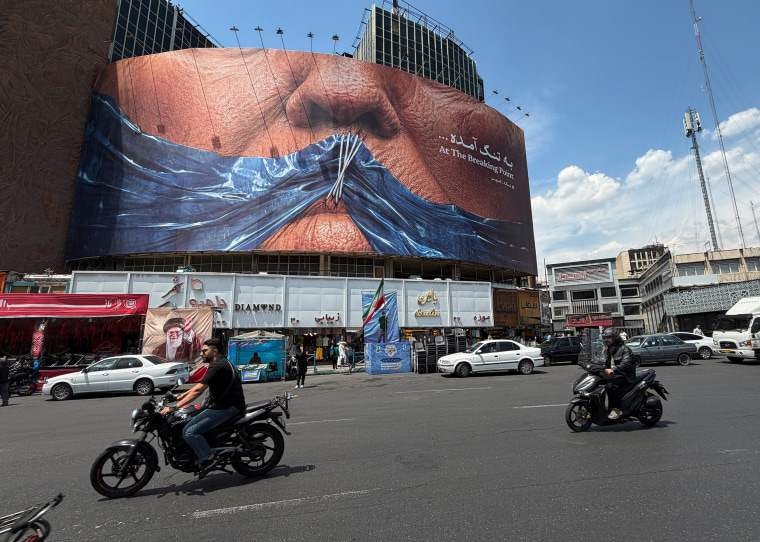
Vehicles pass a billboard in Tehran on Saturday which appears to show the sewn lips of Trump covered in a ribbon shaped to represent the Strait of Hormuz.Vahid Salemi / AP
The Joint Maritime Information Center said that the U.S. has established an “enhanced security area” to the south of usual shipping routes to support transit.
It said vessels should consider routing via Oman territorial waters as usual routes should be considered “extremely hazardous due the presence of mines that have not been fully surveyed and mitigated.”
It was not immediately clear whether any ships had begun using the route or the U.S. mission.
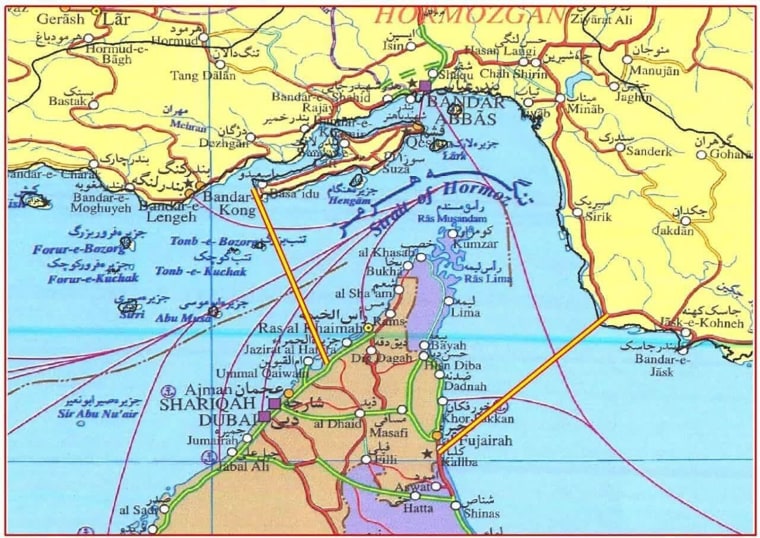
Iran’s Navy shared a new map of what it said was the area of the strait under its control, though it was not clear whether this represented any change.
The map shows a line between Iran’s Qeshm island and the United Arab Emirates’ Umm al Quwain emirate. In the east, the area stops at a line between Iran’s Mount Mobarak and the U.A.E.’s Fujairah.via FARS
Maritime movements that are inconsistent with Tehran’s “declared principles” will face serious risks, said Hossein Mohebbi, a spokesman for Iran’s Revolutionary Guard. “Violating vessels will be stopped with full force,” he said, according to the semi-official ISNA news agency.
Any American interference in the strait will be considered a “violation of the ceasefire” currently in place between Tehran and Washington, warned Ebrahim Azizi, the head of parliament’s National Security and Foreign Policy Committee, in a post on X late Sunday.
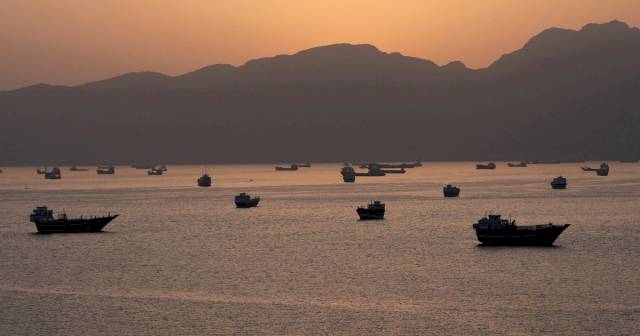
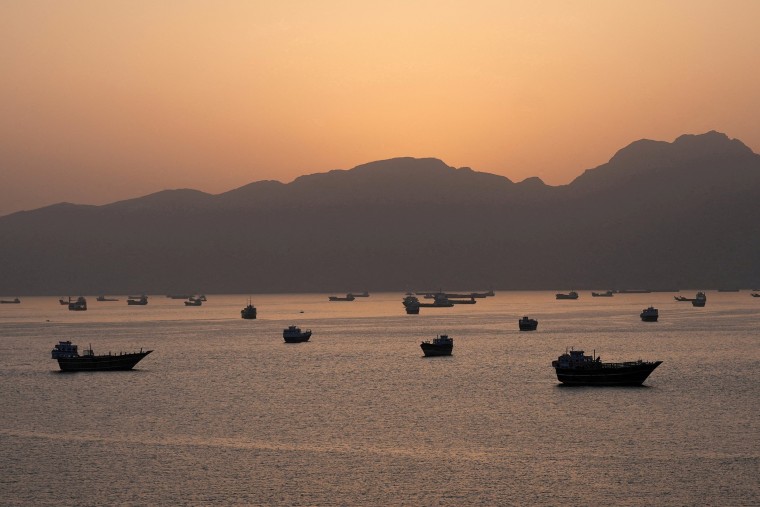
Hundreds of ships and thousands of crew members have been stranded in the area since Iran launched attacks and threatened shipping in the wake of the joint U.S.-Israeli assault more than two months ago.
Many of these crews are running low on food and other necessities, Trump said, calling his move to free them up a “humanitarian gesture” by the U.S. One sailor stuck in the strait told NBC News the security situation left him unable to sleep, spending nights on the deck watching rockets fly over his head.
Two ships were attacked in the strait this weekend, the British military’s United Kingdom Maritime Trade Operations Center said.
Richard Meade
Ships and boats in the Strait of Hormuz near Musandam, Oman, on May 1.Reuters
With peace talks stalled, energy prices have been rising. Oil prices climbed slightly overnight, with the international benchmark Brent crude trading at around $109 a barrel. And the national average gas price in the U.S. continued to rise, hitting $4.46.
Neither side has offered much optimism about a deal to end the war, but Tehran said Monday it was reviewing the latest U.S. counterproposal.
The sailors were flown to Pakistan on Sunday night, a statement from the country’s foreign ministry said, and will be handed over to Iranian authorities. The ship will be taken to Pakistani territorial waters, the statement added, to be returned to its original owners after necessary repairs.
The US president has accused some NATO countries of not doing enough to support the US-Israel war on Iran.
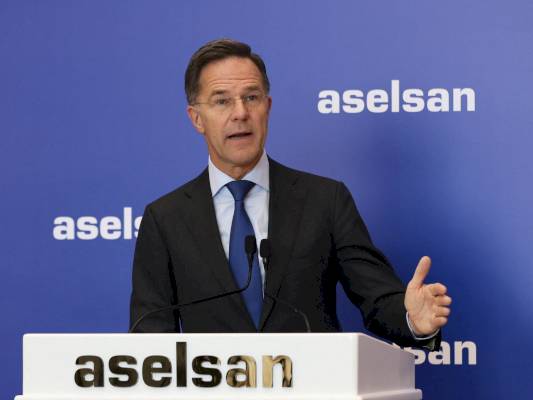
NATO Secretary-General Mark Rutte says European leaders have “gotten the message” after United States President Donald Trump announced plans to withdraw 5,000 soldiers from Germany.
Trump has grown increasingly frustrated with NATO allies, accusing them of not doing enough to support the US-Israel war on Iran. Speaking on Monday, Rutte acknowledged “disappointment from the US side”.
“European leaders have gotten the message. They heard the message loud and clear,” Rutte said before a European Political Community meeting in Armenia.
“Europeans are stepping up, a bigger role for Europe and a stronger NATO,” he added.
The Pentagon announced the troop withdrawal from Germany on Friday, days after German Chancellor Friedrich Merz said Iran was humiliating the US during the negotiations aimed at ending the war.
The European Union’s top diplomat, Kaja Kallas, called the announcement’s timing a “surprise”.
“I think it shows that we have to really strengthen the European pillar in NATO, and we have to really do more,” Kallas said while stressing that “American troops are not in Europe only for protecting European interests but also American interests.”
Over the weekend, NATO spokesperson Allison Hart said officials in the 32-nation military alliance “are working with the US to understand the details of their decision on force posture in Germany”.
‘Dangerous military intervention’
European criticism of the war on Iran has mounted in recent weeks as the conflict sends shockwaves through the global economy due to the continued disruption to shipping in the Strait of Hormuz.
Last week, Merz compared the war to previous military quagmires, such as the US invasions of Iraq and Afghanistan.
“It is, at the moment, a pretty tangled situation,” he said. “And it is costing us a great deal of money. This conflict, this war against Iran, has a direct impact on our economic output.”
Spain has refused to let the US launch attacks on Iran from its airspace or military bases. Prime Minister Pedro Sanchez has condemned the war as “unjustified” and a “dangerous military intervention” outside the realm of international law.
Despite this, Rutte said “more and more” European nations were now pre-positioning assets such as minehunters and minesweepers close to the Gulf to be ready for the “next phase” in the war.
He provided no details, and European nations have previously insisted they would not help to police the Strait of Hormuz until the war is over.
Increased defence spending
Many European countries have committed to ramping up defence spending in the face of fears over Trump’s commitment to NATO and Russia’s assault on Ukraine – a push underscored by several leaders in the Armenian capital.
“Europeans are taking their destiny into their own hands, increasing their defence and security spending, and building their own common solutions,” French President Emmanuel Macron said.
“We have to step up our military capabilities to be able to defend and protect ourselves,” European Commission President Ursula von der Leyen told reporters.
Facts around the balance of imports and exports under President Trump and his tariffs can seem impossibly contradictory.
For example, the trade deficit during the last 14 months of President Biden’s time in office is nearly identical to the first 14 months of Trump 2.0. Biden averaged $73.7 billion each month on the way out, while President Trump has averaged $73.1 billion ever since.
But supporters of the president can quickly push back that Trump has overseen a whopping 55% drop in the monthly trade deficit from his first month in office to the most recent reading.
But both stats — while true — are misleading. The reason is a four-month surge in imports from December 2024 to March 2025 that saw average monthly trade deficits north of $120 billion as importers flooded US ports after Trump’s election to fill their warehouses in anticipation of new tariffs.
Graphic from the Federal Reserve Bank of St. Louis ·The Federal Reserve Bank of St. Louis
It has also made the numbers messy ever since, but that hasn’t slowed either side of the partisan divide from trying to dice the numbers to their advantage.
That spin cycle is sure to be in evidence again this week when March 2026 numbers are released by the government, one year after historically high March 2025 numbers were seen on the eve of Trump’s “Liberation Day.”
Look for Trump’s team on Tuesday to tout another double-digit drop while omitting the fact that any decrease was made possible because March 2025 was the apex of that four-month surge, when Trump oversaw the largest monthly trade deficit in US history, over $135 billion.
How to understand the trends
Perhaps the best way to understand the trends so far is to look at the last 11 months of Biden’s presidency before the surge began, and compare them with the 11 months of data we have from Trump’s second term after the surge ended.
By that measure, Trump’s tariffs have indeed taken a chunk out of the trade deficit. Biden’s average figure for this 11-month span was just over $73 billion, while a comparable 11 months of Trump came in at about $58 billion.
That’s a drop of more than 25%, which is significant but far below what Trump sometimes asserts.
In February, he said on social media that the trade deficit had dropped by 78% and would “GO INTO POSITIVE TERRITORY DURING THIS YEAR.”
President Donald Trump is silhouetted during an event at the White House on April 21. (Brendan SMIALOWSKI / AFP via Getty Images) ·BRENDAN SMIALOWSKI via Getty Images
No evidence for either claim was offered — and the US remains a long way from a trade surplus — but Trump’s second term so far has changed the trade balance somewhat.
Liana Finck is a cartoonist and an illustrator who has contributed to The New Yorker since 2015. She was a 2023 Guggenheim Fellow and is the author of “How to Baby” and “Mixed Feelings.”
Bobby Pulido, a Tejano musician who’s trying to unseat a Republican in Congress, has turned some of his district’s splashiest parties into campaign stops.
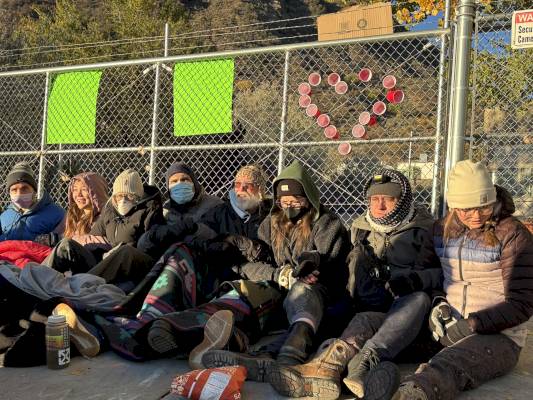
Federal immigration agents arrested three times more people in Colorado per day on average last year compared with 2024, marking an aggressive shift in enforcement under President Donald Trump, according to new data.
About 12 people each day were taken to federal detention facilities in 2025, up from four in 2024. Even without high-profile enforcement surges like those seen in Illinois, Minnesota, New York and California, U.S. Immigration and Customs Enforcement officers arrested about 4,160 people in Colorado in 2025, an increase of 281% compared with 1,091total people arrested in 2024. Arrests in Colorado reached their highest level in April 2025 and have since fallen slightly.
From Jan. 1 to March 10, ICE arrested about 12 people per day in Colorado, demonstrating that last year’s pace continues.
☀️ READ MORE
The surge in arrests as well as reports from groups that aid immigrants and track detentions show a heightened focus by ICE to not just arrest more people, but more immigrants living in Colorado. While Trump vowed to target people with criminal records, data obtained by the Sun shows that most people arrested in Colorado last year have never been convicted of a crime.
About 65% of the people arrested by ICE officers so far under Trump had no prior criminal convictions. And among those with criminal convictions, only 5% of those convictions were for what the Federal Bureau of Investigation designates as violent crimes (murder, nonnegligent manslaughter, rape, robbery and aggravated assault).
Of those arrested with criminal convictions, the most common convictions are for driving under the influence, assault, and traffic offenses.
That’s despite Trump’s campaign promise to target immigrants who are violent criminals.
The data, obtained from ICE and published by the University of California, Berkeley, School of Law’s Deportation Data Project, illustrates the dragnet approach to arrests in Colorado during the first year of Trump’s presidency and the new landscape that immigrants in Colorado have been navigating. The Colorado Sun has been reporting on the data as it becomes available.
George Valdez, acting director of ICE’s Denver field office, declined to comment through a spokesperson. In a statement, the agency told the Sun “the Deportation Data Project is not accurate,” but did not cite any specific issues. The Sun provided ICE more than a week to review our findings, which relied on data obtained directly from ICE by the Deportation Data Project through the Freedom of Information Act.
ICE agents have arrested people driving to work and at their jobs, at their homes, driving to school and leaving state and immigration courts.
Many have lived in Colorado for years and have deep ties to the community through family, friends and their jobs, according to advocates.
Andrea Loya, executive director of Casa de Paz, helps families of people who are detained at the ICE detention facility in Aurora.
Far fewer people are being released from the facility, Loya said, and more of those who are releasednow are Colorado residents, a shift that highlights ICE’s heightened focus on locals. In 2024, Casa de Paz helped 2,087 people released from the facility, most of whom were arrested in other states and brought to Aurora to be processed, Loya said. In 2025, Casa de Paz helped 610people released from the facility, about 40% of whom lived in Colorado.
In March 2025, Loya saw young children waiting to visit family members detained at the ICE detention center in Aurora for the first time.
“Before it was only volunteers,” she said. “We were seeing so many kids, babies through teenagers, moms, dads, grandmas. That immediately told us it’s local folks who are being detained. We have shifted everything.”
ICE has made it more difficult for people released from detention to fly to other states, Loya said, complicating Casa de Paz’s efforts to assist people.
ICE will often take away a person’s driver’s license while they are in detention, Loya said, and it can take them a while to get their license back. ICE gives people released from detention paperwork showing they have recently been released that used to be sufficient to pass airport security, Loya said, but recently security officers have been confused about who can fly and who can’t. While Casa de Paz used to help people with plane tickets, they are now often resorting to long distance bus tickets, Loya said.
“There is this idea that there’s not a lot of ICE activity here because it doesn’t look visually like the other states,” Loya said. “It for sure is happening here.”
Hans Meyer, a Denver-based immigration attorney, said his typical client profile has shifted from someone who has a criminal history and has not lived in the U.S. for very long to “people who have lived in the country for long periods of time and virtually no criminal history with deep community and family connections.”
Meyer is suing ICE in federal court to limit how the agency can use warrantless arrests. In November, the court sided with Meyer and granted a preliminary injunction in the case, but Meyer and lawyers for the American Civil Liberties Union and another Denver law firm allege ICE officers are violating the injunction by continuing to arrest people without first verifying they are undocumented and a flight risk.
ICE arrested one of Meyer’s clients, Dionisio Castillo, 53, at his construction job site in January without asking him questions about his background. Had they asked, they would have known he has lived undocumented in the U.S. for 30 years, has three U.S. citizen children and no criminal history. He spent 48 days at the ICE detention facility in Aurora. His family had to pay a $2,500 bond for his release.
“I was standing next to my truck and I turned to the right and I saw that the officers were walking toward me,” Castillo told the judge through an interpreter at a hearing last month. “They handcuffed me with my hands behind my back.”
Training hours for ICE officers at the Denver field office have been cut over the last year, according to Gregory Davies, the assistant field office director, and the office has hired dozens of new officers recently.
Meyer is hopeful the federal judge in the warrantless arrest case will continue to hold ICE accountable.
“The entire country, including the federal courts, are painfully aware that ICE is a pariah law enforcement agency and has lost all veneer of legitimacy,” he said.
Jordan Garcia, the program director for the American Friends Service Committee’s Colorado Immigrant Rights Program, said people are doing a lot more planning for themselves and their families, including putting another person on the title of the car, on the list to pick up the kids from school or day care, just in case they get arrested. More people are participating in workshops to learn about their rights and how best to protect themselves, Garcia said.
“We’ll continue to do the best we can,” he said. “People are trying to be cautious but they’re also trying to protect each other and be good stewards of the community.”
Methods:
The data comes from Immigration and Customs Enforcement and was obtained by the Deportation Data Project at the University of California, Berkeley, School of Law through a public records lawsuit. It covers every arrest, detention stay and deportation conducted by ICE from Oct. 1, 2022 through Mar. 10, 2026.
Here’s how we performed the analysis:
Filtered data to apprehensions categorized as under the Denver area of responsibility AND either:
labeled as being in the state of Colorado; or tagged with a landmark located in Colorado (e.g., Centennial, CO or Fremont County, CO).
narrowed the arrest data to the time frame of Jan. 1, 2024 to Mar. 10, 2026.
Removed 70 likely duplicates identified by the Deportation Data Project from the arrests dataset, defined as multiple arrests of the same individual occurring within 24 hours.
Excluded 1,384 records with missing state value that were marked as being under the jurisdiction of a Colorado-based docket office due to trends within this subset that contradicted trends in the wider dataset.
Added the most serious conviction to the remaining 6,089 records, using unique case identifiers to match with detention data for individuals who had been convicted with a crime.
Some arrested people who were designated as having pending or no criminal charges at the time of their arrest had a conviction associated with them in the detention dataset. The Colorado Sun included those people, 75 in total, as having pending charges, so it is possible that our total number of arrestees with prior criminal convictions is an undercount.
It is worth noting that there is no way to gauge the accuracy of this data. For instance, 2023 data appears to show a spike in the number of arrests with a landmark or docket office in Colorado, but these arrest records also had an unusually high rate of missing state information, in contrast with all other areas of responsibility in the United States at that time.
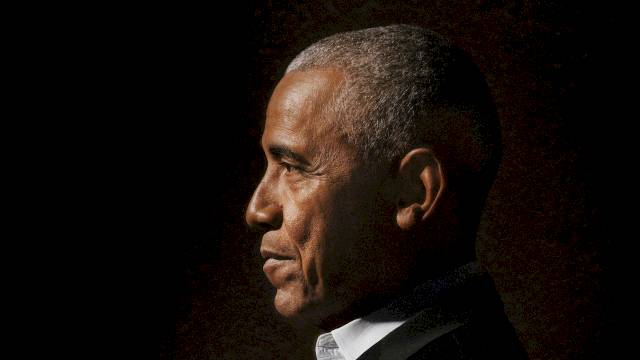
In Barack Obama’s final days in office, he found himself in the painful position of trying to console his staff, the Democratic Party, and millions of supporters. He attempted to convince them—even if he could not entirely convince himself—that the looming Presidency of Donald Trump was not a national calamity. In the past, he would say, the country had endured slavery, the Civil War, the Great Depression, Jim Crow, assassinations. And, though Trump was alarming in many ways, America was blessed by the strength of its institutions and the resilience of its people. The word “guardrails” was uttered constantly. In Obama’s estimation, Trump would not erase all his achievements. As he put it, “Maybe fifteen per cent of that gets rolled back.”
This kind of calm was pure Obama. His appeal had as much to do with character and temperament as it did with his center-left ideology. Although Obama believed that Trump’s ugliest slurs against him, particularly his deployment of the birther theory, were a racist outrage that heightened the threats against him and his family, he now took pains to set aside his contempt. Insuring that there was another orderly transition of power—that, too, was part of his rhetoric of consolation.
Such poise was not easy to sustain. When Obama met Trump for a ritual pre-Inauguration visit to the Oval Office, he was struck by how unschooled and incurious the President-elect was. Trump, Obama told people, seemed indifferent to hearing about potential national-security perils—North Korea, Russia—preferring to brag about the size of the crowds at his campaign rallies. Obama pitched Trump on preserving several of his signature achievements, including the Affordable Care Act and the Iran nuclear deal. Trump responded that he would consider the request, and Obama thought it was not impossible that he meant it.
Obama travelled to Greece and spoke about the virtues of democracy; he thanked the people who had worked on his campaigns and his supporters. With a Trump Presidency ahead, these were wearing performances. And so, to provide some relief and release, Obama also put on a series of upbeat valedictory events at the White House. Bruce Springsteen, a friend of the Obamas’, played an acoustic concert for staff in the East Room. He dedicated “Tougher Than the Rest” to Barack and Michelle and ended by playing an anthem of American inclusiveness, “Land of Hope and Dreams.” Obama, who had started thinking about his memoirs, hosted a lunch with some of his favorite writers: Zadie Smith, Junot Díaz, Barbara Kingsolver, Colson Whitehead, and Dave Eggers. “What surprised me was how completely unbowed President Obama was, how certain he was that the country would find its way,” Díaz later wrote. “He burned with optimism and faith invincible.”
The most exuberant farewell event—a dance party at the White House—took place on January 6th. It was a freezing night, and people shivered outside as they waited to get past security. There were campaign donors and loyal staffers in the crowd, but also a starry list of entertainment executives, musicians, actors, and athletes: Barry Diller, Oprah Winfrey, John Legend and Chrissy Teigen, Paul McCartney, George Clooney, Robert De Niro, Meryl Streep, Magic Johnson. Questlove was the music director. Stevie Wonder and Solange performed. The Electric Slide was danced, with Michelle Obama very much in the lead. As dawn approached, chicken and waffles were served.
“There was laughing, there was loving, there was hugs,” Chance the Rapper said in a video he posted at 4:33 A.M. “It was historic, it was Black, it was beautiful.” And yet there were distinctly mixed emotions at the party, and it was no mystery why: the first Black President was being replaced by someone who had expressed little but scorn for him. Janelle Monáe, leaving the dance floor in a lather of sweat, told someone why she had kept at it for so long. “That’s easy,” she said. “No way I’m getting invited back to this house anytime soon.”
Years later, Sharon Malone, a Washington doctor and the wife of the former Attorney General Eric Holder, said, about that night, “You realized that an era was coming to an end, and it was the last moment of joy we were going to have in that White House.” She added, “We were making the best of a bad situation.”
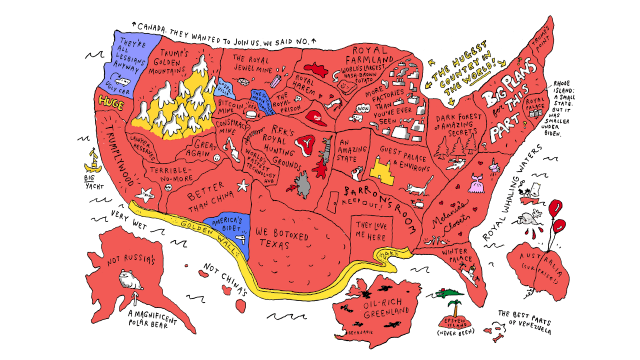
Cartoon by Liana Finck
Ten days before Trump moved in, Obama flew to Chicago, where he had launched his political career, to deliver a speech that laid out his case for why the country was where it was. Rising economic inequality had sparked the cynicism and polarization that lifted Trump into office, he said. He called on different ethnic and racial groups to listen to one another from a position of trust, and to build a new social contract. “We all have to try harder,” he said. “We all have to start with the premise that each of our fellow-citizens loves this country just as much as we do.” He finished with a promise about the battles ahead: “I will be right there with you, as a citizen, for all of my remaining days.”
A few weeks ago, I spoke to Obama about how he’s spent the past decade—and whether events have shaken the confidence that he expressed in that farewell speech. “I would be dishonest if I didn’t acknowledge that,” he replied. How Obama has used his time—including since Trump returned to office—says much about how he sees his role, its potential and its limits.
On January 20, 2017, as Donald Trump was being sworn in as the forty-fifth President, the Obamas sat on the reviewing stand. Michelle noted the predominantly white and male faces around them. At some point, she stopped even trying to smile. “There was no color on that stage,” she said later. “There was no reflection of the broader sense of America.”
After the new President delivered his “American carnage” speech—a dark address that led George W. Bush to note, “That was some weird shit”—the Obamas flew by helicopter to Joint Base Andrews, where they boarded a plane that took them to Palm Springs for a vacation. On the flight, Michelle sobbed uncontrollably for a half hour. “It was just the release of eight years of trying to do everything perfectly,” she said in an onstage interview with Winfrey in 2018. “I said to Barack, ‘That was so hard. What we just did was so hard, and I’ve wanted to say that for eight years.’ ” No small part of the pressure they felt was the threat of violence. According to the Washington Post, the Secret Service assessed that the Obamas had faced three times as many threats as previous First Families. One night in 2011, a gunman fired seven shots that hit the White House; one struck ballistic glass on the Truman Balcony, where the Obamas often sat.
Despite the drama of Trump’s victory, Obama left office proud of his Administration’s achievements: the economic recovery, the rescue of the auto industry, the Affordable Care Act, the Paris climate accord, the legalization of gay marriage, the Iran nuclear deal, the restoration of diplomatic relations with Cuba. But he relished the prospect of a new life. He told me that, during his time in the White House, he had a recurring dream about sitting on a park bench unattended, or stopping by a bodega unrecognized. “Captivity,” he said, was the hardest part of the job. “That loss of anonymity is profound, and you don’t get it back.” Still, to be free of the pressures of the position, and to enjoy the perks of having been an enormously popular President—well, that had its appeal. John Updike once published a short, wry essay in this magazine arguing that the American Presidency “is merely a way station en route to the blessed condition of being an ex-President.” Obama might agree on some days. Even before leaving the White House, he often joked with friends that “the best job in the world is ex-President.”
In this, Obama had myriad examples, to embrace or avoid. George Washington returned to Mount Vernon and established a profitable whiskey distillery. Thomas Jefferson founded and built the University of Virginia. John Quincy Adams, who once remarked that “there is nothing more pathetic in life than a former President,” found satisfaction back in the House of Representatives, where he was a voice for the abolition of slavery. In debt and terminally ill, Ulysses S. Grant rescued his family’s finances by selling his memoirs to his publisher and editor, Mark Twain. William Howard Taft became Chief Justice of the United States. Herbert Hoover helped direct the restructuring of the executive branch but also revelled in his leisure. (“All men are equal before fish,” he wrote in “Fishing for Fun,” a cheerful angling memoir.) The most idealistic former President was surely Jimmy Carter, whose projects ranged from building housing for the poor to battling to eradicate guinea-worm disease in Africa. “I can’t deny I’m a better ex-President than I was a President,” he once said.
The former President has said that he is sure he could have beaten Trump. “He’s frustrated,” Ben Rhodes, who served as his deputy national-security adviser and is now a consultant to him, said.Photograph by Scott Olson / Getty
At first, Obama’s plan was to recover and spend time with Michelle and their daughters, Malia and Sasha, far from the political fray. In those early days, the Obamas slept late. They read, they worked out, they travelled. Barack recognized the need for some marital rebalancing. “I had a big deficit with my wife and had to kind of work my way out,” he said last year, on Marc Maron’s podcast. But at the same time, he recalled, he started thinking, “What’s my next highest and best use, and what’s a new purpose that scratches that itch?”
Obama went on to build a Presidential center, in Chicago, that reflects his commitment to grassroots organizing. Slated to open this spring, on Juneteenth, it will be the headquarters of the Obama Foundation, a sprawling training and networking operation for young leaders that has been his primary focus since leaving the White House. In politics, he transitioned to mentoring and advising younger Democrats and joining candidates on the campaign trail each election cycle.
He also set out to make serious money. In March, 2017, the Obamas signed a sixty-five-million-dollar joint book deal with Penguin Random House. Obama had written books before, but he found the composition of Presidential memoirs slow going. He published the first volume, “A Promised Land,” in 2020. (It was excerpted in these pages.) He told me that he intends for the second volume to come out later this year. Michelle had more immediate success. A memoir, “Becoming,” was released in 2018 and sold more than seventeen million copies, earning back the publisher’s advance and then some. Her book tour sold out about thirty arenas, including Chicago’s United Center, where fourteen thousand people paid to see her in conversation with Winfrey. Barack and Michelle have since published several more best-selling titles.
The Obamas no longer need to make their tax returns public. There is no knowing how much money they’ve made in the past nine years—or how much money they’ve given to charity—but their receipts certainly reach nine figures, from book sales, speeches, and deals with Netflix, Spotify, and Audible. Over time, they have built a considerable real-estate portfolio. They still own the house in Chicago where they lived when Obama was in the U.S. Senate. Shortly after leaving the White House, they spent $8.1 million on a home in the Kalorama neighborhood of Washington, D.C. Six years ago, they bought an $11.75-million waterfront estate on Martha’s Vineyard from an owner of the Boston Celtics. They also built a beachfront house on the Hawaiian island of Oahu.
As the Trump Administration began to assert itself with such policies as the Muslim ban and family separation, even some of Obama’s most loyal constituents grew frustrated with the ex-President’s luxurious vacations. In February of 2017, the British business magnate Richard Branson posted photos of Obama learning to kite surf off Branson’s private island, in the Caribbean. The comedian John Oliver said, “Just tone it down with the kitesurfing pictures. I’m glad he’s having a nice time. America is on fire.” A few months later, the Obamas were photographed in Tahiti on David Geffen’s yacht, along with Springsteen, Winfrey, and Tom Hanks.
“Good God. Some fools have been completely reckless with their oxygen supply.”
Cartoon by Maddie Dai
The Obamas’ travels became regular tabloid fodder. Summers playing golf on the Vineyard. A spin along the Italian Riviera on Steven Spielberg’s yacht. Well-paid speeches in foreign capitals (with V.I.P. packages selling for more than two thousand dollars apiece). In 2023, at a Springsteen performance in Barcelona, Michelle picked up a tambourine and joined the band onstage for “Glory Days.” (“How cool is my wife?” Barack said from the wings.)
Meanwhile, the American prospect darkened. The daily outrages of Trump’s first term and the January 6th insurrection were followed by Joe Biden’s belated withdrawal from the 2024 race and Kamala Harris’s frantic hundred-day campaign. Trump’s second term has proved so radical that officials from his first Administration—including a former chief of staff and a former chairman of the Joint Chiefs of Staff—have referred to him as a fascist. And the worse things got, the more you heard the question “Where is Obama?”
Obama’s first Presidential campaign was ignited by his opposition to George W. Bush’s war in Iraq. And yet, when Obama won the Presidency, Bush greeted him with graceful comments of welcome, and then embarked on a retirement characterized by reticence. He raised money for a library, took up painting, and kept his mouth shut. “He deserves my silence,” Bush said at the time. “I think it’s time for the ex-President to tap-dance off the stage and let the current President have a go at solving the world’s problems.” In fact, Bush proved to be a friend to the Obamas, despite their political differences.
In the modern Presidency, it has not been uncommon for old rivals to confide in one another. On the night that John F. Kennedy was assassinated, Lyndon Johnson, after being sworn in to office, called Dwight Eisenhower and said, “I need you more than ever now.” Eisenhower visited him in the Oval Office and wrote out on a legal pad what he thought Johnson should tell an emergency session of Congress. Richard Nixon dispensed political wisdom about Russian leadership to Bill Clinton. Truman once said, “There is no conversation so sweet as that of former political enemies.” But this is yet another Presidential norm that has collapsed: since entering the White House, Trump has never called Obama. (Trump, in turn, has not been invited to the opening of Obama’s Presidential center.)
In the final press conference of his Presidency, Obama said, “I want to be quiet a little bit and not hear myself talk so darn much.” He expected to speak out only in “certain moments where I think our core values may be at stake.” Representative Pramila Jayapal, a Democrat from Washington State, told me that during Trump’s first term she often wondered, of Obama, “Why isn’t he out here?” She understood the former President’s desire to take a break after his White House years, but as the picture grew grimmer, she said, she heard friends and constituents comment, “Our country’s being destroyed, and you’re doing your Netflix thing and your Hawaii thing?” She went on, “I still remember his speech on race and singing ‘Amazing Grace’ in the South Carolina church. There were these moments when he was able to grab the attention of the country. What if he had done that in a way that gave people a North Star at these really difficult moments?”
I heard similarly plaintive remarks from some former Obama staffers. Cornell Belcher, who was a member of Obama’s polling team during his two Presidential campaigns, told me that he sees an imperative for Obama to work against “forces of darkness—not because they’re Republican but because they’re anti-democratic.” Belcher thinks that the 2026 midterm elections will be won not just on pocketbook issues but on values and character, and by bringing people together in a multiracial coalition. “This moment calls for him to take a better and bigger position,” Belcher said. “We need a return of the Jedi.”
Obama pushed the architects of his Presidential center to create an imposing tower. “He didn’t think I was being bold enough,” one of them recalled.Photograph by E. Jason Wambsgans / Chicago Tribune / Reuters
It’s not just the commentariat asking. “We don’t see him much, truthfully. I wish we could see him more,” Jack Kahn, a real-estate manager who heard Obama speak at a New Jersey campaign rally last year, said. “He should tell people to have faith, to stick together, to get things to swing back in the right direction.”
Obama’s popularity is immense. A Gallup survey last year found that he was seen favorably by ninety-six per cent of Democrats. When the Institute for Family Studies, a conservative think tank, asked two thousand young men last year whom they most looked up to in the worlds of politics, entertainment, religion, and tech, Obama came out on top. John Della Volpe, who directs polling at Harvard’s Institute of Politics, conducted a survey for a private research firm he runs and found that Obama’s favorability rating among young people was sixty-four per cent, with only eleven per cent seeing him very unfavorably. Obama’s standing, Della Volpe told me, is “literally the opposite of where Trump and other Democrats are right now.”
But, as popular as Obama is in many circles, Democrats are divided on whether he is an appropriate avatar for the Party as it labors to advance new leaders. “Is it realistic to think that Obama—on the horizon, rising from the ashes—is going to lead us forward?” Senator Tina Smith, a Minnesota Democrat, said. “I would say that we are all a little naïve if we think that can happen again. There’s nostalgia for him. Yet—how can I put this?—in the political world that I’m in, there is an understanding that we are in a different time.” As she thought about the pleas for Obama to assert himself more in the public arena, she recalled a piece of wisdom often attributed to H. L. Mencken: For every complicated question, there’s an easy answer that’s almost always neat, plausible, and wrong.
Maurice Mitchell, the national director of the Working Families Party, which operates to the left of much of the Democratic leadership, sees Obama as a “rich, famous guy.” But Mitchell points out that the former President still commands “tremendous trust” from a large portion of the electorate. He said that he wished Obama were making a more robust effort to expand the progressive coalition. “This is a time to be part of the united front against fascism,” Mitchell told me. “What he could do, and I think few people could do, is signal that disruptive, insurgent leadership is actually a requirement in this moment.”
Presidents once devoted life after the White House to living peaceably, under a “vine and fig tree,” as George Washington put it. “Obama is in a position that no other President has really faced,” David Axelrod, who helped engineer Obama’s political ascent, said. “Because people are so desperate for leadership at a time when they feel like Trump is running amok, they turn backward and say, ‘You know, Obama should be that guy.’ He’s still searching for just the right formula.”
I met with Obama at his new Presidential center, on the South Side of Chicago. He is sixty-four, and his close-cropped hair has grayed. He has also made that terrible, if inevitable, transition of late middle age from the joy of sports to the obligation of exercise. There is a basketball court in the new complex, but he conceded, “I’ve hung up my full-court game out of concern for popping my Achilles. When I left the Oval Office, I thought, ‘I’ve been pressing my luck.’ ”
In our conversation, Obama made it plain that he no longer harbors illusions about the nature of the Trump Presidency. His early prediction that Trump was capable of rolling back only a modest percentage of Obama’s achievements, and that political norms would prevail, has not remotely proved to be the case. Trump has used the Justice Department to prosecute his political enemies. He has politicized the Pentagon. He flouts every definition of political decency as he threatens to bomb Iran back “to the Stone Ages.” Yet what, exactly, can Obama do about it? As he called out to a heckler last year, “Sir, I’m not the President of the United States currently. So there’s no point in shouting at me.” In other moments, he compares himself to Michael Corleone, in the “Godfather” movies, who never quite manages to escape the family business, and says, “Just when I thought I was out, they pull me back in.”
I asked Obama whether he considers what else he could do. “I think about it every day,” he said. He believes that if he spoke out much more often—if he tried to combat every outrageous utterance and misbegotten policy from the Trump White House—he would quickly diminish his impact.
“For me to function like Jon Stewart, even once a week, just going off, just ripping what was happening—which, by the way, I’m glad Jon’s doing it—then I’m not a political leader, I’m a commentator,” Obama told me. In fact, he insisted, he is doing more than people realize. “The media environment is so difficult that people don’t even know all the stuff I am doing, right?” he said. “And, I think, when they do see me, then the sense is Well, why isn’t he doing that every day instead of just during a midterm election, or during a referendum campaign around gerrymandering, or what have you?”
Trump’s recklessness has drawn Obama to work in politics “more than I would have preferred,” he said. He has campaigned around the country in each election cycle since leaving office. He has hosted fund-raisers and recorded dozens of video ads and robocalls. When he talks about his role in helping to oppose Trump, he argues that his influence should be gauged not only by the number of speeches he gives or by his appearances in legacy news outlets but also by the audiences he reaches in other ways. He markets Netflix projects that carry messages of liberal uplift. He has met with numerous podcasters and influencers. (His senior adviser Eric Schultz referred to this as showing up “in unexpected places.”) He has spoken with the twenty-seven-year-old Uruguayan American Carlos Eduardo Espina, who has more than twenty-two million followers across platforms and gets billions of views a year on TikTok. He has sat down with Victor Fontanez, a heavily tattooed young barber and influencer better known as VicBlends. Fontanez interviewed Obama in 2024 while giving him a haircut—a conversation that got more than twenty-four million views on TikTok. A talk with Hasan Minhaj drew more than 8.5 million YouTube views.
“People who are going to be decisive in elections going forward do not seek out information about politics—they encounter it,” David Plouffe, Obama’s longtime strategist, told me. “Obama will talk about things, and there will be video clips that are interesting to people, because it’s not like a droning on in a political speech.”
Still, Obama parcels his time with care. He told me that the demands of his schedule are of great concern to Michelle: “She wants to see her husband easing up and spending more time with her, enjoying what remains of our lives.” Of the pressure on him to be on the campaign circuit, he said, “It does create a genuine tension in our household, and it frustrates her. I’m more forgiving of it, in the sense that I understand why people feel that way, because people aren’t looking at me in historical comparison to other Presidents. They don’t care about the fact that no other ex-President was the main surrogate for the Party for four election cycles after they left office.”
Ever the optimist, Obama shifted out of his defensive posture. “The fact that people want me to be ‘doing more’ is a good sign,” he said. It indicates that “there has not been as decided a shift in American attitudes as we are making out. And that’s part of the reason people are frustrated. Sometimes it’s directed toward me, which is fine because they kind of sense, Wait, how can we be doing this when I know that’s not who we were? And I don’t think it’s really who we are now.”
“When George Bush was elected, it was very close,” Obama continued. “I think there was a Zeitgeist of, like, You know what? We’re kind of in a conservative mood. We went through the Clinton years, and now we kind of want this change. And then, when I was elected, I think there was a genuine shift in attitudes. You look at surveys—people had become more progressive around a whole host of issues that had been divisive. I think it’s fair to say there’s some shift that took place between when I left office, in 2016, and today. There was maybe some marginal overreach—or, at least, people weren’t ready to go as far as the Twitter left wanted to go on certain issues. But you look at surveys, it’s not like suddenly people said, you know, ‘We don’t believe in gay marriage.’ They didn’t suddenly say, ‘Yeah, we think it’s O.K. to discriminate on race.’ ”
Obama has encountered Trump in person from time to time, most recently at Jimmy Carter’s funeral, in January of 2025, when they sat chatting amiably before the service. It is not lost on the Obamas that Trump continues to show them disdain, often referring to Obama as Barack Hussein Obama, as if to suggest otherness. Last year, he said that Obama was guilty of “treason” and unspooled a conspiracy theory that Obama had manipulated intelligence in an attempt to undermine Trump’s election in 2016. “One of the greatest political scandals in American history,” Karoline Leavitt, the White House press secretary, called it. “A years-long coup,” Tulsi Gabbard, Trump’s director of National Intelligence, added. The President posted a fake video of himself smiling as Obama was arrested by the F.B.I. The accusations provoked a rare, testy reaction from Obama. “Our office does not normally dignify the constant nonsense and misinformation flowing out of this White House with a response,” a spokesman said. “But these claims are outrageous enough to merit one. These bizarre allegations are ridiculous and a weak attempt at distraction.” More recently, Trump’s Truth Social account shared a racist video depicting the Obamas as apes. Leavitt called criticism of the video “fake outrage.”
“I don’t take it personally,” Obama told me. “I mean, I’m always offended when my wife and kids get dragged into things, because they didn’t choose this. . . . That’s a line that even people whose politics I deeply reject, I would expect them to care about. I would never talk about somebody’s family in that way.” Obama said he was more concerned about A.I.-generated videos Trump has posted that treat war “like a video game” and show “excrement dumped on ordinary citizens.” Obama laughed ruefully. “I mean, I’m a fair target in the sense of, yeah, you can feel free to pick on me, because I’m your own size,” he said.
Trump and Obama last met in person in January of 2025, at Jimmy Carter’s funeral. That year, Trump claimed that Obama was guilty of “treason.”Photograph by Chip Somodevilla / Getty
Obama speaks about affronts in a register of deliberate calm. Still, he has said that the country is in “a political crisis of the sort we haven’t seen before.” He told me that, when people ask him whether he sees the MAGA movement and Trump’s consolidation of power in Washington as a repudiation of his Presidency, he replies, “ ‘No, actually, sixty per cent of the country still agrees with me.’ So I don’t take it personally. But it does remind me of the fact that if you have an activated and empowered right wing that first captures the Republican Party and then gets ahold of the federal government, that can do a lot of damage pretty quickly.” Obama described himself as “dismayed” by Congress’s obedience to Trump and by the Administration’s disregard for democratic fundamentals. “We believe in voting and elections, and we believe in democracy—even though we don’t always exercise it perfectly, at least we try to fake it,” he said. “We believe in not politicizing the criminal-justice system or politicizing the military.”
In fact, there is little that Obama has left unsaid about Trump in the past fifteen years. He and Michelle had prime-time roles at the Democratic National Conventions in 2020 and 2024, where they made clear their abhorrence of the man who rose to political prominence through his lies about Obama’s birth and, once in office, laid waste to so many values that they had done their best to honor. Michelle has felt particularly liberated in speaking her mind. At the 2024 Convention, she posed a stark question about Trump: “Who’s going to tell him that the job he is currently seeking might just be one of those ‘Black jobs’?”
“It’s his same old con,” she continued. “Doubling down on ugly, misogynistic, racist lies as a substitute for real ideas and solutions that will actually make people’s lives better.”
At the same Convention, Barack Obama called the modern G.O.P. “a cult of personality.” Trump, he said, “hasn’t stopped whining about his problems since he rode down his golden escalator nine years ago. . . . There’s the childish nicknames, the crazy conspiracy theories, this weird obsession with crowd sizes.” As he said this, he moved his hands closer together, seeming to suggest a distinctly modest penis size.
In the past year, Obama has watched with disbelief as Trump has used his office to enrich himself and his family, and almost daily commits some sort of travesty. At times, often late at night, Obama will fire off a text or an e-mail to a friend about “some dumbass thing Trump did,” Ben Rhodes, who served as Obama’s deputy national-security adviser and is now a consultant to him, said. “What drives him insane is the double standard: ‘What if I took a Qatari jet?’ It’s not even just sour grapes. It’s objectively insane. If Barack Obama did any of these things, he would have been obliterated on sight.”
Obama has told Rhodes and others that he is sure he could have beaten Trump. “He’s frustrated,” Rhodes said, explaining that the former President has made comments to the effect of “I’d love to just be in the ring with this guy.” No such prospect is in the offing, of course, and dwelling on it is of little use. As Michelle Obama told Stephen Colbert, in 2022, “Rage without reason, without a plan, without direction is just more rage. And we’ve been living in a lot of rage.”
In the greater public, a dangerous, inchoate rage directed at Barack Obama persists alongside the widespread affection for him. And that rage demands vigilance. When Obama first ran for President, he received Secret Service protection earlier than any candidate before him, apart from Hillary Clinton, who had a permanent security detail as a former First Lady. After Trump was grazed by a bullet in Butler, Pennsylvania, in 2024, Obama’s security team made sure that campaign rallies he attended were held indoors, where audiences would pass through metal detectors. Such precautions, of course, did not prevent a gunman from sprinting through a security checkpoint outside this year’s White House Correspondents’ Association dinner. As with all former Presidents and their spouses, the Obamas have twenty-four-hour protection at home and wherever they travel.
The security is “the most intrusive thing,” Jonathan Wackrow, a former member of the Obamas’ Secret Service team, told me. But he added that it is a necessity: “The threat environment is not linear. It’s asymmetric and it’s very dynamic.” In 2023, police arrested Taylor Taranto—a January 6th defendant who was pardoned by Trump—after finding him with guns and several hundred rounds of ammunition near the Obamas’ house in Washington, D.C. (He was sentenced to time served.) Arne Duncan, the former Secretary of Education and a friend of Obama’s, said, “Could someone try and do something crazy tomorrow? Tragically, that’s the time we’re in. That’s where we are as a country.”
Around Election Day, Obama amps up his schedule of public appearances. Last fall, he spoke at a rally in Newark for Mikie Sherrill, now the governor of New Jersey. Dressed casually, in a blue shirt with the collar open and the sleeves rolled up, he offered a reel of recent lowlights in Trump’s Presidency, from the two-hundred-and-thirty-million-dollar payment that Trump is seeking from the Justice Department to the masked ICE agents leaping out of unmarked vans and “grabbing people off the streets, including U.S. citizens.” With smiling incredulity, Obama riffed on Republicans’ demonization of diversity-equity-and-inclusion initiatives: “You got a flat tire? Must be D.E.I. Your wife kicked you out? D.E.I. Who knew?” The crowd hooted and laughed. “I’ll admit it’s worse than even I expected,” Obama said. “But I did warn y’all. I did.”
Obama took a breath and announced that he was “going to bring it down a little bit.” He then embarked on a survey of the country’s political history, recalling Black people who were enslaved, women who could not vote, Irish and Italian immigrants who could not get jobs. The United States is living the duelling stories that flowed from the injustices of its founding, he said, “a pecking order of who makes decisions and who obeys, who gets opportunity and who is obliged to serve. And that story is policed by fear and by force, and it tries to convince people that for their group to win another group has got to lose.” This is Trump’s world, he said, and that’s what MAGA wants, “even when they don’t know what the hell they’re doing.” When he finished, he slapped the side of the lectern and headed for the rope line as Springsteen’s “Land of Hope and Dreams” played.
That same day, Obama had a call with Zohran Mamdani, who was on the brink of winning the New York City mayoral race. Mamdani came out of the Democratic Socialists of America and once lambasted Obama as “pretty damn evil” and dishonest. But Mamdani has since renounced those remarks, calling them “the stupid tweet of a college student” and has welcomed Obama’s counsel. Recently, the two visited a pre-K center in the Bronx together, singing “The Wheels on the Bus” as they promoted the Mayor’s push for free universal child care. The event was out of the ordinary for Obama, who rarely appears with politicians off the campaign trail. But the former President has said that he is impressed by Mamdani’s ability to get across a clear political message, often via social media, and by his talent for inspiring young volunteers. Obama conceded that someone like Mamdani is a far better spokesman on issues like affordability than he is, not least because the former President no longer faces such problems. “I strongly believe that my highest and best use now is to help find the next set of leaders who are going to move us forward,” he told me. “And part of it is because I think the very best leaders can tap into the Zeitgeist of the moment.”
With the 2028 Presidential race approaching, Obama has shown no interest in early endorsements. His mentoring efforts so far have mostly been further down the ballot. Representative Yassamin Ansari, of Arizona, received an unexpected call from the former House Speaker Nancy Pelosi last fall. Pelosi wanted Ansari, the president of the freshman Democratic class in Congress, to tell her fellow first-years that it would be worth their while to attend an upcoming gathering at Representative Rosa DeLauro’s house. When Ansari learned that Obama would speak to the group, she was thrilled. She was sixteen years old on the night he won the Presidency, and she remembers sobbing. “I watched his victory speech over and over and over again, and it changed the trajectory of my life,” she said.
Cartoon by Roz Chast
Thirty-five members of Congress attended the gathering. “I get feeling discouraged sometimes,” Obama acknowledged to them. “I get feeling worn out, tired, and embattled.” He reminded them that Democrats had been in similar straits twenty years earlier, after the 2004 election, when Republicans controlled the White House and Congress. Barely four years later, he was elected President, Democrats ran the Senate, and Pelosi was the first female Speaker of the House. He urged them to resist cynicism and defeatism. Ansari told me that his message was “Keep going. We will overcome this. There will be a world beyond Trump.”
Beto O’Rourke, a former Texas congressman who ran for the Senate and the Democratic nomination for President, said that conversations with Obama had buoyed him when he lost successive races. (O’Rourke figured that Obama knew what he was going through, having lost a 2000 congressional primary to Bobby Rush by thirty-one points.) “This is the darkest hour in modern American history,” O’Rourke told me. “I don’t think the stakes have ever been this high, and to know that Obama will continue to be in this fight gives me some comfort.” He thinks that Obama is wise not to go head to head on a regular basis with Trump, who lives for such brawls: “If he were to do it in a big, public, confrontational way, it would be counterproductive.”
Obama has occasionally extended his counsel to foreign leaders. He had several conversations with Keir Starmer before his election as the U.K.’s Prime Minister. Starmer’s Labour colleague David Lammy, who arranged the talks, thought that Obama could offer useful advice to Starmer, the son of a working-class toolmaker. “It was Obama who encouraged him to lean into his relatively humble beginnings,” Lammy, now the Deputy Prime Minister, said. “Obama urged him to move to the center ground, to simplify his message, and think about what builds momentum.” He said that the former President had similar discussions with progressive opposition leaders in other countries.
Calls have come to Obama, too, from university presidents, corporate executives, and law partners who want advice on how to respond to Trump’s latest beyond-the-pale demands. He typically listens, acknowledges the conundrums, and urges the callers to find ways to resist. “What’s required in these situations is a few folks standing up and giving courage to other folks,” Obama told Marc Maron last year. “We all have this capacity, I think, to take a stand.” He added, “If convictions don’t cost anything, then they’re really just kind of fashion.”
In Obama’s post-Presidency, he has relished the chance to wander deep into the weeds of policy subjects that interest him. He and Eric Holder, the former Attorney General, founded a project, called the National Democratic Redistricting Committee, that works to steer states away from gerrymandering. Obama raised millions of dollars, produced a raft of advertisements, and took the unusual step of endorsing dozens of candidates for state legislative office. Then, last summer, the governor of Texas, Greg Abbott, acting on a request from Trump, pressed the state legislature to carve out five likely G.O.P. congressional districts, in the hope of keeping control of the House. It took Obama “less than a nanosecond” to decide to fight back, Pelosi told me, despite his long-standing support for nonpartisan electoral maps. In comments that received national attention, Obama said, “We cannot unilaterally allow one of the two major parties to rig the game.”
Soon, Obama became the face of a California ballot measure, called Proposition 50, that would allow the legislature to create five new Democratic districts in the state. “With Prop 50, you can stop Republicans in their tracks,” he said in one ad. Strategists tested his reputation alongside those of other well-known Democrats. “Not even close,” Addisu Demissie, a senior adviser to the Prop 50 campaign, said. “His favorability was 89–10, with seventy-five per cent very favorable. Jesus Christ is probably 93–7.” The measure passed by a margin of nearly two to one. Obama played a similar role last month in Virginia, where voters narrowly authorized the Democrat-led legislature to draw new congressional maps that could cost Republicans as many as four seats. Michael Smith, the president of the progressive group House Majority Forward, which spent roughly forty million dollars on the effort, said, of Obama, “This victory simply would not have happened without him.” He expects that the former President will be active in the upcoming midterm campaigns “in big moments when we need someone to step in and make the difference.”
Lately, Obama has been immersed in questions about the science and the ramifications of artificial intelligence. He’s devoted “hundreds and hundreds of hours, quite literally,” to the subject, Rhodes told me. The topic captured Obama’s attention in the White House, ahead of the increasingly intense debates surrounding A.I.’s promise and perils. Jason Goldman, a onetime Google and Twitter executive, has helped to guide his explorations, joining him in meetings with Silicon Valley specialists and Biden-era federal employees.
“He’s kind of a geek,” Goldman told me. “The happiest I’ve seen him is when there’s a meaty problem on the table, it’s an unsolved problem, and there are a bunch of different people around the table who have a framework for how to approach the thing.” Behind the scenes, Obama played a role in developing Biden’s 2023 executive order on A.I., which, among other things, required companies to conduct safety tests on certain new products and share the results with the government before releasing them. “Anyone working to harness the power of these new tools has to make a choice: ignore potential problems until it’s too late, or proactively address them,” Obama wrote at the time. Trump rescinded Biden’s order on the day he took office.
In our conversation, Obama said that he plans to help formulate an A.I. agenda for lawmakers and researchers, one “that is not simply a knee-jerk ‘Screw the billionaires in tech,’ because the genie’s out of the bottle. But, rather, how do we have a smart, enforceable strategy for steering this toward the common good, as opposed to just private gain? If we do not have an agenda for that, then I think some of the populist impulses that have been there already can go in all kinds of stray directions that are either not going to be particularly successful in helping ordinary people or can reinforce some of the anti-democratic trends that we’ve already seen.”
Last month, the former President joined New York City’s mayor, Zohran Mamdani, on a visit to a preschool in the Bronx. “I think the very best leaders can tap into the Zeitgeist of the moment,” Obama said.Photograph by Angelina Katsanis / Getty
Obama also sees storytelling as a way to advance an agenda. In 2013, nearly a year into his second term, he told a group of entertainment professionals that their films and TV shows “transmit values and ideals about tolerance and diversity and overcoming adversity” that shape the world’s culture. For years, he courted the deep-pocketed celebrities who flocked to him and fuelled his campaigns, holding private audiences with them. In the final year of his Presidency, he began mulling the idea of forming a Hollywood production company that would acquire, promote, and sometimes create films, along with audio and video series, that would advance ideas important to him and to Michelle, and give him a lucrative foothold in the industry.
The Obamas named the company Higher Ground, after the Stevie Wonder song, and signed an exclusive deal with Netflix. (Obama recently said that when that contract ends, next year, the company will become independent.) Higher Ground’s projects have ranged widely, from “Descendant,” a documentary that traces the legacy of the Clotilda, the last slave ship to reach the United States, to a podcast series about Fela Kuti, the Nigerian Afrobeat innovator, which this year received a Peabody Award. “Crip Camp,” a 2020 documentary that was nominated for an Oscar, focusses on a summer camp in the Catskills for disabled teen-agers which helped spur the disability-rights movement.
Obama estimates that he spends ten per cent of his time on Higher Ground. In some cases, he reads a script or views a cut and sends notes to the director. A project that he nurtured from the start is a four-part Netflix series called “Working,” inspired by Studs Terkel’s 1974 oral history. Terkel conducted long interviews with Americans about their jobs, and in the series we hear from such people as a Mississippi home health aide, a Pennsylvania delivery driver, and a California robotics engineer. Higher Ground recruited a little-known director, Caroline Suh, who said that Obama’s involvement and the seriousness of his approach to the project persuaded her to take it on. “He cared about not stereotyping people and not relying on tropes. He was very sensitive that we not be lazy about that,” Suh said. “He’s forceful and direct but always calm. He was very respectful of the fact that this is what we all do for a living.”
Though Obama has not lived in Chicago since 2008, he is keen to show his continuing connection to the city where he began his political career. The Obama Foundation—his most ambitious and, he feels certain, most lasting post-Presidential project—is based on the South Side, where he worked as a community organizer and later served as an Illinois state senator. One program, called My Brother’s Keeper, provides training and mentorship to young people of color; it grew out of Obama’s efforts to support Black boys and young men following the acquittal of Trayvon Martin’s killer. “Some communities have consistently had the odds stacked against them, and that’s especially true for boys and young men of color,” he said, in 2016. The program, which operates in fifty-five communities around the country, works with tens of thousands of young people.
Last year, Obama met in Newark with eight young men who had flown to Brazil for a cultural-exchange program, as part of My Brother’s Keeper. In an hour-long conversation, Obama told them that they were “dealt harder cards than others” and referred to moments in his own adolescence. “I got high, I got drunk,” he said. “I liked basketball and girls, and that was basically my focus for a while.” He went on to talk about how he shaped up and found focus. He finished by telling them, “I’m proud of you.”
In December, Obama spoke to dozens of college students, who had come to Chicago from across the country as part of the foundation’s leadership-development program. The next day, at a South Side public library named for the Black aviator Bessie Coleman, he met with two dozen children who were part of My Brother’s Keeper-run literacy programs. Obama was wearing a Santa hat, but, rather than selecting a Christmas tale, the library staff had him read the story of Coleman’s determination to surmount racism by proving her excellence: “Bessie said, ‘Oh yeah? You just wait and see! There’ll be a black female pilot. And it will be ME!’ ”
More than fifteen hundred people from around the world have passed through the Obama Foundation’s Leaders Program, a multimillion-dollar training and networking project, started in 2018, that Obama considers a long-term bet on progressive change. One of them is Nika Kovač, a Slovenian activist who led a campaign that persuaded the European Union to help underwrite the travel and medical costs of women who are forced to leave their countries to obtain abortions. Kovač attended her first Leaders Program sessions virtually, during the pandemic. “It’s hard-core training, but at the same time they give you a feeling that you can do big things,” Kovač told me. Her campaign involved gathering more than a million signatures; many were collected by Obama Foundation alumni. “The people leading the program are the first people you call when they attack you on the street or when you win an election,” she said.
“Would you like to Uber in total silence or overshare intricate details of our lives as if we’ve known each other for years?”
Cartoon by Sarah Akinterinwa
These programs will soon operate out of the Obama Presidential Center. The campus, which is spread across nineteen acres, cost an estimated eight hundred and fifty million dollars to build. It’s situated on the grounds of a park originally designed by Frederick Law Olmsted and includes a museum, a playground, and a man-made sledding hill. It’s not called a library, partly because Obama’s Presidential documents are being held separately, by the National Archives and Records Administration. (By the foundation’s estimate, ninety-five per cent of the records originated in digital form.) But there is a branch of the Chicago Public Library on the campus, and among its offerings are thirty-five hundred books that reflect the Obamas’ interests, including Chicago history.
The center is designed to be open to the community, “a physical manifestation of their life’s philosophy,” a staff member said of the Obamas. It is fitted out with a teaching kitchen, a podcast-production space, a large classroom called the Democracy in Action Lab, and a recording studio. Maya Lin and Richard Hunt are among the artists whose work is displayed, and elements of the campus are named for John Lewis, Harriet Tubman, Elie Wiesel, and Hadiya Pendleton, a fifteen-year-old girl killed in 2013 by gunfire at a South Side park. After attending her funeral, Michelle Obama said, “Hadiya Pendleton was me, and I was her.”
On the blustery day when I first visited the center, hundreds of workers were scattered around the site, moving dirt, installing wiring, fitting the interlocking floorboards of the basketball court, and tending to a two-hundred-and-twenty-five-foot structure, clad in gray-swirled New Hampshire granite, that wags have nicknamed the Obamalisk. Inside are museum spaces that tell the story of Obama’s Presidency, grounded in the country’s tormented racial history. On the top floor, in a room designed for visitors to reflect in after they have worked their way to the end of the Obamas’ White House years, the largest windows face south and west, a nod to the city’s Black neighborhoods.
At the building’s peak, five-foot-tall concrete letters spell out a hundred and three words of a speech delivered by Obama in Selma, Alabama, in 2015, on the fiftieth anniversary of Bloody Sunday, when John Lewis and other civil-rights activists were beaten at the foot of the Edmund Pettus Bridge. Obama’s remarks, written with Cody Keenan, his chief White House speechwriter, acknowledged the raw facts of conquest and slavery, hierarchy and domination, but also paid tribute to a heroic vision embodied by the civil-rights coalition of activists, Pullman porters, rabbis, ministers, and college kids facing down billy clubs and police dogs. “America is not the project of any one person,” Obama said in the speech. “The single most powerful word in our democracy is the word ‘We.’ ‘We the people.’ ‘We shall overcome.’ ‘Yes we can.’ ”
A hulking gray tower was not what the center’s architects, Billie Tsien and Tod Williams, had in mind when they competed for the job. Their work, which includes the Barnes Foundation, in Philadelphia, and the low-slung additions to the Phoenix Art Museum, is often defined by a “quietness,” Tsien told me. She and Williams caught the Obamas’ eye by proposing a campus, rather than a single building. But, in a series of meetings that began while Obama was still in the White House, he pushed them to go bigger. “He was saying we should up our ante,” Williams said, acknowledging that the repeated demands made him uneasy. “Yet another time, he drew on one of my drawings, made a strong mark, which indicated that he didn’t think I was being bold enough. Those little things sting. But they also moved everything forward.”
At one point, Obama asked the architects to think of the works of Constantin Brancusi, the modernist sculptor known for his inventive shapes and textures. “What the hell does he mean?” Williams wondered. The architects puzzled over the reference before concluding that it was an invitation to design a building “to be seen as an art piece and not just as architecture,” Williams said. “That really cranked it up for us: ‘Oh, my God, this is serious shit.’ He wanted us to do something that we had not done before, and that is hard. He didn’t let it rest.” After Obama instructed them to experiment with different shapes, they returned several weeks later with twenty-five variations, later winnowed to one. And still Obama wanted changes. As Williams put it, the result is “very much a product of his vision as well as ours.”
Near the end of our conversation, Obama and I turned to the subject of the war in Iran and the erosion of American alliances under Trump. “I do think that repairing the damage that’s been done to the international order is going to be even harder than some of the domestic repairs,” Obama said. “I think one way to think about it is that the post-World War Two order was one of America’s better moments.”
Obama noted that postwar arrangements, including the Marshall Plan, NATO, the World Bank and Bretton Woods—“that whole system, for all its flaws and all of its contradictions”—helped insure that “the world was less violent, healthier, wealthier, more equal, more respectful of human rights. Because the most powerful country in the world said, ‘We are not just going to throw our weight around for the sake of it. We’re not just going to go ahead and demand tribute and bully people. We’re going to be part of some larger consensus around how things should work.’ ”
Trump disrupted all that by pulling out of the Paris climate accord and the Iran nuclear deal, and by imposing tariffs and threatening to seize Greenland. America’s allies, Obama said, “can no longer count on us being the hub of that international order.” (He mentioned the Canadian Prime Minister Mark Carney’s speech at Davos calling on “middle powers” to combat Trump’s arrogance, describing it as “a pretty good summation of how our closest allies feel right now.”) The tragedy of this, he continued, is that “there still is no one that can replace us. If we don’t talk about human rights, human rights don’t get talked about that much. If we aren’t concerned about climate change, truthfully, other countries can give lip service to it and do some things, but they’re not really going to tackle it. So our leadership is still going to matter enormously, but it’s probably going to start with leadership by example more than anything else, rather than dictates.”
Obama rejects the idea that Trump’s two terms are a repudiation of his Presidency. He said that when he’s asked about this he replies, “No, actually, sixty per cent of the country still agrees with me.”Photograph by Philip Montgomery for The New Yorker
I asked about the effect of Trump’s recent threat to the Iranians that, if they failed to capitulate, “a whole civilization will die tonight, never to be brought back again.” Obama took a breath and refused the low road: “I believe American leadership, as represented by the American President, has to reflect a basic regard for human dignity and decency, not just within our own borders but beyond. That’s part of the responsibility of leadership. If we are not giving voice to those core values—that there are innocent people in countries with terrible governments and we have to care about those people, that we can make mistakes if we are not guarding against hubris and pure self-interest . . . If we don’t have those things, the world can break in very bad ways.”
Trump, in an attempt to make a new deal with the Iranian regime, is now entertaining many of the trade-offs that he blasted when Obama was in the White House. Obama, for his part, told me that Benjamin Netanyahu, the Israeli Prime Minister, had made the same arguments for armed confrontation with Iran to him that he did to President Trump. “I think my prognosis was accurate,” he said. It may be that Netanyahu has “gotten what he wanted. Whether that’s what is ultimately best for the Israeli people, I would question that. Whether I think it’s what is good for the United States and America, I would question that. I think there’s an ample record of my differences with Mr. Netanyahu.”
It has been a decade since Obama delivered his farewell speech in Chicago, in which he told his dejected supporters that he was “more optimistic about this country than when we started.” He does not say that now, but, even as he admits that his confidence has been shaken, his approach to politics remains largely unchanged. As we walked through a museum dedicated to his faith in a perpetual, however jagged, path forward, I was reminded of something that Michelle said of her husband when she addressed the 2012 Democratic National Convention: “He reminds me that we are playing a long game here, and that change is hard and change is slow.”
These days, Obama spends a lot of time talking with younger people. With them, he is an elder refuting the notion that things have never been worse. “I say, ‘No, you know what? Civil War—really bad. Jim Crow—tough. You know, our parents, our grandparents, our great-grandparents went through stuff that was profoundly tougher than what we’re going through,’ ” the former President said. “And I say that not to pull rank on them but, rather, to pull them out of any kind of hopelessness about the situation.” ♦
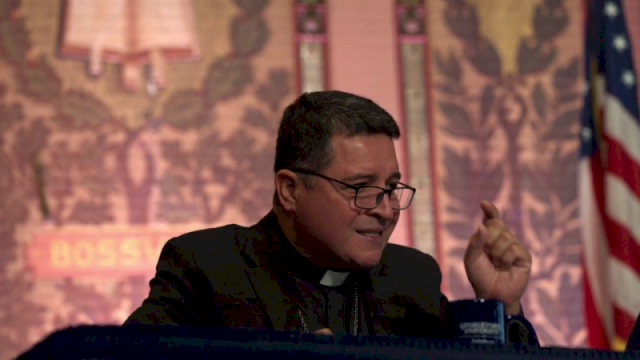
Pope Leo appoints Trump critic as bishop of West Virginia
The next bishop for West Virginia Catholics will be an El Salvador-born advocate for immigrants who has opposed U.S. President Donald Trump’s immigration crackdown policies. CNN’s Christopher Lamb has details.
” data-timestamp-html=”” data-check-event-based-preview data-is-vertical-video-embed=”false” data-network-id data-publish-date=”2018-08-05T01:09:30Z” data-video-section=”politics” data-canonical-url=”https://www.cnn.com/videos/politics/2018/08/05/ohio-pastor-prays-for-lion-trump-rally-jungle-journalism-bts-vpx.cnn” data-branding-key data-video-slug=”ohio pastor prays for lion trump rally jungle journalism bts vpx” data-first-publish-slug=”ohio pastor prays for lion trump rally jungle journalism bts vpx” data-video-tags=”business and industry sectors,business, economy and trade,continents and regions,donald trump,government and public administration,government bodies and offices,journalism and news media,media industry,midwestern united states,north america,ohio,political events,political figures – us,political rallies,politics,the americas,united states,us federal government,white house” data-breakpoints=”{“video-resource–media-extra-large”: 660}” data-display-video-cover data-details>
” data-timestamp-html=”” data-check-event-based-preview data-is-vertical-video-embed=”false” data-network-id data-publish-date=”2018-07-12T18:49:24Z” data-video-section=”us” data-canonical-url=”https://www.cnn.com/videos/us/2018/07/12/paula-white-jesus-refugee-cbn-orig-vstan-bdk.cnn” data-branding-key data-video-slug=”Paula White Jesus Refugee CBN Orig Vstan BDK” data-first-publish-slug=”Paula White Jesus Refugee CBN Orig Vstan BDK” data-video-tags=”africa,donald trump,egypt,government and public administration,government bodies and offices,immigration,immigration, citizenship and displacement,international relations and national security,middle east and north africa,northern africa,political figures – us,undocumented immigrants,us federal government,white house,belief, religion and spirituality,christianity,religious groups,society” data-breakpoints=”{“video-resource–media-extra-large”: 660}” data-display-video-cover data-details>
” data-timestamp-html=”” data-check-event-based-preview data-is-vertical-video-embed=”false” data-network-id data-publish-date=”2017-12-20T17:36:34Z” data-video-section=”politics” data-canonical-url=”https://www.cnn.com/videos/politics/2017/12/20/trump-cabinet-meeting-prayer-ben-carson.cnn” data-branding-key data-video-slug=”Trump cabinet meeting prayer ben carson” data-first-publish-slug=”Trump cabinet meeting prayer ben carson” data-video-tags=”belief, religion and spirituality,ben carson,business and industry sectors,business, economy and trade,donald trump,government and public administration,government bodies and offices,housing authorities,political figures – us,property and housing regulation and policy,real estate,social assistance and welfare,social assistance regulation and policy,society,us department of housing and urban development,us federal departments and agencies,us federal government” data-breakpoints=”{“video-resource–media-extra-large”: 660}” data-display-video-cover data-details>
” data-timestamp-html=”” data-check-event-based-preview data-is-vertical-video-embed=”false” data-network-id data-publish-date=”2016-09-14T21:36:11Z” data-video-section=”politics” data-canonical-url=”https://www.cnn.com/videos/politics/2016/09/14/donald-trump-pastor-church-origwx-allee.cnn” data-branding-key data-video-slug=”donald trump pastor church origwx allee” data-first-publish-slug=”donald trump pastor church origwx allee” data-video-tags=”2016 presidential election,churches and cathedrals,donald trump,elections and campaigns,flint,government and public administration,hillary clinton,michigan,midwestern united states,north america,political candidates,political figures – us,politics,religious buildings,united states,us federal elections,us presidential elections” data-breakpoints=”{“video-resource–media-extra-large”: 660}” data-display-video-cover data-details>
Trump interrupted by pastor at church in Flint, Michigan
” data-timestamp-html=”” data-check-event-based-preview data-is-vertical-video-embed=”false” data-network-id data-publish-date=”2018-01-24T04:15:42Z” data-video-section=”politics” data-canonical-url=”https://www.cnn.com/videos/politics/2018/01/24/evangelical-franklin-graham-defends-trump-lemon-sot-ctn.cnn” data-branding-key data-video-slug=”Evangelical Franklin Graham defends Trump Lemon sot ctn” data-first-publish-slug=”Evangelical Franklin Graham defends Trump Lemon sot ctn” data-video-tags=”celebrities,don lemon,donald trump,franklin graham,government and public administration,government bodies and offices,political figures – us,us federal government,white house,pornography,sex and gender issues,society,stephanie clifford” data-breakpoints=”{“video-resource–media-extra-large”: 660}” data-display-video-cover data-details>
” data-timestamp-html=”” data-check-event-based-preview data-is-vertical-video-embed=”false” data-network-id data-publish-date=”2017-08-19T03:21:29Z” data-video-section=”politics” data-canonical-url=”https://www.cnn.com/videos/politics/2017/08/19/pastor-bernard-first-to-resign-evangelical-advisory-board-ctn.cnn” data-branding-key data-video-slug=”pastor bernard first to resign evangelical advisory board ctn” data-first-publish-slug=”pastor bernard first to resign evangelical advisory board ctn” data-video-tags=”belief, religion and spirituality,christianity,donald trump,evangelical christians,government and public administration,government bodies and offices,political figures – us,religious groups,resignations,society,us federal government,white house” data-breakpoints=”{“video-resource–media-extra-large”: 660}” data-display-video-cover data-details>
” data-timestamp-html=”” data-check-event-based-preview data-is-vertical-video-embed=”false” data-network-id data-publish-date=”2017-05-23T17:02:26Z” data-video-section=”politics” data-canonical-url=”https://www.cnn.com/videos/politics/2017/05/23/things-donald-trump-has-said-about-the-pope-orig-allee.cnn” data-branding-key data-video-slug=”Things Donald Trump has said about the Pope orig allee” data-first-publish-slug=”Things Donald Trump has said about the Pope orig allee” data-video-tags=”belief, religion and spirituality,catholics and catholicism,christianity,donald trump,government and public administration,government bodies and offices,papacy and the pope,political figures – us,pope francis,religious groups,society,us federal government,white house” data-breakpoints=”{“video-resource–media-extra-large”: 660}” data-display-video-cover data-details>
” data-timestamp-html=”” data-check-event-based-preview data-is-vertical-video-embed=”false” data-network-id data-publish-date=”2017-01-21T15:37:03Z” data-video-section=”politics” data-canonical-url=”https://www.cnn.com/videos/politics/2017/01/21/trump-day-two-national-cathedral.cnn” data-branding-key data-video-slug=”trump day two national cathedral” data-first-publish-slug=”trump day two national cathedral” data-video-tags=”donald trump,north america,political figures – us,united states,belief, religion and spirituality,celebrities,melania trump,society” data-breakpoints=”{“video-resource–media-extra-large”: 660}” data-display-video-cover data-details>
” data-timestamp-html=”” data-check-event-based-preview data-is-vertical-video-embed=”false” data-network-id data-publish-date=”2016-02-18T21:03:22Z” data-video-section=”politics” data-canonical-url=”https://www.cnn.com/videos/politics/2016/02/18/trump-fires-back-pope-francis-not-christian-bts-orig-vstan-cws.cnn” data-branding-key=”2016-elections” data-video-slug=”trump fires back pope francis not christian bts orig vstan cws” data-first-publish-slug=”trump fires back pope francis not christian bts orig vstan cws” data-video-tags=”2016 presidential election,belief, religion and spirituality,catholics and catholicism,christianity,donald trump,elections and campaigns,government and public administration,papacy and the pope,political candidates,political figures – us,politics,pope francis,religious groups,society,us federal elections,us presidential elections” data-breakpoints=”{“video-resource–media-extra-large”: 660}” data-display-video-cover data-details>