Author: admin

  • Don’t Forget that Trump’s Wall is Still Devastating US Borderlands – Inkstick

    Don’t Forget that Trump’s Wall is Still Devastating US Borderlands – Inkstick

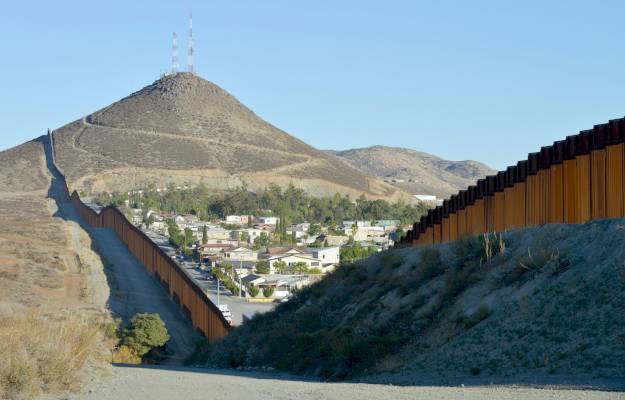
    A leading preoccupation of the first Trump administration has all but slipped from view. Except when ostensible conservatives speak out against it, the major media have scarcely breathed a word on the subject. But it’s still there, 30 feet tall, aspirationally 1,952 miles long, obliterating habitats, dividing families, and sucking down public funds faster than a carrier-based air squadron.

    The media’s lack of attention is understandable. All-too-real wars of choice and metaphorical wars against science, universities, and the environment have dominated our airtime and the headlines. The rise of a new medievalism in medicine and the abrogation of international trade and security agreements have also won attention. Add to all of that a federal paramilitary kidnapping people, even from what still passes for the halls of justice, while murdering the occasional protester, and one’s journalistic cup runneth over.

    The meta-story of the US government’s comprehensive abandonment of its Enlightenment heritage needs telling, too. Goodbye to empiricism and the troublesome scientific discourse it produces. Goodbye as well to empiricism’s political collaterals, including the “created equal” credo of the Declaration of Independence, which the current regime finds distinctly irritating. There is simply too much to report on as the new monarchy, as if in a sped-up nature film, blossoms flowerlike, its palace under renovation, the king’s signature being prepared to grace the currency, and myriad kickback mechanisms whirring like gold-plated turbines to enrich an aristocracy of tech bros and oil emirs.

    So, dear reader, it’s not just logical but inevitable that Donald Trump’s border wall, a major story during his first administration, has essentially fallen out of the news. Rest assured, though, that the world’s least pragmatic and most performative construction project continues to prosper.

    Modern border management relies on three tools: human patrols, remote detection backed by quick response teams, and the construction of physical obstacles. Smart gatekeepers coordinate those tools to maximize effectiveness and minimize cost. But there’s no need for thrift in Trumpworld. The One Big Beautiful Bill Act, or OBBBA, which Trump signed into law last July 4th, negated all need for fiscal restraint. Among other things, it appropriated $46.55 billion for border wall construction, $7.8 billion for US Customs and Border Protection (CBP) agents and their vehicles, $6.2 billion for high-tech border surveillance, and a hefty $10 billion for anything else border-related. The total: $70.55 billion. Those funds will be available through Fiscal Year 2029. By comparison, the government will spend about $10 billion less over that same period to fund the entire Department of the Interior, which manages half a billion acres of surface land as well as the continental shelf and vast subsurface mineral deposits.

    Such border largesse means that the Department of Homeland Security (DHS) can go all-out on all three tactical approaches at the US-Mexico border — patrol, surveillance, and a wall — simultaneously, without troubling to eliminate redundancies, tailor tactics to the environment, or streamline coordination. Daddy has proudly given DHS his credit card.

    In a victory-lap cabinet meeting four days after enacting the OBBBA, Trump told Kristi Noem, then still his DHS secretary, “You’re loaded up on the border.” He essentially admitted that the bill’s munificence demonstrated power, not budgetary acumen, simultaneously adding, “We had zero [migrants] come in last month, so I am not sure how much of it we want to spend. You may actually think about saving a lot of money because the wall is largely built.” The president then continued with fact-free claims that the migrant population abounded with murderers and mental defectives.

    Notwithstanding Trump’s comments, DHS administrators and the contractors who are their most immediate constituents show no sign of leaving money on the table. At the border, their blank-check funding meets a matching regulatory void — the most extensive waiver of laws and regulations in American history. In addition to suspending laws intended to protect the environment, wildlife, national parks, national wildlife refuges, lands sacred to Native Americans, and historic and cultural sites, the Trump administration has also waived more than 60 contracting and procurement regulations. In the name of a national emergency, which is no emergency at all — illegal border crossings (as measured by apprehensions) have indeed plunged — the president has stripped the playing field of all boundaries and opened the door to cronyism and corruption.

    Under showers of money and in the absence of restraint, a single border wall is no longer viewed as adequate. Double-walling has become the norm and certain select areas now boast triple walls. With no cap on costs, whole mountaintops, rugged and unvisited, have been sheared apart to make way for the standard 30-foot-tall, steel-bollard wall, even at costs exceeding $41 million per mile, or almost $8,000 per foot. Meanwhile, the Border Patrol’s terminally bored agents (giving new meaning to bored-er) sit behind the wall in white trucks, looking at their phones and incubating their hemorrhoids.

    It’s easy to think of the mostly arid US-Mexico border zone as empty, but biologically it’s a busy place. The grasslands of the San Rafael Valley in Arizona, for instance, are home to 17 threatened and endangered species.  For years, existing vehicle barriers, bolstered by remote detection technology, have allowed jaguars, ocelots, mountain lions, mule deer, and other wildlife to move back and forth across the valley’s 30 miles of border and disperse according to their ancient ways. A network of 60 remote cameras along that stretch, monitored by the Sky Island Alliance, recorded just one possible migrant per camera every 20 months. Besides being easily patrolled, the valley is also heart-stoppingly beautiful. Nonetheless, DHS intends to double-wall all of it. In addition to bifurcating the wildlife habitat and scarring a gemlike landscape, the wall builders will extract large amounts of groundwater to make concrete for the wall’s foundation, almost certainly desiccating wetlands that are hotspots of biodiversity. And for nothing, save symbolism, bragging rights, and contractor profits.

    No detail illuminates the mentality behind border enforcement better than this: in cooperation with US Customs and Border Protection, military elements at Fort Huachuca, Arizona, are now engaged in “the largest Concertina wire (C-wire) emplacement in US territorial history.” “C-wire,” or “razor wire,” is designed to lacerate any flesh, human or animal, that comes in contact with it. Fort Huachuca soldiers are deploying 43,000 rolls of it, the largest single purchase ever. 

    Usually C-wire is used atop a wall or fence to prevent people from climbing over. Ominously, it’s now being spread on the ground, sometimes in areas where there is no wall, but also in front of the wall and between double walls — a policy of pure viciousness, not necessity. Someone should explain this deployment to the bighorn sheep of California’s Jacumba Mountains, which are now separated from their key Mexican waterhole by thickets of the nasty stuff, which will become ever more camouflaged and treacherous as grass and brush grow through it.

    For treachery, however, it’s hard to top CBP’s plans to “secure” 536 miles of the border in Texas by mooring a chain of cylindrical buoys, linked end to end, down the middle of the Rio Grande. Once in place, the array will look like an orange sausage, five feet in diameter, floating on the river. The anchors and mooring lines, of course, will be invisible. What could possibly go wrong?

    This ill-conceived plan offers a retro-snapshot of American life before the National Environmental Policy Act (NEPA) became law in 1970, back when strip mines and other land-wrecking ventures could be launched with no evaluation of their impact, no public involvement, and no second opinions as to their necessity. The waiver of NEPA and every other environmental constraint means that no modeling of the “Buoy Wall’s” hydrodynamics (that is, its reaction to flooding), if any exists, has been made public.

    The Rio Grande International Study Center in Laredo, Texas, however, commissioned its own study. The results are unequivocal. The Buoy Wall will be a debris trap during floods, as when a hurricane lodges over the region. It will redirect flows of water and raise water levels, especially in places where it’s paired with river-crowding segments of the wall. And if a section of buoys should break loose from the sandy, unstable riverbed, the likelihood of disaster will soar.

    Geomorphologist Mark Tompkins, who authored the report, concludes, “Failures will cause catastrophic flooding, damage and destruction to property, and risks to the health and safety of people near the river corridor.” Thousands of people living adjacent to the river in Laredo and other communities in both Mexico and the US will be put at risk.

    Walls have their place. They can be effective in urban areas. But DHS startled more than a few onlookers with plans to build a wall among the cliffs and arid wildlands of Big Bend National Park. Even the sheriffs of West Texas, one of the reddest regions in the country, got riled up. Although DHS may yet fall back to a more sensible “detection technology” alternative for the national park, it has failed to communicate a clear decision, while nearby private lands and Big Bend Ranch State Park remain at risk.

    Even worse uncertainty may be brewing in Arizona, where the lands of the Tohono O’odham people, whose presence predates the border by many centuries, are spread on either side of the line. The tribe’s exemplary cooperation with border authorities includes tribal enforcement teams that have helped keep illegal crossings at a historic low. But the rigid minds and hungry contractors of the “CBP industrial complex” remain unsatisfied. The agency’s “smart wall map” indicates that it aims to build a double wall across the Tohono O’odham reservation, splitting apart families, clans, and longstanding webs of relationship.

    And then there’s the unhappy Roman Catholic Diocese of Las Cruces, which serves Sunland Park, New Mexico. Walls have long separated El Paso and Sunland Park from the Mexican city of Ciudad Juárez. However, there is an unwalled gap at Monte Cristo Rey, a steep-sided peak long considered impractical for barrier construction. Not now, though. Blasting for the Border Wall began on Cristo Rey in March, in time to appall the thousands of Holy Week pilgrims who visit the statue of Christ the King on the mountain’s summit.

    The land available to CBP, however, is not sufficient to finish the job on Cristo Rey, and the adjacent landowner, the Catholic Church, refuses to sell. CBP claims it may assert the right of eminent domain, while the church has said it will fight, although its best tool for resistance, the Religious Freedom Restoration Act, has predictably been among the many laws waived by DHS.

    On a recent trip to the border, I visited one of the most exquisite places in the entire Southwest. To get to it, I drove 40 miles on dirt roads across broken, arroyo-carved desert. The Border Wall was almost always in sight.

    Apart from the roadway itself, the commonest evidence of a human presence were signs at the approach to each arroyo: DO NOT ENTER WHEN FLOODED, which is good advice in an area where flash floods from local thunderstorms can sweep away a heavy truck. All the arroyos that the road crosses are also crossed by the Border Wall. Floods pile tons of debris against the wall and sometimes the accumulated weight is enough to push the structure down. CBP continues to experiment with designs for swinging water gates, but a durable solution remains unproven.

    Between a pair of “lay-bys” — bulldozed flats where the wall contractor has assembled fleets of eighteen-wheelers, excavators, scrapers, dumpers, pickups, bulldozers, loaders, and cement trucks — I veered down a rough track to a steel gate and let myself in. A little way beyond that, I stopped my car beside a lazy creek at the bottom of a canyon. White-barked sycamores and cottonwoods, just coming into leaf, towered overhead. Amid their shadows, the air smelled of duff and wet sand. The birds were not just singing, they were yelling. When I opened a birding app on my phone, the bird-call IDs scrolled by like movie credits.

    The canyon has a perfectly good name, but I’ll call it Paradox Canyon in recognition of the contrast between the vigorous life it contains and the brutalist-walled horizon looming above it. During the first Trump administration, the nearest mountain peak was cleaved open like a watermelon, leaving the landscape not just scarred but grotesquely amputated. 

    The current contractor, Fisher Industries, is no stranger to disassembling and rearranging mountains. Besides installing the standard bollard wall, Fisher is pouring a concrete patrol road at the foot of the wall, portions of which, rising above Paradox Canyon, are so steep that, absent the paving, no wheeled vehicle can climb it.

    The next mountain, however, is too steep even for a patrol road. The previous contractor’s employees dubbed the peak “Widow Maker,” and the zigzag scars of switchbacks and ledges by which they gained access to the path of the wall make it easy to understand why.

    Fisher is the largest player in the wall-building business. Based in North Dakota, it was the contractor for “We Build the Wall,” a crowd-funded enterprise that got its promoters, including Steve Bannon, a longtime Trump ally, convicted for fraud. “We Build the Wall” funded Fisher to build 3.5 miles of wall on private land beside the Rio Grande near Mission, Texas. The Department of Justice and the International Boundary Waters Commission subsequently sued Fisher for shoddy work and violation of the boundary treaty with Mexico. The suit has since been settled, with Fisher having agreed to make immediate repairs and carry out future repairs subject to the forfeit of a $3-million bond.

    The Paradox Canyon rancher whom I came to visit is philosophical about the wall. The assault on his land began at the end of Trump I and, after a Biden-era pause, has resumed at full strength. The “shock and awe” accompanying Trump’s resumption of office, he says, left no room for negotiating a more sensible path forward. He believes that the symbolism of the wall is its real power, as it channels the fears of the MAGA faithful. The wall, he says, stands for more than shutting out migrants and narcos. It stands for shutting out other complex things, possibly complexity itself. It represents Trump’s promise to his base that their worldview will be fulfilled.

    My rancher friend feels that his present task is to weather the storm of wall-building and await a time when wiser heads prevail, when the rush to spend and build might yield to thoughtful redesign, when gaps for wildlife might be installed and properly monitored, and when the wall’s proponents and its enemies might find a “third path.”

    Meanwhile, the excavators, scrapers, bulldozers, and haulers carry on. From concertina wire to counter-functional buoys, from mountain blasting to free-wheeling billion-dollar contracts, the mindset behind the wall is the same as that which spawned the Iran war. Both are exercises in unchecked power. Both were conceived with disdain for the complexities of the real world. Both serve rhetorical as much as tangible purposes.

    The war with Iran has confounded Trump’s expectation of a quick victory. Thousands of gravestones will be its monument. The Border Wall, in its own slow way, will provide another sort of monument. It won’t be the graves of those who died crossing it or flanking it by sea, for they will rarely be marked at all. And it won’t be the local extinctions of plants or animals, for they will simply vanish. It will instead be a tottering, linear, soulless version of Stonehenge — think of it as America’s Steelhenge — built on sand and made of haste, fear, and avarice.

    It will memorialize Trump’s success in making America less and less great.

    This article was originally published by TomDispatch and is reprinted here with permission.

    William deBuys

    William deBuys, a TomDispatch regular, is the author of 10 books, including A Great Aridness and The Last Unicorn, which compose a trilogy that culminates with The Trail to Kanjiroba: Rediscovering Earth in an Age of Loss.

    Hey there!

    You made it to the bottom of the page! That means you must like what we do. In that case, can we ask for your help? Inkstick is changing the face of foreign policy, but we can’t do it without you. If our content is something that you’ve come to rely on, please make a tax-deductible donation today. Even $5 or $10 a month makes a huge difference. Together, we can tell the stories that need to be told.
  • Trump administration falls behind on wildfire prevention with risky fire season ahead – NPR

    Trump administration falls behind on wildfire prevention with risky fire season ahead – NPR

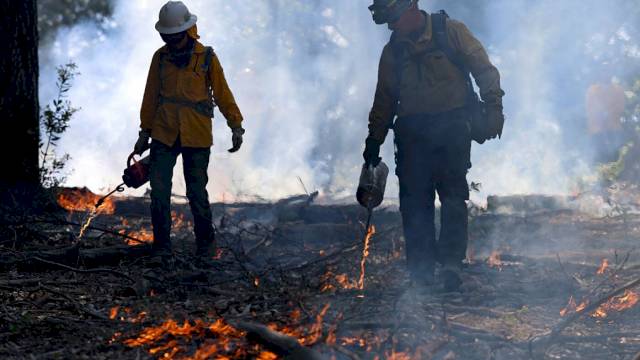
    Setting low-grade fires, known as prescribed burns, can help clear out overgrown brush and dead material that fuels more extreme wildfires. In 2025, controlled burning fell by almost half under the Trump administration.

    Setting low-grade fires, known as prescribed burns, can help clear out overgrown brush and dead material that fuels more extreme wildfires. In 2025, controlled burning fell by almost half under the Trump administration. Justin Sullivan/Getty Images hide caption

    toggle caption

    Justin Sullivan/Getty Images

    With wildfires already burning and drought persisting across much of the U.S., fire experts are bracing for what could be an extreme fire season. The U.S. Forest Service is going into it having done far less work than in recent years to manage the dry, flammable vegetation that can fuel catastrophic fires.

    In 2025, the Forest Service reduced vegetation on almost 1.5 million fewer acres than in 2024, according to an analysis of the agency’s data by NPR and firefighting experts. It marks a significant drop from the more than 4 million acres of hazardous vegetation work done in the last year of the Biden administration.

    The biggest decline was in prescribed burns, the low-grade fires intentionally set to clear dense underbrush, helping reduce the intensity of future wildfires. In 2025, the Forest Service burned only about half of the acreage that it did in both 2024 and 2023, according to an NPR analysis of agency records.

    Despite the extreme wildfires of recent years, there’s actually a fire deficit in most of the country. Many North American forests evolved over millennia with low-intensity wildfires that clear out dense undergrowth. Native Americans use controlled burns to shape the ecosystem, but those measures became far less common after tribes were forced from their lands. In the 1930s, the Forest Service also adopted a policy to extinguish all wildfires.

    As conditions have gotten hotter, the build up of dense vegetation has fed extreme fires that have torn through vast stretches of land and increasingly, into communities.

    The Forest Service said in a statement that the drop in prevention work is mostly due to staff being occupied with firefighting and because environmental conditions were not right for doing prescribed burns in the Southeast. The agency lost 16% of its workforce as of last summer, with 5,860 personnel leaving in the first six months of 2025 as part of the Trump administration’s efforts to reduce the size of government. Senate Democrats have raised concerns that such cuts have hampered the agency’s ability to prepare for wildfires.

    Wildfire experts say the less prescribed burning is done, the more the Forest Service faces conditions that lead to extreme wildfires.

    “The clock is ticking,” says Matthew Hurteau, a forest ecologist at the University of New Mexico. “We’ve got relatively limited time to do the work that needs to be done.”

    Without small burns, there’s a big burn

    Last fall, Hurteau faced the toughest day of his career.

    For 25 years, he’s worked in a forest in California’s Sierra Nevada, the Teakettle Experimental Forest, home to old-growth sugar and Jeffrey pine trees. As one of the Forest Service’s experimental forests, it’s like a living laboratory with 3,200-acres set aside by the agency in the 1930s as an area of special study and research.

    The forest had gotten denser by not having a major wildfire since 1865. It was also dotted with dead trees, victims of California’s extended drought a decade ago which allowed beetles to move in. Hurteau and his colleagues saw that the forest was at risk and in 2020, started planning a prescribed burn.

    In the Teakettle Experimental Forest, researchers studied forest systems and water dynamics among the old-growth trees (left).

    In the Teakettle Experimental Forest, researchers studied forest health and water dynamics among the old-growth (left). The 2025 Garnet Fire burned through at high-intensity, killing many trees (right). Matthew Hurteau hide caption

    toggle caption

    Matthew Hurteau

    “We all knew that this is what the forest needed in order to decrease the chance that a high-severity wildfire rolled through there and killed off all the old-growth pines,” Hurteau says.

    Working with a wildfire non-profit, the Climate & Wildfire Institute, the project received more than $5 million from California’s state fire agency, Calfire. Being in the Sierra National Forest, the Forest Service needed to complete environmental reviews before the burn could begin.

    Hurteau says the process dragged on.

    “It took a lot longer than it should have,” Hurteau says. “We lacked the will from leadership on the forest and the ranger district to facilitate the implementation of this burn.”

    Then, last August, the Garnet Fire was sparked by lightning nearby. It spread, driven by dry conditions and erratic winds.

    “The whole experimental forest burned in one day and it burned quite hot,” Hurteau says.

    In October, Hurteau went back to Teakettle to survey the damage, finding that many of the old-growth trees he knew well had not survived.

    “I’m not somebody who is prone to emotional outbursts, but I broke down and cried five times that day,” he says. “It was a pretty rough thing to see.”

    Forest Service staff with the Sierra National Forest did not respond to questions about Teakettle’s planned prescribed burn. Hurteau says while many land managers and fire experts have been working to restore forest health, there still isn’t nearly enough controlled burning being done.

    “There was a stretch there that I was somewhat hopeful that we’d make some real progress,” Hurteau says. “When Teakettle burned the way it did, some of that optimism evaporated.”

    Prescribed fire falls off

    The Forest Service has said for decades that prescribed burns are a priority. The agency set a goal in 2022 of reducing flammable fuels on an additional 20 million acres over the next decade. In April, current Forest Service chief Tom Schultz highlighted how that type of work made a difference in California’s 2021 Caldor Fire.

    “We had an area that we had managed within the last five years,” Schultz said in testimony at a House budget hearing. “The fire went through there. It didn’t go up in the crowns. It stayed on the ground. It had beneficial impacts. That was due to the management that occurred.”

    In 2023, the Forest Service reduced hazardous vegetation on about 3.7 million acres and in 2024, did more than 4 million acres. That work fell during the first year of Trump’s second administration to 2.6 million acres, according to an analysis shared with NPR by Grassroots Wildland Firefighters and Redstone GIS Consulting. That includes mechanically cutting and removing vegetation, in addition to burns.

    Prescribed burning, which had reached over 1.6 million acres in both 2023 and 2024, fell to about 900,000 acres in 2025, according to an NPR analysis of agency data. The Forest Service, which analyzes its data based on a fiscal year that begins in October, says it burned 1 million fewer acres in fiscal year 2025.

    Forest Service employees reported that agency work slowed after Trump took office, due to efforts by the Department of Government Efficiency to cut staff and programs. After thousands of personnel left the agency or were fired, Senate democrats raised concerns that it was affecting the country’s ability to handle wildfires.

    When large amounts of underbrush and dead material accumulate in forests, it fuels more intense fires that carry flames to the tops of older trees, killing them, like in California's 2025 Garnet fire.

    When large amounts of underbrush and dead material accumulate in forests, it fuels more intense fires that carry flames to the tops of older trees, killing them, like in California’s 2025 Garnet fire. Noah Berger/AP hide caption

    toggle caption

    Noah Berger/AP

    Schultz recently testified that the agency hired about 9,700 firefighters as of early March, slightly more than last year. The agency is also proposing that Forest Service firefighters be moved to the new U.S. Wildland Fire Service, which consolidates all Department of Interior firefighting staff.

    Firefighting experts say those hires don’t necessarily replace key support staff that was lost.

    “There’s a lot of people who help the fire organization get the work done that aren’t firefighters,” says Bobbie Scopa, vice president of Grassroots Wildland Firefighters, a non-profit advocacy group for firefighters. “If you remove a contracting officer who is not a fire person, that can have unintended outcomes of reducing a tremendous amount of fuel reduction work because you can’t put the contracts out.”

    The Forest Service said in a statement that the drop in burning in 2025 mostly occurred in the Southeastern U.S. “due to elevated wildfire activity and elevated fire behavior due to excessive fuel loads from Hurricane Helene and other environmental factors.” The agency’s data shows that prescribed burning also dropped in several other states not affected by Hurricane Helene.

    While the majority of Forest Service land is west of the Mississippi, there has been twice as much prescribed fire in Southern states over the last four years compared to Western states. States in the Southeast have long-standing policies and training programs that encourage prescribed burns.

    What gets in the way of prescribed fire

    Even in most years, the Forest Service faces challenges using prescribed fire. Most burns are only done during short windows when conditions are cool and wet in the spring and fall. While the vast majority of burns occur with few issues, fires have escaped in rare cases, like in New Mexico in 2022, which lead the Forest Service to pause burning nationwide.

    More commonly, prescribed burning is halted because Forest Service staff are occupied fighting wildfires. Fire experts say this leads to a vicious cycle. As wildfires get more extreme, agency personnel have less time to reduce vegetation, known as hazardous fuels work, which sets the stage for even bigger blazes.

    “We have conditions that are worse than they used to be and the seasons are longer,” Scopa says. “We need more people. We need more firefighters and we need folks to do the fuels work separately.”

    Controlled burns aren’t just about forest health. Scopa says reducing flammable fuels gives wildland firefighters a better chance at fighting forest fires in increasingly challenging conditions.

    “We do the fuels reduction work not because it’s going to stop a fire, but because it allows the firefighters a place to efficiently and effectively and safely fight the fire from,” Scopa says. “If you send firefighters into a forested area that has not been treated, it’s going to be much more difficult.”

  • Shipowners Query Trump’s New Hormuz Plan as Attacks Go On – Bloomberg.com

    We’ve detected unusual activity from your computer network

    To continue, please click the box below to let us know you’re not a robot.

    Why did this happen?

    Please make sure your browser supports JavaScript and cookies and that you are not blocking them from loading. For more information you can review our Terms of Service and Cookie Policy.

    Need Help?

    For inquiries related to this message please contact our support team and provide the reference ID below.

    Block reference ID:a6998854-47a2-11f1-a7de-97429c704b47

    Get the most important global markets news at your fingertips with a Bloomberg.com subscription.

    SUBSCRIBE NOW

  • Iran war: What’s happening on day 66 as Trump announces Hormuz mission? – Al Jazeera

    Iran war: What’s happening on day 66 as Trump announces Hormuz mission? – Al Jazeera

    EXPLAINER

    Trump orders new Hormuz mission after Iran says it receives US response to its peace proposal.

    United States President Donald Trump has announced a naval mission called Project Freedom to help navigate stranded ships through the Strait of Hormuz, which remains under a de facto Iranian blockade. The operation will start on Monday, the US president says.

    Iran took control of the Strait of Hormuz, through which one-fifth of global oil and liquefied natural gas supplies pass, days after the US and Israel launched attacks on Iran on February 28.

    Despite Trump’s announcement, oil prices have failed to ease as the international benchmark Brent crude was essentially flat on Monday morning.

    In response to Trump, top Iranian lawmaker Ebrahim Azizi said any US interference in the strait would be considered a violation of the ceasefire.

    Here is what we know as the conflict enters day 66:

    In Iran

    • Responding to Trump’s new naval operation, Iran’s military said on Monday: “Any foreign armed force, especially the aggressive US Army, will be attacked if they attempt to approach and enter the Strait of Hormuz.”
    • On Sunday, Iran said it received a US response to its latest offer for peace talks after Trump called Tehran’s proposal “unacceptable”.
    • Iranian Ministry of Foreign Affairs spokesperson Esmaeil Baghaei said on Monday that US allies in the region are aware the US-Israeli war on Iran is not legal but rather a “unilateral step” that goes against international law.

    Diplomacy

    • Pakistani Foreign Minister Mohammad Ishaq Dar and his Iranian counterpart, Abbas Araghchi, have discussed the “regional situation” and “Pakistan’s ongoing diplomatic efforts for peace and stability in the region” in a phone call, Pakistan’s Ministry of Foreign Affairs said in a statement on social media..
    • After Trump accused NATO allies of not doing enough to support the US in the war on Iran, NATO Secretary-General Mark Rutte said on Monday that European nations have “gotten the message” and are now ensuring that agreements on the use of military bases are being implemented.
    • The leaders of Australia and Japan have agreed to step up cooperation on energy and critical minerals as the Iran war disrupts global trade.

    In the US

    • Talking about his latest mission for the Strait of Hormuz, Trump said the US would start helping to free ships stranded in the Gulf by the US-Israeli war on Iran. Trump gave few details of the plan to aid ships and their crews that have been “locked up” in the vital waterway and are running low on food and other supplies more than two months after the conflict began.
    • The unified command of Iran’s armed forces responded by warning US forces to stay out of the strait. Its forces would “respond harshly” to any threat, it added, telling commercial ships and oil tankers to refrain from any movement in the absence of coordination with Iran’s military.
    • The US has evacuated 22 crew members held on board an Iranian container vessel to Pakistan and will hand them over to Iranian authorities on Monday, Pakistan’s Ministry of Foreign Affairs said, calling the move a “confidence-building measure”.
    • The United Kingdom Maritime Trade Operations (UKMTO) says the maritime security threat level in the Strait of Hormuz remains critical due to ongoing military operations.

    In Lebanon

    • Israel has attacked at least eight locations in southern Lebanon. Our colleagues at Al Jazeera Arabic are reporting Israel attacked Debaal, Qana, Srifa and Qalaouiyah as well as Zawtar al-Sharqiya, Toulin, Shehour and Braachit. The attacks came after the Israeli military ordered residents to flee from their homes.
    • According to Lebanon’s National News Agency (NNA), Israeli forces also dropped flares over Braachit overnight and shelled the outskirts of the towns of Safad El Battikh, Yater, Majdel Selm and Chaitiyeh.

  • Trump has targeted universities and science. But RIT is thriving – WXXI News

    Trump has targeted universities and science. But RIT is thriving – WXXI News

    A record number of graduates will receive their Ph.D.s from Rochester Institute of Technology this weekend.

    The private university has more doctoral research students than ever, is bringing in more federal research funding, and has the most grant applications pending in school history.

    “Even with all you’ve heard about in the last year, research is actually growing at RIT,” said Ryne Raffaelle, RIT’s vice president of research. “I think that would surprise a lot of people who just see the negative on the nightly news, and they don’t necessary have the full context.”

    Ryne Raffaelle, vice president for research, Rochester Institute of Technology

    Provided photo

    /

    RIT

    Ryne Raffaelle, vice president for research, Rochester Institute of Technology

    Back in December, RIT opened a new research building “full of labs” Raffaelle said.

    The numbers and optimism belie predictions of a “graduate-school collapse” amid slumping enrollment, rising costs and a Trump administration focused on what it has deemed to be frivolous research and liberal bias in the nation’s colleges and universities.

    “I don’t want to diminish the turmoil that we’ve all had to live through in the last year, and the consequences of that,” Raffaelle said. “I mean, the time, effort and money wasted is undeniable.”

    But while Syracuse and other institutions have cut academic programs, or laid off staff and paused or cut graduate student admissions, RIT has stayed the course.

    The university expects to confer 76 doctoral degrees this upcoming commencement weekend — a number that should raise RIT’s Carnegie Classification, helping draw more top research grants and faculty. And that number is only expected to rise in future years, as the number of enrolled Ph.D. students at RIT surpassed 500 for the first time this academic year, reaching 517 — up from 246 back in 2016. RIT’s first doctoral program launched in 1990, the nation’s first in imaging science.

    Last year, the university set a record for new research awards at $106 million, officials said, and is up to $70 million so far this year.

    “What’s in vogue today?” Raffaelle asked, in answering what sets RIT apart. “What are people looking for? What are families seeking? What is the government promoting? Oh my gosh, it is high placement rates in, you know, cutting-edge technology, right? So we’re very well-positioned in the market.”

    Schools like Syracuse are overhauling a legacy curriculum and slashing degree programs that are no longer relevant, many of which were found to little or no student interest. Meanwhile, RIT’s research portfolio largely emerged over the past 20 years, he said, and is well-aligned with government and industry needs. Think cyber security, quantum theory, healthcare technology, semiconductors and microelectronics.

    Lute Douglas, a doctoral student in the Rochester Institute of Technology's College of Engineering, pulls a rack out of a biomedical liquid nitrogen tank on Feb. 27, 2026, in RIT's new NanoBio lab at Kate Gleason Hall.

    Provided photo

    /

    RIT

    Lute Douglas, a doctoral student in the Rochester Institute of Technology’s College of Engineering, pulls a rack out of a biomedical liquid nitrogen tank on Feb. 27, 2026, in RIT’s new NanoBio lab at Kate Gleason Hall.

    “You come to RIT, we train you to hit the ground running, Day One, get a job,” he continued. “It’s not blue-sky research, ivory tower. We’re kind of the antithesis of that.”

    The story gets more complex across town at the University of Rochester, with its medical school heavily influenced by the happenings at the National Institutes of Health. RIT receives NIH funding, but nothing to the level of UR.

    ‘High level of uncertainty’

    Take all the federally funded research programs and sum them together, and they are not as big as NIH. And, because of that, it’s got a disproportionate amount of the attention from the Trump administration — with one result being fewer awards.

    UR received $188 million from NIH two years ago, but less than $168 million last year, records show.

    Steve Dewhurst, vice president for research, University of Rochester

    Provided photo

    Steve Dewhurst, vice president for research, University of Rochester

    “I’m optimistic that this year is not a normal year,” said Steve Dewhurst, UR vice president for research.

    The labs that principally rely on NIH funding are in the medical center.

    “We have slowed recruitment (of graduate students) because of that concern about how many new grant awards do we have” Dewhurst said. “Meaning, effectively, how many homes do we have that are well funded?”

    The degree of slowdown is program-specific, he said, not across the board. For context, though: The UR School of Medicine typically sees upwards of 40 research project grants each year. Last year, it got 15, Dewhurst said.

    Campus-wide, though, “overall, our funding is very largely stable,” he said. And, like at RIT, the number of UR grant submissions is up more than 5% in the past year.

    Universities across the nation are experiencing significant government delays in grant award decisions and reimbursements — blamed on the massive staffing cuts by the Department of Government Efficiency.

    But while the Trump administration made much ado about rescinding federal research grants, universities appealed and many — including at UR and RIT — were quietly restored. Congress restored funding to federal R&D agencies. And a proposed cap on indirect research costs, covering lab maintenance, building utilities, and equipment needs, was rejected by the courts and similarly nullified by Congress.

    The University of Rochester Medical Center reopened its renovated and modernized clinical research center this week after flood damage, in December 2022, forced closure.

    “I think one area that is significant is the impact on young scientists,” he aid, “folks that we’re training in our graduate programs or our postdoctoral programs. Understandably, many of them may be looking at science right now and wondering, Is that the right career path for me? It is a real concern to myself and to many of us in in research — we do not want to lose a generation of brilliant minds because of an environment where there is a high level of uncertainty about the funding climate.”

    That climate grew more uncertain last month when Trump abruptly fired the entire National Science Foundation board, while pushing for deep cuts to the agency that administers federal science grants. A week later — May 1 — marked “National Decision Day” for prospective graduate students to select a program and put down a deposit.

    ‘We’ve lost our way’

    “It’s very important to all of us to communicate better,” Dewhurst said, about “the value of what we do and why it is that benefits our nation and individuals.”

    Government investment in research and development post-World War II is what produced jet aircraft, satellites, digital computers, life-saving drugs and vaccines, and an overall increase in household income, he said.

    Yet, he continued: “At least in this present moment, we’ve somehow lost our way with bipartisan support for research.”

    Alyssa Rzasa, an undergraduate biomedical engineering student at Rochester Institute of Technology, works in RIT's new NanoBio lab at Kate Gleason Hall on Feb. 27, 2026.

    Provided photo

    /

    RIT

    Alyssa Rzasa, an undergraduate biomedical engineering student at Rochester Institute of Technology, works in RIT’s new NanoBio lab at Kate Gleason Hall on Feb. 27, 2026.

    Dewhurst was a principal investigator on one of the grants that was not restored, funding a collaboration between UR and RIT that created a pathway into the scientific workforce for students who are deaf.

    “It was to train post-doctoral scientists,” Dewhurst said, “and we had to discontinue the program, and the folks in the program needed to go find jobs elsewhere, and we weren’t able to bring in a subsequent class.”

    It wasn’t the only collaborative UR-RIT program to be defunded. But it was unique nationally, and distinctive to a Rochester community recognized as having one of the world’s largest per-capita deaf populations.

    “You know, anytime you go into a coffee shop, you see in Rochester people communicating by American Sign Language,” he said. “You don’t see that in other towns and cities, and it’s a tremendous part of the fabric of our community, and it’s one that I would very much like to see better represented in our scientific and medical workforces.”

  • Rudy Giuliani in critical condition in hospital – BBC

    Rudy Giuliani in critical condition in hospital – BBC

    Getty Images Giuliani in center with blue suit jacket over white medical brace, crosses his hands and looks down. He is flanked by Kash Patel and Howard LutnickGetty Images

    Giuliani, and members of the Trump administration, at an event honoring September 11 last year

    Rudy Giuliani, the former New York City Mayor and a long-time champion of President Donald Trump, is in a “stable but critical condition” in hospital, his spokesman has said.

    “Mayor Giuliani is a fighter who has faced every challenge in his life with unwavering strength, and he’s fighting with that same level of strength as we speak,” Ted Goodman said in a social media post.

    Shortly afterwards, Trump described Giuliani as “the Best Mayor in the History of New York City, BY FAR” on Truth Social and praised his efforts in contesting the 2020 election, won by Democrat Joe Biden.

    No further details on his illness have been released. Giuliani, who is 81, was injured in a car accident late last year.

    Goodman added at the end of his post: “We do ask that you join us in prayer for America’s Mayor Rudy Giuliani.”

    Giuliani earned that nickname after leading New York City through the aftermath of the 9/11 attacks.

    In recognition of his leadership, he was awarded an honorary knighthood (KBE) by Queen Elizabeth in 2002.

    He left office in 2004 and four years later made an unsuccessful presidential run for the Republican Party.

    He was key backer of his fellow New Yorker’s 2016 White House run, most publicly at the Republican National Convention. He later became Trump’s personal lawyer.

    After the 2020 presidential election, Giuliani and other advisers travelled across the country making false claims about the results, accusing Trump’s opponent Biden of attempting to steal the election.

    Later, a jury forced him to pay two election workers whom he had accused of ballot fraud $148m (£108m) for defamation.

    In his social media post expressing concern for Giuliani’s health, Trump repeated his false claims about Democrats stealing the 2020 election.

    “They cheated on the Elections, fabricated hundreds of stories, did anything possible to destroy our Nation, and now, look at Rudy. So sad!” he said.

    Last September, Giuliani was a passenger in a Ford Bronco when it was struck from behind in the US state of New Hampshire.

    He suffered a fractured thoracic vertebrae, multiple lacerations and contusions, and injuries to his left arm and lower leg, his security guard said at the time.