Author: admin

  • Trump critics Comey and Cohen float applying for the Anti-Weaponisation Fund – BBC

    Trump critics Comey and Cohen float applying for the Anti-Weaponisation Fund – BBC

    Who’s eligible for the ‘Anti-Weaponisation Fund’? Trump’s critics think they might be

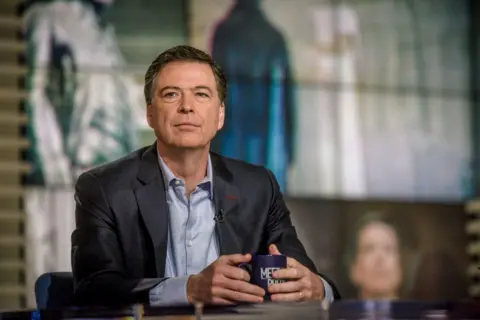
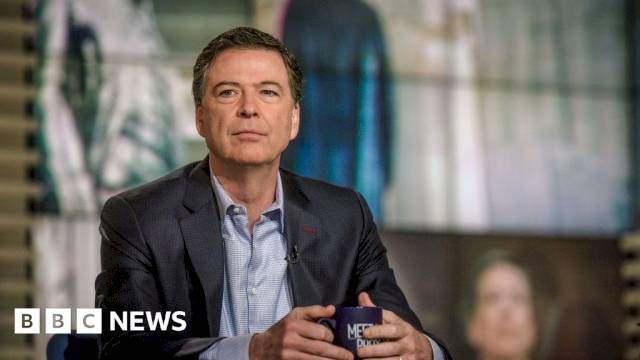
    NBC via Getty Images James Comey wears a suit and holds a mug on the set of NBC News' Meet the Press.NBC via Getty Images

    When Acting Attorney General Todd Blanche announced a $1.8bn fund that would make payouts to victims of government “weaponisation”, Michael Cohen is probably not who he had in mind.

    “After years of being smeared, surveilled, financially exposed, imprisoned, and silenced, I will file a claim asking whether America’s justice system became America’s political weapon,” Cohen posted on X.

    As the political fallout from the settlement continues, high-profile Trump critics indicated they too could seek compensation for what they viewed as unjust legal persecution.

    Their announcements highlighted the opaque nature of the arrangement, which has led everyone from a former FBI director to a Trumpworld attorney to claim they could receive money.

    Eligibility for the fund, on its face, seems extremely broad. In a memo sent to sceptical Republican US senators, Blanche justified the $1.8bn sum because “literally tens of millions of Americans were subjected to improper and unlawful government targeting”.

    The memo also notes that “there is no partisan restriction; Democrats can submit claims, too.”

    Cohen, who pleaded guilty to lying to Congress, tax evasion, illegal campaign contributions, bank fraud, and other offenses in 2018, has used his social media platforms to criticise Trump and wrote a book about his relationship with the president.

    He was released from prison early in 2020 due to Covid-19 concerns, but was later sent back. A federal judge ordered his release, after finding the government was retaliating against him as he prepared to publish his book.

    Trump and his attorneys (including Blanche, during Trump’s Manhattan criminal trial) have pushed back against Cohen’s allegations and questioned his credibility, pointing to his conviction for lying to Congress.

    Former FBI Director James Comey, who the Justice Department indicted twice in the span of eight months in cases that criminal law experts have deemed legally dubious, told CNN he might apply for the fund.

    “It appears that they’re serious,” said Comey, who has publicly sparred with Trump since the president fired him as FBI director in 2017. “It’s to compensate people who have been targeted by the justice department for, they say, personal, political, or ideological reasons.”

    “So I’m guessing, I’ll be in line,” Comey said. “I hope I’ll be ahead of those who savagely beat police officers and sacked the Capitol.”

    In Comey’s first indictment, which a judge later dismissed, his attorneys argued the case should be tossed on the grounds of vindictive prosecution. They are expected to make a similar motion in a new case alleging Comey threatened to harm the president in a social media post depicting seashells that spelled the numbers “86 47”.

    Blanche has defended new charges, saying it was “serious when you threaten the president of the United States”.

    Allison Gill, a commentator behind the podcast and X account “Mueller, She Wrote,” posted that she would seek “$8.647 million in compensation for weaponized lawfare” after she alleged the Trump administration retaliated against her and she lost her government job due to the contents of her show.

    The Department of Justice did not respond to a request for comment, or clarification, about whether Cohen, Comey, or Gill were eligible for funds.

    The fund will be overseen by five people appointed by the US attorney general, according to Blanche’s memo to the Senate, one of whom will be chosen in coordination with Congress.

    After Blanche announced the settlement on Monday, many critics assumed that the fund would be used for payouts to Trump allies, including the hundreds of individuals convicted in connection with the Capitol Hill riot on 6 January, 2021. Trump later pardoned them on his first day back in office.

    Conservative political figures have also applied. Michael Caputo, a first-term Trump administration official, posted his request for $2.7m as a result of the FBI investigation into alleged Russian interference in the 2016 election.

    Both Democratic and Republican lawmakers – some of whom were forced into hiding on January 6 as a mob ransacked their offices – have pressed Blanche for more details about who could benefit from the fund.

    The settlement agreement bars Trump or his family from receiving payouts.

    Blanche’s meeting with Senate Republicans on Thursday grew tense, according to media reports, with many lawmakers voicing their opposition.

    Rep Brian Fitzpatrick, a Pennsylvania Republican, sent a letter to Blanche asking for specifics, including whether “individuals convicted of federal crimes associated of acts of violence” would be eligible to receive payouts.

    Fitzpatrick also introduced legislation with Rep Tom Suozzi, a New York Democrat, that would bar the use of federal funds to pay claims submitted to the fund.

    Blanche has worked to convince Republican senators, whose opposition could scupper the administration’s initiatives, that they money was not intended as a “slush fund,” as multiple Democratic lawmakers have alleged.

    Republican Senate Majority Leader John Thune has said he is “not a big fan” of the fund.

    Other Republicans, however, support the idea of the fund.

    In a floor speech, Senator Tommy Tuberville of Alabama defended the fund, claiming that “hundreds” of “innocent patriotic Americans sat behind bars for the past five years over this made-up witch hunt” as a result of the January 6 investigations and prosecutions.
  • Jan. 6 prosecutor, Trump administration targets sue over ‘weaponization’ fund – NBC News

    Jan. 6 prosecutor, Trump administration targets sue over ‘weaponization’ fund – NBC News

    A fired Jan. 6 prosecutor and a law professor acquitted in a federal criminal case brought by the Trump administration are among the plaintiffs who sued Friday to block a $1.8 billion dollar fund established to give payouts to allies of President Donald Trump.

    The lawsuit, filed in U.S. District Court for the Eastern District of Virginia, alleges that the “anti-weaponization” fund creates a politically discriminatory process that excludes individuals like the plaintiffs, who say they were mistreated by Republican officials and administrations.

    “By its own terms, the Anti-Weaponization Fund is available only to claimants who assert that they were targeted by ‘Democrat’ administrations, even though the current administration has weaponized the awesome power of the federal government against its perceived political opponents like no other administration before it,” the suit states.

    Former Assistant U.S. Attorney Andrew Floyd, a career federal prosecutor who had been a deputy in the Capitol Siege Section and was fired by former Attorney General Pam Bondi in June 2025, is one of the plaintiffs.

    “First, hundreds of people attacked the foundation of an ordered society by trying to stop the results of a free and fair election—committing serious assaults on law enforcement and other crimes as they did so,” Floyd said in a statement, referring to the failed effort by Trump supporters to stop the certification of Joe Biden’s win on Jan. 6, 2021.

    “Then, this administration pardoned them — removing the accountability that had been hard earned by victims, witnesses, law enforcement, and prosecutors and imposed by impartial jurors and judges. Now they are asking taxpayers to illegally reward them for their crimes,” he said.

    Another plaintiff is Cal State Channel Islands professor Jonathan Caravello, who was acquitted of an assault on law enforcement charge over an incident last summer in which he picked up a tear gas canister that had been deployed by federal agents during a protest against an immigration raid at a California cannabis farm.

    The city of New Haven, the National Abortion Federation and the watchdog group Common Cause also joined the suit. All the plaintiffs are represented by Democracy Forward, a progressive nonprofit legal group that filed more than 150 lawsuits in the first year of Trump’s second term.

    Skye Perryman, the president and CEO of Democracy Forward, told NBC News that the fund has a number of constitutional and legal problems.

    “There’s literally no legal authority for the fund,” Perryman said. “You don’t get to snap your fingers and it just appears. Congress hasn’t authorized the fund. There’s actually no legal authority to do this.”

    Trump, his sons and the Trump Organization had sued the president’s own administration for $10 billion over the leak of his IRS filings, but his private attorneys dropped the lawsuit before a judge could weigh in on whether a court had the authority to hear the case, given Trump’s control over the Justice Department.

    The fund was established as part of a settlement agreement that was not overseen by the court.

    Two officers who protected the Capitol on Jan. 6 — former Capitol Police Officer Harry Dunn and Metropolitan Police Department Officer Daniel Hodges — filed a separate suit over what they described as a “slush fund” for “insurrectionists.” They argued the fund would “directly finance the violent operations of rioters, paramilitaries, and their supporters.”

  • Opinion | Trump’s Waver Hurts Ships – WSJ

    Please enable JS and disable any ad blocker

  • Donald Trump says he’ll skip his son Donald Jr.’s wedding – USA Today

    Updated May 22, 2026, 3:02 p.m. ET

    President Donald Trump won’t be attending his oldest son’s wedding, saying he feels compelled to remain in Washington, DC, “during this important period of time.”

    Trump’s son, Donald Trump Jr., is engaged to Palm Beach, Florida, socialite Bettina Anderson. The pair reportedly are getting married over the weekend.

    “While I very much wanted to be with my son, Don Jr., and the newest member of the Trump Family, his soon to be wife, Bettina, circumstances pertaining to Government, and my love for the United States of America, do not allow me to do so,” the president said May 22 on social media. “I feel it is important for me to remain in Washington, D.C., at the White House during this important period of time.”

    “Congratulations to Don and Bettina!” he added.

    Trump earlier said the wedding was “not good timing for me” – pointing to the Iran war – when asked about the event May 21 in the Oval Office.

    “He’d like me to go,” Trump said of his son, who runs The Trump Organization with his brother Eric. “But it’s going to be just a small, little private affair and I’m going to try and make it. I’m in the midst, I said: ‘You know this is not good timing for me, I have a thing called Iran and other things.’”

    Trump Jr., 48, announced his engagement to Anderson, 39, in December during a White House holiday party. They were engaged at Camp David, the presidential retreat in Maryland. Anderson had a bridal shower at Mar-a-Lago, the president’s Palm Beach estate, last month.

    U.S. President Donald Trump and his son Donald Trump Jr. arrive at the White House in Washington, D.C., U.S., May 3, 2026.

    CNN and Page Six reported that Trump Jr. and Anderson will be married on a private island in the Bahamas over the weekend. It would be Trump Jr.’s second marriage. He has five children with former model Vanessa Trump. Their marriage ended in 2018.

    Vanessa Trump, who is in a relationship with golfer Tiger Woods, announced May 20 that she has breast cancer, saying in a social media post that she is “staying focused and hopeful while surrounded by the love and support of my family, my kids and those closest to me.”

    Trump Jr. was engaged to Kimberly Guilfoyle, the United States ambassador to Greece, after his first marriage ended. Their relationship ended in 2024. He began appearing in public with Anderson in December 2024.

    The president said May 21 that he hopes Anderson and his son “have a great marriage.”

    Donald Trump Jr. and Bettina Anderson attend a ceremony held by U.S. President Donald Trump to award posthumously the Medal of Freedom to Charlie Kirk in the Rose Garden at the White House in Washington, D.C., U.S., October 14, 2025.

    Contributing: Mary Walrath-HoldridgeKinsey Crowley

  • Trump administration to require most immigrants seeking green cards to leave the U.S. first – CBS News

    Trump administration to require most immigrants seeking green cards to leave the U.S. first – CBS News

    By

    Camilo  Montoya-Galvez

    Camilo Montoya-Galvez

    Immigration Correspondent

    Camilo Montoya-Galvez is the Immigration Correspondent at CBS News, where his reporting is featured across multiple programs and platforms, including national broadcast shows, CBS News 24/7, CBSNews.com and the organization’s social media accounts.

    Read Full Bio

    / CBS News

    Add CBS News on Google

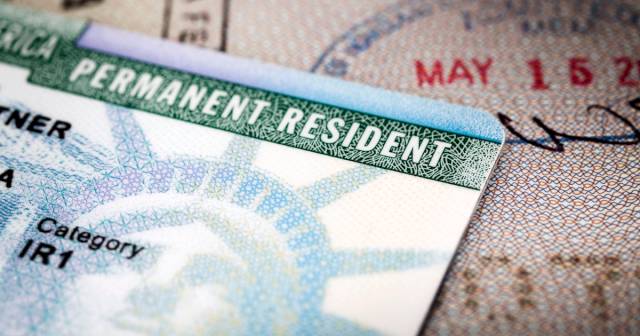
    The Trump administration on Friday announced a sweeping policy designed to make it harder for immigrants already in the U.S. to get permanent residency, or a green card, furthering its campaign to sharply limit legal immigration.

    Officials said they would eliminate the option for many immigrants seeking a green card to complete the process without having to leave the U.S. Instead, in most cases, those immigrants will be required to return to their home countries in order to apply for an immigrant visa overseas through an American consulate, officials said.

    Current and former U.S. immigration officials told CBS News the memo published Friday would likely have wide-ranging implications, forcing groups like students, tourists and other temporary visa holders, as well as those who entered legally but overstayed their visas, to leave the country before trying to obtain a green card through sponsorships filed by U.S. citizen spouses or employers.

    For many immigrants, going back home could make it difficult or impossible for them to return to the U.S. 

    Citizens of 39 countries, most of them in Africa and Asia, currently face outright bans or restrictions from entering the U.S. under a proclamation, known as the “travel ban,” signed by President Trump on national security grounds. A separate Trump administration policy has paused all grants of immigrant visas for people in 75 countries seeking to move to the U.S. permanently, arguing that they could become economic burdens. Additionally, in most cases, people who overstayed their visas and have lived in the U.S. illegally for some time would trigger 10-year bans from reentering the country if they leave.

    Michael Valverde, who was a senior official at U.S. Citizenship and Immigration Services under Republican and Democratic administrations until his departure last year, said Friday’s announcement would “disrupt the plans of hundreds of thousands of families and employers annually.”

    “This is a largely unprecedented move that will limit lawful immigration to the U.S. greatly,” Valverde said. “People who followed the rules faithfully now face tremendous uncertainty.”

    The memo published by USCIS on Friday seeks to dramatically restrict when the agency can allow immigrants to get a green card through the “adjustment of status” process. That allows eligible immigrants in the U.S. to get a green card, without having to return to the U.S. and seek permanent residency through a visa application at an American consulate.

    The memo instructed USCIS officers to treat the adjustment of status process as an “extraordinary” relief and act of “administrative grace,” arguing that Congress suggested in federal law that most green card applications should complete the process abroad. Officers were directed to treat someone’s decision to seek adjustment of status, instead of the consular process overseas, as “adverse factors” in their applications.

    While exemptions to the policy were not precisely outlined, the memo suggested that people with so-called “dual intent” visas, such as H-1Bs for high-skilled workers, as well as refugees and asylees, would still be allowed to apply for a green card in the U.S. through the adjustment of status process.

    “From now on, an alien who is in the U.S. temporarily and wants a Green Card must return to their home country to apply, except in extraordinary circumstances,” USCIS spokesman Zach Kahler said in a statement. “This policy allows our immigration system to function as the law intended instead of incentivizing loopholes.”

    Kahler said the policy would also reduce the “need to find and remove those who decide to slip into the shadows and remain in the U.S. illegally after being denied residency.”

    Doug Rand, a former senior USCIS official under the Biden administration, said the changes could affect hundreds of thousands of cases, since half a million people get green cards each year through the adjustment of status process. Immigrant spouses of U.S. citizens who are in the country on student and other temporary visas, he added, will likely be among those most affected by the changes.

    “The primary impact of this appears to be to make it difficult or impossible for very large numbers of U.S. citizens to get on with their lives with the people they’ve chosen to marry who came here legally,” Rand said.

    Many of those forced to leave the U.S., Rand added, may get stuck overseas.

    “Imagine you fall in love with someone from Iran or Russia, or again, 114 different countries, where if you go back and try to apply for a permanent residency from that country, the Trump administration will not let you in,” Rand said.

  • ‘Stupid on stilts’ – Trump’s investigation compensation fund draws ire of Republicans – BBC

    ‘Stupid on stilts’ – Trump’s investigation compensation fund draws ire of Republicans – BBC

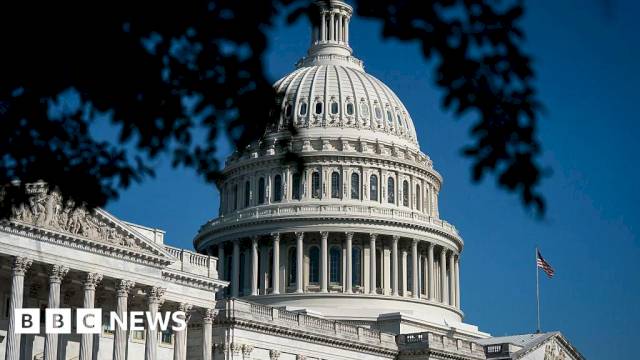
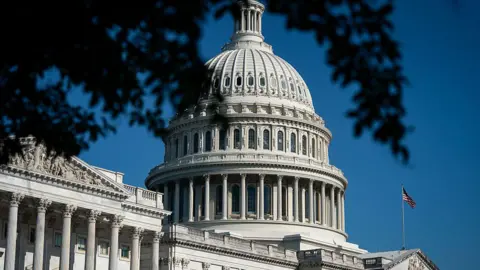
    Getty Images The outside of the US Capitol with a branch of a tree seen at the top of the image. An American flag is also waving in the background.Getty Images

    The Trump administration’s new investigation-compensation fund is drawing sharp criticism from members of the president’s own party who declined to pass government-funding legislation on Thursday due to disagreements over the fund.

    The justice department created the $1.8bn (£1.3bn) fund to pay individuals “unfairly” investigated under previous presidents. Among the claimants are people charged in the 6 January 2021 riot at the US Capitol.

    “So the nation’s top law enforcement official is asking for a slush fund to pay people who assault cops? Utterly stupid, morally wrong – Take your pick,” Republican Senator Mitch McConnell said.

    Democrats also have called it a “slush fund” for Trump allies.

    The Department of Justice (DoJ) set up the fund as part of a settlement with President Donald Trump over a lawsuit he filed against the Internal Revenue Service (IRS) after his tax records were disclosed. The president dropped the suit in exchange for an apology and the fund.

    Congress can control how the DoJ spends taxpayer money, which would be used to fund the $1.8b settlement.

    The top DoJ official, Acting US Attorney General Todd Blanche, travelled to Capitol Hill on Thursday to try and ease Republican senators’ concerns, but was unsuccessful.

    Some wanted to restrict how the fund could be used – and potentially do so in the government funding legislation being considered Thursday. Without a clear consensus, Senate Majority Leader John Thune cancelled the vote on that bill.

    He told reporters afterward that administration officials “need to help with this issue, because we have a lot of members who are concerned, obviously, about the timing, but also about the substance”.

    One of the chief concerns is about potential compensation for individuals who assaulted Capitol police officers on 6 January.

    Nearly 1,600 people were charged with crimes associated with the riot, including about 175 charged with using a deadly or dangerous weapon or causing serious bodily injury to an officer, according to DoJ figures.

    Trump issued a blanket pardon for defandants involved in the riot on his first day back in office, including individuals who had pleaded guilty to assaulting police officers. Roughly 140 officers were injured.

    North Carolina Republican Senator Thom Tillis called the compensation fund “stupid on stilts”.

    “It will invariably put us in a position where your taxpayer dollars and my taxpayer dollars could potentially compensate someone who assaulted a police officer, admitted their guilt, got convicted, got pardoned, and now we’re going to pay them for that? That’s absurd,” he said.

    The fund is also unpopular in the House chamber, where it has drawn the ire of many, including Pennsylvania Republican Brian Fitzpatrick, who is planning to introduce legislation that would effectively kill the fund.

    Until then, he has sent Blanche questions about plans for the fund.

    Among those lining up to apply for compensation is Michael Caputo, a Trump ally and health official during the president’s first administration, who says the FBI investigated him when looking into possible coordination with Russia on interference in the 2016 election. He said he requested $2.7m from the fund earlier this week.

    He wrote on social media that “The machinery of government was clearly politically weaponized against my family”. “They found nothing; we lost everything.”

    Longtime critics of Trump are also exploring applying for funds.

    Michael Cohen, the president’s former lawyer who spent time behind bars for lying to investigators, tax evasion and campaign finance violations, told US media he also plans to request money from the justice department initiative.

    When DoJ officials announced the fund on Monday, they said it would have a total of $1.776bn available to settle and pay cases. They said the “Anti-Weaponization Fund” will be governed by a five-member commission that can vet and pay claims.